

Plot Summary
Prologue
In 1970, Staff Sergeant Chris Hale leads a covert reconnaissance team into Cambodia and discovers an NVA base where Chinese officers and a Russian adviser meet beneath a camouflaged shelter. When the team is surrounded, Hale directs air strikes and gets his wounded men to a hovering helicopter.
The aircraft is hit as it lifts away, and Hale gives his place on the extraction sling to the injured Montagnard scout Houng. Left behind with a penetrating chest wound, Hale watches the helicopter crash, carrying the team and the photographs that could prove what he saw. His son, Kurt, will spend decades wondering why his father never came home.
Hale’s mission establishes the novel’s moral vocabulary before its modern conflict begins. He finds valuable intelligence, but its value cannot protect the people carrying it; survival depends on choices made under pressure, not on the righteousness of the mission. His final decision is neither triumphant nor strategically clean. By surrendering his place to Houng, he chooses a person over his own chance of escape, while the camera and its evidence remain trapped with him. That tension returns in Pike and Jennifer’s work: information can justify action, but it cannot settle what a person owes to another human being.
The Refinery Burns
Two years before the present, CIA operative Brett Thorne accompanies Zaghawa rebels attacking a Chinese-backed oil refinery in Sudan. He carries an experimental explosive device and intends to damage a fractionating tower badly enough to make China reconsider its support for Sudan’s government.
When the rebels’ poorly planned ambush falters, Thorne fights his way through the militia, reaches the refinery, and triggers the weapon under fire. The blast destroys several towers and sets the facility ablaze, far exceeding his intended effect. Chinese intelligence officer Han Wanchun studies the damage and concludes that the rebels could not have done this with small arms. He begins looking for the technology behind the strike.
The Sudan operation begins as strategic coercion, but its result exceeds the intentions of the people who authorized it. Thorne thinks in terms of a carefully chosen target and a political consequence; Han sees a capability to acquire. The shift matters because the weapon’s history is not a simple contest between good and bad actors. American covert action creates a dangerous tool, then fails to control who learns about it. The novel’s later threat grows from that gap between intended use and material consequence. Once a technology has demonstrated its power, other people can detach it from its original purpose.
Jennifer Passes Assessment
Jennifer Cahill, an archaeologist whom former special operator Pike Logan has trained, is sent through the Taskforce’s brutal Assessment. In North Carolina, a staged truck attack leaves her car wrecked and a training officer demanding a package.
Jennifer acts frightened, gives him a false location, then catches him searching the car and incapacitates him. At the final bar challenge, she escapes several operators by climbing rafters and crossing above their reach instead of trying to overpower them. Her success forces skeptical teammates to recognize her resourcefulness.
Pike and Jennifer are preparing to travel under their new archaeological-recovery company’s cover when her abusive ex-husband, Chase, calls seeking money. The call revives her fear, while Pike’s jealousy exposes feelings neither has resolved.
Jennifer’s success rests on adapting the test rather than accepting its assumptions. The men expect a candidate to win through force; she survives by reading the room, using the building, and turning an opponent’s certainty against him. Her skill is real, but her achievement does not erase the costs of entering a world built around violence. Chase’s call makes that distinction personal: she has learned to fight back, yet old fear can still return through a familiar voice. Pike, meanwhile, sees her capability more clearly than he understands her emotional independence. Their partnership begins with trust, but not yet with equal clarity about what each wants.
The Grid Is Breached
In Maryland, former prisoner Keshawn Jackson uses his utility job to enter a power substation and install a thumb drive that will compromise the company’s grid protections. When a manager catches him, Keshawn kills him and treats the act as the beginning of his religious mission.
Al Qaeda operative Hassan Rafik has built this network by recruiting American inmates who converted to Islam in prison, then placing them in electrical companies across several states. Their planted virus is intended to disable warning and automated response systems before coordinated attacks on critical equipment.
Rafik does not yet have the full physical plan, but he is seeking technology capable of causing lasting damage. Keshawn’s skill, access, and willingness to kill make the scheme possible from inside the infrastructure it targets.
Rafik’s recruitment method exploits a genuine human need, the desire to turn failure and isolation into belonging, then narrows that belonging into permission for violence. Keshawn’s new faith gives his life structure, but the novel shows how easily structure can be captured by a leader who supplies an enemy and a mission. The substation is significant because the attack begins not with an explosion but with an ordinary worker entering a familiar workplace. The security system is designed to guard against outside intrusion, leaving the institution vulnerable to a trusted insider. The threat is therefore both ideological and procedural.
A Camera From Cambodia
With Jennifer newly accepted into the Taskforce orbit, Pike and his team travel to Cambodia under the cover of Grolier Recovery Services, their archaeological-support business. Colonel Kurt Hale has learned that artifacts bearing his missing father Chris’s name have reached the U.S. Embassy.
He persuades President Payton Warren to cut through the custody delays so Pike can retrieve them. The items include a Nikon camera and a reconnaissance journal, both recovered with Hale’s ruined rucksack.
In Phnom Penh, the embassy releases the package quickly. Knuckles opens the old camera and finds a roll of film inside. Before the group can continue to Angkor Wat, a Taskforce message redirects them to Jakarta, where another team needs help checking a suspected terrorist facilitator.
The trip makes personal grief an operational liability and a source of purpose at once. Kurt wants his father’s belongings because official procedures threaten to bury the last tangible connection in a queue of uncertain claims. Pike’s company offers a plausible route to the embassy, but it also brings the team into contact with a larger crisis before they can complete their cover-building trip. The camera functions as evidence whose meaning is not yet known. Its importance rests first in Kurt’s private hope, then in the possibility that an object preserved by chance can disturb a political arrangement decades later.
Jennifer Enters the Agency
In Jakarta, Jennifer enters the travel agency used by Jemaah Islamiyah facilitator Noordin Sungkar and confirms that he keeps an office there, though he is away. The Taskforce fears the building’s cameras could expose its own operators, so Johnny’s team asks Jennifer to help access Noordin’s computer.
She agrees only if Pike’s group accompanies her. While she climbs a drainpipe to attach a device to the building’s camera network, she spots a burglar drilling into a jewelry shop.
The team disables the alarm and enters to stop him, then Jennifer slips into Noordin’s office and uses a prepared thumb drive to give the hackers access. The mission succeeds, but when Pike returns to his hotel room, he discovers that someone has stolen Kurt’s camera.
Jennifer’s first live operation is not a clean initiation. She contributes the one thing the established team lacks, firsthand knowledge of the building, while an unrelated burglary turns a technical entry into a rescue and a scramble. Her usefulness becomes visible through action rather than ceremonial acceptance. Pike’s instincts also surface: he will interrupt a cover plan to stop a crime, even when doing so complicates the operation. The stolen camera changes the emotional stakes. What began as a favor to Kurt is now evidence someone else considers valuable, binding the personal mystery to the larger investigation.
The Alexandria Bus Bomb
Pike’s team follows Noordin to Cairo, where he appears to be a tourist among a congressional delegation and other visitors. In Alexandria’s catacombs, Pike and Bull see Noordin receive an item from an unfamiliar Arab man, but the narrow passages prevent them from coordinating a clean follow.
Moments later, a car bomb destroys their tour bus. Bull dies in the wreckage, while Knuckles survives with catastrophic injuries. Pike and Jennifer pull survivors from the bus, then Pike spots an Asian man who had been at the catacombs and attacks him in a warehouse.
He beats the man, who is carrying a suppressed Chinese pistol, until the detainee reaches for a weapon and Pike kills him. Jennifer, horrified by Pike’s loss of control, leaves for the airport.
The bombing collapses the distance between surveillance and consequence. Pike’s team had seen a suspicious handoff but could not yet interpret it; now their uncertainty is paid for in bodies. Pike responds to helplessness by turning a possible lead into a target, and his grief over Bull’s death overwhelms his usual discipline. The scene matters not only because he kills the Chinese operative, but because Jennifer witnesses the process that precedes it. Her departure is a judgment on Pike’s behavior and on the institution she hoped to join. The threat outside and the fracture between them now develop together.
Jennifer Fights Back
At the airport, Jennifer recognizes the Arab man from the catacombs with several companions boarding a Prague flight. She abandons her ticket and follows them to Cairo’s Khan el-Khalili market, where she is seized at gunpoint by a Chinese operative. When he tries to control her in a souvenir shop, Jennifer smashes his face with a heavy lamp and kills him.
Nearby, Pike is also confronted by an armed Chinese agent; he disables the man and joins his team in a firefight against the remaining attackers. Pike rescues a small child caught in the gunfire, and Jennifer tends to her wounded arm. Back at the hotel, she admits how shaken she is. Pike comforts her, while she sees both his capacity for brutality and his instinct to protect strangers.
Jennifer’s return is not a retreat from her moral objections. She chooses to follow the threat because she has recognized that leaving would not make her uninvolved; it would only leave others exposed. In the shop, survival demands violence, and she acts decisively without the emotional numbness Pike has learned to use. The child in the alley complicates the team’s calculus: Pike risks himself to save a person who offers no tactical advantage. This contrast gives Jennifer a more complete view of him, but not a reassuring one. His compassion and his capacity for cruelty coexist, resisting the simple moral categories she wants to trust.
The Cargo Is Stolen
After Noordin’s death destroys his original arrangements, Rafik forces the Indonesian flight crew to continue the secret cargo transfer. He takes control of the plane at Alexandria’s closed airport, kills the pilot and copilot, and orders the surviving crew to carry the cases onward.
The cargo contains components for advanced explosively formed penetrators, weapons whose compact metal plates can strike armor at long range. Rafik moves the shipment through Prague, using false aircraft markings and a duplicate tail number to disguise the transfer.
His trusted associate Kamil travels with him as he seeks explosives and recruits criminal help. The team in Cairo, meanwhile, links the stolen camera and Chinese surveillance to the developing plot, but still lacks a clear account of what the cargo can do.
Rafik’s plan advances through coercion and improvisation, not the seamless command of a distant mastermind. Noordin’s death forces him to expose more of his operation, while each solution creates another vulnerable link: pilots, disguises, intermediaries, and criminal partners. The EFP components make the danger concrete, but their destructive potential depends on access to explosives and on an attack plan still being assembled. This produces a useful asymmetry: the reader can see Rafik’s ambition and growing risks while Pike’s team works from fragments. The thriller’s uncertainty comes from gaps in knowledge, not from a lack of causal preparation.
The Birthmark in the Film
Kurt receives digitally restored images from his father’s film and notices that the same mark appears on a Caucasian man in several frames. President Warren recognizes the birthmark as belonging to Congressman Richard Ellis.
Pike and a CIA station chief arrange to watch Ellis during a briefing in Cairo; when the presentation mentions a possible Chinese connection to the bombing, Ellis’s composure slips. Confronted privately with the photograph, Ellis confesses that he was a CIA liaison in Vietnam and passed SOG team locations to the North Vietnamese.
He also admits that he is now arranging a technology transfer of EFP components to China. The CIA decides to use Ellis as a double agent, feeding the Chinese faulty material rather than exposing the operation immediately.
The old photograph converts a family mystery into a political betrayal. Kurt’s father did not simply disappear in a secret war; the danger that swallowed him was aided by someone inside the American system. Ellis’s career depends on compartmentalizing his actions as practical transactions, but the film forces past and present into the same frame. The CIA’s response reflects the novel’s larger ethical compromise: instead of pursuing public justice, it turns a compromised official into an instrument for limiting damage. The solution may be useful, but it cannot undo the original betrayal or give Kurt the clean closure he wants.
The Prague Slave House
In Prague, Pike’s team traces Noordin’s connections to an Albanian criminal network. Jennifer poses as a street worker to draw the traffickers’ attention, but when they attack her, she fights back and the team captures two men.
A young French woman they were exploiting reveals that a house holds other captive girls and that an Arab visitor discussed a plan in front of them. Pike initially resists diverting the mission, but Jennifer persuades him that the information and the girls are inseparable.
The team assaults the house, finds the captives in a basement, and rescues them. They also uncover a link between the Arab and the network’s next meeting. Pike leaves the girls with local authorities, concealing the Taskforce’s role behind a police raid.
The rescue forces Jennifer and Pike to confront the difference between a source and a person. The young woman is valuable because she knows something, but she is also in immediate danger, and treating her merely as an intelligence channel would reproduce the exploitation the team is trying to stop. Jennifer makes the team’s moral claim operational, not abstract, by demanding that they act. Pike’s initial resistance comes from scarcity and mission discipline, yet he recognizes that the information cannot be separated from its human context. Their choice helps the investigation while making the Taskforce’s secrecy harder to protect.
The Budapest House Explodes
The rescued woman’s account leads Pike’s team to a fortified farmhouse outside Budapest, where Kamil is meeting Albanian crime boss Draco Ljustku to obtain SEMTEX explosives. Pike’s small team slips inside, but a wireless alarm activates and a second force attacks from the carriage house.
The operators find the explosives and EFP equipment, yet gunfire traps them between armed men inside and outside. Pike improvises a delayed charge with the newly seized explosive, blasting the house as the team escapes.
The explosion destroys the compound and kills several attackers, but Kamil gets away. In the forest, Jennifer has silently shot four men who were moving to attack the team. Her action helps secure their withdrawal, though the others are stunned by her decision not to call it in.
The farmhouse raid is a tactical success with an incomplete result. Pike recovers the materials that would make the EFPs usable, but the violence and fire destroy the controlled setting in which the team hoped to capture the whole network. Kamil’s escape preserves the threat, while Jennifer’s four shots mark a new stage in her transformation: she can act under lethal pressure without waiting for permission. Yet she does not celebrate that capacity. The team’s silence afterward registers both respect and discomfort, showing that competence can earn a place among operators without resolving what the work does to the person who performs it.
A Phone in the Locker
After the Budapest raid, Pike’s team follows a key to a railway locker and finds a basic phone linked to the Indonesian crew. A call to the number reaches the pilot, but Kamil arrives before the team can safely arrange a meeting.
Pike’s operators locate them in a Budapest promenade and seize both men; Retro kills Kamil when he attacks Pike with a knife, while the pilot survives. The pilot explains that the EFP components were meant to reach Montreal and that a contact number belongs to a Canadian imam, Abdul-Majid Mohammed.
Investigators discover that Mohammed has instead flown to Baltimore. At the same time, a theft of C-4 and other explosives from Fort A.P. Hill sends American authorities toward a false lead involving white supremacists.
The phone is a modest object that outlasts the larger channels of surveillance. It gives the team a narrow route from a murdered intermediary to a living witness, but that route is nearly lost when Kamil appears. The capture answers one question while expanding the danger: the operation has not ended in Europe, and the missing explosives may soon be available inside the United States. The misleading evidence at Fort A.P. Hill compounds the delay by directing authorities toward a familiar domestic threat rather than Rafik’s network. The novel shows how investigative failure can arise not from incompetence alone, but from a plausible story arriving before the correct one.
Attica Reveals the Cell
Back in the United States, Pike refuses to accept the authorities’ focus on the Phoenix Order and asks Taskforce analysts to revisit a Baltimore missing-person report. The missing woman’s roommate had described her boyfriend as part of a Muslim group and said he kept his home secret.
Pike gets biometric evidence collected from the apartment and traces the suspect to Attica, where a prison worker remembers him in a prayer group led by a volunteer chaplain. Four former members have been paroled and now work for power companies in different states.
Pike recognizes the pattern: Rafik has placed operatives inside the grid. While the Oversight Council debates the danger, reports arrive that substations are failing and the Eastern power network is beginning to cascade.
The breakthrough depends on taking a seemingly ordinary report seriously after official attention has moved elsewhere. Jennifer notices the roommate’s unusual description; Pike supplies the urgency and the willingness to ask for favors beyond his authority. The result is a causal map joining prison recruitment to utility access. It also reveals the danger of confirmation bias: investigators have evidence of an attack but have mistaken the identity of its perpetrators because a planted trail fits an existing fear. The grid’s cascading failures make this discovery urgent. The team now has a credible theory, but little time to turn it into prevention.
The Eastern Grid Fails
Rafik sends the former inmates to attack extremely high-voltage transformers, using EFPs while their computer virus disables the grid’s warning and automatic rerouting systems. Several attacks succeed, power failures spread, and traffic signals go dark across the region.
President Warren authorizes Pike to act domestically after a state trooper is killed and the normal response proves too slow. Pike and Jennifer race toward Virginia, where they intercept one attacker and recover explosive devices, but another ambush wounds Retro and Decoy.
A laptop in the utility truck uses a cellular connection, allowing the team to trace the remaining signal toward Calvert Cliffs. Rafik is there with the final devices, hoping to strike the nuclear plant after the grid attacks.
The crisis transforms the debate over lawful authority into a decision with immediate human consequences. The power grid’s interdependence magnifies small attacks, while the virus removes the system’s ability to correct for damage automatically. Pike’s intervention is necessary, but it places him and Jennifer outside ordinary legal safeguards, a fact the novel refuses to treat as costless. Their pursuit also carries a personal price: Retro and Decoy are wounded, and the team’s time narrows as the blackout spreads. The nuclear plant is not merely another target. It is the escalation that makes delay potentially catastrophic.
The Reactor's Narrow Escape
At Calvert Cliffs, Rafik and Keshawn aim the remaining EFPs at a reactor dome, hoping repeated impacts will breach its concrete shell. A woman and her young son wander into their position. Rafik takes them away to restrain them, but the woman turns the rope against him and strangles him before he can return.
Keshawn fires two devices, cracking the dome, then attacks Pike with a metal post. Pike is wounded and disarmed, but turns one loaded EFP toward Keshawn and triggers it at close range, killing him.
Jennifer reaches Pike and treats his wounds. The second strike sequence fails before it can penetrate the reactor barrier. Authorities shut down the plant for inspection, while the damaged grid faces rolling outages rather than a full regional collapse.
The climax turns on two acts of improvisation rather than superior numbers. The woman survives because Rafik mistakes fear for submission; Jennifer survives the wider operation because her practical judgment and Pike’s training have prepared her to act without a perfect plan. Pike’s final use of the EFP is a choice made at the edge of death, and it stops Keshawn by turning the attackers’ weapon against its operator. The reactor remains intact, but the outcome is not a clean victory: the grid is damaged, several people are wounded, and the team has crossed legal boundaries. Survival comes with consequences that cannot be edited out.
Pike Finds His Brake
The government credits the Secret Service counterassault team with stopping the nuclear threat, shielding the Taskforce from public exposure. Ellis is used by the CIA to feed China faulty material, then forced out of Congress under a cover story that conceals his treason.
Pike leaves medical treatment uncertain whether he will face prosecution, while Jennifer weighs whether she can remain beside him. Back in Charleston, her abusive ex-husband Chase appears demanding money. Pike moves to confront him, but stops when Jennifer insists she can handle the encounter.
Only after she asks for help does Pike turn back. Jennifer recognizes that his restraint, not his capacity for violence, may be the safeguard he has lost. Their future remains unsettled, but she chooses to face it with him.
The ending makes moral change legible through restraint rather than confession. Pike cannot undo his torture of the Chinese agent or the killings he ordered, and Jennifer does not pretend those choices were harmless. What she can observe is whether he can stop when asked, even when anger gives him a reason to continue. Chase’s arrival brings their private history into the same ethical frame as the mission: protective violence may feel justified, but it still requires limits. Jennifer’s role is not to absolve Pike. She offers a relationship in which his actions can be challenged, and his ability to listen becomes evidence of a possible future.
Analysis
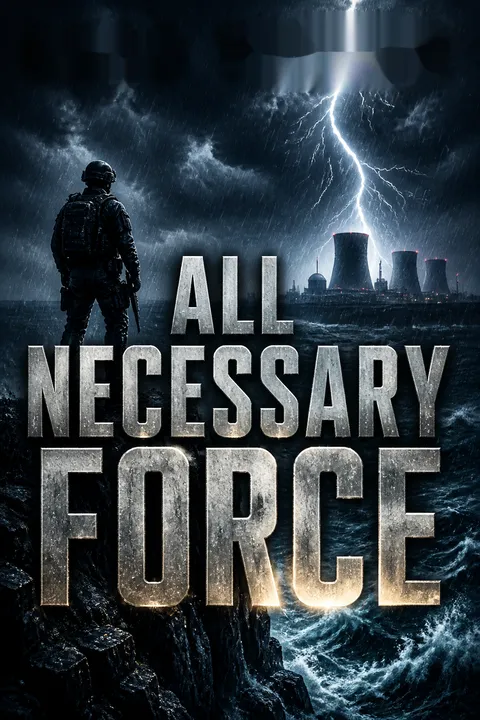
All Necessary Force is built around a problem that neither Pike’s skill nor the Taskforce’s secrecy can solve cleanly: how to use violence in defense of others without allowing violence to become its own justification. The novel places this question in two linked arenas. The first is institutional. Ellis’s betrayal shows that state power can conceal self-interest beneath national purpose, while the Oversight Council’s arguments reveal how emergency authority can erode the safeguards meant to restrain it. Pike is not wrong that delay can cost lives, but the story refuses to make his urgency automatically virtuous. His torture of the Chinese agent exposes how grief can turn a sound operational instinct into a private appetite for punishment.
The second arena is intimate. Jennifer’s development is not a simple conversion from civilian to operator. She learns to fight, chooses to remain, and makes lethal decisions, yet she continues to ask what those choices mean. Her moral attention is a form of operational intelligence: she notices the captive girls, the child in the market, and the possibility that a team can win its mission while losing sight of the people it claims to protect. Pike’s growth depends less on abandoning force than on accepting a limit outside himself. Jennifer becomes a partner who can identify when his judgment is failing, but the ending makes clear that she cannot make his choices for him.
The novel’s title evokes the legal language of authorization, but the story tests the phrase against the people who must enact it. Necessary force may stop a catastrophe, yet necessity does not erase responsibility. The grid attacks give that dilemma material scale: a virus and a handful of insiders can turn ordinary infrastructure into a weapon, and a delay in response can multiply harm. At the same time, the covert response risks creating a power that answers only to its own certainty. The book’s most durable question is therefore not whether force is ever required. It is whether those who wield it can remain answerable to evidence, human consequences, and the possibility that they are wrong.
Review Summary
All Necessary Force received mostly positive reviews, with an average rating of 4.20 out of 5. Readers praised the improved writing, realistic action scenes, and character development, especially for Jennifer Cahill. The book was described as fast-paced and thrilling, with a complex plot involving terrorism and covert operations. Some criticized the technical details and occasional pacing issues. Many found it superior to the first book in the series and looked forward to continuing with Pike Logan's adventures.
People Also Read




Characters
Pike Logan
The wounded field leaderPike is a former elite operator whose family was murdered while he was deployed, leaving grief and anger close beneath his professional composure. He now runs Grolier Recovery Services with Jennifer, using the archaeological cover to support Taskforce missions. He trusts action more readily than institutions and is willing to accept personal risk when bureaucracy threatens to slow a response. That decisiveness makes him effective, but it also makes him dangerous when private pain enters a mission. His relationship with Jennifer forces him to confront how he uses violence, how often he mistakes control for judgment, and whether he can accept another person’s moral scrutiny without treating it as weakness.
Jennifer Cahill
The clear-eyed newcomerJennifer is an archaeologist with a sharp eye for people, places, and overlooked details. Pike trains her for Taskforce work, but she is not simply seeking a more dangerous version of her old life. Her abusive marriage has taught her how fear can distort a person’s choices, while her scholarship gives her curiosity and patience that the operators sometimes lack. She can climb, observe, improvise, and fight when cornered, yet she remains troubled by what violence asks her to become. Jennifer’s partnership with Pike is built on admiration and attraction, but she insists that competence does not excuse cruelty and that loyalty must leave room for disagreement.
Hassan Rafik
The patient plotterRafik is an experienced al Qaeda operative whose hatred of Western power grew from the disappearance of his parents and his own experience of state torture in Algeria. He interprets political conflict through a rigid religious and strategic lens, and he is skilled at turning personal grievance into organized violence. Rather than recruit only from familiar networks, he seeks American converts in prison, valuing their local identities and criminal experience. Rafik is pragmatic about alliances when they serve the attack, even as he claims moral certainty. His confidence is undercut by the complexity of a plan that depends on pilots, criminals, former inmates, and systems he cannot fully control.
Keshawn Jackson
The recruited insiderKeshawn is a former gang member and ex-convict who has built a disciplined life after discovering Islam in prison. His utility job gives him access to the power infrastructure, and Rafik sees in him the rare combination of local credibility and willingness to use violence. Keshawn wants a cause large enough to transform his past into service, but his convictions coexist with emotional attachment and private doubt. His relationship with Beth reveals how much ordinary affection remains possible within him, even as he chooses a mission that demands secrecy and sacrifice. Keshawn’s story tests the difference between religious belonging and a leader’s exploitation of someone seeking purpose.
Kurt Hale
The commander carrying griefKurt commands the secret Taskforce and bears the unresolved absence of his father, Chris Hale, lost on a covert mission in Cambodia. He is close to Pike and to President Warren, but his position requires him to balance loyalty to people he trusts against the danger of an organization operating outside normal law. The recovered camera makes his private grief operationally relevant, drawing him into a betrayal that predates the Taskforce itself. Kurt is careful about oversight because he understands that good intentions do not prevent institutional abuse. He wants decisive action, yet knows the organization’s authority must be bounded if it is to remain worth defending.
Chris Hale
The missing SOG leaderChris Hale is a Special Forces team leader on a secret reconnaissance mission in Cambodia in 1970. He is observant, disciplined, and responsible for a small team operating far beyond dependable support. His discovery of foreign advisers at an NVA base makes his mission unusually valuable, but his first concern remains getting his men out alive. His choices establish the story’s early model of responsibility under fire and connect Kurt’s family history to the later intelligence plot.
Richard Ellis
The polished politicianEllis is a veteran politician and former CIA case officer who sits on the House Intelligence Committee. He is socially skilled, careful about appearances, and accustomed to treating political and intelligence work as games of risk and leverage. His experience gives him a sophisticated understanding of surveillance and institutional blind spots. He values access and influence, while keeping a private boundary between the kinds of secrets he is willing to trade. That self-image shapes his decisions and makes him more vulnerable to pressure than he expects.
President Payton Warren
The burdened decision-makerPresident Warren is one of the few people who knows the Taskforce exists. His trust in Kurt gives him a personal connection to the organization, but he created oversight safeguards because he understands the danger of concentrating covert power in one commander. As the threat escalates, he must weigh immediate lives against constitutional and political consequences. Warren is neither a detached symbol nor an untroubled authority; he knows that every decision may protect the country while exposing the principles he is charged with protecting.
Han Wanchun
The Chinese intelligence officerHan is a colonel in China’s People’s Liberation Army who operates behind the respectable façade of a technology corporation. He is attentive to evidence and strategic opportunity, noticing that the Sudan refinery strike required a capability the rebels likely did not possess. Han is less interested in the political suffering around the refinery than in the technology that produced the damage. His cool assessment helps transform a covert American experiment into an international contest over weapons and influence.
Brett Thorne
The covert field operativeThorne is a CIA operative assigned to work with Sudanese rebels against a Chinese-backed refinery. He is practical, physically capable, and skeptical of the fighters’ discipline, but he knows that his own mission is built around a narrow political calculation. His decision to use the experimental device succeeds tactically while producing a far larger explosion than he anticipated. Thorne’s episode shows how an operative can be competent in the moment and still unleash consequences beyond his control.
Kamil
Rafik's trusted lieutenantKamil is Rafik’s longtime associate, shaped by conflict in Algeria and Afghanistan. He is more cautious than Rafik and more alert to the moral compromises demanded by the operation. His dealings with European criminals and suppliers expose him to people whose appetites have little to do with the cause he serves. Kamil’s loyalty is real, but it does not erase his capacity for revulsion or doubt. He is a reminder that shared ideology does not make two men psychologically alike.
Noordin Sungkar
The Jakarta facilitatorNoordin is a Jemaah Islamiyah facilitator who operates a travel agency in Jakarta and has connections to aircraft and international travel. His business gives him a plausible civilian presence while drawing the attention of Taskforce investigators. He is not the central strategist, but his movements and contacts provide the trail that carries Pike’s team from Indonesia toward Egypt and Europe.
Knuckles
Pike's former secondKnuckles is an experienced operator who once served as Pike’s second-in-command and now leads the team. He is skeptical of Jennifer at first, but his firsthand experience with her gradually shifts his judgment. His loyalty is practical and deeply personal: he wants the team to work, and he is willing to admit when someone has earned its trust. Knuckles also represents the bonds that make the Taskforce more than a collection of specialists.
Bull
The steady team operatorBull is a member of Knuckles’ team, valued for his calm presence and practical competence. He accompanies Pike and Jennifer on the early missions and helps establish the group’s cautious acceptance of their new partner. His presence makes the Cairo operation feel like a team undertaking rather than Pike’s private crusade.
Beth
Keshawn's human attachmentBeth is a supermarket checkout clerk, a churchgoer, and a warm, persistent presence in Keshawn’s life. She treats his reserve as shyness rather than danger and hopes their relationship can become more open. Her trust exposes the ordinary human connection Keshawn is trying to keep separate from his clandestine purpose.
Chase
Jennifer's abusive exChase is Jennifer’s former husband, a physically imposing man who uses charm and intimidation to get what he wants. His demands for money reopen the fear Jennifer has worked to overcome. He represents a personal threat that cannot be handled by treating every conflict as a military operation.
Draco Ljustku
The Albanian crime bossDraco is a Kosovo-born crime lord whose organization spans prostitution, trafficking, and arms deals. Scarred by his past and proud of his power, he treats other people as instruments of business. His alliance offers Kamil access to explosives, but the arrangement demands moral compromise from men who claim to serve a higher purpose.
Abdul-Majid Mohammed
The Montreal imamMohammed is a Muslim cleric in Montreal whose preaching and connections bring him to the attention of Canadian authorities. He is connected to Rafik’s American network, though investigators initially have only fragments about his role. His presence points toward the domestic part of the plot and the danger of mistaking suspicion for proof.
Plot Devices
Chris Hale's camera
A past preserved on filmThe battered Nikon recovered in Cambodia contains film taken during Chris Hale’s 1970 mission. Its images are damaged by time and climate, so its meaning emerges only after digital restoration and careful comparison. The camera first matters to Kurt as the last physical trace of his father, then becomes evidence that identifies Richard Ellis and connects an old betrayal to the present-day EFP transfer. It turns family memory into a practical investigative lead without making that memory emotionally simple.
Explosively formed penetrators
Small plates, devastating reachThe EFP system pairs shaped metal plates with explosive charges and aiming equipment. In this story, a nanotechnology-enhanced plate can strike armor from a distance, making the weapon far more compact and dangerous than a conventional explosive charge. The components are stolen from a secret transfer, then joined to SEMTEX and later C-4. Their power links the Sudan operation, Ellis’s dealings with China, Rafik’s attempt to damage the electrical grid, and the final threat to a nuclear reactor dome.
The grid virus
Disable the system's reflexesRafik’s recruits insert malicious software into utility systems from inside their workplaces. The virus interferes with early-warning and automated load management, leaving human operators to respond to outages without the grid’s normal rapid adjustments. The code alone cannot destroy a transformer, so it works in combination with coordinated physical attacks. That division of labor is central to the plan: insiders provide access, the virus creates cascading vulnerability, and EFPs damage the equipment that keeps electricity moving.
Grolier Recovery Services
An archaeological cover with reachPike and Jennifer’s company provides a credible reason to travel to historically significant places, build foreign contacts, and support archaeological projects. It is meant to camouflage Taskforce personnel and create a civilian record for future movement. In this story, the cover carries Pike and Jennifer to Cambodia, then gives them a plausible presence abroad as missions unfold. The company also embodies a structural tension: it was designed to support operations, but Pike and Jennifer repeatedly find themselves acting as operators rather than remaining safely behind the cover.
Phones and hidden signals
Fragments become a trailThe investigation relies on disposable phones, Bluetooth transfers, cell-tower patterns, a keylogger, a locker card, and a laptop’s cellular connection. None provides a complete answer alone. The team combines small traces to locate suspects, identify a flight route, and connect an attacker’s utility equipment to Calvert Cliffs. The same technological channels can mislead or fail: targets discard phones, disable GPS, and exploit crowded networks. The device shows how intelligence work is less a matter of omniscience than of joining incomplete evidence quickly enough to matter.
Pike Logan Series

About the Author

Download PDF
Download EPUB
.epub digital book format is ideal for reading ebooks on phones, tablets, and e-readers.








