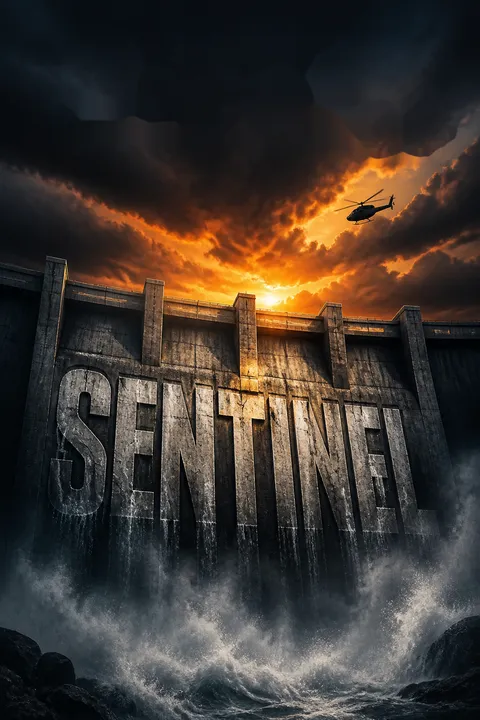


Plot Summary
Prologue
At Togo’s Chinese-built port, intelligence officer Kang Shikun receives a shipload of weapons and the first twenty-one mercenaries led by South African contractor Conrad Tremaine. Kang’s security-company identity hides his work for China’s Ministry of State Security. Tremaine is tasked with training a Togoland rebel force, then recruiting more fighters, including former Russian mercenaries.
He knows Kang has previously treated contractors as expendable, but accepts the job because the pay is extraordinary. The cargo includes rifles, machine guns, ammunition, and equipment enough to make an improvised army look dangerous. Before dawn, the convoy slips inland, carrying a coup’s weapons into Ghana.
The opening makes logistics the first instrument of violence. The weapons arrive through a port built with Chinese loans, so economic leverage and armed force occupy the same landscape before the plot’s human cost appears. Kang and Tremaine work together while withholding motives and information from one another, establishing a system in which every participant is useful but disposable. Tremaine’s memory of dead contractors gives the operation an early moral measure: its organizers count success by political result, while the men they hire count it in bodies. The prologue’s machinery is quiet, deliberate, and already aimed at a country that does not know it is under attack.
Jalalabad's Long Shadow
Nearly a decade earlier, contractor Josh Duffy rides through Jalalabad with Tremaine, Mike Gordon, and Andy Caruth when a roadside bomb flips their armored vehicle. Under fire, Josh reaches an abandoned machine gun and uses it to drive off the attackers. Tremaine refuses to retreat because the truck carries stolen rifles, keeping the team exposed until Caruth is shot.
Josh cannot save him. The memory returns years later in a nightmare, where Tremaine puts Josh in a body bag after their argument. Awake in his Virginia home, Josh crosses the bedroom on a crutch, his left leg missing below the knee, and tries not to wake his wife. He has learned to hide panic, not to stop it.
Josh’s competence and injury are established together, but the defining wound is not simply the amputation. He can function under fire, make decisions, and save lives; what he cannot control is the aftermath that returns when he is alone. The remembered argument with Tremaine reveals a second source of distress: Josh knows that survival sometimes depends on refusing an order, yet the cost of that refusal can be another person’s death. His quiet concealment from Nichole is an effort to protect family life, but it also keeps his trauma private and therefore difficult to treat.
Tremaine Buys an Army
In the Central African Republic, Tremaine approaches Lev Belov, a former Russian military officer left adrift after Wagner’s African operations fracture. Tremaine offers Belov a place in Sentinel Security, the renamed company that once fought against Russian forces in Congo.
The contract promises high weekly pay, a completion bonus, and work in Togo before a direct-action mission across the border in Ghana. Tremaine will not name the target or the client, but Belov understands the offer: his men can avoid returning to Russia’s war and earn money in Africa.
He agrees to recruit experienced fighters. The decision turns old enemies into employees and gives Kang the additional force he needs to disguise a rebel uprising as a much larger threat.
Belov’s choice is neither ideological nor reconciliatory. He and Tremaine do not forgive their shared past; they recognize that mercenary labor makes former enemies interchangeable when the wages are high and the next alternative is worse. The scene also sharpens Tremaine’s method: he recruits men by accurately reading their vulnerability, then limits what they know. The contract’s attractive certainty of pay contrasts with its strategic uncertainty. For Belov’s men, the work is a way to defer a return to a country at war; for Kang, their dispossession is an available military resource.
A Posting Earned in Chaos
Josh is trying to build a safer life with Nichole, their children, and a State Department job when an unscheduled protection detail takes him to a protest near the Turkish ambassador’s residence.
EU diplomat Johanna Aldenburg’s daughter, Ria, is caught between protesters and an aggressive Turkish security contingent. Josh pushes through the violence to reach her, disarms an attacker, and helps Special Agent Millibrew get Ria back to the armored vehicle. A blow to the head sends him to hospital.
Nichole arrives worried, then shares the news she has been waiting to give: her first Foreign Service posting is Ghana, where Josh can also serve with Diplomatic Security. The family’s move promises stability, though Josh’s old work has found him again.
The incident lets Josh’s past skill return before he has fully decided whether he wants it. His intervention is not a relapse into contractor life so much as an automatic response to a person in immediate danger. Nichole’s posting then turns the rescue into a hinge: the couple’s professional lives will reunite in Ghana, but so will Josh’s security instincts and the risks he hoped to leave behind. Their domestic humor and shared trust do not erase the tension between them. Nichole recognizes that Josh’s work can injure him, while Josh still treats danger as manageable if he keeps it contained.
Gorski Names the Danger
In Accra, Josh settles into embassy security work and prepares for a public tour with Ambassador Jennifer Dunnigan, EU representative Aldenburg, and Ghanaian President Francis Amanor.
At a reception, CIA operations officer Bob Gorski approaches him with concerns about Chinese influence, online agitation, and a Togoland rebel leader named Mamadou Addo. Gorski has also seen Tremaine near the Ghanaian border. Josh recognizes the name from Afghanistan and tells Gorski that Tremaine once tried to involve him in a weapons theft that ended with a contractor dead.
Regional Security Officer Jay Costa dismisses Gorski’s warning as his familiar habit of connecting weak clues. Josh keeps the information from Nichole, but Tremaine’s return unsettles his confidence in the new life.
The warning matters because it arrives in the language of bureaucratic uncertainty. Gorski has a pattern of overestimating danger, so Costa’s skepticism is reasonable, yet Josh’s personal knowledge of Tremaine makes the warning harder to disregard. The scene also shows how institutional caution can become a blind spot: the embassy has a clear security plan for a visible diplomatic tour, but little appetite for an invisible political operation. Josh’s decision not to tell Nichole is protective in intention, though it repeats his old habit of managing fear alone. His private knowledge becomes a burden before it becomes actionable intelligence.
A Coup With Spare Faces
Kang’s plan gives each ally a different story. He equips Addo’s Dragons of Western Togoland and uses Tremaine’s contractors to make the small rebel force appear formidable.
He secretly arranges for Iranian officer Hajj Zahedi to bring extremist fighters into Ghana, while recruiting General Kwame Boatang through the general’s fear of corruption investigations. Boatang believes he will defeat the rebels and emerge as the country’s savior. Addo expects to take power himself and assumes China will reward him.
Kang intends to discard both men after using them, with the chaos and a staged military response making Boatang’s takeover appear legitimate. The planned first strike will seize Akosombo Dam, cut electricity, and disrupt communications before the rebels advance on Accra.
Kang’s advantage comes from giving each participant a coherent but incomplete explanation. Addo sees national liberation, Boatang sees escape from prosecution, Tremaine sees a lucrative contract, and Zahedi sees an opportunity to weaken Western influence. Their motives are not compatible, but the plan does not require them to be. This is a precise portrait of political manipulation: a conspiracy can function without loyalty when each actor believes the outcome serves a private need. Kang’s control is therefore less about commanding every fighter than about controlling timing, information, and the public story that will explain the violence afterward.
Opoku Finds the Weapons
At the Volta River Authority, Sergeant Isaac Opoku notices a masked passenger in a crowded van studying his River Command uniform. He records the vehicle’s plate after the stranger refuses a routine identity check.
With his superintendent’s reluctant permission, Isaac traces the van to a limestone mine and brings three corporals to investigate. Inside a warehouse, they find weapons and trucks painted to resemble VRA and River Command vehicles. The masked man, Russian mercenary Lev Belov, opens fire.
Two corporals are shot immediately; the third dies as Isaac and another officer try to escape. Isaac is grazed, tumbles into the quarry, and survives with his pistol. His discovery compromises Kang’s preparations, but the attackers flee before Isaac can alert the dam.
Isaac’s intervention begins as ordinary professional vigilance, not as a plan to become a hero. He notices an anomaly, records evidence, and pushes past a superior’s indifference because the diplomatic visit is imminent. His courage is inseparable from the cost of limited authority: he is sent to investigate with a few officers and pistols, while the conspirators have rifles, disguises, and a larger operation. The fake vehicles and uniforms turn trust into a tactical weakness. The attack also makes the threat local and personal for Isaac, who has a young family and discovers that the people preparing violence can pass as the institution he serves.
Akosombo Goes Dark
Tremaine learns that the quarry encounter has left a River Command officer alive, and argues that the planned Saturday assault must begin immediately. Kang agrees, though the new timing means the diplomatic delegation may still be nearby.
Sentinel and the Dragons reach Akosombo in trucks disguised as VRA vehicles and uniforms. They seize the police station, administration building, and power house, then force the plant staff to shut down Ghana’s electrical grid. Communications fail as Chinese technicians jam satellite links and disrupt networks.
The delegation, delayed by a storm near Tamale, is redirected to the dam for its short press event. The conspirators have taken control, but the schedule change brings President Amanor and the foreign visitors straight into the danger zone.
The coup’s first success is also the mistake that makes it visible. Kang’s operation depends on a carefully controlled sequence, but Isaac’s discovery forces Tremaine to substitute speed for preparation. The result is a blackout that appears to support the rebels’ power, yet it also collides with the delegation’s altered itinerary. The dam is not just infrastructure in this story; it is a physical and political choke point whose control can silence a country. By forcing workers to operate the facility under threat, the attackers convert technical expertise into hostage labor. Their plan depends on the very people it endangers.
A Stage Becomes an Ambush
The three helicopters land at Akosombo, and the delegation proceeds to the power house for its hurried speeches. Josh studies the supposed River Command officers and notices one man’s empty magazine pouch, a small mismatch in an otherwise convincing disguise.
Across the river, Tremaine sets up a sniper rifle and aims at the platform. Josh catches the glint from the scope and warns the group just before Tremaine fires. The president’s security chief takes the first bullet while shielding Amanor, and a second shot hits another guard.
The disguised rebels then open fire on the delegation. Josh, Benjamin Manu, and the bodyguards return fire while Costa moves Dunnigan toward the power house. A wounded Foreign Service Officer is left behind, and the surviving dignitaries shelter inside as the attackers surround them.
The scene makes perception a form of protection. Josh cannot control the crowd or stop the first shot, but his close attention to equipment turns a nearly invisible inconsistency into a warning. The empty pouch is not proof by itself; it becomes meaningful because he understands how a trained officer would carry ammunition. That detail captures his professional intelligence more than his firepower. The ambush also exposes the limits of a ceremonial security plan. The delegation has been brought to a stage designed for cameras, while the attackers have transformed the site into a firing ground. Josh’s quick judgment buys time, not safety.
The Dam's Lowest Floor
Inside the power house, plant operator Martin Mensah tells Costa that Russian contractors are placing explosives near the turbines. With the delegation trapped, Josh, embassy guard Malike, and two of Amanor’s guards descend to stop them.
Gunfire kills one Ghanaian guard, and the team fights through the lower galleries toward the open turbine hatches. In a freight elevator, Josh and another guard struggle with a Russian and a rebel at close range. A grenade detonates in the car, killing the other defenders and leaving Josh badly injured but alive beneath a dead mercenary.
He kills another attacker when the elevator opens, then climbs the dam’s ladder shaft after the Russian commander, Lev Belov. Josh shoots Belov, takes his rugged tablet containing the operation’s codes, and discovers it has been damaged by the gunfire.
The descent turns an abstract national threat into a bodily problem: explosives sit below the people Josh is assigned to protect, and the route toward them narrows into stairwells, doors, and elevator cars. His decisions are made with incomplete technical knowledge, so the mission becomes less about disarming a device than preventing the people holding its controls from reaching safety. The damaged tablet creates a paradox. It may contain proof of the conspiracy, but it also appears to be the means of detonation, and its condition is uncertain. Josh survives through improvisation, not mastery, carrying both evidence and unresolved danger upward.
Three Helicopters, Two Crashes
While the delegation escapes through maintenance passages, Isaac frees surviving River Command officers and leads them back into the fight. The genuine officers retake parts of the dam, forcing the rebels to defend their positions.
Josh reaches the upper shaft and escapes through a damaged roof, then joins Isaac on the dam. The visitors leave in three helicopters: Amanor’s aircraft gets away first, but Tremaine’s men fire rockets at the others. The EU helicopter is struck and crashes into the Volta River.
The last aircraft, carrying Nichole, Dunnigan, and American personnel, is hit while flying low through the hills and disappears into the jungle. Josh watches its glow beyond the ridge. He takes Isaac’s truck and drives toward the crash rather than waiting for the next rescue team.
The helicopters divide the survivors into separate political and emotional fates. Amanor’s escape preserves a legitimate government, while the destruction of the EU aircraft makes the crisis international and the third crash turns Josh’s protective duty into a personal gamble. Tremaine’s use of rockets also reveals the gap between the planned coup and his appetite for control: he is willing to kill foreign officials to eliminate witnesses and secure his own position. Josh cannot know which aircraft held Nichole, so the rescue drive is not a calculated tactical choice. It is the only action compatible with his role as husband and father.
The Stream's Narrow Exit
Josh and Isaac reach the wrecked helicopter in a rainstorm and find Nichole alive, injured, and guarding a cluster of survivors. Ambassador Dunnigan has a badly hurt leg, Chad Larsen is wounded, and several diplomats and dam workers cannot walk. Tremaine’s men search the jungle for them, so the group abandons the crash site and follows Isaac through thick growth.
When the pursuers close in, Josh leads the survivors into a swollen stream. He is swept downstream, but manages to tie a line across the current near a bridge, helping the rest of the group reach the bank. At the road, they ambush a rebel squad, take its vehicles, and continue toward Accra with the wounded and the stolen tablet.
The stream is a dangerous escape route because the group has no safe route left. Josh’s choice is a practical calculation made under pressure, but it also carries a psychological risk: the injured depend on him to lead them into water he cannot predict. His prosthesis, already a daily adaptation, becomes a specific liability in the current, while Isaac’s local knowledge and machete skills make the passage possible. The rescue succeeds through cooperation rather than a single exceptional fighter. Josh creates the line, Isaac navigates, and the others hold one another together. The scene replaces the isolated survivor with a leader who must keep a whole group moving.
The Capital Becomes a Board
As Josh’s group makes its way south, Zahedi’s extremist cells attack police and military targets across Accra, while the Dragons advance on the capital along two routes. The attacks overwhelm local forces and help conceal the larger coup.
Kang watches from the Aburi Hills, where he has power, satellite communications, and a view of the city. CIA officer Gorski finally recognizes the coordinated pattern and recruits local surveillance specialists to search for Kang’s operations center.
Meanwhile, Central Command, led by Boatang, drives south with a large mechanized force. It defeats rebel units as it enters Accra, though Boatang still intends to use the crisis to seize political power. Josh’s convoy reaches the embassy after a dangerous, prolonged journey through the fighting.
The coup depends on producing several emergencies that appear unrelated. Extremist attacks, rebel advances, the blackout, and the deployment of Central Command create noise in which the real contest for power can hide. Gorski’s value is his ability to connect these events, but he can do so only after the pattern becomes visible and the first casualties have already accumulated. Boatang’s forces function both as a response to disorder and as a political instrument. The military’s arrival may defeat the rebels while still advancing the conspirators’ purpose. The chapter’s central irony is that restoring order can itself be part of the coup.
The Children Are Taken
At the embassy, Josh and Nichole expect to reunite with Mandy and Huck, who are protected at their apartment complex by their nanny, Portia Djangba, and her father, Henry. Instead, a police officer who works part time for the Americans claims he has been sent to bring the children to their parents. Portia follows, sensing something wrong, but masked men arrive in a black van and seize Mandy and Huck.
The officer is shot, and Henry is wounded trying to stop the kidnapping. Portia reaches the embassy and tells Nichole what happened. Josh immediately understands that Tremaine is using the children to recover the tablet. Gorski has located Kang’s suspected safe house in the Aburi Hills, but does not want Josh to compromise the CIA operation.
The kidnapping weaponizes trust rather than simply defeating security. The conspirators exploit the family’s expectation that embassy-linked staff can safely transport the children, and the forged errand works because it resembles routine care. Portia’s suspicion and Henry’s intervention show that the family’s safety rests on local relationships as much as formal protection. For Josh, the threat changes the meaning of the tablet: evidence that once mattered to the state is now leverage over his children. The conflict between the CIA’s broader operation and his immediate need is not a debate about courage. It is a collision between institutional priorities and the intimate obligation no procedure can replace.
Masks Cross the Garden Wall
Josh, Nichole, and Isaac borrow unmarked clothing and body armor, then approach Kang’s walled villa in the Aburi Hills, pretending to be contractors. They leave their vehicle before the gate and climb over the rear wall.
Inside, the captured children meet Chen Jia, a Chinese technical contractor who is frightened by the violence around her. Jia unlocks a bedroom window and tells Mandy and Huck how to reach the garden. The children slip outside, but Chinese guards catch them before they can reach the wall.
Tremaine discovers the escape, drags Jia out with the children, and prepares to use them as hostages. Josh and Nichole have crossed the perimeter, but the rescue has become a confrontation in the open, with Tremaine holding the family’s choices in his hands.
The infiltration is built around imitation and vulnerability. Josh’s disguise lets him pass a first layer of scrutiny, but it does not make him invisible; his family still has to move through a compound designed to watch its own boundaries. Jia’s decision to help the children is small in scale and immense in consequence. She is not a trained rescuer, yet she acts against the people controlling her because she recognizes the children’s fear and has begun to imagine her own future as a parent. Mandy’s attempted escape reflects the self-control her father taught her, but she remains a child confronting armed adults.
Duffy Turns the Knife
Tremaine takes the children and Jia onto the villa’s patio, demanding to know who helped them escape. Mandy falsely points to a masked Russian guard, drawing Tremaine’s attention away from the actual route. Josh shoots the Russian from the tree line, then hits Tremaine’s armor as the contractor retreats inside.
In the house, Josh and Nichole fight through armed guards while Isaac covers them. Addo appears with a rifle, but Isaac kills him before he can fire toward the children. Tremaine uses Huck and Jia to force a trade, then Josh tackles him down the stairs.
They fight with a wrench and knife in the garage; Josh drives the blade into Tremaine’s neck. Nichole and Isaac get the children and Jia out through the back, and the family escapes the compound as the Ghanaian army attacks from the front.
Mandy’s lie is the smallest tactical move in a battle otherwise defined by rifles and force. It gives Josh a moment to act, showing how the children are not merely objects being protected, even though the responsibility for their safety remains with adults. Tremaine’s death comes through a struggle at close range, where Josh’s strength is not enough by itself; he wins by changing the angle of the fight and using the attacker’s own weapon. Nichole’s role is equally active: she fights beside Josh, directs the children, and helps extract Jia. The family’s rescue is a joint act, not a lone hero’s victory.
The Coup Loses Its Crown
Josh, Nichole, Isaac, the children, and Jia reach the U.S. embassy, where doctors treat Josh’s throat wound and Isaac’s injuries. The damaged tablet goes to CIA officers Gorski and Richard Mace, who recover names and operational details from it. Chen Jia explains what she knows about the operation. Ghana’s forces defeat the Dragons, and President Amanor remains in office.
General Boatang is arrested after evidence reveals his role in Kang’s plan to turn the crisis into a path to power. Kang is captured while trying to cross into Togo. The United States does not send combat forces into Ghana, and the Duffy family is ordered back to Washington. Their immediate danger ends, but their new life in Accra is over almost as soon as it began.
The resolution refuses the easy fiction that one rescued family settles the political crisis. The state’s survival depends on evidence, local intelligence, and Ghanaian forces, while the tablet gives investigators a way to connect the mercenaries to the larger scheme. Kang’s plan collapses because the staged events no longer support his intended public narrative. Yet the Duffys pay a quieter price: the posting that promised a stable family life is terminated by the very violence Josh helped expose. Safety is restored through removal, not repair. The ending therefore treats professional success as morally mixed, since protecting the people he loves also means leaving the place they had begun to call home.
Epilogue
Five days later, the Duffys share cupcakes with Isaac Opoku, his wife Abina, and their infant son. Gorski reports that Kang has been arrested at the Togo border, Boatang is in custody, and Amanor remains president. Jia, whose knowledge helped investigators reconstruct the coup, will receive a visa to have her baby in the United States.
The Duffys are being recalled to Washington, though they are reluctant to leave Ghana. Isaac credits Josh with the same loyalty Josh showed him, and the families settle into an ordinary afternoon together. Josh has gone several nights without a nightmare, but he does not know whether the relief will last. For now, Nichole grills, the children play, and he lets himself stay present.
The epilogue measures recovery through ordinary acts rather than a declaration that trauma has ended. Cupcakes, coffee, children playing, and Nichole at the grill restore the domestic world that the coup briefly made unreachable. Isaac’s friendship also changes the meaning of rescue: the family did not survive through Josh’s skill alone, but through reciprocal loyalty between people whose countries and institutions did not protect them equally. Jia’s new future contrasts with Kang’s geopolitical calculation, though it does not erase her complicity. Josh’s few quiet nights offer hope without certainty. The book allows happiness to be real while leaving the nervous system, and the future, unresolved.
Analysis
Sentinel treats political violence as an engineered story. Kang does not merely organize armed groups; he arranges for each group to believe a different account of what is happening. Addo expects revolution, Boatang expects rescue and power, Tremaine expects a paid operation, and the extremists expect their own ideological victory. Their separate motives make the conspiracy possible, but they also make it unstable. Once the timing slips, no one shares enough information to manage the consequences.
The book’s most persistent contrast is between visible security and actual safety. Diplomatic details, uniforms, gates, vehicles, and emergency procedures give people confidence, yet the attackers exploit those forms by copying them. Josh and Isaac survive because they look past official appearances and notice small material facts: a misplaced magazine pouch, a masked passenger, an unfamiliar weapon, a false insignia. Their competence is not omniscience. It is disciplined attention under uncertainty.
Josh’s emotional arc centers on the difference between functioning and healing. His experience makes him valuable in a crisis, but every successful return to combat reinforces the pattern that has kept him from discussing his trauma. Nichole’s presence prevents the story from equating love with passive support. She questions his evasions, shares the danger when circumstances require it, and insists that the family’s safety is a shared responsibility. Their marriage becomes a working partnership rather than a refuge untouched by violence.
Isaac broadens the moral center beyond the American team. His concern begins with a suspicious van and grows into a defense of colleagues, infrastructure, and strangers. His loyalty is local and reciprocal, not a convenient symbol of national gratitude. The novel’s final emphasis on family life does not promise that trauma or political instability has vanished. Instead, it offers a narrower and more credible hope: people who have endured violence can still return to one another, share a meal, and remain present for an ordinary day.
Review Summary
Sentinel by Mark Greaney is the second book in the Armored series, following Josh Duffy and his wife Nicole as they work for the US State Department in Ghana. The novel is praised for its intense action, well-researched plot, and relatable characters. Readers appreciate the fast-paced narrative, realistic geopolitical elements, and Greaney's skill in crafting suspenseful scenes. While some found it too long or formulaic, most reviewers highly recommend it for fans of political and military thrillers.
Characters
Josh Duffy
Wounded protector and fatherA former soldier and high-threat contractor, Josh now works as a Diplomatic Security agent. He has a prosthetic lower leg and persistent combat-related nightmares, yet he dislikes being treated as fragile and is reluctant to name his own distress. His instinct is to notice details, take responsibility, and act before danger reaches someone else. That instinct makes him effective, but it also keeps him close to the violence he claims to have left behind. His marriage and children give him a life beyond the mission, while his difficulty sharing fear tests how fully he can inhabit that life.
Nichole Duffy
Diplomat and combat veteranJosh’s wife is a disciplined Foreign Service officer and former Army helicopter pilot. She is intellectually ambitious, organized, and direct, often trying to build stability through planning and self-improvement. Her care for Josh is active rather than sentimental: she notices his sleeplessness and challenges his habit of minimizing it. She understands danger from her own military experience, which lets her recognize both Josh’s competence and the cost of relying on it. As a partner and mother, she seeks a life in which work, family, and safety can coexist, even when those demands pull in different directions.
Mandy Duffy
Observant older daughterJosh and Nichole’s eight-year-old daughter is curious, perceptive, and more emotionally observant than the adults sometimes expect. She recognizes when Portia is withholding information and tries to protect her younger brother without frightening him. Her father’s lessons about staying calm under threat give her a practical vocabulary for fear, but she remains a child who wants her parents nearby. Mandy’s quick attention to people’s expressions and behavior makes her an active presence rather than a passive dependent.
Huck Duffy
Young son and close observerHarry, known as Huck, is Josh and Nichole’s six-year-old son. He is affectionate, curious, and still young enough to look to Mandy for cues when adults become tense. His wish to see a monkey captures his openness to the family’s move abroad, while his trust in his parents anchors their domestic life. Huck does not have Mandy’s practiced composure, but he can follow her lead and express his attachment plainly.
Isaac Opoku
River Command family manA sergeant with the Volta River Authority’s River Command, Isaac is a former army special forces soldier and a new father. He is alert to irregularities because his training has taught him to read people and situations closely, yet he remains grounded in ordinary responsibilities to his wife and infant son. Isaac’s commitment to his colleagues is strong, but it is not abstract patriotism: he acts because people he knows are in danger. His practical knowledge of the dam region and willingness to share risk make him a crucial counterpart to Josh’s experience.
Kang Shikun
Chinese intelligence strategistA senior Chinese intelligence officer operating under a private-security cover, Kang is composed, patient, and skilled at manipulating incentives. He thinks in sequences, using different people’s private ambitions to make them serve a shared plan without revealing its full design. His control depends on withholding information as much as issuing orders. Kang regards economic access and political influence as parts of the same strategic contest, and he is comfortable treating human lives as expendable pieces. His calm demeanor is not a lack of emotion so much as a practiced refusal to let others see where his calculations may be failing.
Conrad Tremaine
Mercenary commander and opportunistA former South African military officer, Tremaine is a seasoned contractor who prizes competence, money, and control. He can read the battlefield and recruit people by understanding what they lack, but his confidence repeatedly narrows his sense of consequence. He treats loyalty as a temporary arrangement and has little patience for subordinates who question his orders. His history with Josh is personal as well as professional: both men know what happens when a commander’s decisions leave others exposed, though they draw very different lessons from it.
Lev Belov
Exiled Russian field leaderBelov is a former Russian military officer and Wagner contractor who remains in Africa after his former organization fractures. Practical and guarded, he measures work by its pay, risk, and prospects for his men. His past conflict with Tremaine makes their new business arrangement uneasy from the beginning. Belov understands that mercenaries are often treated as disposable, yet he continues to choose contracts that keep him away from the dangers waiting at home.
Bob Gorski
Restless CIA Africa handGorski is an experienced CIA operations officer with a long history in Africa and a reputation for pursuing worst-case scenarios. His instincts can lead him to see connections before colleagues accept them, but the same habit makes it easy for others to dismiss him. He is candid about his personal failures and does not pretend intelligence work leaves room for a conventional family life. Gorski values people who understand what danger looks like in practice, which is why he seeks Josh’s help rather than relying only on official channels.
Jay Costa
Accra security chiefCosta is the Regional Security Officer at the U.S. embassy in Accra and Josh’s supervisor. Experienced, sociable, and pragmatic, he knows how to coordinate protection details without making them dominate the room. His skepticism toward Gorski reflects a professional preference for actionable intelligence over speculative warnings. Costa takes responsibility for his team and understands that protecting diplomats means balancing protocol with rapid decisions.
Chad Larsen
Steady deputy security agentLarsen is an Assistant Regional Security Officer and Josh’s colleague. A former Marine infantryman, he is familiar with weapons and combat sounds, but his manner is measured rather than showy. He provides practical judgment within the embassy security team and understands that protecting a principal sometimes means holding position while others move. His working relationship with Josh is rooted in professional trust.
Benjamin Manu
Ghanaian embassy investigatorManu is the Foreign Service National Investigator for Diplomatic Security in Ghana and a former local police captain. He knows the country’s institutions and security culture better than the American agents do, and he is willing to question what looks wrong even when the explanation seems routine. Manu’s local expertise gives the embassy’s security work a necessary perspective beyond imported procedures.
Francis Amanor
Ghana's elected presidentAmanor is Ghana’s elderly president, an energetic public figure who has built a close relationship with Western partners. His political importance comes from his ability to represent continuity and popular legitimacy. He is accustomed to ceremonial appearances, but he can also respond directly to people around him. The conspirators view his position as an obstacle because he embodies the government they want to displace.
Kwame Boatang
Ambitious Central Command generalBoatang commands Ghana’s Central Command and is regarded as a capable, popular military leader. He is ambitious and keenly aware of his political exposure, particularly where his dealings with Chinese organized-crime interests could damage his career. His experience gives him confidence in military solutions, while his fear of disgrace makes him vulnerable to offers that promise a path out of legal trouble.
Mamadou Addo
Togoland rebel professorAddo is an academic turned separatist leader who founded the Dragons of Western Togoland Restoration Front. He is articulate, politically ambitious, and skilled at presenting a small movement as a growing popular cause. His education lends intellectual structure to his rebellion, but his desire to lead can outrun his grasp of military realities. He sees the Togoland cause as a route to national power and expects outside support to strengthen it.
Hajj Zahedi
Iranian proxy-force commanderZahedi is a Quds Force officer who operates in West Africa under cover and negotiates with groups whose beliefs differ from his own. He is disciplined, ideologically committed, and willing to make tactical compromises when they serve his objectives. His dealings with Kang show his ability to treat alliances as instruments rather than friendships.
Chen Jia
Chinese technical contractorJia is a technically gifted Ministry of State Security contractor assigned to a covert operation in Ghana. She is intelligent, observant, and accustomed to following orders within a hierarchy that gives her little authority over the larger mission. Her discomfort around the armed men reflects a conscience that has not been fully absorbed by the work. She is also attentive to the needs of people placed in her care.
Jennifer Dunnigan
U.S. ambassador to GhanaDunnigan is a career diplomat known for listening carefully and supporting strong ties between Ghana and the United States. She is experienced in public-facing diplomacy and understands that a diplomatic tour communicates political commitment as much as it announces projects. She trusts her security detail while remaining personally engaged with the people around her.
Johanna Aldenburg
European Union high representativeAldenburg is the EU’s senior foreign-policy representative, a Dutch diplomat whose itinerary brings Western officials into public view across Ghana. She is devoted to her work but also attentive to family obligations, as shown by her concern for her daughter. Her presence connects the local security crisis to the broader diplomatic contest over influence in Africa.
Portia Djangba
The Duffy children's nannyPortia cares for Mandy and Huck while their parents work. She is young, affectionate, and closely connected to the local community through her father, who works at the apartment complex. Her sense of responsibility is practical and personal: she watches the children carefully and is willing to challenge an apparent authority when something feels wrong.
Julian Delisle
EU protection detail directorDelisle leads Aldenburg’s European Union security team. He is professional and decisive, coordinating with the American and Ghanaian teams while keeping his principal’s safety foremost. His work requires him to manage a multinational detail under pressure.
Junior
Tremaine's South African lieutenantJunior is a younger South African contractor under Tremaine’s command. He is an experienced fighter who sometimes asks questions that expose the limits of what the mercenaries have been told. His relationship with Tremaine mixes obedience with a willingness to draw a personal line.
Krelis
Dutch mercenary secondKrelis is a Dutch contractor who serves under Tremaine. He is capable and pragmatic, but more willing than his commander to question whether a proposed action will work. His doubts offer a grounded counterweight to Tremaine’s confidence.
Plot Devices
Borrowed uniforms and vehicles
Make rebels look officialThe conspirators paint trucks with Volta River Authority and River Command markings and dress rebel fighters in genuine or copied police uniforms. The disguise lets them approach the dam and its employees as if they belong there, delaying recognition until the delegation is exposed. Josh notices an empty magazine pouch, while Isaac recognizes a beret worn in a way a real officer would avoid. These small inconsistencies turn professional observation into the defense against a larger deception. The scheme also creates confusion among real officers, who later remove their uniforms to avoid being mistaken for infiltrators.
The communications blackout
Isolate targets and respondersChinese technicians disrupt Ghana’s power and communications while drones jam satellite signals around Akosombo. The blackout prevents the dam’s workers, the embassy, and the delegation from coordinating normally. It also makes the rebels’ movements harder to track and allows Kang to control the information reaching different participants. Because the operation begins early, the power is restored sooner than planned, and this creates a weakness in Kang’s wider strategy. The blackout is therefore both an offensive weapon and a fragile dependency: the coup’s timing requires it to last long enough for the political story to take hold.
The damaged Getac tablet
Carry proof and control codesSentinel’s rugged tablet contains operational details, names, routes, radio codes, and detonation information. Tremaine and Belov need it to coordinate their men and protect the secrecy of the mission. Josh takes it from Belov, but bullets damage the device, leaving its immediate function unclear while preserving its possible value as evidence. Tremaine pursues Josh not only because the tablet may control explosives but because its files can expose Sentinel’s role. Later, CIA specialists recover enough information from it to identify operatives and reconstruct the conspiracy. The object binds the physical threat at the dam to the political investigation in Accra.
The shifted diplomatic itinerary
Bring leaders into the trapA storm near Tamale forces the delegation to change its schedule and visit Akosombo a day early. The detour puts President Amanor, the EU high representative, the American ambassador, and Josh’s security team at the dam just as Kang’s hurried operation seizes it. The schedule change is not part of the conspirators’ plan, but it creates an opportunity Tremaine exploits by targeting Amanor and then the departing helicopters. This device shows how an ordinary logistical adjustment can become decisive when layered onto a covert operation built around exact timing.
The storm-swollen stream
Turn terrain into escapeAfter the third helicopter crashes in the hills, rain and thick jungle prevent the survivors from using roads safely. Josh leads the injured group to a fast-moving stream to evade Tremaine’s searchers. He risks going first, then ties a rope across the water so the others can find the bank after passing beneath a bridge. The stream is perilous and injures people, but it breaks the pursuers’ immediate line of sight and lets the survivors reach vehicles. The natural landscape becomes a temporary route out of a trap that no official rescue can yet reach.
About the Author




Download PDF
Download EPUB
.epub digital book format is ideal for reading ebooks on phones, tablets, and e-readers.








