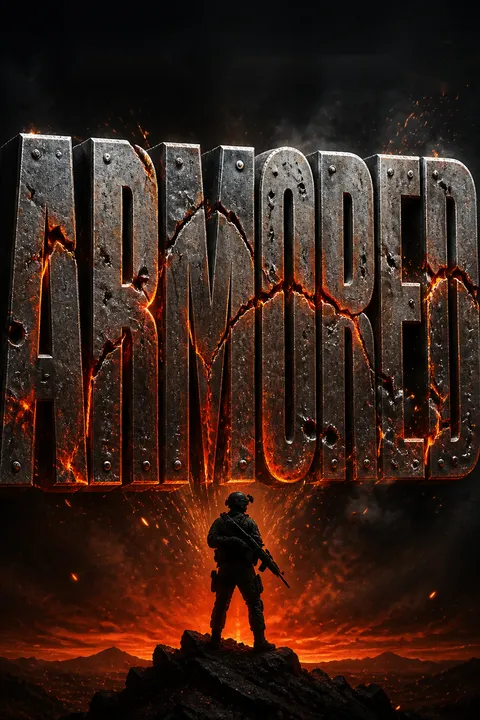


Plot Summary
Beirut's Burning Motorcade
Three years before the main mission, Josh Duffy protects Lebanese presidential candidate Elias Khabbaz and Elias's wife, Rafka, when a bomb destroys their motorcade in Beirut. As gunmen close in, Duffy confirms that Elias and the other protectors are dead, then fights his way back to the Suburban carrying Rafka. His employer orders him to leave her behind because the contract was only for Elias.
Duffy ignores the order. He drives them through gunfire in a stolen delivery truck, but a rifle round shatters his knee. Rafka gets him to a hospital, where surgeons amputate his lower leg after he suffers cardiac arrest. Duffy survives with a prosthesis, but the rescue costs him the work and future he thought he had earned.
The novel begins with an ethical choice that is also a physical catastrophe. Duffy's refusal to abandon Rafka proves that his protective instincts are not merely a job description, but the injury turns that virtue into a source of shame: he comes home alive, yet feels he has failed as provider and professional. The employer's order exposes the contract's moral limits, while Rafka's insistence that the hospital save him reverses the usual protector-protected hierarchy. Their survival is mutual, even though Duffy initially experiences the outcome as personal ruin.
The Mall Cop's Second Chance
Three years later, Duffy works mall security in Virginia, struggling to support his wife, Nichole, and their children, Mandy and Harry. An encounter with an elderly shopper makes him feel how far he has fallen from high-threat work.
Then Mike Gordon, a former contracting teammate, recognizes him at the mall. Gordon is headed to Mexico for an unusually lucrative job with Armored Saint, a company known for poor judgment and worse standards. Duffy admits that his family is buried in bills and asks Gordon to help him get hired.
At the interview, Shane Remmick, the mission commander, rejects Duffy's request for a desk job and offers him a team-leader position instead. Desperate to restore his family's finances, Duffy accepts without a physical assessment.
Duffy's return to contracting is driven less by appetite for violence than by a wounded identity. Mall security gives him work but not the sense of usefulness he associates with protecting people, and the financial strain turns that emotional loss into a practical emergency. Remmick's offer is therefore powerful precisely because it answers both needs at once: income and restored competence. Yet the missing physical test and Duffy's concealed prosthesis make the opportunity unstable from its first moment. His determination is real, but so is the self-deception that helps him accept it.
Cardoza's Three-Sided Game
While Duffy prepares for Mexico, Oscar Cardoza, a consultant who moves between rival cartel leaders, shapes a much larger scheme. Guadalajara's masked leader wants the United Nations mission to fail so the Mexican army will invade the Sierra Madres and weaken the Black Knights.
Cardoza recruits Los Zetas commander Lobo to attack the diplomatic convoy, then bargains with Sinaloa leader El Escopeta for passage through contested territory. The plan depends on stolen Venezuelan Igla-S missiles held by Black Knights chief Rafa Archuleta.
Cardoza intends to move them out, plant them in Sinaloa, and make the rival cartel appear responsible for shooting down Mexican helicopters. He expects the resulting blame and violence to destroy the peace initiative, enrich the conspirators, and buy him a private escape from Mexico.
Cardoza's central instrument is not force but asymmetrical knowledge. He sells each faction a different account of the same operation, making cooperation possible without genuine trust. The missiles are both weapons and evidence, so controlling their location means controlling the story told about the war. His fantasy of retirement gives this manipulation a personal motive: he imagines himself above the violence he profits from, even as every bargain makes more violence likely. The contrast with Duffy is sharp. Cardoza treats people as pieces to move; Duffy accepts danger because he cannot reduce a person to a contract.
A Team Built on Fault Lines
Nichole understands that Duffy's new assignment is mobile, dangerous work, not the harmless security job he first describes. She is furious, but rather than simply forbid him, she uses her former Army experience to train him hard, sharpen his leadership habits, and prepare his equipment.
At Dulles Airport she sends him off with practical supplies and a warning not to let his team exploit uncertainty. In Mexico City, Duffy meets his mismatched crew: blunt former SEAL Wolfson, veteran medic Frenchie, cocky Marine Squeeze, suspicious former Green Beret Cruz, and driver Nascar.
Duffy assigns weapons and duties while hiding his prosthesis. He also learns the UN and Mexican officials plan to meet Black Knights leader Archuleta, with no rapid rescue force available in the mountains.
Nichole's response combines intimacy with disciplined appraisal. She knows Duffy well enough to see that reassurance alone will not change his decision, so she gives him what she can: preparation, structure, and a model of command. Duffy, meanwhile, tries to perform confidence for both his wife and his new team. Concealing his prosthesis protects his chance at the job, but it also isolates him from the people whose trust he needs. The crew's abrasive diversity creates an unstable form of belonging: each man brings skill, but their mutual distrust makes leadership a test before danger even begins.
El Salto Opens Fire
The convoy leaves Mexico City under a Federal Police escort, but Duffy distrusts the masked officers enough to reverse Remmick's order to keep weapons unloaded. After the police withdraw near the foothills, the contractors encounter a bus blocking a road; two grenade rounds clear the way without a fight.
That night, in El Salto, the diplomats dine in a hotel restaurant while the security teams cover the building. Wolfson spots empty police cars in the square just before gunmen fire from behind the bandstand.
Duffy and his crew drag the officials out of the line of fire, while Wolfson and the vehicle gunners return fire. The attackers retreat, but one of Gordon's contractors is killed and civilians are wounded. The mission has shed blood before reaching its destination.
The first attack changes the assignment from precautionary escort to active survival. Duffy's decision to keep weapons ready appears vindicated, but the attack also reveals the limits of vigilance: the team sees the warning sign only moments before the shooting begins. The injury to civilians complicates the contractors' self-image as protectors, especially when their firepower fills a public restaurant. Remmick's focus on restoring control rather than investigating the threat foreshadows a command structure more concerned with keeping the operation moving than understanding what it is becoming.
The Tarahumara Stand Firm
The convoy leaves the highway for rough mountain roads, carrying Dr. Gabriella Flores, an anthropologist who knows the region and its Indigenous languages. She repeatedly warns the contractors that the peace plan ignores local people and will not end cartel control.
When Tarahumara villagers surround the armored vehicles with bows, spears, and old rifles, Remmick orders the convoy to keep moving. Duffy instead leaves the vehicle and joins Gabby on foot, even though his crew has weapons trained on the crowd.
Gabby explains the mission in the villagers' language and tells Duffy to greet them as people rather than threats. Once Duffy signals that the convoy opposes anyone blocking peace, the villagers let them pass. Her intervention prevents the contractors from turning a tense encounter into a massacre.
Gabby contests the security team's habit of treating unfamiliarity as evidence of danger. The villagers' weapons are not an abstract threat: they are tools of survival in a landscape where the state has failed them. Duffy's decision to step outside the armor gives her knowledge a chance to matter, but it also exposes his capacity to revise his own assumptions. The scene makes translation a form of protection. Gabby does not neutralize the villagers; she restores context to their actions, allowing both sides to recognize that the apparent confrontation is partly a failure of communication.
The Road Turns Into War
After a small Sinaloa patrol fires at the convoy, Duffy identifies its men with Gabby's help and orders his team to return fire. The larger threat comes later, when gunmen attack from several directions, pursue the convoy with RPGs, and block the narrow road with felled trees.
Bravo's men leave their vehicle to cut through the logs under fire. An RPG strikes their open APC, setting off its ammunition and fuel. The blast kills four contractors, including the men working the obstruction, while Duffy's vehicle survives another close strike.
Remmick refuses to stop for the bodies, ordering the remaining trucks through the barricade. Duffy obeys, though his crew is shaken by the deaths and by the precision of an enemy that seemed to know their equipment and route.
The ambush converts abstract warnings into irreversible loss. The terrain makes every tactical choice costly: stopping exposes the convoy, moving forward abandons the wounded and dead, and the armored vehicles offer protection only until a hatch or tire becomes vulnerable. Remmick's refusal to recover the bodies establishes a brutal calculus of command, while Duffy's obedience forces him to absorb that calculus without endorsing it. The attackers' coordination suggests foreknowledge, turning grief into suspicion. At this point, the question is no longer whether the convoy is in danger, but who has arranged for it to be so exposed.
The Phone in Rodriguez's Pack
At a night camp, Gordon notices that Mexican official Adnan Rodriguez carried a backpack into the security meeting and left the restaurant shortly before the El Salto attack. He and Duffy confront Rodriguez and find an unauthorized satellite phone hidden in the bag.
Its messages have been erased, but recent contacts point to a Sinaloa area code. Gordon punches Rodriguez before the team can establish who received the messages, and Remmick places the official under guard rather than ending the mission.
The evidence seems to identify an inside leak, yet Duffy remains unsure whether Rodriguez is guilty or merely convenient. With the convoy down to four vehicles and the road back equally dangerous, the team continues toward Cinco Lagrimas, where Archuleta has agreed to meet the delegation.
The phone offers a compelling answer at precisely the moment when the team most wants one. Its apparent clarity is misleading: a device and a suspicious call pattern establish contact, not motive or responsibility. Gordon's grief propels him into violence before the evidence can be tested, while Remmick's decision to continue preserves the mission but also keeps the survivors inside an increasingly opaque plan. The episode dramatizes how trauma narrows interpretation. Faced with a dead team and an unseen enemy, the contractors seize the first explanation that gives their losses a human address.
Five Tears in the Mountains
In Cinco Lagrimas, Black Knights gunmen watch the four remaining armored vehicles surround the town square. The officials enter the municipal building to negotiate with Archuleta, while Duffy's Charlie team escorts them inside.
Black Knights guards try to take the contractors' radios during a search, but UN official Reinhardt Helm refuses to proceed without communications, and the cartel relents. In parallel, Cardoza meets Archuleta and explains that the peace plan may collapse unless the stolen missiles disappear.
He proposes moving them to an airstrip, then planting them with Sinaloa so the Black Knights can deny responsibility. Archuleta remains wary but agrees to consider the transfer after the diplomats confirm the missiles are a condition of peace. The talks continue while armed factions gather outside.
Cinco Lagrimas stages diplomacy inside an armed imbalance. The guards' attempt to confiscate radios is not a minor procedural dispute; communications are the contractors' last defense against isolation. Helm's refusal is a rare instance of institutional authority protecting practical security. Outside the meeting, Cardoza translates the same negotiations into a private opportunity for fraud. The contrast reveals how peace can be both a genuine political possibility and a resource to exploit. Archuleta's willingness to listen does not make him benign, but it shows that even coercive power has reasons to prefer a deal over a costly invasion.
The Secret Under Duff's Boot
As rain traps the contractors near the municipal building, Duffy's prosthetic leg catches between the vehicle's seats and comes free in front of Gabby and Squeeze. Squeeze sees the injury as proof that his team leader deceived them and challenges Duffy in the street.
Gordon breaks up the fight, then admits that Remmick arranged his earlier encounter with Duffy at the mall. Remmick had deliberately assembled Bravo and Charlie from contractors with damaged reputations or serious personal liabilities, while giving Alpha the elite operators.
Duffy realizes his team was selected not despite its vulnerabilities, but because of them. The discovery changes the meaning of every previous setback: the convoy may have been designed to lose its less protected teams and silence its witnesses.
The prosthesis is more than a concealed injury. It condenses Duffy's fear that his worth depends on performing an intact version of himself. Squeeze's anger is partly professional, since team members need accurate knowledge of one another's limits, but it also exposes how narrowly these men define fitness and authority. Gordon's confession shifts the conflict from Duffy's private shame to Remmick's deliberate exploitation. The team has not simply been unlucky or poorly staffed; its members were recruited as expendable people. Duffy's emerging leadership now depends on whether he can face that truth without letting shame dictate his next decision.
The Town Hall Disappears
Duffy and Gordon see Alpha contractors leaving their positions and realize Remmick has been lying about where the team is. Before they can warn the diplomats, an explosion destroys the municipal building and kills Archuleta, the UN officials, Herrera, and most of Alpha. The blast also kills Wolfson and the remaining Bravo guards.
Duffy and Gordon survive in a damaged cantina, while Squeeze, Cruz, Gabby, and the injured Nascar shelter in their APC. Duffy refuses to give up, though shock briefly makes him believe the mission is over. His wife, Nichole, reaches him by phone and forces him to refocus on the living. Duffy recognizes that Remmick has left a trail designed to make the Black Knights blame the survivors.
The bombing collapses the distinction between security failure and intentional murder. Remmick's betrayal turns the protective apparatus into the weapon, while the destroyed town hall erases the very site where peace might have been negotiated. Duffy's moment of despair matters because it is not a lack of courage; he believes his decisions have led everyone entrusted to him toward death. Nichole interrupts that moral collapse by redirecting him from retrospective guilt to present responsibility. Her intervention does not erase the dead or promise rescue. It restores the practical question of what he can still do.
The Airstrip's Last Bargain
Remmick contacts the survivors and offers them money and passage if they join his escape with the missiles. Duffy realizes that the C-130 is carrying the stolen Igla-S weapons and refuses the deal. He and Gordon reach the airstrip, where Remmick's men have loaded the missiles and destroyed their own vehicle. Remmick orders an Igla converted for ground use to destroy Crazy Horse, but Frenchie has already gotten the others out.
Gordon is killed and Duffy is hit in his body armor as Remmick's plane takes off. Duffy's team launches a decrepit cargo plane down a slope and over the canyon, then fires an Igla at the C-130. The missile brings it down, destroying the shipment and Remmick's escape, while the surviving crew crashes into the river.
Duffy's refusal is a consequential rejection of the transactional logic that brought him to Mexico. Remmick frames betrayal as a rescue, offering wealth as proof that survival can excuse complicity; Duffy instead treats the missiles as a danger that cannot be made harmless by sharing the profits. The improvised aircraft escape is not a clean triumph. It saves the remaining contractors from immediate execution while costing Gordon and Frenchie their lives and placing the survivors in another lethal landscape. Courage here is less the absence of fear than the refusal to let fear set the terms of the bargain.
The Canyon Keeps Its Survivors
The surviving crew reaches the river after their plane crashes. Nascar has broken both legs, so Duffy, Gabby, Squeeze, and Cruz make a branch litter and carry him north through the canyon. When Zeta scouts approach, they leave Nascar hidden with his pistol and continue up a steep animal trail, intending to return. They find a Tarahumara goat herder, trade for a donkey, and use it to bring Nascar up the slope.
Gabby finds a route toward the highway, and the team steals a truck from four Sinaloa gunmen to continue north. At the same time, Nichole travels to Mexico seeking Duffy, gets arrested after trying to take a helicopter, and is interviewed in a local jail. Cardoza arrives posing as an FBI supervisor and offers to locate her husband.
The canyon sequence tests whether Duffy's leadership can survive the loss of vehicles, weapons, and certainty. Carrying Nascar slows the group to a crawl, but leaving him behind would repeat the abandonment that Duffy has resisted since Beirut. His crew's return for him converts loyalty from a speech into labor. Gabby's knowledge repeatedly makes movement possible, while the herder's help depends on reciprocal exchange rather than force. Nichole's parallel journey reveals the same impulse in another register: she cannot accept official reports in place of direct knowledge, even when her attempt to help leaves her vulnerable to manipulation.
The Rescue Turns Into a Siege
Duffy's group reaches an abandoned gas station near Del Cobre, where a working landline finally lets him call Nichole. Cardoza intercepts the effort: he is an FBI official who has secretly worked with the cartels, and he uses Nichole to locate Duffy.
He arrives in a Tamaulipas police helicopter filled with Zetas, but Gabby recognizes the cartel's home-state markings. Duffy retreats inside, and a firefight begins as Black Knights and Zetas converge on the station.
Nichole kicks Cardoza from the rising helicopter, then Duffy drags him back into the fight. When Lobo holds Nichole at gunpoint, Duffy and Squeeze shoot the two Zetas guarding her. Nichole takes control of the helicopter and flies the survivors away as Cardoza is captured by the Black Knights.
The rescue exposes the final cost of trusting official appearances. Cardoza's FBI identity is genuine, but it has become a shield for private criminal work, making institutional legitimacy itself difficult to read. Nichole's decisive action reverses her earlier position as the person waiting for news: she now disrupts Cardoza's control and helps create the opening for escape. Duffy's choice to seize Cardoza rather than simply flee turns survival into accountability. The converging cartels do not produce a clean victory; they create just enough disorder for the survivors to leave and for Cardoza to fall into the hands of the men he manipulated.
The Story Reaches Washington
Nichole pilots the helicopter away from the gunfire, carrying Duffy, Gabby, Squeeze, and the badly injured Nascar. Duffy survives surgery and later learns that Nascar is recovering, while the account of the mission reaches the public.
Gabby appears before the United Nations to support a peacekeeping force for the Sierra Madres and explain what happened to the people there. Her testimony gives the mission's survivors a way to challenge the false account that the Black Knights alone destroyed the delegation.
Armored Saint faces legal consequences, though Duffy and Nichole know a lawsuit may take years. The company pays Duffy for only five days of work. He returns to his family with a damaged shoulder, grief for his dead teammates, and a future still uncertain.
The resolution does not pretend that exposure repairs the damage. Gabby's testimony may help protect communities, but it cannot restore the officials or contractors killed by Remmick's scheme. Public recognition also sits uneasily with Duffy, who sees the dead more clearly than the heroic story built around him. His remaining obligations are ordinary and intimate: recovery, financial uncertainty, and caring for his family. By ending on incomplete justice rather than uncomplicated vindication, the novel distinguishes moral survival from victory. Duffy has returned with the truth, but the people who should have carried it beside him are gone.
Epilogue
At home, Duffy searches the bathroom for his prosthetic and Mandy brings it in after cleaning it with Nichole. Later, the family watches Gabby address the United Nations and thank the contractors who helped her survive. Nichole tells Duffy that Nascar is recovering and that Armored Saint has paid him for five days, while the company's legal troubles begin to gather.
Duffy worries that his injury will keep him from finding work, but Nichole reminds him that the family has a roof, food, and one another. When Mandy calls him a hero, he smiles, still carrying the names of the people who did not come home.
The final domestic image deliberately echoes Duffy's life after Beirut, when the prosthetic signified humiliation and a future diminished by injury. Here Mandy handles it without shame, turning care into an ordinary family act rather than a reminder of failure. The broadcast offers public recognition, but Duffy's grief resists the neatness of that narrative. His family's love does not erase his guilt; it gives him a place to bear it. The ending's modest financial relief is equally important. Rather than granting sudden wealth, it returns the story to material precarity and makes staying together the most credible form of hope.
Analysis
Armored is built around a conflict between protection as an ethical commitment and protection as a paid service. Duffy begins as a contractor whose employer treats obligations as strictly limited by the contract. In Beirut, he refuses that logic and saves Rafka, but the injury leaves him convinced that the moral choice ruined his family's future. The Mexico mission gives him a chance to restore income and identity, while secretly exploiting the very vulnerabilities he hopes to overcome.
The plot repeatedly asks what counts as evidence of danger. The armed Tarahumara look hostile until Gabby explains their position; Rodriguez's satellite phone looks decisive until the larger conspiracy reveals how easily suspicion can be directed toward the wrong person. The novel's most dangerous characters are not simply those carrying rifles. Remmick and Cardoza control information, institutional appearances, and the meaning assigned to violence. Their authority makes betrayal harder to recognize than an ambush.
Gabby supplies a counterweight to the contractors' narrow security lens. She insists that local people are not scenery around a military operation, and that a peace plan built without them may reproduce the harm it claims to prevent. Her knowledge turns language, history, and geography into practical forms of survival. Duffy's growth is not a conversion from action to idealism. He remains a fighter, but learns that competence includes restraint, listening, and responsibility for people beyond the official principals.
The ending grants survival, testimony, and the possibility of accountability, but not restoration. Duffy returns with his family and the truth, yet he remains wounded and grieving. The team members who die cannot be absorbed into a triumphant rescue story. By keeping those losses present, the book makes heroism less a public label than an ongoing obligation: to remember who was abandoned, to tell what happened, and to refuse the convenient story that would make the violence seem inevitable.
Review Summary
Armored by Mark Greaney is an action-packed thriller introducing Joshua Duffy, a former elite soldier turned mall cop after losing his leg. Desperate for work, Duffy takes a high-risk security job in Mexico. Readers praise the intense plot, compelling characters, and realistic combat scenes. Many appreciate the departure from Greaney's Gray Man series, noting the protagonist's relatable struggles. The audiobook version receives particular acclaim for its full-cast production. While some found the pacing slow initially, most agree the story delivers gripping action and unexpected twists.
People Also Read







Characters
Josh Duffy
The stubborn protectorA former Army infantryman and experienced security contractor, Duffy is defined by an instinct to protect people even when his employer or circumstances tell him to withdraw. Losing his lower leg in Beirut leaves him struggling with shame, financial pressure, and the fear that his professional identity has ended. He hides his prosthesis when he accepts Remmick's Mexico assignment, not because he doubts his judgment entirely, but because he cannot bear to be judged as useless before he has a chance to prove himself. As a husband and father, he wants to provide; as a team leader, he learns that protecting people sometimes means listening, adapting, and refusing orders that would make them expendable.
Nichole Duffy
The soldier at homeDuffy's wife, a former Army officer and helicopter pilot, Nichole is practical, incisive, and unwilling to confuse loyalty with passive agreement. She understands her husband's work and recognizes the danger behind his softened description of the Mexico job. Financial strain and childcare have narrowed her life, but they have not diminished her command instincts or her capacity to act under pressure. Nichole trains Duffy before departure, watches for omissions in his calls, and pursues her own route toward him when official channels fail. Her strength is not invulnerability. She fears losing her husband, yet she keeps converting fear into decisions.
Gabriella Flores
The mountain interpreterAn anthropologist from the National Museum of Anthropology, Gabby knows the people, languages, and terrain of the Sierra Madres. She joins the mission because she believes a peace agreement could spare Indigenous communities and ordinary residents from a far larger war. The contractors initially dismiss her warnings as pessimism, but her knowledge repeatedly distinguishes villagers from cartel fighters and opens routes that weapons cannot. Gabby is not naïve about corruption or violence; her commitment comes from refusing to treat the people she studies as already lost. Her persistence forces Duffy to see that security without local understanding can become another form of danger.
Oscar Cardoza
The cartel-world consultantCardoza survives by moving between rival cartels, government contacts, and private clients, adjusting his manner to fit each room. Intelligent, socially nimble, and practiced at reading leverage, he sees himself as an intermediary rather than a participant in the violence he helps coordinate. His long-term dream is to leave Mexico and live beyond the reach of his clients. That desire gives his calculations a personal edge, but also encourages him to treat other people's lives as acceptable costs. Cardoza's confidence is genuine, yet it rests on a fragile belief that every danger can be managed by one more connection or one more bargain.
Shane Remmick
The celebrity commanderA former Navy SEAL and high-profile security commander, Remmick projects competence through clipped orders, physical confidence, and a willingness to dominate a room. He can move easily from formal diplomacy to rough barracks humor, and he expects his contractors to obey without hesitation. His charisma makes him persuasive to clients and recruits, while his contempt for weakness reveals how little he values people who cannot serve his plan. Remmick understands security as control of both bodies and information. His public reputation and command authority make him dangerous in a way that ordinary cartel violence is not: people are inclined to trust the person supposedly responsible for protecting them.
Mike Gordon
Duffy's old teammateGordon is a former contractor who once served alongside Duffy and becomes leader of Bravo team in Mexico. Talkative and capable, he carries guilt over past failures and the pressure of providing for his family. His familiarity with Duffy makes him both a source of opportunity and a painful reminder of the life Duffy has lost. Gordon's judgment is tested by grief, desperation, and the belief that a profitable escape may be the only way to keep anyone alive.
Larry Nascar Evans
The reckless driverA former police officer, stock-car racer, and helicopter pilot, Evans becomes Charlie team's driver under the nickname Nascar. He jokes through danger and is frequently underestimated because his career has been uneven. His practical knowledge of vehicles and aircraft proves more valuable than his bravado suggests. Nascar wants enough money to open a body shop, a grounded ambition that makes the mission's risks tangible. He bonds with the crew through banter, but his loyalty is shown most clearly when survival depends on everyone trusting his hands at the controls.
Darnell Brockington
The hard-charging MarineKnown to the team as Squeeze, Brockington is a young former Marine with confidence, physical strength, and a quick temper. He resents Duffy's concealed injury because he interprets it as a breach of trust, yet his aggression is matched by courage and fierce loyalty once the team is tested. His instinct is to answer danger with firepower, while Duffy's command asks him to distinguish threats from people caught in the same conflict. The tension between them gives their eventual cooperation weight.
Jean François Allard
The veteran combat medicFrenchie is a former French naval commando and Foreign Legion veteran who serves as Charlie team's medic. Older than the other contractors, he combines dry humor with steady professionalism and treats Duffy's authority with unusual respect. His experience makes him a stabilizing presence in a crew full of clashing personalities. He understands that battlefield medicine is often a struggle against time and circumstance, but he continues to act when a teammate is wounded.
Tony Cruz
The wary Green BeretA former Army Special Forces soldier raised in Chicago, Cruz is observant, skeptical, and skilled in Spanish without pretending to be a local. His bluntness tests Duffy's authority, while his tactical experience becomes vital when the team must move without vehicles or conventional support. Cruz is less interested in hierarchy than competence, and he respects decisions that withstand pressure. His humor often masks discomfort, especially when events force him back into close combat.
Scott Wolfson
The troubled marksmanWolfson is a former Navy SEAL and Charlie team's designated marksman. He is intensely disciplined in some situations and openly contemptuous in others, particularly when he doubts Duffy's authority. His history has left him carrying psychological burdens that complicate his return to armed work. Wolfson's skill is real, but so is the danger of treating past elite status as proof of present reliability. His presence forces Duffy to balance tactical value against the emotional state of the person holding the rifle.
Rafka Khabbaz
The rescued campaign partnerRafka is the wife of Lebanese candidate Elias Khabbaz and a public figure in her own right. Duffy initially reads her quietness as dependence, but during the Beirut attack she shows political instinct, composure, and a clear understanding of how local loyalties work. She helps guide their escape and insists that the hospital give Duffy its best care. Rafka's gratitude is direct, but she is not simply a beneficiary of his courage. She becomes a forceful partner in the crisis that changes his life.
Rafa Archuleta
The mountain cartel chiefArchuleta leads Los Caballeros Negros, the cartel controlling much of the Sierra Madres. He is proud, suspicious, and accustomed to making strangers prove their worth before he grants them access. His power depends on armed men and control of the region, but he understands that an army invasion could threaten the territory he has built. Archuleta's willingness to meet the UN delegation reflects calculation rather than trust. He values strength and tests it through small humiliations as readily as through direct threats.
Lobo
The Zeta field commanderA former Mexican marine turned Los Zetas commander, Lobo leads the armed force Cardoza brings into the Sierra Madres. He is a capable fighter and a direct, forceful leader who dislikes being managed by intermediaries. His ambition reaches beyond the operation at hand, and he views military discipline as both a tool and a claim to authority. Lobo's confidence makes him dangerous, but his dependence on distant cartel leadership gives Cardoza leverage over him.
Hector Herrera
The Mexican negotiatorA senior official in Mexico's Interior Ministry, Herrera joins the UN delegation to negotiate with Archuleta. He is formal and politically experienced, and he tries to keep the talks alive even when security arrangements become tense. His relationship with assistant Adnan Rodriguez reflects the trust and administrative dependence built into government work.
Reinhardt Helm
The UN peacekeeping directorHelm is a senior UN peacekeeping official who accompanies the delegation into cartel territory. A former soldier with a procedural mind, he understands why communications and security rules matter. He is more willing than some colleagues to challenge the Black Knights when their demands exceed the agreement, though diplomacy still requires him to calculate what concessions may keep the meeting alive.
Michelle LaRue
The refugee-program officialLaRue manages Latin American work for the UN refugee agency and advocates for safe havens for displaced residents. She is confident in her experience and initially views the contractors' heavily armed posture as an unnecessary provocation. Her disagreement with Gabby reflects two different kinds of expertise: institutional planning and lived regional knowledge.
Adnan Rodriguez
The minister's assistantRodriguez works for Deputy Secretary Herrera and accompanies the mission into the mountains. Educated in the United States, he is comfortable moving between Mexican government circles and international officials. His unauthorized communications device creates suspicion during a moment when the convoy is desperate to identify its leak.
El Patrón
The Guadalajara power brokerThe masked leader of the Guadalajara criminal organization hires Cardoza to increase pressure on the Black Knights and encourage a military invasion. He is calculating, patient, and willing to let rival factions damage one another so his own position improves. His authority is exercised through intermediaries, which keeps his intentions distant from the immediate violence.
Mandy and Harry Duffy
The children back homeDuffy and Nichole's young children are the family he hopes to support and the emotional home he measures every risk against. Mandy is affectionate and observant, while Harry is younger and more absorbed in play. Their simple dependence on their parents gives Duffy's financial desperation a human face without making the children responsible for his choices.
Plot Devices
Duffy's prosthetic leg
A hidden limit and testDuffy's prosthetic makes his Beirut injury present in every later decision. He conceals it from Armored Saint because he fears that disclosure will cost him the job and the money his family needs. The concealment strains trust with his crew and briefly leaves him physically vulnerable when the leg catches in the vehicle. At the same time, the prosthesis does not reduce him to a symbol of limitation: he leads under fire, runs when he must, and continues to take responsibility for others. Its dramatic function is to distinguish actual physical capacity from the shame Duffy has attached to it.
The Igla-S missiles
Weapons that rewrite blameThe stolen shoulder-fired missiles make the peace negotiations vulnerable to a wider military crisis. Their presence gives the UN and Mexican government a reason to demand their removal, gives Archuleta leverage over the army, and gives Cardoza and Remmick a valuable shipment to steal. Because the weapons can be planted with Sinaloa, possession becomes a way to manufacture evidence and assign guilt. Their threat also limits air rescue, forcing the contractors to rely on ground routes and improvised aircraft. The missiles connect military danger, cartel economics, and the struggle to control the public account of who caused the war.
The armored convoy
Protection that becomes a trapThe five Guardian APCs are introduced as the means by which a small security force can escort diplomats through cartel territory. Their armor, gunports, turret weapons, and supply capacity let the team travel into areas where ordinary vehicles would be indefensible. But the convoy also announces its presence across the mountains, constrains movement on narrow roads, and makes the contractors dependent on a limited number of vehicles. Once an APC is disabled or destroyed, the survivors lose not just transport but shelter, communications, ammunition, and medical equipment. The convoy's strength therefore creates the appearance of control while magnifying the cost of each breakdown.
Gabby's local knowledge
Context that prevents violenceGabby's knowledge of Tarahumara language, community customs, and mountain routes repeatedly changes what the contractors can do. She identifies villagers who might otherwise be treated as enemies, persuades them to let the convoy pass, and later guides the survivors around cartel patrols. Her expertise is not a convenient substitute for danger; it carries political meaning because the mission's stated purpose is to protect people whose lives the officials scarcely understand. The device also creates friction with Remmick and the contractors, whose training encourages them to prioritize immediate threat assessment over local interpretation. Gabby gives the group access to information their weapons cannot provide.
Cardoza's competing alliances
Information as a weaponCardoza's network across rival cartels and government circles lets him arrange meetings, move forces, and conceal the purpose of his actions. He changes his manner to fit each patron, presenting himself as a useful intermediary while feeding different groups incompatible accounts. This network enables the central conspiracy and later helps him hunt the surviving contractors. It is also his greatest vulnerability: every alliance creates a witness or rival who may expose him when his plan fails. His power depends on making others believe they need his connections more than they fear his duplicity.
About the Author





Download PDF
Download EPUB
.epub digital book format is ideal for reading ebooks on phones, tablets, and e-readers.








