


Plot Summary
The Switchback Wreck
Reacher surfaces from unconsciousness in total darkness, his wrist broken and all four limbs chained to a cold metal surface. He cannot remember how he arrived. Earlier, Ivan Vidic had watched a black Lincoln Navigator crash on an Ozarks switchback. Its driver, FBI agent Gibson, was dead; Reacher, riding beside him, still had a pulse.
Vidic and Darren Fletcher hauled both men from the wreck, and Fletcher took Reacher away. Vidic searched Reacher’s pockets, then pushed the Lincoln over a guardrail to destroy evidence. He told his crew that Gibson’s death meant their plans had to accelerate. The stranger in the passenger seat was alive, injured, and a dangerous loose end, though Vidic did not yet know his name.
The opening makes bodily vulnerability the price of Reacher’s usual certainty. He wakes without memory, information, or freedom, while Vidic turns an accident into an opportunity by manipulating the wreck and the people around it. The contrast establishes the book’s central contest: Reacher reconstructs events from physical traces, while Vidic survives by controlling what others believe. Gibson’s death and the missing identity of his passenger create a mystery whose evidence is already being altered before investigators can arrive.
Shackled on Steel
Fletcher questions Reacher in a mansion kitchen, demanding to know why Gibson crashed and who the stranger is. Reacher remembers nothing, but persuades Fletcher to unlock the cuff on his broken wrist by warning that the restraint may cost him his hand. When Fletcher approaches with a gun, Reacher twists it away, injures Fletcher, and chokes him unconscious.
Vidic enters and claims he rescued Reacher from the wreck. Reacher refuses to trust him, but agrees to leave with him rather than wait for police who may free Fletcher’s associates first. Vidic admits his own survival is the motive. He offers Reacher a share of the money in Fletcher’s safe in exchange for help, medical care, and the gang’s location.
Reacher’s escape depends not on strength alone but on reading what Fletcher fears and making that fear useful. The broken wrist is both an injury and an argument. Vidic, meanwhile, gains cooperation by telling a partial truth: he is protecting himself, but offers Reacher a practical route to his enemies. Their bargain is transactional from the start, so the apparent alliance carries its own warning. Reacher accepts the delay only because it may keep the entire crew in reach rather than scattering them.
Vidic’s Borrowed Truth
Driving away from the mansion, Vidic describes the crew’s evolution from art forgers into violent thieves under Fletcher’s leadership. He says Gibson was an undercover agent called Albatross, and claims he saw Gibson meet a female handler at a highway motel. Vidic also says Reacher had stopped car thieves from taking Gibson’s Lincoln, earning a ride before the crash.
Reacher remembers none of this, but Vidic’s precise description of the supposed handler sounds plausible enough to warrant checking. At the motel, a doctor named Buck Holmes treats Reacher’s concussion and sets his wrist. Once Vidic leaves, Reacher calls FBI agent Ronny Wallwork, reports a possible dead undercover agent, and gives him Vidic’s name and the code name Albatross.
Vidic offers a story polished with enough detail to seem verifiable, but Reacher treats precision as a lead rather than proof. That distinction is characteristic of his investigative method: he does not need to know the truth immediately, only to identify what can be tested. Calling Wallwork also shifts the problem beyond personal retaliation. If an agent really has died, Reacher’s decision to keep the crew together could help the Bureau, but his only source is a man who has already falsified the crash scene.
The Wrong Room
After Vidic leaves, Reacher checks the motel’s room records and finds that a company called Automotive Factors repeatedly booked different rooms on the same day each week. The pattern suggests a regular visitor concealing a routine. In the diner, waitress Hannah May confirms that Reacher had been there before the crash, though he cannot remember it.
Reacher then presses clerk Mary for the booking information. A leather-vested thug confronts him for questioning her, and Reacher drops the man with a crushed foot and a knee to the face. Mary admits she warned the operator of rooms used by exploited women because she feared being forced into that business herself. Reacher orders her to warn the operator against sending anyone else.
The motel’s ordinary records become a map of hidden coercion. Reacher’s questions threaten more than the criminal crew’s secrecy, because Mary has been trapped between her fear of the men and her need for money. His violence stops the immediate intimidation but does not erase her vulnerability. The scene also complicates the book’s repeated use of routine: recurring room bookings, regular meetings, and familiar roads can expose criminals, but only when someone is willing to look closely at seemingly mundane patterns.
Knight’s False Breakfast
A woman carrying breakfast arrives at Reacher’s room with a hidden gun. Reacher slams the door into her before she can attack, then learns she had mistaken him for the man who killed her father. He later finds her watching the motel and identifies her as Jenny Knight, a Phoenix detective suspended after pursuing Zach Kane, the suspected killer of her retired-cop father.
Knight admits she means to kill Kane, not merely arrest him. Reacher explains that the FBI may be investigating the same crew and asks her not to disrupt an operation until he can confirm it. Knight refuses to wait passively, but agrees to work with him. She has traced Kane’s associates to the motel using tracking tags planted in their cars.
Knight’s grief has narrowed justice into a private appointment with Kane. Her mistaken attack reveals how badly she wants to reach him, while her willingness to partner with Reacher shows that she can still subordinate impulse to a larger purpose. Reacher does not condemn her revenge fantasy, because he recognizes the same anger in himself, but he insists that timing matters. Their alliance begins with mutual suspicion and a shared problem: personal vengeance could alert the crew before the FBI can act.
The House Under Watch
Knight and Reacher follow the four associates’ cars to two isolated mansions, where the men appear to be watching potential targets. Rather than risk tailing them, the pair return to Fletcher’s house using keys Reacher took from him.
They disable the security cameras, with Reacher recalling Vidic’s password from the night before. A recording shows Kane loading boxes into a van at an unknown storage site. Upstairs, Reacher searches Paris’s room and finds it half emptied, as if she plans not to return.
In the kitchen’s walk-in refrigerator, he and Knight discover Gibson’s corpse. Knight photographs the body, then uses butter to make a print record. Reacher stops her from contaminating the scene further when he finds phosphorus hidden beneath sand in Paris’s bathroom.
The house turns private space into evidence. Paris’s missing belongings signal flight, the camera archive records a hurried departure, and Gibson’s body makes the cost of the crew’s panic undeniable. Knight’s instinct to document the corpse is shaped by police procedure, while Reacher thinks past the immediate task to the threat the phosphorus poses. Their methods differ, but both are forms of care: preserving evidence matters because Gibson’s identity and fate may otherwise be erased along with his body.
A Fortune Behind Bars
A badly placed rug in Paris’s bedroom leads Reacher to a loose floorboard and a concealed notebook. Its groups of three digits form a book cipher, and Knight photographs every page before they replace it.
In the dining room, they unlock a presentation file with Gibson’s fingerprint and discover the next target: a fortified mansion holding hidden Russian assets worth hundreds of millions. The slides list security codes, an internal trap that can cage intruders, and the locations of paintings, statues, diamonds, metals, jewelry, and wine.
Fletcher’s crew plans to raid the property before fleeing. Reacher and Knight learn the address from the image data. They now have both a looming theft to stop and a reason to keep the crew from disappearing.
The concealed ledger and the presentation show two kinds of secrecy: Paris’s personal encryption and the Russians’ architectural trap. Both depend on controlling access, but each can be defeated by patient attention to small details. The hidden fortune also sharpens the story’s moral discomfort. Art and valuables are treated not as objects of culture but as escape capital, while the crew sees the mansion’s defenses as obstacles to profit. The impending raid converts investigation into a race against a scheduled act of violence.
The Russians’ Locked House
Reacher and Knight reach the Russian mansion before Fletcher’s raid. When the crew enters, Fletcher sends Vidic and Kane through the guarded house to collect valuables. Reacher ambushes Fletcher upstairs, binds him, then knocks Vidic unconscious and disables him. He finds Kane in the living room and uses a hanging copper pan to bring the larger man down.
But Paris is missing, and Knight is gone from the house as well. Reacher discovers that a separate crew has taken Knight and Vidic, likely mistaking Knight for Paris, while Bowery, another missing member, is also in their custody. Reacher locates Paris at the cave where the gang stores stolen goods. She says she and Vidic planned to break away from Fletcher and Kane.
The raid reverses the expected power arrangement: the thieves enter as hunters and become trapped inside their own target. Yet Reacher’s victory is incomplete because the missing women and Vidic show how quickly one operation can split into several crises. Paris’s absence also exposes the limits of Reacher’s information. He has captured the men in front of him, but he does not know who else is moving around the board. The book’s suspense comes from that gap between tactical control and situational knowledge.
The Cave Exchange
Paris reveals that she and Vidic have shifted from art theft toward hacking valuable corporate information and selling it back to its owners. Reacher discovers their latest target, Nechells Property Partners, hired kidnappers after Bowery tried to extort the company.
With Knight, Vidic, and Bowery missing, Reacher forces Paris to contact Nechells. She retrieves her hidden ledger, reconstructs the encrypted address, and sends a timed threat using a scrap of the company’s incriminating data.
The kidnappers bring their captives to the cave, where Reacher and Paris ambush them. Knight is freed, but Bowery later dies from his injuries. Back at the mansion, Knight chooses not to execute Kane. He wakes, uses his phone to summon his associates, and escapes before the FBI can secure him.
Paris’s technical skill becomes a form of leverage, but it cannot undo the violence her business helped invite. Reacher’s demand that she help rescue Knight forces her to confront responsibility beyond her own survival. Knight’s decision to spare Kane is a second moral choice, distinct from simply losing her chance at revenge. Yet the escape that follows demonstrates how imperfect control can be: Reacher and Knight win the confrontation, but a phone left within Kane’s reach turns restraint into an opening.
The Bureau’s Bad Evidence
Federal agents arrive after the crew’s mansion burns, ignited by the phosphorus meant to destroy Gibson’s remains. They arrest Fletcher, but Vidic and Paris are gone, Bowery is dead, and Kane has escaped. The FBI has Gibson’s Lincoln and prints that appear to identify him as the dead agent Albatross, but no body survives for formal confirmation.
Agents keep Reacher and Knight under watch while they probe the stolen Cone Dynamics report. Wallwork confirms that an FBI handler was at the motel on the day of the crash. Reacher realizes Vidic’s driver’s licenses may help find him, but the Bureau’s assumptions remain fragile. Its official story depends on evidence gathered from a car Vidic had time to alter.
The fire is both a practical attempt to erase a body and a metaphor for institutional evidence under pressure: the FBI has traces, but not certainty. Reacher sees that procedure can turn a plausible story into an official one before anyone tests its foundations. The Bureau’s response is not simply incompetent; it is constrained by hierarchy, public accountability, and the need to explain a dead agent. Those pressures make the false identification believable, and give Vidic the space to disappear.
Albatross Changes Names
The FBI tracks Vidic to St. Louis, where he stages a public exchange of a memory stick for cash, then slips away as agents seize the package. Reacher finds that the recovered file is genuine, but the operation feels too easy. At Tower Grove Park, he reconstructs the motel visits: Gibson had been with a sex worker in one room, while Vidic had likely met the FBI handler in another.
Vidic’s accurate description of the handler came from his own meeting, not from spying on Gibson. Reacher concludes that Vidic was the undercover agent, and Gibson was not. Vidic used the crash, planted evidence, and the code name Albatross to make the Bureau record him as dead. The hidden report, Reacher suspects, is not all the thieves stole.
The revelation depends on correcting an error of attribution. Vidic’s claims were not wholly fabricated; he had seen the handler and knew the code name, but those facts belonged to his own secret life. Reacher’s breakthrough comes from allowing contradictory details to remain contradictory rather than smoothing them into the FBI’s preferred account. The moral shock is sharper because Vidic is not merely a criminal who fooled the Bureau. He is an agent who used the institution’s habits of verification to manufacture his own death.
Gold Changes Hands
Reacher and Knight follow the report’s money trail to a Fort Lauderdale airport, where Vidic arrives disguised and retrieves a shipment of gold. He has arranged to fly the bars to Andros Island, where he intends to disappear with Paris. Kane and Paris reach the hangar, but Kane recognizes that Vidic is an FBI agent and confronts him.
Vidic admits he once served the Bureau and used Gibson’s death to conceal his defection. Paris realizes that her help with the phosphorus made the false death possible. Kane shoots Vidic, then kills Paris after taking a second memory stick she had hidden in her clothing. Reacher and Knight enter after the killings and find both bodies, the gold’s storage cage disturbed, and Vidic’s phone missing.
The gold is not simply a reward; it is the material proof that every alliance has become disposable. Vidic’s plan depends on Paris’s loyalty, Kane’s usefulness, and the Bureau’s mistaken belief, yet he has built no stable trust among them. Kane’s violence turns the imagined escape into a brutal redistribution of power. Paris’s hidden copy matters because she anticipated that plans could change, but even her foresight cannot protect her once she is isolated with men who measure people by what they can sell.
The Report’s Real Weight
At a hotel, Reacher opens the memory stick he took from Vidic’s contact and reads the Cone Dynamics report. It explains that the cone-shaped fissile material used in American warheads degrades faster than predicted, leaving much of the aging arsenal unable to detonate. The document is a national-security crisis, not a financial secret.
Reacher realizes Paris must have hidden another copy in the hem of her shirt, and Kane likely took it along with Vidic’s phone. He tells the FBI, but the Bureau reports Kane in the Bahamas and hesitates to intervene. Reacher destroys the copy he read, then persuades Jenny to accompany him. They pressure the pilot who flew Kane to Andros into taking them there, since Reacher’s passport has expired.
The report changes the scale of the story without changing Reacher’s practical way of thinking. He does not respond to the nuclear danger with abstract panic; he asks who knows, what remains in circulation, and how quickly it could be sold. The information’s value lies in the fragility of deterrence, where a technical discovery can alter political calculations far beyond the people who stole it. Destroying the first copy is a small act of containment, but Kane’s missing copy makes the danger mobile.
The Island House
On Andros, Reacher and Knight find Kane in a fortified house at the end of a pier, guarded by four former soldiers. Their first attempt to draw the guards away fails, so Knight goes back to the airport and recruits pilot McLeod for a more convincing distraction. At dusk, McLeod buzzes the shore in a deliberately erratic flight.
Reacher swims toward the house while the guards watch the apparent emergency, but his broken wrist cannot pull him up the pier ladder. He boards Kane’s moored boat instead, climbs to the deck, and enters through an open upstairs window. Reacher kills or disables the four guards in a series of close fights, using the house’s furniture and layout, then searches for Kane before the island’s only exits close.
The approach makes Reacher’s physical cost impossible to ignore. His usual advantages, strength and confidence in his body, are compromised by a cast and concussion, so each movement requires adaptation rather than bravado. Knight’s role is equally important: she creates the diversion that lets him reach the house, even though she cannot accompany him through its defenses. Their plan is improvised and morally hazardous, but it reflects their shared willingness to accept risk when waiting would let Kane sell the report.
A Code for Goodbye
Kane ambushes Reacher on the pier and nearly crushes him, but Reacher uses a broken deck plank to trip Kane and knock him unconscious. He finds the memory stick in Kane’s pocket and smashes it. Knight stops Reacher from killing Kane, insisting that her father’s killer should face a public trial; Reacher gives her custody of the choice.
The FBI later implies Kane may die during surgery, a covert solution to the danger he could expose. Knight’s police shield is restored, while Reacher prepares to travel on. Before they part, she writes an ISBN on his cast and gives him a book cipher containing a personal message and her phone number. Reacher leaves with a reason to find a bookstore, and a possible reason to return to Phoenix.
Knight’s final choice turns the pursuit of her father’s killer away from private punishment and toward public accountability. It is not forgiveness: she still wants Kane to answer for the life he took. Reacher respects the distinction and does not substitute his judgment for hers. The book cipher offers intimacy in a form that suits both characters, withholding the message until Reacher can find the right key. Their parting remains open rather than resolved, fitting a relationship built on brief trust and shared action.
Analysis
In Too Deep builds its suspense from a contest over who gets to define the evidence. Vidic edits a crash scene, supplies a plausible account of a motel meeting, and uses a dead man’s identity to convince the FBI that he no longer exists. Reacher counters not with superior access but with patient comparison: skid marks against the road, room bookings against remembered routines, and the FBI’s assumptions against what the motel witnesses actually saw. The book treats investigation as a discipline of resisting premature coherence. A story can fit the facts and still be false if the facts have been arranged by someone with a reason to mislead.
That problem becomes institutional when the Bureau adopts the wrong identity for its dead agent. The planted prints and destroyed body do not merely confuse a case; they expose how agencies convert uncertain traces into official knowledge. Wallwork and Devine are constrained by procedure, oversight, and reputation, yet Reacher’s outsider status lets him question premises the organization has already begun to defend. His independence is useful, but it is not a perfect solution. The Bureau can still delay, contain, or distort events in the name of managing risk.
The stolen report enlarges this argument. Its technical subject concerns the physical decay of nuclear weapons, but its immediate danger comes from human decisions: who steals it, who buys it, who hides a copy, and who believes a recovered file means the threat has ended. The plot’s repeated exchanges of money, evidence, and bodies insist that information is not abstract once it can change what states and individuals believe they can safely do.
Knight’s arc gives the story a more intimate measure of justice. She begins by imagining that killing Kane will restore something taken from her. Instead, she chooses to let him face a public process, even though she cannot control what the FBI will do afterward. Reacher respects that choice because he understands that restraint is not surrender. The final cipher extends their bond without resolving it: affection is offered, but left for Reacher to uncover in his own time.
Review Summary
In Too Deep receives mixed reviews, with an average rating of 3.96 out of 5. Some praise its action-packed plot and Reacher's cleverness, while others criticize the lack of character development and the departure from Lee Child's original writing style. Many long-time fans express disappointment, feeling the series has lost its charm under Andrew Child's authorship. However, some readers appreciate the new twists and challenges presented to Reacher, including his memory loss and physical limitations, which add intrigue to the story.
People Also Read


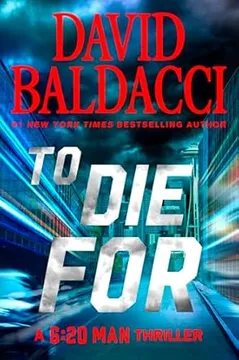

Characters
Jack Reacher
The drifter who reads detailsA former Army major and military police investigator, Reacher moves through life without a home, a car, or much luggage. He trusts observation over official narratives and tests people by watching what their actions reveal. His physical confidence is tempered here by a broken wrist and concussion, which force him to plan around his limits. Reacher is blunt, economical, and difficult to recruit into anyone’s cause, yet he intervenes when people are being exploited or hunted. He shares Knight’s anger at a killer but refuses to let anger alone determine what justice should look like.
Jenny Knight
The suspended detectiveA Phoenix detective suspended after pursuing the man she believes killed her father, Knight is disciplined enough to investigate and angry enough to contemplate revenge. She tracks Kane’s associates, uses technology confidently, and brings police procedure to Reacher’s more improvisational methods. Her father’s death has made the case personal, but she is not only grief: she is observant, pragmatic, and willing to reconsider what she wants from justice. Her partnership with Reacher rests on friction as much as trust, and each challenges the other’s instincts.
Ivan Vidic
The careful escape artistA heavyset man with a distinctive angular head, Vidic survives by reading risk and preparing exits. He uses aliases, watches people closely, and presents himself as a practical member of Fletcher’s criminal crew. His intelligence is real, but so is his appetite for control and self-preservation. Vidic can offer useful information while keeping his own motives hidden, making him difficult for Reacher to trust. His relationship with Paris is bound up with plans to leave the crew behind and build a more profitable, less physically dangerous operation.
Paris
The crew’s digital strategistParis handles computers and financial arrangements for a criminal outfit whose work has changed from art forgery to theft and more ambitious schemes. She is perceptive about group dynamics and increasingly unhappy with Fletcher and Kane’s violence. Her technical ability gives her influence, but it also draws her into plans whose consequences cannot be managed from behind a screen. She is proud of her independence and protective of the future she hopes to build with Vidic. Her choices reveal a person trying to leave a corrupt system without fully abandoning its rewards.
Darren Fletcher
The crew’s volatile bossFletcher takes an art-forgery circle into violent theft, bringing in muscle and accepting risks that cost lives. He is forceful and controlling, with a leader’s confidence in his own decisions and little patience for dissent. His attachment to the crew’s expansion blinds him to how much his choices have changed its character. Fletcher treats contingency planning as proof of authority, but his plans depend on other people following orders even when they no longer trust him.
Zach Kane
The crew’s hired muscleA huge, menacing enforcer, Kane supplies the physical force behind Fletcher’s increasingly violent operations. He is cruel, casually contemptuous, and accustomed to frightening people into compliance. His size makes him dangerous, but his confidence also encourages him to underestimate people who do not fit his idea of a threat. Knight’s pursuit of him is rooted in a family loss, giving his presence a personal charge beyond his role in the crew.
Gibson
The dead man in the LincolnGibson is the driver whose death in the switchback crash sets the investigation in motion. Reacher has no memory of their shared ride, so Gibson initially exists through other people’s claims and the traces left in his car. He is tied to the crew’s past and to the FBI’s interest in its crimes. The gap between his actual behavior and Vidic’s account makes him central to the book’s questions about evidence, identity, and what a plausible story can conceal.
Bowery
The missing crew memberBowery is a member of Fletcher’s operation who disappears before the story begins. His absence makes the crew suspicious of one another and helps trigger Fletcher’s emergency plans. He is connected to the group’s attempted move into cybercrime, where an information deal becomes far more dangerous than expected. Though he is not present for much of the action, his choices and the consequences of his disappearance pull several separate plots together.
Ronny Wallwork
Reacher’s uneasy FBI contactWallwork is an FBI agent who has crossed paths with Reacher before and would prefer not to do so again. He respects the value of Reacher’s instincts but worries about the bureaucratic and professional cost of acting on information obtained outside official channels. His exchanges with Reacher expose the tension between institutional rules and urgent threats. Wallwork is neither a simple ally nor an obstacle; he tries to help while calculating how much risk his position can bear.
Laura Devine
The FBI case leaderAn FBI agent managing the response to the dead undercover operative and stolen document, Devine is polished, cautious, and alert to the Bureau’s exposure. She wants evidence that can survive scrutiny, but the urgency of the case repeatedly forces her to weigh procedure against speed. She recognizes Reacher’s usefulness while remaining wary of his unofficial methods. Her concern with controlling information reflects the stakes of a case in which a leak could matter far beyond the people initially caught.
Buck Holmes
The discreet medicA retired Navy medic with a private practice, Holmes treats Reacher away from a hospital and avoids creating a public medical record. He checks the head injury before setting the broken wrist, applying a careful, military approach to triage. His competence gives Reacher enough mobility to continue investigating, while his warning to avoid another head injury becomes a practical constraint on Reacher’s fighting.
Mary
The frightened motel clerkMary works the highway motel desk and knows which rooms are used for exploitation. She is frightened of the people controlling that business and initially withholds information from Reacher. Her hesitation is not indifference but a calculation shaped by threats and financial need. Once Reacher makes clear that he understands her position, she gives him access to the motel’s records and later warns him about a possible attack.
Hannah May
The observant waitressA diner waitress near the motel, Hannah May remembers Reacher’s visit before the crash and confirms details he cannot recall. She also knows the local development’s abandoned mansions and the kinds of vehicles seen around them. Her ordinary observations help Reacher distinguish what Vidic could plausibly have witnessed from what may be invented.
Plot Devices
Reacher’s memory gap
A damaged witnessThe crash leaves Reacher unable to remember the hour before it or the ride with Gibson. That blank space gives Vidic room to shape an explanation, while forcing Reacher to rely on external witnesses, physical clues, and logic. Small recoveries of memory later help test Vidic’s account, but the decisive correction comes from comparing motel records, a sex worker’s testimony, and the FBI’s confirmation that a handler was present. The device keeps the mystery grounded in what evidence can and cannot establish.
Paris’s book cipher
A hidden recordParis encodes information as groups of three digits that refer to a particular book’s page, line, and word. She hides the ledger under a loose floorboard beneath a misplaced rug, where Reacher notices the room’s arrangement does not make practical sense. The cipher conceals contacts and business details from a casual search, but its key is among the books in her room. It becomes both evidence of Paris’s habits and a necessary tool when Reacher needs to contact the company her crew tried to extort.
The phosphorus vial
A body eraserParis stores phosphorus in a glass container buried in sand inside a bathroom crate. Fletcher intends to use it to burn the mansion and destroy evidence, including Gibson’s remains. Reacher and Knight find it before the fire, but taking it would alert the crew and likely cause them to flee. The hidden chemical therefore creates a tactical choice: preserve the evidence by removing it, or preserve the chance to keep the suspects in place. Its eventual ignition destroys the body and complicates formal identification.
The Cone Dynamics report
A national security secretParis’s hacking operation uncovers a report from Cone Dynamics, an audio consultancy that conceals the importance of its work. The report describes unexpectedly rapid degradation in the fissile material used in American nuclear warheads. Its potential value drives a blackmail attempt, a gold transaction, and the pursuit of a second copy. The report’s contents expand the stakes from organized crime to national security, while its portable memory sticks make the secret vulnerable to sale, duplication, and loss.
Tracking tags and shared locations
A digital trailKnight uses tracking tags hidden in the associates’ vehicles to follow them from the motel to the Russian properties. Later, shared phone locations help expose how Vidic and Paris are coordinating. These tools provide leads, not certainty: the partners still have to interpret where a vehicle stops, what a camera records, or whether a person is carrying a phone. The contrast suits the investigation, which repeatedly shows technology extending human observation without replacing judgment.
FAQ
Synopsis & Basic Details
What is In Too Deep about?
- Amnesia-fueled Investigation: Jack Reacher awakens shackled and injured, with no memory of how he got there or the car crash that preceded it. He's thrust into a complex web of deception involving a dead FBI agent, a ruthless criminal crew, and a mysterious, high-stakes secret.
- Unlikely Alliances Form: Forced to navigate a dangerous landscape, Reacher forms an uneasy alliance with Ivan Vidic, a seemingly helpful but duplicitous figure, and later with Jenny Knight, a detective on suspension with her own personal vendetta.
- Unraveling a Conspiracy: As Reacher's memory slowly returns and new information comes to light, he begins to piece together the true nature of the criminal enterprise, leading him to question everyone's motives and uncover layers of betrayal that go "in too deep."
Why should I read In Too Deep?
- Masterful Misdirection: The narrative expertly employs misdirection, constantly challenging reader assumptions about character allegiances and plot developments, keeping you guessing until the very end. The initial framing of Gibson as the agent and Vidic as a mere opportunist is a prime example.
- Reacher's Vulnerability & Ingenuity: Unlike typical invincible portrayals, Reacher starts the story physically compromised and with amnesia, forcing him to rely more on his deductive reasoning and improvised tactics, showcasing a different facet of his legendary resourcefulness. His use of a copper pan (Chapter 20) or a broken chair leg (Chapter 37) highlights this.
- Deep Dive into Deception: Beyond the action, the novel explores profound themes of trust, betrayal, and the psychological toll of living a double life, particularly through the complex character of Ivan Vidic and his elaborate schemes.
What is the background of In Too Deep?
- Ozarks Underbelly: The story is set in the Ozarks, a region often romanticized but here depicted as a secluded, rugged landscape ripe for illicit activities, particularly the abandoned, opulent mansions built in the 1970s (Chapter 5), which serve as a base for the criminal operations.
- Art Forgery & Blackmail: The criminal crew initially engaged in art forgery, evolving into high-stakes theft and, crucially, a sophisticated blackmail scheme involving stolen, sensitive information. This progression highlights the escalating nature of their ambition and risk.
- FBI Undercover Operations: The plot is deeply intertwined with an FBI undercover operation, which has gone disastrously wrong, leading to a dead agent and a desperate scramble by the Bureau to contain a national security threat, adding a layer of governmental intrigue and urgency.
What are the most memorable quotes in In Too Deep?
- "People leave me alone, I leave them alone. And if they don't? I don't." (Chapter 4)
- Reacher's Core Philosophy: This quote encapsulates Jack Reacher's fundamental code of conduct, a simple yet unyielding principle that drives his actions throughout the series and defines his response to being wronged. It sets the stage for his relentless pursuit of justice against those who disturb his peace.
- "You don't own a house. A house owns you." (Chapter 16)
- "I was in too deep. He couldn't get back to the light." (Chapter 32)
- Vidic's Tragic Descent: Spoken by Jenny Knight, this quote offers a poignant summary of Ivan Vidic's psychological state, suggesting his transformation from an undercover agent to a rogue operative was not merely opportunistic but a consequence of being irrevocably corrupted by his immersion in the criminal underworld. It directly links to the book's title, "In Too Deep."
What writing style, narrative choices, and literary techniques does Lee Child use?
- Terse, Observational Prose: Lee Child (and Andrew Child) employs a signature minimalist and direct writing style, characterized by short sentences and precise observations. This allows Reacher's internal monologue to dominate, focusing on sensory details and logical deductions, as seen in his analysis of the skid marks (Chapter 6) or the motel room (Chapter 7).
- First-Person Limited Perspective: The story is told almost exclusively from Reacher's point of view, immersing the reader directly in his thoughts, deductions, and physical sensations, including his amnesia and the pain from his injuries. This narrative choice enhances the mystery and allows for subtle misdirection, as the reader only knows what Reacher knows.
- Strategic Pacing and Misdirection: The narrative masterfully balances intense action sequences with periods of quiet deduction and character development. Crucially, it uses subtle clues and character dialogue to build a seemingly clear picture, only to subvert it with major twists, such as the true identity of the FBI agent or the nature of the stolen report, keeping the reader constantly engaged and off-balance.
Hidden Details & Subtle Connections
What are some minor details that add significant meaning?
- The Off-Center Rug: Paris's rug in her bedroom is noted as being "off-center" (Chapter 18), a seemingly innocuous detail that Reacher immediately recognizes as a deliberate placement to conceal the loose floorboard beneath it, where her crucial ledger and book code are hidden. This highlights Reacher's meticulous observation skills and the criminals' attempts at concealment.
- Copper Pans in the Kitchen: Reacher observes a rack of copper pans in the kitchen (Chapter 20), noting their decorative rather than functional purpose. This seemingly throwaway detail becomes significant when he later uses the largest pan as an improvised, devastating weapon against Kane (Chapter 20), showcasing his adaptability and the unexpected utility of everyday objects.
- The Hookers' Room 2: The revelation that Gibson was with a hooker in Room 2, not his handler in Room 1 (Chapter 26), is a critical detail that unravels Vidic's entire fabricated story. It exposes Vidic's lie about witnessing Gibson's meeting and provides the first concrete evidence of Vidic's deeper deception, shifting the entire understanding of the initial accident.
What are some subtle foreshadowing and callbacks?
- Vidic's "God Helps Those Who Help Themselves": Early in the story, Vidic reflects on this childhood saying (Chapter 1) after Gibson's crash. This seemingly innocuous thought subtly foreshadows his ruthless opportunism and willingness to betray his associates and manipulate the FBI for his own gain, embodying the self-serving nature of his actions.
- Reacher's Memory as a "Pitch-Dark Room": Reacher repeatedly describes his amnesia as "staring into a pitch-dark room" (Chapter 6), sensing something is there but unable to see it. This motif subtly foreshadows the gradual return of his memory, where "the first shaft of light" (Chapter 16) penetrates the darkness, revealing crucial details about the crash and Vidic's lies.
- The "Albatross" Code Name: Vidic's casual mention of "Albatross" as Gibson's code name (Chapter 5) is a clever piece of misdirection. While seemingly confirming Gibson's FBI status, it later becomes a key piece of evidence that Vidic was the actual agent, as he would only know this specific, obscure detail if he had been "in too deep" himself (Chapter 32).
What are some unexpected character connections?
- Gibson and the Hookers: The surprising revelation that Gibson, the supposed FBI agent, was a regular client of the motel's sex workers (Chapter 26) creates an unexpected connection that completely recontextualizes Vidic's initial story and the circumstances of Gibson's death. It highlights the hidden lives characters lead and the layers of deception.
- Bowery's Torture and the Property Developers: Bowery's harrowing account of being tortured by the "property developers'" fixers (Chapter 24) reveals a brutal, previously unseen connection between the seemingly legitimate business and a ruthless criminal underworld. This links the blackmail plot directly to extreme violence, raising the stakes for Paris and Vidic.
- Kane's Guys and the Topless Bar: The fact that Kane's reinforcements immediately divert to a topless bar (Chapter 26) after being stood down, rather than returning to base, reveals their true priorities and lack of discipline. This unexpected detail highlights their mercenary nature and provides a moment of dark humor amidst the tension.
Who are the most significant supporting characters?
- Jenny Knight: Beyond being Reacher's ally, Knight is a pivotal character whose personal vendetta against Kane (Chapter 13) provides a strong emotional anchor and a parallel narrative arc. Her detective skills, moral compass, and eventual decision not to kill Kane (Chapter 38) are central to the story's themes of justice and personal growth.
- Ronny Wallwork: As Reacher's reluctant FBI contact, Wallwork serves as a crucial bridge to the official law enforcement world. His exasperation with Reacher's unconventional methods (Chapter 8) and his fear of professional repercussions (Chapter 27) add a layer of bureaucratic realism and highlight the friction between Reacher's vigilante justice and formal procedures.
- Paris: Initially presented as Vidic's partner in crime, Paris evolves into a complex character whose intelligence (hacking skills, book code) and emotional vulnerability (attachment to her books, reaction to Vidic's betrayal) drive significant plot points. Her eventual understanding of Vidic's true nature (Chapter 34) is a major turning point.
Psychological, Emotional, & Relational Analysis
What are some unspoken motivations of the characters?
- Vidic's Desire for a "Clean Break": Beyond just money, Vidic's deepest motivation is to completely disappear from his criminal life and the FBI's radar. His elaborate plan to fake his death and return a decoy report (Chapter 32) is driven by a desperate need for absolute freedom and a fresh start with Paris, free from any "blowback" (Chapter 19).
- Paris's Yearning for Legitimacy: Paris's insistence on retrieving her "old books" (Chapter 12) from the house, despite the danger, subtly reveals her unspoken desire to reclaim a semblance of her former, more legitimate life as an artist. This contrasts with her current criminal activities and hints at a deeper dissatisfaction with her path.
- Fletcher's Need for Control: Fletcher's paranoia and aggressive tactics (Chapter 3) stem from an unspoken need to maintain absolute control over his operation and his crew. His inability to admit mistakes or accept Gibson's potential betrayal (Chapter 12) highlights his fragile ego and contributes to his downfall.
What psychological complexities do the characters exhibit?
- Reacher's Amnesia and Intuition: Reacher's temporary amnesia (Chapter 1) forces him to rely heavily on his subconscious and intuition, creating a psychological complexity where his usual logical deductions are initially hampered. This vulnerability makes his eventual breakthroughs, like the "recollection" at the switchback (Chapter 16), feel more earned and impactful.
- Knight's Moral Conflict: Jenny Knight grapples with the profound psychological complexity of seeking vengeance for her father's murder versus upholding the law. Her internal struggle culminates in the pivotal decision not to kill Kane (Chapter 38), demonstrating a powerful act of self-restraint and a commitment to a higher form of justice.
- Vidic's "In Too Deep" Syndrome: Vidic's character embodies the psychological toll of being "in too deep" (Chapter 32). His transformation from an undercover agent to a rogue operative, driven by a desire for wealth and a new life, showcases the corrupting influence of prolonged exposure to criminality and the blurring of moral lines.
What are the major emotional turning points?
- Knight's Confrontation with Kane (and her choice): The emotional climax for Jenny Knight occurs when she finally confronts Kane (Chapter 38). Her initial intent to kill him, fueled by grief and rage, gives way to a profound decision to spare him, choosing justice through the legal system. This moment signifies her emotional growth and healing.
- Paris's Realization of Vidic's Betrayal: Paris's emotional world shatters when Kane reveals Vidic is an FBI agent (Chapter 34). Her disbelief, anger, and subsequent slap to Vidic's face mark a dramatic turning point, forcing her to confront the depth of his deception and re-evaluate her entire relationship and future plans.
- Reacher's Memory Fragment at the Switchback: While subtle, Reacher's sudden, painful "recollection" of Gibson's behavior at the switchback (Chapter 16) is a crucial emotional turning point. It's the first crack in his amnesia, triggering a cascade of deductions that begin to unravel Vidic's carefully constructed lies and propel Reacher's investigation forward.
How do relationship dynamics evolve?
- Reacher and Knight: From Wary Allies to Trusting Partners: Their relationship evolves from a pragmatic, almost transactional alliance (Chapter 4, 13) to one of mutual respect and deep trust. Despite Reacher's initial reluctance to work with a partner, Knight's competence, moral integrity, and shared purpose forge a strong bond, culminating in their shared hotel room (Chapter 27) and Knight's heartfelt goodbye (Chapter 38).
- Vidic and Paris: A Partnership Shattered by Deception: Their dynamic begins as a secret, ambitious partnership to escape Fletcher's crew (Chapter 5). Paris trusts Vidic implicitly, believing in their shared future. However, Vidic's ultimate betrayal—his true identity as a rogue agent and his manipulation of her—shatters this bond (Chapter 34), leading to Paris's profound sense of betrayal and anger.
- Fletcher and Kane: A Toxic Codependency: Fletcher relies on Kane for brute force and intimidation (Chapter 4, 12), while Kane, though outwardly loyal, harbors a deeper contempt for Fletcher's leadership. This dynamic is revealed when Kane abandons Fletcher at the house (Chapter 25) and later casually murders Vidic (Chapter 34) to secure the gold, demonstrating his ultimate self-interest and the fragility of their alliance.
Interpretation & Debate
Which parts of the story remain ambiguous or open-ended?
- The FBI's Internal Fallout: While Agent Devine hints at "massaging the records" (Chapter 28) and Wallwork fears losing his pension (Chapter 27), the full extent of the FBI'
Jack Reacher Series








About the Author
Other books by Lee Child


Download PDF
Download EPUB
.epub digital book format is ideal for reading ebooks on phones, tablets, and e-readers.








