

Plot Summary
Six Shots at Five
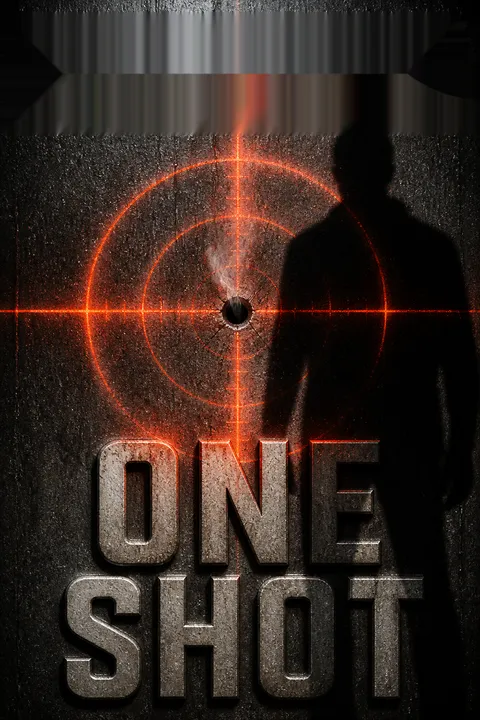
At Friday rush hour, a disguised gunman parks a beige minivan beside the unfinished extension of a downtown garage. From a low wall, he fires six rounds at people funneled past a public pool. Five die, each struck in the head; one bullet vanishes into the water.
The shooter13 collects five shell cases, misses the sixth when it drops into a crack, then drives away before police reach the plaza. At the local television station, anchor Ann Yanni7 sees the killings unfold and begins shaping the news coverage. Detective Emerson6 arrives to find a panicked city, five bodies, no wounded survivors, and a witness who heard six shots.
The opening makes expertise frighteningly ordinary. The shooter treats a crowded plaza as a carefully measured range, while commuters become targets through the accidental architecture of a bottleneck. Yet the dropped case and missing bullet keep his apparent precision from becoming complete control. The scene also introduces two competing ways of making meaning: police work will reconstruct a chain of physical traces, while television will turn a handful of seconds into a public narrative. Both methods begin with evidence, but neither is immune to error.
The Evidence Names Barr
Emerson’s6 team drains the pool and recovers six bullets, including one intact round that can be matched to a rifle. In the garage, technicians find fibers, cement dust, shoe prints, and a shell case lodged in an expansion joint. A parking meter quarter, a traffic cone, and surveillance footage lead them to a beige minivan and then to James Barr,2 a former Army infantryman.
Police find the rifle, clothing, ammunition, and dusty crepe-soled shoes in Barr’s2 house. He is asleep after taking one of his sister Rosemary’s4 sleeping pills, so officers arrest him without a confession. Within hours, Emerson6 and prosecutor Alex Rodin5 regard the evidence as decisive.
The investigation is compelling because its pieces reinforce one another, but that very coherence becomes a trap. Each trace appears to confirm the next, and the case’s emotional force comes from the satisfaction of a solved puzzle. Emerson’s confidence is earned by competent work, not simple arrogance, which makes later doubt harder to accept. The chapter asks readers to distinguish between evidence that is accurate and an interpretation that is complete. A flawless chain can still lead to the wrong person if someone has constructed it deliberately.
Barr Calls for Reacher
Barr2 refuses to speak until his first lawyer, David Chapman, dismisses his insistence that police have the wrong man. Barr2 asks Chapman to find Jack Reacher,1 a name his sister4 does not recognize. Rosemary4 rejects the firm’s assumption that her brother2 is guilty and turns to Helen Rodin,3 a young defense lawyer and the prosecutor’s daughter.3
Before Helen3 can build a strategy, Barr2 is savagely attacked by other inmates and left comatose in the hospital. Franklin,9 a retired police investigator, searches for Reacher1 and discovers that the former military policeman has vanished from public records. As Rosemary4 waits beside her brother,2 Reacher1 is already traveling toward Indiana after hearing Barr’s2 name on television.
Barr’s silence frustrates everyone who wants a usable explanation, but his choice of Reacher gives that silence a direction. The request is not yet an argument for innocence; it is a demand that someone who knows the past enter the present case. Rosemary’s persistence similarly refuses the easy substitution of a strong prosecution file for knowledge of her brother. The jail attack strips Barr of the ability to speak for himself, turning a legal dispute into a question of who will interpret him, and on whose behalf.
Reacher Returns to Kuwait
Reacher1 arrives in town and visits Alex Rodin5 before Helen,3 asking how strong the case is. Rodin5 describes overwhelming physical evidence, and Reacher1 withholds what he knows from the Army. At Helen’s3 office, he explains that fourteen years earlier Barr2 shot four American soldiers in Kuwait City. Reacher,1 then a military policeman, investigated the killings and extracted a confession.
The victims had been robbing and assaulting Kuwaiti families, but the Army concealed their crimes to protect its public image, allowing Barr2 to leave the service without punishment. Reacher1 had warned Barr2 never to kill again. Now he has come back not to defend him, but to decide whether that promise requires him to stop him.
Reacher’s first instinct is not impartiality. He sees the new killings through the moral debt of an earlier case in which Barr escaped justice for reasons beyond either man’s control. His visit to Rodin tests the prosecution before he risks exposing a classified scandal. This history complicates the simple categories of guilt and innocence: Barr’s past crime was real, but the institutional cover-up distorted its consequences. Reacher’s promise is therefore both a safeguard and a danger. It gives him a reason to act, while threatening to make the past more important than what happened now.
A Crime Scene Too Perfect
Helen3 asks Reacher1 to examine the prosecution’s evidence, and Detective Emerson’s6 forensic specialist walks him through every trace linking Barr2 to the plaza. Reacher1 confirms that the case is extraordinarily strong, then notices what the investigators have not asked: why did the shooter13 pay to park, leave the cone, wear conspicuous clothes and shoes, and abandon a shell case?
A trained sniper could have fired from a raised highway, inside the tinted minivan, and escaped with almost no trace. Instead, the shooter13 selected a cramped garage position that guaranteed visible clues. Reacher1 concludes that the evidence was meant to be found. The case that appeared to prove Barr’s2 guilt may instead show that someone forced him into a frame.
Reacher’s method depends on treating competence as a pattern of choices. The odd detail is not merely that the shooter made mistakes, but that every mistake points in the same direction, toward discovery and arrest. His insight challenges a central comfort of forensic reasoning: that material evidence speaks for itself. Traces acquire meaning only through assumptions about why a person would leave them. Reacher’s own certainty remains a problem, since his promise to punish Barr could make him resist exculpatory facts. The case requires him to investigate not only the evidence, but his own appetite for a verdict.
A Barroom Ambush
That night, a red-haired auto-parts clerk named Sandy14 approaches Reacher1 in a sports bar, then accuses him of insulting her so five men will attack. Reacher1 drops three and the others flee. He recognizes the encounter as an arranged attempt to drive him out of town. The next day Sandy14 admits that Jeb Oliver,15 a co-worker, paid the group to provoke him and gave her instructions for the act.
Reacher1 borrows her car and finds Jeb’s15 farm, but Jeb15 has disappeared after being collected by a stranger. Later, the conspirators kill Sandy14 and leave her body outside Reacher’s1 hotel, making him the obvious suspect. He avoids the police and seeks help from Yanni,7 the anchor whose coverage first brought him to town.
The staged fight turns the investigation into a physical contest over who controls Reacher’s movement. Its crude performance reveals that the opposition knows his name, but the violence is designed to look like an ordinary bar dispute. Sandy is neither a simple villain nor a reliable ally: she accepts payment, performs the setup, and then becomes vulnerable to the people who hired her. Her murder changes Reacher’s purpose. He had been willing to let Barr face consequences for his earlier crime; now an innocent young woman has been killed to protect the new conspiracy, and his judgment becomes less detached.
A Week Missing
Barr2 regains consciousness with severe head injuries and no memory of the days leading up to his arrest. Psychiatrist Mary Mason20 finds his amnesia genuine, leaving Helen3 with a legal problem: the state caused the injury that may prevent Barr2 from taking part in his own defense.
Reacher1 questions him about the Cardinals game he remembers hearing on the radio, then checks old newspapers and dates the broadcast to Tuesday night, shortly before the massacre.
Barr2 cannot explain the crime, but when asked how he would have carried it out, he describes the safer highway position Reacher1 has already identified. Meanwhile, Brigadier General Eileen Hutton8 arrives from the Army, carrying knowledge of the old Kuwait case that neither side can freely reveal.
The amnesia creates a gap between responsibility and testimony. Barr cannot use memory to defend himself, but the injury does not automatically prove he was incapable when the crime occurred. Reacher treats the surviving detail of a baseball broadcast as a clock, converting an intimate fragment into a testable boundary. His conversation with Barr also provides a revealing contrast between a trained shooter’s theoretical choices and the actual scene. Hutton’s arrival widens the stakes: the past is not merely personal history, but classified institutional knowledge with consequences for people who never entered the plaza.
The Victims Were Chosen
Hutton8 tells Reacher1 that the current setup echoes the Kuwait killings closely enough to suggest that whoever designed it knew Barr’s2 history. Reacher1 then studies the six-shot sequence: Barr2 stopped with four rounds still in his magazine, rather than continuing until panic or ammunition ended the attack.
The deliberate pause after the third shot suggests that one victim mattered and the others concealed her place in the plan. Reacher1 identifies Oline Archer,16 a DMV employee, as the likely target. Yanni7 agrees to help investigate the victims and arranges for Franklin’s9 research through her station. Reacher’s1 pursuit of the truth now shifts from asking who fired the rifle to asking why someone wanted Oline16 dead.
The change from spree to assassination is a change in scale. A random massacre asks how one person became violent; a targeted killing asks what network of interests made a particular victim dangerous. Reacher arrives at the second question by noticing restraint, not excess: the shooter’s unused ammunition carries more information than the shots themselves. Hutton’s historical comparison gives the pattern depth, while Yanni’s newsroom resources supply a counterweight to official investigations. The dead are no longer interchangeable figures in a public tragedy. Their individual lives become the route into the motive.
The Marksman in Kentucky
Reacher1 drives Yanni’s7 Mustang to a Kentucky firing range run by retired Marine Gunny Cash.10 Cash10 has kept years of target sheets from Barr2 and his quiet companion, Charlie.13 Barr’s2 results show consistent expert shooting, while Charlie’s13 scattered impacts seem poor until Reacher1 recognizes deliberate patterns in the supposed misses.
Charlie13 was hiding his ability. A doctor’s note in Barr’s2 file identifies an early tremor as Parkinson’s disease, which makes accurate rifle fire physically implausible.
The targets, the disease, and the garage footprints point to an impersonator: a smaller man13 wore Barr’s2 clothes and shoes, drove his minivan, and planted the evidence while Barr2 was elsewhere. The supposed shooter and the man who pulled the trigger13 are not the same.
The revelation depends on joining forms of evidence that initially seem unrelated: target paper, stride length, a medical abbreviation, and a missing stretch of memory. Reacher does not treat expertise as a fixed trait; he reads the targets as performances designed to mislead the range owner. Parkinson’s disease supplies a bodily limit that the prosecution’s elaborate forensic chain cannot overcome. At the same time, the discovery does not erase Barr’s past or the deaths in the plaza. It separates the question of who committed the act from the question of why Barr’s identity could be used so convincingly.
Oline’s Missing Husband
Franklin9 finds that Oline16 reported her husband, Ted Archer,17 missing two months before her death. Reacher,1 Helen,3 and Yanni7 interview Oline’s16 co-worker and a neighbor, who describe Ted’s17 failing quarry business and his efforts to learn why the city stopped buying from him.
A competitor had secured lucrative construction contracts through suspected bribes. Oline16 had recently gone to Alex Rodin’s5 office with her concerns, but the neighbor cannot say what happened afterward.
Ted17 drove an old brown Chevrolet pickup, matching a vehicle Reacher1 saw locked in Jeb Oliver’s15 barn. Reacher1 connects the missing husband,17 the city’s construction boom, and Oline’s16 killing. The apparent random victims now surround a business crime that someone has been trying to bury.
Oline’s importance emerges through ordinary social details: a job she needed, a husband whose business failed, and an attempt to get someone in authority to listen. Her story exposes the way economic coercion can hide beneath respectable public spending. The city’s construction projects promise renewal, yet the contracts may have been secured by violence and political influence. Helen’s discovery that Oline approached her father introduces suspicion without resolving it; institutional proximity is not proof of complicity. The investigation must resist replacing one easy story with another, even when the new story points toward powerful people.
Names Behind the Trust
The construction supplier, Specialized Services of Indiana, exists through a Bermuda trust represented locally by lawyer John Mistrov.18 When Reacher1 and Yanni7 pressure Mistrov,18 he gives them the names of the men behind the operation, including Linsky,12 Charlie Smith,13 Vladimir, and an elderly figure called the Zee.11 Records place the company at a quarry and stone-crushing plant outside town.
Before the group can move, the Zee’s11 men abduct Rosemary4 to force her into false testimony against Barr.2 Reacher1 recruits Cash,10 while Helen,3 Yanni,7 and Franklin9 help trace the compound and organize a rescue. The case is no longer a courtroom puzzle. A living witness is being held by the people whose crimes she can expose.
The trail moves from private evidence to public infrastructure. A shell company, a city contract, a quarry, and a missing truck form one material network, linking violence to the visible rebuilding of the town. Mistrov’s disclosure gives the investigators names but not safety; knowledge makes Rosemary more endangered, not less. The abduction also clarifies the coercion Reacher had inferred from Barr’s behavior. The conspiracy relies on making family loyalty a weapon, so the rescue must protect the person whose love for her brother has kept her involved.
Across the Watched Driveway
At two thirty in the morning, Reacher,1 Helen,3 Yanni,7 and Cash10 approach the Zee’s11 isolated compound. Cash10 spots thermal cameras around the house, so Reacher1 walks through irrigated fields and saturates himself with cold water, hiding his body heat from the surveillance system.
Helen3 creates a moving decoy while Cash10 watches the windows. After a sniper fires at Helen,3 Reacher1 enters through a ground-floor window and attacks the guards in the surveillance room. He kills Vladimir and Sokolov, then finds Linsky12 and Chenko on the upper floors.
Chenko survives being thrown from a window. Reacher1 locates Rosemary4 bound in the attic and leads her out through the same window, directing her toward Cash10 and the others. The Zee11 remains inside, waiting for Reacher.1
The assault turns the book’s repeated attention to geometry into a survival problem. Reacher has spent days asking how bodies move through space; now he must cross open ground without becoming a visible target. The irrigation system, introduced earlier as a feature of the surrounding farmland, becomes protection because it changes his temperature. Helen’s decoy is a deliberate act of courage rather than a symbolic gesture: she risks being shot to buy Reacher seconds. Rescue does not arrive cleanly. It leaves the conspirators wounded or dead and brings Reacher face to face with the man who planned the frame.
The Zee’s Last Move
Reacher1 captures the Zee11 by exploiting the old man’s instinct to survive, then gathers the others as witnesses while Yanni7 secretly records the room for NBC. Under pressure, the Zee11 details the bribed contracts, Ted Archer’s17 murder, Oline’s16 killing, Barr’s2 setup, and the attacks meant to stop Reacher.1
He confirms that a police insider helped protect the operation: Emerson.6 Before the authorities can secure the scene, Chenko returns with a shotgun and demands control. Reacher1 draws him close, then moves aside as Cash10 fires from behind the sofa.
Helen’s father5 and Detective Bianca19 arrive with Franklin,9 and Yanni’s recordings preserve the confession. The Zee11 and Emerson6 are taken into custody, while the conspirators’ plan to bury the evidence collapses in front of witnesses.
The final reversal is not simply that the investigator was compromised; it is that a successful investigation can itself be repurposed by a criminal network. Emerson’s early certainty made the frame persuasive and helped shield the operation. Reacher identifies him through behavior that seemed like professional instinct, including how quickly he settled on the lone-shooter explanation and how he handled the parking meter clue. Yanni’s recording gives the confession a form the conspirators cannot quietly erase. The ending contrasts the Zee’s survival instinct with Reacher’s refusal to let another innocent person be sacrificed for a convenient story.
Reacher Leaves at Dawn
With the Zee’s11 confession recorded and Emerson6 exposed, Rosemary4 can return to the hospital and tell Barr2 that the plaza shootings were arranged around him. His Parkinson’s disease and genuine amnesia remain, but the evidence against him has been broken by the people who built it. Helen3 reunites with her father5 in the aftermath, while Yanni7 has the material for a story that reaches beyond the original massacre.
Reacher1 leaves his borrowed weapons, police cards, and hotel key beside the house, then rides an ambulance back toward town. He plans to reach the bus station and move on, carrying no bag and claiming no permanent place in the city. The investigation ends with accountability beginning, not with Reacher1 staying to supervise it.
The resolution refuses the neatness of a total restoration. Barr’s name can be separated from the killings, but his illness, lost memory, and earlier crime remain part of his life. Helen’s relationship with her father survives the discovery of Emerson’s betrayal, though the investigation has forced her to question how easily authority can mistake confidence for truth. Reacher’s departure completes his chosen form of freedom: he intervenes intensely, then refuses the comforts of ownership, office, or local reputation. The town must now live with what its institutions failed to see.
Analysis
One Shot builds its central mystery around a distinction that crime stories often blur: the person linked to an act is not always the person who committed it, and a convincing explanation is not necessarily a true one. Barr’s2 rifle, clothing, fingerprints, and vehicle make the prosecution’s case feel nearly airtight. Reacher1 does not disprove those traces. He asks why they fit together so neatly, then discovers that their coherence was engineered. The novel’s suspense comes from changing the question, first from who fired the rifle to why the scene was designed to identify Barr,2 then from who was framed to whom the killings were meant to protect.
The town’s institutions are not uniformly corrupt. Emerson’s6 police work is genuinely skillful, Alex Rodin’s5 caution is real, and Helen’s3 defense has legal and ethical limits. That mixture makes the betrayal more credible than a world in which every official is secretly villainous. The conspiracy succeeds by exploiting ordinary professional habits: detectives trust a complete evidence chain, prosecutors trust a strong case, and the public accepts a story that makes fear legible. Yanni’s recording s matter because they interrupt that circulation of unquestioned certainty.
Reacher’s1 moral position also changes. He arrives prepared to punish Barr2 for the old Kuwait murders, believing that the earlier cover-up created a debt he must collect. The investigation forces him to distinguish Barr’s2 past guilt from responsibility for the five recent deaths. His anger becomes most justified not when his pride is challenged, but when Sandy14 is killed to protect the frame. Rosemary’s4 loyalty, Helen’s3 persistence, and Yanni’s7 willingness to revise her story keep the investigation from becoming Reacher’s1 private verdict.
The novel’s deepest argument is that justice requires more than collecting evidence or applying rules. It requires asking who benefits when a story appears complete, whose testimony has been silenced, and what institutions are protecting when they demand closure. Reacher1 can expose the machinery, but he cannot restore the lives it has taken. His departure leaves the town with a confession and a record, not with the illusion that truth has undone harm.
Review Summary
One Shot receives mostly positive reviews, praised for its engaging plot, clever twists, and Reacher's compelling character. Readers enjoy the fast-paced action, intricate mystery, and Reacher's analytical skills. Some criticize the repetitive writing style and implausible scenarios. Many fans consider it one of the best in the series, though opinions on the film adaptation are mixed. Overall, it's seen as an entertaining thriller that keeps readers hooked from start to finish.
People Also Read








Characters
Jack Reacher
Rootless military investigatorReacher is a former Army military policeman who lives without a home, phone, or fixed address. He trusts observation, physical skill, and independent judgment more than institutional authority, though his confidence can shade into stubbornness. His connection to James Barr2 comes from an old military investigation and a promise he has carried for years. Reacher begins with a settled view of Barr’s2 guilt, then forces himself to examine evidence that challenges his own assumptions. He dislikes being controlled or tracked, yet he will remain in danger when another person is threatened. His restless life is not mere evasion: it is a deliberate refusal to let any institution claim ownership of him.
James Barr
Former Army sniperBarr is a quiet, isolated former infantryman with a deep history of rifle training and few close relationships. He lives near his sister Rosemary4 and relies on familiar routines, including following baseball by radio. His taciturn nature makes him difficult to read, and his past gives Reacher1 a reason to distrust him before the new evidence is examined. Barr’s identity is closely tied to military competence, a source of pride as well as pressure. He is not an eloquent self-advocate, so his silences and limited memories leave other people to interpret his motives. His relationship with Rosemary4 is the clearest expression of care in an otherwise spare social world.
Helen Rodin
New defense attorneyHelen is a young lawyer establishing her own practice in a city where her father5, Alex Rodin5, is a powerful prosecutor. She accepts an unpopular case partly because the constitutional right to counsel matters to her, even when the practical odds look poor. Helen is intelligent and ambitious, but not untouched by the professional risks of defending a hated defendant. Her work with Reacher1 requires her to balance evidence, legal strategy, and personal loyalty to her father5. She is prepared to question her assumptions when new facts emerge, and she is more courageous in action than her cautious career calculations initially suggest.
Rosemary Barr
Determined family advocateRosemary is James Barr’s2 younger sister and a legal secretary who believes she knows the character of the brother2 she has lived beside. She has little money and no criminal-law expertise, yet she acts quickly when the case threatens to consume him. Her conviction does not come from evidence; it comes from years of shared life and an unwillingness to let fear replace loyalty. Rosemary can be anxious and overwhelmed, but she is persistent about securing proper representation and asking questions others dismiss. Her bond with James2 becomes the emotional center of the defense, while her own independence is tested by the pressures surrounding the case.
Alex Rodin
Ambitious elected prosecutorAlex is the district attorney and Helen’s father3, a cautious prosecutor with an impressive record in serious cases. He believes a strong evidentiary file should lead to a reliable conviction and is confident in the police work presented to him. His professional identity is built around winning cases that meet his high standard, which can make uncertainty feel like a threat rather than an invitation. At home, his relationship with Helen3 is affectionate but competitive, especially when their legal roles put them on opposite sides. He values control of information and takes pride in polished, careful presentation.
Emerson
Methodical homicide detectiveEmerson is a veteran detective who takes charge of the plaza investigation and coordinates police, forensic, and prosecutorial work. He is calm under public pressure and skilled at turning scattered witness accounts into a coherent sequence. His confidence in the case reflects both experience and a desire to resolve a frightening crime before the city loses faith in its institutions. Emerson is practical, attentive to procedure, and aware that television coverage can shape public expectations. He and Alex Rodin5 share a working relationship built on trust in the evidence and an interest in presenting a clear account.
Ann Yanni
Ambitious local anchorYanni is the local television anchor who witnesses the massacre from the NBC building and quickly recognizes its news value. Her ambition is real, but so is her capacity to respond to the human weight of the story; the families gathered behind the police line unsettle her more than the spectacle excites her. She understands that framing determines what viewers notice, and she is willing to revise her own account when the facts point beyond a simple crime report. Her access to staff, broadcast equipment, and public attention makes journalism an active force in the investigation rather than mere background noise.
Eileen Hutton
Army legal officerHutton is a senior Army lawyer who once served in the Gulf alongside Reacher1. She is disciplined, perceptive, and at ease in a world where official missions can demand silence from the people who know the facts. Her connection to Reacher1 is personal as well as professional, but she approaches the case with a clear sense of the risks to the Army and its veterans. Hutton understands how classified history can outlive the events that created it. She is one of the few people who can place Barr’s2 military past within its original context.
Franklin
Veteran case investigatorFranklin is a retired police officer who works as a private investigator for local lawyers. He specializes in fact-checking, records, and tracing people through databases rather than dramatic fieldwork. His knowledge of the local police gives him useful access, but also makes him wary of taking positions that could damage professional relationships. Franklin initially expects the case to be unwinnable and is reluctant to keep working without pay. Once he commits, his patient research supplies the links that individual interviews and forensic evidence cannot provide.
Gunny Cash
Retired Marine marksmanCash is a retired Marine sergeant who runs a Kentucky shooting range and keeps unusually thorough records of his customers’ targets. He is proud of his marksmanship but does not confuse skill with authority over others. Cash respects discipline, safe handling, and careful preparation, sometimes to the frustration of people who want him to take greater risks. His history as a competitive shooter gives Reacher1 access to a kind of evidence the police have not considered. In a crisis, he brings professional steadiness rather than a taste for violence.
The Zee
Aging industrial powerbrokerThe Zee is an elderly, physically damaged man who commands deference from a small circle of associates. His authority is rooted in a history of extreme hardship and a relentless instinct for survival. He is patient, strategic, and accustomed to treating people as pieces in a larger arrangement. The Zee favors distance and delegation, allowing others to handle the immediate risks while he assesses consequences. His past has made him distrustful of confinement and deeply attentive to hierarchy, loyalty, and control.
Grigor Linsky
The Zee’s senior lieutenantLinsky is an older, observant associate who handles surveillance and reports to the Zee11. A severe spinal injury has left him physically uncomfortable, but it has not dulled his patience or attention to detail. He understands the organization’s hierarchy and reads small changes in behavior as possible warnings. Linsky’s survival has depended on discipline, silence, and knowing when to defer to someone more powerful. He is capable of methodical work without mistaking himself for the person who ultimately makes decisions.
Charlie Smith
Barr’s elusive friendCharlie is a small, private man who has known Barr2 for several years and shares his interest in guns. He appears only intermittently in Barr’s2 life, rarely offering details about himself or his home. His guardedness makes him difficult for Rosemary4 and the police to place, while his companionship matters to Barr2, who has few friends. Charlie’s connection to the shooting range gives him a place in Barr’s2 routine that other acquaintances do not share. He is an unsettling presence precisely because so little about him is known.
Sandy Dupree
Young auto-parts clerkSandy is a nineteen-year-old clerk at an auto-parts store, quick to read a situation and capable of improvising when a plan goes off course. She lives with limited prospects and treats a small payment as worthwhile in a town where little seems to happen. Her flirtatious presentation is partly a performance, but it also gives her a way to control how others see her. Sandy’s connection to Jeb Oliver15 draws her into events larger than she understands. She is neither a hardened criminal nor a harmless innocent, but a young woman navigating choices with too few good options.
Jeb Oliver
Local intermediaryJeb works at the same auto-parts store as Sandy14 and has a reputation for keeping his own company. He is resourceful enough to recruit people for small jobs and connected enough to receive help from people whose names he does not share. His rural home, expensive truck, and closeness to his mother suggest a life more complicated than his job would imply. Jeb is a useful example of how a local figure can connect a powerful organization to ordinary people without appearing important himself.
Oline Archer
DMV clerk and investigatorOline is a married woman who returns to work at the DMV after her husband’s17 business begins to falter. She is private and careful about making accusations, even as she grows concerned about her husband’s17 disappearance and the financial pressures surrounding him. Her friends describe her as a steady colleague rather than a person who seeks attention. Oline’s instinct is to pursue answers through official channels, approaching people she believes have the authority to help. Her ordinary routines place her at the intersection of private grief and public business.
Ted Archer
Missing quarry ownerTed owns a quarry and concrete business that once depended on city contracts. When those contracts begin disappearing, he tries to understand how a competitor is undercutting him and what is happening to the local market. He is described by friends as someone who fights rather than abandons a problem. His business troubles shape the lives of both himself and Oline16, forcing her to return to work. Ted’s work connects the town’s construction boom to the livelihoods of people beyond the city center.
John Mistrov
Trusts and wills lawyerMistrov is a small-practice lawyer who handles trusts and estate matters. He prefers professional confidentiality and initially resists questions about the company he represents. His comfortable loft and casual manner contrast with the serious business conducted through his legal work.
Donna Bianca
Police squad lieutenantBianca is Emerson’s6 number two and a capable police lieutenant who helps coordinate the investigation. She is practical, observant, and accustomed to taking responsibility when a case grows beyond one detective’s control.
Mary Mason
Memory loss specialistMason is a psychiatrist who evaluates Barr’s2 memory after his coma. She approaches the assessment cautiously, distinguishing observable signs from conclusions that remain matters of expert judgment. Her work gives Helen3 a grounded medical account of Barr’s2 condition.
Warren Niebuhr
Coercion specialistNiebuhr is a psychiatrist specializing in coercion and dependency. He offers a psychological framework for understanding how threats and unequal relationships can shape a person’s actions, while acknowledging that motives are difficult to prove.
Alan Danuta
Veterans’ rights lawyerDanuta is a Washington lawyer who specializes in veterans’ legal issues. He recognizes that Barr’s2 amnesia may create a constitutional question extending far beyond the local case and helps Helen3 consider the broader legal stakes.
Plot Devices
The forensic evidence chain
Clues that seem conclusiveThe crime scene yields a remarkably connected set of traces: fingerprints on a quarter and cone, fibers and cement dust in a garage, a shell case, a pristine bullet, and a rifle with matching marks. Together, these clues appear to place James Barr2 at every stage of the shooting. Reacher’s1 investigation changes their meaning by asking why a trained shooter would leave so many traces. The evidence is genuine, but its apparent certainty has been manufactured through an impersonator’s use of Barr’s2 belongings.
The firing position
Geometry reveals intentThe raised highway behind the library offers a more concealed and tactically sensible firing position than the unfinished parking garage. Reacher1 uses the sightlines, distance, moving targets, and pool’s orientation to show that the garage position was deliberately inferior. Its flaws are clues: the shooter13 wanted investigators to find physical evidence and connect it to Barr2. The same attention to space later helps Reacher1 plan his approach to the Zee’s11 monitored compound.
The Kuwait investigation
An old crime shapes the frameFourteen years earlier, Reacher1 investigated Barr’s2 killings of four American soldiers in Kuwait City. The victims had committed serious crimes against Kuwaiti families, and military leaders concealed that fact to protect the Army’s reputation. Barr2 escaped punishment, and Reacher1 warned him not to kill again. In the present, the old case supplies the designer of the frame with details about Barr’s2 training and behavior. It also gives Reacher1 a personal reason to distrust Barr2, which he must overcome as the current evidence begins to unravel.
Memory and Parkinson’s
The body contradicts the caseBarr’s2 coma leaves him with genuine retrograde amnesia, complicating his ability to participate in his defense. At the same time, a doctor’s note identifies an early tremor as Parkinson’s disease. The diagnosis makes the expert shooting attributed to Barr2 physically implausible. Reacher1 pairs this bodily evidence with the firing-range records, where Barr’s2 long-time companion’s13 poor-looking targets conceal exceptional accuracy. Medical limitation and target analysis together expose the impersonation.
Yanni’s recording
A public record breaks silenceYanni7 begins as an ambitious anchor shaping the first broadcast narrative, but she later uses her station’s resources to investigate the victims. During the final confrontation, she records the Zee’s11 confession and the exposure of Emerson6. Journalism therefore becomes more than commentary: it supplies research capacity, public scrutiny, and a durable record that the local authorities cannot quietly suppress. Yanni’s7 changing role mirrors the movement from a sensational account of a lone shooter toward a more complicated story of corruption and conspiracy.
FAQ
Synopsis & Basic Details
What is One Shot about?
- Sniper attack, framed suspect: A skilled sniper murders five people in a public plaza, and all evidence points to James Barr, a former military sniper.
- Reacher investigates inconsistencies: Jack Reacher, prompted by a past connection to Barr, investigates the seemingly open-and-shut case, uncovering inconsistencies and suspecting a setup.
- Unraveling a complex conspiracy: Reacher delves into the evidence, exposing a deeper conspiracy involving powerful figures and forcing him to confront a ruthless puppet master.
Why should I read One Shot?
- Intricate plot, compelling mystery: The novel offers a complex and suspenseful plot with numerous twists and turns, keeping readers engaged as Reacher unravels the truth.
- Reacher's sharp intellect, action: Readers are drawn to Reacher's character, a brilliant and resourceful investigator who uses his skills to solve a seemingly impossible case.
- Exploration of justice, morality: The story explores themes of justice, morality, and the abuse of power, prompting readers to consider the complexities of right and wrong.
What is the background of One Shot?
- Post-Gulf War military context: The story references Barr's military service in the Gulf War, hinting at potential psychological impacts and government cover-ups related to veterans.
- Small-town America setting: The setting of a mid-sized heartland city highlights the contrast between seemingly peaceful communities and the potential for violence and corruption.
- Legal, political corruption: The novel touches on themes of legal and political corruption, suggesting that powerful individuals can manipulate the justice system for their own gain.
What are the most memorable quotes in One Shot?
- "One shot, one kill.": This sniper's credo encapsulates the precision and deadly intent at the heart of the crime, highlighting the killer's training and mindset.
- "They got the wrong guy.": Barr's repeated denial, despite overwhelming evidence, becomes a central mystery, suggesting a frame-up and prompting Reacher's investigation.
- "Get Jack Reacher for me.": This cryptic request from Barr sets the plot in motion, hinting at Reacher's unique understanding of Barr and the situation, and drawing him into the case.
What writing style, narrative choices, and literary techniques does Lee Child use?
- First-person limited perspective: The story is told from Reacher's point of view, creating suspense as the reader only knows what Reacher knows, and experiences the investigation alongside him.
- Concise, action-oriented prose: Child's writing style is direct and economical, focusing on action and dialogue, creating a fast-paced and engaging reading experience.
- Foreshadowing, red herrings: Child uses subtle foreshadowing and red herrings to create suspense and misdirect the reader, making the mystery more complex and engaging.
Hidden Details & Subtle Connections
What are some minor details that add significant meaning?
- The orange traffic cone: A seemingly insignificant detail, the cone blocking a parking space reveals the shooter's meticulous planning and premeditation, highlighting the calculated nature of the crime.
- The brand of desert boots: The specific mention of Clarks desert boots, favored by Special Forces, subtly reinforces the shooter's military background and training, adding credibility to his skills.
- The A.A. Rodin initials: The Russian origin of the DA's initials hints at a deeper, perhaps hidden, family history and cultural background, adding complexity to his character.
What are some subtle foreshadowing and callbacks?
- Kuwait City reference: The early mention of Barr's past in Kuwait City foreshadows the revelation of a previous shooting incident, establishing a pattern of violence and raising questions about his true nature.
- The "They got the wrong guy" phrase: Barr's insistence on his innocence echoes throughout the story, serving as a constant reminder of the possibility of a frame-up and driving Reacher's investigation.
- The description of the M1A Super Match rifle: The detailed description of the rifle early in the book foreshadows its importance as a key piece of evidence and highlights the shooter's expertise with firearms.
What are some unexpected character connections?
- Helen Rodin's father: The fact that Helen Rodin is the DA's daughter creates a conflict of interest and adds tension to the story, as she must navigate her professional responsibilities and her relationship with her father.
- Eileen Hutton's past with Reacher: The revelation that Reacher had a past relationship with Eileen Hutton adds a personal dimension to the investigation and raises questions about her objectivity.
- Jeb Oliver's connection to the Zee: The link between a local auto parts store employee and a powerful criminal organization highlights the pervasive nature of corruption and its reach into seemingly ordinary lives.
Who are the most significant supporting characters?
- Gunny Cash: As a former Marine and expert marksman, Cash provides Reacher with valuable insights into military training and firearms, as well as crucial support in the final confrontation.
- Franklin: The private investigator's knowledge of the local police department and his skills in research and skip-tracing prove essential in uncovering key information and tracking down suspects.
- Ann Yanni: The ambitious journalist's access to media resources and her determination to uncover the truth help Reacher expose the conspiracy and bring the perpetrators to justice.
Psychological, Emotional, & Relational Analysis
What are some unspoken motivations of the characters?
- Reacher's guilt, responsibility: Reacher feels responsible for Barr's actions due to his past involvement, driving him to seek the truth and ensure justice is served, even if it means condemning Barr.
- Helen Rodin's desire for independence: Helen is motivated by a desire to prove herself as a lawyer, independent of her father's influence, leading her to take on the challenging case and challenge his authority.
- The Zee's need for control: The Zee's actions are driven by a deep-seated need for control and a desire to maintain his power, even at the expense of others' lives, stemming from his traumatic past in the Gulag.
What psychological complexities do the characters exhibit?
- James Barr's internal conflict: Barr struggles with his past actions and the possibility of a relapse, exhibiting a complex mix of guilt, remorse, and a desire for redemption.
- Helen Rodin's divided loyalties: Helen is torn between her loyalty to her father and her commitment to justice, creating internal conflict and forcing her to make difficult choices.
- The Zee's sociopathic tendencies: The Zee displays a lack of empathy and a willingness to manipulate and harm others for his own gain, exhibiting traits of a sociopath.
What are the major emotional turning points?
- Reacher's realization of Barr's innocence: Reacher's shift from believing in Barr's guilt to suspecting a setup marks a major emotional turning point, driving him to fight for justice and protect the innocent.
- Rosemary Barr's discovery of her brother's past: Rosemary's discovery of Barr's actions in Kuwait City is a devastating emotional blow, challenging her unwavering faith in him and forcing her to confront his dark side.
- Helen Rodin's betrayal by her father: Helen's realization that her father may be involved in the conspiracy is a profound emotional betrayal, shattering her trust and forcing her to question everything she thought she knew.
How do relationship dynamics evolve?
- Reacher and Helen's initial distrust to alliance: Reacher and Helen's relationship evolves from initial distrust and antagonism to a grudging respect and alliance, as they work together to uncover the truth.
- Reacher and Rosemary's skepticism to empathy: Reacher's relationship with Rosemary shifts from skepticism to empathy, as he recognizes her genuine belief in her brother's innocence and her unwavering loyalty.
- The Zee's manipulation of his henchmen: The Zee's relationships with his henchmen are based on fear and control, highlighting his manipulative nature and their willingness to carry out his orders, no matter how brutal.
Interpretation & Debate
Which parts of the story remain ambiguous or open-ended?
- The extent of the military cover-up: The full details of the military cover-up in Kuwait City remain somewhat ambiguous, leaving the reader to speculate about the true scope of the scandal and the motivations of those involved.
- The future of Rosemary Barr: The story leaves Rosemary's future uncertain, as she must grapple with her brother's actions and rebuild her life after the events of the novel.
- Reacher's ultimate fate: As always, Reacher's future remains open-ended, as he continues his nomadic existence, seeking justice and moving on to new challenges.
What are some debatable, controversial scenes or moments in One Shot?
- Reacher's use of violence: Reacher's willingness to use violence, even against those who may be innocent, raises ethical questions about the justification of his actions and the potential for abuse of power.
- The portrayal of the victims: The novel's focus on the victims' personal lives and potential flaws could be seen as insensitive or exploitative, raising questions about the ethics of true crime narratives.
- The ending's resolution: The relatively quick and easy resolution of the conspiracy, with the puppet master easily apprehended, may be seen as anticlimactic or unrealistic, given the complexity of the plot and the power of the forces involved.
One Shot Ending Explained: How It Ends & What It Means
- The Zee's capture, exposure: The ending sees the Zee exposed and captured, bringing an end to his reign of terror and highlighting the triumph of justice over corruption.
- Emerson's downfall, accountability: The revelation of Emerson's corruption and his subsequent arrest underscore the importance of accountability and the consequences of abusing power.
- Reacher's departure, continued quest: Reacher's departure at the end of the story reinforces his nomadic nature and his commitment to seeking justice wherever it may be found, leaving the reader with a sense of closure and anticipation for his next adventure.
Jack Reacher Series







About the Author
Other books by Lee Child


Download PDF
Download EPUB
.epub digital book format is ideal for reading ebooks on phones, tablets, and e-readers.








