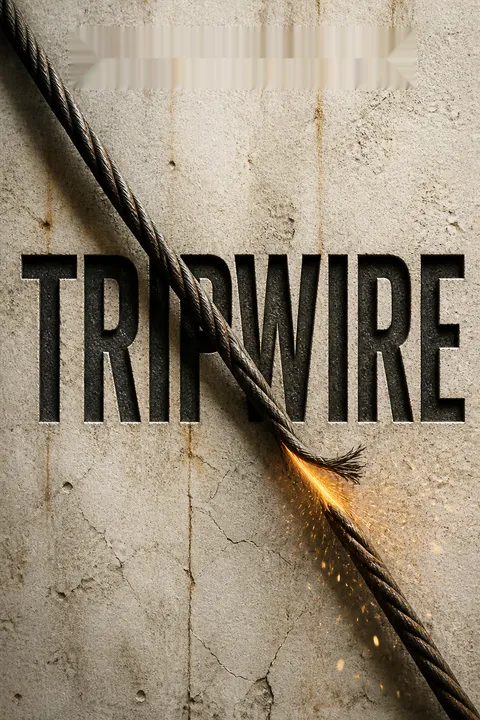


Plot Summary
Prologue
For nearly thirty years, Hook Hobie has guarded the secret behind his fortune, his freedom, and his carefully built life. He relies on two distant warnings: one from Hanoi, another from Hawaii. The first should give him time to prepare; the second should send him running.
Instead, the nearer warning arrives first, then the farther one follows the same day. Hobie knows what the warnings mean. He also sees a chance to seize a failing company. Rather than flee as planned, he stays to finish the deal.
The opening makes Hobie's central weakness part of the suspense: he recognizes danger clearly, yet refuses to obey his own escape plan. His warning system turns an old secret into a clock, while the business opportunity tempts him to believe that another brief delay can still be controlled. This is not simple ignorance or bravado. Hobie understands the threat and chooses greed over survival, exposing how a life built on calculation can still be undone by the desire for one final advantage.
The Search Comes South
In Key West, Jack Reacher has made anonymity a refuge after leaving the Army. He digs swimming pools by day and works security at a nude bar by night. Private detective Costello approaches him with questions about a former military police major named Reacher, but Reacher denies being the man.
Meanwhile, New York businessman Chester Stone needs $1.1 million to keep his inherited company afloat for six weeks. Hook Hobie lends it at punishing terms and takes a lasting claim on Stone's stock. Costello's inquiries alarm Hobie's men, who follow him south. Reacher's lie keeps him from learning why Costello came, while Stone's signature gives Hobie leverage over a company already close to collapse.
The parallel plots begin with men trying to preserve the lives they know. Reacher avoids a name because civilian life has left him without a role, and Stone accepts a dangerous loan because he cannot bear to lose the family business. Their choices have opposite moral weight, but both postpone a reckoning. Reacher's concealment is defensive and temporary; Hobie's financial arrangement is predatory by design. The opening therefore makes invisibility and debt two forms of exposure: one man tries to escape notice, while another signs away control in exchange for a few weeks of hope.
Costello's Last Lead
Two young men in expensive suits come to the bar looking for Reacher. He forces them back downstairs, then finds Costello beaten to death near a cemetery, his fingertips cut off and his wallet gone. Reacher believes the men killed the detective to discover whom he was seeking, and guilt over his own lie makes him act.
He flies north, locates Costello's Greenwich Village office, and finds the secretary missing, her work abandoned mid-letter. An invoice leads him to a Wall Street law firm. When he calls, an assistant gives him the address of a funeral in Garrison. Reacher reaches the Hudson-side home and recognizes the family name on the mailbox: Garber, the name of his former commander.
Costello's death transforms Reacher's private caution into responsibility. He did not kill the detective, but he sees that his refusal to identify himself helped leave Costello alone with the people hunting him. The distinction between guilt and culpability matters here: Reacher's shame is not a legal confession, but it is enough to propel him back into the investigative role he had tried to abandon. The abandoned office and unfinished letter make the violence legible through small professional disruptions. The case begins to pull him not through a formal summons, but through the consequences of his own evasive choice.
Garber's Funeral Assignment
At Leon Garber's funeral, Reacher finds Jodie, the general's daughter and Costello's client. She explains that her father had asked Costello to locate Reacher because he was too ill to continue an obligation he had taken on. Before Jodie can explain more, the two men from Key West attack the house.
Reacher hurls Garber's heavy file case at one gunman, knocks the other down, and shoves Jodie back inside. They escape through the garage in her vehicle, then return after the attackers leave to retrieve Garber's papers. At a cardiology clinic, Jodie and Reacher learn that Garber spent time with an elderly couple, Tom and Mary Hobie. His concern has passed to Reacher, though its cause remains unknown.
The funeral reconnects Reacher to a relationship that predates his chosen isolation. Garber was not merely a superior officer; he was a mentor whose trust gave Reacher a place in the Army. Jodie is both the surviving link to that past and an adult with her own professional authority. The attack confirms that Garber's unfinished task has dangerous consequences, but Reacher responds as if the old chain of responsibility still holds. His decision to continue is not based on knowing the case. It grows from loyalty to a man whose judgment shaped his own.
Broadway's Moving Roadblock
After Jodie reaches Manhattan, Reacher studies her apartment and insists on escorting her to work. The next morning, a black truck slams into her vehicle on Broadway, pinning it between cars. Reacher realizes the collision is an ambush when a man approaches Jodie's door with a weapon.
He reverses and drives forward through the wreckage, knocking the attacker aside, then gets Jodie out through his own door and abandons the damaged vehicle in an alley. He persuades her to stay at her secure office while he investigates the Hobies. That evening he tells her what he has learned, then admits that his feelings for her were never familial. Jodie reveals she has loved him for years, and they begin a relationship.
The attack changes Jodie's danger from a distant possibility into a physical fact, while the relationship changes through a different kind of risk. Reacher can read a vehicle's movement and act without hesitation, but speaking honestly to Jodie requires him to abandon the safe fiction that she is only a friend's daughter. Her response shows that the supposed family boundary has concealed mutual longing rather than mutual indifference. The juxtaposition is important: Reacher's protective instinct is effective against an external threat, but intimacy requires him to stop deciding on Jodie's behalf and let her answer for herself.
The Hobies' Missing Son
Reacher visits Tom and Mary Hobie, an infirm couple who have spent decades searching for their son Victor, an Army helicopter pilot listed as missing in Vietnam. General Garber had been helping them. The Hobies show Reacher a photograph of a gaunt American prisoner behind a fence, supplied by Bronx investigator Rutter, who promised to organize a rescue.
Their savings have already paid for his reconnaissance. Reacher questions Victor's old friend Ed Steven, who remembers a serious, ordinary young man devoted to military service. The photograph troubles Reacher, but he has not yet proved it false. When he returns to Jodie, they study the evidence together, and Reacher's suspicion that the image was staged becomes a concrete lead.
The Hobies' hope is sustained by evidence they desperately need to believe. Their son's absence has left them vulnerable not because they are foolish, but because uncertainty prevents grief from becoming a completed fact. Reacher approaches the case through character evidence, comparing the young pilot in the letters and memories with the stranger in the photograph. His method is useful but imperfect: he trusts a stable personality to predict behavior across war and trauma. The section also shifts his obligation from loyalty to Garber toward responsibility for two civilians whose hope has already been purchased at great cost.
The Jungle in the Bronx
Reacher recognizes the plants in Rutter's supposed Vietnam photograph from the New York Botanical Garden. He takes Jodie to the conservatory, where the foliage, bench, and viewing angle match the image. Rutter has staged a prisoner scene with borrowed props and a hired man, exploiting the Hobies' need to see their son alive.
Reacher and Jodie confront him in his surplus store, where several armed men emerge from a cellar. Reacher shoots apart a chair with a stolen Steyr to make them surrender, then forces Rutter to reveal the truth and recover the Hobies' $18,000. Jodie calculates interest and divides the money: half is returned to the couple, and half funds their search for the real story.
The conservatory turns visual certainty against itself. The photograph looked persuasive because the Hobies were primed to interpret it as proof; Reacher breaks that spell by comparing its details to an ordinary place in New York. The fraud is not just financial theft. It converts mourning into a market and sells the victims a temporary escape from loss. Reacher's violence against Rutter is coercive, yet it is directed toward restitution and further inquiry rather than personal gain. Jodie's interest calculation gives the recovery a legal and ethical precision that balances Reacher's blunt force.
DeWitt's Sealed Record
Reacher and Jodie travel to the military records center in St. Louis and persuade Major Conrad to open Victor Hobie's file. It records a helicopter lost after taking fire near the An Khe Pass, with eight men aboard and no recovered wreckage. In Texas, General DeWitt first denies remembering Victor, then describes a gifted, unusually unemotional pilot whose improvised techniques saved soldiers.
DeWitt refuses to explain the final mission, calling it classified, but urges Reacher to look closer to home and hints that the co-pilot's records matter. The files show that co-pilot Kaplan was eventually declared killed in action, while Victor remained missing. Reacher and Jodie leave for Hawaii, where the crash site has finally been excavated.
Institutional records provide facts, but their categories also conceal choices. The Army's distinction between missing and killed in action is presented as a procedural safeguard against premature certainty, yet it can preserve an unresolved story for decades. DeWitt's evasions make silence itself evidence: he remembers enough to describe Victor's excellence but will not discuss the mission that ended his record. Reacher's investigative skill now depends on reading gaps between documents rather than treating official classifications as conclusions. The case also unsettles his confidence in his own judgment, since the evidence he gathers complicates rather than confirms his first impression of Victor.
Seven Caskets, Fifteen Hands
At the Army identification laboratory in Hawaii, forensic anthropologist Nash Newman shows Reacher and Jodie the remains recovered from the crash. Seven caskets hold the remains of seven men, but the bones include fifteen hands. One body is missing, while a severed right hand and forearm show that someone survived the wreck with a serious injury.
Newman reveals that a wounded man identified as Victor Hobie reached a field hospital, killed an orderly while escaping, and disappeared. Reacher cannot reconcile that record with the dutiful pilot he has studied. Newman agrees to compare the remains with Victor's dental films. Meanwhile, Hobie's warning system advances, and the New York operation accelerates its takeover of Stone's company.
The extra hand is a material contradiction that no institutional label can explain away. It changes the question from whether anyone survived to how the survivor's identity was recorded. Reacher's forensic reasoning turns the body count into a form of testimony: an absent corpse and a severed limb mark the limits of what the archive can claim. Yet the hospital account seems to indict the missing pilot, forcing Reacher to confront the possibility that his humane portrait of Victor is wrong. The concurrent takeover sharpens the clock. While Reacher seeks a truthful account of the past, Hobie is converting present uncertainty into immediate control.
Stone's Company in Chains
Hobie deliberately drives Stone's stock price down, prompting the banks to sell him their debt and secured shares. He plans to close the factory, trigger mortgage defaults among workers, and acquire valuable Long Island land.
As Stone realizes the loan has become a $17.1 million trap, Hobie's men strip him, threaten his wife Marilyn, and hold both of them with real-estate agent Sheryl. Marilyn bargains to get Sheryl to a hospital, where Sheryl alerts Stone's lawyer.
Police officers O'Hallinan and Sark trace the company vehicle to Hobie's office, but Tony and armed guards capture them. Marilyn arranges a delayed stock meeting and hires detective William Curry to impersonate the lawyer expected there, hoping a witness will keep Hobie from killing them.
Hobie's takeover joins financial coercion to bodily coercion. He first makes the company appear worthless, then uses the resulting panic to buy the debt cheaply; inside his office, he makes the same logic literal by taking Stone's clothes, possessions, and choices. Marilyn's planning counters this system with procedural delay, witnesses, and public accountability. Her strategy is imperfect, but it marks a shift from being treated as leverage to acting as a negotiator. The police officers' capture shows the cost of ordinary institutions entering a private criminal order without knowing its rules.
The Hook's Real Name
Newman's dental comparison proves that one of the recovered skeletons is Victor Hobie, despite the dog tags found with it. Reacher understands that the hospital's fugitive used Victor's identity, while the real Victor died in the crash. In Costello's office, he finds notes about an appointment at CCT, short for Cayman Corporate Trust, whose owner is Hook Hobie.
Jodie attends the delayed meeting with Curry, but Hobie recognizes the deception and takes both of them hostage alongside the Stones. He makes Stone sign over the stock and keeps the group as bait for Reacher. When Jodie secretly warns him, Reacher is already close enough to turn toward the World Trade Center.
The convergence of dental evidence and Costello's discarded notes resolves two mysteries through different kinds of proof. A body establishes who died; a business abbreviation locates who is still operating under a false identity. The mismatch between dog tags and teeth demonstrates how a single deliberate substitution can distort both family memory and government records. Jodie's decision to enter Hobie's office is risky, but it is also an exercise of agency: she refuses to abandon the people trapped there. Her coded warning depends on the intimacy she and Reacher have built, turning personal knowledge into practical communication.
Carl Allen Unmasked
Reacher enters the eighty-eighth floor, kills the armed men blocking him, and confronts the scarred lender as he holds Jodie at gunpoint. Reacher identifies him as Carl Allen, the Vietnam infantryman being transported for arrest when the Huey crashed. Allen survived, exchanged dog tags with the dead Victor, and escaped under Victor's name.
The real Victor's skeleton and dental records prove that the pilot died in the crash; Allen's apparent record of desertion and murder belongs to the man who stole his identity. Allen demands Reacher's name and threatens Jodie, but Reacher refuses. He shoots Allen after a prolonged standoff, taking a bullet in the chest and a nail fragment in his head.
The revelation restores moral distinctions that the false identity had scrambled. Victor was not the deserter who abandoned his parents; Allen used his name to conceal his own past and build a new life. Reacher's accusation is persuasive because it joins military history, skeletal evidence, and the physical fact of the missing hand. Yet the climax does not make truth painless. Reacher must hold his aim while injured, and his refusal to exchange identities for Jodie's safety makes the confrontation a test of whether his ethical commitments survive bodily fear. His victory comes at a cost that leaves him unconscious.
A Home Beyond the Road
Reacher wakes three weeks later in St. Vincent's Hospital, where Jodie has stayed beside him. The Army agrees to recognize Victor as a fallen hero and arrange full honors for Tom and Mary Hobie, including his name on the Vietnam memorial. The Hobies visit Reacher, now able to grieve their son as dead rather than wait for a return that never came.
Jodie tells Reacher that Leon left him the Garrison house. Reacher initially resists the bequest, since he has spent his life moving from place to place, but begins to imagine living there. He asks Jodie to help him recover. She agrees, and the two leave the hospital together, their future no longer limited to a road with no destination.
The ending settles two forms of unfinished business without pretending to erase their costs. The Hobies receive an honorable account of Victor's death, and a public recognition that corrects the identity fraud which prolonged their grief. Reacher, meanwhile, inherits more than property: Garber has offered him a place in civilian life, something he never believed he needed. His first response is resistance because a home implies obligations and continuity. His willingness to accept help from Jodie suggests that anchoring himself need not mean surrendering his independence. The resolution turns belonging from a trap into a choice.
Analysis
Tripwire ties its military mystery to a contemporary struggle over identity, evidence, and control. The plot repeatedly asks what can be trusted when a person's name, a photograph, a financial statement, or an official record can be manipulated. Reacher's investigation succeeds because he refuses to treat any single source as final. He compares memory with files, dog tags with dental records, and a jungle image with the greenhouse plants visible behind it. The book's strongest revelation is therefore not merely that a criminal has hidden under another man's name. It is that institutions and families can preserve a false identity for decades when a convenient label goes unchallenged.
The Hobies' grief and Stone's financial panic are different forms of vulnerability, but both draw predators who sell a solution while tightening the trap. Rutter turns the parents' hope into cash; Hook Hobie turns Stone's temporary need into control of a company and its land. In each case, the victim's desire is not foolish in itself. The danger comes from a person who understands that desire better than the victim can defend against it. Reacher's violence interrupts that exploitation, though the novel does not present violence as a clean alternative to law. He acts outside ordinary procedure, risks killing, and nearly dies himself. His insistence on concrete proof keeps his force from becoming mere retaliation.
Reacher's personal arc runs beside the investigation. He begins by protecting anonymity, lies to Costello, and leaves the Keys because guilt makes neutrality impossible. Jodie's return asks more of him than physical protection: he must acknowledge her as an adult and accept that belonging involves mutual choice. Garber's bequest makes the same demand in material form. The house is not simply a reward; it is an invitation to stop treating the future as someone else's problem. By the end, Reacher has not abandoned his independence. He has discovered that commitment can be chosen without becoming captivity.
Review Summary
Tripwire receives mixed reviews, with some praising its suspenseful plot and character development, while others criticize repetitive writing and unrealistic elements. Many readers appreciate the improved prose and intriguing villain compared to previous books. The story follows Jack Reacher as he investigates a Vietnam War mystery and confronts a ruthless loan shark. Fans enjoy Reacher's resourcefulness and the book's fast-paced action, though some find certain plot points implausible. Overall, it's considered a solid entry in the Jack Reacher series.
People Also Read









Characters
Jack Reacher
The wandering investigatorA former Army military police major, Reacher is physically formidable, observant, and most comfortable when no one can track him. Years of military structure gave him skill and purpose; civilian freedom leaves him wary of commitments, even as his actions show a strong sense of responsibility. He reads people and situations through evidence, habit, and instinct, and he can move quickly from analysis to violence. His loyalty to Leon Garber draws him into the case, while his bond with Jodie challenges the protective distance he usually keeps. Reacher's central tension is not between strength and weakness, but between the ease of remaining unattached and the desire to matter to other people.
Jodie Garber
The lawyer with a stakeLeon Garber's daughter, Jodie is a Wall Street lawyer skilled at negotiating debt and reading power. She is composed in public and emotionally direct with the people she trusts. Her father's death leaves her with an unresolved obligation, but she does not merely inherit his task: she investigates, questions Reacher, and makes her own decisions about danger. Her history with Reacher contains affection that has lasted beyond adolescence, alongside resentment at being seen chiefly through her father's role. She values her career and independence, yet neither prevents her from risking herself for the Hobies. Jodie brings legal reasoning and emotional insight to a partnership that might otherwise be governed only by Reacher's instincts.
Hook Hobie
The predatory lenderA wealthy private lender with a burned face and a steel hook, Hobie has learned to make visible injury part of his authority. He studies borrowers, markets, and personal vulnerabilities with the same cold concentration, then turns each weakness into leverage. His methods range from polished financial agreements to threats against families, and he treats the difference as a matter of technique rather than morality. Hobie prides himself on adapting, believing that flexibility is the source of his survival and success. Beneath that self-image is a man who cannot accept the moment when caution requires him to abandon a profitable opportunity. His clients encounter both a calculating businessman and a practiced intimidator.
Leon Garber
Reacher's fallen mentorA senior military police officer and Reacher's former commander, Garber is remembered as blunt, fair, and unusually perceptive. He backed Reacher's rapid rise in the Army without claiming credit for his success. His affection for his daughter and his sense of duty shape the obligations he leaves behind. Even after his death, his decisions draw Reacher back into service and place Jodie at the center of the case. Garber's careful habits and trust in Reacher contrast with the uncertainty of the task he could not finish.
Chester Stone
The cornered company heirThe third Chester Stone to lead his family's manufacturing company, he is trying to preserve an enterprise whose market has collapsed around it. He understands that the business is in trouble but hides the details from Marilyn, partly from pride and partly from a wish to protect her. That secrecy leaves him vulnerable to Hobie's leverage. Stone is neither an outright villain nor a helpless innocent: his decisions have helped bring the company to the brink, but he remains attached to the work and legacy built by his father and grandfather.
Marilyn Stone
The strategic spouseMarilyn sees Chester's financial distress before he can admit it and responds with practical planning. She prepares their house for sale, studies the likely market, and tries to protect their future without turning his shame into another burden. Under pressure, she becomes a negotiator, using delay and carefully chosen conditions to create opportunities for help. Her confidence is not fearlessness; she is often frightened, but continues to make decisions while others are stunned. Marilyn's clear-eyed loyalty challenges the assumption that the financially powerful spouse must be the one in control.
Tom Hobie
The grieving fatherAn elderly, seriously ill former printer, Tom Hobie has spent decades seeking an account of his son Victor's disappearance in Vietnam. He and his wife built their lives around a belief in military duty and the importance of bringing their boy home. His failing health gives the search urgency, while his careful collection of letters and official papers preserves its history. Tom's hope is stubborn, but not shallow: it is the form his love has taken in the absence of reliable information.
Mary Hobie
The waiting motherTom's frail wife, Mary has shared his long search for their only son. She speaks with gentle reserve and has learned to live with a question the Army never properly answered. Her memories and the family photographs help Reacher understand the boy they raised, beyond the bureaucratic label attached to him. Mary's hope makes her vulnerable to false promises, but her steadiness and care for Tom remain sources of strength.
Victor Hobie
The missing helicopter pilotTom and Mary's only son, Victor is a volunteer Army pilot whose file records strong academic and flying ability. Letters home and the recollections of his childhood friend portray a serious, dutiful young man, while General DeWitt remembers a pilot whose inventive methods saved lives. Victor's unresolved status has shaped his parents' lives for decades and gives Garber his final task. The contrast between the young man known by his family and the official record of his disappearance drives Reacher to question what the documents leave out.
Costello
The discreet private detectiveA retired New York police detective turned private investigator, Costello handles cases through legal and professional contacts rather than public advertising. He is persistent enough to trace Reacher to Key West, but he does not know how dangerous his inquiry has become. His work connects Jodie's request to the New York financial world and gives Reacher the first trail to follow. Costello's methodical habits leave clues behind even when he is no longer able to explain them.
Tony
Hobie's office lieutenantHobie's receptionist and trusted aide, Tony manages the routines that make the lender's office look respectable. He coordinates surveillance, intimidation, and the practical work of keeping Hobie's operation concealed. Tony understands his employer's methods and occasionally recognizes the danger in them, but obedience and self-preservation keep him involved. His polished manner makes the contrast between the office's professional surface and its violence more unsettling.
Crystal
Reacher's Key West friendA dancer at the Key West bar where Reacher works, Crystal treats his guilt over Costello's death with blunt compassion. She understands his attraction to anonymity even when she cannot share his sense of obligation to a stranger. By driving him to Miami, she helps him leave the life he had built in the Keys. Her brief presence gives Reacher's departure an emotional cost: the freedom he prizes also means leaving people without promising to return.
Ed Steven
Victor's childhood friendA hardware-store owner in Brighton, Ed grew up with Victor Hobie and knew him before the Army. He remembers Victor as conventional, earnest, and serious about service, while acknowledging that a childhood friend's judgment has limits. Ed's account helps Reacher test the family's memories against someone who knew Victor outside the home. He represents the town's practical, modest world, where old loyalties persist but old stories can become burdens.
General DeWitt
The guarded flight instructorA senior helicopter officer who trained and served with Victor, DeWitt is now responsible for a flight school. He remembers Victor as a gifted pilot who was emotionally difficult to know. Years of combat have made DeWitt wary of attachment and blunt about the waste of war. He guards classified details, but his hints show that his silence is not simple forgetfulness. His recollections give Reacher a firsthand account that complicates the official file.
Nash Newman
The forensic anthropologistA highly respected Army forensic anthropologist, Newman studies human remains to identify the missing and establish how they died. He taught Reacher advanced forensic methods and still feels loyalty to Leon Garber. Newman takes official secrecy seriously, but his friendship with Reacher leads him to examine evidence outside normal procedure. His precision is essential to the case: he can distinguish what a set of dog tags claims from what the teeth and bones establish.
Rutter
The Bronx investigatorA military-surplus dealer and paid investigator, Rutter operates from a dusty Bronx storefront with an illegal trade beneath its respectable cover. He offers the Hobies a possible answer to their son's disappearance, and his services draw Reacher and Jodie into a dangerous confrontation. Rutter is more interested in what clients will believe than in what the evidence can prove. His business depends on exploiting the distance between hope and verification.
William Curry
The lawyer's substituteA retired New York detective working as a private investigator, Curry is hired to attend a meeting in the identity of a senior lawyer. He prepares cautiously, carrying concealed weapons, but enters a situation whose danger exceeds the assignment he accepted. Curry is experienced enough to recognize a trap and disciplined enough to wait for a real opening. His presence gives Marilyn's attempt at a witnessed transfer a measure of professional legitimacy.
Sheryl
Marilyn's real-estate agentA capable local realtor, Sheryl helps Marilyn prepare the Stone home for a possible sale. Her professional confidence encourages Marilyn to act before the financial crisis becomes public. She is drawn into Hobie's violence through her work, but remains part of Marilyn's effort to reach help.
Dr. McBannerman
Garber's cardiologistA young cardiologist who treated Leon Garber, McBannerman remembers his new preoccupation with a task and his later visit to Hawaii. She cannot disclose patient information freely, but her recollections point Jodie and Reacher toward the elderly Hobies.
Officers O'Hallinan and Sark
The domestic violence detectivesNYPD detectives investigating abuse, O'Hallinan and Sark question Sheryl after she arrives at the hospital with severe facial injuries. Their persistence leads them from her account to the corporate vehicles connected with Hobie's office. They approach the case through ordinary police procedure, unaware of the larger criminal operation they are entering.
Plot Devices
The distant warning calls
A clock on Hobie's secretHobie relies on two contacts, one in Hanoi and one in Hawaii, to warn him when the past he has concealed is getting close. He has planned to use the first warning to prepare and the second to flee. The calls arrive out of order on the same day, disrupting the schedule he has trusted for decades. This mechanism gives the prologue its suspense and later explains why Hobie continues taking risks even as Reacher closes in. It also exposes the flaw in Hobie's self-image: he treats a carefully designed escape plan as proof that he can control danger.
Rutter's POW photograph
Hope disguised as evidenceThe Hobies' photograph appears to show their son alive in a Vietnamese prison camp, and it persuades them to spend their remaining savings on a rescue effort. Reacher tests the image against its visible details and recognizes that its vegetation matches the New York Botanical Garden. The staged image reveals how Rutter exploits the family's desire for certainty. It also gives Reacher a concrete route to the Bronx investigator, rather than leaving him to pursue an abstract rumor. The photograph's false setting makes perception itself part of the investigation: its meaning depends on what the viewers want to see and what they are willing to check.
Dog tags and dental records
Identity tested against boneThe crash victims' dog tags initially suggest who died, but the remains do not fully agree with the names attached to them. The count of seven bodies and fifteen hands indicates that a wounded man escaped, while a dental comparison identifies Victor Hobie's skeleton independently of the tags. Together, these clues expose a decades-old identity substitution. The device works because each form of evidence has a different vulnerability: tags can be exchanged, but the body and its dental history preserve a more personal record. This discovery turns the Vietnam mystery into the key to identifying Hobie and clearing Victor's name.
The stock-transfer trap
Debt converted into controlHobie lends Stone a short-term sum, then uses the company's falling share price to pressure its banks into selling him their debt and secured stock. The apparent bridge loan becomes an opening for a takeover: Hobie can threaten the company, its employees' mortgages, and Stone's family until Stone signs over enough shares. Marilyn counters with a false claim that a trust requires additional approval, buying time to arrange a witness and alert a lawyer. The device shows Hobie's central method in miniature. He turns an ordinary financial instrument into coercion by controlling the borrower's options and threatening what the borrower loves.
Garber's house bequest
An anchor for ReacherLeon Garber leaves his Garrison house to Reacher, believing that his former officer needs a place to return to after years of military service and drifting. Reacher initially experiences the bequest as a burden: a house entails bills, maintenance, and a settled life he has avoided. Jodie explains that she does not want the property and that her father chose freely. The bequest resolves more than an inheritance question. It makes Reacher confront the fact that his drifting has already become work and that he can choose a future with a home and a partner rather than simply continue moving.
FAQ
Synopsis & Basic Details
What is Tripwire about?
- Synopsis focuses on Reacher's entanglement: Jack Reacher is living a simple life digging swimming pools in Key West when a private investigator looking for him turns up dead, drawing Reacher into a dangerous conspiracy connected to his past and a mysterious woman named Mrs. Jacob.
- Reacher's past collides with present: The story follows Reacher as he investigates the investigator's murder, uncovering a web of deceit and corruption that leads him from the Florida Keys to New York City and beyond, forcing him to confront powerful enemies and protect those caught in the crossfire.
- Unraveling a complex conspiracy: Reacher must use his skills and instincts to unravel the truth behind the conspiracy, which involves a ruthless man named Hook Hobie, a struggling businessman, and a secret from the Vietnam War era, all while staying one step ahead of those who want him dead.
- Themes of identity and justice: The novel explores themes of identity, deception, and the search for justice as Reacher navigates a dangerous world of hidden agendas and deadly secrets, ultimately seeking to expose the truth and protect the innocent.
Why should I read Tripwire?
- Intriguing mystery and suspense: The novel offers a compelling mystery with plenty of twists and turns, keeping readers guessing as Reacher uncovers the truth behind the conspiracy and the identity of Mrs. Jacob.
- Action-packed thriller: Tripwire delivers plenty of action and suspense, with Reacher facing dangerous adversaries and engaging in thrilling confrontations as he fights to protect himself and those around him.
- Compelling characters and relationships: The novel features a cast of memorable characters, including the enigmatic Jack Reacher, the determined Jodie Garber, and the ruthless Hook Hobie, whose motivations and relationships add depth and complexity to the story.
- Exploration of moral ambiguity: Tripwire explores themes of morality and justice, as Reacher grapples with difficult choices and confronts the dark side of human nature, forcing readers to question their own values and beliefs.
What is the background of Tripwire?
- Post-Vietnam War disillusionment: The novel is set against the backdrop of the lingering effects of the Vietnam War, exploring themes of disillusionment, betrayal, and the search for truth in a world of deception and corruption.
- Military police investigation expertise: Lee Child draws on his own experiences and knowledge of military police procedures to create a realistic and compelling portrayal of Reacher's investigative skills and the challenges he faces in uncovering the truth.
- Financial corruption and corporate greed: The novel explores themes of financial corruption and corporate greed, as Hook Hobie seeks to exploit Chester Stone's financial troubles for his own gain, highlighting the dark side of capitalism and the lengths people will go to for power and wealth.
- Geographical settings enhance atmosphere: The settings of Key West, New York City, and the Vietnam War era contribute to the novel's atmosphere and themes, providing a vivid backdrop for the action and adding depth to the characters and their motivations.
What are the most memorable quotes in Tripwire?
- "Because being invisible had become a habit.": This quote encapsulates Reacher's desire for anonymity and his deliberate efforts to remain detached from society, reflecting his complex and alienated response to his past experiences and his preference for solitude.
- "They mess with me, they answer to me.": This quote reveals Reacher's unwavering sense of justice and his willingness to take matters into his own hands, highlighting his moral code and his determination to protect the innocent, even at great personal risk.
- "I'm always happy. Always was, always will be.": This quote reflects Reacher's stoic nature and his ability to find contentment in simplicity and freedom, showcasing his unique perspective on life and his resilience in the face of adversity.
What writing style, narrative choices, and literary techniques does Lee Child use?
- Concise and direct prose: Lee Child employs a concise and direct writing style, characterized by short sentences, vivid descriptions, and a fast-paced narrative that keeps readers engaged and focused on the action.
- First-person limited perspective: The novel is narrated from Reacher's point of view, providing readers with intimate access to his thoughts, feelings, and observations, while also creating a sense of mystery and suspense as the truth is gradually revealed.
- Foreshadowing and red herrings: Child uses foreshadowing and red herrings to create suspense and misdirection, planting clues and misleading readers to keep them guessing about the true nature of the conspiracy and the identity of the villains.
- Realistic action sequences: The novel features realistic and visceral action sequences, characterized by detailed descriptions of combat techniques, weapons, and the physical and psychological effects of violence, adding authenticity and intensity to the story.
Hidden Details & Subtle Connections
What are some minor details that add significant meaning?
- The business cards on the wall: The description of the bar with "ten thousand business cards, tacked up over every spare square inch" foreshadows the complex web of connections and hidden identities that Reacher will soon uncover, suggesting that everyone has a story and a past.
- Reacher's water addiction: Reacher's "addiction to the water as he had once been to coffee" symbolizes his attempt to cleanse himself of his past and embrace a simpler, healthier lifestyle, while also highlighting his disciplined nature and his ability to adapt to new environments.
- The presidents' names in the motel register: Reacher checking into a motel under the name Harry S Truman and noting that "most of the forty-one presidents had stayed there" suggests the transient nature of his existence and the insignificance of individual identities in the face of larger historical forces.
- Crystal's Porsche: Crystal's "old black Porsche" represents her independence and her ability to navigate a dangerous world on her own terms, while also foreshadowing the fast-paced action and the high stakes that Reacher will soon encounter.
What are some subtle foreshadowing and callbacks?
- The "Tarzan" nickname: The nickname "Tarzan" given to Reacher in the nude bar foreshadows his primal strength and his ability to navigate a dangerous environment, while also highlighting the contrast between his rugged exterior and his sharp intellect.
- Costello's sliced fingertips: The detail of Costello's "fingertips had been sliced off" foreshadows the ruthless nature of the villains and their willingness to use extreme violence to protect their secrets, while also creating a sense of unease and foreboding.
- The mention of Zapruder: The reference to "Zapruder" when describing Chester Stone's family history foreshadows the themes of conspiracy and hidden truths that will emerge later in the novel, while also highlighting the cultural and historical context of the story.
What are some unexpected character connections?
- Leon Garber and Hook Hobie's shared history: The revelation that Leon Garber and Hook Hobie both served in the Vietnam War creates a complex and unexpected connection between the two men, suggesting that their lives were intertwined in ways that Reacher is only beginning to understand.
- Jodie Garber and Crystal's shared strength: The parallel between Jodie Garber's determination to uncover the truth and Crystal's ability to navigate a dangerous world on her own terms suggests a shared strength and resilience among the women in Reacher's life, highlighting his respect for female agency and independence.
- Costello and the NYPD connection: Costello's past as an NYPD detective and his reliance on favors from old colleagues to access Reacher's bank records highlights the importance of connections and loyalty in a world of corruption and deceit, while also suggesting that even those who uphold the law can be compromised.
Who are the most significant supporting characters?
- Crystal: Crystal, the dancer in Key West, provides Reacher with crucial information and support, demonstrating her resourcefulness and her willingness to help those in need, while also offering a glimpse into Reacher's ability to connect with people from all walks of life.
- Marilyn Stone: Marilyn Stone, Chester's wife, exhibits remarkable strength and intelligence in the face of adversity, using her quick thinking and strategic deception to protect her family and buy them time, highlighting the importance of female agency and resilience in a male-dominated world.
- Nash Newman: Nash Newman, the forensic anthropologist, provides Reacher with crucial information and expertise, demonstrating his commitment to truth and justice, while also offering a glimpse into the world of scientific investigation and the challenges of identifying the dead.
Psychological, Emotional, & Relational Analysis
What are some unspoken motivations of the characters?
- Reacher's guilt and responsibility: Reacher's unspoken motivation is to atone for his perceived guilt in Costello's death, driving him to investigate the case and protect Jodie Garber, even at great personal risk, reflecting his strong moral code and his sense of responsibility for others.
- Jodie's desire to honor her father: Jodie's unspoken motivation is to honor her father's memory and fulfill his last wish, driving her to help Reacher uncover the truth behind the conspiracy, even as she grapples with her own feelings for him and the dangers they face.
- Hobie's need for control and validation: Hobie's unspoken motivation is to assert his dominance and validate his past actions, driving him to exploit Chester Stone's financial troubles and protect his secrets at all costs, reflecting his deep-seated insecurities and his ruthless ambition.
- Marilyn's protective instincts: Marilyn's unspoken motivation is to protect her husband and her family from harm, driving her to take charge of the situation and use her intelligence and resourcefulness to outmaneuver Hobie, even as she faces terrifying threats and difficult choices.
What psychological complexities do the characters exhibit?
- Reacher's detachment vs. his sense of duty: Reacher exhibits a complex psychological profile, torn between his desire for detachment and his strong sense of duty, often struggling to reconcile his need for solitude with his responsibility to protect others, reflecting his internal conflict and his evolving understanding of his place in the world.
- Jodie's unresolved feelings and professional ambition: Jodie exhibits a complex psychological profile, torn between her long-standing feelings for Reacher and her desire to maintain her professional independence, often struggling to balance her personal desires with her career aspirations, reflecting her internal conflict and her evolving understanding of her own identity.
- Hobie's trauma and ruthlessness: Hobie exhibits a complex psychological profile, shaped by his traumatic experiences in Vietnam and his subsequent disfigurement, often struggling to control his anger and his desire for revenge, reflecting his deep-seated insecurities and his ruthless ambition.
- Chester Stone's denial and desperation: Chester Stone exhibits a complex psychological profile, characterized by his denial of his financial troubles and his desperate attempts to save his company, often struggling to cope with the pressure and the consequences of his decisions, reflecting his vulnerability and his flawed judgment.
What are the major emotional turning points?
- Reacher's guilt over Costello's death: Reacher's emotional turning point occurs when he learns of Costello's murder, triggering a sense of guilt and responsibility that compels him to investigate the case and protect Jodie Garber, marking a shift from detachment to active involvement.
- Jodie's realization of Reacher's feelings: Jodie's emotional turning point occurs when Reacher reveals his true feelings for her, challenging her long-held beliefs about their relationship and forcing her to confront her own desires and fears, leading to a moment of vulnerability and connection.
- Chester Stone's loss of control: Chester Stone's emotional turning point occurs when he realizes he has lost control of his company and his life, triggering a sense of despair and helplessness that leaves him vulnerable to Hobie's manipulation, highlighting the devastating consequences of greed and poor judgment.
How do relationship dynamics evolve?
- Reacher and Jodie's evolving relationship: Reacher and Jodie's relationship evolves from a platonic friendship to a romantic partnership, as they confront their shared history and their growing feelings for each other, navigating the challenges of danger and uncertainty while forging a deeper connection based on trust and mutual respect.
- Hobie and Tony's power dynamic: Hobie and Tony's relationship evolves from a partnership to a master-servant dynamic, as Hobie's paranoia and ruthlessness increase, leading to Tony's growing unease and his eventual betrayal, highlighting the corrupting influence of power and the fragility of loyalty.
- Chester and Marilyn's marital bond: Chester and Marilyn's relationship evolves from a partnership to a dynamic where Marilyn takes charge, demonstrating her strength and intelligence, while Chester becomes more passive and dependent, highlighting the shifting power dynamics within their marriage and the resilience of their bond in the face of adversity.
Interpretation & Debate
Which parts of the story remain ambiguous or open-ended?
- The full extent of the government conspiracy: The novel leaves ambiguous the full extent of the government's involvement in covering up the truth about Victor Hobie's fate, raising questions about the motivations and actions of those in power and the potential for corruption within the military and political establishment.
- The long-term consequences of Reacher's actions: The novel leaves open-ended the long-term consequences of Reacher's actions, particularly his decision to kill Carl Allen and his potential impact on the lives of those involved, raising questions about the nature of justice and the moral implications of violence.
- The future of Reacher and Jodie's relationship: The novel leaves ambiguous the future of Reacher and Jodie's relationship, suggesting that their connection is strong but also acknowledging the challenges of building a life together given Reacher's nomadic lifestyle and his commitment to justice, leaving readers to wonder whether they will find lasting happiness together.
What are some debatable, controversial scenes or moments in Tripwire?
- Reacher's use of violence: Reacher's use of violence, particularly his killing of Carl Allen, is a controversial aspect of the story, raising questions about the morality of his actions and the justification for taking a life, even in self-defense or in the pursuit of justice.
- The portrayal of women: The portrayal of women in the novel, particularly Crystal and Marilyn, is a debatable aspect of the story, with some readers criticizing their objectification and their limited roles in the narrative, while others argue that they are complex and resourceful characters who contribute to the story in meaningful ways.
- The depiction of the Vietnam War: The novel's depiction of the Vietnam War and its impact on the characters is a controversial aspect of the story, with some readers criticizing its glorification of violence and its simplistic portrayal of complex historical events, while others argue that it provides a realistic and nuanced portrayal of the psychological toll of war.
Tripwire Ending Explained: How It Ends & What It Means
- Justice is served, but at a cost: The ending of Tripwire sees Reacher successfully eliminating the threat posed by Carl Allen and exposing his deception, bringing a sense of closure to the Hobie family and restoring Victor Hobie's honor, but at the cost of further violence and moral compromise.
- Reacher's future remains uncertain: The ending leaves Reacher's future uncertain, as he inherits Leon Garber's house and contemplates a more settled life with Jodie, but also acknowledges his restless spirit and his commitment to justice, suggesting that his journey is far from over.
- The cycle of violence continues: The ending highlights the cyclical nature of violence, as Reacher's actions, while justified, perpetuate a cycle of retribution and retribution, raising questions about the possibility of breaking free from the patterns of the past and finding lasting peace.
Synopsis & Basic Details
What is Tripwire about?
- Synopsis focuses on Reacher's entanglement: Jack Reacher is living a simple life digging swimming pools in Key West when a private investigator looking for him turns up dead, drawing Reacher into a dangerous conspiracy connected to his past and a mysterious woman named Mrs. Jacob.
- Reacher's past collides with present: The story follows Reacher as he investigates the investigator's murder, uncovering a web of deceit and corruption that leads him from the Florida Keys to New York City and beyond, forcing him to confront powerful enemies and protect those caught in the crossfire.
- Unraveling a complex conspiracy: Reacher must use his skills and instincts to unravel the truth behind the conspiracy, which involves a ruthless man named Hook Hobie, a struggling businessman, and a secret from the Vietnam War era, all while staying one step ahead of those who want him dead.
- Themes of identity and justice: The novel explores themes of identity, deception, and the search for justice as Reacher navigates a dangerous world of hidden agendas and deadly secrets, ultimately seeking to expose the truth and protect the innocent.
Why should I read Tripwire?
- Intriguing mystery and suspense: The novel offers a compelling mystery with plenty of twists and turns, keeping readers guessing as Reacher uncovers the truth behind the conspiracy and the identity of Mrs. Jacob.
- Action-packed thriller: Tripwire delivers plenty of action and suspense, with Reacher facing dangerous adversaries and engaging in thrilling confrontations as he fights to protect himself and those around him.
- Compelling characters and relationships: The novel features a cast of memorable characters, including the enigmatic Jack Reacher, the determined Jodie Garber, and the ruthless Hook Hobie, whose motivations and relationships add depth and complexity to the story.
- Exploration of moral ambiguity: Tripwire explores themes of morality and justice, as Reacher grapples with difficult choices and confronts the dark side of human nature, forcing readers to question their own values and beliefs.
What is the background of Tripwire?
- Post-Vietnam War disillusionment: The novel is set against the backdrop of the lingering effects of the Vietnam War, exploring themes of disillusionment, betrayal, and the search for truth in a world of deception and corruption.
- Military police investigation expertise: Lee Child draws on his own experiences and knowledge of military police procedures to create a realistic and compelling portrayal of Reacher's investigative skills and the challenges he faces in uncovering the truth.
- Financial corruption and corporate greed: The novel explores themes of financial corruption and corporate greed, as Hook Hobie seeks to exploit Chester Stone's financial troubles for his own gain, highlighting the dark side of capitalism and the lengths people will go to for power and wealth.
- Geographical settings enhance atmosphere: The settings of Key West, New York City, and the Vietnam War era contribute to the novel's atmosphere and themes, providing a vivid backdrop for the action and adding depth to the characters and their motivations.
What are the most memorable quotes in Tripwire?
- "Because being invisible had become a habit.": This quote encapsulates Reacher's desire for anonymity and his deliberate efforts to remain detached from society, reflecting his complex and alienated response to his past experiences and his preference for solitude.
- "They mess with me, they answer to me.": This quote reveals Reacher's unwavering sense of justice and his willingness to take matters into his own hands, highlighting his moral code and his determination to protect the innocent, even at great personal risk.
- "I'm always happy. Always was, always will be.": This quote reflects Reacher's stoic nature and his ability to find contentment in simplicity and freedom, showcasing his unique perspective on life and his resilience in the face of adversity.
What writing style, narrative choices, and literary techniques does Lee Child use?
- Concise and direct prose: Lee Child employs a concise and direct writing style, characterized by short sentences, vivid descriptions, and a fast-paced narrative that keeps readers engaged and focused on the action.
- First-person limited perspective: The novel is narrated from Reacher's point of view, providing readers with intimate access to his thoughts, feelings, and observations, while also creating a sense of mystery and suspense as the truth is gradually revealed.
- Foreshadowing and red herrings: Child uses foreshadowing and red herrings to create suspense and misdirection, planting clues and misleading readers to keep them guessing about the true nature of the conspiracy and the identity of the villains.
- Realistic action sequences: The novel features realistic and visceral action sequences, characterized by detailed descriptions of combat techniques, weapons, and the physical and psychological effects of violence, adding authenticity and intensity to the story.
Hidden Details & Subtle Connections
What are some minor details that add significant meaning?
- The business cards on the wall: The description of the bar with "ten thousand business cards, tacked up over every spare square inch" foreshadows the complex web of connections and hidden identities that Reacher will soon uncover, suggesting that everyone has a story and a past.
- Reacher's water addiction: Reacher's "addiction to the water as he had once been to coffee" symbolizes his attempt to cleanse himself of his past and embrace a simpler, healthier lifestyle, while also highlighting his disciplined nature and his ability to adapt to new environments.
- The presidents' names in the motel register: Reacher checking into a motel under the name Harry S Truman and noting that "most of the forty-one presidents had stayed there" suggests the transient nature of his existence and the insignificance of individual identities in the face of larger historical forces.
- Crystal's Porsche: Crystal's "old black Porsche" represents her independence and her ability to navigate a dangerous world on her own terms, while also foreshadowing the fast-paced action and the high stakes that Reacher will soon encounter.
What are some subtle foreshadowing and callbacks?
- The "Tarzan" nickname: The nickname "Tarzan" given to Reacher in the nude bar foreshadows his primal strength and his ability to navigate a dangerous environment, while also highlighting the contrast between his rugged exterior and his sharp intellect.
- **[Costello](#
Jack Reacher Series













About the Author
Other books by Lee Child


Download PDF
Download EPUB
.epub digital book format is ideal for reading ebooks on phones, tablets, and e-readers.








