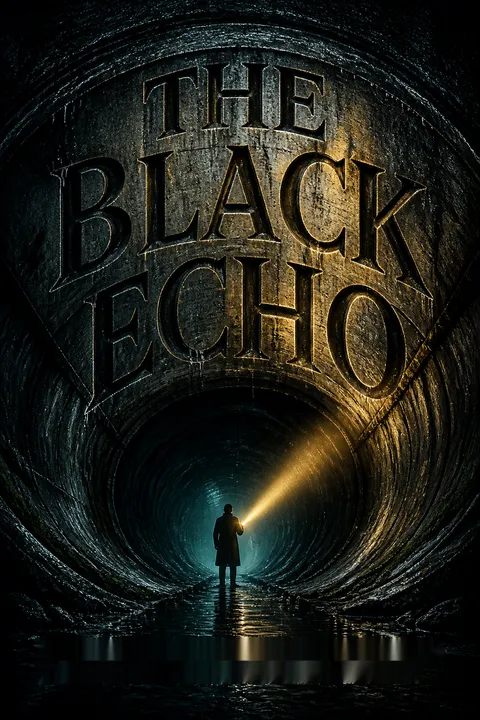


Plot Summary
Graffiti Before Dawn
Before dawn at Mulholland Dam, teenage runaway Edward Niese, who tags as Sharkey, paints beside the reservoir and inhales fumes to steady himself. A vehicle approaches without headlights. Hiding in the brush, he watches a driver pull a limp man from a beige Jeep and drag him into an old drainage pipe, while a smaller passenger stays behind.
The driver sweeps the ground with a branch, then breaks the pump-house bulb as the Jeep leaves. Sharkey crawls partway into the pipe, sees the body, and flees to a pay phone. He reports it anonymously, refusing to give his name. Hours later, Hollywood homicide detective Harry Bosch receives the call. The boy has set a murder investigation in motion, though he fears the men he saw.
The story begins with a witness who is both perceptive and frightened, not with an investigator who controls the scene. Sharkey notices the missing headlights, the second passenger, the deliberate sweeping, and the broken bulb, but his precarious life makes anonymity feel safer than responsibility. His act of calling police is therefore both a civic gesture and a survival calculation. The concealed passenger also plants a useful uncertainty: the men’s apparent number and identities may be wrong. The pipe functions as more than a hiding place. It is the first physical expression of the book’s recurring boundary between what can be seen and what remains buried.
The Tattoo in the Dark
Bosch crawls through the pipe and finds a scene that resists the easy overdose verdict. There are no usable tracks, the dead man’s shirt is drawn over his head, and one finger is broken. A syringe kit and a makeshift heroin stove invite the coroner’s technician to classify the man as another addict who used too much.
Then Bosch sees the tattoo of a rat on the man’s arm and recognizes William Meadows, a fellow First Infantry tunnel rat he knew in Vietnam. Jerry Edgar, Bosch’s partner, arrives and argues that Meadows’s criminal record and drug history explain the scene. Bosch remembers helping Meadows enter a veterans’ recovery program the previous year, so the apparent relapse feels both suspicious and personal.
Bosch’s recognition changes the evidence without resolving it. The body is no longer an anonymous casualty of Los Angeles’s street life, but an old companion whose recent story Bosch thought he had helped redirect. His insistence on the broken finger, absent tracks, and displaced shirt is sound investigative method, yet it is also shaped by a private obligation he cannot easily separate from the case. Edgar’s skepticism matters because it gives the reader a credible alternative to Bosch’s suspicion. The scene shows how professional judgment can sharpen under emotional pressure, but also how attachment risks turning a detective’s intuition into a conviction before the evidence is complete.
The Bracelet's Missing Trail
At Meadows’s apartment, Bosch and Edgar find signs that someone searched in haste: drawers were returned in the wrong order, clothing pockets were turned out, and the bed was disturbed. A photograph hidden behind a dresser shows Bosch and Meadows among their Vietnam tunnel squad.
Behind it, Bosch finds a pawn ticket issued six weeks earlier under Meadows’s false name, Bill Fields. The ticket describes an antique gold bracelet with jade.
At the pawnshop, owner Oscar Obinna reports a break-in that morning; the bracelet has been taken along with other jewelry. Obinna’s photograph confirms it is the piece Meadows pawned. The timing turns a personal clue into a pattern: someone searched Meadows’s home, then went directly to retrieve the bracelet.
The apartment’s disorder is significant because it records not merely that someone searched, but that the search failed. The misplaced drawers and hidden ticket let Bosch reconstruct an unseen visitor’s urgency, while the old photograph binds the present crime to a history Meadows had apparently kept private. The pawnshop break-in supplies a second, independent action that makes the bracelet more than a keepsake. Bosch’s method is tactile and comparative: he notices what was moved, what was missed, and what happened nearby at the same hour. The scene also establishes the case’s central investigative tension: an object can be both evidence of a crime and evidence of a larger crime still concealed.
A Needle Is Not Enough
Medical examiner Jesus Salazar moves Meadows’s autopsy ahead after Bosch presses for a closer examination. He confirms the finger was broken after death, then finds a chest puncture that was made while Meadows was alive.
Under the microscope, burned muscle shows that an electrode from a stun device was pressed into his chest, likely to make him talk. A fresh injection wound and unusually pure heroin point to the fatal dose, but medical evidence cannot prove who administered it.
Bosch also finds concrete grit in Meadows’s carefully kept work shoes, while the body’s clothes smell of urine, matching the apartment. Salazar concludes the evidence supports homicide. The presumed overdose is now a killing, and the bracelet becomes a possible motive.
The autopsy turns Bosch’s suspicion into a defensible account of violence, but it does not give him the certainty he wants. The stun-gun wound establishes coercion; the high-grade heroin and injection mark suggest a staged overdose, yet neither identifies the killer. Salazar’s caution prevents forensic evidence from becoming a convenient omniscient answer. Meanwhile, the grit and urine connect separate locations through material traces, making the body’s movement part of the case. This turning point demonstrates the limits of institutional knowledge: the medical examiner can name the injuries and their likely sequence, but Bosch must still discover the human motive that made torture useful.
WestLand Under the Street
Searching police property records, Bosch discovers that the bracelet matches one reported stolen from WestLand National Bank during a Labor Day weekend burglary. The thieves had dug from Los Angeles’s storm drains into the bank’s safe-deposit vault and opened hundreds of boxes, then vanished with millions in valuables.
Bosch had missed the case while suspended and away from Los Angeles. Newspaper clippings show that the bracelet belonged to an elderly customer who reported it stolen, while the FBI’s investigation had produced no arrests and recovered no property.
Meadows’s pawn ticket now places him in possession of loot from the heist. Bosch brings that link to FBI agent Eleanor Wish, whose name appears on the case bulletins, and asks to compare investigations.
The connection expands the scale of the story while preserving the personal shape of its opening. A single bracelet joins a dead veteran to a technically ambitious crime that federal investigators have failed to solve. Bosch’s absence during his suspension explains why he did not recognize the bank case earlier, and his return to it marks a professional as well as investigative reversal. The WestLand burglary also introduces a distinctive criminal method: the city’s infrastructure has been turned into a hidden road. The case’s central question shifts from who killed Meadows to why someone would torture him for one piece of loot among hundreds.
The FBI Closes Ranks
Wish initially refuses to share FBI files, insisting that Bosch’s personal history with Meadows creates a conflict. She reveals that the bureau had already examined both men as possible tunnel specialists and had ruled Bosch out.
After Bosch leaves, FBI agent John Rourke contacts Lieutenant Harvey Pounds and argues that Bosch should be removed from the homicide. Internal Affairs detectives Lewis and Clarke question Bosch and Edgar; Edgar is taken off the case, while Bosch refuses to answer without representation.
Bosch later confronts Wish and warns that he will take the FBI’s failure to the Los Angeles Times if she keeps him sidelined. The bureau relents, assigning him to work with Wish. The alliance begins under pressure, and Bosch remains watched by his own department.
This conflict makes procedure part of the danger rather than a neutral backdrop. Wish’s caution is understandable: Bosch knew the victim and once helped him avoid jail, while the FBI has a major unsolved burglary to protect. Yet the department’s response is shaped by institutional self-preservation as much as by fairness. Bosch forces access through the threat of publicity because formal channels are being used to contain him. His return to the case is therefore conditional, not triumphant. The partnership begins with useful knowledge on both sides and unequal trust, establishing the interpersonal friction that later makes their intimacy and their divided loyalties consequential.
Sharkey's Half-Story
Bosch connects the unfinished blue tag at the dam to Sharkey, whose juvenile record shows he often slept in the reservoir pipe. He and Wish find the boy’s crew near Hollywood Boulevard, then bring him to the station after spotting him selling nude photographs to men on the street.
Sharkey first claims he simply found the corpse, but Bosch points out that his paint, matches, and movements show he was nearby before the body was discovered. Sharkey then describes seeing two men arrive in a beige Jeep: one dragged Meadows into the pipe and used a branch to erase signs of the body’s passage; the other remained in the vehicle. Sharkey says he never saw their faces, but his account gives Bosch a vehicle and a method.
Sharkey’s testimony is shaped by the same street intelligence that keeps him alive: he edits, tests his interrogators, and gives only what he believes he must. Bosch earns more by recognizing the boy’s fear than by treating him as a conventional suspect, although Wish challenges his handling of the interview. The description of the driver’s cleanup confirms that the original scene was deliberately staged, while the unseen passenger keeps open the possibility that the witness misread who was present. Sharkey is useful but not yet safe. His value to the investigation grows faster than the adults around him can measure.
The Promise Between Rats
After the interview, Bosch tells Wish about his years underground in Vietnam with Meadows. During one operation, the two separated in a tunnel system, and Bosch’s demolition charges collapsed passages before he could find his partner. Another unit later discovered Meadows alive, disoriented and carrying a grisly trophy from his time underground.
The men had promised not to leave one another behind, and Bosch has never stopped feeling that he failed his part. He explains why the tunnels produced the soldiers’ name for their particular terror, the Black Echo. Wish shares her grief for an older brother she believes died in Vietnam. Their stories create a moment of trust, and Bosch’s concern for Meadows becomes more than a detective’s duty.
The war story supplies the emotional logic behind Bosch’s persistence without excusing it. His guilt is not a simple belief that he could have controlled the past; it is the residue of a promise made in a place where control was scarce. The Black Echo names a particular sensory experience, confinement in darkness with fear amplified by one’s own breathing, rather than serving as a loose metaphor for trauma. Wish’s account of her brother offers a parallel wound and invites intimacy. Their bond grows through disclosure, but the scene also shows how shared pain can create trust before either person has enough knowledge to judge what the other is withholding.
Charlie Company's Roll Call
Bosch and Wish visit Charlie Company, a farm and reintegration program run by retired Colonel Gordon Scales. Scales gives them Meadows’s file and a list of former residents, though he worries that police attention could damage the program.
The records show that Meadows, Art Franklin, and Gene Delgado overlapped there briefly. Franklin and Delgado had served in Saigon as military police and later accumulated bank-robbery convictions; both had been imprisoned with Meadows.
The evidence suggests they knew one another before the farm, making their short overlap a possible reunion rather than a first meeting. After returning to Los Angeles, Bosch and Wish cannot find Sharkey, but they share dinner at Wish’s home, discuss their histories, and become intimate.
Charlie Company complicates the moral categories that the investigation keeps trying to impose. Scales is not a criminal accomplice merely because offenders pass through his program, and the farm’s success depends on allowing former inmates a credible chance to begin again. At the same time, its records expose how the men’s past associations may have survived their official rehabilitation. The brief overlap is a clue, not proof, and its ambiguity drives the next inquiry. Bosch and Wish’s intimacy follows a day in which professional suspicion and personal disclosure have accumulated together, making their closeness genuine but structurally vulnerable.
Another Witness Goes Quiet
Before dawn, Jerry Edgar finds Sharkey’s body in the pedestrian tunnel beneath the Hollywood Bowl. The boy has been stabbed in the throat, and Bosch’s business card lies with his photographs. Someone has painted a crude RIP tag above him, using a full can of spray paint rather than the careful technique of a practiced tagger. The killing turns Sharkey’s testimony into a warning aimed at Bosch and Wish.
Edgar’s scene work finds no clear prints or weapon, and he tells Bosch that the boy’s street companions last saw him enter a car. Bosch realizes that the killer knew Sharkey had been interviewed and feels responsible for placing the boy in danger. He begins to suspect that case information is leaking from inside law enforcement.
Sharkey’s death destroys the comforting fiction that a witness can be returned to ordinary life after a brief interview. The card left with the body makes the crime legible as communication, not merely violence, and the amateur paintwork distinguishes the message from the boy’s own craft. Bosch’s guilt is immediate, but the evidence does not yet tell him whether the leak came from the FBI, LAPD, or the street. The tunnel setting reprises the novel’s most intimate fear while changing its meaning: Sharkey is no longer a hidden observer but the exposed body around which rival institutions begin to maneuver.
Diamonds from Saigon
Bosch revisits the WestLand boxholder lists and focuses on Vietnamese customers, including Ngo Van Binh, who reported no loss. A State Department contact identifies Binh as a former Saigon police captain who controlled vice, one of three officers believed to have formed a criminal network called the Devil’s Three.
Near the fall of Saigon, the captains converted illicit earnings into diamonds and escaped to the United States. Another captain, Nguyen Tran, came with Binh.
Bosch concludes the WestLand crew may have drilled many boxes to disguise its real target: Binh’s hidden diamonds. The first burglary’s loot was then meant to disappear while the robbers waited to strike Tran’s separate cache. The plan explains both Meadows’s bracelet and the unusual focus on safe-deposit boxes.
The diamonds turn the apparent burglary into a long-delayed consequence of wartime corruption. Bosch’s theory connects the target to a specific person rather than treating the safe-deposit vault as an interchangeable source of money. It also explains why the thieves took unrelated contents: abundance could conceal precision. Yet the theory remains dependent on inference, since Binh and Tran have every reason to hide assets they never declared. The past is not background decoration here. It has preserved a financial secret across continents and years, allowing an old network of military, police, and criminal relationships to become the machinery of a new crime.
Tran's Glass Vault
Binh denies knowing Tran and refuses to help, so Bosch secretly installs a listening device inside Binh’s office telephone. A call to a Vietnamese shopping center in Westminster gives Wish a chance to meet the man behind the business, whom they identify as Tran, living under the name Jimmie Bok.
Bosch and Wish follow Tran’s gold Mercedes from Little Saigon to Beverly Hills, where he enters Beverly Hills Safe & Lock with bodyguards and a steel case. The business keeps valuables in a prominent glass-fronted vault, outside ordinary bank regulation.
Tran removes a deposit box and carries it to a private room. Bosch realizes the robbers have a second target and asks the FBI to place the vault under surveillance, even as the phone bug creates legal risk for him and Wish.
The phone bug is a morally compromised shortcut that yields a crucial lead while exposing the investigators to professional consequences. Bosch accepts that risk because Binh’s silence has closed the lawful route, but Wish is left to bear a decision she did not make. The safe-and-lock business is an apt counterpoint to the storm drains: both promise security through architecture, yet each depends on assumptions about who is watching. Tran’s visible transfer gives Bosch the location of the second cache, but it does not reveal what the robbers will do when they find the box empty. The solution becomes a race against a plan already in motion.
Rourke's Missing Letter
The FBI assembles a surveillance plan around Beverly Hills Safe & Lock, while a storm-drain supervisor maps likely tunnel routes. Bosch remains uneasy when Rourke directs SWAT toward the freeway exits and treats the obvious route as certain.
During a quiet stretch, Bosch opens the fuller military records he ordered and finds a 1973 letter from a congressman thanking Meadows for help in Saigon. It identifies Rourke as Meadows’s commanding officer, a connection missing from the FBI’s copy.
Bosch phones Rourke, who denies knowing Meadows closely, and the denial deepens Bosch’s suspicion. Rourke’s team has also found a beige Jeep and three ATVs near the freeway, apparently confirming the planned route. Bosch cannot tell whether the evidence is genuine or staged.
This turning point makes information itself unreliable. The fuller military file corrects an omission, but Bosch cannot yet know whether the discrepancy means conspiracy or bureaucratic carelessness. The Jeep and ATVs seem to confirm the operational plan, while Rourke’s evasive answer points in the opposite direction. The contrast forces Bosch to resist the clean satisfaction of a solved pattern. His instincts are strongest when details do not fit, yet he is also operating amid surveillance and institutional mistrust. The delay before the alarm allows suspense to arise from a practical question: which facts are genuine, and who has arranged for the investigators to believe them?
Gunfire Beneath Wilshire
An alarm sounds at the glass vault. Lewis and Clarke, acting without authorization, persuade the manager to open it; a robber fires an automatic weapon, killing Lewis and mortally wounding Clarke. Bosch shoots Art Franklin, then drops through the blast hole and follows blood into the storm drains.
Franklin is dead, but Gene Delgado ambushes Bosch and shoots his shoulder. FBI agent Rourke appears, kills Delgado, and admits he helped plan the first burglary and expected to keep its diamonds.
He explains that Meadows’s hidden bracelet threatened the scheme. As Rourke prepares to kill Bosch, Wish arrives through the tunnels and shoots him. Bosch collapses in the water, badly wounded, while the coordinated caper ends in five deaths and one survivor.
The climax converts the novel’s two kinds of darkness into one physical crisis: the transparent vault offers no safety, and the underground routes offer no reliable escape. Lewis and Clarke’s unauthorized entry is fatal partly because they mistake access for understanding. Bosch’s descent is an act of both investigation and self-endangerment, while Rourke’s confession reveals that institutional authority has been serving private greed. Wish’s arrival saves Bosch but also places her inside the violence she helped set in motion. The result is not a clean triumph. The robbers are stopped, yet the body count and Bosch’s wound make the victory inseparable from the failures of judgment that preceded it.
The Name Missing
After waking in the hospital, Bosch hears the department’s effort to present the dead officers as heroes and realizes that the official account is being shaped to protect institutions. He escapes briefly, visits Meadows’s funeral, and then finds Wish at the FBI building.
By confronting her with her brother’s absent name on the Vietnam memorial, he learns that Michael Scarletti survived the war but died in Los Angeles after accepting a heroin-courier job.
Wish had engineered the robberies with Rourke as revenge on the men tied to her brother’s death, intending to take the diamonds and disappear. She helped move Meadows’s body, then turned against Rourke when his killings endangered innocent people. Bosch gives her two days to surrender, threatening instead to tell Binh and Tran.
The revelation changes the meaning of Wish’s earlier disclosures without making them false: her brother mattered deeply, but the story she had built around his death concealed the crime that shaped it. Bosch’s visit to the memorial turns a public monument into a test of private memory, and the missing name exposes how omission can become a family’s protective myth. Wish’s revenge plot is carefully designed to harm perpetrators without injuring outsiders, yet it depends on theft, deception, and the use of other people. Bosch’s ultimatum is not simple forgiveness. He refuses to expose her immediately, but insists that Sharkey’s death must have an answer.
Epilogue
After Memorial Day, Bosch returns to the hospital for surgery to repair the muscles torn by the bullet. A Los Angeles Times story about the caper appears with a photograph from Rourke’s funeral, but it avoids naming Wish. She has surrendered through a lawyer and is expected to receive a comparatively quiet prison sentence.
Once released for recuperation, Bosch finds a package at home: Wish has sent him a framed print of Edward Hopper’s Nighthawks, the painting that had hung in her apartment. He returns to Hollywood homicide rather than retiring on disability. The lonely figure in the diner becomes a private reminder of their brief intimacy and the distance neither of them could cross.
The ending refuses to make recovery equivalent to closure. Bosch returns to police work with a damaged shoulder and a clarified sense of the department’s willingness to manage public truth. Wish’s prison sentence recognizes her responsibility without reducing the complicated motives behind it to a single label. The print of Nighthawks is an intimate farewell that does not restore their relationship; it preserves a shared recognition of loneliness while acknowledging that recognition cannot undo betrayal. Bosch’s decision to resume homicide work also resists the institution’s invitation to leave quietly. He returns to the job, but not to an uncomplicated faith in the systems surrounding it.
Analysis
The Black Echo builds its crime plot around the problem of what a person can know about another person after time has changed them. Bosch remembers Meadows as a soldier who entered tunnels without hesitation; the corpse in the pipe belongs to a man whose later life has been shaped by addiction, prison, and failed reintegration. Neither image cancels the other. The murder investigation becomes a test of whether loyalty can survive without becoming blindness.
The book’s physical spaces make that question legible. The storm drains and hand-dug tunnels are routes beneath the city’s official surface, just as wartime corruption and old debts persist beneath respectable careers. Beverly Hills Safe & Lock advertises security behind glass, yet its apparent transparency proves as vulnerable as the hidden tunnels beneath it. Institutions repeatedly confuse visibility with control: the FBI misreads the caper, LAPD tries to manage its public story, and the men who believe they command the operation cannot control its consequences.
Bosch and Wish form the emotional center because each carries a private account of loss. Their intimacy grows from recognition, but recognition proves incomplete. Wish’s brother is not the heroic casualty she believed him to be, and her revenge plan is not made harmless by its intention to target guilty men. Bosch’s response is more complicated than either prosecution or absolution. He gives her a chance to surrender, while refusing to erase the young witness whose death followed from the scheme.
The novel therefore treats justice as an unstable practice rather than a clean verdict. Forensic evidence can establish torture but not motive; a memorial can preserve thousands of names while leaving one family’s truth outside its wall; a police department can protect its reputation by altering the story it tells. Bosch’s work consists of resisting those substitutions. His persistence does not restore the dead or repair the institutions around him, but it keeps their specific lives from being reduced to convenient explanations.
Review Summary
The Black Echo introduces detective Harry Bosch, a Vietnam veteran haunted by his past. Readers praise Connelly's skilled storytelling, complex characters, and attention to procedural details. The novel's 1990s setting and lack of modern technology add nostalgic charm. While some find Bosch clichéd, most appreciate his flawed yet compelling persona. The plot, involving a bank heist and FBI collaboration, keeps readers engaged despite occasional pacing issues. Many reviewers express eagerness to continue the series, highlighting Connelly's ability to craft an intriguing protagonist and atmospheric Los Angeles setting.
People Also Read






Characters
Harry Bosch
Haunted homicide detectiveA Los Angeles homicide detective shaped by foster care, military service, and years spent confronting violent crime. Bosch is methodical about physical evidence, suspicious of easy explanations, and impatient with institutions that value procedure over truth. His insomnia and recurring memories of Vietnam expose the cost of his self-command, while his sparse home life and attachment to jazz suggest how carefully he manages solitude. He is not a conventional team player, but his loyalty to people he has known can deepen into an obligation he cannot easily put down. Bosch’s defining tension is between the discipline required to investigate objectively and the personal history that makes certain cases impossible for him to treat as ordinary.
Eleanor Wish
Guarded federal agentAn FBI agent assigned to bank robberies, Eleanor is capable, composed, and wary of being read by colleagues. She brings knowledge of the WestLand investigation and a practical understanding of surveillance, while her guarded manner reflects a private grief she rarely discusses. With Bosch, she moves between professional skepticism and moments of unusual openness. Her preference for evidence and control is tested by the emotional history attached to the case. Eleanor is not simply a counterpart to Bosch: she has her own institutional loyalties, personal wounds, and reasons for choosing difficult work over the bureau’s more prestigious paths.
Jerry Edgar
Divided police partnerBosch’s partner in Hollywood homicide, Edgar is competent, socially fluent, and more comfortable with practical boundaries than Bosch is. He supplements police work with real-estate sales and values a stable life outside the job. His skepticism about Meadows’s death is not laziness so much as a refusal to let old loyalties replace evidence. Edgar nevertheless shows up when duty requires it, even when he disagrees with Bosch. Their partnership is marked by friction, respect, and Edgar’s uneasy effort to keep his professional responsibilities from swallowing the rest of his life.
William Meadows
Veteran tunnel specialistA Vietnam veteran who served beside Bosch as a tunnel rat, Meadows is remembered as unusually willing to enter the underground passages that frightened other soldiers. After the war, he struggles with addiction, prison, unstable work, and a difficult return to ordinary life. His history with Bosch is brief in the years they share but powerful in its emotional residue. Meadows embodies the gap between the man someone once trusted and the damaged, guarded person he later becomes. His connection to the past gives Bosch a personal reason to keep searching when other officers would classify the case as an overdose.
Edward Niese, called Sharkey
Runaway street witnessA teenage runaway who survives through tagging, small scams, and a loose street crew. Sharkey is observant and resourceful, but distrustful of adults and practiced at concealing what he knows. He understands the danger of the streets better than the officers who question him, and he weighs every answer against the risk of being returned to a home he rejects. His talent for reading people makes him a vivid witness, though his precarious position leaves him with little protection. Sharkey reveals how easily a vulnerable young person can become essential to a case without becoming safe.
John Rourke
FBI squad commanderA senior FBI agent and Vietnam veteran who commands the bank-robbery investigation. Rourke presents himself as a capable administrator with a soldier’s background and a strong interest in controlling the direction of an operation. He is politically aware, measured in public, and accustomed to making decisions that affect both agents and other agencies. His history in Saigon gives him a connection to the world Bosch investigates, though the full meaning of that history is initially unclear. Rourke’s polished authority contrasts with Bosch’s distrust of institutional appearances.
Gordon Scales
Veterans' farm directorA retired colonel and religious leader who runs Charlie Company, a farm-based rehabilitation program for incarcerated Vietnam veterans. Scales is earnest about helping former soldiers build lives beyond prison and fiercely protective of the program’s reputation. His faith gives structure to his work, but it also makes him inclined to trust the transformation he hopes to see in others. He cooperates with Bosch and Wish while worrying that police scrutiny could undo years of effort. Scales represents the difficult work of rehabilitation and the risk involved when a community’s generosity is mistaken for proof that every participant has changed.
Ngo Van Binh
Guarded business ownerA former Saigon police captain who has built a business importing inexpensive electronics and merchandise. Binh is reserved, watchful, and careful about what he reveals to American investigators. His office and public shop suggest a respectable commercial life, while his past belongs to the disorder and corruption of wartime Saigon. He understands that the safest answer may be no answer at all. Binh’s guarded manner makes him difficult to question, but his presence links the Los Angeles investigation to an older network of money, power, and carefully concealed history.
Nguyen Tran
Discreet property ownerA former Saigon police captain living in Southern California under an assumed name. Tran operates commercial properties and keeps a low public profile despite his financial success. He is courteous when dealing with strangers but does not volunteer information, relying on assistants and security to control access to him. His caution reflects a life built on concealment and the belief that wealth is safest when kept beyond ordinary institutions. Tran’s connection to Binh and their shared past gives the investigators a second route into the mystery of the stolen valuables.
Michael Scarletti
Eleanor's older brotherEleanor’s older brother, a soldier whose letters and childhood closeness remain central to her private understanding of loyalty and loss. He was the person she trusted most in a family shaped by military service and frequent moves. His influence persists in the way Eleanor thinks about duty, sacrifice, and what a person owes the dead. She carries his memory with a force that colleagues can sense but rarely understand. Michael’s place in her life is emotional before it is investigative, and his story helps explain why the past remains active for her.
Irvin Irving
Department power brokerThe deputy chief responsible for Internal Affairs, Irving is ambitious, image-conscious, and skilled at presenting institutional self-protection as duty. He believes the department must control public perception to preserve its authority, and he treats dissent as a threat to the larger organization. Irving is not careless: he observes details, anticipates political consequences, and uses procedure strategically. His polished manner and intimidating presence make him a formidable bureaucratic opponent, especially for a detective who refuses to belong comfortably to the department’s informal family.
Harvey Pounds
Wary division lieutenantThe lieutenant supervising Hollywood detectives, known as Ninety-eight. Pounds is a practical manager caught between protecting his detectives and obeying commands from higher levels of the department. He respects Bosch’s investigative ability but resents the trouble that Bosch’s independence brings to his division. His judgments often reflect institutional pressure rather than personal malice. Pounds wants work handled cleanly and quietly, yet he cannot always decide what clean means when a case reaches beyond his authority.
Art Franklin
Veteran bank robberA Vietnam veteran and former military policeman whose criminal record includes bank robbery. Franklin has spent time in federal prison and later entered Charlie Company, placing him within Meadows’s circle of former soldiers. He is physically imposing and associated with the practical skills needed for a carefully engineered burglary. His past ties the criminal investigation to a shared wartime history, though his precise part in the events remains obscured until Bosch follows the evidence.
Gene Delgado
Quiet veteran robberA Vietnam-era military policeman and repeat offender who served time for burglary and attempted bank robbery. Delgado is smaller and less conspicuous than Franklin, and his record suggests a man accustomed to operating without attracting attention. He spent time at Charlie Company near Meadows, giving investigators a possible link between the veterans’ rehabilitation program and the WestLand case. Delgado’s low profile makes him easy to overlook when the investigation is focused on louder personalities.
Jesus Salazar
Skeptical medical examinerA county medical examiner who works carefully despite an overloaded schedule. Salazar is willing to examine Bosch’s suspicions but distinguishes what the body proves from what remains conjecture. His autopsy findings give the case a forensic foundation without pretending to solve it.
Larry Sakai
Overworked coroner technicianA coroner’s technician who handles the first examination of Meadows’s body. Sakai is tired, blunt, and inclined to classify the death as a routine overdose until the evidence demands otherwise. His workload and impatience reveal the pressure behind the county’s assembly-line treatment of the dead.
Thelia King
Gang-file specialistA Hollywood Division computer specialist who knows how to search the gang and juvenile databases. King helps Bosch connect the partial graffiti tag to Sharkey’s street identity, turning a fragment of paint into a name and a trail.
Plot Devices
The drainage tunnels
Hidden route and battlefieldLos Angeles’s storm drains let the WestLand thieves approach a bank vault from below, conceal their digging, and move equipment beyond ordinary surveillance. The same network recalls the Vietnam tunnels Bosch and Meadows once entered as soldiers. In the present investigation, underground passages provide the robbers with concealment, but they also become the setting for the final pursuit. The device joins crime logistics to Bosch’s bodily memory of war: darkness is at once a route, a trap, and a place where sound and fear distort judgment.
The jade bracelet
Small clue, large motiveMeadows’s pawn ticket identifies an antique bracelet stolen from a WestLand safe-deposit box, and the pawnshop burglary shows that someone wants it back. The bracelet appears too modest to explain torture and murder until Bosch connects it to the larger vault caper. Its importance lies in being the one item Meadows kept from a job designed to leave no trace. The object gives Bosch a physical link between the dead veteran, the unsolved burglary, and the people who are willing to kill to preserve their plan.
The Black Echo
War memory made presentThe Black Echo is Bosch’s name for the fear and sensory isolation experienced inside Vietnam’s tunnels. It gives shape to memories that otherwise return as insomnia, claustrophobia, and fragmented images. In the present, the storm drains reproduce the conditions of those missions, so Bosch’s past becomes physically active rather than merely remembered. The term also binds him to Meadows through their shared service and the promise they made about leaving no one behind.
The hidden telephone bug
Information through compromiseWhen Binh refuses to identify Tran, Bosch plants a small listening device in Binh’s office telephone. The intercepted call gives him a number that leads to Tran’s business in Westminster, and the resulting surveillance takes the investigation to the second cache. The device advances the case but crosses a legal and ethical line, leaving Wish exposed to Bosch’s unilateral decision. It also foreshadows the larger question of who is listening to the investigators and how information is being passed to the people hunting their witness.
The Nighthawks print
Image of chosen solitudeEdward Hopper’s Nighthawks hangs in Wish’s apartment and later becomes a farewell gift to Bosch. Its diner figures give visual form to the characters’ attraction and separation: people can share a room and still remain inwardly alone. Bosch recognizes himself in the man sitting apart, while Wish’s attachment to the image suggests her own guarded relationship with intimacy. At the end, the print preserves their connection without pretending that it can repair the betrayal or reunite them.
FAQ
Synopsis & Basic Details
What is The Black Echo about?
- Veteran's Death Uncovers Conspiracy: The Black Echo follows LAPD Homicide Detective Harry Bosch as he investigates the death of Billy Meadows, a fellow Vietnam War tunnel rat found dead in a drainage pipe near the Mulholland Dam.
- Link to Major Bank Heist: The investigation quickly connects Meadows' death to a sophisticated, unsolved bank burglary where thieves tunneled into a vault, drawing the attention and involvement of the FBI.
- Bosch Navigates Personal & Professional Obstacles: As Bosch delves deeper, confronting his own war trauma and past connection to Meadows, he faces resistance and suspicion from both his own department's Internal Affairs and the FBI, uncovering layers of corruption and betrayal.
Why should I read The Black Echo?
- Gritty, Authentic Police Procedural: The novel offers a realistic look at police work in Los Angeles, detailing crime scene processing, inter-agency tensions, and the relentless grind of detective work, grounded in Michael Connelly's experience as a crime reporter.
- Deep Character Exploration: Readers gain insight into the complex psyche of Harry Bosch, particularly how his Vietnam War experiences shaped him and influence his approach to justice, making him a compelling and morally ambiguous protagonist.
- Intricate Plot with Twists: The story weaves together seemingly disparate crimes – a drug overdose, a bank heist, and multiple murders – into a single, surprising narrative that keeps readers guessing until the final revelations.
What is the background of The Black Echo?
- Post-Vietnam War Trauma: The novel is deeply rooted in the lingering psychological impact of the Vietnam War on its veterans, particularly the unique and harrowing experiences of tunnel rats, and how these traumas manifest years later in civilian life.
- Los Angeles Setting: The city of Los Angeles, with its sprawling geography, diverse neighborhoods (from Hollywood Hills to the Valley and downtown), extensive storm drain system, and underlying social issues (homelessness, drug addiction), serves as a crucial and atmospheric backdrop.
- Early 1990s Police & FBI Dynamics: The story reflects the operational realities and sometimes strained relationships between local police departments (like LAPD) and federal agencies (like the FBI) in handling complex criminal investigations during this era.
What are the most memorable quotes in The Black Echo?
- "Everybody dies. The goal isn't to live forever, the goal is to create something that will.": This quote, though not directly attributed to a character in the provided text, encapsulates a core theme of legacy and the search for meaning in a world marked by mortality, resonating with Bosch's own drive.
- "Out of the blue and into the black.": This phrase, used by Meadows and other tunnel rats to describe entering a tunnel, becomes a powerful motif throughout the book, symbolizing descent into darkness, danger, and the unknown, whether in war or crime.
- "There are no coincidences.": A mantra for Bosch, this line reflects his detective's intuition and refusal to accept seemingly random connections, driving him to seek deeper patterns and motivations behind the events he investigates.
What writing style, narrative choices, and literary techniques does Michael Connelly use?
- Hard-Boiled Realism: Connelly employs a stark, unsentimental prose style characteristic of hard-boiled detective fiction, focusing on procedural details, cynical dialogue, and the grim realities of crime and its aftermath.
- Limited Third-Person Perspective: The narrative primarily follows Harry Bosch's point of view, allowing readers access to his thoughts, observations, and internal struggles, creating a strong sense of identification with the protagonist while also limiting the reader's knowledge to what Bosch knows or suspects.
- Symbolism and Motif: Recurring symbols like tunnels, water, and darkness are used effectively to represent themes of trauma, hidden truths, and the psychological states of the characters, adding layers of meaning beneath the surface plot.
Hidden Details & Subtle Connections
What are some minor details that add significant meaning?
- The Broken Pump House Bulb: Bosch notices the broken light bulb above the pump house door at the dam, a seemingly minor detail that later connects to Sharkey's story of the Jeep driving without lights and deliberately breaking the bulb for concealment. (Part I)
- Meadows' Clean Hypo Kit: Despite Meadows' history of drug use, his kit found in the pipe is described as "clean, with no sign of corrosion," suggesting recent acquisition or use, which contradicts the idea of him being a long-term, bottomed-out addict and hints at the kit being planted. (Part I)
- The White Stone in Meadows' Shoe: Bosch finds a small chunk of cement stuck in the tread of Meadows' work boot, a subtle detail that could potentially link him to the concrete used in the bank vault or the tunnel digging, suggesting his physical presence at a related site. (Part I)
What are some subtle foreshadowing and callbacks?
- Bosch's Dream of the Chopper: Bosch's opening dream features a helicopter that doesn't land and help that doesn't arrive, subtly foreshadowing his isolation in the investigation and the lack of support he will receive from his department and the FBI. (Part I)
- The Solitaire Game: The unfinished game of solitaire in Meadows' apartment, with the aces already up, symbolizes a life interrupted and a plan left incomplete, hinting that Meadows' death was not a natural end but a sudden halt to his activities. (Part I)
- The "Black Echo" Phrase: The term "black echo," initially used by Bosch to describe the terrifying experience of being alone in a Vietnam tunnel, is later revealed to be the tunnel rats' name for their missions, connecting the psychological trauma of war directly to the dark, confined spaces of the crime and the criminal enterprise. (Part II)
What are some unexpected character connections?
- Rourke's Past with Meadows: The revelation through Meadows' military file that FBI Agent John Rourke was Meadows' commanding officer at the Saigon embassy in 1973 is a crucial, hidden connection that exposes Rourke's long-standing relationship with one of the key suspects and his subsequent deception. (Part VII)
- Eleanor Wish's Brother's Death: Eleanor's personal connection to the case is revealed to stem from her brother Michael's death in LA in 1973 from a staged heroin overdose, mirroring Meadows' fate and providing her motive for seeking justice against those involved in the heroin trade and its cover-ups, including Rourke. (Part IX)
- Lewis & Clarke's Unofficial Surveillance: The Internal Affairs detectives Lewis and Clarke are revealed to be conducting unauthorized surveillance on Bosch, reporting directly to Deputy Chief Irving, highlighting the deep-seated distrust within the LAPD and their misguided attempt to catch Bosch in wrongdoing, which ultimately leads to their deaths. (Part V, Part VII)
Who are the most significant supporting characters?
- Eleanor Wish: As Bosch's FBI partner, Eleanor is central to unraveling the bank heist and Rourke's involvement. Her hidden personal vendetta and complex motivations drive key plot points and add significant emotional depth to the narrative, particularly her evolving relationship with Bosch.
- John Rourke: Initially presented as the lead FBI investigator, Rourke is gradually revealed to be the mastermind behind the bank heist and Meadows' murder. His position of authority and past connection to the Vietnam vets make him a formidable and deceptive antagonist, symbolizing corruption within institutions.
- Sharkey: The young graffiti artist serves as the initial witness who discovers Meadows' body. His subsequent interactions with Bosch provide crucial details about the body disposal, and his tragic murder underscores the escalating danger of the investigation and the collateral damage inflicted by the criminals.
Psychological, Emotional, & Relational Analysis
What are some unspoken motivations of the characters?
- Bosch's Need for Atonement: Beyond solving the case, Bosch is driven by a subconscious need to atone for past failures, particularly his inability to save Al Crofton in the Vietnam tunnel and perhaps his perceived failure to help Meadows when he called from jail, fueling his relentless pursuit even when ordered off the case. (Part II)
- Rourke's Greed and Control: Rourke's primary motivation is revealed to be immense greed, stemming from his involvement in the Vietnam heroin trade. He orchestrates the bank heist to acquire wealth and uses his FBI position to maintain control over the operation and eliminate anyone who threatens it. (Part VIII)
- Eleanor's Quest for Justice/Revenge: Eleanor's motivation is deeply personal – seeking justice for her brother's murder, which was covered up as an overdose. Her actions are driven by grief and a desire to expose and punish those responsible, even if it means operating outside the law. (Part IX)
What psychological complexities do the characters exhibit?
- Bosch's PTSD and Claustrophobia: Bosch struggles with lingering post-traumatic stress from his tunnel experiences in Vietnam, manifesting as insomnia and claustrophobia, which are triggered by confined spaces like the pipe where Meadows is found, highlighting the lasting impact of war trauma. (Part I, Part II)
- Meadows' Post-War Struggles: Meadows' life after Vietnam is marked by drug addiction, crime, and an inability to reintegrate into society, culminating in his death. His history reflects the profound difficulties many veterans faced, particularly those with intense combat experiences like tunnel rats. (Part II)
- Eleanor's Dual Nature: Eleanor presents a professional, capable facade as an FBI agent but harbors a deep, hidden emotional wound and a burning desire for personal justice, creating a complex character torn between institutional duty and personal vendetta. (Part IX)
What are the major emotional turning points?
- Bosch Identifying Meadows: The moment Bosch recognizes Billy Meadows' face and tattoo at the crime scene is a significant emotional turning point, instantly connecting the present investigation to his traumatic past and injecting a personal stake into the case. (Part I)
- Salazar's Stun Gun Revelation: Dr. Salazar's discovery of the stun gun burn on Meadows' chest is a turning point that shifts the case from a potential overdose to a clear homicide involving torture, intensifying the stakes and confirming Bosch's initial suspicions that something was deeply wrong. (Part I)
- Sharkey's Murder: The death of Sharkey, the young witness, is a brutal emotional turning point that underscores the ruthlessness of the criminals and transforms the investigation from a complex puzzle into a personal mission for Bosch to avenge the innocent. (Part VII)
How do relationship dynamics evolve?
- Bosch and Edgar's Partnership: The relationship between Bosch and his assigned partner Jerry Edgar is initially strained by Edgar's focus on real estate and perceived lack of dedication, but it evolves into a grudging respect and loyalty, particularly when Edgar defends Bosch to Pounds and expresses concern for his safety. (Part I, Part II, Part VII)
- Bosch and Wish's Alliance: The dynamic between Bosch and Eleanor Wish transforms from initial suspicion and inter-agency rivalry into a tentative alliance based on shared goals, mutual respect for their skills, and eventually, a brief, intense personal connection fueled by shared trauma and loneliness, before her betrayal shatters the trust. (Part II, Part III, Part IV, Part IX)
- Bosch and Pounds' Authority Struggle: Bosch's relationship with his lieutenant, Harvey Pounds, is marked by constant friction due to Bosch's maverick tendencies and Pounds' adherence to procedure and concern for his own career, highlighting the clash between institutional loyalty and individual pursuit of justice. (Part II, Part V, Part VIII)
Interpretation & Debate
Which parts of the story remain ambiguous or open-ended?
- The Full Extent of Rourke's Network: While Rourke is identified as the mastermind, the story leaves some ambiguity about the full scope of his criminal network, particularly who else might have been involved in the Vietnam heroin trade or other post-war schemes beyond the core group of vets.
- Eleanor's Ultimate Fate: Although Eleanor turns herself in and is expected to receive a reduced sentence, her long-term fate and whether she truly finds peace or redemption remain open-ended, left to the reader's imagination after she leaves Bosch's life.
- The Location of Tran's Diamonds: While Rourke's share of the diamonds is found, the fate and location of Nguyen Tran's share, which was the target of the second planned heist, remain unknown, suggesting that part of the criminal enterprise may still exist.
What are some debatable, controversial scenes or moments in The Black Echo?
- Bosch's Handling of Sharkey: Bosch's decision to interview Sharkey without reading him his rights (justifying it by saying he wasn't a suspect) and later considering hypnotizing him (which would make him unusable as a court witness) is debatable, raising ethical questions about prioritizing information gathering over protecting a vulnerable witness. (Part VI)
- Eleanor's Murder of Rourke: Eleanor's decision to follow Bosch into the tunnel and kill Rourke, while presented as an act of justice for her brother and potentially saving Bosch, is a controversial act of extrajudicial killing that challenges traditional notions of law and order. (Part VIII)
- Bosch Letting Eleanor Go: Bosch's final decision not to immediately report Eleanor to the authorities, instead giving her a two-day head start and threatening to expose her to Binh and Tran if she doesn't turn herself in, is highly debatable and morally ambiguous, placing his personal connection and understanding above his duty as a police officer. (Part IX)
The Black Echo Ending Explained: How It Ends & What It Means
- The Confrontation and Deaths: The climax sees Bosch, Lewis & Clarke, and Beverly Hills Safe & Lock owner Avery stumble into the vault just as Franklin and Delgado are inside. A shootout ensues, resulting in the deaths of Lewis, Clarke, Franklin, and later, Delgado and Rourke in the tunnels below, leaving Bosch injured but alive.
- Eleanor's Confession and Surrender: Eleanor reveals her elaborate plan for revenge against Rourke and his accomplices for her brother's murder. She confesses to killing Rourke in the tunnel. Bosch, understanding her motives but unwilling to fully condone her actions, gives her a chance to turn herself in, which she eventually does.
- Meaning: Justice, Trauma, and Compromise: The ending highlights the novel's themes of justice being complex and often outside institutional bounds, the lasting impact of trauma (both war and personal loss), and the moral compromises characters make. Bosch survives, physically and professionally (returning to homicide), but is left grappling with the human cost and the blurred lines between right and wrong, symbolized by the Hopper painting Eleanor sends him.
Harry Bosch Universe Series








About the Author
Other books by Michael Connelly


Download PDF
Download EPUB
.epub digital book format is ideal for reading ebooks on phones, tablets, and e-readers.








