

Plot Summary
Midnight at Mulholland
Newly assigned to Homicide Special, Harry Bosch is called to the Mulholland overlook, where Dr. Stanley Kent has been shot twice in the back of the head. Bosch’s younger partner, Ignacio Ferras, is still on his way, so Bosch takes over the scene with Hollywood detective Jerry Edgar.
Kent’s hospital access badges identify him as a medical physicist, while the open trunk of his Porsche bears marks left by something heavy that has been removed. Several badges carry handwritten security combinations, suggesting Kent had unusually broad access to hospitals across Los Angeles. Bosch also notices Rachel Walling, an FBI agent he once loved, arriving before he has learned why federal authorities care about the dead man.
Bosch begins this case in the unsettled position of a veteran proving himself in a new squad. His attention to the trunk and the access badges shows his method: the body matters, but so does the space the killer altered around it. The scene’s first tension is institutional as much as criminal. Bosch must establish authority over a case that his new partner has not yet reached, while the return of Rachel brings private history into a professional setting. The clues quietly widen the murder beyond an execution.
Rachel Walling Returns
Walling identifies Kent’s body and explains that his radiation dosimeter rings mean he handled radioactive material, though their warning screens show no dangerous exposure at the scene. She tells Bosch that Kent’s name triggered a federal alert because medical physicists can access substances that could be misused.
When she urges him to check Kent’s home, Bosch catches her pretending not to know the address and demands an honest account. She admits that she and her former partner warned the Kents about the risks after cesium was stolen from a clinic in North Carolina. At the house, Bosch and Walling find Alicia Kent alive, bound and unconscious in the bedroom. The case now has a living witness and a missing radioactive source.
The radiation rings convert an ordinary forensic detail into a threshold between local policing and national-security authority. Walling’s expertise makes her immediately useful, but her initial concealment also makes collaboration unstable. Bosch responds to the breach not by deferring to federal credentials, but by insisting that information be exchanged on equal terms. The discovery of Alicia gives the investigation a human center: the missing material is frightening, yet the immediate fact is a woman left helpless in her own home. Bosch’s first task is to keep both the witness and the case from being absorbed by someone else.
The Wife’s Emergency Email
After paramedics treat Alicia’s bruised wrists and ankles, Bosch interviews her while she is still shaken. She describes two masked intruders who threatened her, demanded the location of Kent’s gun and car keys, and took a camera from his office. One attacker asked for her email password.
Walling later finds an urgent message sent from Alicia’s account to Kent, carrying a photograph of her bound on the bed and instructions to bring every available cesium source to the overlook by eight o’clock. The threat promised further violence if Kent sought help. The message explains why the physicist went to the clinic and why the murder may be tied to a theft. Bosch heads for Saint Agatha’s, where Kent worked.
The photograph is not merely evidence of coercion; it is a technology for making intimacy serve violence. The attackers use the trusted channel between spouses to turn Kent’s care for Alicia into leverage. Bosch’s interview keeps the emotional and evidentiary tasks in tension: he must ask a traumatized woman for details while recognizing that each detail may determine whether the threat is still active. The case’s urgency comes from this forced choice. Kent was not simply robbed of professional materials; he was made to choose between his wife and the public safety his work was meant to protect.
Thirty Two Missing Sources
At Saint Agatha’s, FBI agent Jack Brenner and a radiological team inspect the clinic’s hot lab. The log shows Kent signed out one cesium source for a treatment, but the lead-lined safe is empty. A note left inside says he was watched, feared for his wife, and had no choice but to hand over thirty-two sources.
Bosch recognizes that the heavy container missing from Kent’s Porsche was likely the lead transport device used to move them without exposing him. The federal response accelerates, but Bosch keeps his attention on the murder itself. Back at the scene, Ferras reports that a young Canadian trespasser has been detained near the overlook. The possible witness gives Bosch a fresh lead.
The empty safe changes the case from a possible threat to a confirmed security failure, but the note preserves Kent’s moral position: he acted under coercion rather than as a willing thief. The lead container explains how the material could move without triggering the rings, linking Bosch’s first physical clue to the hospital records. Yet the scale of the danger also creates a competing definition of success. Federal agents prioritize recovering the cesium; Bosch insists that understanding who killed Kent is not a lesser task. The young witness arrives just as these two priorities begin to pull apart.
A Witness in the Hills
Bosch questions Jesse Mitford, a homeless young man from Halifax who had climbed the hill hoping to reach a house he believed belonged to Madonna. Mitford admits he watched from a distance as a kneeling man was shot, then saw another man move a heavy container from the Porsche into a dark sedan while a second car waited nearby.
He recalls hearing a word that sounded like Allah, but cannot identify the shooter. Bosch protects Mitford by placing him in a hotel under an alias and lies to Brenner about where he is.
Ferras objects that the FBI should receive the witness information. Bosch refuses, convinced federal agents are shutting the LAPD out. Their first case together is already testing whether Ferras can work with Bosch’s stubborn independence.
Mitford’s testimony is valuable precisely because it is incomplete. He can reconstruct the logistics of the killing but cannot identify a face, and his uncertain hearing of a single word risks being shaped by investigators’ expectations. Bosch’s decision to conceal him protects a witness from being swallowed by a larger operation, but it also converts professional distrust into an active breach. Ferras’s resistance is not simply timidity. He sees cooperation as a duty when public danger is at stake. The partnership’s conflict mirrors the case’s central question: who gets to decide what information is too important to share?
Bosch Warns the Chief
As federal agents take control of interviews with Alicia and Kent’s business partner, Bosch brings his concerns directly to the Los Angeles police chief, bypassing his chain of command. The chief agrees to press for LAPD access, but warns Bosch that the case carries political risks as well as public danger.
On the drive back, Lieutenant Gandle directs Bosch and Ferras to a Chrysler matching Alicia’s stolen car, parked outside the home of Ramin Samir, a controversial former professor. Captain Don Hadley’s LAPD Office of Homeland Security has already arrived, treating the location as a possible terrorist base. Bosch recognizes that the federal struggle and local ambition are now shaping the investigation as much as the evidence.
Bosch’s appeal to the chief reveals his loyalty to the department, but it also shows how little formal authority can guarantee when the stakes become political. The chief’s warning about public perception complicates Bosch’s simple commitment to the homicide: even a correct investigation can be distorted by institutions seeking advantage or fearing blame. Hadley embodies the local version of that pressure. His unit wants to demonstrate that it can handle a terrorist threat, while Bosch wants to test the evidence before acting. The case now risks being driven by what agencies need to prove about themselves.
Samir’s House Is a Trap
Hadley points to the stolen Chrysler, two ski masks, and a hand-drawn map found in Samir’s trash as grounds for a rapid raid. Bosch warns that the evidence is too convenient, but Hadley proceeds with a no-knock entry. Officers shoot Samir after he reaches for a revolver; a young woman is taken from the house, and no radioactive material is found.
The raid becomes a public spectacle while the cesium remains missing. Bosch tells Walling that Samir may have been planted as a diversion, not a terrorist organizer. The failed operation confirms his suspicion that someone has arranged the evidence to send investigators toward a politically useful suspect and away from the actual killers.
The raid dramatizes the danger of converting suspicion into certainty under pressure. Hadley’s evidence is not fabricated on its face, but its neatness should invite caution; instead, the urgency to act makes the story feel proven before it is tested. Samir’s death is the concrete cost of that mistake, while the empty house leaves the public danger unresolved. Bosch’s resistance is not a claim that terrorism is impossible. It is a demand that investigators distinguish a plausible narrative from a supported one, especially when force makes the first interpretation irreversible.
The Name Moby Surfaces
At the federal building, Walling tells Bosch that Alicia recalled the name Moby, a nickname used by Syrian operative Momar Azim Nassar, believed to be in the country with another suspect. Bosch verifies that the name appears in old news reports, then gives Walling Mitford’s hotel location so federal agents can collect him.
Before the search advances, medical examiner Joe Felton reports that a man named Digoberto Gonzalves has arrived at Queen of Angels with acute radiation syndrome. Bosch and Walling rush to the hospital. Gonzalves is unconscious, badly burned, and too ill to question. His clothing and belongings have been removed as hazardous waste, but Bosch retrieves them and finds a Mexican driver’s license, keys, and a cell phone.
The name Moby seems to validate the terrorist theory, and Bosch’s decision to hand over Mitford shows that he can revise his stance when new information appears. But the hospital emergency shifts the story from intelligence to bodily evidence. Gonzalves’s burns are not an abstract warning; they are the visible cost of contact with a substance the authorities have failed to locate. His ordinary possessions, especially the keys, offer a different investigative path. The scene also makes uncertainty ethical: Gonzalves may be a participant, a victim, or both, and Bosch refuses to reduce him to a label before learning more.
Cesium in a Junk Truck
The paramedic call places Gonzalves near Cahuenga Boulevard, and Bosch suspects his Toyota is nearby. In an alley, he and Walling find an old white pickup crowded with discarded junk. Its open-backed cargo area contains a lead transport container, or pig, and Bosch’s radiation monitor eventually detects cesium in the cab’s center console.
Inside the glove box is a Smith & Wesson .22, the same caliber likely used to kill Kent. A Nikon camera and a rolled yoga poster are also among the rubbish. Bosch realizes Gonzalves must have scavenged the discarded items from a Dumpster. He has been briefly exposed because the monitor was switched off, and Walling takes him away from the truck as the recovery team arrives.
The truck makes the case’s scattered objects suddenly legible: the stolen material, probable murder weapon, camera, and poster have been discarded together, not moved through a terrorist network. Gonzalves’s illness exposes the consequences of a crime that was designed to appear larger and more ideologically coherent than it was. Bosch’s own brief exposure makes the danger intimate, and his instinct to continue despite his symptoms reflects both courage and professional compulsion. The evidence offers a breakthrough, but it also demands a new question: if the cesium was thrown away, what was the real purpose of the theft?
The Yoga Poster Fits
Bosch pretends his exposure has made him collapse so Walling will drive him away from the recovery scene. He asks her to take him to the Kent house, where he tests the yoga poster against a faded rectangle in Alicia’s workout room.
It fits exactly, including the tape marks. Bosch argues that the poster was removed because its depicted pose could suggest Alicia had staged her own binding. He links the discarded camera and gun, grape juice used to imitate bruises, the unplugged clock, and the missing clothes in the crime-scene photographs to a rehearsed abduction.
Alicia had helped create a false terrorist trail. Walling reveals that her former partner during the original visit to the Kents was Cliff Maxwell, not her current partner, Brenner.
Bosch’s reconstruction depends on treating omissions as evidence. The poster, the absent clothes, the altered clock, and the artificial bruising matter because they expose the labor required to make a staged event look spontaneous. His method is interpretive but not free-form: each inference attaches to a physical object that can be checked. Walling’s recognition of the former partner changes the emotional stakes, because the likely culprit is not an anonymous outsider but someone inside her professional world. The scene turns their difficult trust into a necessary alliance, with Bosch’s suspicion now demanding proof rather than merely resistance.
Maxwell’s Last Escape
Walling learns that Maxwell has gone to retrieve Mitford from the hotel, and Bosch realizes Alicia is the more immediate target because she could expose their scheme. He and Walling race to the FBI’s secret downtown office, with Ferras waiting outside.
On the seventh floor they find Alicia dead beside a murdered agent, staged to look like a murder-suicide. Maxwell flees through an exit as Bosch fires after him. Ferras intercepts him at street level and wounds him, then Bosch and Walling follow a blood trail into Grand Central Market.
When Maxwell fires through a butcher’s display, Walling approaches him while Bosch covers her. Maxwell admits Alicia wanted Kent dead and that he acted for her, then kills himself before police can arrest him.
The final pursuit compresses the book’s competing forms of loyalty into physical action. Walling must face a former partner whose betrayal implicates her judgment, while Ferras takes the risk Bosch has repeatedly asked of him and protects the investigation at street level. Maxwell’s confession clarifies motive but cannot undo Alicia’s death or the damage done to Samir and Kent. His suicide denies the law a full interrogation, leaving the truth dependent on the surviving evidence and his brief admission. The market’s ordinary commerce becomes the setting for the collapse of a conspiracy built from staged domestic details.
Three Wounds, One Case
With Maxwell dead, the immediate danger ends, but the people who pursued the case are injured. Ferras has a gunshot wound in his shoulder; Walling has a cut from shattered glass; Bosch’s throat burns after his brief exposure to the cesium. Bosch helps Ferras wait for paramedics, then agrees to go to the hospital with Walling and his partner.
He cannot know yet what the radiation will do to him. As emergency crews arrive, he thinks about Kent’s final view of the city and the difference between dying on the overlook and dying in a crowded market. What matters to Bosch is not the setting of the fall, but whether a person keeps resisting it.
The resolution refuses the comfort of a clean victory. The conspiracy has been exposed, but Stanley and Alicia Kent are dead, Samir has been killed in a mistaken raid, Gonzalves is gravely ill, and Ferras, Walling, and Bosch leave the case physically marked. Bosch’s final reflection recasts detective work as persistence rather than mastery: he can expose a lie, but he cannot restore the people consumed by it. That limit is central to his character. He keeps working not because justice cancels loss, but because refusing to look away is the one form of resistance still available.
Analysis
The novel makes institutional conflict part of the detective work. Bosch is not simply solving a murder while agencies compete for credit; he is confronting the way each institution defines the problem it is equipped to solve. Federal agents see a missing radiological source and organize around containment. Hadley sees an opportunity to demonstrate local readiness. Bosch sees Stanley Kent’s death as the fact that must not be displaced by either agenda. The story tests those priorities through consequences: a raid on Samir’s house kills the wrong man, while the recovered cesium leads back to discarded evidence rather than a terrorist network.
Its central trick depends on the power of a plausible narrative. The missing cesium, the alleged extremist name, the Arabic-sounding word, and the parked car reinforce one another, but none proves the whole theory. Bosch’s counter-investigation succeeds because he attends to awkward domestic details: a poster removed from a wall, an unplugged clock, an absent pile of clothes, and grape juice where bruises seem to demand an explanation. These objects turn the home into a crime scene twice over, first as an apparent site of victimization and then as a carefully arranged performance.
The book also complicates the idea that expertise automatically produces truth. Walling understands radiological risk, Bosch understands homicide scenes, and Ferras understands the obligations of a partnership. Each sees something the others may miss. Their disagreements become productive only when professional pride gives way to evidence. Bosch’s greatest strength, his refusal to surrender the case, is also a danger when it becomes distrust for its own sake. He has to share Mitford and accept Walling’s intelligence, just as she has to reconsider the story her own people have begun to believe.
The ending offers no clean restoration. The conspiracy is exposed, but the innocent suffer, the perpetrators die, and Bosch cannot yet know whether his exposure will harm him. His final persistence is not triumphal. It is a choice to keep resisting the pull of indifference, even when solving the case cannot return the dead or repair the damage already done.
Review Summary
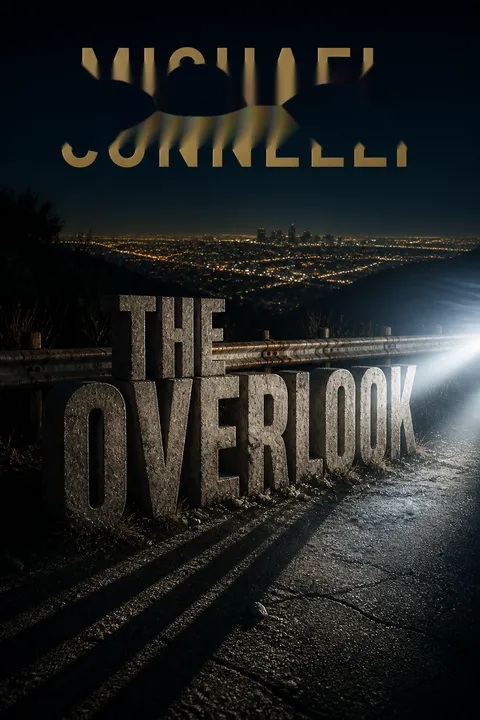
The Overlook is a fast-paced, shorter entry in the Harry Bosch series. Bosch investigates a murder involving stolen radioactive materials, clashing with FBI and Homeland Security. The plot is tightly focused, occurring within 24 hours. Some readers found it less character-driven than previous novels, but praised its thrilling pace. The book explores themes of terrorism and inter-agency conflicts. While some felt it lacked depth, others appreciated its concise storytelling and unexpected twists. Overall, it's considered an entertaining, if somewhat different, addition to the series.
People Also Read






Characters
Harry Bosch
Unyielding homicide detectiveA veteran Los Angeles homicide detective newly transferred to Homicide Special, Bosch trusts patient observation more than institutional assurances. He notices physical inconsistencies, pursues uncomfortable questions, and measures a case by whether the victim’s death is understood, not merely whether an agency’s immediate objective is met. His independence can become abrasive, especially with younger partners and federal agents, because he treats cooperation without candor as another form of obstruction. Beneath his certainty is an awareness of mortality shaped by years of violence and personal loss. He continues to work because he believes that looking closely and refusing to abandon the dead are obligations, even when the result cannot repair what happened.
Rachel Walling
FBI intelligence specialistWalling is an FBI agent with expertise in profiling and radiological threats, and she shares a complicated romantic history with Bosch. She is disciplined, capable, and accustomed to withholding information when operational secrecy demands it, a habit that clashes with Bosch’s insistence on direct disclosure. Her professional identity is shaped by the need to distinguish credible threats from noise, while her personal history makes every disagreement with Bosch carry an additional charge. She can command a rapidly changing federal response, but she also listens when evidence challenges her assumptions. Walling’s strength lies in combining technical knowledge with the willingness to revise her judgment when the facts demand it.
Ignacio Ferras
Bosch’s new partnerFerras is a younger Homicide Special detective paired with Bosch for his first case in the squad. He is physically capable, ambitious, and proud of his work, but he also has a family life and a child on the way that make reckless choices feel consequential. Ferras wants to learn from Bosch without surrendering his own judgment, and he challenges the older detective when Bosch treats disobedience as the only form of integrity. Their friction is partly generational and partly professional: Ferras believes interagency cooperation can save lives, while Bosch expects the federal government to exclude local investigators. Ferras’s steadiness gives their partnership room to develop beyond the first collision.
Alicia Kent
A physicist’s wifeAlicia is Stanley Kent’s wife, a private person whose home life is suddenly exposed to police and federal scrutiny. She is connected to her husband’s professional risks through the security warnings they received and through the practical routines of their household, including her care for a rose garden and a yoga practice. When Bosch first encounters her, she is frightened and physically shaken, and her account becomes central to understanding what happened to Stanley. Alicia’s importance comes from the way domestic trust intersects with the technical world of hospital security. She is not simply a source of information; her choices affect the shape and direction of the investigation.
Stanley Kent
Medical physicist and victimKent is a medical physicist whose work gives him access to radioactive sources used in cancer treatment. His professional routine includes moving cesium between secure hospital facilities and coordinating with doctors, placing him at the junction of therapeutic science and public risk. The access badges and combinations found in his car suggest a man familiar with systems that depend on regular procedures and trusted specialists. His marriage to Alicia is central to the personal stakes of the case, while his job draws federal attention after his death. Kent’s role forces investigators to confront how expertise can become vulnerability when security procedures rely on habit and trust.
Jack Brenner
Walling’s FBI partnerBrenner is a senior FBI agent who coordinates the federal response and initially assures Bosch that the LAPD will remain involved. He is confident, operationally focused, and skilled at moving agencies toward a shared objective. His manner can feel proprietary, particularly when he speaks for Walling or directs the handling of witnesses. Brenner represents the FBI’s institutional scale: rapid teams, national contacts, and the ability to set priorities well beyond a single homicide scene. His working relationship with Walling is an important part of the investigation’s federal side.
Cliff Maxwell
Walling’s former partnerMaxwell is an FBI agent who previously worked with Walling on security visits to professionals with access to radioactive materials. In the present investigation, he has an established place within the bureau’s operational culture and is trusted with sensitive assignments. Walling’s past work with him gives their professional connection unusual weight, while Bosch’s suspicions about the crime make the agent’s role worth examining. Maxwell’s character sits at the boundary between loyalty to a team and the obligations imposed by evidence, a tension that shapes how others judge him.
Jesse Mitford
Young witness from HalifaxMitford is a twenty-year-old Canadian drifter who arrives in Los Angeles with little money and hopes of finding a foothold as a musician. He climbs into the hills with an outdated celebrity map, partly hoping to send his mother a memorable story for her birthday. His poverty and fear explain why he hides after witnessing violence instead of immediately calling for help. Mitford is observant enough to reconstruct the murder’s sequence, but distance and darkness limit his ability to identify anyone. Bosch recognizes that the young man needs protection as much as interrogation, and treats his testimony as useful without pretending it is complete.
Digoberto Gonzalves
Unwitting scavengerGonzalves is a working-class Mexican man whose possessions include work clothes, tools, a cell phone, and photographs of his family. Bosch finds him incapacitated by radiation exposure, unable to explain how he came into contact with the cesium. His ordinary belongings provide a human counterweight to the investigation’s talk of terrorism and national security. Gonzalves may have information the investigators urgently need, but his condition leaves that uncertain. His presence reminds Bosch that discarded evidence does not disappear; it can injure people who never understood the danger they found.
Ramin Samir
Controversial former professorSamir is a former USC professor known for outspoken criticism of American foreign policy and for provocative public statements. His public profile has made him a target of suspicion, though Bosch remembers that investigators never established a criminal connection to terrorism. Samir’s home becomes a focal point for a law-enforcement operation because the stolen car is found outside it. His story shows how a person’s political reputation can become a substitute for evidence when agencies feel pressure to produce a visible result.
Don Hadley
LAPD security commanderHadley commands the LAPD Office of Homeland Security, a unit created to improve the department’s access to federal intelligence. He is energetic, theatrical, and eager to prove that local officers can respond to national-security threats. His confidence helps move personnel and equipment quickly, but he is less receptive to Bosch’s warnings about weak or overly convenient evidence. Hadley’s choices expose the friction between a department seeking credibility and a detective insisting on restraint.
Larry Gandle
Bosch’s supervisorGandle is Bosch’s supervisor in Homicide Special and calls him out for his first case in the new assignment. He keeps Bosch informed as the investigation expands and must balance the department’s reporting chain against the speed of events. His practical manner reflects the managerial pressures surrounding a politically sensitive homicide.
Kiz Rider
Bosch’s former partnerRider is Bosch’s former partner, now working in the Office of the Chief of Police. She remains a trusted professional contact and helps Bosch check archived news reports when he needs independent confirmation about a name. Her position connects investigative work on the street to the department’s upper levels.
The Police Chief
LAPD’s political leaderThe chief leads a department under federal oversight and must consider public trust, political pressure, and operational effectiveness at once. Bosch approaches him directly to request access to the federal investigation, and the chief warns him that a case involving terrorism can be used for purposes beyond solving a murder. He is sympathetic to Bosch but cautious about how the department acts.
Plot Devices
The cesium sources
Threat with a physical trailThe radioactive sources are medical materials used in cancer treatment, but a large quantity could create severe exposure and public panic if misused. Their disappearance gives the FBI and Homeland Security reason to take over much of the investigation. The lead-lined transport container explains how the sources can be moved without immediately triggering radiation alarms. Following the cesium links the hospital safe, Kent’s car, Gonzalves’s exposure, and the discarded objects Bosch later finds. The device keeps the case’s public danger concrete while also tempting investigators to mistake a frightening object for proof of a terrorist plot.
The emergency email
A threat disguised as intimacyAn email sent from Alicia’s account carries a photograph of her bound and instructions for Kent to deliver cesium to the overlook. The message gives the attackers leverage over Kent while creating a digital record that supports the apparent abduction. It also links the household computer, the camera, and the timing of the trip to Saint Agatha’s. Investigators initially treat the message as reliable evidence of coercion, but its existence cannot by itself establish who created it or whether the scene it depicts happened as described.
Jesse’s distant view
A partial witness accountMitford watches the overlook from far enough away that he cannot identify faces, yet he sees the sequence of cars, the shooting, and the transfer of a heavy container. His uncertain hearing of a word that sounds like Allah adds a potentially misleading religious dimension to his testimony. Bosch tests the limits of Mitford’s memory rather than treating it as a complete account. The witness is useful because he can narrate the mechanics of the crime, but the gaps in his observation leave room for investigators to impose their own assumptions.
The discarded yoga poster
A household detail breaks the stagingA rolled yoga poster found with the discarded materials matches a faded rectangle and tape marks in the Kent home. Its depicted pose invites Bosch to reconsider the way Alicia appeared bound, while its removal suggests someone feared that detectives would connect the image to the scene. The poster gains force alongside other inconsistencies, including the missing clothes in the bedroom photographs, the unplugged clock, and the evidence of grape juice. It is not conclusive alone; its value comes from making several details fit a different reconstruction of events.
The planted terrorist trail
Misdirection toward a public suspectThe stolen Chrysler, ski masks, map, suspected extremist names, and the witness’s uncertain religious clue lead investigators toward Samir and international terrorism. Each element appears to strengthen the same theory, which is why Bosch questions their unusual convenience. The raid on Samir’s home finds no cesium and ends with Samir shot, demonstrating the cost of acting before the trail is verified. The apparent coherence of the evidence is itself part of the device: it gives several agencies a story that is easier to pursue than the less dramatic facts inside the Kent household.
Harry Bosch Universe Series














About the Author
Other books by Michael Connelly


Download PDF
Download EPUB
.epub digital book format is ideal for reading ebooks on phones, tablets, and e-readers.








