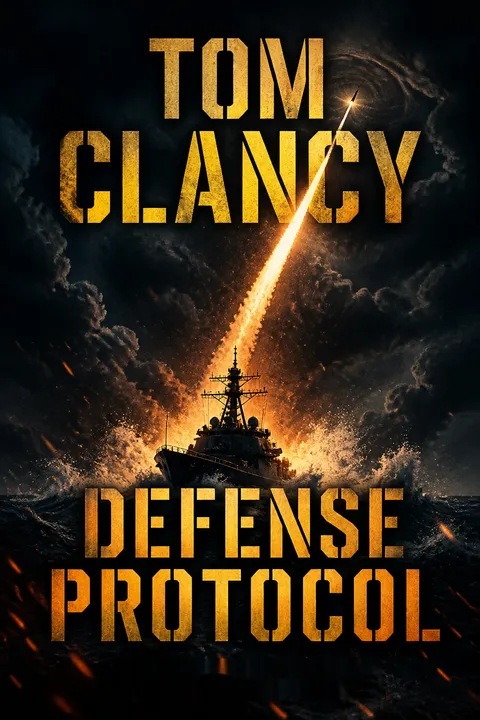


Plot Summary
Prologue
Cheng Kai, China’s foreign minister, senses that officials have stopped seeking his guidance. On the morning he is due to travel to Laos, a deepfake scandal appears in a state newspaper, falsely accusing him of corruption and adultery.
He realizes the smear must have President Li’s approval. Before Cheng can understand why his loyalty has become dangerous, two men force their way into his car and inject him with a drug. Their message is clear: his service to the government is over.
Cheng’s removal turns political suspicion into a physical threat before the larger conflict has even begun. The altered photograph matters less as a lie than as a public instrument: it prepares the country to distrust a man whom the state has already silenced. His first loss is not office but the ability to interpret the rules he once served. The car’s partition, the absent driver’s courtesy, and the drugged injection make repression feel bureaucratic and intimate at once. The prologue establishes that in Li’s government, loyalty offers no protection when it becomes inconvenient.
The Empty Cabinet Seat
At home, President Jack Ryan and his daughter Katie finish a friendly game of Battleship, grateful for a rare evening without a crisis. In Beijing, Defense Minister Qin Hâiyû enters an emergency cabinet meeting and finds Cheng Kai’s place conspicuously bare.
President Li praises Qin’s detailed Operation Sea Serpent plan, then announces that the coming naval exercise may become the real operation to seize Taiwan. Qin presents the invasion as militarily achievable, while carefully warning that American casualties and the consequences of a direct clash could be enormous.
Li dismisses those risks and orders Qin to produce an assessment of the forces needed to turn the exercise into an attack. Qin leaves understanding that a war game has become a live threat.
The juxtaposition of Jack and Katie’s game with Li’s real military planning gives the novel its governing contrast: a family can name the ships on a board, while a president must answer for the people aboard real ones. Qin’s careful presentation is already a moral compromise. He serves a plan he believes could devastate China because dissent has been made dangerous. Li’s confidence, meanwhile, rests on treating political will as a resource he alone can measure. The empty seat makes the personal cost of that calculation visible before anyone at the table dares to name it.
The Numbers Are Rewritten
At home that evening, Qin reopens the invasion report and discovers that its casualty estimates have been drastically reduced. The section weighing foreign military and economic consequences has vanished.
Because only Li could have altered the document, Qin understands that the president intends to deceive his own cabinet and make Qin answer for the outcome. Qin believes Taiwan belongs with China, but he also knows a forced conquest could bring mass deaths and economic isolation. Remembering Cheng’s disappearance, he weighs silence against a warning to the Americans.
He contacts his old academy friend Dong Jun, now a senior intelligence official, hoping to learn whether the invasion is truly moving forward. Qin is no longer just the plan’s author. He is deciding whether conscience requires him to sabotage it.
The falsified report converts abstract risk into a problem of authorship and blame. Qin’s work is being used against him: the expertise that earned his appointment can make him the official scapegoat for consequences Li has deliberately concealed. His dilemma is not a clean division between patriotism and betrayal. Qin still believes reunification has value, yet rejects a method likely to destroy the country he means to serve. The distinction is psychologically important. He does not abandon China; he begins to separate the people and future of China from the ambitions of its leader.
Katie Pulls the Thread
At the Office of Naval Intelligence, Katie notices that Cheng has disappeared after missing the East Asia Summit, while China offers only a vague health explanation and a propagandistic scandal.
Her enlisted analyst, Bubba Pettigrew, warns that investigating a foreign minister is outside their remit, but Katie links Cheng’s disappearance to the growing naval pressure around Taiwan. CIA China specialist Larry Sexton confirms that Cheng’s predecessor is dead and suspects the foreign minister crossed Li. Katie’s questions reach the White House.
Jack orders a deeper inquiry into Cheng, Qin, and the previous defense minister, while naval leaders prepare forces for the announced exercise. When ONI assigns Katie to lead its contingent in a joint task force in Taiwan, her new office and desk job give way to an urgent deployment.
Katie begins not with a complete intelligence picture but with a refusal to treat an unexplained absence as routine. Her instinct is valuable precisely because she has not yet accepted the agency boundaries that can make specialists overlook connections between politics and naval posture. The assignment also tests the identity she prefers: Katie wants to analyze from a protected office, not become a field commander. Her father’s trust in her judgment does not spare her from fear or uncertainty. Instead, it puts her where her analytical habits can have immediate consequences.
A Warning in Miniature
At a diplomatic meeting in Beijing, Qin warns American deputy chief of mission Scott Kincaid that interference around Sea Serpent could bring war. During their handshake, he slips Kincaid a tiny case containing a character chosen for its layered meaning.
Alone at the embassy, Kincaid deciphers Qin’s request for the battle plan and a meeting at Liulichang, along with an urgent plea to protect his family in the Maldives. Kincaid turns to the Night Spider, a veteran CIA support asset who uses taxis, trusted local contacts, and physical dead drops rather than digital communications.
At a Beijing nightclub, she accepts a coded message from Kincaid’s proxy, then prepares to meet Qin. The intelligence opportunity now depends on a single transfer in a city watching everyone.
The small case is a fitting counterweight to the state’s enormous surveillance apparatus. Qin cannot send a formal message without exposing himself, so he compresses intention into a gesture, a character, and a meeting place. Kincaid must interpret rather than simply receive the warning, showing how intelligence depends on judgment under uncertainty. The Spider’s methods offer a different kind of security: not technological invisibility, but patient knowledge of people and routines. Each method is vulnerable in a different way. The operation begins as an exchange of trust, not a guaranteed channel.
The Spider Chooses
At Liulichang, the Night Spider spots two people following Qin as he waits to hand over the Operation Sea Serpent files. She abandons the planned pass and approaches him in disguise, warning that he must leave immediately or be captured. Qin chooses to trust her, powers off his phone, and follows her through a taxi switch and a parking garage.
When an agent catches up and reaches for a weapon, the Spider shoots him, making her own return to ordinary life impossible. She hides Qin in a restaurant cellar with the help of Jia, a longtime friend, and tells him to think first of the wife and twin daughters who will need him. Qin recognizes that the woman protecting him has sacrificed her own life in China to do it.
Qin’s decision to follow the Spider is the point at which his abstract dissent becomes an irreversible act. He has not yet escaped the state, but he has lost the protection of appearing loyal. The Spider’s choice is equally consequential. Her professional discipline usually means minimizing contact and risk, yet she accepts danger because Qin is a father trying to prevent a war. Their partnership begins unevenly: he wants control, while she understands that survival requires surrendering it. Her insistence that he remain alive for his family gives his defection a future beyond his own guilt.
A Family Pulled from Paradise
Jack authorizes Task Force 99, an international covert team led by John Clark, to retrieve Qin and his family. Before entering China, Clark’s team detours to the Maldives, where Qin’s wife, Caiji, and their twin daughters are under Chinese surveillance.
Clark, Ding Chavez, and their partners approach the Four Seasons by night, using a yacht and a concealed swim from the reef. When the resort’s Chinese security teams discover the assault, the operators fight through the cabanas and reach Caiji and the girls.
Clark assures them Qin is alive and promises to try to reunite them. The family escapes by boat, carrying little more than themselves and the girls’ dolls. Their rescue gives Qin a reason to endure hiding and gives the Americans a promise they must now keep.
The rescue makes the human condition of Qin’s defection concrete. His family is not an abstract bargaining chip but a mother and two frightened children who must leave their home in the night. Clark’s promise is carefully limited: he cannot guarantee reunion, only make the attempt. That restraint matters in a profession built on plans that can collapse without warning. The dolls, recovered by Charlie Adams, preserve a small piece of the girls’ old life amid a forced flight. Their safe removal shifts the mission from intelligence collection toward responsibility for particular people.
The Island Is the Trigger
On Taiwan’s Penghu islands, Katie studies the missile defenses surrounding the approaches to the main island and asks why Li would risk the world’s economic backlash.
With John Conza and Bubba, she identifies a more dangerous possibility: Chinese commandos could seize a Taiwanese anti-ship battery on remote Huayu and fire at a Chinese ship. Beijing could then present its own invasion as retaliation. The theory matches the need for a convincing pretext, and Katie urges a covert team to watch the island.
Meanwhile, Li tells his security chief that he intends to blame Qin’s disappearance on America, expel the U.S. mission, and use the staged missile strike to justify attacking Taiwan. The danger Katie predicts is already being prepared in Beijing.
Katie’s insight depends on shifting the question from what China can do to what story it needs the world to believe. The missile battery is not merely a weapon; it is a potential author of false history. Her analysis recognizes that modern aggression seeks legitimacy as well as territory. Li’s plan exploits the gap between an event and its interpretation, hoping that a convincing image of Taiwanese aggression will outweigh the evidence of preparation. Katie’s willingness to act on a theory before certainty arrives shows both the strength and burden of intelligence work: waiting for proof may mean waiting until prevention is impossible.
Beijing Closes Its Doors
China’s president learns that Qin’s wife and daughters have vanished from the Maldives and orders the search intensified. He also expels the American diplomatic mission, cutting Kincaid off from the Spider and stripping the operation of its local control.
Task Force 99 suffers further losses on arrival: Ding is detained at the airport, and Henri Toussaint detects surveillance and withdraws. Clark presses on with the remaining operators. In Taiwan, Kincaid meets Katie before leaving and gives her the Spider’s dead-drop locations.
Katie contacts Sexton, who remembers a personal reference from his early relationship with the Spider: a museum display at the Peking Man site. The clue offers a chance to reach her, but only if she can receive it before the Chinese find her.
The operation loses its institutional scaffolding at exactly the moment it needs coordination. Kincaid’s expulsion is more than a diplomatic insult; it severs the human link between the Spider and the CIA. Katie inherits responsibility without having built the mission or fully understanding its history. Sexton’s memory matters because it joins emotional intimacy to operational procedure. A decades-old moment can become a secure address when formal channels fail. Yet it is not a magic solution. The team must still place the message, the Spider must find it, and every attempt to communicate risks revealing the people involved.
The Peking Man Ambush
Clark places coded messages at four of the Spider’s dead drops, using Sexton’s recollection to direct her and Qin to the Peking Man museum. The Spider has been hiding Qin in Jia’s cellar, but the MSS shuts down her taxi business and begins closing in on her contacts. When a patrol enters the restaurant, Qin kills the intruder and the pair must abandon their refuge.
At the museum, two agents confront them before the planned meeting. Clark and Charlie Adams intervene, killing the attackers, then verify the Spider’s identity with Sexton’s personal reference. The fugitives escape in the Spider’s sedan, but police block the exit and shoot out a window. Clark takes over, finds a dump truck, and sends Qin behind the wheel as they flee.
The museum meeting turns memory into both a bridge and a test. The personal reference gives the Spider a reason to trust Clark, but the gunfire forces that trust to be exercised under immediate threat. Qin’s killing of the intruder marks a change in him: the former strategist who feared acting has begun to defend the fragile life he has chosen. The improvised dump truck escape also strips the operation of its polished design. Survival now depends on practical adaptation, not a seamless plan. Every character must accept uncertainty and contribute with whatever skill remains available.
The Blockade Bites Back
As the USS Jason Dunham redeploys toward Taiwan, its crew first defeats a terrorist boat in the Strait of Malacca, where two attackers launch missiles at the destroyer. The ship’s defenses destroy both missiles and sink the boat.
Ryan then orders the Dunham to challenge China’s announced blockade of the Taiwan Strait. Captain Jeffrey Kreutz and combat systems officer Mitchell Horrillo face the Chinese destroyer Nanchang, commanded by Shen Huaqing. Shen tries to block the American ship, but his political commissar demands greater aggression.
The Dunham maneuvers past the Nanchang and crosses the blockade line. The Chinese ship then launches a missile, which the Dunham intercepts. Shen resists further escalation, but the encounter makes clear that the next mistake could start a war.
The Dunham’s earlier defense against the terrorist boat establishes the crew’s competence before the geopolitical stakes sharpen. The later encounter is more dangerous because each tactical decision also communicates political intent. Kreutz must defend his ship without making Li’s story of American aggression more credible. Shen faces a parallel pressure from a commissar who values obedience to the Party over the lives of the crew. The collision maneuver and missile warning reveal the fragility of restraint when leaders issue ambiguous orders and subordinates interpret them differently. Professional skill can buy time, but it cannot remove the political danger.
Huayu Goes Dark
Katie’s warning leads U.S. special operators to Huayu, where three teams approach the island’s missile batteries by underwater insertion. They expect a defensive deployment, but one site is already compromised: Taiwanese sentries are dead, and a Chinese operator is turning the launcher toward a target.
Andrew Miaoulis, a CIA ground-branch officer and former Green Beret, charges the control building despite being shot in the chest. He kills the operator before the launch can be stopped, but another team reports that the third site has fired two missiles.
The battle costs American and Taiwanese lives, including Miaoulis and Navy SEAL Skip Anderson. The false flag has not been prevented. Its missiles are already heading toward the Chinese fleet.
The island action gives physical form to Katie’s analysis, but it does not reward foresight with a clean victory. Her team reaches the right place and still cannot prevent every launch. Miaoulis’s effort to stop the operator shows how individual courage can interrupt a plan without controlling its larger consequences. The losses also challenge the tidy language of strategic prediction. A false flag may be designed to manipulate millions, yet its immediate price is paid by specific people in a dark control room and on a small island. The story insists that successful analysis is not the same as a bloodless outcome.
Two Missiles, One Choice
The two missiles from Huayu approach the Nanchang and the Dunham, leaving both captains only minutes to decide what they mean. Katie persuades Kreutz that the missiles are part of Li’s staged attack, not a Taiwanese assault. The Dunham fires interceptors and destroys both.
Shen could still obey orders to punish Huayu, but he accepts Kreutz’s account that the missiles came from a training exercise and agrees to hold fire. This improvised explanation gives both commanders room to avoid immediate escalation. On Huayu, SEALs carry out their dead and wounded by water because an air evacuation is too dangerous. The ceasefire buys them time, but it cannot restore the lives already lost.
The turning point hinges on a story offered in time to prevent another story from becoming official. Katie’s claim that the missiles were part of an exercise is not a complete truth, but it gives Shen a face-saving reason to resist the false narrative Li needs. The captains choose restraint without certainty, trusting a narrow opening rather than waiting for perfect proof. Their decision demonstrates that de-escalation is not passivity. It requires invention and nerve. The evacuation of the dead and wounded prevents the strategic success from feeling abstract: the crisis pauses, but its human cost travels with the survivors.
The Port’s Last Mile
Clark’s reduced team reaches Tianjin with Qin and the Spider, aiming to board the South Korean cargo ship Capella. Léi suspects the port is a trap and helps Clark choose a longer route around the stacked containers. A guard blocks their sedan and opens fire. Léi drives through him, but pursuing shooters destroy the tires and trap the group beside the ship.
Clark prepares to fight at close range until John Conza, a former SEAL who has joined the extraction team, calls from a hidden firing position. Conza and his fellow operators eliminate the surrounding gunmen. Léi takes a bullet in the thigh while shielding Qin. Clark carries her aboard as the Capella pulls away from the pier, leaving the team with a long, exposed crossing ahead.
The port sequence compresses the whole mission into a narrow strip of concrete between capture and escape. Clark’s route choice recognizes that the obvious path is the easiest place for the MSS to control, while Léi’s driving turns her local knowledge into immediate action. Conza’s arrival is a reminder that the international team is not simply a collection of strangers anymore; people have entered the same danger by different routes and are willing to cover one another. Léi’s wound changes the cost of escape, while the Capella’s movement offers no guarantee of safety, only a chance to keep moving.
The World Takes Sides
With the Huayu attack and the Dunham’s missile encounter threatening to become Li’s justification for war, Jack Ryan builds support among allied governments. He argues that China’s accusations against the United States are a pretext and asks partners to oppose the invasion economically and politically.
Secretary General Xu Chao, increasingly alarmed by Li’s ambition, concludes that patience and countrywide interest now require stopping the president.
Ryan then delivers a public address with leaders from several allied nations, describing the staged attack and warning that Li is counting on the world to remain divided. As the broadcast challenges the president’s narrative, Xu’s associates move against Li. Li is taken from his residence before he can secure his version of events.
Ryan’s address transforms intelligence into public accountability. The allies cannot undo the covert actions already taken, but their shared appearance makes it harder for Li to isolate the crisis as a bilateral dispute or manipulate each country separately. Xu’s decision reveals a second internal conflict: the threat to China is no longer only external but also the result of a leader mistaking national power for personal legacy. The climax therefore combines persuasion with a change in political authority. Neither force alone is sufficient. Ryan needs a coalition, and Xu needs a moment when Li’s own actions have exposed the cost of following him.
The Blockade Dissolves
Xu contacts Ryan and confirms that Li no longer leads China. He apologizes for the danger created by one man’s decisions, orders the Nanchang to withdraw, and dissolves the maritime exclusion zone. He also promises that the Capella will not be stopped on its way to South Korea.
Ryan sends aircraft to recover the operators from Huayu, while the Dunham continues through the strait under safe passage. The immediate invasion threat recedes, though the dead cannot be brought back and trust between the countries remains damaged.
Qin’s family is reunited with him after the extraction. The crisis ends not with a decisive battle but with a different Chinese leader choosing restraint, and an American president choosing to leave room for that choice.
The resolution is deliberately political rather than purely military. Xu’s assurances matter because they convert a sudden change in leadership into concrete orders that protect the ships and people still in danger. Ryan accepts the opening without pretending that an apology repairs the damage. The story’s final measure of success is not conquest but the preservation of a choice: China can step away from Li’s war, and the United States can respond without turning every provocation into an irreversible strike. The rescued family completes Qin’s personal purpose, while the losses on Huayu prevent the ending from becoming triumph without grief.
Epilogue
At the Ryan home, Jack finds Katie looking out over the Chesapeake Bay and praises her judgment during the crisis. She asks whether Qin has reunited with his family and whether the Spider will be protected in her new life. Their conversation turns to Dennis Knepper, the submarine officer Katie hopes to invite for dinner.
Jack teases her that Dennis must first beat him at Battleship. The game returns as a family joke, but its meaning has changed: the real conflict has passed, and the Ryans can once again imagine a future that includes ordinary dinners, new affection, and time together.
The final scene returns to the domestic board game that opened the novel, but now its pieces carry the weight of actual decisions. Jack’s pride in Katie has shifted from private affection to recognition that she can lead under pressure. Katie, meanwhile, allows herself to ask for something personal after days spent making choices for strangers and allies. Her interest in Dennis is a small but meaningful return to ordinary life. The Spider and Qin remain present in the conversation as people whose futures are still uncertain, preventing the family’s relief from erasing the cost of their survival.
Analysis
Defense Protocol is built around competing claims to interpret an event. Li understands that seizing Taiwan by force would provoke condemnation, so he does not rely on military power alone. He tries to manufacture a sequence that will make China look like the victim: Qin becomes an American casualty, Huayu becomes the source of a Taiwanese attack, and invasion becomes retaliation. The novel’s central struggle is therefore over who can establish the public meaning of violence before the evidence is buried.
Katie’s role is to recognize that narrative structure before it is complete. Her insight does not come from a single secret document but from connecting the military map to the political problem Li must solve. This makes intelligence work a form of causal imagination. She has to ask not only what the Chinese forces are doing, but what explanation their actions are designed to support. Her analysis matters because it prompts action before certainty is available, though the deaths on Huayu show that foresight cannot guarantee prevention.
Qin and Léi embody different forms of resistance. Qin’s expertise gives him access to the plan, but his institutional identity initially limits his willingness to oppose it. Léi has no official power, yet decades of patient relationships give her practical agency. Their cooperation unsettles the simple distinction between loyalty and betrayal. Both are labeled traitors by the state, but each acts from an attachment to people and a future that Li’s ambition threatens.
The military sequences repeatedly show restraint as an active skill. Captain Kreutz must protect his ship without handing Li a convincing pretext. Captain Shen must interpret orders without sacrificing his crew to political theater. Ryan must demonstrate resolve while leaving room for China to step back. The novel’s answer to aggression is not passivity, but controlled force joined to credible communication and coalition.
The return to Battleship gives the ending emotional scale. The game cannot model casualties or political miscalculation, yet it has always depended on choices made with incomplete information. Jack and Katie return to it only after the crisis, when they can again share a table instead of carrying separate burdens. Their reunion does not undo the losses, but it restores the ordinary life the conflict was threatening to consume.
Review Summary
Tom Clancy Defense Protocol is highly praised for its sophisticated plot, authentic military details, and geopolitical relevance. Readers appreciate the focus on US-China tensions over Taiwan, complex characters like Chinese Defense Minister Qin and Katie Ryan, and the seamless blend of technical accuracy with engaging storytelling. The book is seen as a worthy continuation of Clancy's legacy, with many reviewers highlighting its page-turning suspense and timely themes. Some criticism is noted regarding pacing and character development, but overall, the novel is well-received by fans of the Jack Ryan series.
People Also Read








Characters
Jack Ryan
President under pressureThe President of the United States, Jack Ryan balances strategic authority with the instincts of a husband and father. He trusts evidence, but his long intelligence career has taught him that decisions often arrive before certainty does. His relationship with Katie is affectionate and teasing, yet he must not let his concern for her distort his responsibility to the country. Ryan’s central tension is between restraint and resolve: he wants to prevent war, but he will not let threats decide where American forces may operate or whether an ally is abandoned.
Katie Ryan
Analyst in the fieldJack’s daughter and an ONI lieutenant commander, Katie is an intelligence analyst who would rather work behind a desk than at the operational edge. Her strength lies in connecting political clues to military patterns, and she is willing to voice a conclusion before it becomes comfortable or popular. That confidence coexists with self-doubt, especially when people treat her reputation as proof she cannot fail. Katie’s relationship with her father is warm but not uncomplicated: she wants his respect without being reduced to his daughter. Her dry humor and curiosity help her stay human inside high-stakes work.
Qin Hâiyû
The reluctant strategistChina’s defense minister and the architect of its naval plan for Taiwan, Qin is a career officer who believes in service, discipline, and the value of his country. His patriotism is genuine, which makes his growing opposition to Li more difficult than simple defiance. Qin believes Taiwan should be part of China, yet fears that conquest by force will destroy the people and economy he means to protect. He is accustomed to command and control, and must learn to rely on people whose methods he does not understand. Family gives his moral choices their most immediate meaning.
Qiū Léi
The Night SpiderKnown in the intelligence world as the Night Spider, Léi is a Chinese support asset who has spent decades building safe routes, trusted contacts, and a taxi business that can move people without drawing attention. Her father trained her in martial arts and instilled in her a belief that strength need not resemble the men who hold power. She values independence and has shaped a life that does not depend on marriage or institutional approval. Léi’s patience is as important as her physical skill. She is idealistic about China’s people, but unsentimental about the danger posed by its ruling system.
John Clark
Veteran extraction leaderA veteran special operator and head of the international Task Force 99, Clark has spent a lifetime entering dangerous places to bring people out. He carries a deep sense of responsibility for his team and for the families who trust him, even as age and the promise of retirement tug at his attention. Clark’s strength is not simply tactical experience; it is his ability to adapt when plans fail and to keep others focused without promising what he cannot guarantee. His loyalty to Ding and his team makes every operational decision personal, though he tries to keep that emotion disciplined.
Li Jian Jun
Expansionist presidentChina’s president, Li is ambitious, calculating, and increasingly convinced that history will judge him by the reunification of Taiwan. He understands propaganda and economic leverage, but his certainty about his own strategic insight makes him underestimate both American resolve and the risks to China. Li treats loyalty as something to be tested and political power as a tool for securing his legacy. His most dangerous quality is not mere aggression but his ability to make extreme plans seem reasonable to himself, then demand that others accept their consequences.
Xu Chao
Pragmatic party elderThe secretary general of China’s ruling government, Xu is reserved and cautious, with a deeper concern for the country than for the personal ambitions of its leader. He believes political systems lose legitimacy when leaders demand that citizens serve them rather than the reverse. Xu’s patience is a strength, but it also places him in the difficult position of deciding when caution has become complicity. He observes Li’s changing judgment closely and weighs the stability of China against the danger of confronting power from within.
Scott Kincaid
Embassy intelligence officerThe deputy chief of mission at the American embassy in Beijing, Kincaid also works for the CIA. He is disciplined about protecting his cover and careful when interpreting a message whose meaning could determine the fate of an asset. Kincaid understands that intelligence relationships cannot be commanded into existence, particularly with the independent Night Spider. His work links Qin’s warning to the people who can act on it, but his role is constrained by a shrinking network and the political risks of operating inside China.
Mary Pat Foley
Ryan’s intelligence partnerAs Director of National Intelligence and one of Jack Ryan’s oldest colleagues, Mary Pat Foley coordinates intelligence and operational decisions across agencies. She knows how to challenge the President without losing sight of the urgency facing him. Her judgments are shaped by an understanding of both the possible intelligence payoff and the human cost of a failed mission. Foley’s steady presence gives Ryan a trusted counterweight when instinct and responsibility pull in different directions.
Ding Chavez
Clark’s trusted secondA seasoned operator, senior member of The Campus, and Clark’s son-in-law, Ding is both a capable field partner and a close family connection. He combines patience with a sharp sense of humor, qualities that help him endure danger without mistaking bravado for courage. His loyalty to Clark is strengthened by years of shared work, but he is also a husband whose absence affects the family waiting at home. Ding’s experience makes him valuable in the field and vulnerable to the risks of using an established identity.
John Conza
The adaptable former SEALA former Navy SEAL who now serves in intelligence, Conza brings operational experience and an easy rapport to Katie’s task force. He lives with the physical and emotional consequences of losing a leg in combat, while working to prove his value beyond his former role. Conza uses humor to make difficult moments bearable, but he does not confuse that humor with indifference. He respects Katie’s analytical skill and is willing to return to field work when his particular mix of experience can help.
Larry Sexton
The veteran China handA senior CIA specialist on China, Sexton has spent decades warning that Beijing’s ambitions deserve more attention. His blunt manner conceals both professional frustration and a private history with the Night Spider, whom he knew before she became a legendary asset. Sexton’s knowledge is valuable, but time has also separated him from the city and the woman he once knew. He must turn memory into practical guidance without pretending he can control what happens next.
Cheng Kai
The silenced foreign ministerChina’s foreign minister, Cheng has been a forceful advocate of President Li’s policies and a skilled public defender of the government. His confidence in his own position is shaken when communication from his staff abruptly changes and the state begins treating him as a problem. Cheng’s story shows how quickly a loyal official can become vulnerable when political authority turns inward. His absence becomes an early warning that the debate over Taiwan has already begun to consume people inside Li’s cabinet.
Qin Caiji
Qin’s steadfast partnerQin’s wife and the mother of their twin daughters, Caiji is perceptive, composed, and more prepared for danger than strangers might assume. She and Qin share a private way of communicating when they suspect their conversations are monitored. Her concern is not only for her husband’s safety but for the emotional security of her children. Caiji’s presence gives the political crisis a family perspective, and her composure helps her protect the girls when their ordinary life is abruptly disrupted.
Captain Shen Huaqing
The measured ship captainCaptain of the Chinese destroyer Nanchang, Shen is a capable naval officer who believes good command depends on respect as well as authority. He takes pride in his ship and crew, yet understands that military decisions can produce consequences far beyond the bridge. His relationship with the political commissar tests his ability to protect the crew while remaining within a political chain of command. Shen is neither eager for war nor willing to treat the lives aboard his ship as expendable symbols.
Andrew Miaoulis
The Green Beret analystKnown to teammates as Drewski, Miaoulis is a CIA ground-branch officer with a background in Army Special Forces and combat diving. His informal manner can make him seem less serious than he is, but his instincts and courage come from years of difficult deployments. He is comfortable working alongside operators and brings a practical understanding of how intelligence becomes action. His loyalty to teammates is expressed through deeds rather than speeches.
Ted James
The CIA team leadJames leads the CIA contingent assigned to Task Force 25. He favors collaborative planning and understands that a joint operation works only when agencies share information rather than protect their institutional territory. His calm, direct style helps Katie manage a team whose members bring different training and priorities. James is willing to challenge a plan when its practical risks are being overlooked, while remaining committed to finding a way forward.
Dennis Knepper
Katie’s submarine connectionA naval officer and executive officer aboard the USS Washington, Knepper has developed a warm connection with Katie through the demands of his submarine deployment. His messages are infrequent, but she understands the interest behind them. Their relationship is still tentative, and its appeal lies partly in the ordinary possibility it offers after Katie’s intense professional life.
Plot Devices
Operation Sea Serpent
Exercise conceals invasionThe name refers both to Qin’s detailed operational plan for taking Taiwan and to the large naval exercise Li has already announced. By turning the exercise into a cover for the real invasion, Li can move ships, aircraft, and Marines into position while conditioning the United States to regard the buildup as familiar posturing. The distinction between drill and attack becomes the central intelligence problem. It also lets Li present the United States as the provocateur if it moves forces in response.
The Spider’s dead drops
Old tradecraft hides messagesLéi’s network relies on memorized routes, coded marks, trusted local businesses, and taxis rather than phones or digital systems. Her methods help her avoid the surveillance technology used across Beijing, but the system depends on her personal knowledge and careful habits. When Kincaid is expelled, the same network offers a last means of communication between the Spider and the American team. Its strength is also its weakness: once her contacts are endangered, she must risk going out herself to find a way forward.
The Huayu false flag
A staged attack manufactures consentLi’s commandos plan to seize a Taiwanese missile battery on Huayu and fire at a Chinese warship, making Taiwan appear to have initiated hostilities. China can then claim its invasion is a measured response, while missile strikes destroy the evidence and the operators. Katie identifies the plan by asking what kind of provocation would make other countries hesitate to condemn Beijing. The plot turns military hardware into a tool for manufacturing political legitimacy.
The Peking Man reference
A memory becomes a meeting placeSexton recalls a personal moment shared with Léi at the Peking Man museum, where they discussed love and whether they would meet again. He gives the reference to Katie, whose team uses it in a coded message that can guide the Spider without relying on digital communication. The shared memory functions as authentication: an intercepted message would be difficult to interpret, while Léi can recognize its meaning. Private intimacy becomes practical intelligence without being reduced to a password alone.
Operation Battleship
A cover story buys restraintAfter the Nanchang and the Dunham confront the missiles launched from Huayu, Katie proposes framing them as weapons fired during a joint training exercise. The explanation is deliberately improvised, but it gives Captain Shen a way to avoid immediately retaliating against the island. The name echoes Jack and Katie’s family game from the opening, linking a private ritual to a real attempt to prevent a larger battle. The deception does not erase the danger; it creates a narrow interval in which the commanders can choose not to escalate.
FAQ
Synopsis & Basic Details
What is Tom Clancy Defense Protocol about?
- Geopolitical Tensions Escalate: The novel centers on rising tensions between the United States and China, specifically concerning Taiwan's sovereignty and control of the South China Sea. China's President Li Jian Jun plans a covert military operation disguised as an exercise to forcibly reunify Taiwan.
- Intelligence and Counter-Operations: US President Jack Ryan and his intelligence community uncover hints of China's aggressive intentions through the potential defection of Chinese Defense Minister Qin Hâiyû, leading to high-stakes espionage and extraction missions.
- Preventing Global Conflict: The narrative follows parallel efforts by US intelligence analysts, special operators, and diplomatic teams to understand China's true plans, rescue key figures, and build international consensus to deter a potential war in the Pacific.
Why should I read Tom Clancy Defense Protocol?
- High-Stakes Geopolitical Thriller: The book delivers classic Tom Clancy-style action and intrigue, exploring a plausible near-future conflict scenario with detailed technical realism and complex political maneuvering.
- Deep Dive into Intelligence Operations: Readers gain insight into the intricate world of intelligence gathering, analysis, and covert operations, from high-level White House strategy sessions to dangerous field missions in hostile territory.
- Timely and Relevant Themes: The story tackles contemporary issues like cyber warfare, disinformation campaigns, the precarious balance of global power, and the moral dilemmas faced by individuals caught in international conflicts.
What is the background of Tom Clancy Defense Protocol?
- Contemporary Geopolitical Context: The novel is set against the backdrop of increasing real-world tensions between China and Taiwan, and China's growing military presence and territorial claims in the South China Sea.
- Continuation of the Ryanverse: It continues the long-running narrative of the Jack Ryan universe, featuring established characters like President Jack Ryan, John Clark, Ding Chavez, and Mary Pat Foley, building on their history and expertise.
- Focus on Modern Warfare & Espionage: The story incorporates modern technological elements in intelligence (cyber, satellite imagery, AI) and military capabilities (stealth destroyers, advanced missiles, special operations forces), reflecting current defense and espionage landscapes.
What are the most memorable quotes in Tom Clancy Defense Protocol?
- "All war is deception.": This quote, attributed to Sun Tzu's The Art of War, appears early in the prologue and is explicitly referenced by Defense Minister Qin Hâiyû in his coded message to the CIA, serving as a central motif for the strategic misdirection employed by both sides.
- "It is always darkest before it becomes totally black.": Attributed to Mao Tse-tung, this chilling quote is delivered by the driver sent by Secretary General Xu Chao to apprehend President Li Jian Jun, symbolizing the final, irreversible descent into political oblivion for Li.
- "Peace through strength.": This recurring phrase, a cornerstone of Jack Ryan's foreign policy philosophy, is invoked multiple times by Ryan and his advisors, encapsulating the core strategy for deterring Chinese aggression without resorting to open warfare.
What writing style, narrative choices, and literary techniques does Brian Andrews use?
- Multiple Perspectives & Shifting POVs: The narrative frequently shifts between the viewpoints of key characters (Ryan, Qin, Katie, Clark, Li, Shen, Horrillo, Léi, Drewski), offering a panoramic view of the unfolding crisis from different levels and locations.
- Detailed Technical Realism: Andrews maintains the hallmark Clancy style of incorporating extensive technical details about military hardware, intelligence methods, and operational procedures, grounding the high-stakes plot in a sense of authenticity.
- Internal Monologue & Psychological Insight: The author frequently delves into the characters' thoughts and emotional states, revealing their anxieties, motivations, and moral conflicts, particularly evident in the chapters focusing on Cheng, Qin, Ryan, and Katie.
Hidden Details & Subtle Connections
What are some minor details that add significant meaning?
- Cheng Kai's Tinted-Glass Car Divider: The detail that Cheng's car has a tinted-glass divider "like one would find in a fancy limousine. Or a police car" subtly foreshadows his impending arrest and isolation, hinting that his transport is not for comfort but control.
- Qin's Wife's Name as a Signal: The old woman (the Spider) using Qin's wife's name, "Caiji," to signal authenticity at the antique shop is a seemingly small detail that confirms her identity and connection to Qin's earlier message, demonstrating a pre-arranged, deeply personal code.
- The Capella's Thrusters: The reveal that the South Korean cargo ship Capella has hidden thrusters, allowing it to leave the pier without tugs, is a crucial detail that enables the team's rapid, unexpected departure from Tianjin Port, highlighting the covert modifications made for the exfiltration.
What are some subtle foreshadowing and callbacks?
- Katie's Battleship Game: The opening scene with Jack and Katie playing Battleship subtly foreshadows the strategic naval conflict to come, framing the complex geopolitical struggle as a game of positioning and calculated strikes, albeit with real-world consequences.
- Qin's Cracked Rib: The pain from Qin's cracked rib, sustained tackling Colonel Sun, is a physical callback to his moment of decisive action against the commissar's rash missile launch, a constant reminder of his personal sacrifice and defiance.
- Larry Sexton's Orchid Gift: The orchid from retired CIA officer Matthew Reilly to Katie is a callback to their collaboration in the Belgorod incident, subtly linking Katie's past success in naval intelligence to her current high-stakes mission in the Pacific.
What are some unexpected character connections?
- The Spider's History with Larry Sexton: The revelation that the legendary Chinese asset known as the Spider (Qiū Léi) was originally recruited and handled by Larry Sexton, the CIA's senior China expert, is a significant and unexpected connection that provides a crucial link for Katie to re-establish contact.
- John Conza's SEAL Brotherhood: John Conza's deep connections within the Navy SEAL community, particularly with Master Chief Hurley and other operators like Scott Todd and Chief Reed, are vital to the plot, enabling the rapid mobilization and coordination of the DEVGRU and Group Eight assets for the Huayu mission and the Capella exfil support.
- Secretary General Xu Chao's Coup: The most unexpected connection is Secretary General Xu Chao's decision to orchestrate a coup against President Li Jian Jun and then directly contact President Ryan, revealing a hidden network of dissent within the Chinese government willing to risk everything to prevent war.
Who are the most significant supporting characters?
- Qiū Léi (The Spider): A legendary, long-serving CIA asset in Beijing, her deep knowledge of clandestine operations and extensive network are crucial for Qin's survival and the team's exfiltration, embodying resilience and defiance against the state.
- Scott Kincaid: The Deputy Chief of U.S. Mission in Beijing and CIA case officer, he serves as the initial point of contact for Qin and the handler for the Spider, his forced expulsion from China creating a critical communication gap that drives the plot.
- Secretary General Xu Chao: A high-ranking Chinese official who, despite appearing loyal, harbors deep concerns about President Li's recklessness and ultimately orchestrates his removal, becoming a pivotal figure in de-escalating the crisis.
Psychological, Emotional, & Relational Analysis
What are some unspoken motivations of the characters?
- Qin Hâiyû's Patriotism Beyond the Party: While Qin explicitly states his desire to prevent war, his deeper, unspoken motivation is a genuine love for China and its people, believing Li's actions will ultimately harm the nation he dedicated his life to, not just risk his career. His decision is driven by a sense of duty to his country's future, not just personal survival or family safety.
- Qiū Léi's Idealism and Defiance: The Spider's motivation goes beyond simply being a CIA asset; her dedication stems from a profound idealism and a desire to fight for "the China that should be," one that serves its people rather than being ruled by fear and cruelty, a defiance rooted in her father's warrior ethos.
- President Li Jian Jun's Legacy Obsession: Li's relentless pursuit of Taiwan's reunification is fueled by an almost manic obsession with his personal legacy, viewing the island's absorption as the defining achievement that will cement his place in history, overriding pragmatic concerns and human cost.
What psychological complexities do the characters exhibit?
- Qin's Struggle with Fear and Duty: Qin exhibits the psychological complexity of a man torn between ingrained loyalty, personal fear for his life and family, and a burgeoning moral imperative, leading to moments of panic and self-doubt ("What is wrong with me?") alongside acts of incredible courage.
- Katie Ryan's Imposter Syndrome vs. Competence: Katie displays psychological complexity by grappling with imposter syndrome ("I don't have any idea what the hell I'm doing") despite her proven analytical brilliance and tactical instincts, highlighting the internal conflict between self-perception and external validation in high-pressure roles.
- John Clark's Weariness and Responsibility: Clark shows the psychological toll of a lifetime in covert operations, feeling the physical effects of age and expressing a desire for retirement, yet his deep-seated sense of responsibility and loyalty to his team and mission overrides his personal comfort and safety.
What are the major emotional turning points?
- Cheng Kai's Realization of Betrayal: Cheng's emotional turning point occurs when he sees the Global Times article and realizes President Li sanctioned the smear campaign, shifting from paranoia to shock, outrage, and a visceral understanding of his political assassination.
- Qin Hâiyû's Discovery of the Edited Plan: Qin's major emotional turning point is finding the heavily edited Operation Sea Serpent document, realizing Li's deception and true intentions, which solidifies his decision to betray the Party and seek American help, despite the immense personal risk.
- Katie Ryan's Acceptance of Leadership: Katie's emotional turning point is her conversation with Captain Ferguson, where she moves from reluctance and self-doubt about her field assignment ("I hate the field") to accepting her role as the face of ONI and leading the task force, embracing the challenge despite her discomfort.
How do relationship dynamics evolve?
- Qin and Léi's Forced Alliance to Mutual Respect: The relationship between Qin and Léi evolves from a transactional, handler-asset dynamic born of necessity into one of mutual respect and even affection, forged through shared danger and dependence in the onion cellar, culminating in Léi risking her life for him and Qin expressing gratitude and trust.
- Clark and Conza's Mentor-Protégé Bond: The relationship between John Clark and John Conza, initially a professional connection based on Conza's reputation, deepens into a mentor-protégé bond rooted in shared experience, mutual respect for each other's skills (Clark's leadership, Conza's tactical insight and resilience), and the shared gallows humor in the face of overwhelming odds.
- Ryan and Katie's Father-Daughter Professionalism: The father-daughter relationship between Jack and Katie Ryan is portrayed with a unique blend of personal affection and professional respect, where Jack acknowledges Katie's capabilities as an intelligence officer, and Katie, while sometimes bristling at his presidential role, trusts his judgment and seeks his counsel, culminating in his pride in her actions and her comfort in sharing personal news.
Interpretation & Debate
Which parts of the story remain ambiguous or open-ended?
- The Extent of the MSS Network Compromise: While the purge of 2013 is mentioned, the story leaves ambiguous the full extent to which the MSS has rebuilt its counterintelligence capabilities and penetrated US networks, making it debatable how truly "dark" TF 99 and the Spider were able to go.
- The Specifics of Xu Chao's Coup: The narrative only provides a brief glimpse of President Li's apprehension by Secretary General Xu Chao's agents, leaving the details of how the coup was orchestrated, who else was involved, and the immediate aftermath within the Chinese government open to interpretation.
- The Future of US-China Relations: While Secretary General Xu's call offers a potential path to de-escalation and dialogue, the long-term future of US-China relations and whether trust can truly be restored after President Li's aggressive actions and the resulting deaths remains an open question.
What are some debatable, controversial scenes or moments in Tom Clancy Defense Protocol?
- President Li's False Flag Plan: President Li's plan to stage an attack on his own fleet from Huayu island, potentially sacrificing his own sailors, is a highly controversial and morally debatable strategy, raising questions about the lengths to which a leader would go for political gain.
- The Dunham's Blockade Bust: President Ryan's order for the USS Jason Dunham to transit the Strait of Taiwan despite China's declared blockade is a controversial decision, risking a direct military confrontation based on a principle of international law versus pragmatic de-escalation.
- The Huayu Island Assault Outcome: The outcome of the DEVGRU/Ground Branch assault on Huayu island, resulting in American casualties (Drewski killed, Skip Anderson killed) despite successfully stopping the missile launches, is a debatable moment regarding the tactical success versus the human cost of the operation.
Tom Clancy Defense Protocol Ending Explained: How It Ends & What It Means
- Li's Downfall & Xu's Takeover: The novel concludes with President Li Jian Jun being forcibly removed from power by agents loyal to Secretary General Xu Chao, who then contacts President Ryan to de-escalate the crisis, signaling a shift in China's leadership and immediate foreign policy. This means the immediate threat of a large-scale invasion of Taiwan under Li's command is averted.
- Successful Extractions & De-escalation: Task Force 99 successfully extracts Defense Minister Qin Hâiyû and the Spider (Qiū Léi) from China via a South Korean cargo ship, aided by US special operators. Simultaneously, US air assets recover the surviving DEVGRU operators from Huayu island. This means the US achieved its key intelligence and personnel recovery objectives, while China, under new leadership, allows these operations to conclude without further military conflict.
- Fragile Peace & Uncertain Future: The ending establishes a fragile peace, with China expressing regret for Li's actions and allowing safe passage for US personnel and assets. However, the human cost (American lives lost on Huayu) and the deep mistrust generated by Li's aggression mean the path forward for US-China relations, and the fate of figures like Qin and the Spider, remains uncertain, highlighting that while the immediate crisis is resolved, underlying tensions persist.
Jack Ryan Universe (Publication Order) Series





Download PDF
Download EPUB
.epub digital book format is ideal for reading ebooks on phones, tablets, and e-readers.








