


Plot Summary
Prologue
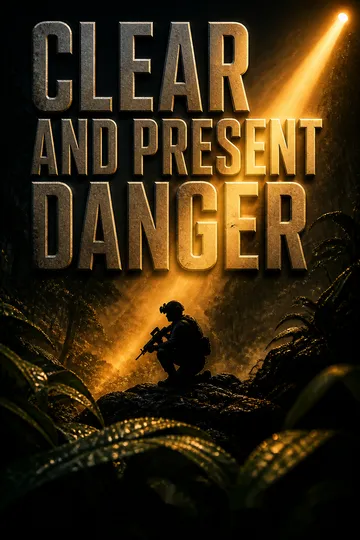
In the Oval Office, the President lets National Security Adviser James Cutter launch Operation SHOWBOAT, a covert effort meant to disrupt Colombian drug shipments. Elsewhere, two killers take a wealthy American yacht north, while Army sergeant Domingo Chavez and his squad prepare for a secret insertion.
At China Lake, technicians prove that a lighter, paper-based bomb can still guide accurately to its target. The strands seem unrelated, but the operation’s machinery is already moving: political pressure, clandestine troops, and weapons whose consequences will outgrow their designers’ plans.
The opening places political choice beside technical capability and human vulnerability. The President and Cutter talk about action as policy, the technicians test a weapon as engineering, and Chavez prepares as a soldier; each sees only the part of the machinery assigned to him. The yacht’s doomed passengers expose the flaw in that compartmentalized vision before the main plot begins. By presenting several processes in motion at once, the prologue makes the coming crisis feel less like a single mistake than a chain of decisions whose makers cannot see their combined shape.
Panache Finds a Slaughterhouse
Coast Guard captain Red Wegener intercepts the Empire Builder in fog off Mexico after its wealthy owner misses a business meeting and heads far beyond his usual range. Two men aboard try to evade Panache, but the cutter forces them to stop. Lieutenant Wilcox’s boarding party finds blood throughout the yacht, evidence of rape, and a stash of cocaine.
The owner, his wife, and their two children are gone, their bodies apparently thrown overboard. Wegener has spent his career pulling people from the sea; now the water holds victims he could not save. He orders his crew to preserve the crime scene and carry the prisoners to port, while the discovery turns a routine drug patrol into a murder investigation.
Wegener’s professional identity is built on the belief that preparation and skill can rescue people from danger. The yacht breaks that promise in a particularly cruel way: the sea did not take the family, but it conceals what human beings did to them. The discovery also shifts the Coast Guard from rescue into law enforcement, a role Wegener resents but cannot refuse. His insistence on preserving evidence shows that his response to horror is procedure, not spectacle. The case will test whether procedure can deliver a justice that feels proportionate to the crime.
A Court at Sea
Wegener’s chief Manuel Oreza warns that missing bodies and frightened witnesses may let the killers bargain their way into short sentences. The captain responds by using an obsolete maritime code to stage a summary court-martial aboard Panache.
His crew pretends to hang Ramón Capati in a storm, then uses the shock to make Jesús Castillo identify himself and describe the yacht murders. Both prisoners are handed over alive, and the federal case proceeds on physical evidence rather than Castillo’s confession.
In Mobile, FBI agent Mark Bright searches the victims’ home and discovers hidden computer disks. They reveal that the murdered businessman had laundered Cartel money through American real estate, giving investigators a trail to hundreds of millions of dollars.
Wegener’s stunt exposes the tension between justice as punishment and justice as a rule-bound public process. He wants the killers to face the moral weight of their actions, but his improvised tribunal risks contaminating the case and weakening the law he means to serve. Bright’s discovery offers a contrasting method: patient observation of a displaced chair mat leads to concealed financial records. The plot thus sets two kinds of investigative force against each other, the captain’s moral improvisation and the FBI’s forensic persistence. Both uncover truth, but only one can be safely presented in court.
The Cartel’s Blind Spots
CIA operative John Clark flies over Medellín with local pilot Carlos Larson and sees that cartel leaders have turned hilltop homes into fortified compounds. He judges that ordinary surveillance or a direct assault would bring casualties without lasting results.
In Washington, Jack Ryan briefs National Security Adviser James Cutter while his mentor, Admiral James Greer, undergoes treatment for terminal cancer. Greer’s illness leaves Ryan carrying more responsibility just as Cutter pushes a covert anti-drug plan.
The Cartel’s Ernesto Escobedo, meanwhile, wants political respect as well as wealth, and hires former Cuban intelligence officer Félix Cortez to improve its security. Cortez sees that the American government is preparing something, but cannot yet identify the operation.
This section gives each institution a different blind spot. Clark recognizes the cartel’s physical defenses but cannot yet know the political design behind the mission. Cutter has authority without operational judgment, while Ryan has analytical ability but is being kept outside decisions that will soon affect his work. Escobedo mistakes financial power for political legitimacy, and Cortez understands the difference but is hired to serve the very system he distrusts. Greer’s illness sharpens the stakes for Ryan: advancement is arriving not as triumph, but as an obligation inherited from a mentor who may not be there to guide him.
Chavez Leaves the Army’s Map
Army staff sergeant Domingo Chavez expects an early transfer to Fort Benning, but a disguised CIA recruiter diverts him to a remote Colorado camp with other Spanish-speaking light infantrymen.
The soldiers endure high-altitude conditioning, learn silent weapons, and practice night movement without being told their destination. Clark evaluates them during an exercise and singles out Chavez’s patience and fieldcraft. The men then learn that their assignment is not to train foreign troops: they will enter Colombia, watch covert airstrips, and help stop drug flights.
In Florida, fighter pilot Jeff Winters, known as Bronco, begins intercepting smugglers. He shoots down aircraft that evade him, while other crews are instructed to capture crews when possible.
Chavez’s recruitment works by appealing to the strongest parts of his identity: pride in his Army service, loyalty to fellow soldiers, and anger at the drugs damaging the neighborhoods he escaped. Those motives are real, but they are also being deliberately arranged by people above him. His training feels like professional development until its true purpose emerges, showing how expertise can be converted into consent without full knowledge. Clark’s praise gives Chavez personal recognition, while Bronco’s lethal interceptions introduce a parallel form of state force. Both men are capable operators, but neither controls the policy that defines their targets.
Moira Opens a Door
The FBI prepares Operation TARPON to freeze the Cartel’s hidden investments, relying on Bright’s recovered records to trace money through banks and real-estate ventures. At the same time, Cortez courts Moira Wolfe, a widowed secretary to FBI Director Emil Jacobs. He presents himself as Juan Díaz, a businessman grieving a dead wife, and Moira, lonely after her husband’s sudden death, falls in love with him.
She tells him that Jacobs will travel secretly to Colombia to meet the Attorney General. The information is not a full briefing, but it gives Cortez a crucial warning. TARPON then becomes public, revealing the seizure of more than half a billion dollars and making the Cartel’s financial losses impossible to conceal.
Moira’s vulnerability is not foolishness; it is grief meeting a practiced performance calibrated to answer it. Cortez offers intimacy while quietly converting trust into intelligence, and the two kinds of exchange become difficult for Moira to separate. Her disclosure is small in her mind, a private detail shared with a lover, but within the machinery of state it becomes a security breach. TARPON has the opposite logic: painstaking records turn hidden wealth into public evidence. The juxtaposition shows how information can be obtained through patient investigation or through emotional access, and how both can alter the balance of power.
Bogotá Answers with Rockets
Cortez passes the warning along, and four RPG teams ambush the armored limousine carrying Jacobs, the DEA administrator, and the American ambassador through Bogotá. The explosives destroy the vehicle and kill the passengers and security detail.
The captured M-19 gunman knows little about who ordered the attack, but investigators conclude that the flight information leaked from the American side. President and national-security officials gather at Camp David. The President declares the Cartel a hostile force and authorizes a more aggressive response.
Cutter and CIA deputy director Bob Ritter are ordered to hurt the organization directly. Ryan, newly named acting Director of Intelligence, is excluded from the operation’s inner circle because the President wants its knowledge tightly contained.
The assassination transforms a covert anti-drug program into a contest over national sovereignty and revenge. The Cartel’s decision is strategically reckless, but the leak that enables it also reveals the fragility of secrecy inside the American government. The President’s anger is understandable, yet his authority expands faster than his understanding of consequences. Ryan’s exclusion is especially revealing: he is promoted into responsibility while denied the information needed to exercise it. The novel frames secrecy as both operational protection and a method of avoiding accountability, with the same closed circle that promises security also narrowing the chances for dissent.
SHOWBOAT Enters the Hills
Four covert Army teams land in Colombia under Captain Ramirez, with Chavez as the lead scout for Team Knife. Their mission is to observe airstrips and report incoming flights, while Bronco intercepts aircraft offshore. Some crews are captured by Marines posing as exercise personnel; others are shot down when they refuse to comply.
Chavez’s team reaches the Reno strip, watches a Piper Cheyenne depart, and reports its course. The guards at the field appear careless, but Ramirez insists that his men stay distant and avoid contact. The teams also begin locating cocaine-processing sites. Their early success persuades Washington that the operation is working, although the soldiers on the ground know only fragments of its larger design.
The operation’s compartmentalization creates efficiency and moral distance at the same time. Chavez can observe a flight without knowing the full system that will intercept it; Bronco can destroy an aircraft without knowing what the ground teams have seen. Ramirez’s caution reflects military discipline, but his orders also limit the information he can gather. The early successes reward the planners and make them more confident, while the people exposed to danger have little basis for judging whether the wider mission is worth its costs. The gap between tactical competence and strategic understanding is already widening.
The First Bomb Falls
After the assassination, Clark receives authority for Operation RECIPROCITY and arranges a Navy A-6 strike against a meeting at Ernesto Untiveros’s fortified home. He marks a modified bomb onto a truck parked beside the conference room.
The paper-composite casing leaves no bomb fragments, making the blast appear to be a car bombing. Four senior Cartel figures die, along with Untiveros’s wife, children, servants, and guards. Cortez arrives late, survives the explosion, and initially believes a rival cartel faction planted the bomb.
He identifies the weapon as an American precision strike only after examining the residue. The attack removes powerful leaders, but it also demonstrates that Washington’s retaliation has already killed people beyond its intended list.
Clark’s strike is technically precise and morally imprecise. The bomb hits its designated point, but precision of delivery cannot control who is nearby or convert them into acceptable losses. Cortez’s survival matters because he can read the attack as both threat and opportunity, while the dead cannot contest the interpretation imposed on them. The paper casing hides evidence as well as metal, making the weapon’s invisibility part of the operation’s design. The scene tests the assumption that a clean technical solution can keep political violence clean. The blast says otherwise.
Moira Pays for Trust
After Jacobs’s funeral, Moira recognizes the man she knew as Juan Díaz in a photograph from Colombia. FBI agents explain that he was Cortez, a trained intelligence officer who had used her for information. Overwhelmed by guilt for revealing Jacobs’s trip, Moira takes Placidyl pills from her dead husband’s medicine cabinet. Her son Dave finds her unconscious and calls for an ambulance.
Doctors keep her alive, and Murray reassures her that Cortez engineered the relationship rather than simply taking advantage of a careless employee. The Bureau transfers Moira to a job without classified access. Her children and colleagues remain close, but she must rebuild a life in which love, grief, and professional trust no longer feel safely separable.
Moira’s crisis follows the familiar but unfair logic of a compromised source: she treats the consequences of manipulation as proof of her own moral failure. Murray’s intervention matters because he names the asymmetry between her loneliness and Cortez’s training. Yet reassurance cannot immediately restore her sense of agency; she has to survive the shame before she can accept help. Her transfer recognizes that security systems can protect institutions while still having a duty to the people they use. The episode makes emotional recovery a practical consequence of intelligence work, not a sentimental aside.
Cortez Turns the Cartel
Cortez uses the cartel’s confusion to present himself as its most capable strategist. When he and Escobedo travel to meet Luis Fuentes, gunmen attack their armored convoy with machine guns. Cortez knocks Escobedo down, and the driver escapes the kill zone. From a nearby rise, they watch Clark’s second precision strike destroy Fuentes’s house.
The attack kills Fuentes and other cartel figures, while Cortez and Escobedo survive. Cortez interprets the American operation correctly and uses the danger to deepen Escobedo’s dependence on him. He proposes a restructured Cartel, claiming he can reduce exports to the United States while eliminating internal rivals. His ambition now runs alongside Washington’s plan to provoke a cartel war.
Cortez’s intelligence training lets him treat crisis as a political opening. He does not merely survive the violence; he arranges its meaning for Escobedo, turning rescue into leverage and American action into an instrument of his own rise. His analysis is sharper than the Cartel leaders’, but his success does not make him a stabilizing force. He wants order because order increases his control. The convoy attack and the strike on Fuentes’s house show how rival agendas can occupy the same battlefield, each mistaking the other’s violence for an opportunity to be used.
The Pirates’ Last Bargain
Defense attorney Edward Stuart negotiates a twenty-year plea for Capati and Castillo, hoping to spare them execution while avoiding a trial that could expose Wegener’s staged hanging. A Cartel intermediary rejects the deal and orders Stuart to fight.
Before the case can return to court, the Patterson twins, two jailed criminals offered a chance at leniency, attack the pirates during a staged shower-room fight. Both prisoners die from homemade shanks.
The twins claim ignorance, while a police lieutenant removes the ballistics evidence linking them to another murder. Without that evidence, the brothers are likely to escape prosecution. Wegener’s crew is spared a public trial over its conduct, but the legal system’s compromise has made room for two more murders.
This subplot gives the novel’s argument about justice its most intimate test. Stuart’s bargain is partly ethical and partly self-protective, while the Cartel’s insistence on trial treats the prisoners as expendable assets. The Patterson twins exploit the same imperfect system that once protected them, and the police lieutenant answers that failure with a deliberate distortion of evidence. Nobody emerges with clean hands. The scene also mirrors the larger covert operation: people in authority bend procedure to achieve outcomes they believe necessary, then discover that the same permission can be used by someone more ruthless.
Ryan Finds the Secret War
Navy captain Robby Jackson realizes that the A-6 sorties he watched from USS Ranger match the cartel bombings. His brother Tim independently suspects that Chavez and other Spanish-speaking soldiers have vanished into a covert mission. When Robby warns Ryan that the operation’s secrecy is failing, Ryan insists he knows nothing, then investigates after Cutter’s meeting with Cortez and the cutoff of field support raise alarms.
He enters Ritter’s safe, copies records on EAGLE EYE, SHOWBOAT, CAPER, and RECIPROCITY, and takes them to FBI chief Bill Shaw and Dan Murray. They agree that stopping the operation matters less immediately than saving the isolated soldiers, while recognizing that the exposed program may implicate the President and CIA.
Ryan’s transition from analyst to actor begins when institutional trust fails. He does not uncover the operation through a dramatic confession, but by connecting clues that senior officials have kept in separate compartments. Robby’s professional eye and Tim’s concern for his missing soldier show how secrecy leaks through ordinary relationships, not only through espionage. Ryan’s decision to copy the files is a breach of protocol, but he believes the greater breach is withholding information from the official oversight system. The conflict is no longer simply whether force is justified; it is whether an institution can police its own use of force.
Cutter Cuts the Lifeline
Cortez meets Cutter in Panama and reveals that he knows about the covert teams, airstrips, bombs, and helicopter. He offers to cut drug shipments in exchange for the withdrawal of American support, while promising to eliminate cartel leaders responsible for the Bogotá murders. Cutter accepts the bargain and orders the helicopter back to Florida and the communications team to erase its encryption key.
In the mountains, Ramirez’s soldiers lose contact with Washington. Clark returns to Panama, discovers that the link has been deliberately severed, and refuses to accept the abandonment. He persuades Ryan, Murray, and Shaw to help organize an extraction outside Cutter’s chain of command.
Cutter’s bargain is the point at which a covert operation becomes a private political transaction. He tells himself that reduced drug exports and cartel instability will count as success, but the price is the safety of soldiers whose mission he authorized. The destruction of the communications key turns bureaucratic concealment into a physical abandonment: the teams cannot call for help, and the command structure can pretend they are no longer its responsibility. Clark’s refusal to accept that logic restores the distinction between command authority and moral obligation. Ryan’s help gives that refusal a route back into legitimate institutions.
Ninja Hill Breaks the Hunt
Cartel gunmen fan into the mountains to find the American teams. Team Banner stumbles into a larger force and suffers heavy losses, including its captain; a few survivors escape and later join Chavez’s Team Knife. Ramirez finally chooses to stop running and lays an ambush on a narrow approach.
The soldiers let the attackers enter a killing zone, then use claymore mines, grenades, and coordinated rifle fire to inflict severe casualties before withdrawing. A second engagement costs more lives, and the remaining soldiers reach the extraction area exhausted, low on food, and unsure whether anyone will come. The battle proves their skill, but skill cannot compensate for being outnumbered and cut off.
Chavez’s fieldcraft and Ramirez’s command are effective precisely because they translate training into shared action. The ambush succeeds tactically, yet each success consumes people and ammunition that cannot be replaced. Ramirez’s earlier reluctance to risk his men gives way to a clearer understanding that evasion alone can let the enemy choose every encounter. His decision restores initiative but not control over the larger situation. The sequence refuses the fantasy that superior training makes soldiers invulnerable: it can shape the terms of a fight, but it cannot erase the consequences of sending them into one.
The Storm Takes Zimmer
Clark reaches Team Knife and helps guide an improvised rescue, while a fresh assault on Team Feature forces Colonel Paul Johns to bring the Pave Low into gunfire. Ryan fires a minigun from the open side as the helicopter covers the soldiers’ retreat. The rescue succeeds, but airman Buck Zimmer is hit repeatedly and dies while Ryan tries to comfort him with a promise that his seven children will be cared for.
A damaged engine and Hurricane Adele then prevent the helicopter from crossing the mountains. Johns takes the wounded and surviving troops through the storm to the Coast Guard cutter Panache, where Wegener’s crew secures the aircraft to the pitching deck.
The rescue places Ryan inside the consequences he had previously encountered as reports, files, and policy questions. His promise to Zimmer’s dying is not a solution to death, but it is an obligation that changes what he must do afterward. Johns’s crew, like Wegener’s, responds through practiced procedure when circumstances become nearly unmanageable. The two services meet at sea, where rescue once again depends on individuals who take responsibility without knowing whether the larger system will protect them. Adele intensifies the danger, but the human cost was already present before the storm arrived.
Cortez Changes Hands
With Ryan, Clark, and the surviving soldiers coordinating outside Cutter’s orders, Team Omen raids the farmhouse where Cortez and Escobedo are meeting. They capture both men and escape under Pave Low cover. Clark returns Escobedo to cartel associates, who take him away to face his own faction’s judgment; Cortez is held for transfer at Guantanamo.
The FBI’s surveillance identifies Cutter’s meeting with Cortez, and investigators recover the erased communications disk from the Admiral’s rubbish. Cutter, facing exposure and arrest, walks into traffic and dies in what is treated as an accident. The operation’s central architect is gone, but his choices have left both political and human consequences behind.
The capture resolves the immediate contest for control, but it does not restore a simple moral order. Escobedo is returned to the Cartel rather than processed through American courts, while Cortez becomes a bargaining problem between governments. Cutter’s death removes a witness and a defendant, not the institutional habits that allowed him to act. Ryan and Clark succeed because they improvise beyond the broken chain of command, yet their success depends on further secrecy and unsanctioned decisions. The ending makes accountability a problem that cannot be solved by removing one compromised official.
The Price of Secrecy
At Admiral Greer’s funeral, Ryan is absent because he is helping bring the surviving soldiers home; the loss of his mentor has already shaped his decision to tell the truth to Congress. He refuses the President’s request to conceal the operation’s full story, though he protects the identities of the people who acted under orders.
The oversight chairmen keep the affair from becoming a public scandal, and the incoming administration is left to decide what to do with the damaged agency. Moira, recovered and working outside the FBI, travels with Murray to Guantanamo when Cortez is returned to Cuba. She sees the man who exploited her, but says nothing. This time silence belongs to her.
The final movement distinguishes secrecy chosen by a victim from secrecy imposed by a government. Moira’s silence no longer serves Cortez’s intelligence work; it marks a boundary she controls. Ryan, meanwhile, chooses disclosure to the people authorized to judge the operation, accepting that institutional loyalty cannot mean unconditional concealment. Greer’s death makes that choice feel inherited rather than convenient: Ryan must carry forward the standards his mentor taught him without the comfort of asking for more guidance. The resolution offers neither a clean victory nor a public reckoning, but it does leave responsibility in human hands.
Analysis
Clear and Present Danger asks what happens when a government treats a social crisis as war but keeps the language and procedures of policing. The distinction matters because each frame carries different permissions, expectations, and forms of accountability. The novel does not make the drug trade a metaphor; it gives it specific mechanisms: murdered families, corrupted officials, aircraft, processing sites, hidden investments, and communities pressured by poverty. Its argument is that the Cartel’s power is economic and political as much as criminal, so no single raid or arrest can dismantle it.
The plot’s most unsettling symmetry is that both the Cartel and the American government use compartmentalization to manage violence. Cortez recruits Moira by separating genuine intimacy from the information he extracts. Cutter and Ritter separate policy from execution, while Ryan is asked to report to Congress without knowing what he is reporting around. These divisions do not erase responsibility. They merely make responsibility harder to locate until someone is already dead.
Ryan’s ethical development is measured not by certainty but by his refusal to confuse authority with innocence. He recognizes that covert force may be defensible, yet insists that those who authorize it remain answerable. Clark, by contrast, judges decisions through the lives of the soldiers he can see and reach. Their different perspectives are both necessary: Ryan asks whether the state can justify its actions, while Clark asks what those actions demand of the people in the field.
The resolution offers limited victories rather than purification. Drug routes are disrupted, cartel leaders are removed, and some soldiers survive, but the legal machinery fails in the pirate case and political secrecy shields powerful officials. The enduring lesson is not that force is always wrong or always necessary. It is that a state which claims exceptional power must accept exceptional responsibility, especially when its own servants bear the costs.
Review Summary
Clear and Present Danger receives mostly positive reviews, praised for its intense action, political intrigue, and well-researched military details. Readers appreciate the complex plot involving drug cartels and covert operations. Some find the technical jargon and lengthy descriptions challenging, while others enjoy the depth of information. The character development, especially of Felix Cortez and Ding Chavez, is highlighted as a strength. Critics note the book's slow start and occasional melodramatic elements but overall consider it a compelling thriller in the Jack Ryan series.
People Also Read

Characters
Jack Ryan
Reluctant intelligence chiefRyan is a former Marine, historian, and intelligence analyst whose rise in the CIA has been guided by Admiral James Greer. He is intellectually quick and personally conscientious, but not naturally comfortable with Washington’s political games. He believes intelligence should serve the country without becoming an excuse to evade law or judgment. His family keeps his work anchored in ordinary human consequences, while his career repeatedly places him close to decisions made with incomplete information. Ryan’s central tension is between institutional loyalty and the obligation to speak honestly when the institution itself is failing its responsibilities.
John Clark
Field operations specialistClark is a veteran covert operative whose aliases, languages, and military experience make him valuable in dangerous field assignments. He is physically disciplined, observant, and economical with words. His work depends on anticipating danger and acting before an opponent can respond, but his experience has also made him skeptical of distant planners who mistake a map for a battlefield. Clark takes responsibility for the people operating beside him, even when that responsibility conflicts with orders. His private life as a husband and father gives his professional violence a human counterweight, though he rarely allows the two worlds to meet.
Domingo Chavez
Night-trained squad scoutChavez, called Ding by his fellow soldiers, is a compact, disciplined light-infantry sergeant raised in Los Angeles. He joined the Army after seeing gang violence destroy a friend’s life, and military training gave his toughness structure, literacy, and a sense of earned pride. He leads by noticing what others miss: tracks, sounds, movement, and the condition of the men behind him. Chavez is loyal to his squad and takes his work seriously, but his youth leaves him vulnerable to the idea that a clear mission must also be a just one. He is at his best when trained instincts and personal compassion work together.
Red Wegener
Coast Guard rescue captainWegener is a seasoned Coast Guard officer whose reputation was built rescuing sailors in dangerous seas. A natural seaman and patient teacher, he trusts experienced chiefs and prefers practical judgment to rank for its own sake. Drug interdiction has forced him into a policing role he never expected, and the yacht murders challenge his faith that established procedures can meet every form of wrongdoing. Wegener’s instinct is to protect people, whether they are stranded boaters or young crew members learning their jobs. His authority carries warmth, but also a willingness to improvise when ordinary rules seem inadequate.
Félix Cortez
Cartel intelligence adviserCortez is a former Cuban intelligence colonel trained in recruitment, counter-surveillance, and political analysis. Fluent in several languages, he adapts his identity to the person he needs to influence. He prizes competence and strategic patience, and considers himself more professional than the smugglers who employ him. Yet his intelligence does not make him morally neutral: he uses intimate trust as a tool and treats people as pieces in a design. Cortez’s central ambition is to move beyond hired service and shape the organization that depends on him, while maintaining the self-image of a disciplined professional.
James Cutter
President’s security adviserCutter is a vice admiral serving as the President’s National Security Adviser. He is ambitious, polished, and comfortable with high-level decision making, but his confidence often exceeds his operational understanding. Cutter wants visible results in the drug campaign and believes secrecy can contain political risk. He is less at ease with the human costs and procedural ambiguities that follow from covert action than with the authority to initiate it. His relationship with the President rests on access and usefulness, while his dealings with CIA executives reveal how easily policy authority and personal self-protection can become entangled.
James Greer
Ryan’s trusted mentorGreer is a senior CIA intelligence officer and Ryan’s most important professional mentor. A Navy veteran with a dry sense of humor, he combines institutional knowledge with a personal interest in younger colleagues. His guidance is rooted less in clever procedure than in responsibility, judgment, and the weight of one’s word. Greer’s illness shadows Ryan’s promotion and makes their conversations feel like lessons passed on under pressure. He has helped shape the person Ryan is becoming, even as political and operational demands threaten to pull that person in conflicting directions.
Moira Wolfe
FBI director’s secretaryMoira is an experienced executive secretary, a mother, and a widow learning to live with sudden loss. She is competent and observant at work, but her private grief leaves her open to a relationship that appears to offer companionship and renewed possibility. Moira is not defined by carelessness; she is a person whose emotional needs are met by someone deliberately trained to notice them. Her role exposes how intelligence operations enter private lives and how institutional security can depend on people whose vulnerabilities are never acknowledged until after harm is done.
Bob Ritter
CIA operations directorRitter leads the CIA’s Operations Directorate and wants to restore its capacity for consequential field work. He is capable, experienced, and willing to take risks that more cautious officials avoid. His respect for Clark reflects an understanding of practical expertise, but his ambition to run a major operation can narrow his attention to what the mission is achieving rather than what it is doing to the people involved. Ritter is neither a simple villain nor a detached bureaucrat; he is a professional whose belief in the institution’s usefulness is tested by the consequences of his own decisions.
Dan Murray
FBI investigator and mediatorMurray is a veteran FBI agent promoted into management after years of field and overseas service. He remains a cop at heart: practical, loyal, and attentive to the people behind a case file. His friendship with Ryan allows him to speak plainly, while his professional experience helps translate political conflict into investigative questions. Murray believes in law but also sees how procedure can fail victims or punish the wrong people. He often becomes the bridge between the intelligence world and ordinary criminal justice, carrying information between institutions that do not fully trust each other.
Ernesto Escobedo
Cartel power brokerEscobedo is a wealthy and influential Cartel figure who thinks in terms of markets, political recognition, and the historical rise of power elites. Educated and disciplined in his private habits, he sees himself as a builder of a future Colombia rather than merely a trafficker. That self-image coexists with ruthless violence against rivals and families. Escobedo’s desire for legitimacy is real, but he confuses public respect with the ability to compel obedience. His reliance on Cortez reflects both his strategic intelligence and his vulnerability to people who understand power more professionally than he does.
Captain Ramirez
Light-infantry commanderRamirez is a capable Army captain who commands a small team of highly trained soldiers in unfamiliar terrain. He respects his men’s skills and shares their physical hardships, but command places him between obedience to distant authorities and responsibility for the people under his care. His instinct is to preserve the team, even when survival requires taking risks. Ramirez’s leadership is defined by close attention to terrain, preparation, and morale. He is still learning how combat differs from exercises, where simulated losses do not follow a commander back into the night.
Robby Jackson
Navy fighter pilotRobby Jackson is a skilled Navy aviator serving in a Pentagon role while pursuing command of a carrier air wing. He is confident in the cockpit and frank with his younger brother, Lieutenant Tim Jackson. His military instincts help him spot the connection between the aircraft he sees at sea and events reported in Colombia. Robby is not an intelligence professional, but his willingness to question what he observes makes him an important link between services. He values competence and directness, and dislikes being made a pawn in decisions hidden from the people expected to carry them out.
Emil Jacobs
FBI director and public servantJacobs is the Director of the FBI, a former United States Attorney who sees law enforcement as a duty to protect the vulnerable. He is analytical, committed, and personally attentive to the people who work for him. His authority comes not only from office but from a long record of service that has earned loyalty across the Bureau. Jacobs’s decision to take the drug-money case seriously places him at the center of a conflict larger than ordinary prosecution. His staff, especially Moira Wolfe and Dan Murray, regard him as a humane leader as well as a demanding one.
The President
Commander in chief under pressureThe President is a seasoned politician facing an election-year promise to confront drugs and a personal shock when the Cartel kills senior American officials. He is capable of warmth toward trusted advisers, but the office encourages him to convert grief into policy before the consequences are clear. His authority is both immense and constrained: he can approve covert action, yet must also manage law, Congress, public opinion, and the lives of people he may never meet. His struggle is not merely whether to act, but whether he can accept responsibility for what action sets in motion.
Carlos Larson
Local pilot and CIA contactLarson is an American pilot living in Colombia under a commercial cover, with real ties to the local flying community. He knows cartel culture, aircraft, and regional geography, making him useful to Clark’s reconnaissance work. Larson is less comfortable than Clark with violence and the moral compromises of covert operations, but he is no innocent outsider. His professional competence and personal relationships give him something to lose if his cover fails. He often asks the practical questions that planners neglect, especially about extraction, risk, and what happens to local contacts after the mission moves on.
Paul Johns
Special-operations pilotColonel Johns, known as PJ, is an Air Force helicopter commander with extensive rescue and special-operations experience. He is quiet, precise, and demanding because he has seen how small mistakes become fatal in low-level flight. His crew trusts him, and he treats their lives as part of his command responsibility rather than expendable equipment. Johns’s past missions have taught him that rescue is never simply a technical task; it is a promise made to people on the ground. He is an ordinary-seeming man whose courage becomes visible in the decisions he makes under pressure.
Plot Devices
The encrypted satellite net
Covert command and controlSHOWBOAT’s teams use compact satellite radios linked through a communications van in Panama. A one-time encryption algorithm lets them report locations, relay aircraft movements, and request help without knowing who operates the network. The arrangement supports the operation while preserving compartmentalization, but its dependence on a single set of keys creates a dangerous weakness. When Cutter orders the keys erased, the teams cannot reach their handlers, and the machinery meant to protect secrecy becomes a means of abandonment. The device turns an abstract chain of command into something the soldiers can hear disappear.
The combustible smart bomb
Concealed precision strikeThe Navy’s experimental bomb uses a nonmetallic casing and laser guidance. Its explosive force can destroy a selected target while leaving little evidence of a conventional bomb casing, allowing a military strike to be mistaken for a car bombing. Clark designates targets from the ground, while an A-6 drops the weapon from high altitude. The device embodies the operation’s central contradiction: extraordinary precision in placing force can make responsibility harder to see, while nearby civilians remain exposed to the blast.
TARPON’s hidden records
Follow the cartel’s moneyThe dead yacht owner’s computer disks record a complex money-laundering network built through banks, shell companies, and American real-estate developments. FBI agent Mark Bright finds the disks in a hidden safe and works with financial investigators to trace the funds. The resulting seizures expose the Cartel’s attempt to turn drug profits into legitimate-looking wealth and political influence. Unlike the field operations, TARPON uses financial documentation and international cooperation. It gives the government a major legal success, but also triggers the Cartel’s decision to retaliate against Jacobs.
The staged court-martial
Shock a prisoner into talkingWegener uses an obsolete maritime code and his crew’s cooperation to stage a summary trial and apparent hanging aboard Panache. The threat frightens one prisoner into confessing, but the confession is later excluded from the prosecution. The episode gives investigators useful leads and exposes the crew to legal jeopardy. It also establishes a recurring question: whether a desired outcome can justify bypassing safeguards. The later death of the prisoners in jail does not resolve that question, because their murders simply transfer the moral and legal burden to new actors.
The cartel power struggle
Turn retaliation into leverageCortez interprets American attacks as an opportunity to reshape the Cartel from within. He encourages suspicion, presents himself as the necessary security expert, and offers Cutter a reduction in drug exports in return for withdrawing American support. This strategy gives Cortez leverage over Escobedo and other cartel figures while also exploiting the Americans’ own desire for a visible victory. The device drives the second half of the novel: neither side fully controls the conflict, and both try to make the other’s violence serve their aims.
FAQ
Synopsis & Basic Details
What is Clear and Present Danger about?
- U.S. wages secret war: The novel centers on the U.S. government's covert war against Colombian drug cartels, initiated without congressional approval, after the murder of a close friend of the President.
- Ryan uncovers the truth: Jack Ryan, now Deputy Director of Intelligence, becomes entangled in the operation and uncovers the ethical compromises and illegal activities undertaken by members of his own government.
- Morality vs. Political Expediency: The story explores the conflict between Ryan's personal morality and the political expediency driving the covert war, forcing him to make difficult choices about loyalty and duty.
Why should I read Clear and Present Danger?
- Complex political thriller: The novel offers a gripping narrative filled with political intrigue, military action, and moral ambiguity, keeping readers engaged from beginning to end.
- Exploration of ethical dilemmas: It delves into the ethical complexities of government power and the consequences of unchecked authority, prompting readers to consider the balance between national security and individual rights.
- Character-driven narrative: The story features a cast of compelling characters, each with their own motivations and flaws, adding depth and realism to the plot.
What is the background of Clear and Present Danger?
- Political climate: The novel reflects the political climate of the late 1980s and early 1990s, marked by heightened concern over drug trafficking and a willingness to take aggressive action against it.
- Historical context: It draws on real-world events and political dynamics, such as the Iran-Contra affair, to create a sense of realism and relevance.
- Technological advancements: The story incorporates advanced military technology and intelligence-gathering techniques, showcasing the evolving nature of warfare and espionage.
What are the most memorable quotes in Clear and Present Danger?
- "It's your ball. Run with it.": This quote, spoken by the President to Cutter, encapsulates the delegation of authority and the pressure to achieve results, regardless of the ethical implications.
- "It's time those bastards were taught a lesson.": This quote reveals the President's vengeful mindset and his willingness to bypass legal constraints in order to punish the drug cartels.
- "You have to go out. You don't have to come back.": This quote, part of the Coast Guard creed, highlights the selflessness and dedication of those who serve, even in the face of extreme danger.
What writing style, narrative choices, and literary techniques does Tom Clancy use?
- Techno-thriller style: Clancy employs a detailed and technical writing style, immersing readers in the intricacies of military operations, intelligence gathering, and political maneuvering.
- Multiple perspectives: The narrative shifts between various characters' viewpoints, providing a comprehensive understanding of the events and their impact on different individuals.
- Moral ambiguity: Clancy explores the gray areas of morality, presenting characters with complex choices and highlighting the consequences of their actions.
Hidden Details & Subtle Connections
What are some minor details that add significant meaning?
- The HMS Resolute desk: The President's desk, made from a salvaged British ship, symbolizes the historical alliance between the US and UK, but also hints at the "resolute" (and potentially inflexible) nature of the President's decisions.
- Wegener's pipe: Captain Wegener's pipe is more than just a prop; it represents his connection to a bygone era of seafaring, contrasting with the modern, brutal realities of the drug war.
- The "Calvert" cigarettes: The brand name of the marijuana cigarettes dropped by the prisoner subtly alludes to the Calvert family, prominent figures in Maryland history, suggesting a hidden connection between American history and the drug trade.
What are some subtle foreshadowing and callbacks?
- The "Storms tonight" weather forecast: The weather forecast foreshadows the moral storm brewing within the characters and the violent events that will unfold.
- The "Untouchables" reference: Wegener's reference to "The Untouchables" foreshadows the escalation of the drug war and the potential for violence and corruption reminiscent of Prohibition-era gang wars.
- Obrecki's tractor engine: Seaman Obrecki's knowledge of tractor engines foreshadows his crucial role in identifying the engine malfunction on the Panache, highlighting the importance of diverse skills and backgrounds.
What are some unexpected character connections?
- Ritter and Clark's shared history: The mention of Clark's past missions and Ritter's knowledge of them hints at a deeper connection between the two men, suggesting a shared history of covert operations and moral compromises.
- Jackson brothers' contrasting paths: The contrasting career paths of the Jackson brothers (one in the Navy, the other in the Army) highlights the different ways individuals can serve their country and the sacrifices they make.
- Wegener and Oreza's long-standing partnership: The established trust and camaraderie between Wegener and Oreza, spanning years of service, underscores the importance of teamwork and experience in high-pressure situations.
Who are the most significant supporting characters?
- Chief Boatswain's Mate Riley: Riley embodies the traditional values and toughness of the Coast Guard, serving as Wegener's right-hand man and a moral compass for the crew.
- Chief Quartermaster Oreza: Oreza's expertise in navigation and his understanding of the sea make him an invaluable asset to Wegener, providing practical knowledge and a grounded perspective.
- Lieutenant Wilcox: Wilcox represents the younger generation of Coast Guard officers, eager to prove themselves and willing to follow orders, even when faced with difficult situations.
Psychological, Emotional, & Relational Analysis
What are some unspoken motivations of the characters?
- Cutter's ambition: Cutter's primary motivation is to advance his career and gain favor with the President, even if it means compromising ethical principles and taking unnecessary risks.
- Ryan's sense of duty: Ryan is driven by a strong sense of duty to his country and a desire to do what is right, even when it conflicts with his personal ambitions or the orders of his superiors.
- Escobedo's desire for legitimacy: Escobedo seeks not only wealth and power but also legitimacy and respect, motivating his efforts to infiltrate legitimate businesses and influence political institutions.
What psychological complexities do the characters exhibit?
- Wegener's moral conflict: Wegener struggles with the conflict between his duty to enforce the law and his personal sense of justice, leading him to take actions that blur the lines between right and wrong.
- Clark's detached professionalism: Clark exhibits a detached professionalism that masks a deep-seated anger and a willingness to use violence to achieve his goals, raising questions about the psychological toll of his work.
- Cortez's internal conflict: Cortez grapples with the conflict between his loyalty to his former government and his desire for personal gain, leading him to make choices that betray his own values.
What are the major emotional turning points?
- Wegener's discovery of the murders: Wegener's discovery of the brutal murders on the Empire Builder marks a turning point, fueling his anger and leading him to take drastic action.
- Ryan's realization of the truth: Ryan's realization that the U.S. government is engaged in illegal activities marks a turning point, forcing him to confront his own values and make difficult choices.
- Moira's betrayal: Moira's discovery that she has been used by Cortez marks a major emotional turning point, leading her to attempt suicide and grapple with the consequences of her actions.
How do relationship dynamics evolve?
- Ryan and Greer's mentor-mentee relationship: The relationship between Ryan and Greer evolves from a professional mentorship to a deep personal bond, with Greer serving as a father figure and Ryan grappling with the loss of his mentor.
- Cutter and the President's power dynamic: The power dynamic between Cutter and the President shifts as the operation unravels, highlighting the precarious nature of political alliances and the consequences of failure.
- Clark and Larson's professional partnership: The professional partnership between Clark and Larson evolves as they face increasingly dangerous situations, testing their trust and loyalty to one another.
Interpretation & Debate
Which parts of the story remain ambiguous or open-ended?
- The long-term consequences of the covert war: The novel leaves open the question of whether the covert war on drugs ultimately achieves its goals or simply perpetuates a cycle of violence and corruption.
- The future of the characters: The fates of some characters, such as Clark and Ryan, are left ambiguous, leaving readers to speculate about their future roles in the world of intelligence and national security.
- The true extent of the conspiracy: The novel hints at a larger conspiracy within the U.S. government, but the full extent of this conspiracy is never fully revealed, leaving readers to question the true nature of power and corruption.
What are some debatable, controversial scenes or moments in Clear and Present Danger?
- Wegener's mock execution: Wegener's decision to stage a mock execution is a highly controversial moment, raising questions about the ethics of law enforcement and the use of psychological manipulation.
- The bombing of Escobedo's house: The bombing of Escobedo's house, resulting in the deaths of innocent civilians, is a highly debatable scene, raising questions about the morality of collateral damage and the limits of warfare.
- The decision to abandon the soldiers: The decision to abandon the soldiers in Colombia is a controversial moment, highlighting the political calculations and moral compromises that can occur in government decision-making.
Clear and Present Danger Ending Explained: How It Ends & What It Means
- Ryan confronts the President: Ryan confronts the President about the illegal activities and ethical compromises made during the covert war, leading to a tense showdown and a questioning of authority.
- Cutter's downfall: Cutter's ambition and overconfidence ultimately lead to his downfall, as his actions are exposed and he faces the consequences of his decisions.
- The cycle of violence continues: Despite the efforts of Ryan and others to uphold ethical principles, the novel suggests that the cycle of violence and corruption in the drug war is likely to continue, highlighting the complexities and challenges of addressing this global problem.
Jack Ryan Universe (Publication Order) Series



About the Author
Download PDF
Download EPUB
.epub digital book format is ideal for reading ebooks on phones, tablets, and e-readers.








