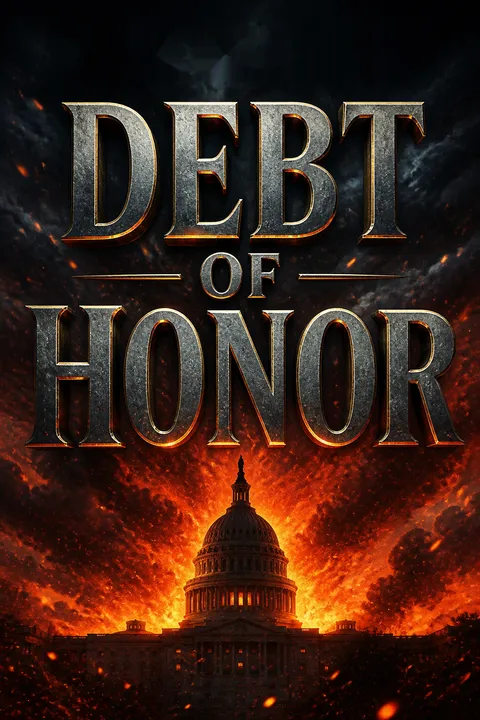


Plot Summary
Prologue
Raizo Yamata8 buys land on Saipan, including the cliff where his family died during the American invasion of 1944. He sees the purchase as a reversal of history and quietly resolves to humble the United States.
Elsewhere, a Japanese engineering team begins work on a secret weapons project, while Jack Ryan,1 retired from government and struggling to settle into private life, receives an urgent summons from President Roger Durling.3 The book opens with revenge, ambition, and a return to public duty moving toward the same collision, though none of the people involved yet knows how soon it will come.
The opening binds Yamata's private grief to national ambition. His family's deaths are not merely remembered; he turns them into a political account that he believes history must repay. The contrast with Ryan's interrupted holiday establishes two competing relationships to the past: Yamata treats it as an unpaid debt, while Ryan has tried to leave his own dangerous service behind. The secret engineering work gives that grievance material form. In this story, historical memory becomes dangerous when a leader mistakes personal vindication for the needs of an entire country.
A Call at Greenbrier
Jack Ryan1 is playing golf with Rear Admiral Robert Jackson7 when a White House call ends his brief return to private life. President Roger Durling3 asks him to replace an ineffective National Security Advisor, and Ryan1 accepts despite the strain the job will place on his wife,6 Cathy,6 and their children.
His first immediate test is Operation WALKMAN: CIA officers John Clark4 and Domingo Chavez5 have spent weeks posing as mineral prospectors to lure Somali warlord Mohammed Abdul Corp into a capture.
They seize Corp without friendly casualties and transfer him to his own country's authorities. Ryan's1 successful coordination with the field team restores his standing in government, but the operation also makes clear that his new position will involve choices whose consequences reach far beyond Washington.
Ryan's return is driven less by ambition than by the discomfort of being absent from consequential work. Private life has not cured his restlessness, but the novel makes clear that returning to power is not a clean restoration: it exposes his family to the demands of a job he once abandoned. Operation WALKMAN also establishes his moral style. He accepts a limited, practical action over a grand gesture, yet remains attentive to the lives involved. His competence is valuable precisely because he distrusts the seductions of authority.
Yamata's Wider Map
While Ryan1 studies an Indian carrier group operating near Sri Lanka, Admiral Jackson7 warns that the United States has too few ships to maintain a credible reserve. The Indian fleet is practicing attacks that could overwhelm an American carrier's defenses, while its army trains nearby.
At the same time, Yamata8 gathers Japanese industrialists, an Indian admiral, and a Chinese diplomat to argue that Japan's dependence on imported resources leaves it permanently vulnerable. He points to Eastern Siberia's largely untapped oil and mineral wealth, and persuades Chinese officials that Japan could help open it.
The alliance is not yet a formal invasion plan, but the conversation gives Yamata's8 grievance a strategic destination: a resource-rich sphere that could make Japan and China less dependent on Western markets and sea power.
This section enlarges the conflict from a personal vendetta into a contest over geography, supply, and military capacity. The Indian fleet's movements matter not only for its possible ambitions in Sri Lanka, but because they expose how little reserve the United States can bring to distant waters. Yamata reads resource dependence as a national humiliation and treats expansion as the cure. The danger lies in his confidence that material vulnerability can be solved by territorial control, even though that solution requires the very war that could destroy the economy he hopes to save.
Two Quiet Triggers
Two separate vulnerabilities take shape. At a Japanese supplier, an electrical fault weakens the galvanizing on sheets used to make automobile fuel tanks; the defective coating later passes inspection.
In New York, programmer Chuck Searls installs an upgrade to the Depository Trust Company's shared software, hiding a trigger that can corrupt transaction records across the system. Meanwhile, FBI official Dan Murray15 and psychologist Clarice Golden begin building a case against Vice President Ed Kealty16 after aide Barbara Linders describes an assault and produces a letter left by her friend Lisa Beringer, who died by suicide.
These threads are not yet connected, but each exposes the same weakness: institutions rely on trust in people and procedures that no one has fully tested.
The novel plants its crises in ordinary systems rather than spectacular weapons. A faulty cable, a shared software platform, and a private office where power goes unchecked all become potential points of national failure. Their common feature is not technology but dependence: people assume that a trusted process will keep working because it has worked before. The section also makes credibility an ethical issue. Murray must treat a powerful official as he would any suspect, while the economic system's confidence in common software becomes a vulnerability that can be exploited.
Five Lives in the Fog
On an interstate in Tennessee, fog, excessive speed, and a chain collision bring two Japanese Crestas together. Their weakened fuel tanks rupture and ignite, killing five people; truck driver Will Snyder saves one child from the burning wreck.
National Transportation Safety Board engineer Rebecca Upton finds that the tanks should have survived the crash. The discovery gives Massachusetts Congressman Al Trent the evidence he has long wanted. He links the deaths to Japan's refusal to use a safer American-made part, rallies Congress, and shepherds the Trade Reform Act through the House and Senate.
President Durling3 signs it, authorizing the United States to mirror foreign trade restrictions. A product failure that began with one electrical defect now becomes the public trigger for a sweeping economic confrontation.
The tragedy moves policy through grief rather than abstract argument. Trent's political skill lies in connecting a technical failure to people the public can picture: a young family, an orphaned child, and a trucker injured while trying to help. Yet the law that follows is not simply justice for victims. It becomes a tool for correcting trade imbalances and rewarding domestic industry. The novel shows how a real wrong can be recruited into a larger strategy, even when the policy consequences exceed the original harm.
The Girl in Tokyo
CIA officer Chet Nomuri11 builds a quiet source network among Japanese salarymen and learns that opposition leader Hiroshi Goto9 is keeping an American mistress, Kimberly Norton.20 Clark4 and Chavez5 enter Japan under Russian journalist cover to help locate her and reactivate Oleg Lyalin's old THISTLE network.
By the time they reach Norton's20 room, she is dead. Her apparent overdose is staged; Clark4 and Chavez5 find signs that another person injected her and that she had resisted.
Their discovery confirms that she was not simply a missing runaway but a vulnerable American caught in a political man's private world. The case now threatens Goto,9 who is poised to become prime minister, while Ryan1 refuses to turn Norton20 into an intelligence trap and insists that she be offered a route home.
Nomuri's bathhouse conversations make intimacy an intelligence channel, but the discovery of Norton dead exposes the human cost of treating people as usable information. Ryan's refusal to exploit her as bait distinguishes national security from mere opportunism. Clark and Chavez, trained to read physical evidence, can identify what a political system may try to conceal. The section also complicates Goto's rise: private entitlement is not an incidental flaw when a leader's power depends on controlling the people around him.
The Market Goes Dark
The Trade Reform Act sends Japanese stocks plunging and deepens panic among banks and industrialists. Yamata's8 plan uses the shared DTC software to turn that fear into a system-wide crisis: paid traders make matching false entries in Merck and General Motors, triggering Searls's hidden code.
When the market closes, every transaction after noon appears as meaningless data. Brokers cannot establish who owns what or how much cash remains in their accounts. The Federal Reserve raises rates and banks struggle to reassure depositors, while European institutions begin selling American securities.
The crisis is no longer just a falling stock market. With records missing, the basic bookkeeping that allows businesses and banks to function has stopped, leaving the world economy vulnerable to a panic no one can measure.
Searls's sabotage succeeds because it attacks the shared record rather than any single company. The market can survive losses more easily than it can survive uncertainty about what has been bought, sold, or paid. Clancy makes confidence concrete: it is not a slogan but the daily assumption that transactions can be verified. Yamata's strategy turns that assumption against the system, while the institutions' reliance on automated models limits their ability to recognize that the danger is not another market fluctuation but the disappearance of the ledger itself.
A Salute Turns Deadly
During Exercise DATELINE PARTNERS, Admiral Sato's destroyers approach the American carriers in a ceremonial pass. The Japanese formation suddenly turns and launches torpedoes. Three strike John Stennis, wrecking several shafts; Enterprise suffers even worse damage.
Elsewhere, Japanese submarines attack USS Asheville and USS Charlotte, and both sink with their crews. The exercise's routine assumptions collapse at once: American sailors had treated the Japanese as partners, and their own force had been trained against a threat that no longer existed.
The losses leave only a fraction of the Pacific Fleet ready for action. Admiral Mancuso's sonar expert Ron Jones reconstructs the attacks from underwater recordings, proving that the sub losses were deliberate, but proof arrives after the fleet has already been crippled.
The ceremonial approach is a tactical deception that turns courtesy into a weapon. Its force comes from the Americans' willingness to read familiar gestures as evidence of shared rules. Jones's reconstruction then shows the cost of institutional complacency: the evidence was present in the sonar traces, but only an expert with old habits of listening could interpret it. The attack does not merely destroy ships. It breaks the expectation that peace has made military readiness obsolete.
The Marianas Taken
While the American fleet reels, Japanese transports bring troops into Saipan and Guam. Soldiers quietly take the airports, police posts, communications facilities, and government buildings; Colonel Sasaki captures Saipan's governor.
Japanese officials announce that the islands are returning to Japan and promise prosperity, local representation, and respect for residents, while ordering civilians to surrender firearms and radio equipment. Former Coast Guard chief Manuel Oreza18 and engineer Pete Burroughs realize that the phone outage is not a storm but part of an occupation.
Burroughs uses a satellite phone and a metal mixing bowl as a crude directional antenna to report what he has seen to Admiral Jackson.7 His call gives Washington its first direct warning that the islands have been taken.
The invasion is engineered to feel almost administrative. Airports, phone links, and official offices are seized before residents can organize, while the occupiers use reassuring language and offers of compensation to make force appear like a change of management. Oreza's experience gives him the instinct to distrust the calm, and Burroughs's improvised antenna turns domestic equipment into a lifeline. Their civilian perspective shows what satellite imagery cannot: occupation is not only a military map but a sudden restriction on ordinary choices.
A Nuclear Secret
The Japanese Ambassador tells President Durling3 that Japan has nuclear-tipped missiles, built by converting Russian SS-19 designs under the cover of a space-launch program. Ryan1 recognizes that the threat changes every possible response.
He activates THISTLE and accepts Russian intelligence chief Sergey Golovko's13 offer to protect the American agents in Japan in exchange for shared information. At the same time, the crisis at home worsens: the press exposes the FBI investigation of Kealty,16 forcing Durling3 to balance a sexual-assault case against a trade emergency and a war.
Durling's3 trip to Moscow ends with the last American and Russian strategic missiles being ceremonially destroyed, but the Japanese disclosure makes the celebration feel less like the end of nuclear danger than a brief pause before its return.
The missile revelation overturns the assumptions behind Ryan's restraint. Deterrence has suddenly changed shape: America has reduced its own arsenal while Japan has secretly built one, and any military response now carries a catastrophic ceiling. The Russian partnership is not born from trust but from mutual exposure and need. Meanwhile, the Kealty investigation shows how private misconduct can consume public attention at precisely the moment when strategic judgment is most needed.
The President's Narrow Choice
Ryan1 and Durling3 face the question no briefing can settle: whether to negotiate over the Marianas or risk a wider war by forcing Japan out. Durling3 initially limits action, while Ryan1 argues that leaving American citizens under occupation will invite further aggression.
Intelligence reveals that Yamata's8 real ambition includes access to Siberia's resources, with China as a prospective partner. Clark4 and Chavez5 discover that former Prime Minister Koga10 has been seized by Yamata's8 circle, then extract him from the industrialist's guarded residence.
Koga10 confirms that Japan's policy is being directed by unelected corporate leaders, not simply by Goto's9 cabinet. His survival gives the Americans a possible political ally, but not a quick solution to the military crisis.
This is Ryan's point of no return as an adviser: he can no longer treat each crisis as a separate file. The Siberian objective connects the economic sabotage, military occupation, and nuclear program into a single expansionist strategy. Koga's capture and rescue reveal that Japanese institutions are not merely unstable; the elected government is being subordinated to corporate power. Ryan must decide whether restraint prevents catastrophe or simply gives the conspirators more time.
The Valley Is Flooded
American analysts locate the secret missile complex in a narrow Japanese valley by combining satellite imagery with knowledge of rail transport. President Durling3 approves Operation TIBBETS, and B-2 bombers carry conventional penetrators into the country.
The mission attacks the concealed silos and the dam that supports the isolated complex. At the same time, U.S. forces strike Japanese air defenses and disrupt the surveillance network that had protected the islands.
The attack is meant to neutralize the nuclear weapons before they can be launched, but its success is not guaranteed; the bombers face powerful new Japanese radar, and some warheads may survive. Ryan1 and Durling3 have chosen a dangerous response because the alternative is allowing Japan to hold an unanswerable nuclear threat over the conflict.
The operation makes the novel's central ethical tension physical. Ryan's government uses force to prevent a greater use of force, but the distinction does not erase the people placed in danger. The valley's geography, rail line, silos, and dam are all introduced earlier, so the strike is not a sudden miracle but the payoff of patient technical inference. The uncertainty about surviving weapons matters: military action can alter the balance without restoring control.
Friday, Again
George Winston14 recognizes that the DTC records cannot be reconstructed in time to prevent a global panic. He proposes a radical reset: restore trading to Friday noon, before the corrupted transactions began, then coordinate with European central banks to stabilize the dollar and yen.
President Durling3 presents the plan publicly, explaining that the attack destroyed records, not the underlying wealth or productive capacity of the country. On Wall Street, traders reopen cautiously.
Winston14 buys Citibank stock first, giving others a signal to follow, and the market holds instead of collapsing again. The fix is a calculated fiction, but one that investors can accept because every major institution agrees to it. The economy is bruised, not healed, and the crisis remains far from over.
Winston's solution depends on the same collective belief that the attack exploited. By choosing a shared starting point, he gives institutions a record they can act on before the true one can be rebuilt. This is not a technical repair but a social one: the market works because enough people agree to behave as if it can. The move also clarifies Winston's sense of responsibility. He returns not for personal gain but because investors trusted him with their futures.
Koga's Return
The Americans use Koga's10 survival and the evidence gathered by their agents to expose the gap between Japan's public government and the corporate group directing its actions. Koga10 returns to the political struggle as Goto's9 authority erodes, while Yamata8 presses for a referendum that would legitimize Japan's control of the Marianas.
His plan depends on treating the occupation as a peaceful transfer of power, but residents' protests and the American refusal to accept the result undermine that claim.
The B-2 strike and the loss of Japanese aircraft further weaken Yamata's8 position. His allies begin to see that he has led them into a conflict with consequences they cannot control, and political support starts to peel away from the man who promised national greatness.
Koga's return challenges Yamata on the terrain he has tried to bypass: legitimacy. Yamata treats public consent as an instrument to be staged after power is secured, while Koga understands that political authority cannot be manufactured by calling an occupation an election. The weakening of Yamata's coalition is therefore both material and moral. His allies are not suddenly virtuous; they are beginning to recognize that the costs of obedience exceed the benefits.
A New President
Durling's3 administration begins to recover the economy and force Japan toward withdrawal, but another crisis arrives at the Capitol. After Kealty16 resigns under pressure from the FBI investigation, Durling3 nominates Ryan1 as Vice President, promising him a short term and a return to private life.
During the address marking Ryan's1 confirmation, Japanese airline captain Torajiro Sato19 turns a passenger 747 toward Washington. He crashes it into the Capitol, killing the President3 and much of the government gathered there.
Ryan1 survives because he is in the tunnel with his family and security detail. A federal judge administers the presidential oath in a nearby building, and the exhausted National Security Advisor becomes President as the attack leaves the country's leadership and its unfinished war in his hands.
The ending makes the title's debt of honor newly ambiguous. Ryan has accepted office reluctantly to help Durling, only to inherit the presidency through catastrophic violence. Sato's attack turns private bereavement and national grievance into indiscriminate revenge, precisely the moral distortion Yamata's politics has cultivated. The book closes without resolving the war, insisting instead that the next decision belongs to a leader who has repeatedly tried to limit violence and now must govern in its aftermath.
Analysis
Debt of Honor turns a chain of apparently separate failures into one argument about who gets to define reality. A defective fuel tank becomes a trade law; an erased database becomes an economic weapon; a space program hides nuclear missiles; a naval exercise becomes an ambush. Each institution mistakes its own procedures for protection. The novel's sharpest insight is that complex systems fail at their points of shared dependence: identical software, predictable routines, a thin fleet stretched across oceans, or a government that lets corporate power make decisions without public consent.
Ryan's1 role is not to discover a single mastermind and defeat him in a clean contest. He must decide what can be known, what can be risked, and which principles remain worth defending when each available choice endangers lives. His insistence on restraint is not passivity; he repeatedly argues that an early, limited response may prevent a wider war. Yet the book never lets that argument become comfortable. Clark4 and Chavez5 kill people to retrieve Koga10 and protect their country, while Ryan1 must accept military operations whose outcomes are uncertain and politically dangerous.
Yamata's8 tragedy is that genuine historical injury becomes a license for domination. He understands Japan's economic exposure, but treats national greatness as something to seize rather than build through consent. The American response is likewise imperfect: its trade policy is partly principled and partly electoral, and its reduced military strength has made its promises less credible. The closing Capitol attack carries that instability into the succession of power. Ryan1 inherits a presidency not through a planned political ascent but through catastrophe, and the story ends before he can resolve the war. The final question is therefore not whether he can restore the old order, but whether he can make restraint and force answer to the same moral standard.
Review Summary
Debt of Honor received mixed reviews, with many praising its intricate plot, military details, and surprising ending. Critics noted its excessive length and slow pacing, particularly in financial sections. Some found the portrayal of Japan problematic. Fans appreciated the returning characters and geopolitical intrigue. The book's climax was considered shocking and memorable. Overall, readers found it a complex and ambitious entry in the Jack Ryan series, though opinions varied on its success in balancing detail and narrative momentum.
People Also Read
Characters
Jack Ryan
Reluctant crisis strategistRyan is a former CIA analyst and historian who has tried to leave government behind for investment work and family life. Durling3 brings him back because he can connect intelligence, military capability, and political consequences without mistaking one for the whole picture. Ryan is direct, impatient with bureaucratic evasion, and unusually troubled by the human cost of decisions made at a distance. His marriage to Cathy6 and devotion to their children keep his work from becoming abstract, even as his experience repeatedly pulls him into the center of national emergencies. He wants proportionate action, but the book tests whether restraint remains ethical when it allows a threat to grow.
Raizo Yamata
Grieving industrial strategistYamata is a wealthy Japanese industrialist whose business acumen is matched by a long memory of his family's death on Saipan. He interprets Japan's dependence on foreign resources and American markets as a permanent weakness, and his answer is national self-sufficiency secured through power. Patient, controlled, and skilled at reading other people, he builds influence through business ties, political patronage, and careful concealment. His central psychological danger is that he makes historical injury serve as proof that his ambitions are righteous. He believes he is acting for Japan, but his plans increasingly depend on others accepting his private vision as national destiny.
Roger Durling
President under pressureDurling is a former soldier and governor who never expected to become President. He is personable, politically aware, and burdened by the gap between a president's broad oath and the specific choices demanded by crises. He relies on Ryan1 for blunt analysis but remains responsible for the final decisions. His domestic agenda, electoral concerns, and desire to protect ordinary Americans often pull in different directions. Durling's strength is not certainty but a willingness to hear uncomfortable advice and accept responsibility for the consequences. He understands that public confidence is itself a form of national power.
John Clark
Seasoned field operatorClark is a veteran CIA field officer whose practical judgment has been shaped by decades of dangerous assignments. He relies on discipline, observation, and patience rather than theatrical heroics, and he is protective of younger partners without treating them as children. His work with Chavez5 combines surveillance, covert entry, and direct action, while his capacity to read people makes him useful beyond the field. Clark's private life as a father complicates his professional detachment, especially when young women in danger remind him of his daughters. He distrusts easy solutions because he has seen how quickly an operation can become personal.
Domingo Chavez
Ambitious field partnerChavez is a capable CIA officer whose childhood in a poor neighborhood and earlier military service have made him fiercely self-directed. He is physically brave, quick with languages, and increasingly drawn to graduate study in history and international relations. Clark4 mentors him, but Chavez is not merely a younger copy of his partner: he brings sharper anger and a more openly moral response to exploitation. His relationship with Clark's4 daughter, Patricia, gives his ambition a personal dimension. He wants to prove that he can belong in both the intellectual and operational sides of the Agency without surrendering the instincts that first made him useful.
Cathy Ryan
Surgeon and family anchorCathy is a pioneering ophthalmic surgeon whose work with laser treatment is independent of her husband's1 political career. She is precise, self-assured, and deeply committed to patients, habits that make her a counterweight to Ryan's1 tendency to treat every crisis as an urgent puzzle. Her support for his return to government comes from recognizing that he cannot simply exchange public service for a quieter profession. At the same time, she refuses to become merely an extension of his duties. Her notebooks, clinical discipline, and demanding research life show a mind that acts carefully because other people's lives depend on accurate memory.
Robert Jackson
Carrier-war strategistRear Admiral Robert Jackson is a former naval aviator and Ryan's1 close friend. He is at home with the mechanics of flying and fleet operations, but feels the loss of a flying command as age and bureaucracy move him toward staff work. The Indian and Japanese crises force him to translate professional frustration into strategic judgment. He knows the Navy's limits because he has watched its ships, crews, and budgets shrink, yet he retains the instincts of a commander who expects people to act when danger becomes real. His friendship with Ryan1 allows each man to speak plainly without confusing candor for disloyalty.
Raizo Yamata
Grieving industrial strategistYamata is a wealthy Japanese industrialist whose business acumen is matched by a long memory of his family's death on Saipan. He interprets Japan's dependence on foreign resources and American markets as a permanent weakness, and his answer is national self-sufficiency secured through power. Patient, controlled, and skilled at reading other people, he builds influence through business ties, political patronage, and careful concealment. His central psychological danger is that he makes historical injury serve as proof that his ambitions are righteous. He believes he is acting for Japan, but his plans increasingly depend on others accepting his private vision as national destiny.
Hiroshi Goto
Ambitious political performerGoto is an opposition politician whose bombast and personal appetites make him useful to Yamata's8 plans. He can command a crowd, but his confidence rests more on performance and patronage than on independent judgment. His readiness to treat people as extensions of his status exposes the weakness beneath his public authority. Goto embodies a political culture in which the person who appears powerful may still be controlled by business interests operating behind the formal institutions of government.
Mogataru Koga
Reform-minded statesmanKoga is a former prime minister who wants Japan to become a genuine democracy rather than a polished front for corporate power. He is cautious, intellectual, and more committed to public accountability than to personal advancement. His experience has taught him how difficult reform is when elected officials depend on unelected industrialists, but he continues to believe that ordinary citizens deserve a voice in decisions made in their name. Koga's restraint is not passivity; it reflects a deliberate effort to preserve legitimacy in a political system where reckless opposition can harm the very people reformers hope to serve.
Chet Nomuri
Patient undercover observerNomuri is a Japanese American CIA officer working in Tokyo under a carefully built local identity. His family history includes both Japanese heritage and American discrimination, making his assignment an unusually personal encounter with the society of his ancestors. He earns information through everyday relationships rather than dramatic confrontations, especially in bathhouses and among salarymen. Nomuri is observant and adaptable, but his growing discomfort with Japanese attitudes toward foreigners and women threatens the identification a good field officer needs. He is most effective when he listens without rushing to impose his own interpretation.
Mary Patricia Foley
CIA operations chiefMary Pat Foley is the CIA's Deputy Director for Operations, an experienced field officer with strong instincts for people and risk. She works in close partnership with her husband, Ed, whose planning skills complement her field judgment. She worries about the officers she sends into danger and is willing to challenge Ryan1 when she thinks he is asking too much. Her decisions balance institutional caution with the need to rebuild human intelligence after years of neglect. Mary Pat's professionalism is maternal without becoming sentimental, and she sees field agents as people before they become assets.
Sergey Golovko
Pragmatic Russian intelligence chiefGolovko leads Russia's foreign intelligence service and has known Ryan1 as both adversary and counterpart. He is perceptive, economical with information, and still carries habits formed in the old intelligence world. His offer to cooperate reflects not a sudden friendship but a recognition that Russia faces a danger it cannot assess alone. Golovko respects Ryan's1 intelligence while testing his limits, and their relationship is built on candor shaped by mutual suspicion. He understands that governments can be partners on one question and rivals on the next.
George Winston
Market maker returnedWinston founded the Columbus Group and left it to pursue a less pressured life, only to return when the market crisis threatens the people who trusted his firm. He is a gifted reader of financial behavior, skeptical of models that mistake patterns for reality, and unusually conscious of his responsibility to small investors. His confidence comes from experience, but it is tempered by an awareness that no single trader can control the entire market. Winston's return is an act of obligation as much as expertise: he cannot watch a system collapse while pretending he no longer belongs to it.
Dan Murray
FBI case leaderMurray is a senior FBI agent who approaches the Kealty16 investigation as a criminal case rather than a political inconvenience. He is methodical, loyal to the Bureau's rules, and personally invested in giving victims a fair hearing. His work with Barbara Linders and Clarice Golden shows a rare combination of investigative toughness and emotional attentiveness. Murray understands that due process protects both the accused and the credibility of a conviction, but he also feels the cost of delay when political scheduling forces a victim to wait.
Edward Kealty
Troubled vice presidentKealty is a politically skilled vice president with a long record of legislative influence and a complicated private life. He is accustomed to charm opening doors, and he has difficulty recognizing when another person's consent is not assured. His alcohol history and his account of the allegations complicate the public and legal judgment of him, but his influence gives him the power to shape the crisis around his conduct. Kealty represents the way personal behavior becomes a matter of national consequence when office protects the person accused.
Tokikichi Arima
Occupation's reassuring faceArima is a senior Japanese ground-force commander who presents the occupation of the Marianas as orderly, lawful, and beneficial. His public manners are careful, and he promises local rights and economic improvement while requiring residents to surrender firearms and communications equipment. He shows how force can be made to look administrative when the occupier controls the roads, media, and timetable.
Manuel Oreza
Coast Guard witnessOreza is a retired Coast Guard master chief who runs a fishing charter on Saipan. Practical, alert, and loyal to his family, he recognizes that the island's communications failure and uniformed newcomers do not fit the official story. His experience at sea teaches him to observe before acting, while his instinct to protect his wife and daughter leads him to report what he sees. Oreza's perspective grounds the occupation in the daily life of residents who have no access to military briefings.
Torajiro Sato
Pilot with divided loyaltiesSato is a veteran Japan Airlines captain and former fighter pilot whose skill and discipline are respected by his colleagues. He is part of a family with deep naval and military traditions, and he feels the pull of national identity even after leaving uniformed service. His professional pride is genuine, but it exists alongside a powerful attachment to Japan's past. Sato's perspective shows how ordinary duty and national grievance can become dangerously entangled.
Kimberly Norton
Missing American in TokyoNorton is a young American who leaves home for Japan, hoping to make an independent life despite limited preparation and strained family ties. Her vulnerability makes her easy for more powerful people to exploit. The investigation around her draws together Nomuri's11 local sources, Clark4 and Chavez's5 fieldwork, and Ryan's1 insistence that American citizens should not be treated merely as intelligence opportunities.
Plot Devices
The defective fuel tanks
Accident becomes leverageA faulty electrical connection weakens the galvanizing on steel sheets used in Japanese-made fuel tanks. The defect survives the supplier's inspection and reaches cars assembled in Japan and Kentucky. When a fog-related collision crushes two tanks, leaking gasoline ignites and kills five people. The technical failure is real, but its consequences are political: Trent uses the accident to push a mirror-image trade law through Congress. The device connects a minor manufacturing error to a national policy shift without making the tragedy itself a deliberate act.
Electra-Clerk's trigger
Markets collapse on commandProgrammer Chuck Searls hides a conditional trigger in the Depository Trust Company's shared trading software. False entries in General Motors and Merck activate it, causing transactions after noon to be recorded as gibberish across the connected systems. The sabotage does not destroy money or property, but it removes the records needed to establish ownership and cash balances. The resulting uncertainty intensifies market panic and forces Winston14, Fiedler, and the European central banks to invent a common reset point.
THISTLE and its cover
Human intelligence survives pressureTHISTLE is a Russian intelligence network built by Oleg Lyalin and later reactivated by CIA officers working in Japan. Ryan1 and Foley12 use it because satellite photographs cannot explain what Japanese leaders intend. Clark4 and Chavez5 pose as Russian journalists, while Nomuri11 gathers information through salarymen and everyday routines. The network yields critical clues about Goto9, Koga10, and Japan's wider plans, but its compromised contacts also make the agents vulnerable. Russian protection becomes a necessary exchange rather than a simple alliance.
Converted SS-19 missiles
Space program hides deterrenceJapan acquires Russian SS-19 designs and presents improved boosters as part of a civilian space-launch program. The unchanged warhead section, specialized rail transport, and hidden silos reveal that the rockets are not merely satellite launchers. Yamata's8 engineers combine them with secretly fabricated nuclear warheads, giving Japan a strategic threat the United States did not anticipate. The missile sites' placement in a narrow valley and behind a dam complicates detection and attack, forcing American analysts to combine visual, radar, and rail-network evidence.
The carrier exercise
Courtesy conceals attackDATELINE PARTNERS is introduced as a realistic naval exercise between the United States and Japan. The Japanese use familiar ceremony and carefully staged maneuvers to draw American ships into predictable positions. Torpedoes launched during a supposed friendly pass cripple two carriers, while submarines sink Asheville and Charlotte. The exercise's rules, the crews' assumptions, and the ships' predictable movements all become part of the trap. It demonstrates that military readiness depends not only on equipment but on correctly judging whether the other side is still playing by the same rules.
FAQ
Synopsis & Basic Details
What is Debt of Honor about?
- Global tensions escalate rapidly: The novel depicts a sudden, multifaceted crisis between the United States and Japan, triggered by seemingly unrelated events like a property transaction, a car accident exposing manufacturing defects, and a financial market manipulation.
- Jack Ryan's unexpected return: Pulled from civilian life, Jack Ryan is appointed National Security Advisor and tasked with navigating the complex political, economic, and military fallout as the situation spirals towards open conflict.
- Covert operations and strategic strikes: Parallel plotlines follow CIA operatives John Clark and Domingo Chavez undertaking dangerous missions in Japan and the Pacific, while U.S. military forces prepare for and execute limited, high-stakes strikes.
Why should I read Debt of Honor?
- Intricate geopolitical thriller: The novel offers a deep dive into the complexities of international relations, economic interdependence, and military strategy, showcasing Tom Clancy's signature blend of technical detail and suspense.
- Exploration of modern warfare: It presents a chilling vision of conflict extending beyond traditional military engagements to include economic warfare, information control, and targeted strikes on infrastructure and leadership.
- Character-driven crisis response: Readers witness key figures like Jack Ryan, John Clark, and various military leaders grappling with immense pressure, moral dilemmas, and the human cost of decisions made at the highest levels of power.
What is the background of Debt of Honor?
- Post-Cold War geopolitical shift: The story is set in a world where the Soviet threat has diminished, leading to significant downsizing of the U.S. military and a focus on economic competition, particularly with Japan.
- U.S.-Japan trade dispute: It draws heavily on real-world trade disputes of the late 20th century, portraying Japanese economic power and perceived unfair trade practices as a source of significant friction with the U.S.
- Technological and military context: The narrative incorporates detailed descriptions of contemporary military hardware (Aegis destroyers, B-2 bombers, Comanche helicopters, nuclear submarines) and financial technology (computer trading, satellite communications), grounding the plot in realistic capabilities of the era.
What are the most memorable quotes in Debt of Honor?
- "A man's character is his fate.": This quote, attributed to Heraclitus and used as an epigraph, serves as a central thematic statement, suggesting that individual moral fiber and inherent nature ultimately determine outcomes, both for characters and nations.
- "If you don't write it down, it never happened.": Repeated by Cathy Ryan and later adopted by Jack, this seemingly simple medical principle becomes a crucial insight into the financial crisis, highlighting the vulnerability of systems reliant on intangible electronic records and the power of controlling information.
- "War is the ultimate criminal act, an armed robbery writ large. And it's always about greed.": Jack Ryan's blunt assessment of the motivations behind conflict cuts through diplomatic rhetoric, framing international aggression as fundamentally driven by the desire for resources and power, regardless of political justifications.
What writing style, narrative choices, and literary techniques does Tom Clancy use?
- Techno-thriller detail: Clancy employs extensive technical descriptions of military hardware, financial systems, and intelligence tradecraft, providing a sense of realism and immersion in the operational aspects of the plot.
- Multiple simultaneous plotlines: The narrative jumps between various locations and character perspectives (Washington, Tokyo, Pacific Ocean, Saipan), building suspense by showing different facets of the unfolding crisis and how seemingly disparate events are interconnected.
- Focus on process and procedure: Rather than just action, Clancy often details the step-by-step processes of military operations, intelligence gathering, or political decision-making, revealing the complexities and human elements involved in large-scale endeavors.
Hidden Details & Subtle Connections
What are some minor details that add significant meaning?
- The defective gas tank's origin: The initial car accident is traced back to a seemingly minor manufacturing error – a faulty electrical wire affecting the galvanizing process – highlighting how small technical failures can have catastrophic, far-reaching consequences and serve as catalysts for larger conflicts.
- The Ohio-class submarines' status: The fact that the Ohio-class boomers were not fully decommissioned due to environmental protests (Chapter 36) becomes a critical plot point, providing the U.S. Navy with unexpected, highly capable assets when their fast-attack fleet is crippled.
- The standard-gauge rail line: The detail that the SS-19 missiles are transported on standard-gauge rail (Chapter 28, 33) is crucial for U.S. intelligence, as it limits potential hiding places in Japan's predominantly narrow-gauge rail network, aiding the search for the missiles.
What are some subtle foreshadowing and callbacks?
- Yamata's Saipan land purchase: The prologue details Yamata's personal connection to Banzai Cliff on Saipan, foreshadowing the island's central role in his plans for revenge and national reclamation, linking the historical tragedy of his family's death to the future conflict.
- Ryan's past experiences: Frequent references to Ryan's previous missions (Colombia, ULA attack, Red October, Berlin) serve as callbacks that establish his credentials and experience in dealing with complex, dangerous situations, justifying his sudden return to government and his insights into the current crisis.
- The "garbage can" comparison: The seemingly throwaway line comparing the defective gas tanks to garbage cans (Chapter 12) becomes a widely quoted symbol in the media, highlighting the perceived poor quality of Japanese manufacturing and fueling public outrage, demonstrating the power of simple, resonant language in shaping public opinion.
What are some unexpected character connections?
- Clark and Chavez's Coast Guard contact: The chance encounter with retired Master Chief Manuel Oreza on Saipan (Chapter 22) provides Clark and Chavez with a vital, unexpected source of information and a secure communication link when traditional channels are cut off, highlighting the value of informal networks and past relationships.
- Ryan's connection to George Winston: Ryan's past work in the financial sector and brief acquaintance with George Winston (Chapter 30) allows him to quickly identify Winston as a key figure in understanding the market manipulation, demonstrating how seemingly minor past connections can become strategically important.
- The Japanese Admiral and the TWA Pilot: Admiral Sato's relationship with his brother, Captain Torajiro Sato (Chapter 45), a JAL pilot, provides a poignant human element amidst the military conflict, culminating in Torajiro's tragic, misguided act of vengeance against the U.S. Capitol.
Who are the most significant supporting characters?
- Admiral Robby Jackson: As Deputy J-3 and later Task Force Commander, Jackson is Ryan's key military counterpart, providing crucial operational analysis and leading the U.S. Navy's response, embodying the professional competence and frustration of the downsized military.
- George Winston: The former head of the Columbus Group, Winston's expertise is vital in diagnosing and helping to rectify the economic sabotage, representing the private sector's critical role and vulnerability in the crisis.
- Master Chief Manuel Oreza: A retired Coast Guardsman living on Saipan, Oreza becomes an invaluable, unexpected intelligence asset for the U.S., providing real-time ground truth from the occupied islands through his satellite phone, highlighting the importance of citizen reporting in a crisis.
Psychological, Emotional, & Relational Analysis
What are some unspoken motivations of the characters?
- Yamata's deep-seated revenge: Beyond economic dominance, Yamata is driven by a profound, personal desire for vengeance for his family's death on Saipan during WWII (Prologue, Chapter 7, 26), viewing the economic and military actions as settling a "debt of honor" for past wrongs.
- Goto's insecurity and manipulation: Prime Minister Goto's personal weaknesses, including vanity and a need for validation (Chapter 10, 14, 40), make him susceptible to manipulation by Yamata and others, highlighting how personal flaws can be exploited for political and strategic ends.
- Clark's paternal protectiveness: Clark's concern for Kimberly Norton (Chapter 5, 14) and later his daughter Patsy's relationship with Chavez (Chapter 3) reveal a strong paternal instinct that influences his actions and adds a layer of emotional depth to his professional detachment.
What psychological complexities do the characters exhibit?
- Barbara Linders' trauma and resilience: Linders' journey from a victim of sexual assault suffering from depression and self-blame (Chapter 1, 4, 15) to finding the courage to seek justice and testify (Chapter 4, 15) showcases the complex psychological impact of trauma and the difficult path to recovery and empowerment.
- Koga's internal conflict: Former Prime Minister Koga is portrayed as a man torn between his ideals of democratic governance and the corrupt reality of Japanese politics (Chapter 17, 29, 40), leading to his decision to risk treason to prevent further madness, highlighting the moral burden of leadership.
- Military professionals' detachment and duty: Characters like Admiral Jackson, Captain Sanchez, and Commander Claggett exhibit the psychological complexity of military service, balancing personal feelings (grief, fear, frustration) with the demands of duty, professionalism, and the necessity of inflicting violence in pursuit of strategic objectives.
What are the major emotional turning points?
- Ryan's return to government: The call from the President (Prologue) marks a significant emotional turning point for Ryan, forcing him to confront his dissatisfaction with civilian life and the pull of public service, despite the personal cost it has previously entailed.
- The I-40 car crash: The graphic depiction of the deadly car accident (Chapter 7) serves as a major emotional shockwave, transforming a technical trade dispute into a human tragedy that galvanizes public opinion and political action in the U.S.
- The attack on the U.S. carriers and submarines: The sudden, violent attacks on the U.S. fleet (Chapter 20, 21) are a brutal emotional turning point, shifting the conflict from economic and political maneuvering to open, lethal warfare and forcing military leaders to confront the reality of combat losses.
How do relationship dynamics evolve?
- Clark and Chavez's partnership: Their relationship deepens from a professional pairing to one of mutual trust and almost familial bond (Chapter 1, 3, 6, 17), with Clark acting as a mentor and father figure to the younger, more impulsive Chavez.
- Cook and Nagumo's betrayal: The initially friendly, mutually beneficial relationship between Cook and Nagumo (Chapter 7, 10, 16) devolves into a complex mix of professional obligation, personal betrayal, and regret as they find themselves on opposing sides of a conflict, highlighting the moral ambiguities of espionage and diplomacy.
- Ryan and Durling's trust: The relationship between Ryan and President Durling evolves from one of professional necessity to mutual respect and trust (Chapter 1, 5, 17, 25), with Durling increasingly relying on Ryan's judgment and character, culminating in Ryan's unexpected appointment as Vice President.
Interpretation & Debate
Which parts of the story remain ambiguous or open-ended?
- The full extent of the conspiracy: While Yamata is identified as the mastermind behind the economic attack and island seizure, the precise involvement and knowledge of all the other zaibatsu and government officials remain somewhat ambiguous, leaving open questions about the depth and breadth of the plot.
- The fate of the remaining SS-19 missiles: Despite the attack on the Yoshinobu valley site, the text indicates that one or two missiles may have survived (Chapter 45), leaving a lingering question about the potential for a future nuclear threat from Japan.
- The long-term consequences of the economic fix: While the U.S. and European markets are stabilized by the end of the novel (Chapter 34, 45), the long-term global economic effects of the deliberate chaos and the counter-attack on the yen remain open-ended, suggesting potential future instability.
What are some debatable, controversial scenes or moments in Debt of Honor?
- The justification for the economic attack: The novel presents the Japanese economic assault as a response to perceived unfair trade practices and historical grievances (Chapter 7, 10, 26), raising the debatable point of whether the U.S. trade policies, particularly the Trade Reform Act, were themselves a form of economic aggression that provoked Japan's actions.
- The morality of Operation ZORRO: The decision to target civilian leaders (zaibatsu) and infrastructure (dam, airfields) (Chapter 38, 41, 42) is highly controversial, raising ethical questions about the rules of engagement in modern warfare and whether the ends (preventing wider war, reclaiming territory) justify the means (targeted killings, collateral damage).
- The use of the blinding lights: Clark and Chavez's use of non-lethal blinding lights to disable the E-767 crews (Chapter 42) is a technically plausible but morally debatable tactic, causing disorientation and crashes that result in fatalities, highlighting the fine line between disabling and killing in warfare.
Debt of Honor Ending Explained: How It Ends & What It Means
- Military and Economic Resolution: The U.S. successfully cripples Japan's military capacity in the Pacific through targeted strikes (destroying AEW aircraft, fighters, submarines, and ICBMs) and stabilizes the global financial markets by effectively erasing the records of the Japanese-orchestrated crash and counter-attacking the yen. This demonstrates the U.S. ability to respond decisively across multiple domains.
- Political Shift in Japan: The failure of Yamata's plan and the exposure of the conspiracy lead to the downfall of Prime Minister Goto and the return of the more moderate Mogataru Koga (Chapter 46). Koga seeks a peaceful resolution and apologizes for Japan's actions, signaling a return to traditional diplomatic channels and a rejection of the aggressive, nationalist agenda.
- Ryan's Unexpected Ascension: In the immediate aftermath of Captain Sato's suicide attack on the Capitol, which kills President Durling and much of Congress (Chapter 46), Jack Ryan is sworn in as the new President of the United States. His final speech emphasizes American resilience and ideals, setting a tone of determined but principled leadership for the nation's recovery and future.
Jack Ryan Universe (Publication Order) Series


About the Author
Download PDF
Download EPUB
.epub digital book format is ideal for reading ebooks on phones, tablets, and e-readers.








