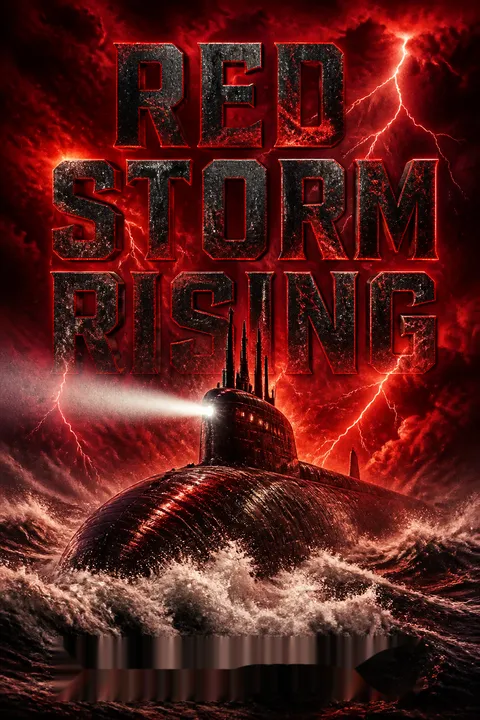


Plot Summary
The Siberian Fire
At Nizhnevartovsk, Azerbaijani engineer Ibrahim Tolkaze leads two accomplices into the refinery’s control center. They kill the night crew, disable the automated safeguards, and reroute vast quantities of fuel across the yards and oil fields. The resulting fires destroy the refinery and the wellheads that supply a third of Soviet crude production.
American analysts first mistake the blaze for an industrial accident. In Moscow, energy minister Mikhail Sergetov calculates the real cost: severe shortages of gasoline, diesel, and kerosene, with years needed to restore production. When the Politburo asks how the country can survive the shortfall without exposing its weakness to the West, its defense minister proposes taking oil by force.
The sabotage begins as a local act of violence but becomes a national crisis because the Soviet economy has concentrated enormous dependence in one industrial site. Tolkaze exploits not only technical access but also institutional complacency: the guards, safety systems, and control procedures exist, yet each has been compromised by routine or corruption. Sergetov’s calculations turn catastrophe into political pressure. The leadership treats economic vulnerability as a threat to state survival, revealing how a system that claims total control can interpret its own failures as grounds for war.
War as an Oil Policy
The Politburo’s Defense Council argues that the Soviet Union must seize Gulf oil, but first must disable NATO so the alliance cannot defend the region. Sergetov objects that conquering Western Europe is reckless and that the country lacks the fuel for a prolonged campaign.
The military’s senior commanders are summoned only after the political decision has taken shape. Marshal Shavyrin tells Ground Forces commander Yuri Rozhkov that the invasion, code-named Red Storm, is scheduled for June 15.
At a commanders’ meeting, Pavel Alekseyev urges an immediate winter attack while NATO is unready; Rozhkov rejects the gamble and accepts the four-month preparation period. The Soviet Army begins retraining, enforcing discipline, and preparing for a war its professional officers know may not stay limited.
The decision to wage war is presented less as confident expansion than as a response to leaders who cannot tolerate being seen as vulnerable. Sergetov recognizes the distinction between protecting the country and protecting the ruling system, yet even he compromises when the decision becomes irreversible. Alekseyev’s proposal for an immediate attack shows the military’s competing calculation: surprise might save lives, but it would require disobeying the timetable imposed from above. The state’s hierarchy converts disagreement into preparation, not reconsideration.
Toland Reads the Signals
At the National Security Agency, analyst Robert Toland notices that four Soviet regimental commanders have been executed for falsifying readiness reports. A shortage of vehicle batteries, submarine maintenance, increased weapons exercises, and changes to farm plots add to his suspicion that the Soviet military is preparing for more than routine training.
His section chief initially dismisses the pattern, but Toland’s Navy friends, submarine commander Daniel McCafferty and frigate captain Edward Morris, recognize that the clues fit together. Vice Admiral Richard Pipes backs Toland’s warning, and the Atlantic Fleet raises its training tempo.
Meanwhile, Moscow advertises strategic arms reductions and decommissioning missile submarines. The apparent contradiction becomes the core intelligence problem: the Soviet Union is performing peace for foreign observers while quietly improving its ability to fight.
Toland’s insight comes from refusing to let separate facts remain separate. The executions, battery shortages, naval maintenance, and exercises are individually explainable; their simultaneity changes their meaning. This is intelligence as pattern recognition under uncertainty, not clairvoyance. The arms-control spectacle makes the problem harder by offering Western analysts a reassuring story that fits their hopes. Toland’s warning matters because he is willing to risk professional embarrassment before he can prove intent. His work shifts the plot from suspicion to preparation, even though no one yet knows why war is being readied.
A Bomb in Moscow
A bomb explodes inside the Kremlin’s Council of Ministers building, killing clerks and children from Pskov who were scheduled to meet the Politburo. Soviet officials accuse West Germany and present a captured man, Gerhardt Falken, as a German spy responsible.
Toland and Marine colonel Chuck Lowe suspect the attack is staged, especially after a separate Soviet officer, Major Andre Chernyavin, is injured in a traffic accident in West Germany. Police find current NATO communications-base plans on him; under interrogation, Chernyavin reveals that his team was preparing to sabotage the facility before a Soviet assault.
The evidence points to a Soviet deception designed to divide NATO, but Moscow’s public mourning and accusations inflame Soviet anger. The United States mobilizes as the crisis becomes impossible to dismiss.
The bombing works because it is built to manipulate two audiences at once. Soviet citizens receive a story of German aggression, while NATO governments must decide whether the evidence is genuine before their own mobilization can catch up. Chernyavin’s accidental capture punctures the deception, but does not instantly undo its political effects. Sergetov sees the dead children and recognizes the cost of a lie made official. The contrast between staged public grief and real private horror shows how propaganda can conscript emotion as efficiently as a draft notice.
Dreamland Opens the War
As the Soviet invasion begins, NATO acts first in the air. Colonel Douglas Ellington leads stealth F-19s through East Germany at treetop height and destroys Soviet airborne radar aircraft.
Follow-on fighters and bombers strike airfields, bridges, and bridging equipment, delaying the second Soviet echelon and giving NATO a temporary advantage in the night sky. The raid costs NATO aircraft, but it prevents Soviet forces from moving across the Elbe as planned.
On the ground, Soviet formations cross into West Germany and encounter prepared defenses, where tanks, antitank missiles, and air attacks exact heavier losses than Soviet estimates allowed. Alekseyev watches the campaign fall behind schedule. NATO has not stopped the invasion, but it has denied the rapid victory on which the Soviet plan depends.
The opening air campaign converts surprise from an abstract doctrine into damaged infrastructure and lost time. NATO’s stealth aircraft do not win the war by themselves; they disrupt the Soviet timetable and force the invasion to fight on less favorable terms. The contrast between the Soviet plan’s precision and the battlefield’s disorder is crucial. Bridges, command aircraft, and traffic routes are not background details but the connective tissue of mechanized warfare. Once disrupted, the Red Army must spend lives and fuel restoring movement it assumed would be available.
Iceland Falls from the Sea
While NATO rushes Marines toward Iceland, Soviet General Andreyev’s force approaches aboard the barge carrier Julius Fucik, disguised at sea as an American cargo ship. Soviet bombers strike Keflavik, destroying its command center and communications, while hovercraft carry paratroopers ashore.
The ship survives a Harpoon hit and strafing, then deliberately grounds itself at Hafnarfjordur so its vehicles can unload. Air transports bring in more troops, and Soviet units seize the airports and government facilities.
Air Force lieutenant Mike Edwards escapes the shattered base with three Marines, carrying a satellite radio and orders to observe and report. His reports become NATO’s only reliable view inside the occupied island, while Andreyev realizes that taking Iceland is easier than controlling it.
The invasion succeeds through coordination among deception, air attack, amphibious transport, and rapid occupation of communications sites. The Fucik’s disguise gives the operation time; its captain’s decision to beach the damaged ship turns a vulnerable transport into a bridge to land. Edwards’s escape creates an opposing form of control: a small observer with a radio can preserve information even after a base has fallen. The novel repeatedly treats communications as terrain. Whoever can see, report, and coordinate retains options after physical positions are lost.
The Carrier Trap
A Soviet missile raid approaches the Nimitz, Saratoga, and French carrier Foch. The first wave appears to be a large group of bombers, but the targets are converted Kelt missiles launched as decoys. American Tomcats fire their Phoenix missiles at them and leave the carrier formation exposed.
The real Backfires arrive from another direction and launch a mass of Kingfish missiles. Aegis defenses and chaff destroy many, but several strike Nimitz, Foch, and escort ships; the amphibious ship Saipan explodes with thousands aboard.
Bob Toland survives the destruction of Nimitz’s combat center and helps the damaged carrier reach Southampton. The attack gives the Soviet Navy a major early victory and leaves the Atlantic convoys without the protection they expected.
The disaster is not caused by a failure of individual courage or technology alone. The Soviet plan exploits the American force’s dependence on accurate identification and the need to place fighters at the right distance. Once the decoys consume the interceptors, even a sophisticated defense system faces more missiles than it can destroy. Toland’s survival makes the cost personal, but the institutional lesson is larger: technical superiority can be turned against its owner when an opponent understands its operating assumptions.
The Atlantic Convoys Bleed
Captain Morris leads the frigate Pharris as an outlying sonar picket for a convoy carrying weapons and supplies to Europe. Working with patrol aircraft, his crew helps sink Soviet submarines, rescues survivors, and learns that the enemy is adapting by targeting escorts as well as merchant ships.
McCafferty’s submarine Chicago discovers that Soviet ballistic-missile submarines are being protected behind a mined approach to the White Sea, a defensive arrangement that blocks pursuit.
Later, Chicago joins a British-led mission against Soviet naval forces near Norway, but another submarine attacks first and disrupts its firing solution. At sea, victories are partial and expensive: ships disappear, contacts fade, and captains must decide whether a faint sound is a threat or a mistake.
The naval strand makes uncertainty physical. Morris and McCafferty cannot see their adversaries; they infer them through sound, water layers, and brief changes in a display. Their victories depend on crews coordinating imperfect information before a target escapes or fires. The convoy system turns logistics into combat: each lost cargo ship weakens armies thousands of miles away. The Soviet minefield around the White Sea also demonstrates how strategic defense can free other forces for offensive missions. Nothing at sea is isolated from the land war.
Edwards Finds Vigdis
Edwards’s small party moves across Iceland’s bare interior, avoiding roads and Soviet patrols while reporting aircraft, troop movements, and occupied airfields. At a remote farmhouse they find Soviet soldiers attacking the household.
Edwards and the Marines intervene, kill the attackers, and rescue Vigdis Agustdottir, whose parents have been murdered and who is pregnant. Edwards executes the Russian lieutenant responsible; the men burn the house and disguise the patrol’s disappearance as an accident.
Vigdis joins them as they continue north, exhausted and short of food. Edwards tells her about Sandy, the girl he once loved, who was raped and murdered while he was away at school. His attempt to protect Vigdis grows from grief as much as duty, and she becomes more than a civilian they are escorting.
Vigdis’s rescue changes the mission from observation alone to responsibility for another person’s survival. Edwards’s past does not simply explain his anger; it exposes how unresolved grief can shape a moral decision made under pressure. Killing the lieutenant gives him immediate agency, but it also places him in the role of judge and executioner without military process. Vigdis’s presence complicates the group’s movement and forces the men to reckon with the civilians caught inside a war they did not choose.
Iceland Becomes a Battlefield
NATO’s first B-52 strike on Keflavik loses half its aircraft but damages runways and Soviet defenses. Edwards’s reports help later strikes find the electrical station, fuel facilities, and control towers that support the occupation.
American fighters also ambush Soviet MiGs, while the occupying force struggles to maintain aircraft, missiles, and supply routes. Andreyev faces a second problem: the KGB’s harsh treatment of Icelanders is creating hostility where little resistance existed.
Edwards’s party continues across the island, surviving a helicopter search and later fighting Soviet soldiers who attack a farmhouse. When Vigdis’s family is killed, Edwards helps her escape and keeps reporting, even after his small group is discovered. The invasion’s clean opening becomes a costly garrison problem.
Iceland shifts from a map objective to an inhabited place whose people resist coercion in small, consequential ways. Andreyev understands that discipline and restraint could make occupation easier, while the KGB treats control as a matter of arrests and intimidation. Edwards’s reports help NATO attack the infrastructure that makes the island useful to the Soviets, but each successful strike also heightens danger for him and his companions. The island’s terrain rewards endurance and local knowledge more than raw numbers.
Alfeld’s Costly Crossing
At Bieben and then Alfeld, Soviet attacks meet prepared German, American, and Belgian defenses. Sergeant Terry Mackall’s Abrams crew destroys tanks from dug-in positions, while NATO aircraft and artillery punish Soviet columns.
Alekseyev visits the front, sees the losses firsthand, and eventually takes command of 20th Guards Tank Division after its commander is killed. He drives the division toward Alfeld, where fighting in streets clogged with fleeing civilians makes every movement more dangerous.
Soviet rockets destroy two bridges, but a battalion crosses the remaining one before NATO fire cuts it off. Alekseyev’s advance gains a foothold west of the Leine, yet his division is depleted and the bridgehead depends on exposed supply routes. A tactical breakthrough becomes a race to reinforce it.
Alekseyev’s command evolves from staff calculation to direct responsibility for men exposed to fire. His earlier confidence in plans gives way to attention to terrain, timing, and the human cost of each order. The battle at Alfeld shows how civilian evacuation can become a military constraint: vehicles jam streets, troops hesitate, and artillery turns a town into a trap. The bridgehead is a success only in the narrow sense of crossing. Its survival depends on logistics and reinforcement, exactly the factors the original plan treated too optimistically.
The Submarines Strike Kola
NATO sends Chicago, Boston, Providence, and other submarines through the Arctic ice to attack Soviet naval air bases on the Kola Peninsula. The submarines evade Soviet patrols and launch Tomahawk missiles from close offshore. Providence is damaged by a Russian frigate’s antisubmarine rockets, but Chicago and Boston help it escape.
The missiles hit four Backfire bases, destroying aircraft and fuel equipment before the bombers can be used again. A Soviet satellite attack nearly catches American reconnaissance assets, but U.S. pilot Amy Nakamura destroys the radar-ocean surveillance satellite with an experimental antisatellite missile.
With the Backfire force damaged and satellite coverage reduced, Soviet attacks on Atlantic shipping lose reach and precision. The operation costs lives and exposes the submarines to pursuit, but it changes the balance at sea.
Operation Doolittle answers the naval crisis by attacking the system that enables Soviet attacks rather than chasing every submarine individually. Its success depends on setup: the icepack route, British diversion, stealth, and a satellite warning all make the missile strikes possible. The damaged Providence prevents the operation from feeling clean or cost-free. Nakamura’s satellite interception extends the contest into orbit, where surveillance itself is a weapon. The resulting advantage is temporary, but it buys NATO room to move supplies and forces.
The Front Runs on Empty
NATO’s new supplies reach Europe as Soviet fuel and ammunition shortages worsen. Toland’s intelligence work helps identify a pattern in Soviet bomber operations, while the loss of satellites and aircraft further complicates Russian planning.
At the front, Alekseyev’s forces struggle to keep the Weser bridgehead supplied. A U.S. armored column uses an underground pipeline route to reach Alfeld, destroys trucks and repair facilities, and helps sever the Soviet supply corridor.
Mackall’s tanks hold the town against another assault, while German forces counterattack from the north. Alekseyev recognizes that his army cannot both maintain the salient and advance toward the Ruhr. The offensive has consumed its momentum; continuing blindly risks losing the divisions already across the river.
The war’s decisive pressure shifts from who has more tanks to who can keep them moving. NATO’s pipeline-route maneuver attacks a supply network rather than a front line, making Alekseyev’s dilemma concrete: fuel and transport cannot support every objective at once. His growing realism is tested against political orders that still demand progress. Mackall’s defensive competence matters, but it cannot substitute for the larger logistics struggle. The section makes exhaustion a strategic fact, not merely a private sensation.
Moscow’s Last Gamble
In Moscow, KGB chief Kosov admits to Sergetov that an ambitious deputy supplied the Politburo with selectively optimistic intelligence, helping push the country into war. As losses mount, the Defense Council considers using tactical nuclear weapons and controlling the resulting political fallout.
Sergetov and Alekseyev understand that escalation could destroy both armies and the country they claim to defend. Alekseyev asks for authority over any nuclear weapons assigned to his front, intending to prevent their use.
Meanwhile, he and Sergetov begin arranging a change in Moscow’s leadership, using loyal troops and trusted officers while the existing power structure turns on its own commanders. The struggle is no longer only over territory. It is over who may decide whether the war continues.
The political crisis reveals that the war began partly through corrupted information and is now threatened by another failure of judgment. Kosov’s account does not erase his own complicity, but it shows how institutional factions can distort facts to protect ambition. Sergetov and Alekseyev move from serving the state as given to trying to preserve it from its leaders. Their intended control of nuclear weapons is a moral and political wager: obedience could be catastrophic, but intervention risks being labeled treason.
A Ceasefire in the Woods
With Soviet forces stalled and NATO preparing a counteroffensive, Alekseyev meets SACEUR, General Robinson, near the front. Each arrives wary of an ambush, but the commanders recognize that both armies are exhausted and that another push could make nuclear escalation harder to prevent.
They agree to a ceasefire in place followed by a phased withdrawal toward prewar lines, with civilians allowed to leave Soviet-held areas and food supplies permitted through. The agreement does not settle every political question, but it stops the immediate race toward further destruction.
Back in Moscow, Sergetov and his allies consolidate authority, while the Navy and Army receive the news that the fighting is ending. Toland returns to the carrier force; Morris brings Reuben James home. The war closes not with conquest, but with a decision to stop.
The final negotiation is credible because it comes through the military men who have seen the cost at close range. Robinson and Alekseyev do not become friends or resolve the causes of war; they recognize that continued fighting has become a gamble with consequences neither can control. Their agreement preserves lives without pretending that the political conflict has vanished. The return to ordinary naval procedures at the end gives the ceasefire a concrete human scale: crews secure their ships, survivors return, and men who have spent weeks measuring danger can begin to imagine a life beyond it.
Analysis
Red Storm Rising makes logistics the hidden protagonist of a war usually described through weapons and commanders. The Soviet Union attacks because an oil catastrophe threatens its economic and military position; NATO’s survival depends on keeping ships moving across the Atlantic; and the battle for Alfeld turns on whether fuel, ammunition, and reinforcements can cross a river faster than air attack can destroy them. The story’s technical detail therefore has a moral function: it shows how political decisions become bodily consequences through systems that seem impersonal until they fail.
Its competing institutions are not simply competent or incompetent. Toland’s analysts, Alekseyev’s officers, NATO’s commanders, and the Soviet Politburo all work with partial information, but their incentives differ. The politicians protect authority and face, while professionals are forced to calculate losses they cannot abstract away. The contrast is sharpest in Sergetov and Alekseyev, who begin as servants of the state and gradually recognize that obedience to its current rulers may destroy the state itself. Their resistance is not romantic rebellion. It grows from engineering estimates, frontline observation, and the knowledge that nuclear escalation would erase the distinctions their leaders claim to defend.
The book also treats technology as a contest of assumptions rather than a guarantee of superiority. Stealth, Aegis, satellite surveillance, torpedoes, and missiles all matter, but every advantage invites a countermeasure. Decoy Kelts defeat the carrier screen; adaptive NATO tactics later destroy Soviet aircraft and supply capacity; sonar can identify a target and still mistake its purpose. Human judgment remains decisive precisely because machines make the battle faster than certainty can arrive.
The eventual ceasefire is not a neat moral victory. It is a recognition that neither side can control the consequences of continuing. The most meaningful courage in the novel is therefore not the willingness to attack, but the willingness to stop when political pride still demands one more advance.
Review Summary
Red Storm Rising is a gripping techno-thriller depicting a hypothetical World War III between NATO and the Soviet Union. Praised for its meticulous research and realism, the novel offers intense military action across various theaters. While some readers find the technical details excessive and characters underdeveloped, many appreciate Clancy's portrayal of warfare and geopolitics. The book's relevance endures, drawing parallels to modern conflicts. Despite its length and occasional pacing issues, it remains a favorite among military fiction enthusiasts for its strategic depth and suspenseful narrative.
Characters
Robert Toland
The pattern-reading analystAn NSA analyst and Navy reservist, Toland notices that Soviet readiness measures do not fit the public performance of arms control. He is careful, technically skilled, and more comfortable interpreting signals than commanding people, yet he is willing to risk his standing when his analysis is dismissed. His marriage to Martha and his friendships with McCafferty and Morris keep his intelligence work tied to ordinary lives. Toland’s strength is synthesis: he connects reports from satellites, submarines, and newspapers into a warning before the evidence is complete. He is neither a political strategist nor a battlefield hero, but his work repeatedly gives commanders the information that lets them act.
Pavel Alekseyev
The soldier forced to chooseA Soviet general and deputy theater commander, Alekseyev is ambitious, disciplined, and deeply shaped by his father’s military legacy. He believes that an army’s duty is to protect the state, but his professional judgment increasingly conflicts with the orders of political leaders. He demands readiness, punishes falsified reports, and expects officers to accept responsibility for their units. At the front, he learns that maps and doctrine cannot absorb the reality of burning vehicles, exhausted conscripts, and civilians trapped between armies. His loyalty is genuine, which makes his doubts more consequential than simple opposition.
Mikhail Sergetov
The engineer inside powerA Soviet energy minister and candidate member of the Politburo, Sergetov approaches politics with an engineer’s habit of measuring consequences. He understands how oil shortages will affect transport, food, industry, and military operations, and he is troubled when leaders treat those constraints as reasons for conquest. He is pragmatic rather than fearless, skilled at surviving the compromises of the Party while retaining an ability to recognize its failures. His relationship with his son Ivan combines pride with anxiety, especially when military service takes the younger man toward the front.
Daniel McCafferty
The submarine captainCaptain of the new attack submarine Chicago, McCafferty is a confident submariner who knows that silence, patience, and precise decisions matter more than bravado. His technical knowledge is matched by an awareness of what command costs: a submarine crew’s survival depends on judgments he must make with incomplete information. He values preparation and expects professionalism from young sailors, but combat forces him to revise plans repeatedly. His friendship with Toland and the other naval officers places him within a close working circle, while his submarine’s dangerous missions test the gap between practiced exercises and live combat.
Edward Morris
The convoy’s hard-pressed captainA surface-warship officer whose command of Pharris puts him between Soviet submarines and vulnerable merchant ships, Morris is practical, watchful, and protective of his crew. He understands that escort work is often invisible when it succeeds, yet he feels personally responsible when it fails. His loss of Pharris weighs on him beyond the damage to the ship, particularly when he must visit the families of the dead. On Reuben James he works with the helicopter crew and British allies, learning to accept support without surrendering command. His emotional reserve is a duty he imposes on himself, not an absence of feeling.
Mike Edwards
The stranded Air Force scoutA young Air Force meteorologist stranded on Iceland, Edwards begins the crisis as an observer rather than a trained ground combatant. He uses his map-reading, persistence, and radio to report Soviet movements, then depends on the Marines around him to survive unfamiliar terrain. His history with Sandy gives him a personal wound that surfaces when he protects Vigdis. Edwards is brave, but not naturally sure of himself; he hesitates, makes errors, and learns by listening to Sergeant Smith and Sergeant Nichols. His central struggle is to remain useful without pretending he is more prepared than he is.
Vigdis Agustsdottir
The Icelandic survivorAn Icelandic farm girl caught in the occupation, Vigdis is resourceful, direct, and accustomed to a rural life far from military power. She joins Edwards’s group after Russian soldiers attack her family, and her pregnancy makes her physical endurance and future especially immediate. Trauma leaves her shaken, but she does not become merely a passive victim: she keeps walking, understands the local landscape, and helps Edwards survive a later close encounter. Her growing trust in him is grounded in what he does rather than what he promises. She represents Iceland’s civilian life, which the military maps repeatedly reduce to roads and objectives.
Ibrahim Tolkaze
The refinery saboteurAn Azerbaijani engineer at Nizhnevartovsk, Tolkaze uses intimate knowledge of refinery controls to destroy the facility. His religious conviction and resentment of Russian domination drive him to turn workplace access into a weapon. He is methodical enough to plan the attack in detail, but his belief in divine purpose also lets him treat mass killing as justified.
Edward Keegan
Toland’s experienced adviserToland’s father-in-law, Keegan is a retired naval intelligence officer who now works for the Defense Intelligence Agency. He listens when Bob describes anomalies in Soviet military behavior and helps him see that the pattern deserves attention. His experience gives Toland a trusted sounding board outside the chain of command.
Martha Toland
Toland’s worried anchorToland’s wife and mother of their children, Martha understands the risks of Navy life but does not automatically accept her husband’s decision to return to active duty. Her fear is concrete: she worries that Bob is a civilian analyst entering a danger he is not trained to face. Her challenge makes his professional choice personal.
Daniel McCafferty
The submarine captainCaptain of the new attack submarine Chicago, McCafferty is a confident submariner who knows that silence, patience, and precise decisions matter more than bravado. His technical knowledge is matched by an awareness of what command costs: a submarine crew’s survival depends on judgments he must make with incomplete information. He values preparation and expects professionalism from young sailors, but combat forces him to revise plans repeatedly. His friendship with Toland and the other naval officers places him within a close working circle, while his submarine’s dangerous missions test the gap between practiced exercises and live combat.
Edward Morris
The convoy’s hard-pressed captainA surface-warship officer whose command of Pharris puts him between Soviet submarines and vulnerable merchant ships, Morris is practical, watchful, and protective of his crew. He understands that escort work is often invisible when it succeeds, yet he feels personally responsible when it fails. His loss of Pharris weighs on him beyond the damage to the ship, particularly when he must visit the families of the dead. On Reuben James he works with the helicopter crew and British allies, learning to accept support without surrendering command. His emotional reserve is a duty he imposes on himself, not an absence of feeling.
Sergeant James Smith
The Marines’ field guideA Marine company clerk with strong field instincts, Smith guides Edwards’s party across Iceland and keeps the group focused on concealment, pace, and practical survival. He is blunt with officers, but his bluntness comes from responsibility rather than contempt. He becomes a steady counterweight to Edwards’s uncertainty and helps protect Vigdis without treating her as a burden.
Sergeant Nichols
The experienced British scoutA Royal Marine sent to reinforce Edwards’s stranded party, Nichols brings reconnaissance experience and a disciplined understanding of concealment. His injured ankle slows him, but he remains a capable field leader. He is skeptical of inexperienced officers, yet he respects Edwards when the younger man listens and makes sound decisions.
Jerry O’Malley
The stubborn helicopter hunterA seasoned naval helicopter pilot, O’Malley is blunt, technically skilled, and more interested in hunting submarines than pleasing promotion boards. He understands the particular tactics Soviet submarine captains use and teaches his crew to think from the enemy’s position. His humor hides a long memory of combat and loss, which lets him recognize when Morris’s guilt is becoming dangerous.
Mikhail Sergetov
The engineer inside powerA Soviet energy minister and candidate member of the Politburo, Sergetov approaches politics with an engineer’s habit of measuring consequences. He understands how oil shortages will affect transport, food, industry, and military operations, and he is troubled when leaders treat those constraints as reasons for conquest. He is pragmatic rather than fearless, skilled at surviving the compromises of the Party while retaining an ability to recognize its failures. His relationship with his son Ivan combines pride with anxiety, especially when military service takes the younger man toward the front.
Ivan Sergetov
The minister’s soldier sonA young Soviet officer trained in Middle Eastern languages, Ivan joins Alekseyev’s staff because his language skills and military experience may help with operations beyond Europe. He is intelligent and initially dismissive of Arab soldiers, but frontline service forces him to confront the cost of the war and the distance between intelligence reports and lived conditions. His bond with his father carries both affection and the burden of family privilege.
Mikhail Kosov
The calculating KGB chiefThe chairman of the KGB, Kosov understands that intelligence can serve factional ambition as readily as national security. He is cautious, politically alert, and willing to work with people he does not fully trust when the state’s survival is at stake. His manner can be genial, but his calculations are severe.
Pyotr Bromkovskiy
The old revolutionary conscienceA frail veteran of the Soviet Union’s earlier wars, Bromkovskiy remembers a more idealistic version of the Party and is willing to question the decision to invade NATO. His age and standing make him difficult to dismiss, though his warnings carry little formal power. He represents institutional memory in a leadership increasingly governed by fear.
General Robinson
NATO’s senior commanderThe senior NATO commander in Europe, Robinson is responsible for keeping an alliance of different armies, governments, and supply systems fighting together. He is an experienced soldier who understands that battlefield success does not automatically become political success. His decisions balance national pressures against military necessity, while the dwindling reserves and ammunition make every choice more consequential.
Terry Mackall
The tank commander at AlfeldAn American tank sergeant in the 11th Armored Cavalry Regiment, Mackall fights from prepared positions near Bieben and Alfeld. He is practical, skilled under pressure, and attentive to the men in his crew. When officers above him are killed, he accepts greater responsibility and adapts to changing orders. His plainspoken confidence offers a ground-level view of the battle’s cost.
Amy Nakamura
The satellite interceptor pilotAn Air Force fighter pilot and test specialist, Nakamura is frustrated when she is assigned work that keeps her from combat. Her experience with the antisatellite program makes her a natural choice for a dangerous mission that few pilots could fly. She is competitive, confident, and impatient with being underestimated.
Douglas Ellington
The stealth fighter leaderA veteran attack pilot leading the F-19 stealth squadron, Ellington knows that flying low at night demands a mixture of technical trust and physical nerve. He treats each mission as a specific problem to solve, even as losses among his crews accumulate. His experience gives him authority, but not immunity from grief.
General Andreyev
The isolated island commanderThe Soviet airborne commander sent to seize Iceland, Andreyev is disciplined, practical, and more attentive to military realities than to political theater. He wants to protect his troops and keep the captured bases operational, but KGB interference and NATO attacks steadily narrow his choices. His experience in Afghanistan gives him a measure for occupation, though Iceland presents a different kind of population and terrain.
Captain Kherov
The freighter’s determined captainThe veteran merchant captain of Julius Fucik, Kherov understands the ship as a working vessel rather than a military platform. After a missile strike and strafing run, he keeps the damaged carrier moving long enough to unload Andreyev’s troops. His seamanship turns a compromised voyage into a landing.
Plot Devices
Nizhnevartovsk sabotage
The economic fuseTolkaze’s attack on the refinery turns a local vulnerability into a national oil shortage. The fire destroys both refining capacity and producing wellheads, which means the damage cannot be repaired by simply redirecting existing fuel. Soviet planners face shortages in transport, agriculture, industry, and military operations. The sabotage is the novel’s initiating device because it gives the Politburo a material crisis, then allows political leaders to reframe that crisis as a reason to attack NATO and seize Gulf oil.
Maskirovka
The manufactured pretextThe Soviet leadership combines public arms-control gestures with a staged Kremlin bombing and fabricated German evidence to weaken NATO’s trust and create a justification for war. The operation depends on timing, media access, and the exploitation of historical fear of Germany. Chernyavin’s accidental capture exposes that the Soviets are also preparing real sabotage inside West Germany. The device links disinformation to military action, showing that deception is not a separate political theater but part of the invasion plan.
Signals and satellites
The distant battlefieldReconnaissance satellites, intercepted radio traffic, airborne radar, sonar, and coded transmissions allow characters to infer enemy positions without seeing them directly. Toland’s early warning grows from combining otherwise minor signals; Edwards’s radio makes a small party on Iceland militarily valuable; and satellite data guides bomber raids and fleet movements. The devices also create vulnerabilities. Soviet satellites locate convoys, while NATO’s destruction of a radar-ocean satellite reduces Russian visibility. The story repeatedly makes information a resource that can save forces, mislead commanders, or disappear at a critical moment.
The Iceland landing
The Atlantic choke pointThe disguised barge carrier, bomber attack, hovercraft, and airlift let the Soviet Union seize Keflavik and Iceland’s western ports before NATO can reinforce them. Control of the island threatens the Greenland-Iceland-United Kingdom barrier and opens a route for Soviet submarines and bombers into Atlantic shipping lanes. NATO’s later use of Edwards’s reports and attacks on airfields, radar, and fuel reveal how much of the campaign depends on Iceland’s infrastructure. The island is not merely a base; it is a strategic hinge between the European front and the Atlantic supply line.
Undersea warfare
The invisible contestSubmarines, towed-array sonar, sonobuoys, decoys, and torpedoes make the Atlantic campaign a contest of inference. Morris’s frigates and their helicopters try to locate Soviet boats before those boats can reach convoys. McCafferty’s Chicago uses silence and maneuver to attack ships and evade pursuit. The system is never perfectly reliable: a faint contact may be a submarine, a decoy, or background noise, and one mistaken interpretation can expose a ship. Undersea tactics also connect directly to logistics, since every submarine that reaches a convoy can remove supplies needed by NATO forces in Germany.
FAQ
Synopsis & Basic Details
What is Red Storm Rising about?
- Global Conflict Catalyst: Red Storm Rising depicts a fictional World War III ignited by a catastrophic act of sabotage at a Soviet oil refinery, orchestrated by Muslim extremists. This crippling blow to Soviet energy supplies forces the Politburo to make a desperate, high-stakes decision: launch a conventional war against NATO to seize the Persian Gulf oil fields.
- Multi-Front Warfare: The narrative unfolds across multiple theaters, from the intense tank battles in Germany and the silent, deadly submarine warfare in the North Atlantic, to the strategic struggle for Iceland and the aerial dogfights over Europe. It meticulously details the logistical, tactical, and human challenges faced by both sides.
- Espionage and Deception: Central to the plot is the Soviet Union's elaborate "maskirovka" (deception) campaign, designed to lull NATO into a false sense of security and justify their aggression. This involves fabricated terrorist plots and misleading diplomatic overtures, highlighting the intricate web of intelligence and counter-intelligence.
Why should I read Red Storm Rising?
- Masterclass in Realism: Tom Clancy's meticulous research and technical accuracy immerse readers in a plausible, high-stakes global conflict, offering an unparalleled sense of realism in military operations, from tank maneuvers to submarine acoustics. The detailed portrayal of military hardware and doctrine provides a unique educational experience for those interested in modern warfare.
- Character-Driven Thriller: Beyond the hardware, the novel excels in its character development, showcasing the psychological toll of war on diverse individuals—from the conflicted Soviet minister Mikhail Sergetov to the resourceful U.S. Air Force Lieutenant Edwards—making their struggles and triumphs deeply resonant. Their personal journeys provide a human anchor to the grand strategic narrative.
- Prophetic Geopolitical Insights: Written during the Cold War, the book explores geopolitical tensions and resource dependency that remain relevant today, offering a chilling "what if" scenario that forces readers to consider the fragility of peace and the complex interplay of economics, politics, and military power.
What is the background of Red Storm Rising?
- Cold War Tensions: The novel is set against the backdrop of the late Cold War, specifically the mid-1980s, when the Soviet Union and NATO were locked in a tense military and ideological standoff. It extrapolates from existing military doctrines, force structures, and geopolitical realities of the era, such as the Soviet reliance on oil and the strategic importance of the GIUK (Greenland-Iceland-UK) Gap.
- Resource Scarcity as Casus Belli: A key element is the Soviet Union's severe oil shortage, a plausible economic vulnerability that Clancy and co-author Larry Bond identified. This economic crisis, rather than direct ideological conflict, serves as the primary casus belli, providing a unique and compelling motivation for the Soviet invasion of Western Europe.
- Technological Realism: The book heavily features contemporary military technology, including Stealth aircraft (F-19A Ghostrider), Aegis cruisers (USS Ticonderoga), and advanced submarines (USS Chicago), all depicted with a high degree of technical accuracy. It explores how these technologies would interact in a large-scale conventional conflict, influencing tactical and strategic outcomes.
What are the most memorable quotes in Red Storm Rising?
- "In war there is no certainty.": Uttered by General Alekseyev to the Politburo, this quote encapsulates the inherent unpredictability and chaos of combat, a stark contrast to the Politburo's rigid plans and optimistic projections. It highlights the gap between theoretical strategy and the brutal reality of the battlefield.
- "It is easier for men who understand war to stop one.": Spoken by General Alekseyev to General Robinson during their ceasefire negotiations, this line underscores the pragmatic understanding shared by professional soldiers, often in contrast to their political masters. It suggests that those who truly comprehend war's horrors are best equipped to end them.
- "The Revolution has come to this.": Mikhail Sergetov's internal lament as he witnesses the aftermath of the Kremlin bombing, a deliberate act of terror against Soviet citizens. This quote powerfully conveys his disillusionment with the Party's moral decay and the horrific lengths to which it will go to maintain power, sacrificing its own people for political ends.
What writing style, narrative choices, and literary techniques does Tom Clancy use?
- Omniscient, Detail-Rich Narration: Clancy employs a broad, omniscient third-person perspective, allowing him to seamlessly shift between numerous viewpoints across different theaters of war and levels of command. This is coupled with an almost encyclopedic level of technical detail, immersing the reader in the mechanics of military operations, from weapon systems to logistical challenges.
- Parallel Storylines & Cross-Cutting: The narrative is structured around multiple, interwoven plotlines, following individual characters and units across the globe. Clancy frequently uses cross-cutting between these disparate scenes—from a Politburo meeting to a submarine hunt—to build tension, highlight interconnectedness, and provide a comprehensive view of the unfolding conflict.
- "Techno-Thriller" Genre Conventions: Clancy is a master of the "techno-thriller," characterized by its focus on military technology, realistic operational procedures, and high-stakes geopolitical conflict. He uses jargon and technical specifications not just for authenticity but as integral plot elements, often making the technology itself a "character" in the story, driving the action and influencing outcomes.
Hidden Details & Subtle Connections
What are some minor details that add significant meaning?
- Tolkaze's Koran Passage: Ibrahim Tolkaze's opening act of sabotage is framed by a passage from the Koran, "And when the misbelievers plotted to keep thee prisoner, or kill thee, or drive thee forth, they plotted well; but God plotted, too. And God is the best of plotters." This detail immediately establishes his religious fanaticism and belief in divine justification, elevating the refinery attack beyond mere terrorism to a religiously motivated act that sets the entire global conflict in motion.
- The Politburo's "Young" Men: Sergetov's observation that the Politburo is finally composed of "young" men in their fifties and sixties, yet still too slow to change, subtly highlights the entrenched bureaucracy and resistance to reform within the Soviet system. This detail underscores the systemic inertia that ultimately drives the desperate decision for war, as genuine reform is perceived as too slow or risky.
- Chernyavin's Dental Work: The German doctor's observation of Major Chernyavin's "miserable dental work" (stainless steel fillings) despite his otherwise fit appearance and good clothing, is a subtle but telling detail. It immediately flags him as a Soviet agent, as such dental work was common in the Eastern Bloc due to different medical standards, providing a realistic and often overlooked intelligence indicator.
What are some subtle foreshadowing and callbacks?
- Sergetov's Russification Recommendation: Early in the book, Sergetov mentions his prior recommendation for "further Russification of the largely 'foreign' workforce" in the oil fields. This subtly foreshadows the ethnic tensions and distrust within the Soviet Union that ultimately lead to Tolkaze's sabotage, revealing a systemic issue that the Politburo failed to address.
- Alexander Nevsky Film Festival: The Soviet TV broadcast of Sergey Eisenstein's Alexander Nevsky, culminating in the "Arise, you Russian People" song, is a powerful callback to historical Russian nationalism and resistance against German invaders. This propaganda effort directly precedes the Kremlin bombing and the declaration of war, explicitly linking the current conflict to past struggles and rallying the populace.
- Morris's "Digital Decision Generator": Captain Morris's internal musing about needing a "digital decision generator" (a coin with YES/NO) for captains facing dilemmas subtly foreshadows the immense psychological burden of command in war. It highlights the impossible choices and the lack of clear-cut answers that leaders face, a theme that recurs throughout his personal arc.
What are some unexpected character connections?
- Sergetov and Alekseyev's Alliance: The unexpected alliance between Mikhail Sergetov, a Politburo member, and General Alekseyev, a military commander, forms a crucial internal resistance to the hardliners. Their shared disillusionment with the Party's leadership and their pragmatic desire to save the Motherland transcends their initial roles, leading to the climactic "coup" in Moscow.
- Edwards's Personal Vendetta: Lieutenant Edwards's seemingly random act of killing the Russian soldiers who raped Vigdis is revealed to be deeply personal, a callback to his girlfriend Sandy's unsolved rape and murder. This unexpected connection transforms him from a mere "wing-wiper" into a character driven by a profound sense of personal justice, blurring the lines between military duty and private vengeance.
- O'Malley and Morris's Shared Trauma: The bond formed between Commander O'Malley (helicopter pilot) and Captain Morris (frigate commander) after Morris's ship is hit is unexpected. O'Malley, a Vietnam veteran, helps Morris process the trauma of losing his ship and men, revealing a shared psychological burden of combat that transcends rank and branch of service.
Who are the most significant supporting characters?
- Major Ivan Sergetov: Mikhail Sergetov's son, Ivan, initially appears as a minor character but becomes crucial as General Alekseyev's aide. His presence at the front provides his father with unfiltered intelligence, directly influencing the Politburo's understanding of the war's true cost and enabling the internal power shift.
- Sergeant Nichols (Royal Marines): A seasoned British commando, Nichols provides critical ground expertise and a cynical, pragmatic counterpoint to Edwards's initial naivete. His experience in the Falklands War and his unwavering professionalism are instrumental in the survival and effectiveness of Edwards's reconnaissance team in Iceland.
- Boris Kosov (KGB Director): While a major figure, his supporting role in the final political maneuver is significant. Kosov, the KGB Director, orchestrates the internal coup against the hardline Politburo members, revealing his own ruthless pragmatism and desire for self-preservation, ultimately aligning with Sergetov and Alekseyev to end the war.
Psychological, Emotional, & Relational Analysis
What are some unspoken motivations of the characters?
- Politburo's Fear of Collapse: Beyond the stated need for oil, the Politburo's decision for war is driven by an unspoken, existential fear of the Soviet system's internal collapse. Sergetov observes, "Soviet Solidarity endure in the hearts of people hungry, cold, in the dark?" This fear of widespread unrest and loss of control motivates their desperate gamble.
- Alekseyev's Quest for Professionalism: General Alekseyev's ruthless drive to improve military discipline and readiness, even executing colonels, stems from an unspoken desire to restore the Red Army's professional integrity, which he feels has been eroded by political interference and corruption. He seeks to prove the Army's true capability, independent of Party dogma.
- Morris's Need for Redemption: Captain Morris's eagerness to take command of the Reuben James after the Pharris is crippled is driven by an unspoken need for redemption. Despite his nightmares and the psychological toll, he feels a profound responsibility for his lost men and seeks to prove his competence and leadership in the face of adversity.
What psychological complexities do the characters exhibit?
- Sergetov's Moral Compromise: Mikhail Sergetov grapples with profound moral complexity, forced to participate in the Politburo's deceptions and even the horrific Kremlin bombing. His internal monologue reveals a man deeply disturbed by the Party's actions, yet compelled by self-preservation and a desperate hope to steer the country away from total destruction.
- Edwards's Transformation through Trauma: Lieutenant Edwards undergoes a significant psychological transformation. Initially a "wing-wiper" meteorologist, his exposure to the brutality of war, particularly the rape and murder at the Icelandic farmhouse, shatters his innocence and forces him to commit acts of violence, leading to a hardened, yet morally conflicted, persona.
- McCafferty's Burden of Command: Captain McCafferty exhibits the immense psychological burden of commanding a nuclear submarine in wartime. His constant vigilance, the pressure to make life-or-death decisions, and the isolation of his role lead to moments of intense stress and self-doubt, even as he maintains a "cool captain" facade for his crew.
What are the major emotional turning points?
- The Kremlin Bombing's Aftermath: The televised funeral for the Pskov children, victims of the Kremlin bombing, is a major emotional turning point. Sergetov's internal revulsion and the Chairman's staged grief highlight the cynical manipulation of public emotion, while simultaneously galvanizing the Soviet populace for war.
- Edwards's Act of Vengeance: The scene where Edwards kills the Russian soldiers who raped Vigdis is a brutal emotional turning point for his character. It marks his transition from an observer to an active participant in the war's savagery, driven by a primal need for justice and a personal connection to the victim.
- Alekseyev's Confrontation with the Politburo: General Alekseyev's final meeting with the Politburo, where he is ordered to use tactical nuclear weapons, is a critical emotional climax. His internal struggle between loyalty and moral imperative, culminating in his decision to participate in the coup, reveals his ultimate commitment to saving the Motherland from its own leadership.
How do relationship dynamics evolve?
- Erosion of Party Loyalty: The relationship between the military high command (Alekseyev, Rozhkov, Shavyrin) and the Politburo steadily erodes throughout the war. Initially compliant, the generals become increasingly disillusioned with the politicians' unrealistic demands and disregard for military realities, culminating in their participation in the coup.
- Unlikely Bonds Forged in Combat: The extreme pressures of war forge unexpected bonds, such as the camaraderie between Lieutenant Edwards and Sergeant Smith (USMC), or Captain Morris and Commander O'Malley (USN). These relationships, initially defined by rank or branch, evolve into deep mutual respect and reliance, highlighting the shared human experience of combat.
- The Shifting Sands of Power in Moscow: The power dynamics within the Politburo are constantly shifting, particularly between the Defense Minister, Foreign Minister, and KGB Director. This culminates in the fragile alliance between Sergetov and Kosov, who, despite their past rivalries, unite to depose the hardliners and end the war, demonstrating that even in a totalitarian system, personal ambition and pragmatism can override ideological purity.
Interpretation & Debate
Which parts of the story remain ambiguous or open-ended?
- The Extent of Soviet Nuclear Control: While Kosov claims control over the nuclear warheads, the exact chain of command and the potential for rogue elements to launch remains ambiguous. The book ends with the hardliners arrested, but the implication that nuclear launch authority was not fully centralized or that Kosov's faction alone controlled it leaves a chilling open question about the stability of Soviet nuclear forces.
- The Long-Term Fate of the New Soviet Leadership: The novel concludes with Sergetov, Alekseyev, and Krylov forming a "troika" to lead the Soviet Union, promising a more accountable government. However, the long-term stability and success of this new, unelected leadership remain entirely open-ended, leaving readers to ponder whether true reform is possible within the Soviet system or if it's merely a temporary reprieve.
- The True Cost of NATO's "Victory": While NATO "wins" the conventional war, the book leaves the full economic and social cost to the West ambiguous. The massive expenditure of resources, the disruption of civilian life, and the heavy casualties imply a pyrrhic victory, prompting debate on whether the outcome was truly a win for either side in the long run.
What are some debatable, controversial scenes or moments in Red Storm Rising?
- The Kremlin Bombing and Child Casualties: The most controversial scene is the deliberate bombing of the Council of Ministers building by the KGB, specifically orchestrated to include Young Octobrists (children) from Pskov. This act of state-sponsored terrorism against its own citizens, designed to inflame public opinion and justify war, is a morally reprehensible and highly debatable plot point, pushing the boundaries of plausible villainy.
- Edwards's Execution of Russian Prisoners: Lieutenant Edwards's decision to execute the Russian soldiers who raped Vigdis, rather than taking them prisoner, is a morally ambiguous and controversial moment. While presented as an act of justice for a heinous crime, it directly violates the laws of war and challenges the reader's perception of "heroic" actions in combat.
- The Politburo's Casual Decision for War: The almost detached and pragmatic manner in which the Politburo votes for war, driven by economic necessity and internal power plays rather than grand ideological conviction, is a debatable portrayal. It suggests a chillingly bureaucratic approach to global conflict, stripping it of any moral or heroic pretense and reducing it to a cold calculation.
Red Storm Rising Ending Explained: How It Ends & What It Means
- Internal Soviet Coup: The war ends not with a decisive NATO military victory, but with an internal Soviet coup. Mikhail Sergetov, General Alekseyev, and KGB Director Boris Kosov, disillusioned with the hardline Politburo's disastrous war strategy and their willingness to escalate to nuclear conflict, orchestrate a swift, bloody takeover of the Kremlin. They arrest the Defense Minister and other key figures, effectively ending the war.
- Pragmatic Peace: The new Soviet leadership, a "troika" of Sergetov, Alekseyev, and Krylov, immediately seeks a ceasefire with NATO. General Alekseyev meets with SACEUR General Robinson, negotiating a return to pre-war lines and an exchange of prisoners. The peace is not based on ideological triumph but on mutual exhaustion and a shared understanding of the catastrophic alternative (nuclear war).
- Meaning: The Cost of Hubris & The Power of Pragmatism: The ending of Red Storm Rising serves as a powerful commentary on the dangers of unchecked political hubris and the ultimate triumph of pragmatism over ideology. The war, initiated by a desperate and deceitful Politburo, is ultimately stopped by individuals within the Soviet system who recognize the futility and self-destructive nature of their leaders' actions. It suggests that even in the darkest moments, human reason and the desire for survival can prevail over destructive ambition.
About the Author




Download PDF
Download EPUB
.epub digital book format is ideal for reading ebooks on phones, tablets, and e-readers.








