


Plot Summary
Gunfire on The Mall
Historian Jack Ryan is walking through London with his wife, Cathy, and four-year-old daughter, Sally, when an armored Rolls-Royce carrying the Prince and Princess of Wales is ambushed near St. James's Park. Ryan pushes his family behind a tree, then sees one attacker waiting for the passengers to flee.
His former Marine training takes over: he tackles the gunman, takes his pistol, and shoots him before turning on the second attacker. The second man fires first, wounding Ryan in the shoulder; Ryan's return shots kill him. The royal couple and their infant survive behind the car's protective partition. Ryan's wife, a surgeon, treats him at the scene as police and guards rush in.
Ryan's intervention begins as an instinctive moral act, not a calculated bid for heroism. His family is already under cover when he chooses to move toward danger, so the rescue exposes a tension between public responsibility and private obligation that will shape the rest of the story. The scene also establishes his decisive advantage and his vulnerability: Marine training gives him a few usable seconds, but it cannot make killing feel clean or consequence-free. The bullet in his shoulder turns an act of courage into a lasting physical and psychological debt.
Saved Royals, Shaken Prince
At St. Thomas's Hospital, Ryan learns that the attackers belong to the Ulster Liberation Army, a radical breakaway from the Provisionals, and that the royal family escaped largely because he intervened.
The Queen visits, thanks him, and makes him a Knight Commander of the Victorian Order; his wife will be known as Lady Ryan. Police keep the Ryan family at Buckingham Palace while they assess the risk of retaliation. When the Prince visits, Ryan sees that he is blaming himself for staying inside the Rolls.
Ryan explains that shielding his family was the soundest choice under fire. He also points out that the attackers carried grenades capable of defeating the car's armor, suggesting they wanted to seize the royal family, not simply kill them.
The royal reward makes Ryan a public figure just as he is struggling to understand what he did. His conversation with the Prince reveals a quality that separates him from simple action heroes: he can read a tactical choice without pretending it was easy, and he helps another person judge himself by circumstances rather than by a fantasy of courage. His kidnapping theory shifts the attack from isolated violence to political coercion. The threatened baby is not incidental; the terrorists see intimate family bonds as leverage against a state.
At Old Bailey
Ryan testifies at the expedited murder trial of the surviving attacker, Sean Miller. The defense tries to cast Ryan as a reckless Marine who shot without understanding the scene, but his account and the eyewitness evidence leave little room for doubt. Ryan identifies Miller, then meets the prisoner's cold, unwavering stare and senses that the attack has become personal.
The jury convicts Miller, and he is sent to prison for life. Ryan remains in London until the proceedings are complete, then returns to Maryland with Cathy and Sally. Before they leave, the family has been welcomed by the royal household, and Cathy tells Jack she is pregnant again. He boards the Concorde home still haunted by the men he killed and by Miller's gaze.
The trial converts a split-second rescue into a public narrative that Ryan cannot fully control. The courtroom needs a clean distinction between witness and defendant, while Ryan's memory remains morally unsettled and vulnerable to Miller's attention. Miller's stare matters because it turns legal closure into an illusion: the state has judged the attacker, but Ryan knows the man's hostility has not been neutralized. The new pregnancy and return home offer genuine happiness, yet they also sharpen the stakes of any future violence.
Christmas Ferry Ambush
On Christmas morning, police move Miller toward a maximum-security prison on the Isle of Wight in a convoy designed to conceal which van carries him. At the Lymington ferry, ULA gunmen attack, kill officers and civilians, and disable the vessel's engines and radios. Miller's escort, Sergeant Bob Highland, is wounded while Miller is freed and handed a pistol.
The attackers escape in a Zodiac boat, leaving the ferry drifting in a storm. A police radio salvaged from the prisoner van lets the captain summon help; a Navy helicopter evacuates a surgeon to treat the wounded. A later sonar search finds the Zodiac wreck, but no bodies. The escape proves that the ULA has penetrated security and can strike far beyond its Irish base.
The ferry assault transforms the first attack's implied danger into a direct institutional failure. The ULA's advantage is not merely weaponry; it is precise knowledge of the transfer route, the chosen vessel, and the security arrangements. Highland's survival and the rescued passengers preserve a human counterweight to the operation's cold efficiency, while the damaged radios show how thoroughly the attackers planned their exit. The wrecked Zodiac appears to promise closure, but the absence of bodies keeps uncertainty alive and makes the next threat harder to dismiss.
Home Is No Shelter
Back at the Naval Academy, Ryan tries to resume teaching and ordinary family life. FBI agent Dan Murray, troubled by the ULA's unexplained operations and its ability to obtain sensitive information, warns that the group might target Ryan in America. The Bureau has no evidence that Irish terrorists operate on U.S. soil, but Murray trusts his unease enough to send an agent to brief Ryan.
Ryan varies his driving, arranges a home alarm, and begins practicing with pistols under Marine Sergeant Major Noah Breckenridge. Cathy resists the idea of keeping guns at home and learning to use one, while Ryan tries not to frighten her. His growing suspicion pushes him back toward CIA, where he asks to study the ULA's intelligence and methods.
Murray's warning is powerful precisely because it is not proof. It forces Ryan to act in the space between reasoned caution and fear, a space where family decisions become difficult to justify either way. His training with Breckenridge turns anxiety into a disciplined practice, but the gun in the house also unsettles Cathy, who sees the cost of treating home as a battlefield. Ryan's return to intelligence work is a bid for knowledge and agency, not yet an embrace of violence.
Route Fifty Turns Deadly
The warning proves correct when a van follows Cathy from Sally's nursery school and opens fire beside the Severn River Bridge. Cathy stomps on the brake when she sees the gunman, disrupting his aim, but her Porsche crashes into the bridge barrier. She and Sally suffer devastating injuries. State Trooper Larry Fontana pursues the van and is killed when the attackers fire again.
A second officer and a helicopter crew rush the family to trauma care, where surgeons stabilize Cathy and operate on Sally's liver, spleen, bowel, ribs, and legs. Jack reaches the hospital and waits through the night, unable to help. The doctors tell him Sally may live if her damaged liver continues functioning; Cathy's pregnancy is intact.
The attack destroys the comforting distinction between political targets and private citizens. Cathy and Sally are not collateral in a public event; they are deliberately chosen because they belong to Ryan. The violence also exposes the fragility of his earlier confidence that professionals would avoid an operation in America. His physical absence at the moment of impact becomes a source of guilt, while Cathy's quick braking shows that her own agency, not luck alone, helps save them.
A Visit from Sinn Fein
While Sally remains in critical care, Sinn Fein spokesman Padraig O'Neil arrives at the hospital to express sympathy and deny involvement. Ryan recognizes him from television and lunges, but friend Robby Jackson restrains him before he can reach O'Neil. FBI agent Eddie Donoho then takes photographs of Sally and the wounded family to Boston, where he shows them to his uncle, a bar owner who has long raised money for the Provisionals.
Seeing the injured child and learning that his nephew has identified a former Provisional among the attackers, the uncle throws O'Neil out. A newspaper report wrongly attributes the attack to the PIRA, intensifying pressure on the group. Ryan, meanwhile, asks CIA to put him on the case.
Ryan's near-attack on O'Neil shows grief searching for a body to punish before evidence can identify one. Robby's restraint preserves Ryan from turning a justified rage into an irreversible mistake. The Boston episode demonstrates how images and personal loyalties can shift political support faster than official intelligence: the uncle changes his mind not through abstract argument but by confronting a child's injuries. Yet the false attribution also reveals how easily public outrage can be redirected, even when the actual perpetrators remain unknown.
Clues in the Static
Ryan joins CIA's counterterrorism effort while still teaching, studying files that contain more uncertainty than answers. He sees that the ULA operates in larger, more military-style teams than the Provisionals and appears unusually well financed.
Its suspected leader, Kevin O'Donnell, is a former Provisional security chief who vanished for years, possibly to rebuild his face and recruit a disciplined cadre. Ryan also connects an intelligence pattern to a camp in Libya: satellite images show a woman associated with the French group Action Directe, helping French officers identify the site.
They raid it, capture several operatives, and kill the guards. Ryan is troubled by the covert killing, but recognizes that his analysis has enabled action. In Britain, police surveillance links rare-book dealer Dennis Cooley to Foreign Office official Geoffrey Watkins.
This work makes intelligence feel less like omniscience than patient interpretation of scraps. Ryan's skill lies in noticing what a system overlooks: unusual team size, recurring camp activity, or a seemingly ordinary book transaction. But every inference carries moral consequences. The raid against Action Directe gives him a glimpse of the distance between supplying information and witnessing its use, and that distance does not absolve him. The Cooley-Watkins connection likewise begins as a pattern, not proof, keeping investigation suspended between insight and the danger of overreading.
The Gun in the Quarry
A boy fishing at a secluded quarry hooks an Uzi and brings it to the FBI. Ballistics experts match it to bullets from the Porsche attack and the state trooper's death. The boy's father recalls seeing a black man in a customized van near the quarry, giving investigators their first useful description of the local driver, Alex Dobbens.
Ryan traces the Uzi's Singapore manufacture through arms dealer Erik Martens and finds a possible connection between the weapon pipeline and the ULA.
Meanwhile, satellite images show that a Libyan camp associated with the ULA is active. A planned French commando raid is aborted when troops encounter a Libyan army unit. At the same time, a faulty wire exposes the bug in Cooley's shop; he escapes to the continent before police can seize him.
The submerged weapon is a rare piece of material evidence in a case built on inference. Its discovery connects an ordinary child's fishing trip to an international arms network, while the forensic match gives investigators a firm anchor at last. Yet the evidence does not immediately identify the cell or its leadership. Across the Atlantic, the aborted raid and Cooley's escape show the same pattern: intelligence can narrow the field without guaranteeing control. The investigators gain a lead, but their opponents remain mobile and capable of exploiting a single delay.
A Coup Behind the Visit
After the British surveillance net forces Cooley to flee, he reaches O'Donnell's circle and asks to join the next operation. O'Donnell's larger plan becomes clear: seize the Prince and Princess of Wales during their American visit, using them to demand the release of imprisoned Provisionals.
At the same time, ULA agents embedded within the PIRA are positioned to assassinate its senior leadership, leaving O'Donnell able to take control of the movement. The royal visit to Jack's home offers a private target outside the heavily guarded public events.
Alex Dobbens scouts the Ryan property and insists that the plan spare the family and household staff if possible. Miller accepts Alex's practical advice, while privately resenting his reluctance to harm civilians.
The revelation recasts the ULA's apparently erratic violence as a strategy of political succession. O'Donnell does not merely want leverage over Britain; he wants to destroy the Provisionals' leadership and inherit the organization. His ambition treats people as components in a system, including the royal couple, imprisoned militants, and Ryan's family. Alex's objection to harming civilians is not pure innocence, but a limit rooted in political calculation and human discomfort. Miller's resentment shows how a private grievance can corrode even a supposedly disciplined operation.
A House Under Watch
The Waleses arrive at the Ryan home for a private dinner with Cathy, Sally, and Robby and Sissy Jackson. The security teams inspect the house, its driveway, and the unstable cliff overlooking the Chesapeake, while Ryan jokes about the precautions.
Across the state, the ULA stages a decoy safehouse that police raid after an anonymous report; the real operatives escape, having monitored the police response. Alex then uses his utility-company cover to approach the Ryan property, where a faulty experimental transformer has already made the electricity unreliable.
He presents work papers, explains the disruption, and persuades the guards to let his truck through. The storm helps hide his team's movements and draws security attention toward the road rather than the house.
The dinner gathers the story's intimate and political worlds into one room: a family meal becomes a state visit, and friendship becomes part of a security perimeter. Ryan's humor is a form of hospitality, but it also briefly blinds him to the possibility that the threat has followed him home. The ULA's deception works by exploiting expectations rather than overpowering the guards at once. A false police lead, a legitimate-looking utility truck, and real electrical trouble combine into a plausible story that makes vigilance relax at precisely the wrong moment.
The Storm Opens the Gate
After the utility truck leaves, the ULA strikes during the storm. A second vehicle stages a tire failure at the west perimeter, drawing guards toward a false emergency, while masked gunmen attack from the opposite side.
Their first bursts kill most of the Secret Service and British security personnel before anyone inside understands what is happening. Ryan, Cathy, Sally, the Prince, the Princess, and Sissy are forced together at gunpoint. Sean Miller appears among the attackers, making the threat unmistakably personal.
Robby, separated in the bathroom, finds Ryan's shotgun and pistol upstairs. He watches through a concealed opening in the bedroom wall, waiting for a clear shot. Outside, the surviving guards and attackers exchange fire in the rain as the ULA prepares to move its hostages.
The storm is not merely atmosphere; it covers sound, movement, and the confusion needed to turn a prepared security plan against itself. The attackers exploit the guards' correct response to a false danger, demonstrating that competent procedures can be manipulated when the adversary controls the information. Inside, Robby's position gives the family a narrow chance, but also demands patience: a shot taken too soon could endanger the hostages. The sequence compresses the novel's central conflict into one room, where intimacy and public power are both held at gunpoint.
Boats Across the Bay
Robby kills two gunmen with the shotgun, and Ryan and the Prince overpower the attacker tying up the guests. Rather than remain at the house, Ryan leads the group down the ULA's concealed ladders to two waiting boats at the cliff base. They kill the guards and take one boat, but Sissy is shot in the foot as they escape. The ULA pursues through the storm.
At the Naval Academy, Robby and Ryan persuade the duty Marines and officers to join the chase; radar tracks the attackers toward Baltimore Harbor. Ryan recognizes that they are heading for a Cypriot ship, the Costanza, matching the ULA's known travel and weapons routes. State Police board the ship before its crew can leave, trapping the remaining terrorists.
Escape succeeds because Ryan stops treating the house as defensible and recognizes the cliff as both a hidden exit and a dangerous obstacle. His decision carries risk, especially for the women and Sally, but staying would leave the attackers in control of the hostages. The pursuit then becomes collective: Robby's flying discipline, the Prince's composure at the boat's controls, the Marines' response, and Ryan's intelligence work all contribute. The Costanza connection turns a private escape into an operation against the network that has sustained the ULA.
A Son at Dawn
On the Costanza, Ryan confronts Miller and nearly kills him, but Breckenridge lowers Ryan's pistol and reminds him that execution would make him a murderer. Miller is arrested with the remaining ULA members; the surviving hostages are safe, though Sissy needs treatment for her wound.
In London, the capture exposes Watkins as the source who betrayed the royal itinerary. He is found dead beside a weapon and a letter, ending the police investigation. Ryan returns to the Naval Academy as Cathy goes into labor.
After the exhausting night, he reaches the delivery room in time to hold their healthy son, John Patrick Ryan Jr. He has chosen intelligence work over teaching, but the final test is personal: he refuses to let revenge define the man his family needs.
Ryan's restraint is the novel's moral climax. Breckenridge does not excuse Miller or ask Ryan to forgive him; he prevents the state of emergency from turning into private execution. The choice preserves a distinction between justice and vengeance precisely when Ryan has every emotional reason to collapse it. Watkins's death closes the betrayal plot, while the birth of Ryan's son gives the ending a living counterweight to the novel's injuries and deaths. Ryan's work will continue, but his identity is not reduced to the violence he has survived.
Analysis
Patriot Games treats terrorism as a contest over both physical security and moral definition. The ULA's leaders exploit democratic openness, public sympathy, and the state's obligation to follow legal procedure. Their plan is not simply to kill prominent people; it is to make the institutions around them appear helpless, then use that failure to seize political power. Against this, the book places intelligence work, policing, military discipline, and ordinary loyalty. None is sufficient alone. Ryan's rescue of the royals depends on training, but the later pursuit depends on analysts, local officers, Marines, the FBI, and people willing to share information across institutional boundaries.
Ryan's moral arc is more demanding than his physical one. He can act decisively in the moment, yet cannot make the killing feel uncomplicated afterward. The pressure intensifies when his own family is attacked, because personal grief offers an intoxicating justification for revenge. Breckenridge's intervention at the end does not soften the harm Miller has done; it preserves Ryan's ability to distinguish justice from private execution. The book argues that restraint is not weakness when it is chosen under pressure and backed by the power to act otherwise.
The novel also examines the costs of secrecy. Compartmentalization protects sources, but it leaves Ryan unable to explain his work to Cathy and leaves agencies struggling to connect facts held in separate files. Conversely, Cooley's tradecraft and Dobbens's cover show how ordinary life can conceal extraordinary danger. The story's final contrast is deliberate: covert operations and political schemes continue to operate beyond public view, while the birth of Ryan's son is witnessed, named, and welcomed. The private future he protects is not an escape from public duty. It is the reason that duty must retain human limits.
Review Summary
Patriot Games receives mixed reviews, with an overall positive reception. Many praise its thrilling plot, well-developed characters, and detailed storytelling. Readers appreciate Jack Ryan's character and the book's exploration of terrorism. Some criticize the pacing, finding certain sections slow or overly detailed. The novel's dated elements and occasional lack of character development are noted by some reviewers. Despite these criticisms, many readers find it an engaging and exciting entry in the Jack Ryan series, showcasing Clancy's skill in crafting political thrillers.
People Also Read





Characters
Jack Ryan
Historian in the crossfireRyan is a Naval Academy history instructor, former Marine, husband, and father whose habit of studying decisions under pressure is tested in the street rather than in archives. He is observant and analytical, but not emotionally untouched by what he sees. His actions arise from a strong sense of responsibility, shaped by a police officer father and military training. He dislikes secrecy when it prevents useful knowledge, yet accepts limits when he has given his word. Ryan's central conflict is not whether he can use force, but whether he can remain morally answerable to himself after doing so. His affection for Cathy and Sally anchors him even as his work draws him toward intelligence and violence.
Cathy Ryan
Surgeon and steady partnerCathy is Ryan's wife, an accomplished ophthalmic surgeon, and Sally's mother. Her clinical discipline makes her decisive in emergencies, but it does not make her invulnerable to fear or guilt. She values competence, routine, and independence, and initially resists the idea that guns belong in her home. Her relationship with Jack is marked by teasing, directness, and deep trust, though his classified work creates a divide between them. Cathy is not simply the person Ryan protects: she saves lives through her medical skill, makes difficult judgments of her own, and expects to be treated as a capable adult. Her pregnancy adds a new physical and emotional pressure to an already demanding life.
Sally Ryan
Ryan's spirited daughterSally is Jack and Cathy's four-year-old daughter. Curious, energetic, and quick to attach herself to the people and creatures she loves, she experiences events through a child's partial understanding. Her drawings, questions, and need for comfort make the stakes of the adults' decisions concrete. Sally is too young to grasp the political causes surrounding her family, which is precisely why her safety matters so fiercely to them. She depends on her parents, but her stubbornness and exuberance give her a distinct presence rather than making her merely a symbol of innocence.
Robby Jackson
Pilot and loyal friendRobby is a Navy fighter pilot and Ryan's close friend at the Naval Academy. A preacher's son from Alabama, he combines easy humor with a serious professional code. His caution in the cockpit contrasts with his willingness to act when a friend is in danger. Robby understands risk as something to be measured, trained for, and accepted when necessary, not romanticized. His friendship with Jack includes teasing, practical help, and an unspoken readiness to stay beside him through fear. He is especially protective of his wife, Sissy, and his anger at attacks on civilians comes from a warrior's belief that the helpless must not be made targets.
Sean Miller
The ULA's captured gunmanMiller is a young, disciplined ULA operative whose education and self-control make him more unsettling than a common street criminal. He can endure interrogation without speaking and treats violence as an instrument of political purpose. His professionalism is genuine in the narrow sense of planning and execution, but it is severed from the ethical obligations that Ryan and Robby associate with professional service. Miller's hostility toward Ryan grows from the failed London operation, while his belief in the Cause allows him to justify harm to people who have no part in the conflict. He is intelligent enough to plan, but his personal resentment can distort his judgment.
Kevin O'Donnell
The ULA's hidden strategistO'Donnell is a former Provisional security chief who builds the Ulster Liberation Army into a small, secretive, highly organized force. A political ideologue with military instincts, he prizes patience, compartmentalization, and control of information. He views both the British state and the Provisionals as obstacles to his own project, and is willing to manipulate either side. O'Donnell's ability to wait distinguishes him from less disciplined militants, but his strategic intelligence serves an ambition that treats people as tools. He values loyalty when it advances the organization and distrusts sentiment when it interferes with an operation.
Alex Dobbens
The cell's American engineerDobbens is a technically gifted electrical engineer who leads the ULA's American support cell while maintaining a respectable utility-company identity. He thinks in systems, logistics, and solvable problems, applying professional habits to criminal planning. His competence makes him valuable to Miller, but his practical judgments sometimes conflict with the Irishman's desire for dramatic political action. Dobbens retains limits around harming children and household staff, though he justifies those limits partly as sound public relations. He is neither a harmless technician nor a conventional zealot; he understands how ordinary infrastructure and routines can be turned into instruments of covert power.
Dan Murray
The FBI's uneasy forecasterMurray is an experienced FBI agent working with British counterterrorism officers. He trusts procedure, but also knows that police work depends on intuitions that cannot yet be proved. His concern about the ULA's possible move into America leads him to warn Ryan despite the lack of concrete evidence. Murray is collegial and candid, willing to admit when instinct has outrun facts. His professional judgment is shaped by the belief that democracies must defend themselves without becoming the kind of systems their enemies accuse them of being.
James Owens
Scotland Yard investigatorOwens leads Scotland Yard's anti-terrorist investigation and works closely with the FBI. A careful, experienced policeman, he values evidence and professional discipline even when anger at the attacks threatens to overwhelm him. The deaths of colleagues make the ULA's operations personal, but he continues to insist on patient investigation rather than vengeance. Owens understands that a leak may come from within a trusted institution, a possibility that tests both his judgment and his faith in procedure.
Marty Cantor
Ryan's CIA guideCantor is a CIA analyst and Ryan's principal guide through the Agency's intelligence work. He recognizes Ryan's talent for noticing patterns but also acts as a skeptic, reminding him how easily an analyst can mistake inference for fact. Cantor is committed to the work and to the people doing it, yet the pressures of the institution damage his health. His mentorship teaches Ryan that intelligence is not a pile of answers but a contest to find one meaningful signal in overwhelming noise.
James Greer
The recruiting intelligence chiefGreer is the CIA's Deputy Director for Intelligence, an experienced officer who sees promise in Ryan's analysis. He recruits indirectly, giving Ryan access to information and meaningful work rather than forcing an immediate career choice. Greer is practical and politically astute, but he also understands that talent must be tested under pressure. He represents an institution that can use Ryan's moral seriousness while also exposing him to actions whose consequences are difficult to reconcile.
Noah Breckenridge
Marine marksman and mentorBreckenridge is the Marine Sergeant Major at the Naval Academy, a decorated veteran and skilled firearms instructor. He teaches Ryan to shoot accurately, but more importantly, he insists that survival requires discipline rather than bravado. His experience gives him a clear understanding of what stress does to judgment. Breckenridge respects courage while warning against confusing it with recklessness, and his blunt, paternal manner allows him to challenge Ryan when emotion threatens to take control.
Prince of Wales
A royal target in dangerThe Prince of Wales is a trained naval officer, pilot, and public figure whose family is placed at the center of the ULA's political designs. He takes his responsibilities seriously and is troubled by the thought that he failed to protect his wife and child. Ryan's practical counsel helps him assess that crisis without relying on a heroic fantasy. The Prince's ease with Robby and curiosity about aviation reveal a person more relaxed than his public role suggests, though he cannot escape the political meaning attached to his title.
Princess of Wales
A mother under scrutinyThe Princess of Wales is the Prince's wife and mother of their infant. The attack leaves her shaken, but she remains part of the family's public and private life. At the Ryan home, she responds warmly to Cathy and Sally, and her interest in another pregnancy reflects a desire for a family life beyond ceremony. Her presence makes the royal couple's vulnerability personal rather than symbolic: the ULA's plans threaten a wife and mother, not merely an institution.
Dennis Cooley
The bookshop's coded courierCooley is a rare-book dealer whose quiet, scholarly life conceals his role as an intelligence contact for the ULA. He uses the language of books and collectors to pass information while following strict rules about what he needs to know. His reserve and competence make him difficult to distinguish from an ordinary bookseller, and his love of literature appears genuine. Cooley's story illustrates how ideological commitment can hide inside respectable routines without requiring a conspicuous public persona.
Geoffrey Watkins
The compromised officialWatkins is a Foreign Office official with experience in Northern Ireland and a polished manner that makes his intentions difficult to read. He enjoys testing people through conversation and is accustomed to operating around intelligence professionals. His past service has left him with complicated views of Britain's presence in Ireland, but the men around him cannot easily distinguish conviction from opportunism. Watkins represents the danger of access: a trusted official can be more consequential to a terrorist operation than a weapon.
Cecilia Jackson
Robby's steadfast wifeSissy is Robby's wife, a professional pianist and a close friend of the Ryans. She and Robby have endured the disappointment of infertility while supporting one another's careers. Her composure and warmth help make her part of the Ryans' family circle, and her presence at the dinner underscores how an ordinary gathering can be overtaken by public violence.
Padraig O'Neil
The Provisionals' public voiceO'Neil is a Sinn Fein spokesman and elected politician who presents the Provisionals' claims to American audiences. He is measured and persuasive, skilled at separating political argument from the violence associated with his movement. His hospital visit brings the conflict into direct contact with Ryan's grief, while his public influence shows how political legitimacy can be contested far from the battlefield.
Plot Devices
Ryan's tactical training
Instinct under fireRyan's Marine training shapes his first response to the London ambush and later gives him a practical vocabulary for assessing security, weapons, and escape routes. It does not turn him into an invulnerable action hero: he is wounded, makes errors, and must confront the consequences of lethal decisions. The training provides rapid habits when deliberation is impossible, while his later conversations with Breckenridge and the Prince distinguish disciplined action from recklessness. The device makes the novel's central question concrete: what can a person do in the seconds before a threat becomes irreversible?
Intelligence as mosaic
Small clues, large consequencesThe investigation advances through fragments that have little meaning alone: satellite images, weapons manufacturing records, eyewitness memories, travel patterns, and coded book transactions. Ryan's strength is not access to a single decisive secret but his ability to connect details others have filed separately. The quarry Uzi turns that work into forensic evidence, while the camp photographs help identify where the ULA trains. The device also exposes the limits of analysis: a plausible pattern may still be wrong, and the camp raid fails despite careful preparation.
The bookshop code
Messages disguised as commerceCooley and Watkins use the rare-book trade to exchange operational information under the cover of ordinary purchases. References to locations, editions, and damaged volumes carry meanings that neither a casual customer nor an uninformed employee would recognize. The scheme draws on Cooley's genuine expertise, making the cover more credible than an invented business would be. Its weakness is not the code itself but the possibility of surveillance: a hidden microphone and an electrician's repair expose the system and force Cooley to flee.
The false lead
Move guards toward the wrong threatThe ULA repeatedly exploits what its opponents expect to see. A staged report draws police to a decoy safehouse, and a realistic utility repair story gives Dobbens access to the Ryan property. During the final attack, a false perimeter emergency redirects security while the main assault comes from elsewhere. The deceptions work because they contain truth: the safehouse exists, the electricity really is unreliable, and guards have legitimate reasons to investigate. The device shows that security can be defeated not only by force, but by shaping what trained people believe they are responding to.
The Chesapeake escape
Geography becomes a route outThe Ryan property's cliff first seems to be a natural barrier, and the security team treats it as one. The ULA turns it into an approach by placing ladders below the house, but that same route gives Ryan's group a way out when the attack begins. The storm makes the climb and boat escape more dangerous, then hides the fugitives on the open water. The harbor, patrol boats, and Costanza finally transform that escape route into a trail the authorities can follow. The shifting geography makes terrain an active part of both the attack and its defeat.
FAQ
Synopsis & Basic Details
What is Patriot Games about?
- Synopsis centers Jack Ryan: The story follows Jack Ryan, a former Marine and now a history professor, who thwarts a terrorist attack on the Prince and Princess of Wales in London.
- Ryan faces consequences: This act of heroism draws him into a dangerous game of cat and mouse with a ruthless faction of the IRA, the Ulster Liberation Army (ULA).
- Protecting family becomes paramount: Ryan must protect his family from the ULA's vengeance while navigating the complex world of international terrorism and political intrigue.
Why should I read Patriot Games?
- Thrill ride of suspense: Clancy masterfully builds suspense, keeping readers on the edge of their seats with action-packed sequences and unexpected twists.
- Exploration of moral complexities: The novel explores the moral ambiguities of political violence and the personal costs of heroism, prompting readers to consider difficult questions about justice and revenge.
- Insight into intelligence operations: Clancy provides a detailed and realistic portrayal of intelligence gathering and counterterrorism efforts, offering a glimpse into the inner workings of government agencies.
What is the background of Patriot Games?
- The Troubles in Northern Ireland: The novel is set against the backdrop of the long-standing conflict between Protestants and Catholics in Northern Ireland, providing context for the ULA's motivations and actions.
- Political climate of the 1980s: The story reflects the Cold War tensions and the rise of international terrorism in the 1980s, highlighting the anxieties and fears of the era.
- Espionage and counterterrorism tactics: Clancy draws on his extensive research to depict realistic espionage and counterterrorism tactics, adding authenticity to the narrative.
What are the most memorable quotes in Patriot Games?
- "I didn't try -- I fucking did it!": This quote encapsulates Ryan's decisive action and unwavering commitment to protecting his family, even in the face of overwhelming odds.
- "We have enough problems of our own in America without having to borrow yours.": This quote reflects Ryan's perspective as an American citizen, highlighting his desire to remain detached from the complexities of the Irish conflict.
- "A conscience is the price of morality, and morality is the price of civilization.": This quote underscores the novel's exploration of moral dilemmas and the importance of upholding ethical principles, even in the face of violence.
What writing style, narrative choices, and literary techniques does Tom Clancy use?
- Techno-thriller style: Clancy employs a detailed and technical writing style, immersing readers in the world of espionage and military operations.
- Third-person perspective: The novel is narrated from a third-person perspective, allowing readers to gain insight into the thoughts and motivations of multiple characters.
- Foreshadowing and suspense: Clancy uses foreshadowing and suspense to create a sense of unease and anticipation, keeping readers engaged and invested in the story's outcome.
Hidden Details & Subtle Connections
What are some minor details that add significant meaning?
- Ryan's VW Rabbit: Ryan's choice of car contrasts sharply with the Rolls-Royces he sees in London, highlighting his down-to-earth nature and lack of concern for material possessions. This reinforces his image as an ordinary man thrust into extraordinary circumstances.
- Cathy's Canon camera: Cathy's passion for photography symbolizes her ability to capture and preserve moments in time, contrasting with the fleeting and chaotic nature of the events unfolding around her. It also highlights her role as an observer and recorder of history.
- The Welsh Guards' Colonel-in-Chief: The detail that Prince Charles is the Colonel-in-Chief of the Welsh Guards adds a layer of personal connection and responsibility to the events, emphasizing the human cost of the terrorist attack.
What are some subtle foreshadowing and callbacks?
- Ryan nearly hit by a bus: Ryan's near-miss with a double-decker bus at the beginning of the novel foreshadows the later attack on the Royal Family, highlighting the ever-present danger lurking in seemingly ordinary situations.
- Ryan's back injury: Ryan's history of back problems, initially presented as a minor detail, gains significance later when he sustains further injuries during the confrontation with the terrorists, emphasizing the lasting physical toll of his actions.
- Ryan's Marine training: Ryan's past as a Marine, initially mentioned as a brief stint, becomes crucial in his ability to react quickly and effectively during the terrorist attack, highlighting the enduring impact of his military experience.
What are some unexpected character connections?
- Ryan and the Royal Family: The unlikely connection between an American history professor and the British Royal Family underscores the universal values of courage and loyalty that transcend national boundaries.
- Ryan and Sean Miller: The intense personal connection between Ryan and Sean Miller, forged in the heat of battle, highlights the human cost of political violence and the enduring impact of trauma.
- Owens and Charlie Winston: The revelation that Commander Owens knew Charlie Winston, the security escort killed in the attack, adds a layer of personal grief and determination to the investigation, emphasizing the human cost of terrorism.
Who are the most significant supporting characters?
- Cathy Ryan: Cathy's medical expertise and unwavering support for Jack make her a crucial figure in the story, providing both practical assistance and emotional grounding.
- Robby Jackson: Robby's loyalty and military expertise provide Jack with valuable support and camaraderie, highlighting the importance of friendship and shared experience in times of crisis.
- Commander James Owens: Owens's dedication to justice and his relentless pursuit of the terrorists drive the investigation forward, underscoring the importance of law enforcement in combating political violence.
Psychological, Emotional, & Relational Analysis
What are some unspoken motivations of the characters?
- Jack Ryan's guilt: Ryan's actions are driven by a deep-seated sense of responsibility and a desire to atone for his perceived failure to protect his family, even though he acted heroically.
- Sean Miller's desire for revenge: Miller's actions are fueled by a burning desire for revenge against Ryan, stemming from his defeat and capture, highlighting the destructive power of hatred and resentment.
- Kevin O'Donnell's ambition: O'Donnell's motivations are driven by a desire for power and control, using the ULA as a means to achieve his own political goals, even at the expense of others.
What psychological complexities do the characters exhibit?
- Jack Ryan's PTSD: Ryan grapples with the psychological trauma of witnessing and participating in violence, experiencing nightmares and flashbacks that highlight the lasting impact of his actions.
- Sean Miller's dehumanization: Miller's cold and calculating nature reflects a detachment from human empathy, allowing him to commit acts of violence without remorse, highlighting the psychological effects of radicalization.
- Cathy Ryan's emotional detachment: Cathy's ability to compartmentalize her emotions as a surgeon contrasts with her deep love for her family, highlighting the psychological coping mechanisms required in high-pressure professions.
What are the major emotional turning points?
- The terrorist attack: The attack itself is a major emotional turning point, triggering fear, anger, and a sense of vulnerability for the Ryan family.
- Sally's injuries: The extent of Sally's injuries is a devastating emotional blow, fueling Ryan's determination to seek justice and protect his family.
- The birth of Jack Ryan Jr.: The birth of Jack Ryan Jr. provides a sense of hope and renewal, offering a counterpoint to the violence and loss that have marked the story.
How do relationship dynamics evolve?
- Jack and Cathy's bond strengthens: The shared trauma of the attack strengthens the bond between Jack and Cathy, deepening their love and commitment to each other.
- Jack and Robby's friendship deepens: The crisis reinforces the importance of friendship and camaraderie, as Robby provides unwavering support and understanding for Jack.
- Jack and Joe Muller's relationship remains strained: Despite the shared experience of nearly losing their loved ones, the fundamental differences between Jack and Joe Muller remain unresolved, highlighting the enduring impact of past conflicts.
Interpretation & Debate
Which parts of the story remain ambiguous or open-ended?
- The extent of O'Donnell's influence: The novel leaves open the question of how deeply O'Donnell has infiltrated the PIRA and what his ultimate plans are for the organization, suggesting a potential for future conflict.
- The long-term impact on Sally: While Sally recovers physically, the novel does not fully explore the long-term psychological effects of the trauma she experienced, leaving readers to wonder about the lasting impact on her life.
- The future of the ULA: The novel concludes with the ULA's operations disrupted, but the organization's ultimate fate remains uncertain, suggesting that the threat of terrorism is an ongoing challenge.
What are some debatable, controversial scenes or moments in Patriot Games?
- Ryan's use of lethal force: Ryan's decision to kill the terrorists, particularly the second gunman, raises questions about the justification of lethal force and the moral implications of taking a human life, even in self-defense.
- The level of violence in the novel: The graphic descriptions of violence may be seen as excessive or gratuitous by some readers, raising questions about the author's intent and the impact on the story's message.
- The portrayal of Irish characters: The novel's depiction of Irish characters, particularly the terrorists, may be seen as stereotypical or biased by some readers, raising questions about cultural sensitivity and representation.
Patriot Games Ending Explained: How It Ends & What It Means
- The ULA is disrupted, but not destroyed: While Ryan thwarts the immediate threat, the novel acknowledges that the ULA remains a potential danger, highlighting the ongoing nature of the fight against terrorism.
- Ryan chooses family over vengeance: Ryan's decision to spare Sean Miller, despite his intense anger and desire for revenge, underscores the importance of upholding moral principles and choosing love over hate.
- The cycle of violence continues: The novel's ending suggests that the cycle of violence is difficult to break, as new threats emerge and old conflicts persist, highlighting the need for ongoing vigilance and a commitment to justice.
Jack Ryan Universe (Publication Order) Series
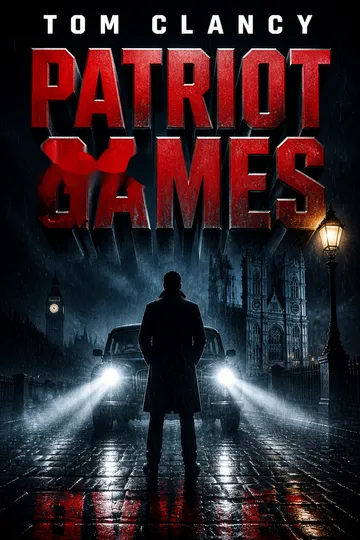


About the Author
Download PDF
Download EPUB
.epub digital book format is ideal for reading ebooks on phones, tablets, and e-readers.








