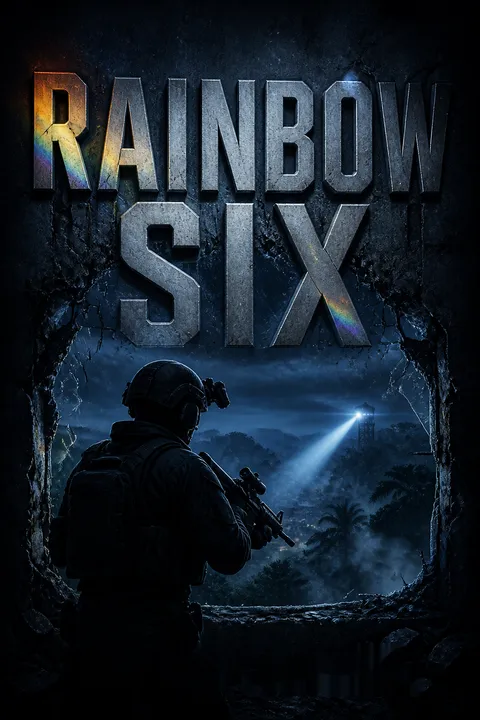


Plot Summary
Prologue
On a flight to London, John Clark, his colleague Alistair Stanley, and Domingo Chavez quietly coordinate as three armed hijackers seize the cockpit. Clark and Chavez disarm the men before anyone aboard is killed, then divert the plane to safety.
The incident exposes the danger of a world where terrorist networks can act without warning, and it helps launch Clark’s plan for Rainbow, a secret multinational counterterrorist unit. Elsewhere, a company’s vans drug and abduct ten homeless men from New York. They are carried to a hidden facility, where researchers prepare them as test subjects for a project whose purpose remains concealed.
The opening places two kinds of power beside each other. Clark’s is disciplined and protective: he reads a cabin, communicates through small signals, and acts before panic can spread. The hidden laboratory’s power is the opposite. Its operators make vulnerable people disappear because society has already made them easy to overlook. The parallel establishes the novel’s moral fault line before the antagonist’s aims are clear. Expertise can preserve life, but technical competence alone proves nothing about the ends it serves.
Rainbow Takes Shape
After the hijacking, Clark brings his proposal for Rainbow to Britain and takes command at the SAS base in Hereford. Alistair Stanley becomes his deputy, while Domingo Chavez leads a strike team drawn from American, British, French, and German specialists. Clark insists that the unit must be ready to act before its training is complete, because a hostage crisis will not wait for a perfect organization.
Chavez discovers how much he must prove to his exceptionally capable team, then runs, shoots, and trains alongside them. At home, he and his pregnant wife, Patsy, settle into life near her parents, John and Sandy Clark. The new agency begins as both a family venture and a demanding test of command.
Rainbow’s formation turns Clark’s private experience into an institution. He must trade the immediacy of field work for responsibility over people who may die because of his decisions. Chavez faces a different pressure: his rank does not automatically command respect among veterans who may outshoot or outrun him. The two men’s authority therefore depends on visible competence, not titles alone. Their domestic ties make that competence personal. Chavez is not simply building a unit; he is preparing to become a father while entering work that may keep him away from his family.
Bern’s First Test
A former KGB officer, Dmitriy Popov, has helped bring old West German terrorists back into action under the direction of an unnamed American employer. Their first operation is a bank seizure in Bern.
The attackers kill a hostage early, then demand escape arrangements while Swiss police try to contain the crisis. Rainbow sends Chavez’s Team Two, which studies the building through cameras and plans an assault before the terrorists can kill again. Chavez divides the bank into sectors and sends his team through two entrances.
They kill the armed captors and free the remaining hostages, though the first victim cannot be saved. The operation succeeds, but it gives Rainbow its first proof that training must answer to unpredictable people and cramped, civilian spaces.
The Bern mission draws a sharp distinction between political language and criminal behavior. The attackers may call themselves revolutionaries, but their early murder of a hostage makes human beings into leverage. Chavez responds with tactical judgment rather than theatrical aggression, using surveillance and division of responsibility to limit the danger to civilians. Yet the rescue cannot erase the first death. Rainbow begins its working life with a success that contains an irreversible failure, a reminder that competence can reduce harm without restoring what has already been lost.
The Schloss Siege
Popov next recruits former Baader-Meinhof terrorists Hans Furchtner and Petra Dortmund to seize Erwin Ostermann, a wealthy Austrian trader. They believe Ostermann holds secret access codes to the international financial system, though no such private network exists.
At his vast country house, they take Ostermann and his staff hostage and demand prisoners and an escape flight. Rainbow’s team arrives with only a partial picture of the attackers and a sprawling building to cover. Negotiation buys time, but Dortmund and Furchtner threaten to kill hostages.
As the captives are led toward a helicopter, gardener Klaus Rosenthal, a Holocaust survivor, secretly takes a knife and wounds one captor. Rainbow’s planned ambush kills the attackers and frees the hostages, while Rosenthal’s resistance helps break the captors’ control.
The Schloss’s scale turns wealth into tactical vulnerability. Ostermann’s resources cannot protect him once armed people occupy the rooms, stairways, and grounds of his home. The terrorists’ confidence rests partly on a false belief about secret financial power, revealing how ideology can make imagined systems feel more real than evidence. Rosenthal’s resistance has a distinct psychological force: a man once stripped of agency under state violence recognizes the pattern of dehumanization and acts, despite his age and fear. His choice interrupts the captors’ script without making him a soldier.
Rainbow Learns to Fly
After the Austrian rescue, Chavez argues that saving hostages must remain the team’s default, even when the plan carries risks. The discussion exposes a practical weakness: Rainbow lacks its own helicopter crew, forcing the team to depend on local aircraft and unfamiliar pilots.
Clark recruits Marine aviator Dan Malloy, whose experience with special-operations helicopters gives the unit a reliable way to insert and extract its teams. Rainbow adds drills for long-rope deployments, medical evacuation, and communication security.
Tim Noonan, an FBI technical specialist, also develops software that can block or intercept cellular calls around an operation. The team keeps improving, but Clark and Chavez know that their training cannot control every variable. Their work is reactive, shaped by dangers chosen by other people.
This section converts operational success into institutional learning. Rainbow does not mistake a favorable outcome for proof that its systems are complete. Chavez’s insistence on preserving innocent life forces the commanders to define what their tactical doctrine is for, while Malloy and Noonan supply capabilities the original plan overlooked. The tension is between standardization and uncertainty: procedures can reduce predictable errors, but hostage situations remain shaped by individuals who do not follow the script. Clark’s discomfort with command deepens because every improvement makes him more responsible for risks he cannot eliminate.
Shiva Takes Form
At a secret Horizon Corporation facility, molecular biologists strengthen an Ebola-like virus by adding genetic material that helps it survive outside the body. They name the engineered organism Shiva and develop tiny capsules that can carry it through an aerosol mist.
The researchers also devise two vaccines. One, labeled A, is intended for mass distribution but will spread the disease; the other, B, is meant to protect selected survivors. In New York, Horizon employees drug and abduct homeless men, using them as early test subjects.
Doctors observe the virus multiplying and killing them, while treating their pain enough to keep the experiments orderly. The project’s scientists describe their work as ecological restoration, but their method is deliberate mass murder disguised as medical research.
The threat grows from a contradiction at the center of Horizon’s research: tools designed to deliver vaccines can also deliver disease. The project’s members do not see themselves as ordinary killers. They use scientific language and environmental concern to recast victims as expendable obstacles to a supposedly higher balance. That self-description is psychologically protective. It lets researchers treat individual suffering as negligible while imagining themselves as stewards of the whole planet. The virus’s name and delivery system give the conspiracy a concrete mechanism, but its greatest weapon is the certainty of people who believe their atrocity is necessary.
Worldpark Under Gunfire
A group of European terrorists, led by the Action Directe veteran Rene and including Basque separatists, targets Worldpark, a crowded theme park in Spain. Their goal is to force France to release Carlos the Jackal and other imprisoned militants.
The park’s security supervisor Andre has helped them study the grounds, while the attackers disguise themselves among staff and visitors. During a company outing, they draw weapons and herd thirty-five children into the castle command center.
Retired Spanish paratrooper Francisco de la Cruz charges one gunman with his legionary sword and shield, wounding him before bullets break his leg. The terrorists still take control of the building. When the Dutch child Anna is brought outside, one attacker shoots her, forcing Rainbow to act under the knowledge that the captors will kill again.
Worldpark’s cheerful design becomes part of the attackers’ weapon. Its crowds, costumes, and child-centered spectacle make it easy to conceal armed men, but they also magnify the public meaning of the crime. De la Cruz acts from a soldier’s reflex and a caretaker’s attachment to the park, briefly disrupting the assault at personal cost. Anna’s murder makes clear that the terrorists’ threats are not bargaining theater. It also tests Rainbow’s restraint: the team can see the danger, but cannot fire until it can do so without increasing the threat to the other children.
Seven Seconds in the Castle
Rainbow studies the castle, uses hidden cameras to count attackers, and positions two sharpshooters on nearby rides. Chavez leads the assault while Clark coordinates from the command post.
The team cuts the castle’s power, drops from a helicopter onto the roof, then blasts through the control-room windows with charges and flash-bangs. Chavez and his men place themselves between the gunmen and the children as they fire. The attackers are killed or disabled, and the children escape with only one minor injury besides Anna’s earlier death.
De la Cruz gives Chavez the gold eagle of his fictional Roman legion as a mark of gratitude. Popov, watching the rescue on television, recognizes the same disciplined team that ended the Bern and Vienna crises.
The assault transforms Rainbow from a promising proposal into a demonstrated international force. Its success depends on layered preparation: surveillance, snipers, helicopter insertion, explosives, and a practiced division of responsibility. Yet the central image is not the technology. It is Chavez and his shooters putting their bodies between armed men and children. Popov’s recognition of the repeated team changes the strategic balance: Rainbow is no longer merely a local response but a force capable of appearing across borders. The victory protects survivors, but Anna’s death remains the cost the team could not prevent.
The Missing Women
As Horizon expands its experiments beyond the homeless men, its operatives abduct healthy people from New York bars, including legal secretary Mary Bannister and another young woman, Anne Pretloe. Mary wakes inside the research facility, confused, ill, and connected to an IV.
She finds an unattended computer and sends her father a garbled message saying she does not know where she is. The message reaches Indiana, where Skip Bannister contacts the FBI. Agents compare Mary’s disappearance with Pretloe’s and begin searching Manhattan, interviewing bar staff and former acquaintances.
They identify Kirk Maclean as a man who knew both women, but his polished explanations and ordinary apartment offer no immediate proof. Mary’s message becomes the first fragile thread connecting the experiments to the outside world.
The investigation begins not with a forensic breakthrough but with a damaged act of communication. Mary’s incoherent email is both evidence of her captivity and evidence of the drugs and illness degrading her ability to think. Her father’s refusal to accept the routine explanation that she has simply left home forces the case into motion. At the same time, the FBI’s caution shows the limits of pattern recognition: two missing women may indicate a predator, but every ordinary fact about their lives can also point elsewhere. The threat is hidden inside normal urban anonymity.
Popov Finds Rainbow
After watching news coverage of the Bern, Vienna, and Worldpark operations, Popov notices the same pipe-smoking officer and recurring team members in each aftermath. He realizes that Rainbow is a secret multinational force based in Britain, led by John Clark.
Popov passes the discovery to his American employer, John Brightling, and later obtains further information through Russian intelligence contacts. Meanwhile, Brightling’s company completes a vast Kansas complex with airtight buildings, extensive water supplies, and its own runway, while Global Security’s Bill Henriksen seeks a security contract for the Sydney Olympics.
The two investigations begin to converge: Popov knows that Rainbow may threaten future operations, while Brightling’s network needs access to the Olympic stadium’s cooling system.
Popov’s strength is observation rather than belief. He reads a repeated gesture, a pipe lit after each operation, as evidence that one hidden unit is appearing under different national covers. His discovery reverses the usual surveillance relationship: Rainbow has been hunting terrorists, but now a trained intelligence officer is studying Rainbow. The Kansas facility and Olympic contract broaden the scale of the conflict. A multinational rescue force and a corporate research network both move through ordinary institutions, but one protects public space while the other uses it to conceal a global plan.
A Stadium Becomes a Delivery System
As the Sydney Olympics approach, Global Security wins a consulting contract with the Australian authorities, giving its staff access to the stadium and its systems. Lieutenant Colonel Wilson Gearing, a former chemical-warfare specialist, inspects the fog-cooling equipment, which draws water through pipes and sprays a fine mist through crowded concourses.
He understands how easily it could carry the capsules containing Shiva. Rainbow is also asked to advise the Australian SAS, while Chavez’s team is still recovering from the Hereford attack and preparing to travel.
The stadium’s cooling system, installed to protect spectators from the heat, has become a potential route for mass exposure. At the supplied story’s endpoint, the Olympic crowds are gathering and Gearing’s plan remains active.
The danger here is built into a practical kindness. The fogging system exists to make a brutal summer more bearable, and its ordinary function gives it cover as a delivery mechanism. Gearing’s expertise makes the threat credible because he knows both the technical system and the biology behind its misuse. The stadium is not simply a target; it is a carefully engineered gathering place whose success depends on moving people through shared air. Rainbow’s arrival in the Australian security picture raises the possibility of intervention, but the preparations have not yet resolved into a confrontation.
The Project’s Human Cost
Horizon’s scientists move from the homeless test group to healthier captives, including Mary Bannister and Anne Pretloe. They expose subjects through injections and the experimental fogging system, and observe that sexual contact can also transmit the virus.
Interferon and other treatments fail; the subjects develop internal bleeding and die despite heavy pain medication. Mary’s brief escape to a computer has already reached her father, but the research staff discover the message and increase her medication to keep her in bed.
Meanwhile, Horizon’s false A vaccine is prepared for mass production, while vaccine B is reserved for those selected to survive. The tests establish that Shiva is both highly lethal and difficult to treat, turning the company’s environmental rhetoric into an imminent human catastrophe.
This section strips away any remaining distance between scientific theory and bodily consequence. The virus is no longer a specimen under a microscope; its progress is measured in pain, bleeding, and the dwindling consciousness of people who were never told the truth. The researchers’ decision to drug Mary after her attempt to contact her father shows how the project manages not only bodies but information. The two vaccines embody its moral structure: one is a public promise that hides a death sentence, the other a privilege reserved for insiders.
Hereford’s Hospital Ambush
Popov recruits Sean Grady, a ruthless Irish Republican Army commander, and offers him money and cocaine to attack Rainbow close to its Hereford base. Grady’s plan targets Clark’s wife, Sandy, and Chavez’s pregnant wife, Patsy, who are working at the local hospital.
A fifteen-man team storms the hospital, while other gunmen ambush Rainbow operators outside. The attack catches Team One in the open: two operators are killed and several are wounded. Chavez’s team arrives as reinforcements, and the attackers’ escape plan begins to collapse.
The assault turns Rainbow’s private family ties into a tactical vulnerability. Clark and Chavez cannot simply command from safety; they must trust their colleagues to rescue the people they love while the attackers exploit the team’s own rules of protection.
Grady’s plan weaponizes the distinction between professional duty and private attachment. Rainbow is trained to protect strangers, but these hostages are the people its commanders return home to. The ambush also reveals a strategic weakness in a force whose members share unusually close family bonds: the enemy can force leaders to experience the operation as both command crisis and personal terror. The attackers’ confidence is real, but it rests on a fragile assumption that fear will make the team predictable. Instead, Rainbow’s training allows others to act while Clark and Chavez endure their helplessness.
The Hospital Is Retaken
Inside the hospital, Chavez’s team reaches the emergency wing while the Irish gunmen try to hold their remaining hostages. When one attacker moves toward Patsy, George Tomlinson kills him with a burst from his suppressed weapon, and Julio Vega and another operator pull Patsy to safety.
A physician, Paul Bellow, negotiates with the trapped gunmen, persuading them to consider surrender rather than die in a final assault. Outside, Colonel Malloy and crew chief Jack Nance track Grady’s fleeing car; Nance shoots Grady through the shoulder, stopping his escape.
Rainbow loses two operators and suffers several wounded, but Sandy and Patsy survive. The victory leaves the team shaken and furious, while proving that hostage rescue can succeed without forcing every trapped attacker into a last stand.
The rescue is not a clean triumph. It is a chain of small decisions made under pressure: Tomlinson fires when Patsy is threatened, Vega moves her out, and Bellow uses the attackers’ remaining self-image to keep the crisis from escalating. The operation also distinguishes courage from bloodlust. The team can act decisively without turning the hospital into a killing ground. Yet the deaths of Rainbow operators make the cost unmistakable. For Clark and Chavez, the rescue saves their families but does not restore the unit to what it was before the ambush.
Grady Names the Russian
After surgery, Grady speaks while still emerging from anesthesia, giving Rainbow and British security officers the name used by the Russian who supplied the IRA with funds and drugs: Iosef Serov. His account links the Hereford assault to the earlier terrorist operations.
Popov learns that the attack has failed and quickly transfers nearly all the money from the Swiss account to another account before flying back to the United States. The FBI traces his travel and payment records but has no address, while the British service reviews its own surveillance.
Rainbow has a name and a likely route into the conspiracy, but Popov remains beyond reach. The discovery sharpens the question that has followed every operation: who is paying for these attacks, and why?
Grady’s revelation is useful but incomplete. It identifies a courier and exposes the financial structure behind the IRA mission, yet the mastermind’s larger motive remains hidden. Popov reacts as a trained survivor: he moves the money before the investigation can freeze it and uses travel documents that leave few simple trails. This is a contest between different forms of expertise. Rainbow can end an armed assault, but institutional investigators must reconstruct a network from fragments, while Popov keeps adapting before those fragments can become a case.
The Final Warning
The FBI and British services pursue Popov while the disappearance of Mary Bannister and Anne Pretloe begins to look connected to Horizon’s experiments. In Australia, the Olympic crowds enter the stadium, where Gearing has access to the fogging system he intends to alter.
The virus and its two vaccines have been tested; the researchers believe the public vaccine will spread Shiva while the protected insiders survive. Popov, now understanding that the operations he arranged serve a purpose greater than ordinary terrorism, has not yet grasped the full design.
Rainbow’s presence in the Australian security effort offers a possible obstacle, but the supplied story ends before the stadium plan is carried out or stopped. The race, the cooling mist, and the concealed canisters point toward a catastrophe still in motion.
The ending of the supplied narrative leaves several timelines converging without resolving them. Rainbow has learned that a Russian intermediary is behind attacks, the FBI is closing in on a missing-persons pattern, and Horizon has perfected a means of spreading a lethal virus. Yet each group still holds only part of the truth. The Olympic stadium embodies the central danger: a public institution can be both a gathering place and an instrument of mass exposure. The unfinished endpoint preserves the difference between recognizing a threat and stopping it.
Analysis
Rainbow Six sets two systems of expertise against each other. Rainbow’s operators train to read rooms, protect hostages, and make decisions under pressure. Horizon’s scientists and consultants also plan carefully, but they use precision to conceal mass murder rather than prevent it. The novel’s strongest contrast is not science versus ignorance. It is the purpose to which knowledge is put. Noonan’s communications software and the researchers’ aerosol capsules both arise from technical ingenuity; one limits an attacker’s control, while the other turns a public cooling system into a delivery route for disease.
The hostage crises test what Rainbow means by success. The unit often kills its opponents, yet its stated aim is to preserve innocent life. At Bern and Worldpark, it arrives after a hostage has already died. At Hereford, the danger reaches Clark’s and Chavez’s families, making command painfully personal. Paul Bellow’s negotiations show that understanding an adversary can be a tactical tool, but his approach works only when the captor still has a self-image that can be appealed to. The novel rejects both easy heroism and easy moral equivalence: terrorists and rescuers may be trained, disciplined, and brave, but their chosen ends remain decisive.
The conspiracy’s ecological language is deliberately unsettling because its members identify a genuine problem, human damage to the natural world, then convert concern into permission to exterminate people. Their error is not simply fanaticism. It is a failure to recognize that a complex living system cannot be repaired by treating human beings as disposable parts. Popov’s perspective sharpens the critique. He understands institutions and tradecraft but initially cannot grasp why his wealthy employer treats money as trivial or what goal could outrank it. His confusion mirrors the reader’s as the separate plots converge.
The supplied narrative stops with the Olympic dispersal plan still unresolved. That open endpoint is consequential: Rainbow has identified a possible mechanism, but suspicion is not yet prevention. The story leaves its characters at the point where knowledge must become action, and where delay may itself decide how many people survive.
Review Summary
Rainbow Six receives mixed reviews. Many praise its action-packed plot, technical detail, and complex storylines. Fans appreciate Clancy's portrayal of counterterrorism operations and the character development of John Clark. However, critics note excessive length, repetitive descriptions, and heavy-handed political views. Some find the villains one-dimensional and the dialogue unrealistic. Despite these criticisms, many readers consider it one of Clancy's best works, highlighting its suspenseful narrative and intricate plotting. The book's influence on popular culture, including video games, is also noted.
People Also Read
Characters
John Clark
Rainbow’s field commanderA veteran CIA field officer who becomes the American commander of Rainbow, Clark combines patience, tactical imagination, and a deep distrust of unnecessary risk. He has spent decades working where decisions are immediate, so the administrative burden of command frustrates him even as he accepts responsibility for the people under him. His marriage to Sandy and his affection for his daughter, Patsy, give the work a private dimension he rarely displays. Clark wants to protect civilians without pretending that every crisis has a perfect solution. His authority comes from experience, but his continuing challenge is to trust a multinational organization rather than personally control every move.
Domingo Chavez
Team Two’s combat leaderChavez is a former infantryman turned CIA operative, a compact, disciplined soldier who likes physical work and earns his team’s confidence by training beside them. He is married to physician Patricia, called Patsy, and is Clark’s son-in-law. His competitive pride initially makes Rainbow’s elite soldiers seem daunting, but he learns to put judgment ahead of ego, as when he gives experienced sergeants the lead in a dangerous assault. Chavez’s identity as a soldier sits beside a more tender one: he is eager to become a father and thinks seriously about what he will owe his child. He sees force as necessary protection, never as sport.
Dmitriy Popov
The displaced KGB operatorA former KGB colonel fluent in several languages, Popov is observant, adaptable, and skilled at reading people without making himself conspicuous. He once served a state whose purposes he understood, but now works for a wealthy private employer whose aims remain opaque to him. His desire for comfort and financial independence competes with his professional instinct to understand the mission he has accepted. Popov is neither an ideologue like many of his contacts nor a straightforward loyalist. He approaches political violence as a trade, yet his uncertainty about the people paying him gradually unsettles the detachment on which his survival depends.
John Brightling
The biotech magnateA brilliant physician and entrepreneur, Brightling leads Horizon Corporation and attracts scientific talent with confidence, money, and a gift for explaining difficult ideas. He is a forceful advocate for technological progress and believes that large problems can be solved by people willing to act at scale. His public charisma masks a private certainty that ordinary moral limits can be set aside for a sufficiently ambitious goal. Brightling’s divorce from Carol reflects the strain of two powerful minds pursuing different forms of influence. He seeks to transform the world rather than merely profit from it, and his confidence makes him dangerous when conviction outruns accountability.
Carol Brightling
The White House scientistCarol is a highly credentialed environmental scientist serving as presidential science advisor. She wants evidence to shape policy, but she works inside a political system that often asks her to support decisions she believes are wrong. Her marriage to John Brightling ended after their intellectual and personal ambitions collided. Carol is proud, strategic, and acutely conscious of status, yet the private loneliness behind her public competence is visible in her attachment to her cat and her memories of the marriage. Her environmental concern gives her a genuine political vocation, while her need to matter inside government makes compromise both useful and costly.
Alistair Stanley
Rainbow’s British deputyA former SAS major seconded to British intelligence, Stanley is Clark’s executive officer and a steady counterweight to his American colleague. He is observant, tactful, and skilled at reading both people and institutional procedure. His calm manner can disguise how much experience he brings to operational decisions. Stanley knows when caution is useful and when it becomes delay, and he helps translate Clark’s forceful instincts into a multinational command structure. He is loyal without being uncritical, willing to question plans when the risks to hostages or operators are too high.
Paul Bellow
Rainbow’s hostage psychologistBellow is a psychiatrist and expert on terrorist behavior who advises Rainbow during negotiations. He studies not only what captors demand but how their beliefs shape their choices, and he uses patience, rapport, and carefully selected arguments to keep crises from becoming more violent. He is not a field shooter, which leaves him exposed when he approaches armed men, but he accepts that risk because conversation can create openings that force cannot. His work depends on treating adversaries as psychologically legible without confusing understanding with approval.
Bill Henriksen
The security consultantA former FBI Hostage Rescue Team member, Henriksen runs Global Security and sells expertise in counterterrorism, equipment, and police training. He is comfortable on television and in government offices, and knows how to translate operational knowledge into contracts and influence. His experience gives him credibility with police and military clients, while his confidence in his own judgment can make him difficult to read. Henriksen is closely connected to the security world Rainbow occupies, and his professional access makes him an important figure in the widening conflict.
Patricia Chavez
The doctor and new motherPatsy is a physician completing hospital training and the daughter of John and Sandy Clark. She is married to Domingo Chavez, whose dangerous work she understands without romanticizing it. Practical and medically focused, she is also emotionally direct, challenging her husband when his habits or assumptions concern her. Her pregnancy gives their marriage a shared anticipation that sits uneasily beside the risks of Rainbow’s work. Patsy’s medical vocation places her on the life-saving side of the moral divide, but she does not treat violence as an abstract opposite: she knows that emergencies can require painful, irreversible decisions.
Sandy Clark
The family’s experienced nurseSandy is Clark’s wife, Patsy’s mother, and an experienced emergency-room nurse. Her long marriage to John has given her a clear sense of the difference between his public, domestic self and the professional life he keeps largely out of sight. She is observant and grounded, and she brings practical calm to family life in a foreign country. Her medical work makes her comfortable in emergencies, though not indifferent to them. Sandy’s presence connects Rainbow’s operational world to the ordinary people who keep households, hospitals, and relationships functioning while the agents are away.
Tim Noonan
Rainbow’s technical specialistNoonan is an FBI agent with technical expertise and enough weapons training to work comfortably alongside Rainbow’s shooters. He develops surveillance and communications tools, including a system that blocks cellular calls near an operation, and he pushes to be treated as more than a support specialist. He likes practical gadgets but understands their limits, and his field experience keeps him from mistaking a clever device for a complete solution. Noonan’s mix of technical curiosity and physical courage makes him a bridge between information gathering and direct action.
Dan Malloy
Rainbow’s helicopter pilotA Marine lieutenant colonel and veteran rescue pilot, Malloy joins Rainbow to provide the helicopter expertise the original organization lacked. He is confident in the air, cautious about the risks pilots face, and openly proud of his craft. Malloy’s ability to insert and extract teams gives the unit options that ground plans cannot provide. He is not merely a driver: he understands that a pilot’s timing, aircraft condition, and judgment can determine whether a mission succeeds. His family’s move to Britain also makes his assignment a personal commitment, not a temporary stunt.
Sean Grady
The IRA hardlinerGrady is a deeply committed Irish Republican Army commander with a reputation for discipline and ruthlessness. He believes armed action can preserve the movement’s political purpose when others are willing to make peace. Years of conflict have made him cautious about informers and skilled at organizing covert operations. He values loyalty, secrecy, and symbolic victories, but his confidence in the cause can narrow his sense of what ordinary people will accept. Grady’s view of himself as a soldier rather than a criminal shapes both his choices and his expectations of those he commands.
Francisco de la Cruz
The sword-bearing centurionA retired Spanish paratrooper who supervises Worldpark’s Roman legionnaires, de la Cruz takes his ceremonial role seriously and treats the children at the park with a grandfather’s warmth. His military instincts remain close to the surface, and he reacts when armed attackers appear among the visitors. He is proud of his men, his family, and the traditions he helps stage for the park, but his courage is not based on believing the costume is real. He understands danger because he has lived around it before.
Klaus Rosenthal
The survivor who resistsRosenthal is the elderly head gardener at Ostermann’s estate and a Holocaust survivor. He has built a quiet life around growing things after enduring a childhood in which other people controlled whether he lived. When danger returns in a familiar form, his fear does not erase his ability to act. His knowledge of the grounds and his attention to what does not belong make him more than a passive hostage. Rosenthal’s history gives his resistance a particular weight without turning it into a simple story of courage overcoming trauma.
Erwin Ostermann
The captive financierOstermann is a wealthy Austrian trader whose grand estate reflects a life of privacy, discipline, and financial success. He is respected by public officials for his philanthropy, yet he has little preparation for direct physical danger. His captors misunderstand the financial systems he uses and demand access codes that do not exist. Ostermann’s intelligence helps him read the fear and motives of people around him, but it cannot protect his household once violence enters the home. His ordeal forces him to reconsider the value of security he once viewed as unnecessary.
Plot Devices
Rainbow
Multinational rescue forceRainbow combines American, British, and other NATO personnel into a secret unit that can answer hostage crises across borders. It joins intelligence analysis, psychological negotiation, technical surveillance, elite shooters, and helicopter insertion. The team’s international composition makes cooperation possible, but also creates a complicated chain of command. Its repeated operations show how training, trust, and rapid adaptation can limit harm, while its casualties and family vulnerabilities demonstrate that expertise does not make it invulnerable.
The hidden laboratory
Science concealed as progressHorizon’s research facilities provide a plausible setting for experimental medicine while concealing a program aimed at radical population reduction. The Kansas complex has unusual scale, sealed environmental systems, its own power and water, and a private runway. These details initially suggest corporate security and advanced research. Their later relevance lies in making the facility capable of housing selected survivors and continuing work after ordinary social systems collapse.
Shiva and its vaccines
A plague with two facesShiva is an engineered, unusually resilient Ebola-like virus. Nanocapsules allow it to survive aerosol delivery, while experiments test its spread through exposure and close contact. Horizon’s vaccine A is designed for public distribution but carries the lethal virus; vaccine B is intended to protect chosen survivors. The contrast makes the conspiracy operationally credible: the public is offered a cure, while the people directing the catastrophe reserve actual protection for themselves.
Cellular signals
Control and detectionNoonan’s software can block cellular calls around a target site, preventing outsiders from warning captors. Separately, the experimental Lifeguard device detects the distinctive signal generated by a human heartbeat, helping operators locate people through walls or other obstructions. Both tools extend Rainbow’s senses, but neither replaces judgment. Their value depends on correct placement, interpretation, and the team’s ability to act on what the technology reveals.
The coded trail
A network revealed in fragmentsPopov uses false names, old contacts, cash, numbered accounts, and trusted intermediaries to move between former terrorist networks and his employer. Investigators recover pieces of this system through testimony, travel records, surveillance, and financial inquiries. No single clue explains the purpose of the attacks. The recurring gap between what Rainbow can prove and what it suspects drives the investigation forward and gives Popov room to adapt.
Jack Ryan Universe (Publication Order) Series



About the Author
Download PDF
Download EPUB
.epub digital book format is ideal for reading ebooks on phones, tablets, and e-readers.








