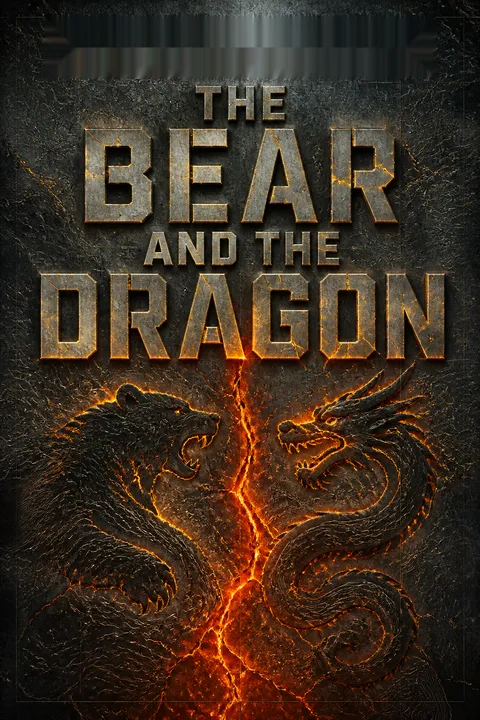


Plot Summary
Prologue
SVR chairman Sergey Golovko2 rides through Moscow in an armored white Mercedes, reading the morning paper while his driver picks through the traffic. A rocket-propelled grenade tears into an identical car nearby. The driver and passengers die before Golovko2 can learn whether the attack was meant for him.
At his office window, he watches emergency crews approach the wreck and recognizes how narrowly chance has spared him. The dead man is Gregoriy Avseyenko, a former KGB officer turned wealthy pimp, whose enemies may reach far beyond the criminal world.
The mistaken identity turns a routine commute into an intelligence problem: Golovko survives not because his security works, but because the attacker chooses the wrong white car. The scene also places the former Soviet state in transition. Golovko still travels with the privileges of power, yet the institutions around him have weakened, and a cheap military weapon can pierce the shell of his status. His first response is not vengeance but inquiry. That instinct establishes the novel's central tension: decisions made in secret can determine who lives, while those responsible may remain invisible until the consequences are already in motion.
Rasputin's Empty Empire
The Moscow militia identifies Avseyenko as Rasputin, a former KGB manager who built a lucrative prostitution business after losing his official post. Informants say he was exploring a cocaine route through Odessa and had offended powerful men, but no one can name the killer. FBI agent Mike Reilly9 helps Lieutenant Oleg Provalov10 question associates, including Tanya Bogdanova, one of Avseyenko's employees.
Then police in St. Petersburg pull two handcuffed men from the Neva, each shot in the head and bearing a Spetsnaz tattoo. Their military records show Afghanistan service. The dead men fit the informants' description of hired soldiers, turning a Moscow street murder into a cross-city hunt for whoever recruited them.
The investigation begins with a victim whom almost nobody wishes to mourn, but the two murdered soldiers make his killing impossible to dismiss as ordinary underworld business. Reilly and Provalov work from different traditions: one trusts evidence and procedure, the other must operate within a police force compromised by scarcity and corruption. Their cooperation becomes a small rehearsal for the international alliance forming elsewhere. The case also exposes the afterlife of the Soviet security apparatus. Former officers and soldiers have carried their skills into private crime, where their training serves money rather than the state.
A Secretary Becomes a Source
CIA officer Chester Nomuri3 arrives in Beijing under cover as a Nippon Electric computer salesman, a role that gives him access to government offices. There he meets Lian Ming,4 the educated secretary to senior minister Fang Gan.5 Nomuri3 demonstrates software that makes her work easier, then courts her with Western food, gifts, and attention absent from her life under Fang's5 possessive authority.
Ming4 understands that the computer program he asks her to install will let him read her files. She accepts anyway, partly because she trusts Nomuri3 and partly because she wants to strike back at the officials who treat her as office property. Her computer begins sending Fang's5 confidential political notes to CIA.
Nomuri's recruitment succeeds through intimacy, not ideological argument. The relationship gives Ming an experience of being regarded as a person, but it also entangles affection with espionage and puts her in danger without her fully grasping the consequences. Her consent is real, yet formed inside a system that has already narrowed her choices through sexual coercion and political subordination. For Nomuri, the operation tests the gap between professional detachment and human attachment. The source is valuable precisely because Ming is close to power, but that closeness is also what makes the relationship ethically and physically hazardous.
Gold Beneath the Wolves
Russian and Western survey teams working far apart in eastern Siberia report extraordinary finds on the same day. One locates oil reserves potentially larger than the Persian Gulf fields; the other discovers a vast gold deposit near the isolated home of Pavel Gogol,24 an elderly veteran who has long collected river gold on wolf pelts.
The discoveries could bring Russia billions in hard currency, but only if the government can keep corrupt officials from siphoning it away. President Grushavoy7 and adviser Sergey Golovko2 plan to use foreign expertise, especially from American oil companies. In Beijing, Zhang Han San6 sees the same resources as a prize his earlier schemes failed to secure.
The discoveries change the value of Siberia from remote wilderness to the hinge of national survival. Gogol's solitary, almost prehistoric life gives the gold strike a human face, while the oil field turns geology into a geopolitical weapon. For Russia, wealth offers a route out of collapse, but also draws the country into a contest it may be too weak to defend. For Zhang, the resources justify risk because he regards economic power as something to seize rather than earn through exchange. The same landscape therefore offers Russia renewal and China temptation, making abundance itself a source of danger.
A Diary Reaches Langley
Ming's4 computer sends CIA more than a thousand pages of Fang Gan's5 notes from private discussions with Zhang6 and other ministers. Analyst Joshua Sears finds evidence that Zhang6 helped shape the earlier Chinese maneuvers involving Japan and Iran, and that the restored American recognition of Taiwan has unsettled him.
The notes expose a leadership that treats secrecy as protection and policy as a game of leverage. Meanwhile, Provalov10 and Reilly9 track the Moscow assassin, Klementi Suvorov,11 a former KGB officer living under an alias. A dead-drop operation captures his coded correspondence. Its decoded message confirms that Golovko2 was the intended target and that Suvorov11 is preparing another attempt on his life.
Two intelligence systems converge: Ming's intimate access to Beijing's deliberations and the police pursuit of a Russian assassin. Each source is partial, yet together they reveal a pattern of political violence hidden beneath routine procedure. Zhang's notes show how leaders can mistake secrecy for control, while Suvorov's dead drops show how trained operatives exploit the spaces between institutions. The revelation that Golovko was the target turns the opening's near miss into a continuing threat. It also explains why Ryan must treat intelligence not as background knowledge but as a fragile resource that can save lives only if used carefully.
The Trade Table Hardens
Treasury Secretary George Winston12 calculates that China is exploiting a vast trade imbalance while blocking American goods and copying protected technology. President Jack Ryan1 instructs Secretary of State Scott Adler13 to press for reciprocal access, and Assistant Secretary Cliff Rutledge14 leads the delegation to Beijing with analyst Mark Gant15 at his side.
The Chinese insist that American recognition of Taiwan is the real grievance and expect the United States to yield. Rutledge14 keeps returning the talks to trade, while Gant15 warns that Beijing is negotiating from a more fragile financial position than it admits. The meetings produce no concession, and each side reads the other's firmness as proof of bad faith.
The talks are not merely about tariffs or patents. Ryan sees fair access as a test of whether China will accept rules beyond its own authority, while Beijing treats concessions as a loss of sovereignty and prestige. Rutledge understands diplomatic ritual, but Gant recognizes the material pressure beneath it: China needs American currency more than its leaders want to admit. Their failure to agree reveals two incompatible definitions of power. Ryan's administration believes economic pressure can enforce reciprocal rules; Zhang's circle believes national dignity requires refusing demands, even when refusal worsens the crisis.
Birth Under the Needle
Factory worker Yang Lien-Hua18 goes into labor with an unauthorized pregnancy, fearing the hospital will kill her baby under China's population rules. Her husband Quon19 gets her to Longfu Hospital, where a doctor prepares a formaldehyde injection for the unborn child.
Reverend Yu Fa An16 arrives with Cardinal Renato DiMilo17 and Monsignor Franz Schepke, hoping their presence and diplomatic status can stop the procedure. Yu16 knocks the doctor away, DiMilo17 breaks the syringe, and a policeman shoots the cardinal.17 Yu16 lunges forward and is shot dead. The baby is born alive in the confusion, and the doctor takes it from Yu's16 fallen arms. CNN's camera records the entire struggle.
The birth collapses the state's abstractions into a single endangered body. Lien-Hua's pregnancy is treated as a policy violation, while the adults around her must decide whether obedience matters more than a child's first breath. Yu and DiMilo act from different religious traditions but make the same practical choice: they put themselves between the infant and the machinery of the state. Their intervention saves the child but cannot save them. The televised scene makes private courage public evidence, transforming what officials could have dismissed as internal procedure into an international moral and political crisis.
Beijing Sees the Blood
Chinese officials refuse to return Yu's16 body to his widow,22 cremating him and scattering his ashes in a river. When Yu Chun22 comes back to Beijing, police also bar her from entering the home that served as her congregation's church. CNN correspondent Barry Wise23 helps her ask permission, then records the police beating her and the gathered worshippers as they pray outside.
The images spread worldwide. Ryan1 condemns the killings and the assault, while Zhang6 and other officials reject his criticism as interference in Chinese affairs. Churches, unions, and ordinary Americans demand a response, and Ryan1 refuses to separate trade policy from the treatment of human beings.
The second televised confrontation matters because the state repeats its first error in public. Denying Yu Chun her husband's ashes and then striking the mourners shows that the violence was not simply an isolated lapse by one policeman. Wise's camera makes the government answer for actions its own citizens might otherwise never see. Ryan's response is constrained by diplomacy, but his refusal to call the matter irrelevant reflects a different model of political legitimacy: a government's conduct toward its people affects its standing abroad. The public's anger becomes a force the Chinese leaders cannot manage as easily as a closed meeting.
The Wallets Close
Chinese officials dismiss the protests, but the economic consequences arrive quickly. American clothing company Butterfly cancels a major contract with Chinese suppliers after demonstrators disrupt its stores, and European firms follow. The PRC's finance minister, Qian Kun, warns the Politburo that lost export income threatens purchases of oil and wheat.
The leaders have already spent much of their trade surplus on military hardware and industrial equipment, leaving dangerously thin reserves. Rather than reconsider, Zhang6 insists the United States will retreat and encourages a more ambitious solution to China's shortages: seize Siberia's oil, gold, and space. In Moscow, Ryan1 and his advisers begin preparing to help Russia resist.
The boycott converts moral outrage into material pressure, and reveals how vulnerable China's leadership is to decisions made outside government. Its rulers can control domestic speech, but they cannot command foreign customers to keep buying. Qian understands that the state's military spending has consumed the cushion its leaders assumed would always be there. Zhang's response is revealing: rather than change course, he treats the crisis as evidence that greater power is needed. The economic problem therefore becomes a political trap. The harder Beijing clings to prestige, the fewer peaceful options remain.
Siberia's Border Opens
The Chinese Politburo authorizes Operation Spring Dragon, a drive into eastern Siberia intended to capture the gold and oil fields before Russia can defend them. Defense Minister Luo relies on a large, increasingly well-trained army, while Zhang6 dismisses the risk of Western intervention.
General Gennady Bondarenko,8 Russia's new Far East commander, has too few ready divisions and inadequate air support, so he prepares to trade ground for time. Chinese forces cross the Amur behind heavy artillery fire. Russian border troops fight from old bunkers, then withdraw under orders rather than be destroyed in place. Bondarenko8 calls up reservists and races to organize a defense around the threatened resource corridor.
The invasion is the political gamble that the earlier strands have been preparing: Zhang's ambition, China's cash crisis, and the Siberian discoveries finally become one military decision. Luo and Peng count numbers and equipment, while Bondarenko sees the more difficult problem of making scattered, undertrained units act as an army. His order to retreat is not cowardice but an attempt to preserve the people he will need later. The Chinese mistake the absence of immediate resistance for weakness. Their confidence grows precisely as their supply line lengthens, giving the Russians time to choose where the advance will finally be tested.
NATO Draws a Line
As Chinese forces push north, Ryan1 offers Russia membership in NATO, making an attack on the Russian Federation a threat to the entire alliance. President Grushavoy7 accepts, and Secretary of State Adler13 secures the other leaders' agreement. The United States sends aircraft and reconnaissance systems to Siberia, while the 1st Armored Division begins moving east by rail.
Bondarenko8 uses engineers to strengthen defenses and trains the 265th Motor Rifle Division with the soldiers and equipment he has. At the same time, American and Russian intelligence watch the Chinese advance from the air, giving commanders a clearer picture than their enemies realize.
Ryan's alliance offer is both a strategic deterrent and a moral wager. It gives Russia protection it cannot provide itself, but also binds the United States to a conflict that may become catastrophic. The move reflects Ryan's belief that a promise matters only if a country is willing to act on it. Bondarenko's preparations offer the ground-level counterpart: he cannot manufacture strength overnight, so he builds discipline, repairs defenses, and preserves his troops. The alliance and the training program both seek to change the Chinese calculation before the battlefield makes that calculation irreversible.
The Ambush at the Mine
Chinese forces reach the gold region expecting little more than retreating Russians. Instead, Bondarenko8 concentrates the 265th Motor Rifle Division and incoming reinforcements around ground chosen to narrow the enemy's advance. First Armored's cavalry locates Chinese units, and its Apaches destroy tanks at night before the main formations can respond.
American F-15s devastate the Chinese fighter force, while precision attacks on railroad bridges and supply routes deepen the invasion's logistical crisis. Russian troops have taken losses, but they have preserved enough strength to fight. The Chinese advance stalls as fuel, ammunition, and reliable information become harder to obtain.
The battlefield turns on information and logistics as much as on firepower. Bondarenko's troops survive by refusing the decisive engagement the Chinese expect, while American sensors make concealed movement increasingly difficult. The Apache attack and fighter victories are devastating, but their deeper effect is psychological: the PLA learns that numerical superiority does not guarantee control of the sky or the road. Destroying bridges attacks the invasion's circulatory system. The Russian defense is therefore not a single heroic charge, but a coordinated effort to make the enemy's strength arrive too late, too scattered, and too poorly supplied.
One Missile Over Washington
After American forces begin striking Chinese military assets, the Politburo's hardliners authorize a missile launch toward Washington. Secretary of Defense Bretano has already asked engineer Alan Gregory to adapt the Navy's Aegis system for a ballistic target. Aegis cruiser Gettysburg, brought to the capital, fires a series of interceptors; the final missile destroys the incoming warhead over the city before it can detonate.
At the same time, Chinese citizens watching uncensored footage of the war and the failed missile strike gather in Beijing. Students force their way into the political center, and Fang5 and Qian confront the leaders whose choices have brought the country to ruin. The established order begins to fracture.
The interception is a technical triumph, but its moral meaning lies in what it prevents: a decision by a handful of leaders from killing millions who had no part in the war. Ryan's earlier insistence on limiting harm now meets its hardest test, and the Aegis system buys time without making the crisis clean or reversible. Meanwhile, the Chinese public sees what the state has tried to conceal: military failure, domestic violence, and the cost of political pride. The final upheaval is not an instant cure. It is the moment when the rulers' monopoly on information and authority begins to fail.
Analysis
The novel's central conflict is not simply a contest between armies. It is a collision between political systems that interpret power differently. Ryan1 treats legitimacy as something earned through public consent and the restraint of force. Zhang6 treats it as a possession maintained by control, secrecy, and the ability to make others yield. Their dispute over trade becomes dangerous because neither side can easily retreat without appearing weak to the audience it governs.
The book repeatedly tests what governments owe ordinary people. Yu16 and DiMilo17 risk themselves for an infant whom the state has classified as an administrative problem. Ryan1 refuses to call the deaths irrelevant to commerce. Bondarenko8 measures military success partly by whether his soldiers survive, while Peng and Zhang6 measure success through territory and strategic gain. These contrasts are concrete, not abstract: they appear in the choices to protect a child, preserve an agent, withdraw from a losing position, or send a young soldier into battle.
Technology complicates responsibility rather than erasing it. SORGE, satellites, drones, encrypted telephones, and Aegis make distant decisions more informed and more immediate. Yet information cannot guarantee wisdom. Zhang6 sees enough facts to plan an invasion but filters them through pride. Ryan1 receives better intelligence than most presidents but still must decide under uncertainty. The surveillance feeds can expose atrocities, yet they also risk turning deaths into spectacle.
The ending rejects the comforting idea that economic ties automatically prevent war. Trade becomes leverage, then a weapon, while the same public visibility that turns consumers against Chinese goods also exposes the regime's failures to its own citizens. The novel's tentative hope rests not on superior firepower alone, but on accountable power: alliances, evidence, and the possibility that people who have been treated as subjects may eventually act as citizens.
Review Summary
The Bear and the Dragon received mixed reviews. While some praised its geopolitical storytelling and action sequences, many criticized its excessive length, repetitive writing, and overt political bias. Readers found the portrayal of Chinese characters racist and the plot predictable. Some longtime Clancy fans expressed disappointment, noting a decline in quality compared to earlier works. The book's exploration of US-Russia-China relations and military technology was appreciated by some, but others found it outdated and unrealistic. Overall, opinions were divided on its merit as a Tom Clancy novel.
People Also Read
Characters
Jack Ryan
Reluctant crisis presidentRyan is a former intelligence officer and economic thinker serving as President, a job whose rituals and security restrictions make him feel less like a king than a prisoner with a schedule. He distrusts political performance and prefers concrete evidence, yet every choice he makes carries consequences for people far beyond his sight. His instinct is to protect lives and uphold public principles, but he must also bargain with allies, manage Congress, and decide how much secrecy national security requires. His private doubts do not make him passive; they force him to test each decision against the people it may expose to danger.
Sergey Golovko
Russia's veteran spymasterGolovko heads Russia's foreign intelligence service and serves as President Grushavoy's7 trusted adviser. He began his career in the KGB and remains a student of facts, wary of ideology and of leaders who mistake a theory for reality. His relationship with Ryan1 has grown from the dangerous old rivalry between their countries into guarded friendship, built on favors, candor, and respect for each other's judgment. Golovko's power is mostly advisory, but he understands how intelligence can shape policy and how quickly a hidden threat can become personal.
Chester Nomuri
Beijing's undercover recruiterNomuri is a CIA officer operating in Beijing under cover as a Japanese computer salesman. He is technically capable, adaptable, and more emotionally vulnerable than his tradecraft training would prefer. His work depends on reading people without reducing them to instruments, a contradiction sharpened by his relationship with Ming4. He believes that information can protect his country, but he also discovers that collecting it may endanger the person who provides it. Nomuri's professional confidence is strongest when he is improvising; his greatest risk is assuming that cleverness can control the human attachments his operations create.
Lian Ming
The minister's hidden secretaryMing is Fang Gan's5 educated personal secretary, fluent in English and skilled at the computer systems that organize his confidential work. Her place in the ministry gives her unusual proximity to political decisions, but the same officials who depend on her abilities also treat her as a subordinate whose privacy can be invaded. She is curious about the outside world and increasingly skeptical of the ideology she once accepted. Nomuri's3 attention offers her affection and a glimpse of personal choice, though their relationship places her between loyalty, desire, and danger.
Fang Gan
The cautious insiderFang is a senior Chinese minister and a full Politburo member without a single ordinary portfolio. He believes in the Communist Party but has seen enough economic reality to recognize that rigid ideology can endanger the country it claims to protect. He values stability, status, and the comfortable privileges his position brings, yet he is more willing than Zhang6 to consider compromise. His access to colleagues makes him a pivotal observer of the regime's private reasoning, even as his own caution limits how openly he can oppose the powerful people around him.
Zhang Han San
The strategist behind the throneZhang is a senior Minister Without Portfolio who shapes policy through his influence over the Premier and the defense establishment. He is patient, ideologically confident, and adept at letting other people bear the visible risks of his plans. His ambition is national in scale, but his understanding of strength is bound to prestige, control, and expansion. He reads restraint as weakness and tends to dismiss evidence that contradicts his designs. That combination makes him a formidable political operator and a dangerous interpreter of what his country can afford.
Eduard Grushavoy
Russia's reforming presidentGrushavoy leads a country trying to rebuild after the Soviet collapse. He relies heavily on Golovko's2 judgment and wants Russia to prosper without returning to the habits that helped destroy its former system. His presidency is constrained by weak institutions, competing ministries, and a military short of equipment and money. He is not a theatrical leader, but he understands that the choices made under pressure will define whether Russia becomes a functioning partner in the wider world.
Gennady Bondarenko
The eastern front commanderBondarenko is a professional soldier promoted to command Russia's Far East Military District. He has combat experience from Afghanistan and an intellectual interest in military history, especially the training and discipline that turn civilians into soldiers. He is appalled by the poor condition of his command but does not confuse pessimism with surrender. His instinct is to preserve his troops, improve what can be improved, and make the enemy spend time and strength. He sees soldiers as people entrusted to him, not as expendable counters on a map.
Mike Reilly
The American investigatorReilly is an FBI organized-crime specialist assigned to Moscow, where he helps local police without pretending that American procedures can simply be transplanted. He trusts physical evidence, patient surveillance, and the ordinary mistakes criminals make when desire or vanity overtakes caution. His friendship with Provalov10 grows from practical cooperation rather than political agreement. Reilly's loyalty to the Bureau and his respect for Russian police work allow him to notice connections that might otherwise remain divided between jurisdictions.
Oleg Provalov
The Moscow homicide detectiveProvalov is a Moscow militia investigator confronting a murder case that keeps expanding beyond the criminal world he knows. He is wary of corruption and determined to make evidence matter, even when resources are scarce and his superiors have their own interests. Reilly's9 mentorship helps him think through surveillance, informants, and the value of a disciplined case. Provalov's most useful trait is professional patience: he can admit what he does not know and keep investigating rather than force a convenient answer.
Klementi Suvorov
The vanished KGB operatorSuvorov is a former KGB officer trained in foreign intelligence and counter-surveillance. He has changed identities, built new contacts, and learned to use the gaps between legal and criminal worlds. His private life appears ordinary enough to conceal the work he performs for powerful patrons. He is disciplined and patient, but his appetite for women and his confidence in his own tradecraft create vulnerabilities that investigators can exploit. Suvorov represents the danger of professional skill detached from public duty.
George Winston
Ryan's hard-nosed treasurerWinston is a former Wall Street trader serving as Secretary of the Treasury. He thinks in cash flows, incentives, and the consequences of bad accounting, and he is willing to speak bluntly when Ryan's1 instinctive fairness risks overlooking leverage. He dislikes seeing American workers disadvantaged by trade practices he considers dishonest. His commercial knowledge gives the administration a clearer view of China's financial weakness, while his friendship with Ryan1 lets him challenge the President without ceremony.
Scott Adler
The cautious chief diplomatAdler is a career foreign-service officer who values negotiation, patience, and the difficult art of keeping a disagreement from becoming a war. He understands that principles must survive contact with other governments, not merely sound noble at home. His caution sometimes frustrates Ryan1, but it gives the administration a needed counterweight to impulsive escalation. Adler is a technician of diplomacy, skilled at translating presidential intent into language that foreign governments can hear, even when they dislike the message.
Cliff Rutledge
The experienced trade negotiatorRutledge is an Assistant Secretary of State and veteran negotiator who trusts diplomatic process and knows how to keep a difficult meeting moving. He is less comfortable with Ryan's1 directness and initially believes that every dispute needs a carefully measured concession. His confidence in established procedure makes him useful at the table, but his instincts are challenged by an adversary that treats compromise as loss of face. He works professionally even when he disagrees with the policy he has been ordered to present.
Mark Gant
The Treasury numbers manGant is a former stock trader and Winston's12 technical adviser, sent to Beijing because he can read financial risk without diplomatic euphemism. He is impatient with ritual, but his plain speech helps him identify the economic weakness beneath China's confident posture. Gant sees that trade is not an abstraction: lost contracts become idle factories and workers without wages. His perspective gives Ryan's1 policies a material foundation, even when his bluntness unsettles the diplomats around him.
Reverend Yu Fa An
The clandestine pastorYu is a Taiwanese-born Baptist minister educated in the United States who serves a small Chinese congregation under constant official suspicion. He also has an engineering background, a history of perseverance, and a gift for comforting people without demanding that they share his exact path. His faith makes him willing to serve where the government discourages any loyalty beyond itself. Yu's friendship with Catholic Cardinal DiMilo17 shows his capacity to recognize shared moral purpose across denominational lines.
Renato Cardinal DiMilo
The Vatican's new envoyDiMilo is an elderly Italian cardinal and experienced Vatican diplomat arriving in Beijing as Papal Nuncio. He combines a scholar's command of languages and history with a priest's attentiveness to people who are often ignored by governments. He understands the risks of working in a country hostile to independent religious life, yet his instinct is to offer practical solidarity rather than merely observe. His friendship with Yu16 grows from their shared commitment to serving believers across institutional boundaries.
Yang Lien-Hua
The mother defying policyLien-Hua is a factory worker grieving the accidental death of her first child and determined to carry a second pregnancy to term. She is frightened by the state's population rules, but her desire to protect her baby is stronger than her wish to remain unnoticed. Her faith gives her a language for grief and hope, while her marriage to Quon19 gives her a partner in resisting a policy that treats family life as state property.
Yang Quon
A father's desperate defenderQuon is a factory worker and former army sergeant who wants to protect his wife and their expected child. He is not a political organizer, but the threat to his family pushes him beyond the obedience he has learned to show authorities. His loyalty is practical and intimate: he acts because the people he loves are in danger.
Robert Jackson
The fighter-pilot vice presidentJackson is Ryan's1 friend, former Navy fighter pilot, and Vice President. His military experience makes him alert to operational risks and to the distance between intelligence reports and battlefield decisions. He is more comfortable with direct action than with diplomatic maneuvering, but he understands that force has consequences beyond the immediate target. His relationship with Ryan1 is unusually candid, allowing both men to speak plainly when the pressures of office make honest counsel scarce.
Marion Diggs
The armored division commanderDiggs is a career Army officer and skilled trainer who has commanded troops in combat and peacekeeping operations. He judges a unit by what its soldiers can do under pressure, not by the shine of its equipment or the confidence of its briefings. He is demanding without relying on public humiliation, and he believes training is both a professional obligation and a form of protection for the people who will fight. His command of First Armored makes him a central part of the American response.
Yang Chun
Yu's bereaved wifeChun is Yu's16 wife, a quiet member of his congregation who returns to Beijing after learning that he has been killed. She wants to recover his body and hold a proper memorial, but the authorities deny her even his ashes. Her grief becomes part of the public record when a reporter gives her the chance to tell what happened.
Barry Wise
CNN's on-scene witnessWise is an experienced CNN correspondent who believes his job is to carry verifiable events to people who cannot witness them themselves. His Marine background makes him alert to danger, but his reporting is driven less by bravado than by respect for the audience's right to know. He understands how images can expose what official language conceals, and he is willing to risk confrontation to keep the camera running when authorities try to suppress evidence.
Pavel Gogol
The solitary Siberian veteranGogol is an elderly former sniper who has lived alone in the Siberian wilderness for decades, largely forgotten by changing governments. He knows the land, the animals, and the discipline of waiting. The discovery of gold near his home draws national attention to a life he had preferred to keep apart from cities and officials.
Plot Devices
Operation SORGE
A window into BeijingSORGE is the CIA effort built around Ming's4 access to Fang Gan's5 private political notes. A disguised software program copies her files and sends them through layered encryption and ordinary-looking Internet traffic to a secure CIA account. The material lets Ryan's1 advisers hear how Chinese leaders discuss trade, Taiwan, Russia, and military risk without learning the source's identity. Its power comes from intimacy, but that makes it dangerous: every extra reader increases the chance that Ming4 will be exposed, while withholding the intelligence could leave policy-makers blind. The device links a secretary's routine office work to decisions that may alter the fate of countries.
Siberian oil and gold
A prize that invites invasionGeological surveys reveal enormous oil reserves and a gold deposit in eastern Siberia. Russia sees the resources as a path toward economic recovery, while the Chinese leadership views them as a way to escape its dependence on foreign currency. The discoveries drive Russian plans for pipelines, ports, and mining settlements, but they also give Zhang6 a reason to consider war. The resources are therefore more than valuable commodities: they change the strategic map, attract foreign expertise, and turn a remote border into the place where the novel's political and military conflicts meet.
Dead drops and one-time pads
A trail through spycraftSuvorov11 passes coded messages through a magnetic container hidden beneath a park bench, using a one-time pad to protect the text. Russian counterintelligence officers quietly replace the pad and read the next message without alerting him. This classic tradecraft gives Provalov10 and the FSS a way to connect the attack on Golovko2 to a Chinese handler. At the same time, the sequence illustrates the novel's broader principle that careful observation can beat even professional secrecy. A routine walk, a piece of paper, and a hidden container become evidence of a plot against a head of state.
The Dark Star feed
Eyes above the battlefieldThe high-altitude Dark Star drones provide persistent thermal and visual coverage of Chinese troop movements. Their live feed helps Russian and American commanders locate formations, watch bridges, and identify moments when units are exposed. CIA also releases selected footage over the Internet, allowing Chinese citizens to see events their government would prefer to conceal. The same technology serves two different purposes: tactical intelligence for commanders and political evidence for the public. Its advantage is extraordinary, but it also makes war look disturbingly like a video game to those watching safely from a screen.
Aegis ballistic intercept
A last defense over WashingtonAfter Secretary Bretano asks engineer Alan Gregory to adapt the Navy's Aegis system for a ballistic target, cruiser Gettysburg receives modified software and interceptor missiles. The system has not faced a real ICBM before, and its ability to stop one remains uncertain until the launch toward Washington. Aegis gives the United States a narrow defensive possibility without requiring an immediate nuclear response. Its role is both technical and moral: it buys the President time to avoid answering mass death with mass death, while reminding him that the people under his protection are not abstractions.
Jack Ryan Universe (Publication Order) Series







About the Author
Download PDF
Download EPUB
.epub digital book format is ideal for reading ebooks on phones, tablets, and e-readers.








