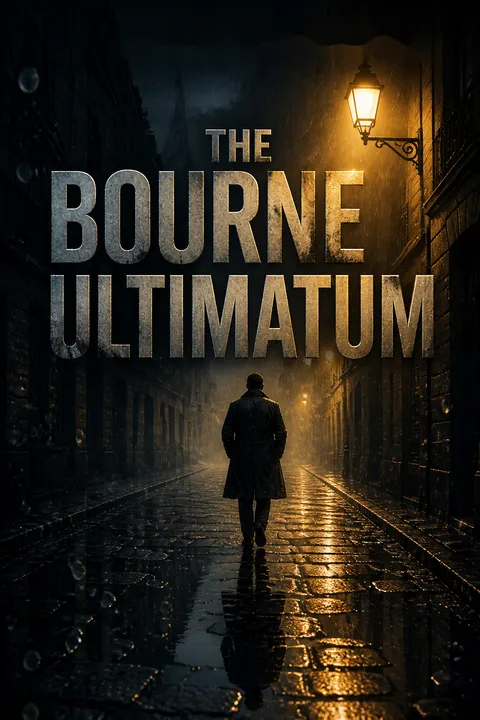


Plot Summary
Prologue
Before the alarms, David Webb is already moving through the woods around General Norman Swayne’s Virginia estate, armed and older than the body his memories expect. He has come to trace Carlos the Jackal through a modern criminal network called Medusa, whose roots reach back to the deniable Vietnam unit that made him Delta One.
His family is now the reason he cannot turn away. A Doberman lunges; Bourne uses a dart pistol to stop it, then refuses the killing his old instincts demand. David and Jason remain locked inside one body, each resisting the other as the hunt begins.
The opening establishes the novel’s central danger as both external and intimate. Bourne’s age limits the physical certainty on which his identity depends, while his refusal to kill the dog shows that David Webb has not disappeared. The estate is more than a target: it is a buried history of state violence and private profit. By placing family protection beside the old machinery of covert operations, the prologue makes Bourne’s return a choice with emotional costs, not merely a relapse into competence.
The Amusement Park Trap
Retired CIA officer Alexander Conklin and psychiatrist Morris Panov separately receive urgent messages supposedly from David Webb, using the name Jason Bourne. They meet at a violent Baltimore amusement park, where Conklin recognizes the setup too late: a sniper kills a bystander, and the two men escape in the crowd.
Conklin sends Panov to warn Webb, who is driving south with his wife, Marie, and their young children. Webb decides Marie and the children must leave the country for their Caribbean refuge, while he returns to the identity he had tried to bury. His family’s flight begins the crisis, but the attack on his friends reveals that someone has found the hidden circle around Bourne.
The trap turns ordinary trust into a vulnerability: Conklin and Panov respond because each believes the message comes from someone they love and have protected. The murdered bystander makes the danger immediate without clarifying its author, forcing Conklin to act on incomplete evidence. Webb’s decision to separate from his family is both protective and psychologically perilous. The old identity offers a practical answer to a threat, but it also threatens the fragile domestic life that has helped him recover. The novel begins by making safety and intimacy pull in opposite directions.
Langley Opens Its Files
At Langley, Conklin confronts Director Peter Holland and senior aides over the breach of a supposedly sealed record. He explains that Jason Bourne was an identity created for a covert operation, not the original Tasmanian criminal whose name it borrowed.
The real man had been a foreign-service scholar whose first wife and children were killed in Cambodia; grief drove him into Medusa, a deniable Vietnam unit, before Treadstone trained him to bait Carlos. During the Smithsonian surveillance, two Asian messengers try to lure Conklin and Panov to a supposed Hong Kong contact.
Snipers kill the messengers before they can reveal more. Bourne recognizes the Jackal’s use of elderly couriers and corrects Conklin’s European theory: the threat has reached Washington through Hong Kong.
Conklin’s account revises the moral categories on which the CIA has relied. The agency built a killer’s legend around a bereaved scholar, then mistook the legend for the man. His history does not excuse later violence, but it explains why the role became psychologically adhesive. The dead messengers also demonstrate how intelligence systems manufacture uncertainty: evidence arrives already contaminated by someone else’s strategy. Conklin’s willingness to disclose the truth marks a shift from institutional secrecy toward personal responsibility, though the agency still has to decide how much truth it can tolerate.
A Dangerous Medusa Bait
Bourne arrives in Washington and rejects the protection that would keep him away from the hunt. At Cactus’s covert workshop, the old document forger gives him new identities and civilian papers, allowing him to move without relying on CIA records.
Conklin starts probing officials once connected to Command Saigon, while Bourne studies hotel guests for a possible Jackal courier. Their calls shake powerful figures, including Pentagon procurement chief General Norman Swayne and Federal Trade Commission chairman Albert Armbruster.
Armbruster admits that Medusa’s civilian heirs hold enormous Swiss accounts and are buying control of European companies; he also wants the military discarded once their European control is secure. What began as a way to lure Carlos now exposes a living cartel whose ambitions reach beyond old war crimes.
The bait works because it contains genuine danger. Bourne does not invent Medusa’s crimes; he weaponizes a partial truth and expects fear to make powerful people behave credibly. Armbruster’s financial disclosures shift the conflict from retrospective scandal to active political capture. His contempt for military partners suggests that the new organization has outgrown its wartime origins and sees state power as an instrument to be acquired or discarded. Bourne’s choice to work alone protects the plan from institutional leaks, but it also narrows his moral attention to the one man he wants dead.
Swayne’s Manassas Estate
Bourne studies Swayne’s heavily guarded Virginia property and recognizes that a career officer could not plausibly afford its fortified grounds. He slips inside, disarms the estate’s security routine and confronts Swayne’s master sergeant, Flannagan, who remembers Bourne from Vietnam and confirms that old Medusans still meet at the house.
Before Bourne can learn more, a gunshot sounds inside: Swayne has been killed. Bourne finds the general’s wife, Rachel, and Flannagan beside the body, then uses the apparent domestic scandal to persuade them to leave rather than face a public investigation.
Flannagan supplies names, vehicle records and a New York telephone number connected to the meetings. The supposed suicide is a staged murder, and Bourne’s stolen notebook may identify its unseen authors.
The estate’s domestic arrangements reveal how power reproduces itself through dependency and humiliation. Flannagan and Rachel are close to the general yet excluded from the meetings that define their lives; their knowledge comes from observation, not formal authority. Bourne exploits their fear of exposure, but he also offers them a way out rather than treating them as disposable sources. Swayne’s death shows that Medusa’s old members are being managed by a newer, more disciplined force. The notebook turns a private killing into an evidentiary problem, but possession of evidence does not guarantee control over it.
The Cemetery at Home
Dr. Ivan Jax examines Swayne’s body and concludes that the general was murdered, not driven to suicide. Bourne finds signs of a second person leaving through a bloodied window, but Flannagan and Rachel have already disappeared before Conklin can secure them.
Their departure leaves Bourne with Swayne’s personal ledgers and a hidden cemetery on the estate, evidence of Medusa’s reach and secrecy. Cactus arrives with local allies to guard the property. A gunman then attacks, wounds Cactus and kills two guards before Bourne uses flares and darkness to draw him into the open.
Bourne shoots the attacker and recovers a handwritten ledger. The surviving evidence points toward a broader conspiracy, while the assault proves that Medusa is willing to kill anyone who gets close.
The chapter converts the country estate from a symbol of hidden privilege into a site of active counterintelligence. The cemetery makes the network’s secrecy literal, while the staged suicide demonstrates its capacity to rewrite appearances. Bourne’s reliance on Cactus and neighborhood allies differs from the state’s methods: their loyalty is reciprocal and personal, not secured by rank or surveillance. Yet the attack makes that distinction costly. Bourne accepts help, then watches his choices expose others to danger, sharpening his guilt and reinforcing his urge to work alone.
Montserrat Becomes the Target
While Bourne investigates Medusa, Carlos activates his network of elderly couriers. In Paris, an old criminal named Jean Pierre Fontaine is ordered to travel to Montserrat and kill a mother and two children.
A disbarred Boston judge, Brendan Prefontaine, follows the same trail after Randolph Gates pays him to locate the family. Johnny St. Jacques moves Marie, Jamie and baby Alison from their house to the guarded Tranquility Inn after someone asks about them at the airport.
Fontaine reaches the island disguised as a decorated French war hero, but his assigned nurse carries the actual weapons and a command to make the killings look like Bourne’s work. The plan places a hired killer, a compromised judge and an endangered family in the same small refuge.
The Jackal’s courier system turns marginal lives into infrastructure. Fontaine’s poverty and his wife’s illness make him vulnerable to a contract that offers care while concealing a demand for murder. Prefontaine’s pursuit is driven by greed, but his legal intelligence lets him see that Gates’s payment signals danger. On Montserrat, Johnny responds not with bureaucratic procedure but with local knowledge and control of the island’s access points. These different motives converge around the same family, showing how people who believe they are managing a transaction can become instruments in someone else’s design.
A Contract Breaks in Storm
At Tranquility Inn, Fontaine meets the false judge Prefontaine and senses that the Bostonian knows more than he admits. The Jackal’s nurse orders Fontaine to kill Marie and the children, then write Bourne’s name on the wall.
During a violent storm, Fontaine discovers his dying wife has taken poison and finds two prepared injections meant to kill them both after the job. The Jackal has never intended to honor his promises. Fontaine turns against the nurse, while Johnny races across dangerous water to reach the inn.
A staged attack creates gunfire, fire and a false report that Marie and the children have been murdered. The deception draws Carlos’s attention, but the family remains alive and hidden; Fontaine’s change of allegiance comes from betrayal, not sudden innocence.
Fontaine’s rebellion begins when the contract’s hidden terms become personal. He has spent years rationalizing violence as a paid duty, yet the Jackal’s plan to dispose of him and his wife exposes the asymmetry beneath that bargain. His wife’s death does not erase his past, but it frees him from pretending that obedience is the same as loyalty. The storm amplifies the practical confusion that Bourne’s side exploits, while also reflecting the moral confusion of characters forced to choose under pressure. The false deaths become a tactical instrument, but the emotional cost is borne by Marie and Johnny, who must live inside the lie.
The Chapel’s False Jackal
At Tranquility, Bourne and Fontaine watch the resort for the Jackal, while Johnny sends guards to protect the chapel. A local steward, Ishmael, is abducted and brutally beaten as bait; Bourne, believing the boy dead, fires a flare into the chapel and attacks the concealed gunman, only to be shot through the neck.
The man he kills is not Carlos but a decoy. Meanwhile, another priest, Samuel, has sold information to the Jackal. Fontaine recognizes him too late, and an explosion destroys the chapel, killing Fontaine and the traitor as Bourne escapes with the guards.
Carlos reaches a boat and vanishes from the island. Bourne survives, but his failed trap and the innocent casualties deepen his conviction that only a final direct confrontation can end the pursuit.
The chapel turns religious imagery into operational camouflage, but the scene’s moral center is not the symbolism; it is the injured child used to manipulate Bourne. His conviction that Ishmael is dead shows how quickly guilt can become a tactical weakness. Fontaine’s final resistance helps expose the Jackal’s deception, yet it cannot prevent the explosion. The episode makes Bourne’s desire for a clean, personal resolution understandable while showing its limits: every duel is embedded in a network of people who did not choose the conflict. His survival is not a victory so much as renewed obligation.
Paris Calls Back
Bourne leaves Montserrat for Paris, where the Jackal’s network and old memories offer his best chance of reaching Carlos. At the same time, General Teagarten is killed in Brussels and a staged calling card frames Bourne, turning European authorities against him.
In Washington, the CIA’s records keeper Steven DeSole is murdered after selling information to Medusa. Panov is abducted from Walter Reed and drugged for interrogation, but escapes when he tricks his guard into crashing a car and reaches Conklin.
Bourne finds the hidden café Le Coeur du Soldat, where its owner Santos can reach the Jackal. Posing as a broker for powerful American clients, Bourne persuades Santos to pass along a message. The plan opens a channel, but also makes Bourne a target for both Medusa and organized crime.
The story’s separate institutions begin to mirror one another. The CIA, Medusa and the Mafia all traffic in information, coercion and deniable violence, though they claim different purposes. Panov’s escape depends on psychological observation rather than force, a reminder that his professional skills remain useful even when he is a prisoner. Bourne’s disguise as a broker is especially risky because he uses the same transactional logic that has made people like Santos and DeFazio powerful. The channel to Carlos is therefore not a simple breakthrough; it is an exchange in which every new piece of information creates another possible claimant.
A Reunion Under Fire
Marie reaches Paris by way of Marseille and searches the places she and David once used while fleeing. Bourne returns to the Meurice, the hotel tied to one of their most painful memories, just as the Jackal’s men move to kill him. Marie spots Bourne crossing the street and attacks an armed man who is aiming at him; she takes his gun and kills him.
Bernardine, the retired Deuxième officer who has helped Bourne, is shot during the escape. Bourne and Marie flee together to the Barbizon countryside. He is relieved to have her alive but furious that her arrival increases the danger. Their reunion reconnects him to David Webb, even as he keeps trying to push her away so he can pursue Carlos alone.
Marie’s entrance into the Paris action is not passive rescue. She recognizes Bourne in a crowd, intervenes physically and saves his life, while also becoming exposed to the violence he meant to keep from her. Bernardine’s death makes their reunion inseparable from loss. The Meurice carries their earlier history, so returning there activates both shared memory and present danger. Bourne’s anger functions as self-protection: if he can define Marie as a liability, he need not admit how much he depends on her. Her persistence challenges the split between the man who loves her and the operative who treats attachment as risk.
The Wrong Address Burns
Bourne uses information from Swayne’s ledger and a contact supplied by Santos to trace a telephone number associated with the Jackal. When a police assault begins at the boulevard Lefebvre, he assumes the house is Carlos’s headquarters and watches the Deuxième storm it.
The building is a decoy; its staged residents and a planted raid waste precious time while the real Jackal leaves elsewhere. Bourne recognizes that the apparent normality after the police withdraw is itself arranged.
He and Bernardine follow the network’s couriers, and Bourne captures Dominique Lavier, a fashion-world insider who has been operating under her dead sister’s identity. Lavier explains that the Jackal’s communications are layered through old contacts, and agrees to help Bourne in exchange for escape and a new life.
The failed raid demonstrates that evidence can be accurate in fragments yet misleading in combination. Bourne’s confidence in the telephone trace makes him vulnerable to a staged scene designed to confirm his expectations. His correction comes not from better equipment but from noticing social behavior: a neighborhood that resumes ordinary life too quickly is not ordinary. Lavier’s capture adds a human source to an investigation dominated by numbers and aliases. Her cooperation is transactional, but so is nearly every alliance in this world; the difference is that Bourne offers her a future rather than demanding obedience without terms.
Medusa Reaches the Runway
At a rural airfield near Paris, Bourne plans to send Marie back toward safety while he continues after Carlos. Mafia enforcer Mario and his cousin DeFazio arrive to kill Bourne, Conklin and Panov under contract.
Their attack tears through the terminal; Panov is shot in the chest, while Bourne wounds Mario and forces him to surrender by offering a route to medical help. Conklin and Krupkin then bring Bourne to Moscow, where they discover that Medusa’s Wall Street lawyer, Bryce Ogilvie, has joined forces with the Jackal.
KGB surveillance footage identifies Ogilvie meeting Carlos, and General Rodchenko emerges as the Jackal’s high-ranking informer. Carlos kills Rodchenko, then massacres the Moscow followers he had tried to recruit and flees toward Novgorod.
The airfield assault makes the conflict’s overlapping economies explicit: the Mafia sells violence, Medusa purchases it, and the Jackal uses both without submitting to either. Panov’s injury gives the conspiracy an immediate human cost and forces Bourne to accept that his private hunt cannot remain separate from his allies’ survival. The Moscow revelation connects the contemporary cartel to the old Vietnam network through people, not merely symbols. Rodchenko’s position shows how institutional access can become personal leverage, while the massacre of the Jackal’s recruits reveals that he cannot build loyalty, only temporary dependence.
The Jackal Reclaims Novgorod
At St. Basil’s Cathedral, KGB observers capture footage of Carlos with Rodchenko and Ogilvie. After the general’s murder and the Vavilova massacre, Bourne and Conklin infer that the Jackal is returning to Novgorod, the Soviet training complex where he was first rejected.
Krupkin’s officers confirm the route and provide Bourne with a Novgorod access card, a map and a cover identity as an American inspector. Bourne persuades Krupkin not to seal the compounds against anyone carrying the forged papers, reasoning that Carlos will probe for openings and must believe his access remains possible.
Meanwhile, false reports announce Bourne’s death in Moscow and hint that he killed Teagarten in Brussels. The misinformation conceals Bourne’s movement and encourages Carlos to proceed into the complex.
Bourne’s strategy now depends on understanding the Jackal’s self-image as carefully as his logistics. The false death report is credible because it exploits a public narrative Carlos has helped create: Bourne as a legendary assassin. Yet the deeper wager is psychological. Carlos must believe Novgorod remains his territory, a place where the original rejection can be reversed through spectacle. Krupkin’s decision to allow forged credentials through the checkpoints converts institutional weakness into bait. The alliance remains uneasy, but it is grounded in complementary knowledge: Bourne reads the opponent, while the KGB controls the terrain.
The Compound Goes Up
Bourne enters Novgorod with Benjamin, a California-raised Soviet trainer whose mother’s imprisonment gives him reason to help. The complex recreates cities and military sites from several nations, making it both a school for infiltration and a labyrinth of staged realities.
Carlos has already entered disguised as a Spanish officer and planted explosives across the compounds. When fires and blasts spread from Germany through France and England toward the American sector, Bourne drives through panicked crowds to reach the tunnel.
Benjamin shuts the gates and helps disperse civilians without firing into them. Bourne spots the fuel truck and understands that Carlos is using the chaos to escape, not simply to destroy the site. He moves toward the tunnel as the Jackal’s attack narrows to a final confrontation.
Novgorod is a physical model of the book’s central problem: reality can be manufactured convincingly enough to train people, deceive institutions and erase the boundary between role and self. The fires turn that model against its creators. Bourne’s method differs from Carlos’s in a crucial respect: he seeks to stop the catastrophe without treating the crowd as expendable. Benjamin’s refusal to shoot civilians also marks a small but meaningful break from command obedience. The setting makes the climax more than a duel; it is a contest over whether people can act ethically inside systems designed to make them instruments.
The Tunnel Takes Carlos
At the American tunnel, Bourne sees through Carlos’s disguise and attacks as the Jackal tries to escape through the flooded passage. The two men fight at close range, both wounded and exhausted.
Bourne’s bayonet and the Jackal’s weapon fail to settle the struggle; the decisive advantage comes when Benjamin closes the tunnel’s gates and releases the river water into the sealed passage. Carlos is trapped behind thick glass as the flooding carries him against the bars.
Bourne watches the man who shaped his life as an enemy die in the place that first trained him. Benjamin’s help gets Bourne out before the Soviet authorities can imprison or claim him. The contest ends not with a clean victory but with Bourne surviving the consequences of a system built to make killers.
The final confrontation compresses the novel’s competing identities into bodily exhaustion: neither man wins through effortless mastery, and Bourne’s age is visible in every movement. The flooded tunnel is an apt end to the Jackal’s return to Novgorod: the institution that once excluded him becomes the instrument that contains him. Benjamin’s intervention matters because it is chosen, not commanded. Bourne’s victory is therefore relational, dependent on trust he could not have generated alone. The death of Carlos removes the external threat, but it cannot automatically erase the years of conditioning or the damage to Bourne’s sense of self.
A Family Gets Its Future
With Carlos dead, Conklin and Panov reunite with Marie and the children on Tranquility Isle. Washington and Moscow quietly dismantle Medusa’s operations rather than expose every official implicated in them; Ogilvie is returned to Soviet custody, and the two governments contain the scandal under the language of institutional cleanup.
Panov, still recovering from his wounds, refuses to treat Bourne as a case to be managed from a distance. Marie remains beside her husband as he struggles to let Jason Bourne recede. Their life does not return to the untouched calm of Maine, but the immediate hunt is over, the children are safe, and Bourne can begin choosing David Webb without pretending the other identity never existed.
The resolution is deliberately imperfect. Medusa is contained through another political bargain, not brought fully into public justice, so the institutions preserve themselves even as individuals pay for their crimes. Bourne’s personal resolution is more intimate: he must not merely survive Carlos but loosen the identity that made survival possible. Marie and Panov provide continuity without pretending that love or therapy can erase history. The ending’s hope rests on ordinary life as a practice, not a reward: family, care and honesty must be rebuilt after the exceptional violence has stopped.
Epilogue
At night on the beach, Marie asks David whether he would have fired at a shadow if he thought she or the children were in danger. He cannot promise what Jason Bourne might do. Panov approaches with a flashlight, and Bourne briefly mistakes him for a mole who has tracked his movements.
Panov refuses to indulge the division: Jason Bourne is dead, and David must accept that the killing identity is finished. David breaks down beside Marie. Panov stays with them until the panic passes, insisting that the family can recover without denying what happened. The last scene makes survival a beginning rather than a cure.
The epilogue refuses a simple conversion in which Bourne vanishes and Webb returns unchanged. A sound on the beach still triggers the trained response, and the weapon remains part of his body’s memory. Panov’s blunt intervention interrupts that reflex by naming the identity as finished, not because its history is false but because it no longer has to govern the present. Marie’s physical closeness and Panov’s witness give David a way to endure the breakdown without performing competence. The ending locates recovery in shared recognition: the family can remember the violence without continuing to live by its rules.
Analysis
The novel treats identity as an operational resource that can outlive the person who first wore it. David Webb’s past was not simply hidden from him; it was organized by governments, trained into his body and repeatedly activated by danger. That makes the conflict between David and Jason Bourne more than a metaphor for competing selves. Bourne’s reflexes can save lives, but each use also rehearses the conditions under which the state once exploited him. Marie’s insistence on ordinary connection and Panov’s clinical but personal care offer alternatives to institutional control, though neither can erase the violence already learned.
The political plot extends this problem from one person to systems. Medusa translates wartime impunity into corporate acquisition and financial leverage, while the CIA, KGB and Mafia each depend on secrecy, proxies and selective disclosure. Their methods differ, but all reduce human beings to instruments: couriers, informants, hired killers or acceptable casualties. Bourne’s pursuit is morally compromised because he too uses deception and risks others, yet the narrative repeatedly distinguishes his aim from Carlos’s appetite for spectacle. Bourne wants the threat ended so his family can live; Carlos wants history to recognize him.
The repeated use of staged environments, false names and planted evidence makes truth a practical achievement rather than a stable possession. A telephone number can be bait, a funeral report a cover, a respectable hotel a killing ground, and a simulated city a real battlefield. What protects characters is not simply better information, but attention to behavior, context and motive. The novel’s final ethical claim is consequently modest. Institutions may bury their complicity to prevent wider damage, and personal recovery may remain incomplete, but people can still choose whom to protect and whether to keep obeying a role. Bourne’s survival matters because he can return to those choices with Marie, rather than because he has become untouched by the past.
Review Summary
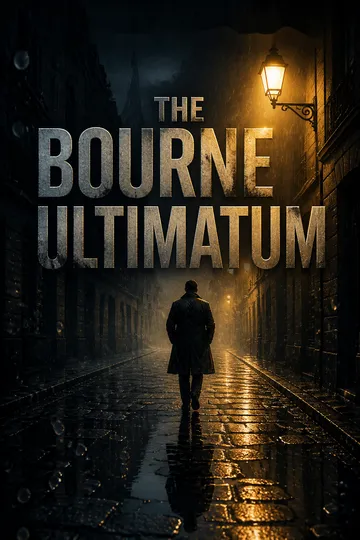
The Bourne Ultimatum received mixed reviews, with some praising its intense action and complex plot, while others criticized its convoluted storyline and unrealistic elements. Many readers found it a satisfying conclusion to the trilogy, appreciating the final confrontation between Bourne and Carlos the Jackal. However, some felt the book was overly long and repetitive. Fans of the series generally enjoyed the character development and intricate espionage details, while newcomers often struggled with the dense narrative and dialogue. Overall, it was seen as a fitting end to Ludlum's original Bourne series.
People Also Read
Characters
David Webb / Jason Bourne
Scholar turned operativeDavid Webb is a professor of Oriental studies whose life was remade by grief, covert training and amnesia. Jason Bourne is the operational identity intelligence agencies built around him, and the distinction between the two remains psychologically active rather than neatly divided. David values family, intellectual work and ordinary routines; Bourne values speed, control and the ability to anticipate violence. Neither identity is wholly false or wholly sufficient. Under threat, he relies on the lethal habits that once helped him survive, while fearing that those habits will consume the husband and father he has become. His struggle is not simply to defeat an enemy, but to keep his capacity for choice after years of being used by institutions.
Marie St. Jacques Webb
Bourne’s steadfast partnerMarie is a Canadian economist, David’s wife and the person who helped restore his life after his memory loss. She is analytical without being emotionally distant, able to read patterns in both financial schemes and her husband’s shifting behavior. Her attachment to David does not make her passive: she travels into danger, recognizes him in a crowd and acts decisively when an assassin threatens him. She understands that Jason Bourne can protect her family, but also sees what that identity costs David. Her central tension is between respecting his choices and refusing to let him disappear into the role of protector. She offers him a shared life, not an exemption from his history.
Alexander Conklin
Bourne’s fieldwise allyConklin is a retired CIA field officer whose instincts, improvisation and personal loyalty repeatedly compensate for the agency’s bureaucratic limits. He has a damaged leg, a history of alcoholism and a deep store of guilt over the operations that shaped Bourne. His friendship with David has survived a past attempt to kill him and the compromises of later missions. Conklin can be abrasive and theatrical, but his humor conceals a serious fear of repeating old mistakes. He understands operational deception while also recognizing that strategy cannot make its human costs disappear. His commitment to Bourne and Marie often conflicts with the CIA’s obligation to protect its own institutional interests.
Morris Panov
The mind’s trusted physicianPanov is David’s psychiatrist and one of the few people who understands how deeply his identities and memories have been damaged. He distrusts fashionable abstractions and prefers direct observation, blunt questions and practical care. His concern for David is personal as well as professional, sharpened by guilt over past judgments that nearly led to disaster. Panov refuses to reduce Bourne to a diagnosis, yet recognizes when the killing identity is overtaking the man he treats. His own courage is not primarily physical; he continues to help even when threatened, drugged or injured. For Marie and Conklin, he is both a friend and a stabilizing witness to the parts of David they cannot always reach.
Carlos the Jackal
Bourne’s obsessive rivalCarlos is an international assassin who treats reputation as a form of survival. His hatred of Bourne began when an intelligence operation challenged his supremacy and disrupted the legend he had built through contract killings. He cultivates couriers, compromised officials and false identities, preferring networks that let him strike without appearing himself. His intelligence is formidable, but ego distorts it: he needs not only to defeat Bourne, but to make the world acknowledge the victory. He can reward loyalty and exploit desperation, yet his relationships remain conditional on usefulness. The tension between his carefully engineered methods and his increasingly personal obsession makes him dangerous even when he appears to be retreating.
Dimitri Krupkin
The KGB’s uneasy allyKrupkin is a Soviet intelligence officer, an old adversary and occasional partner of Conklin. He is multilingual, shrewd and worldly enough to understand that ideology rarely explains every decision made inside an intelligence service. He enjoys money and comfort, yet remains committed to protecting the Soviet Union from threats such as Carlos. His relationship with Conklin is built on mutual knowledge, competition and a grudging respect neither mistakes for friendship without limits. Krupkin is willing to make practical bargains, but he does not forget which side he serves. His presence forces Bourne to work within an alliance where cooperation is real, temporary and always shadowed by political calculation.
John St. Jacques
Marie’s resourceful brotherJohnny is Marie’s younger brother and the energetic owner of Tranquility Inn. He is impulsive, sociable and more capable of violence than his easygoing manner suggests. David trusts him because Johnny has shown he can act decisively when people he loves are threatened, though Marie knows there are parts of her brother’s past she has not fully understood. On the island, his local knowledge, staff and security network become practical defenses for the family. He is protective without being polished, and his loyalty is expressed through action: moving people, arranging transport and refusing to abandon those in his care.
Brendan Prefontaine
The disgraced legal sleuthPrefontaine is a former federal judge who has served prison time for corruption and now survives through intelligence, charm and opportunism. He follows Gates’s money because he expects a profitable lead, but his curiosity uncovers the danger surrounding Marie and her children. His humor is a defense against failure and a way to reclaim the authority he once possessed. Though far from morally spotless, he can recognize when a powerful client has crossed from ordinary exploitation into complicity in murder. He becomes useful because he understands legal procedure and because his appetite for self-preservation can be redirected toward a cause larger than his own comfort.
Jean Pierre Fontaine
The Jackal’s aging courierFontaine is a poor French criminal whose long service to Carlos has supported him and his ailing wife. He is observant, sardonic and accustomed to making moral compromises in exchange for survival. The role of decorated Resistance hero imposed on him contrasts with the shabby reality of his life, but he can perform it convincingly. His attachment to his wife is quiet and deeply rooted, giving him a personal measure against the Jackal’s demands. Fontaine represents the vulnerable people recruited into systems of violence by promises of care, money or belonging, and the uneasy knowledge that survival can still require complicity.
Cactus
The discreet paper-makerCactus is an elderly Washington forger and a trusted friend of Bourne, Panov and Conklin. He uses humor and an unassuming manner to conceal exceptional technical skill and a long history of helping people escape official control. His work gives Bourne aliases and documents without forcing him back into traceable agency channels. Cactus is protective of Marie and the children, and he understands that assistance can carry risks even when freely given. He is not a field operative in the conventional sense, but his intelligence, contacts and loyalty make him part of Bourne’s chosen community rather than a mere supplier.
Peter Holland
The CIA director with limitsHolland is a former combat commander who now directs the CIA. His experience makes him skeptical of tidy strategies and aware that decisions made at a distance can injure the people carrying them out. He respects Conklin’s field judgment and recognizes Bourne’s value, but he must also protect the agency and the country according to his oath. That divided obligation creates friction with Conklin, whose priority is the endangered family. Holland is neither a simple bureaucrat nor a transparent ally; he is a pragmatic official trying to keep a compromised institution functioning without surrendering every moral distinction.
Dominique Lavier
The couture-world informantDominique operates in Paris’s fashion and social circles under the identity once used by her sister. She understands how elite salons can conceal information routes and how appearance protects people from scrutiny. Her relationship with Carlos is shaped by coercion, money and the knowledge that disobedience can be fatal. She is pragmatic rather than sentimental, measuring each alliance by its chance of survival. Bourne’s offer gives her a possible exit, but she remains wary of both him and the institutions surrounding him. Her value lies not in direct access to the Jackal, but in her knowledge of how messages travel through his human network.
General Norman Swayne
The procurement chiefSwayne is a Pentagon procurement official with roots in the old Vietnam-era network. His estate, personal security and ties to former military colleagues reveal the distance between his public position and private history. He is vulnerable to pressure from people who know what he once helped build, but his official rank does not give him control over the larger organization. Swayne represents the institutional bridge between covert wartime operations and the civilian power brokers who inherit their benefits.
Albert Armbruster
Medusa’s uneasy executiveArmbruster chairs the Federal Trade Commission and serves as one of Medusa’s civilian participants. He is wealthy, anxious about exposure and more candid when he believes a threat can be managed. His disclosures reveal that the organization is acquiring companies and pursuing influence abroad, not merely concealing old crimes. He views military partners as increasingly dispensable, exposing the factional tensions within Medusa.
Bryce Ogilvie
Medusa’s legal architectOgilvie is a powerful New York attorney whose expertise helps shield Medusa’s financial operations behind legitimate corporate structures. He is disciplined, ambitious and convinced that his legal sophistication can keep criminal conduct outside the reach of ordinary investigators. His career links the old Saigon network to a modern cartel, illustrating how violence can be converted into respectable paperwork. He is dangerous less because he carries a weapon than because he can make exploitation appear lawful.
Master Sergeant Flannagan
Swayne’s overlooked aideFlannagan is a career soldier who served in Vietnam and later became Swayne’s aide. He understands military hierarchy and knows that enlisted men are often useful to powerful officers only while they remain expendable. His careful observations of the estate’s meetings make him an important source, while his hope of leaving the service reflects a long-built need for safety and control.
Rachel Swayne
The general’s disillusioned wifeRachel is Swayne’s wife, shaped by poverty, coercion and years spent around men who treated her as an accessory to their power. She reads the social arrangements at the estate more clearly than her husband expects, and she has prepared for a life elsewhere. Her bluntness punctures the polished language used by the people around her.
Benjamin
Novgorod’s Americanized trainerBenjamin is a young Soviet trainer raised partly in the United States and shaped by Novgorod’s immersive training system. His education and family history give him a perspective that differs from the older officers who treat the complex as an unquestioned institution. He is initially guarded with Bourne, but his practical intelligence and personal loyalties make him a valuable guide. His presence shows how systems built to simulate other societies can create people whose identities do not fit neatly inside them.
Ishmael
The young island stewardIshmael is a bright young steward at Tranquility Inn, proud of his education and quick to defend the people he serves. His youth and courage make him an easy target for the Jackal’s manipulators, but he is not merely bait: his intelligence helps Bourne use the resort’s paths and routines. He represents the ordinary island life that the assassins treat as expendable.
Plot Devices
The Bourne Identity
A divided operational selfJason Bourne is an identity created by intelligence professionals and hardened through years of covert violence, while David Webb is the scholar and family man who survived the role. Memory loss makes the separation unstable: fragments of each life surface at inconvenient moments, and stress can pull Bourne into command. The device drives both plot and emotion. Bourne’s skills allow him to read traps and survive pursuit, but each successful use risks making the identity feel more permanent. Marie, Panov and Conklin help him recognize the difference between trained reflex and chosen action. The story’s resolution depends not on erasing Bourne’s past, but on refusing to let it dictate every future decision.
Medusa
A hidden criminal inheritanceMedusa begins as a deniable Vietnam-era unit and persists through officials, military contacts, financial institutions and corporate lawyers. The name links Bourne’s past to a present-day network that buys companies, moves money through Europe and uses organized violence when threatened. Ledgers, coded calls, hidden accounts and former colleagues gradually expose its structure. Medusa also provides Bourne with a dangerous lure: its real crimes can frighten its members into approaching Carlos, whose interest in Bourne offers a possible way to end the family’s danger. The organization’s secrecy is not abstract. It survives because different people possess only partial knowledge and because the most powerful participants can make wrongdoing resemble ordinary business.
The Old Men of Paris
A human courier networkCarlos uses elderly criminals as couriers because they attract little suspicion and have families whose futures he can promise to protect. They carry messages through cafés, churches and social contacts, allowing him to keep distance from both clients and investigators. The network is built on reciprocal vulnerability: couriers receive money and security, while the Jackal demands loyalty until death. Bourne recognizes the pattern when messengers appear in Washington and later uses that knowledge to interpret the Paris contacts. The system gives Carlos reach without a visible headquarters, but its human links can still be bribed, frightened or turned when the contract stops protecting those who serve it.
Novgorod
A world built for deceptionNovgorod is a vast Soviet training complex that reproduces streets, cities, military sites and national environments in miniature. Candidates learn languages, behavior and social cues so they can move convincingly through foreign settings. Its tunnels, access cards and layered security become crucial when Bourne follows Carlos inside. The complex also embodies the novel’s concern with manufactured reality: people are trained to perform identities until deception becomes habitual. The danger is not only that a setting can fool an outsider, but that a person can become trapped in the role he has learned to perform. Bourne’s own history makes him especially alert to this danger.
False Death Reports
Cover through controlled misinformationReports that Bourne has died, including a Soviet account tying him to Teagarten’s assassination, manipulate the expectations of both Carlos and the institutions hunting him. The story uses false identities and staged scenes throughout, but the death reports are especially powerful because they exploit Bourne’s public legend. They create room for movement, misdirect observers and later give Marie a clue that David is still alive. Their effectiveness depends on selective truth: the reports borrow real events and recognizable details, then arrange them into a lie credible enough to travel across intelligence services.
FAQ
Synopsis & Basic Details
What is The Bourne Ultimatum about?
- Synopsis: The Bourne Ultimatum follows David Webb, a professor haunted by his past as the assassin Jason Bourne, as he's drawn back into a deadly game when Carlos the Jackal resurfaces, threatening his family and forcing him to confront his dual identity.
- Synopsis: The story explores themes of identity, memory, and the psychological toll of violence, as Bourne uncovers a vast conspiracy linked to a covert operation from the Vietnam War era, known as Medusa.
- Synopsis: Bourne must protect his loved ones while navigating a world of deception and betrayal, ultimately leading to a final confrontation with the Jackal, where he must reconcile his past and present to secure a future for himself and his family.
Why should I read The Bourne Ultimatum?
- Intriguing dual identity: The novel delves into the complex psyche of a man struggling with two distinct identities, offering a compelling exploration of memory, trauma, and the nature of self.
- Suspenseful espionage thriller: Ludlum masterfully crafts a high-stakes narrative filled with twists, turns, and betrayals, keeping readers on the edge of their seats as Bourne navigates a dangerous world of espionage and conspiracy.
- Exploration of moral ambiguity: The story raises thought-provoking questions about morality, justice, and the consequences of violence, challenging readers to consider the complexities of right and wrong in a world of shifting allegiances.
What is the background of The Bourne Ultimatum?
- Vietnam War's Shadow: The novel is deeply rooted in the historical context of the Vietnam War, particularly the clandestine operations and moral ambiguities that characterized the conflict, with Medusa representing the darkest aspects of that era.
- Cold War Espionage: The story draws upon the themes of Cold War espionage, exploring the power struggles, betrayals, and ideological conflicts that defined the era, with Carlos the Jackal embodying the ruthless efficiency of a Cold War assassin.
- Political Corruption: The novel touches upon themes of political corruption and abuse of power, with high-ranking officials implicated in the Medusa conspiracy, highlighting the potential for corruption within government and military institutions.
What are the most memorable quotes in The Bourne Ultimatum?
- "Get away from me, David! Let me be the killer you cannot be!": This quote encapsulates the internal struggle between David Webb's desire for peace and Jason Bourne's capacity for violence, highlighting the psychological conflict at the heart of the story.
- "I've been here before,": This quote, uttered by Webb as he transforms back into Bourne, foreshadows the inevitable return to his violent past and the acceptance of his killer identity.
- "Business is business,": This recurring phrase, spoken by the Jackal's messengers, underscores the cold, calculating nature of the assassin and the dehumanizing effect of his profession.
What writing style, narrative choices, and literary techniques does Robert Ludlum use?
- Fast-paced and action-oriented: Ludlum employs a brisk, cinematic writing style characterized by short, declarative sentences, vivid descriptions, and frequent shifts in perspective, creating a sense of urgency and momentum.
- Complex plot and intricate details: The novel features a labyrinthine plot filled with twists, turns, and red herrings, requiring readers to pay close attention to the intricate details and shifting alliances.
- Extensive use of foreshadowing and suspense: Ludlum masterfully builds suspense through subtle foreshadowing, cliffhangers, and a constant sense of impending danger, keeping readers on the edge of their seats as the story unfolds.
Hidden Details & Subtle Connections
What are some minor details that add significant meaning?
- The ornamental crucifix: The crucifix hanging in the Pontiac LeMans that picks up David at the airport is a subtle symbol of the moral conflict within Bourne, representing the potential for redemption amidst the violence.
- The brand names: The specific brands of weapons and equipment mentioned (Zeiss Ikon, Beretta) add a layer of realism and authenticity, grounding the story in a tangible world of espionage and covert operations.
- The weather patterns: The oppressive heat in Baltimore and the violent storm in Montserrat mirror the escalating tension and chaos in Bourne's life, using the environment to amplify the emotional atmosphere.
What are some subtle foreshadowing and callbacks?
- The "old men of Paris": Bourne's recollection of the Jackal's network of elderly couriers foreshadows the appearance of the aged Oriental messengers at the Smithsonian, creating a thematic echo that connects the past and present.
- The Tam Quan reference: The repeated mention of Tam Quan, the location of the original Jason Bourne's death, serves as a constant reminder of the false identity and the violent origins of the Bourne persona.
- The "Snake Lady" tattoo: The recurring motif of the "Snake Lady" tattoo foreshadows the unveiling of the Medusa conspiracy and the involvement of high-ranking officials, creating a sense of dread and impending doom.
What are some unexpected character connections?
- Cactus and Mo Panov: The revelation that Cactus and Mo Panov are friends adds a layer of intimacy and trust to Bourne's support network, highlighting the importance of loyalty and connection in a world of betrayal.
- Peter Holland and Medusa: The director's past as a SEAL and his animosity towards Medusa adds complexity to his character, suggesting a personal stake in the Bourne case that goes beyond professional duty.
- Randolph Gates and Brendan Prefontaine: The connection between Randolph Gates and Brendan Prefontaine, former student and teacher, reveals a hidden history and a shared past that influences their actions in the present.
Who are the most significant supporting characters?
- Alex Conklin: As Bourne's former handler and confidant, Conklin provides crucial support and guidance, using his intelligence expertise and network of contacts to aid Bourne in his mission.
- Morris Panov: As Bourne's psychiatrist, Panov offers insights into his psychological state and struggles with his dual identity, providing a crucial emotional anchor and moral compass.
- Johnny St. Jacques: As Marie's brother and a skilled protector, Johnny provides crucial support and resources, using his knowledge of the Caribbean and his connections to safeguard Bourne's family.
Psychological, Emotional, & Relational Analysis
What are some unspoken motivations of the characters?
- Alex Conklin's guilt: Conklin is driven by a deep sense of guilt over his past actions and his role in creating Jason Bourne, motivating him to protect David Webb and his family at all costs.
- Marie Webb's fear: Marie is motivated by a profound fear of losing David to his violent past, driving her to take drastic measures to protect him and their children, even if it means defying his wishes.
- Carlos the Jackal's obsession: The Jackal's primary motivation is not simply to eliminate a rival, but to reclaim his lost status and prove his superiority, fueled by a deep-seated insecurity and a need for validation.
What psychological complexities do the characters exhibit?
- Bourne's fractured psyche: Bourne exhibits a complex psychological profile characterized by dissociative identity disorder, PTSD, and a constant struggle to reconcile his two identities, highlighting the long-term effects of trauma and violence.
- The Jackal's narcissistic rage: The Jackal displays a narcissistic personality disorder characterized by grandiosity, a lack of empathy, and a deep-seated rage when his authority is challenged, driving his relentless pursuit of Bourne.
- Conklin's self-destructive tendencies: Conklin's past struggles with alcoholism and his willingness to put himself in harm's way suggest a self-destructive streak, stemming from guilt and a desire for redemption.
What are the major emotional turning points?
- Marie's decision to leave: Marie's decision to leave the island and seek out David in Paris marks a turning point in their relationship, demonstrating her unwavering love and commitment to him, even in the face of extreme danger.
- Bourne's realization of the trap: Bourne's realization that he has been manipulated and that innocent people have been harmed marks a turning point in his mission, fueling his determination to stop the Jackal and expose the Medusa conspiracy.
- Conklin's decision to trust Bourne: Conklin's decision to trust Bourne's instincts and follow his lead, despite the risks, marks a turning point in their relationship, solidifying their bond and highlighting the importance of loyalty and faith.
How do relationship dynamics evolve?
- Bourne and Marie's strained bond: The relationship between Bourne and Marie evolves from a loving partnership to a strained alliance, as the threat of the Jackal forces them to confront the darker aspects of Bourne's past and the sacrifices they must make to survive.
- Conklin and Bourne's unwavering loyalty: The relationship between Conklin and Bourne deepens as they face increasing danger, solidifying their bond of loyalty and trust, even as they grapple with their own demons.
- Bourne and the Jackal's deadly rivalry: The relationship between Bourne and the Jackal evolves from a professional rivalry to a personal vendetta, as their paths converge in a final, deadly confrontation that will determine their fates.
Interpretation & Debate
Which parts of the story remain ambiguous or open-ended?
- The full extent of Medusa's influence: The novel leaves the full extent of Medusa's influence and the identities of all its members ambiguous, suggesting a vast and pervasive network of power and corruption that extends beyond the scope of the story.
- The long-term psychological impact on Bourne: The novel does not fully resolve the psychological impact of Bourne's dual identity and his violent past, leaving open the question of whether he can ever truly escape the shadows of Jason Bourne.
- The future of the world after the Jackal's defeat: The novel does not offer a definitive vision of the future after the Jackal's defeat, leaving open the question of whether the world is truly safer or whether new threats will emerge to take his place.
What are some debatable, controversial scenes or moments in The Bourne Ultimatum?
- Bourne's use of violence: Bourne's reliance on violence, even when it results in collateral damage, raises ethical questions about the justification of his actions and the moral cost of his mission.
- The manipulation of supporting characters: Bourne's manipulation of supporting characters, such as the guards and the local population, raises questions about the ethics of using others as pawns in his deadly game.
- The portrayal of women: The portrayal of women in the novel, particularly Marie and Rachel Swayne, has been criticized for perpetuating certain stereotypes and for not fully developing their agency and autonomy.
The Bourne Ultimatum Ending Explained: How It Ends & What It Means
- The Jackal's death: The Jackal's death, while seemingly definitive, leaves open the possibility that his legacy of violence and corruption will continue to haunt the world, suggesting that the fight against evil is never truly over.
- Bourne's survival: Bourne's survival, despite the physical and psychological toll of his mission, offers a glimmer of hope for redemption and a chance to rebuild his life, but it also raises questions about the long-term consequences of his actions.
- The ambiguous future: The ending leaves the future of Bourne and his family ambiguous, suggesting that they may never be truly safe from the shadows of his past, but also hinting at the possibility of a new beginning and a chance to find peace.
Jason Bourne Series
About the Author
Other books by Robert Ludlum

Download PDF
Download EPUB
.epub digital book format is ideal for reading ebooks on phones, tablets, and e-readers.








