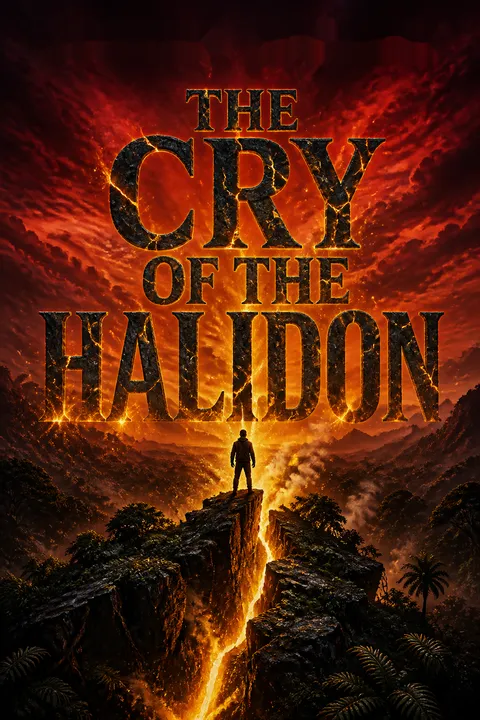


Plot Summary
A Week Without Cancellations
At Trident Villas on Jamaica’s north coast, manager Timothy Durell notices that every reservation for one particular week has held firm for nearly a year. The guests are arriving from several countries, and their oddly coordinated plans make him suspect they know one another.
Meanwhile, American geologist Alexander McAuliff meets Julian Warfield, a guarded financier whose company, Dunstone, wants a secret survey of Jamaica’s Cock Pit country. Warfield offers Alex an extraordinary fee to map the land, explaining that the survey will support a planned city.
Alex accepts because the money promises independence from the academic and corporate systems he abandoned after his fiancée’s murder. He does not yet know that the survey is the opening move in a struggle over Jamaica itself.
Durell’s reservations are the story’s first visible anomaly: a statistical oddity that hints at coordination before anyone can name its purpose. Alex’s contract then turns land measurement into political action. A survey appears neutral because it produces data rather than buildings, yet that data determines where investment can go and who may claim the ground. Alex accepts for a personal reason, freedom from institutions he resents, while Warfield treats his expertise as a lever for a project of national scale. The thriller begins by making professional competence morally unstable: the mapmaker can serve a future he has not been shown.
The Missing First Team
After Warfield’s offer, Alex learns that the previous survey expedition vanished in Jamaica. British Intelligence agent R. C. Hammond explains that Dunstone is more than a development firm: its financiers aim to build economic power strong enough to bend governments, beginning with Jamaica.
British officials suspect influential allies inside several governments, but cannot prove the network’s reach. The first expedition’s fate suggests that Dunstone has a dangerous opponent, one whose identity is unknown.
Hammond wants Alex to locate that opponent and uncover the financiers behind Dunstone, using the new survey as cover. His only lead is the word Halidon, scratched by a dying agent into a piece of equipment. Alex agrees to cooperate, but insists that he will not take orders blindly.
Hammond offers Alex a choice shaped to feel like no choice: cooperate with intelligence or face dangers neither side will acknowledge in public. Alex’s insistence on retaining judgment is a small act of self-definition, but the arrangement already makes him useful to competing powers. The first expedition’s disappearance converts technical fieldwork into a lethal investigation, while the single word left by the dying agent functions as both evidence and an absence. Halidon has no clear referent yet, so every faction can project its own fear onto it. The section establishes the book’s central asymmetry: the powerful know more than Alex, but not enough to control what they have set in motion.
A Team Built on Cover
Alex recruits a small team through the University of London, including dependable soil analyst Sam Tucker, married geologists Peter Jensen and Ruth Wells Jensen, botanist James Ferguson, Jamaican scholar Charles Whitehall, and rock specialist Alison Booth.
Alison’s skill earns her a place, and their growing attraction gives Alex a personal stake in protecting her. Warfield reveals that Alison’s former husband, David Booth, worked as a narcotics courier for French financier Henri Salanne, the Marquis de Chatellerault.
Alison has not explained the danger to Alex, but Warfield approves her inclusion anyway. He also transfers much of Alex’s fee early, then uses the payment to bind him publicly to Dunstone. When Warfield asks what Alex knows about Halidon, Alex understands that both sides are watching him.
The team is assembled as a credible academic unit, but its members arrive carrying private histories that make the cover porous. Alison’s qualifications are real, yet her connection to Chatellerault makes her a possible target and a possible instrument. Alex’s decision to hire her is therefore neither purely professional nor purely romantic, a mixture that makes later secrecy costly. Warfield’s early payment is a form of coercion disguised as generosity: money is not merely compensation but a manufactured record of complicity. In this section, Alex’s wish to remain independent collides with the fact that other people can define his position through contracts, surveillance, and association.
Blood Outside The Owl
At a Soho club, Hammond tries to introduce Alex to black men believed to oppose Dunstone. A coded warning signals that the meeting is compromised. Alex rushes after Hammond, who is dragged into an alley and stabbed; one of the men who had blocked Alex is then killed by a car in a failed attempt to run Alex down. A supposed victim reappears alive and identifies himself as Tallon, exposing the death as a decoy.
Hammond later explains that two captured opponents swallowed cyanide rather than talk, and that the attackers mistook Alex’s arrival for a trap. The attempt to find an ally has instead cost lives and destroyed trust. Hammond tells Alex that withdrawing now would make him suspect to both factions, so Alex continues toward Jamaica.
The Soho encounter turns abstract intelligence work into bodily risk. Alex’s impulse to act is understandable, but it helps trigger the panic that ruins the contact. His first lesson in covert work is therefore not mastery but consequence: observation and timing matter because other people interpret the same movement differently. The false death adds another uncertainty, showing that even the most vivid evidence can be staged. Hammond’s explanation does not repair the damage; it converts danger into obligation by making withdrawal appear more perilous than compliance. Alex’s agency narrows precisely as he becomes more active, a paradox that will recur whenever he tries to protect others through force.
The Luggage Was Rerouted
The team lands in Kingston, where the customs delay separates Alex from his colleagues and someone sends his and Alison’s luggage to their hotel without permission. Alex finds listening devices hidden in his case.
Alison recognizes the danger and finally explains that she helped Interpol gather evidence against David Booth and Chatellerault’s narcotics network. Her former husband learned what she was doing, and she fled England after securing a divorce in Haiti.
Robert Hanley, an old pilot friend, brings worse news: Sam Tucker has disappeared from his Montego Bay hotel. Alex conceals the surveillance devices and Alison’s story from the rest of the team, trying to keep them safe. But the expedition has barely begun, and its cover is already compromised.
The luggage is an intimate breach: surveillance has entered the private space where Alex and Alison might have sought refuge from their public roles. Alison’s disclosure changes the meaning of her presence without invalidating her professional ability. She is neither simply a victim nor an uncomplicated agent; she has made choices under pressure and continues to bear their consequences. Alex’s instinct is to protect her by controlling information, but the secrecy repeats the very structure that has trapped them both. Sam’s disappearance widens the threat from personal surveillance to physical uncertainty, while the team’s ordinary logistics become evidence that someone else is directing their movements.
A Spy at the Airport
Young botanist James Ferguson admits that Arthur Craft’s foundation has offered him money to keep a record of Alex’s contacts in Jamaica. Craft’s men had arranged the luggage transfer, leaving Alex unsure whether the devices were planted by Dunstone or by the foundation.
Ferguson insists he will continue with the survey and report what Craft asks. Meanwhile, Whitehall receives an invitation from Chatellerault, then tells Alex that he belongs to a Jamaican faction preparing to seize power.
Whitehall calls his cause necessary and casts himself as a future ruler, not merely a scholar. Alex discovers that the team includes men pursuing private bargains and competing political projects. He cannot simply fire everyone without weakening the expedition or exposing what he knows.
Ferguson’s insecurity makes him susceptible to a promise of recognition and wealth, while Whitehall’s grievance has hardened into an authoritarian political vision. Their motives differ, but each treats the survey as a route to something larger than its stated purpose. Alex is forced to manage people who are not merely unreliable but ideologically invested in other outcomes. His role as director gives him formal authority without genuine command: he can hire and dismiss, yet he cannot see every allegiance or control the pressures behind them. The section complicates the familiar spy-thriller division between loyal agents and traitors by showing how ambition, resentment, and fear can produce collaboration without a single shared cause.
Tallon’s Fish Counter
Alex follows a green Chevrolet through Kingston and reaches Tallon’s, an exclusive fish shop that conceals a British Intelligence contact, Westmore Tallon. Tallon confirms that Chatellerault is secretly staying in Jamaica and warns that Alison may have been placed on the team as bait.
He also traces the Chevrolet’s registration to Walter Piersall, an American anthropologist recently reported killed in a hit-and-run. Piersall’s two assistants had collected Sam’s belongings, making his disappearance more than a traveler’s eccentric detour.
Before Alex can act, the same network brings Sam back. Tucker explains that Piersall had summoned him after becoming alarmed about a land conspiracy. The men who followed Alex were Piersall’s associates, and they take him to meet their leader, Barak Moore.
Tallon’s shop makes the city’s class hierarchy part of the espionage machinery: elite service conceals a channel into state intelligence. Alex receives facts but not a reliable interpretation, and the revelation that Alison may be bait forces him to question even his desire to protect her. Piersall’s death links the missing man, the surveillance car, and the land dispute, replacing coincidence with a causal chain. Sam’s return restores a trusted relationship, but his account points beyond Alex’s familiar professional world. The story’s geography begins to function like an archive: vehicles, shops, and villages preserve traces of who has moved through them and why.
Two Enemies Share A Table
In a concealed mountain airfield, Alex meets Barak Moore, a revolutionary organizer, and reunites with Sam. Moore and Whitehall despise one another: Moore wants political power shared broadly, while Whitehall plans rule by a disciplined elite.
They nonetheless agree that outside financiers are threatening Jamaica. Piersall had studied the Halidon, a secretive descendant community connected to the Coromanteen people, and believed it could be reached through a coded message. His papers, including a key hidden on his property, may establish the group’s existence.
Alex joins the uneasy alliance because it offers the best chance of finding the killers behind the previous expedition and protecting his team. The survey moves north, with Moore’s people providing guides and security.
The alliance is tactical rather than reconciliatory. Moore and Whitehall recognize a common external threat while retaining incompatible visions of what Jamaica should become afterward. Their willingness to cooperate exposes the political future beneath the espionage plot: removing foreign control will not settle the question of who governs. Alex’s position is equally unstable. He has not adopted either man’s ideology, yet his survey and his search have become resources within their contest. Piersall’s research offers a way forward, but its promise is also dangerous because historical knowledge can summon communities that have survived by remaining unknown.
The Raid At High Hill
After nine days surveying the coast, Alex and his allies raid Piersall’s house at High Hill to recover two sealed archive cases. They distract the guard with animal cries, but the plan collapses when the police arrive. Floyd stays behind to draw fire and is killed.
Alex escapes with one case, while Barak is shot and carried to the coast for clandestine treatment. Whitehall takes the other case for himself. Back at camp, the doctor cannot save Barak, and Lawrence inherits responsibility for Moore’s followers.
Alex recognizes that his decisions have helped bring local fighters into a battle they cannot easily leave. The two cases now divide Piersall’s evidence, and Whitehall’s insistence on controlling his share makes the alliance more fragile.
The raid makes the cost of the alliance immediate and personal. Floyd’s sacrifice buys time, while Barak’s wound transfers authority to Lawrence before the younger man is prepared to hold it. Alex’s anger at the violence cannot undo his own participation in the operation. The archive cases sharpen the conflict between shared purpose and possession: Whitehall’s seizure of one case reflects his belief that knowledge and leadership should remain concentrated. The battle also changes the story’s emotional register. Until now, danger could be treated as a problem of surveillance and negotiation; after the deaths, it becomes a debt carried by survivors who must decide what their losses were for.
Piersall’s Code Opens
Whitehall opens the first archive case and discovers how Piersall traced the Halidon to an Acquaba-led group that refused to help the British recapture escaped slaves. Piersall’s second case contains the meaning of the name: a coded cry made with a wooden instrument, a call of danger and appeal. The coastal survey has meanwhile uncovered rich soil, minerals, and water resources that could support Warfield’s proposed city.
Alex and the team enter the Cock Pit to continue their work, while Whitehall sends a message to the Maroon leader in the code of four. Peter Jensen’s peculiar questions and Ruth’s unease hint at hidden loyalties, and Warfield has directed Peter to watch Alex. Craft also tries to buy Ferguson away from the expedition.
The code transforms a name from a mystery into a practice: Halidon is not just an organization to locate but a signal whose meaning depends on shared history. Piersall’s archival method joins linguistic research to political survival, making scholarship consequential without making it omnipotent. At the same time, the survey’s findings validate Warfield’s ambition. The land is valuable enough to explain why governments, corporations, and local factions are competing over it. Hidden loyalties now appear on every level, from Jensen’s surveillance to Ferguson’s temptation. Alex can no longer separate the scientific work from the coercive uses waiting for its results.
The Wrong Maroon Message
Whitehall’s coded request appears to earn a response from the Maroon leader, but the reply was fabricated by Halidon operatives. Their man has replaced one of the runners and is listening to the team. Peter Jensen, acting for Warfield, tries to shadow Alex, while Ruth keeps watch from the camp.
Ferguson accepts Craft’s offer and attempts to leave, but Halidon scouts intercept him with the messenger. The disguised runner then enters Whitehall’s tent with Lawrence at gunpoint and demands Piersall’s papers.
Alex refuses to reveal where the documents are, so the Halidonite marches him away from camp. A hidden cordon surrounds the surveyors, turning the expedition into hostages and forcing Alex to confront the group he has spent weeks trying to find.
The false Maroon reply demonstrates that Alex and Whitehall have mistaken a sign of recognition for consent. The Halidon controls the encounter because it has watched the outsiders longer than they have watched it. Ferguson’s attempted departure and Jensen’s spying show how the team fractures under pressure, but neither action explains the entire danger; the hidden community is operating on a scale no individual betrayal can account for. Alex’s refusal to disclose the papers becomes his one remaining leverage. His expertise in reading land has brought him to the right place, yet political knowledge and trust remain outside his control.
A Village Behind The Falls
The captured Alex is taken before a Halidon leader who identifies himself as Malcolm, the Jamaican operative who had posed as a priest and once worked inside British Intelligence. Malcolm escorts him through caves and concealed routes to a mountain valley invisible from ordinary flight paths.
There, an orderly settlement reveals that the Halidon is neither an impoverished legend nor a simple guerrilla band. Its residents farm, study, and maintain discreet modern communications.
Minister Daniel confirms that Piersall’s history is accurate and that the group guards a hidden gold deposit. The Halidon has used its wealth to support people suffering famine and displacement, but Daniel warns that exposure would bring outside powers to seize the community and its resources.
The hidden settlement overturns the assumption that isolation means backwardness. Its inhabitants have chosen selective contact, using modern systems without surrendering the secrecy that protects their political autonomy. Malcolm’s former intelligence work further blurs the line between the state and the group it failed to understand. Daniel presents the Halidon as a humanitarian institution, but its secrecy and capacity for violence remain inseparable from its benevolent claims. Alex is asked to evaluate not a simple secret society but an unaccountable power that may do real good. The village’s beauty is therefore also an argument, one that must be tested rather than accepted.
Gold, Power, And Limits
Daniel explains that the Halidon’s wealth comes from a gold vein hidden beneath Jamaica, and that its members are trained to serve the outside world without ruling it. He admits the danger in that arrangement: the Council has no ordinary checks, and its leaders can decide who threatens the community.
Daniel offers the British a list of Dunstone’s international financiers in exchange for ending British operations in Jamaica. Alex learns that Hammond’s supposed multinational partnership has concealed his own service’s plans from its American, French, and German allies.
Back at the survey camp, Halidon agents hold the crew, while Peter Jensen watches for a chance to report to Warfield. Daniel sends Alex toward Montego Bay to carry the offer, warning that Dunstone will target him.
Daniel’s account makes the Halidon’s central contradiction explicit: a community committed to freedom protects itself through secrecy, hierarchy, and lethal threats. Its aid work complicates any easy condemnation, but it does not erase the absence of public accountability. The proposed exchange also reveals that the British are not neutral defenders of Jamaica; they want Dunstone’s names for their own strategic interests. Alex becomes a messenger between powers that distrust one another and each claim a right to decide the island’s future. The section’s moral pressure comes from the fact that no available party is innocent, yet the consequences of their bargains will fall most heavily on people with little say in them.
Four Deaths At Noon
In Montego Bay, Alex waits with Hammond for proof that the Halidon can damage Dunstone. At noon London time, news reports coordinated killings across London, Paris, Berlin, Rome, and the United States.
Four suspected figures in each center have been murdered through a repeated sequence of methods, and Chatellerault is killed in Jamaica. The message demonstrates the Halidon’s reach, but it also exposes Alex and Hammond to Dunstone’s response. A British Intelligence specialist has been compromised, and a Halidon guard in their hotel is murdered.
Alex and Hammond flee through Montego’s streets, killing a pursuer to seize a radio and escape. Malcolm warns that Dunstone has bought half the British Caribbean specialists, then disappears while trying to evade capture.
The synchronized murders serve simultaneously as evidence, threat, and political spectacle. Their fourfold pattern converts Piersall’s historical code into a global announcement, but the method also makes the Halidon’s moral claims harder to accept: its humanitarian mission is defended through assassination. Hammond’s discovery that his own specialists have been bought destroys the institutional trust on which his authority depends. Alex and Hammond escape only by adopting the violence they had been criticizing. Malcolm’s warning leaves the protagonists with no secure chain of command, making trust a personal risk rather than an organizational guarantee.
The Cock Pit Shootout
Daniel intercepts Alex and Hammond at a hidden airstrip and reveals that Dunstone has sent former British agents to destroy the survey team. Though Daniel initially orders his people to withdraw, Alex demands a chance to reach the camp.
He pilots a small plane through a storm and lands near the Cock Pit, where hired gunmen are already searching for the surveyors. Alex kills one attacker on the jungle path, then rejoins Sam, Alison, Lawrence, Whitehall, and a surviving Halidon runner.
Sam, Lawrence, and Whitehall each take a separate route to confront the remaining gunmen. They return alive after killing their opponents, while the runner dies shielding Sam. At the camp, Alex and Alison reunite, and the surviving factions hold together long enough to escape.
The rescue is the point at which Alex stops serving as a courier between other people’s plans and chooses whose lives take priority. His flight is technically precarious, and his jungle encounter shows that competence has grown through exposure rather than mastery. The defense depends on people who remain ideological opponents: Whitehall, Lawrence, and Sam act together without pretending their futures align. The runner’s death extends the book’s pattern of sacrifice, but Alex’s insistence on returning refuses Daniel’s calculus that secrecy may outweigh individual lives. The climax tests whether solidarity can be practiced before political agreement exists.
The Island Stays Jamaican
After escaping the Cock Pit, the survivors reach Trident Villas, where Sam and Robert Hanley decide to enter a business partnership. Hammond and Daniel meet Alex and Alison with confirmation that two million dollars has been deposited in Alex’s account.
They report that Dunstone’s hierarchy has been exposed to cooperating governments and that the development scheme is being dismantled. Peter Jensen escaped the Halidon’s watch, but when Warfield ordered him to kill Alex, he could not obey and killed Warfield instead.
Peter and Ruth leave Jamaica under new identities. Piersall’s murder is traced to local land interests, while Malcolm remains missing. Alex and Alison choose a life together, believing they can finally leave intelligence services and corporate patrons behind.
The settlement is deliberately partial. Dunstone loses its immediate project, but Jamaica does not emerge from conflict into a clean political order: Whitehall and Lawrence still represent rival domestic futures, and the Halidon remains powerful and secret. Alex receives the money that first drew him into the survey, yet its meaning has changed. It is no longer simply the price of independence; it is compensation from institutions he has learned to distrust. His choice with Alison offers intimacy rather than certainty. The ending suggests that freedom is not the absence of entanglement, but the chance to decide which obligations one accepts and which powers one refuses.
Analysis
The novel makes land the material beneath every argument. Alex arrives as a geologist, trained to describe what a place can support, but his measurements become the foundation for a project that could turn Jamaica into an instrument of international finance. The survey’s apparent neutrality is therefore a political disguise: knowledge does not determine how it will be used, but it makes certain uses possible.
The competing organizations all claim protective motives. Dunstone promises development, British Intelligence promises security, and the Halidon claims to preserve Jamaican autonomy while quietly distributing aid. Each also relies on secrecy, surveillance, coercion, or violence. The book does not equate their aims, but it refuses to let good intentions erase the structures of power behind them. Daniel’s community may relieve suffering, yet its council remains beyond ordinary checks; Hammond may warn Alex accurately, yet he manipulates him; Alex may defend the surveyors, yet his secrecy repeatedly denies them the chance to choose their own risks.
That conflict gives the novel its psychological movement. Alex begins by treating independence as something money can purchase. His growing attachment to Alison, his loyalty to Sam, and his insistence on returning for the endangered team teach him that freedom is not solitary escape. It requires responsibility, but responsibility can become another form of control if it excludes the people one claims to protect. The final choice is less a victory over power than a refusal to keep serving it. Alex and Alison leave with money and each other, while Jamaica’s political struggle continues. The ending grants them personal freedom without pretending that the island’s future has been settled.
Review Summary
The Cry of the Halidon receives mixed reviews, with an average rating of 3.78 out of 5. Some readers praise Ludlum's suspenseful writing and complex plot, while others find it confusing and dated. The story, set in Jamaica, involves corporate greed, intelligence agencies, and mysterious groups. Critics appreciate the vivid descriptions but note the book's slow pace and far-fetched elements. Many consider it one of Ludlum's weaker works, recommending other titles for newcomers to the author.
People Also Read

Characters
Alexander McAuliff
Reluctant field directorAn American geologist who left university life and corporate firms to work independently, Alex values competence, autonomy, and money as a way to protect both. His past includes military service and the death of his fiancée, experiences that make him alert to danger but uneasy with institutions that claim authority over him. He is practical rather than ideological, and initially assumes a well-run survey can remain separate from politics. His growing attachment to Alison sharpens his protective instincts, sometimes leading him to withhold information from people he wants to keep safe. Alex’s defining tension is between self-reliance and responsibility: he resists being commanded, yet repeatedly chooses to act for people whose safety has become his concern.
Alison Booth
Geologist with a pastA gifted rock-strata specialist, Alison is disciplined, perceptive, and guarded by a dry humor that allows her to meet scrutiny without surrendering privacy. Her failed marriage left her wary of anyone who turns personal vulnerability into leverage. She has experience navigating the hidden pressures surrounding her former husband’s work, which gives her practical instincts that surprise Alex. Their attraction develops through mutual competence as much as desire: Alison respects intelligence, but she resists being treated as someone who must be protected rather than consulted. She wants to return to professional life on her own terms and to escape the machinery of surveillance that has made ordinary choices feel conditional.
R. C. Hammond
British intelligence handlerA precise, experienced British Intelligence officer, Hammond treats security as a discipline and people as pieces that must be positioned carefully. He recruits Alex because the geologist can enter Jamaica under a credible professional cover, then trains him to observe, communicate, and manage danger. His calm manner disguises an authoritarian confidence in his own judgment. Hammond believes that intelligence work requires secrecy and manipulation, even when those methods damage the people expected to cooperate. His relationship with Alex is a constant contest between instruction and resistance. He is neither a simple ally nor a simple enemy, but an official whose loyalties to the service repeatedly complicate his personal decency.
Charles Whitehall
Scholar with a throne in mindA celebrated Jamaican scholar of Caribbean history, Whitehall is elegant, observant, and acutely conscious of the recognition denied him at home. He combines deep knowledge of the island’s cultures with a rigid political vision that makes him believe a disciplined elite should govern. His wit and professional skill can make him an effective ally, but his pride often turns cooperation into a contest over authority. Whitehall wants Jamaica protected from foreign exploitation, yet he does not trust popular power to produce the order he desires. Alex respects his intelligence while remaining suspicious of his ambitions, and their disagreements reveal how shared opposition to outsiders can conceal radically different political ends.
Barak Moore
Revolutionary organizerA forceful Jamaican organizer, Barak wants the island’s resources and political future returned to its people rather than captured by foreign capital or a narrow ruling class. He is blunt, strategically capable, and willing to work beside Whitehall when a more immediate threat demands it, though he has no illusions about their differences. His authority comes from both conviction and the loyalty of the people around him. Barak’s view of political change is more openly popular than Whitehall’s, and he treats resistance as a practical necessity rather than an academic argument. Alex is drawn to his clarity but remains alert to the violence that can accompany his methods.
Daniel
Hidden community’s ministerDaniel leads the Halidon’s council from a concealed Jamaican mountain community. He is composed, articulate, and accustomed to making decisions whose consequences remain invisible to outsiders. He describes the Halidon as a guardian of Jamaican autonomy and presents its resources as a means of aiding people in crisis. Yet his authority rests on secrecy and an unusually concentrated power, which makes his benevolence difficult to separate from coercion. Daniel respects the limits of what can safely be revealed, and he is prepared to threaten Alex when the community’s survival appears at stake. Their exchanges force Alex to confront the question of whether good intentions can justify unaccountable control.
Sam Tucker
Alex’s trusted field allyA veteran soil analyst and Alex’s longtime friend, Sam is broad-minded, resourceful, and at ease among people far removed from his own background. His wandering habits reflect genuine curiosity rather than professional ambition, and he values loyalty more than a polished chain of command. Sam understands that fieldwork depends on practical judgment, improvisation, and trust built over years. He challenges Alex when secrecy crosses into unfairness, but he does not abandon him when the danger becomes real. His search for a place to belong runs quietly beneath his rugged confidence, giving his loyalty an emotional depth beyond simple friendship.
Julian Warfield
Architect of DunstoneA small, exacting international financier, Warfield believes capital can accomplish what governments cannot, and he is willing to reshape institutions to prove it. His courtesy is a tool as much as a temperament: he studies people closely, anticipates their weaknesses, and makes coercion look like opportunity. He offers Alex money and professional independence while quietly making refusal more dangerous. Warfield’s confidence comes from networks of influence that stretch beyond any one country, yet his ambition depends on keeping those networks concealed. To Alex, he embodies the seductive promise of freedom purchased through complicity.
James Ferguson
Ambitious botanistA talented young botanist, Ferguson is impatient with institutions that undervalue his work and easily tempted by the prospect of recognition and wealth. His discovery potential in Jamaican plant fibers has already brought him into conflict with powerful funders. He is quick-witted but inexperienced at managing the consequences of his own bargains, often disguising uncertainty with banter or an act of drunkenness. Alex sees his professional ability clearly, even when Ferguson’s loyalties are unsettled. He represents the vulnerability of a gifted person who has learned to measure respect by the price someone is willing to pay.
Peter Jensen
Veteran mineralogistAn accomplished ore specialist, Peter is sociable, observant, and accustomed to working in the company of his wife, Ruth. His easy humor can make him seem harmless, while his years of fieldwork have taught him how to read people and terrain. Peter values the security and professional life he and Ruth have built together, and he is grateful to the powerful patron who once helped them. His loyalty is therefore shaped by both affection and obligation. Beneath the genial manner is a man who knows that past choices can return as present demands.
Ruth Wells Jensen
Paleontologist and partnerA capable paleontologist and Peter’s wife, Ruth is sharp, warm, and more politically alert than her casual manner suggests. She has built a professional life with her husband and understands the practical compromises that have kept them secure. Her observations often carry more caution than Peter’s, though she remains deeply attached to him. On the expedition she contributes real scientific work while navigating the uneasy boundaries between marriage, loyalty, and professional independence. Ruth’s humor helps preserve normality, but it cannot conceal how much she understands about the forces gathering around the team.
Robert Hanley
Caribbean bush pilotAn experienced pilot with decades of Caribbean flying behind him, Hanley is sturdy, sociable, and fiercely protective of old friends. He understands the island’s informal networks and can move people between places that official routes do not serve. His practical instincts make him valuable in a crisis, while his warmth keeps him from becoming merely a hired operator. Hanley is especially close to Sam Tucker, whose unpredictable travels test his patience but never erase his loyalty. He approaches danger as a problem to be handled directly, often with less ceremony than the intelligence professionals around him.
Westmore Tallon
Kingston fish merchantAn elderly Kingston businessman, Tallon runs an unusually refined fish shop and moves comfortably among the island’s wealthy customers. He is watchful, self-possessed, and accustomed to protecting information through carefully controlled access. Alex approaches him through a coded request, discovering a man whose commercial respectability conceals a broader concern for Jamaica’s security. Tallon’s formal manners can shade into arrogance, and he is not easily impressed by outsiders who believe they have solved the island’s mysteries. His advice gives Alex a local point of contact, but never the full picture.
Malcolm
Jamaican guide and operativeKnown to Alex under a simple name, Malcolm is a disciplined Jamaican operative with a gift for moving between worlds. He understands British intelligence methods, local politics, and the concealed routes through the Cock Pit. His clipped manner reflects training, but his decisions reveal a personal commitment to the community he serves. Malcolm is more than a guide: he is a bridge between institutional espionage and the Halidon’s own system of protection. His knowledge makes him useful to several sides, while his loyalties remain difficult for outsiders to classify.
Walter Piersall
Anthropologist of the Cock PitAn American anthropologist settled in Jamaica, Piersall studied the island’s first peoples and the history of the Maroon communities. His work joined patient archival research to a growing concern about who controlled Jamaican land. Piersall was not content to leave a troubling rumor untested; he sought evidence in government records, historical documents, and local accounts. His interest in the island deepened into a personal commitment, making him both a scholar and an advocate. The papers he left behind guide the living characters toward a history that powerful interests would prefer to keep obscure.
Arthur Craft Junior
Foundation heirThe younger Craft controls a wealthy Jamaican foundation and treats scientific work as a potential source of commercial advantage. He is impatient, manipulative, and quick to recruit people whose discoveries could strengthen his interests. His attention to Ferguson’s botanical research shows how easily academic labor can be redirected by money.
Lawrence
Revolutionary field guardA physically imposing young Jamaican, Lawrence begins as a quiet member of Barak Moore’s circle and becomes increasingly responsible as events test the group. He is protective, practical, and more emotionally transparent than the senior political figures around him. Lawrence’s strength is matched by a capacity to learn quickly, though inherited authority does not immediately make him confident. His relationship with Alex is built through shared danger and a growing reliance neither man expected.
Timothy Durell
Trident Villas managerThe young English manager of Trident Villas, Durell is proud of his efficiency and alert to irregularities in the resort’s operation. His concern about the strangely stable guest reservations provides the first hint that the week’s arrivals have been arranged for reasons beyond tourism.
Plot Devices
The Academic Survey
Cover for land acquisitionDunstone disguises its interest in Jamaica’s Cock Pit country as a scholarly project funded through the Royal Historical Society, the University of London, and the Jamaican Ministry of Education. The cover lets Alex hire qualified specialists, obtain permits, transport equipment, and enter disputed territory without announcing the intended development. It also makes the survey’s findings valuable to rival interests: measurements of soil, water, minerals, and terrain can guide a future city and attract investment. The device exposes how administrative legitimacy can be manufactured through respectable institutions, while the scientists doing genuine work may not know what their findings will enable.
The Halidon Cry
A historical summonsPiersall’s research traces Halidon to a coded sound rooted in Coromanteen history. The name refers to a wooden instrument whose low cry signals danger and appeals to a council of gods. Knowing the sound’s meaning gives outsiders a way to establish that they understand the community’s history, but it does not automatically grant access or trust. Whitehall uses the code in a message to the Maroon leader, while Halidon operatives exploit the resulting expectation to approach the survey team. The signal is at once a key, a cultural inheritance, and a test of whether the outsiders understand more than the name.
Listening Devices
Surveillance inside the surveyTiny transmitters hidden in Alex’s luggage allow an unseen watcher to hear conversations from the team’s hotel rooms. Alex detects the devices with a scanner supplied during his intelligence training, then leaves them in place and moves them into the hotel kitchen, where routine staff talk will confuse anyone listening. The devices embody the novel’s collapse of private and public life: even a suitcase becomes an entry point for a rival organization. Their discovery trains Alex to treat ordinary objects and hotel routines as possible parts of an intelligence operation.
Piersall’s Archive Cases
Evidence split between two boxesPiersall hides two sealed archive cases on his property. The first contains his historical research into the Acquaba people and the clues that point toward their descendants; the second contains the coded meaning that identifies how to summon the Halidon. Splitting the evidence prevents one discovery from immediately revealing the whole secret. Whitehall secures one case while Alex carries the other, forcing the uneasy allies to depend on each other’s findings. The cases turn archival scholarship into a physical object of pursuit and make the question of who controls knowledge as important as what the documents say.
The Fourfold Broadcast
Proof through synchronized killingsAt noon London time, news reports coordinated killings of suspected Dunstone figures in several world capitals and the United States. Four victims and four repeated methods create a pattern linked to the historical code of four and demonstrate that the Halidon can reach far beyond Jamaica. The killings make the community’s threat credible enough to force British Intelligence to negotiate, while their brutality complicates the Halidon’s humanitarian self-image. Their function is political as well as dramatic: the broadcast converts a hidden conflict into a public crisis that governments cannot ignore.
About the Author
Other books by Robert Ludlum

Download PDF
Download EPUB
.epub digital book format is ideal for reading ebooks on phones, tablets, and e-readers.








