

Plot Summary
Prologue
In a Russian prison, Leonid Arkadin kills contract murderer Borya Maks and delivers proof of the killing to Pyotr Zilber, who wants revenge for his brother’s death. Pyotr then hires Arkadin to kill Semion Icoupov, a powerful rival living in Switzerland. Instead, Arkadin brings Pyotr to Icoupov, who interrogates him about a stolen document.
Pyotr uses hidden cyanide to kill himself before revealing the full route the document has taken. Icoupov sends Arkadin to Sevastopol to recover it and shut down the courier network. The stolen plans belong to a major American target, and the attack they are meant to enable is only weeks away.
The opening introduces two men whose loyalties are difficult to read. Arkadin can perform a contract with clinical precision, yet his decision to deliver Pyotr to Icoupov suggests that his work is governed by allegiances hidden beneath the professional surface. Pyotr’s death turns a private vendetta into an international emergency, while the document gives that emergency a physical form that can be stolen, passed along, or lost. The prison setting makes violence seem almost routine, but the looming attack enlarges its consequences: the same habits of secrecy and retaliation now threaten lives far beyond the men who began the conflict.
The Classroom Door Opens
At Georgetown, Jason Bourne is trying to live as David Webb, a linguistics professor separated from the dangerous work that cost him his wife and friends. Moira Trevor, an executive at NextGen Energy Solutions, asks him to secure the company’s new LNG terminal in Long Beach. He hesitates, determined to give his quieter identity a chance.
His mentor, Professor Dominic Specter, then summons him to breakfast. When two men seize Specter outside the diner, Bourne tears after their Cadillac, climbs onto its trunk, and fights his way inside. He kills the abductors and saves Specter from the runaway car. The rescue makes clear that the skills Bourne hoped to leave behind remain necessary, and Specter admits he has a dangerous story to tell.
Bourne’s return to action begins as a failure of separation. He has not erased Jason Bourne by teaching linguistics; he has only arranged his days so the other self can remain out of sight. Specter’s abduction forces the two identities into the same scene, and Bourne’s physical response is immediate, practiced, and effective. Moira’s offer matters because it presents an alternative route back into danger, one framed as protective corporate work rather than covert violence. The contrast exposes Bourne’s central difficulty: he wants a life defined by care and routine, yet his strongest capacity is the one that repeatedly pulls him into emergencies.
A Legion Beneath the Lectern
At Specter’s secluded Virginia estate, Bourne learns that his professor has spent years hunting the Black Legion, a clandestine terrorist organization descended from Muslim units recruited by the Nazis.
Specter says the group is now hidden behind the respectable Eastern Brotherhood and is preparing an attack on a major American structure. His estranged son, Pyotr Zilber, stole the plans and was killed before he could deliver them. The man sent to retrieve them is Leonid Arkadin, the same assassin who killed Maks.
Specter asks Bourne to find Arkadin, recover the plans, and stop the attack. Meanwhile, newly appointed CIA director Veronica Hart resists Defense Department official Luther LaValle’s attempt to take over the agency. Bourne accepts Specter’s mission, leaving his refuge behind.
Specter’s revelation turns an academic mentor into a man whose private grief has become an intelligence operation. His wife’s murder explains his persistence, but it does not yet make his judgments trustworthy; he offers Bourne a mission before disclosing the full history behind it. The Black Legion’s respectable public face also complicates the usual distinction between visible institution and hidden threat. At the same time, Hart’s conflict with LaValle shows that the danger is not confined to foreign networks. The agencies meant to protect the country are competing for authority, creating vulnerabilities that the story’s adversaries can exploit.
The Zoo's False Ally
Bourne discovers that Moira is being followed and finds Soraya Moore, the new director of Typhon, watching her under orders from Hart. Soraya explains that altered communications between Moira and the late Martin Lindros raised suspicion that Moira had received classified information.
Bourne refuses to accept the accusation without proof. At the National Zoo, he questions Mikhail Tarkanian, an old associate of Specter’s, and realizes Tarkanian has arranged the attempt on Specter’s life. Armed men close in, and Tarkanian tries to escape with them.
Bourne fights through the reptile house, using a python and a venomous viper to stop the gunmen, then corners Tarkanian at the hospital. Tarkanian’s attack leaves Bourne no safe option; he dies in the struggle, giving Bourne a lead toward Moscow.
The zoo episode makes Bourne’s judgment more complicated than the agency’s suspicion of him allows. He does not accept institutional accusations at face value, but he also does not confuse personal loyalty with innocence: Tarkanian’s friendship with Specter cannot protect him once his actions are exposed. The animals sharpen the scene’s moral pressure. Bourne survives by reading behavior and controlling danger, while the snakes turn the human pursuers’ assumptions against them. Tarkanian’s death is consequential rather than triumphant. It closes one channel of inquiry, increases Bourne’s isolation, and sends him toward Moscow with a compromised understanding of the people he is trying to help.
The Freer Becomes a Trap
Bourne meets Hart and Soraya outside the Freer Gallery to inspect the Lindros communications. He takes the file, then discovers that armed NSA agents are waiting to capture him. He triggers the gallery’s fire alarm, escapes through the crowded Metro, and evades an agent using a dart gun.
On the flight to Munich with Moira, he examines the papers and learns the communications were part of a sting operation Martin arranged to expose a rival energy company’s corporate espionage. Moira had not been betraying Martin.
Bourne’s relief comes with an uncomfortable realization: he had been ready to distrust her because intimacy makes him feel exposed. He later leaves her in Munich and continues toward Moscow, where Specter’s network has arranged a contact and a false identity.
The file resolves a factual question but not the emotional one that produced it. Bourne’s suspicion of Moira grew from evidence, yet it was also shaped by bereavement and the fear that love can be used as leverage. Discovering the sting clears her name while exposing how quickly he converts uncertainty into self-protection. The Freer escape also reveals the political stakes surrounding his work: LaValle’s men want to capture him not only as an operative but as proof that the Pentagon can outperform the CIA. Bourne’s choices are therefore shaped by two kinds of pressure, one intimate and one institutional, each making trust costly.
Devra Knows the Route
In Sevastopol, Arkadin searches for the next link in Pyotr’s courier chain. He finds Oleg Shumenko at a winery, kills him in a fight, and discovers an IOU bearing the name Devra. At a nightclub, Devra admits that she moved sealed packages for Pyotr, though she hides that she is the network’s real courier. When Pyotr’s former associates pursue them, she helps Arkadin escape across rooftops and shoots a man threatening them.
Her reasons are personal: Pyotr’s circle exploited her, and she wants out. Arkadin deduces that Devra carried the document onward and forces her to reveal its destination, Eskisehir in Turkey. They travel there together, where she leads him toward Haydar, the next courier, and the plans’ route toward Munich.
Devra’s cooperation begins in coercion and develops through shared danger, so neither character can safely treat it as uncomplicated trust. Arkadin recognizes the network’s compartmentalized structure, but his methods remain shaped by force; Devra’s information is extracted from a person who has spent years learning how little protection truth offers. Her decision to help is not allegiance to Arkadin so much as rejection of the men who controlled her. The courier chain gives this relationship a practical purpose, while the increasingly personal risks begin to blur the boundary between tool and companion. That blur will matter because Arkadin has built his life around keeping attachment at a distance.
The Courier's Blueprints
In Eskisehir, Arkadin and Devra arrange an ambush for Haydar, who is carrying the package to another courier. Arkadin crashes his car into Haydar’s vehicle, but Devra turns on Arkadin during the confusion, stabbing him while he stages his own death. Once Haydar believes Arkadin is gone, Devra kills him and learns that he has already passed the package to Heinrich.
The pair race to Istanbul, find Heinrich at the beach, and Arkadin takes the sealed cylinder after killing him. The plans are now in his hands. Yet his mission has not made Devra disposable: she stays beside him, helps him through his dislocated shoulder, and follows him onward to Munich. Arkadin begins to want her presence, a feeling he cannot easily reconcile with his history.
The courier operation is built on staged appearances: Arkadin pretends to die, Devra pretends to betray him, and both use the other’s misreading to reach Haydar. Their effectiveness depends on performance, but performance has become a survival skill rather than mere deception. The package’s recovery gives Arkadin the tangible success Icoupov expects, while his growing attachment to Devra threatens the emotional discipline that has kept him functional. The story makes that conflict bodily. A damaged shoulder must be reset, a long journey shared, and care accepted from someone he cannot fully control. His capacity to want is beginning to compete with his capacity to kill.
Moscow Takes Its Price
Bourne reaches Moscow with Lev Baronov, Specter’s local contact, but finds himself watched almost immediately. At Mikhail Tarkanian’s apartment, a Kazanskaya enforcer attacks him with a knife; Bourne defeats him and finds signs that Pyotr’s girlfriend, Gala Nematova, had been living there. When Bourne returns to the car, Baronov has been strangled by an NSA operative.
Bourne escapes the attacker, then tracks Gala to a nightclub and rescues her from men sent to seize her. He takes her to a hotel, where Anthony Prowess, another NSA agent, disguises himself as room service and attacks. Bourne kills Prowess, but Gala hears him tell Boris Karpov that he killed Tarkanian. She now knows that Arkadin’s closest friend died by Bourne’s hand.
Moscow strips away the idea that Bourne can rely on a clean division between allies and enemies. Baronov is killed for helping him, a local criminal attacks him in a friend’s apartment, and the NSA pursues him with a patience that turns ordinary spaces into traps. Gala becomes both a source of information and a witness to the cost of Bourne’s work. Her discovery that he killed Tarkanian plants the same grievance in her that will later animate Arkadin. Bourne continues to protect people, but each rescue leaves someone else with a reason to hate him. The city makes his competence useful while making his isolation sharper.
Maslov Names the Enemy
Gala tells Bourne that Arkadin is protecting her and gives him Arkadin’s full name. Bourne persuades Ivan Volkin, an underworld historian, to arrange a meeting with Kazanskaya leader Dimitri Maslov. Maslov confirms that Pyotr was not merely a reckless courier: he belonged to the Black Legion and wanted to use his information network to move the Kazanskaya’s drugs.
Maslov explains that Pyotr hired Arkadin to kill Maks in prison, then sought to turn Arkadin against Icoupov. Bourne offers Maslov evidence that can help him defeat a rival criminal family, gaining access to the money Specter’s people left in a bank. When officials and NSA agents close in, Bourne escapes the bank and kills Harris Low, the operative who has been tracking him.
Maslov’s account changes the meaning of Pyotr’s network without making it less dangerous. The same courier system served counterterrorist intelligence and criminal logistics, and Pyotr’s personal appetites did not prevent him from becoming a consequential operator. Bourne must bargain with a crime boss to pursue a terrorist threat, accepting that morally compromised allies may still hold necessary information. The bank escape shows the material consequences of that bargain: money offers mobility, but retrieving it exposes Bourne to police and NSA surveillance. In Moscow, information is never free. It arrives attached to competing interests, and every useful fact makes another person’s power stronger.
A Life Made in Hell
As Arkadin and Devra travel toward Munich, memories reveal how he became an assassin. Raised in brutal Nizhny Tagil, he entered a partnership with crime boss Stas Kuzin, first leasing buildings for brothels and then recruiting girls for them. Arkadin grew close to Yelena, one of the trafficked women, and promised to protect her.
When Kuzin murdered her and buried her in a quicklime pit, Arkadin retaliated, freed the remaining girls, and left the city. Later, Semion Icoupov found him near suicide and offered him a place in his organization. Arkadin’s violent past helps explain why Devra’s loyalty unsettles him. He begins to see her not as another courier, but as someone whose safety matters to him.
Arkadin’s memories reveal that his violence is not simply a professional talent. It is also a response to a childhood in which dependency and helplessness were dangerous, and to the later discovery that his own money and efficiency helped sustain exploitation. His revenge against Kuzin is an act of moral recognition, but it cannot undo his participation or return Yelena. That distinction explains why he remains haunted even after leaving Nizhny Tagil. Devra threatens his defenses because she invites a form of care that is not transactional. His past does not excuse his brutality; it shows why he has mistaken emotional numbness for control.
The Dead Man's Museum
In Munich, Bourne meets Egon Kirsch, a nervous artist who serves as Specter’s final courier. Kirsch gives him access to his apartment, but a museum guard, Petra Eichen, shoots Kirsch before Bourne can protect him. Bourne follows Petra through a construction site and escapes the police with her.
She admits she was hired by a young man called Spangler Wald, then takes Bourne to Dachau, where she knows Virgil Pelz, an old Nazi hunter living in the town’s air-raid bunker. Pelz explains how the Black Legion survived the war by trading intelligence to Western agencies. He recognizes Specter in a photograph as Asher Sever, a former leader of the organization, making Bourne question the identity and loyalties of the mentor who recruited him.
Petra’s involvement turns the Munich investigation toward the afterlife of history. She accepts money to kill Kirsch, then guides Bourne into a place whose public memorial cannot contain the private shame she feels about Dachau. Pelz offers knowledge from a previous generation, but his isolation also shows the cost of speaking against intelligence alliances when they become politically useful. His identification of Specter destabilizes Bourne’s mission at its source. If the mentor who framed the danger is also part of the danger, Bourne can no longer treat the story as a straightforward rescue operation. The museum’s ancient figures and Dachau’s ruined remains become rival archives of what institutions preserve and conceal.
The Mentor's Other Face
At Kirsch’s apartment, Bourne finds a tracking device hidden in his passport and realizes someone has been following him electronically. Semion Icoupov arrives before Arkadin does and hands Bourne architectural plans for the Empire State Building, claiming the Black Legion intends to attack it within hours.
Arkadin breaks in, demanding revenge for Tarkanian, and fights Bourne through Kirsch’s apartment and a concealed mannequin studio. Devra tries to protect Arkadin, but Icoupov shoots her when the confrontation turns against him. She wounds Icoupov before dying in Arkadin’s arms. Bourne escapes the building. Icoupov also gets away, while Arkadin is left with a fresh loss and an intensified need to kill Bourne.
The confrontation compresses the novel’s competing forms of loyalty into one apartment. Icoupov offers Bourne evidence that appears to confirm Specter’s warning, while Arkadin treats the fight as personal justice for Tarkanian. Devra’s death makes the cost of those claims explicit: the men’s histories and plans are carried forward through other people’s bodies. Bourne’s escape depends on using Kirsch’s hidden studio, a space where art’s human forms become practical cover. Yet the fight does not settle who is telling the truth. The plans appear decisive, but the relationships around them remain contradictory, keeping Bourne trapped between evidence, affection, and the possibility that both have been manipulated.
Two Traps Close
In Virginia, Soraya and Tyrone Elkins try to document illegal torture inside LaValle’s NSA safe house. Deron’s partner Kiki writes a short-lived program to blind its cameras, but Tyrone is caught with the evidence and tortured.
Soraya is pressured to trade Bourne for his freedom. Meanwhile, Rob Batt regrets joining LaValle and gives Soraya photographs linking General Kendall and Rodney Feir to the conspiracy. Willard, an embedded CI agent, retrieves Tyrone’s camera and sends its images to Hart.
In Munich, Bourne recognizes Soraya’s coded warning when a supposed meeting invite repeats a phrase they used in Odessa. He reaches Moira before NSA agents can seize them. Hart arrives with marshals, exposes LaValle’s torture rooms, and frees Tyrone.
The parallel traps show how surveillance changes both the practical and emotional meaning of trust. Soraya’s operation depends on people who can move through systems unnoticed, but her decision to involve Tyrone places someone she cares about in a coercive machine. Her guilt threatens to narrow her choices until Batt’s evidence and Willard’s quiet intervention restore room to act. Bourne’s recognition of the coded warning similarly depends on memory, the very faculty he fears he has lost. The rescue is achieved not by one heroic agent but through linked acts of dissent: Batt changes sides, Willard risks exposure, and Hart uses lawful authority against LaValle’s lawless system.
Long Beach, Not Manhattan
Moira tells Bourne that an engineer, Arthur Hauser, warned her of a security flaw in the LNG terminal’s coupling software. Bourne sees that the Empire State Building plans may be a decoy: a terrorist cell could more easily exploit the flaw and crash the incoming tanker into the Long Beach terminal.
At the airport, Moira reveals that she works for Black River, the security firm that withdrew from the project, and refuses to leave NextGen’s security exposed. Noah Petersen tries to stop her from boarding. Nearby, Arkadin kills Icoupov’s driver, shoots Icoupov and Specter, and sneaks aboard the cargo plane carrying the terminal equipment. Bourne finds the wounded Specter, takes him onto the plane, and departs with Moira for California.
The true target emerges when Bourne stops treating the architectural plans as self-explanatory and connects them to Moira’s technical warning. A dramatic, recognizable building has drawn attention away from a less visible vulnerability in industrial software. The revelation also exposes how private security decisions can create public danger: Black River’s withdrawal leaves Moira to choose between obedience to her employer and responsibility for the terminal. At the airport, personal vendettas collide with that larger threat. Arkadin’s killing of Icoupov and attack on Specter are not simply a final settling of old debts; they threaten to leave the only people who understand the plan unable to stop it.
The Tanker at the Brink
Moira and Bourne reach the LNG tanker by helicopter as it nears Long Beach, carrying a vast cargo of supercooled gas. Bourne spots Arkadin clinging to the aircraft and orders the pilot to skim the tanker’s containers.
Arkadin jumps aboard; Bourne follows, and the two search the crew for the Black Legion emblem. They find the engineer in the engine room attempting to activate a laptop program, but the explosive-looking box he guards is a dummy.
Moira discovers the ship’s doctor working at a computer and kills him before he can activate the actual software. With the dangerous program still inactive, the captain slows the tanker and the terminal remains intact. Arkadin attacks Bourne on deck, but Bourne throws him over the railing into the sea.
The climax makes the threat less spectacular than the false target but more materially intimate. The weapon is not a bomb planted in a landmark; it is software that could turn a carefully managed transfer into a catastrophe. The dummy device distracts the hunters from the real mechanism, while the doctor’s access to the computer makes technical expertise as dangerous as armed force. Bourne and Arkadin briefly cooperate because stopping the attack serves both their purposes, though their shared resemblance does not dissolve their conflict. The tanker’s slow approach gives every decision a measurable consequence. The danger is not abstract national security but millions of gallons of fuel moving toward a populated port.
The Beast's First Draft
The tanker docks safely, the LNG terminal survives, and NextGen promotes Moira to lead its security division. Bourne agrees to consider a vacation with her, then visits the hospitalized Specter, who remains unconscious and dependent on a respirator.
There, Frederick Willard explains that Arkadin had been trained by Alex Conklin as part of Treadstone before Bourne. Icoupov had sent Arkadin to Conklin, but Arkadin rebelled and went rogue. Conklin’s ambition, Willard says, was to create an ultimate covert warrior.
The revelation unsettles Bourne: the man he fought may be an earlier version of himself, shaped by the same program but driven toward a different life. The story ends with Bourne alive beside Moira, carrying a new question about what Conklin intended him to become.
The final revelation reframes the duel without resolving its moral weight. Arkadin was not simply a foreign assassin who happened to resemble Bourne; he was an earlier product of the same design, a possible outcome of Conklin’s attempt to engineer a perfect operative. That connection makes Bourne’s survival less like proof of superiority than evidence that training cannot dictate a person’s whole life. He has chosen attachments, restraint, and a future with Moira, but the machinery that shaped him remains partly unknown. Specter’s unconscious body and Arkadin’s disappearance leave the past unresolved. Bourne’s wish for a vacation is therefore modest but significant: he is trying to choose a life beyond the role built for him.
Analysis
The novel’s central question is whether a person can choose an identity after institutions have designed one for him. Bourne wants to be David Webb, the professor who can keep a promise to his children and return home at night. Yet crises repeatedly summon the trained operative, whose reflexes are faster than his deliberation. The late disclosure that Arkadin was shaped by the same Treadstone project turns their rivalry into a comparison between possible outcomes of the same experiment. Bourne’s capacity for attachment does not erase his conditioning, but it changes what he does with it.
The story also distrusts the clean boundaries on which organizations depend. Specter’s respectable academic life conceals a private intelligence war. The Eastern Brotherhood’s public face hides the Black Legion. The CIA and NSA, ostensibly defending the same country, compete for jurisdiction and use covert pressure against one another. Black River’s corporate security work intersects with a vulnerability that threatens a public port. These layers do not make every institution equally corrupt; they show how secrecy allows actors to claim necessity while avoiding accountability. Hart’s insistence on evidence and oversight becomes a practical counterforce, not an abstract ideal.
The novel’s repeated objects of transmission, including plans, electronic files, tattoos, forged identities, and coded phrases, suggest that information has no stable moral meaning apart from its use. The stolen plans seem to promise certainty, but the true threat lies elsewhere. Bourne’s strongest act of judgment is not simply recovering the document; it is noticing that the obvious target does not fit the available means. He interprets the terminal’s software weakness and redirects attention to Long Beach.
Arkadin’s history gives the book its harshest account of trauma. He has escaped places and people, but memory keeps returning as bodily pain and violent repetition. His story does not present violence as a cure for victimization. Instead, revenge gives him temporary direction while deepening his isolation. Against that cycle, Bourne’s choice to seek a future with Moira is modest, uncertain, and therefore meaningful. He does not become free of his past; he acts as if the past need not make every decision for him.
Review Summary
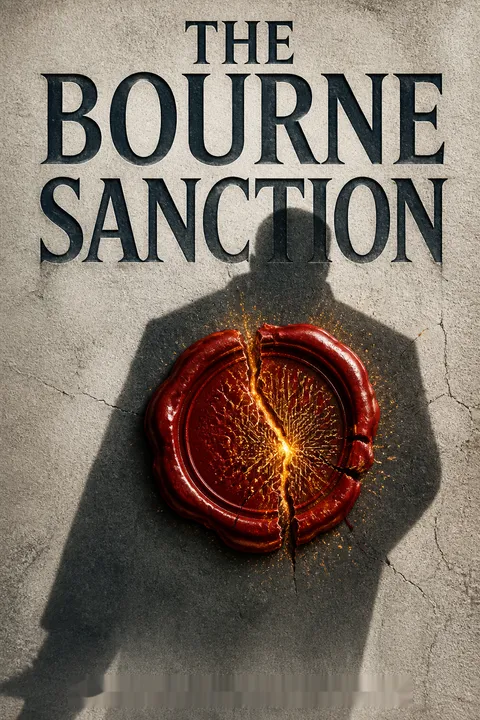
The Bourne Sanction receives mixed reviews, with an average rating of 3.90 out of 5. Some readers praise the action scenes and complex plot, while others criticize the convoluted storyline and character development. Many feel it doesn't live up to Robert Ludlum's original Bourne novels. The book introduces new characters and explores Jason Bourne's internal struggles, but some find the political intrigue and multiple storylines confusing. Readers appreciate the fast-paced action but note inconsistencies and unrealistic scenarios throughout the novel.
People Also Read



Characters
Jason Bourne
The divided operativeBourne is the covert operative identity of David Webb, a linguistics professor who longs for stability after losing his wife, Marie, and several close friends. His command of languages and his instinct for surveillance let him read people and places quickly, while his field skills make him dangerous under pressure. He is also wary of the part of himself that responds most naturally to violence. Teaching offers order, but it cannot answer whether he can live without the identity that has repeatedly saved others. His relationships with Specter, Soraya, and Moira test different kinds of loyalty, while his care for Marie’s children keeps his longing for a quieter life painfully concrete.
Leonid Arkadin
The scarred assassinArkadin is a Russian contract killer whose reputation rests on the ability to enter hostile places and leave them alive. He is controlled in action, but his memories reveal a childhood and youth shaped by violence, exploitation, and a profound fear of dependence. His ties to Icoupov give him purpose and structure, while his growing attachment to Devra unsettles both. Arkadin treats the past as something to outrun, yet it keeps returning through specific people and wounds. He is not simply a mirror for Bourne: he shows what an equally formidable operative might become when revenge and emotional isolation are allowed to define every choice.
Moira Trevor
The determined executiveMoira is a senior executive at NextGen Energy Solutions, responsible for a major LNG terminal project and accustomed to making decisions under corporate pressure. She is intelligent, self-possessed, and willing to challenge authority when she believes people or infrastructure are at risk. Her attraction to Bourne grows alongside her own work, but she does not exist merely as a refuge for him. She carries private loyalties and professional obligations that complicate what she can tell him. Moira’s strength lies in combining technical knowledge with moral initiative: when she sees a danger others would prefer to ignore, she accepts the cost of acting on it.
Dominic Specter
The professor with a causeSpecter is Bourne’s former professor and mentor, a warm, energetic academic whose life extends far beyond the university. He has the habits of a scholar and the resources of someone who has spent years building a private intelligence network. Personal loss has given his work an intensity that can make him persuasive and difficult to question. He recognizes Bourne’s abilities and understands the comfort that teaching can offer him, yet he also sees a need for action that the classroom cannot meet. Specter’s relationship with Bourne depends on trust, mentorship, and the belief that shared purpose can justify risks others would refuse.
Soraya Moore
Typhon's field commanderSoraya directs Typhon, a CIA counterterrorism unit built around understanding the motivations and methods of extremist groups. A skilled intelligence officer and former colleague of Bourne, she values preparation but can act outside standard procedure when the threat demands it. Her friendship with Bourne is marked by trust, professional respect, and emotions she keeps under control. Soraya is also a leader learning the difference between taking responsibility and carrying every failure alone. Her work with Tyrone forces her to reckon with the consequences of asking someone to risk himself on her behalf, even when he has freely agreed.
Devra
The courier who fights backDevra is a nightclub DJ and courier whose sharpness and guarded humor conceal years of being used by powerful men. She knows how to conceal information, gauge danger, and perform the role others expect of her. Her choices are driven less by ideology than by the need to survive and by a desire to escape the network that has controlled her. Arkadin’s presence challenges her defenses, but she does not become passive in his company. Devra is resourceful, physically brave, and capable of making difficult choices without confusing loyalty with obedience.
Semion Icoupov
The polished power brokerIcoupov is a wealthy, influential man whose cultivated manners conceal a readiness to use torture and assassination. He believes in order, loyalty, and carefully managed power, but his judgments are shaped by old grievances and a rigid sense of justice. His long connection to Arkadin carries the intimacy of mentorship and the imbalance of control. Icoupov is difficult to read because he can behave like a courteous host while directing brutal acts. His confidence in managing people and events gives him reach, but also makes him vulnerable to the consequences of treating human beings as instruments.
Tyrone Elkins
The streetwise recruitTyrone comes from a Washington neighborhood where street knowledge has been essential to survival. Deron has helped him build skills beyond the street, and his work for Soraya gives him a chance to test himself in a larger world. He is stubborn, brave, and sensitive to the ways powerful institutions dismiss people like him. His admiration for Soraya complicates his willingness to take risks, but his identity is not limited to that devotion. Tyrone’s story centers on the difficult work of becoming more than the role other people expect him to play.
Veronica Hart
The reforming directorHart is the newly appointed director of the CIA, brought in from private intelligence work to restore an agency damaged by scandal and internal mistrust. She is disciplined, politically alert, and unwilling to let the Pentagon absorb the agency’s authority. Her confidence has been earned through a career in which her competence was repeatedly questioned. Hart favors cooperation over the old culture of rivalry, but she understands that reform requires tactical skill as well as principle. Her private history makes her wary of powerful men who disguise self-interest as patriotism.
Pyotr Zilber
The ambitious networkerPyotr is a young operator who runs an information network across several countries and wants to prove himself to his father. His intelligence and access are real, but he is also drawn to nightlife, romance, and the rewards of influence. That mixture makes him ambitious but vulnerable to people who know how to exploit his appetites. Pyotr’s network links criminal couriers and political intelligence, giving his choices consequences well beyond his immediate circle. His relationship with his father is defined by distance, secrecy, and a hunger for recognition.
Gala Nematova
The survivor in silkGala moves easily through Moscow’s elite clubs, using beauty and social fluency as tools in a world where women are often treated as disposable. Her attachment to Arkadin is intense, but she distinguishes emotional loyalty from the practical compromises she makes to survive. She understands how to read a room, hide her intentions, and recognize when danger is closing in. Her encounter with Bourne challenges his assumptions about love and about the women who inhabit criminal worlds. Gala is both vulnerable to powerful men and more perceptive than they tend to believe.
Mikhail Tarkanian
The trusted Russian contactTarkanian is a Russian associate within Specter’s intelligence network and a close friend of Arkadin. He carries the confidence of someone accustomed to surviving rough environments, but his loyalty is difficult to assess from the outside. His ties to both men make him a consequential figure in the competing networks around Pyotr and the Black Legion. Tarkanian’s choices show how personal friendship and political allegiance can overlap without being identical. Bourne’s encounter with him turns an abstract suspicion into a dangerous test of judgment.
Luther LaValle
The empire builderLaValle is the Pentagon’s intelligence chief, a polished and ambitious official who sees agency boundaries as obstacles to his influence. He argues that military intelligence should take control of the CIA, presenting expansion as a necessary response to institutional weakness. His confidence rests on political connections, covert resources, and his belief that results justify methods. LaValle is skilled at identifying other people’s ambitions and using them, but he underestimates those whose moral commitments limit his leverage. His conception of patriotism leaves little space for oversight or dissent.
Rob Batt
The compromised deputyBatt is a senior CIA official whose ambition and resentment make him susceptible to LaValle’s promises. He believes he has earned leadership and initially sees Hart’s appointment as an insult to his experience. His career is shaped by institutional privilege and a need for recognition, but he is not blind to the consequences of his choices. Batt’s capacity for self-criticism emerges only after the people who recruited him discard him. He illustrates how wounded pride can masquerade as duty, and how late recognition may still create an opportunity to repair damage.
Richard Kendall
LaValle's military deputyKendall is a forceful military intelligence officer who supports LaValle’s campaign to expand the Pentagon’s reach. He relies on hierarchy and expects compliance, especially from people he considers beneath him. His confidence is greater when he has institutional power behind him than when he must answer for his own conduct.
Rodney Feir
The resentful filekeeperFeir manages CIA field-support information and feels overlooked beside the officers whose work he enables. His long frustration with being treated as a function rather than a colleague leaves him open to offers of status and access. He is observant and practical, traits that let him understand the agency’s hidden traffic better than many people above him. Feir’s resentment is not merely vanity; it grows from years of exclusion. Yet he turns that grievance into a choice that endangers the people and institution he serves.
Frederick Willard
The invisible insiderWillard is a discreet NSA steward whose unobtrusive presence lets him move through spaces where others would attract attention. He was recruited and trained by Alex Conklin, and his performance of ordinary service conceals a long intelligence role. Willard is patient, observant, and shaped by an older sense of duty to the agency he serves. He does not seek recognition; his effectiveness depends on being overlooked. His work illustrates how loyalty can survive inside institutions even when their visible leaders betray their stated principles.
Egon Kirsch
The artist courierKirsch is an unsuccessful artist who serves as a discreet contact in Specter’s intelligence network. His apartment and studio reflect a private, imaginative life far removed from the violence surrounding his work. He is wary of the clandestine world and sees his service as a limited obligation rather than a vocation. His knowledge makes him valuable, while his careful habits help protect the network’s final link.
Virgil Pelz
The buried Nazi hunterPelz is an aging former Nazi hunter who lives in an air-raid bunker beneath Dachau. His years of isolation have left him eccentric and difficult to approach, but his memory preserves details that official histories have discarded. He distrusts intelligence agencies because he has seen them make alliances for convenience. Pelz is both witness and warning: knowledge can expose the past, but institutions may punish the person who insists on using it.
Petra Eichen
The haunted guardPetra is a museum guard from Dachau who is drawn to the town’s buried history and repelled by its efforts to smooth that history over. She accepts money to kill, but her conscience remains active enough to trouble her. Her personal anger at Germany’s evasions is mixed with a longing to make meaningful art and a sense that she has failed to act on that desire. Her encounter with Bourne forces her to confront what she has done rather than hiding behind the past.
Deron
The inventive forgerDeron is an art forger and technical inventor who supplies Bourne with documents and specialized tools. He is clever, generous with his knowledge, and protective of people he has taken under his wing. His relationship with Tyrone combines mentorship with the practical care of someone who knows what the street can take from a young person. Deron’s skill makes him a valuable ally, but his most important influence is his insistence that knowledge can expand a person’s sense of what is possible.
Esiankiki, called Kiki
The camera-eyed allyKiki is Deron’s partner, a talented hacker who can see opportunities in systems others consider secure. She is confident, socially perceptive, and connected to a history of community support that helped her pursue education. Her friendship with Tyrone and her loyalty to Soraya draw her into a dangerous operation against the NSA. Kiki balances technical daring with an instinct for when fear is becoming paralyzing, pushing her companions toward action without pretending the risks are small.
Boris Karpov
Bourne's Russian allyKarpov is a Russian security official who has worked with Bourne before and remains willing to provide intelligence when circumstances allow. He understands the competing power centers in Moscow and knows how to turn political information into leverage. His usefulness comes from professional experience and a personal respect for Bourne, though the two must operate within a volatile and compromised system.
Arthur Hauser
The alarmed engineerHauser is an engineer involved in the software for NextGen’s LNG coupling system. He recognizes a security weakness that his company has been unable to repair in time. Fear of the consequences pushes him to warn Moira, despite the professional risk. He represents the technical workers who may see a danger clearly but have little authority over how powerful institutions respond.
Noah Petersen
The firm loyalistNoah is a Black River operative and Moira’s handler in Munich. He is controlled, efficient, and loyal to the firm’s decisions, even when those decisions conflict with Moira’s judgment. His relationship with her combines professional respect with the assumption that institutional orders should take precedence over individual conscience.
Plot Devices
The Black Legion emblem
A mark across generationsThe Legion’s insignia joins three horses’ heads to an SS death’s head. Bourne first sees a version of it on the arm of the men who attack Specter, then uses the mark to connect evidence from the Nazi era to a current terrorist network. The emblem serves as a compact clue, but it is not proof on its own: other groups can appropriate symbols, and people in the story dispute the Legion’s survival. Its value comes from how it links separate investigations, from the museum to Dachau and the tanker, while reminding the characters that political symbols can outlive the causes that first created them.
The courier chain
A document passed hand to handPyotr’s network moves a sealed set of plans through people who know only the link immediately before or after them. The system limits what any captured courier can reveal, but its reliability depends on people whose motives and competence vary widely. Arkadin follows the trail from Sevastopol through Devra and Haydar to Heinrich, while Bourne traces the same network from Moscow toward Munich. The physical plans become a source of urgency and a tempting apparent answer to the threat. Their delivery chain also makes the plot’s larger deception possible, because a document’s existence does not guarantee that the story told about it is true.
Assumed identities
A self built for survivalBourne moves through the investigation under false names, forged documents, and careful changes in behavior. Arkadin also relies on disguises and the ability to pass as someone who belongs in a prison, office, or airport. These identities are practical tools, but they echo the deeper divisions in both men: Bourne lives between David Webb and his operative self, while Arkadin has learned to hide his past even from those close to him. The aliases let each man cross borders and evade surveillance. They also raise the question of whether a person can use a role indefinitely without allowing it to define what remains underneath.
The coded warning
A phrase turns into a signalSoraya and Bourne share a coded phrase from an earlier operation. When Soraya is forced to contact him under LaValle’s supervision, she repeats language that appears ordinary but carries a warning that the proposed meeting is a trap. Bourne does not recognize the code immediately; a familiar phrase spoken by a child helps unlock the memory. The device makes his damaged memory consequential rather than decorative. It also shows the value of relationships built through shared experience: Soraya can warn him without openly defying her captors, and Bourne can understand her only by remembering their history.
The LNG software flaw
A hidden lever in the terminalA weakness in the coupling system’s software could let an attacker interfere with the electronic docking process between the tanker and the Long Beach terminal. The plot introduces the flaw through engineer Arthur Hauser, who warns Moira after his company fails to repair it. Bourne later realizes that the conspicuous Empire State Building plans may be intended to draw attention away from the terminal. On the tanker, a laptop and a second operative reveal that the software, not an explosive device, is the real mechanism of attack. The device grounds the climax in infrastructure: ordinary systems become dangerous when no one is allowed enough time or authority to question them.
Jason Bourne Series
Download PDF
Download EPUB
.epub digital book format is ideal for reading ebooks on phones, tablets, and e-readers.








