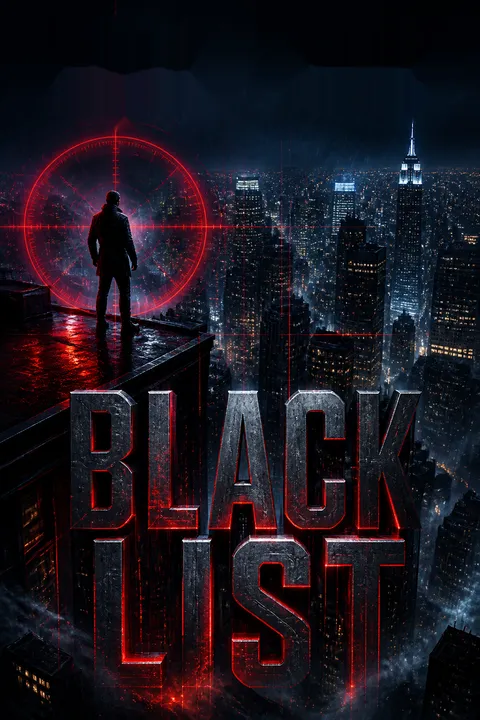


Plot Summary
Prologue
At a Pentagon City mall, ATS operative Caroline Romero realizes that a security team led by white-haired Martin Vignon has found her. She buys ordinary items to disguise her movements, then uses a lingerie shop’s camera-free dressing room to record a concealed message.
The shoppers around her keep browsing while Caroline carries out the final step of her plan. By the time Vignon’s team closes in near a busy exit, she has sent her warning and evidence beyond their reach. Her work has turned her from an employee who erased loose ends into someone determined to expose what the organization is hiding.
The mall makes surveillance feel least visible precisely where it is most pervasive. Caroline knows the cameras because she once used systems like them, and that professional familiarity gives her a narrow advantage, not safety. Her choice of mundane purchases and a dressing room turns ordinary consumer space into a covert channel. The scene also establishes the story’s central moral fracture: Caroline stops obeying the institution that trained her to control information, and the act of looking closer makes her a target. Her warning is an intimate gesture as well as an act of resistance, aimed at people she believes can still choose what to do with the truth.
Paris Safehouse Shattered
Scot Harvath, a counterterrorism operative working for the private Carlton Group, reaches a Paris safe house expecting to meet his colleague Riley Turner. Gunmen fire through the doorway as Riley opens it, killing her before Harvath can react. He grabs weapons and pepper spray from a hidden kit, then uses the attackers’ simultaneous entry through the front and rear doors to kill them.
The assault confirms that someone has located a supposedly secret Carlton Group refuge. With police closing in, Harvath disguises himself, avoids the cameras as best he can, and takes a train toward Spain. Riley’s death leaves him grieving, cut off from his organization, and determined to identify whoever arranged the attack.
The safe house is supposed to make secrecy tangible, but its discovery turns that promise into a trap. Harvath’s training keeps him moving after Riley dies, yet his decision to stay and kill every attacker shows grief overriding the discipline that normally protects him. The narrative gives that choice an immediate cost: he escapes with no answers and an even less secure position. Riley matters not simply as a lost partner but as the possible beginning of a life Harvath had cautiously hoped to build. The plot’s violence therefore attacks both his professional trust and his private hope, forcing him to pursue the truth while carrying an absence he cannot compartmentalize away.
The Fire Leaves One Witness
Two days after Caroline’s mall operation, Reed Carlton, the veteran former CIA officer who leads the Carlton Group, wakes to find his Virginia home burning around him. The sprinklers, alarms, and security shutters have been disabled, and the location trackers show his guards motionless.
Carlton uses a secret escape tunnel he had kept even from his own security team and reaches the night outside alive. He assumes the fire has killed his people and recognizes that the attack was planned by someone with access to his defenses.
Moving under an alias, he avoids his normal communications and searches public news reports for signs of what happened to his operators. When calls and messages bring no response, he concludes that the group has been deliberately isolated.
Carlton’s escape depends on a habit that is both his strength and his loneliness: he trusts contingency plans more than shared knowledge. Keeping the tunnel secret saves him, but his compartmentalized organization leaves him unable to tell who else survived. The fire attacks more than a house; it destroys the physical center of a network built on trust, discipline, and accumulated experience. Carlton’s choice to avoid ordinary communication is a recognition that familiar channels have become liabilities. His grief is kept under control because he must reason before he can mourn, yet the personal cost is already visible in the way he treats the loss of his people as the loss of family as well as capability.
Harvath Lands on the List
In Spain, Harvath follows a contact through an ETA-linked tobacconist to a fortified ranch in the Basque mountains, where he hopes to find Padre Peio, a former intelligence officer who became a priest after his wife was killed in a terrorist bombing. Harvath waits there for word from Carlton, but the ranch is attacked in fog before he can learn what has happened.
He kills several young assailants, while Peio arrives with a shotgun and helps stop the man holding Harvath at gunpoint. The attacker identifies Harvath as a supposed traitor marked for death on a secret Black List. Peio is wounded, but shares a warning from Nicholas: Harvath must not trust ordinary communications or leave digital traces.
The second assault changes the threat from an unexplained professional hit into an accusation backed by state power. Calling Harvath a traitor is an attempt to make murder sound like procedure, and the secret list gives that violence an institutional disguise. Peio’s intervention joins two kinds of service that the novel keeps in tension: the priest’s concern for souls and the operative’s need to stop an immediate attacker. His refusal to abandon Harvath also reflects a loyalty formed through shared danger rather than formal allegiance. The warning about digital traces connects the physical ambush to a wider system of observation, suggesting that the enemy can follow not only bodies but their patterns of communication.
Nina Carries Caroline's Warning
In Texas, Nicholas, a reclusive hacker and intelligence broker known as the Troll, goes to a McAllen hotel garage expecting to meet Caroline Romero, the friend who once defended him from two drunken attackers at a hacking conference.
Instead, a frightened young woman approaches his SUV and proves her identity with an old photograph. She is Nina Jensen, Caroline’s younger half sister. Caroline has sent Nina a package containing clothes, an encrypted flash drive, and a recorded message warning her not to connect the drive to a computer until she finds Nicholas.
Nina has been watched at home and work, so Nicholas takes her away, has her destroy her phone, and brings her to the remote Three Peaks Ranch. There, her sister’s warning becomes the only lead they can trust.
Nicholas’s past encounter with Caroline gives the present crisis its human center. Their friendship began when Caroline intervened against men who treated his body as permission to humiliate him; her message now asks him to risk his carefully protected solitude for her family. Nina arrives carrying evidence but also the fear of someone whose ordinary life has already been penetrated. Nicholas answers that fear with practical safeguards rather than promises alone, removing the phone and choosing a remote refuge. Their connection begins under pressure, but its emotional force comes from reciprocal recognition: he sees Caroline’s trust in Nina, while Nina sees that her sister chose someone who might understand both danger and discretion.
A Drive Opens the Cage
The flash drive resists Nicholas until he recognizes that Caroline has hidden its password behind a digital back door tied to Sanjay, the bank employee who once framed her for stealing client data. Inside, he finds a vast archive documenting Adaptive Technology Solutions, or ATS, and its reach into government surveillance systems.
Caroline’s files trace the company’s origins, its influence over officials, and technologies that collect Americans’ communications, movements, and identifying data.
They also reveal a planned cyberattack called Blue Sand, intended to cripple the Internet and create a pretext for replacing it with a government-controlled system. A separate file describes the Black List, a secret mechanism for killing designated Americans. Harvath’s attacks now appear connected to a campaign far larger than one private intelligence group.
The drive is not merely a container of secrets; its hidden architecture mirrors the story’s political argument. Information has been arranged so that the reader and Nicholas must discover what lies beneath apparently harmless surfaces, much as citizens are asked to notice the structures concealed behind security language. Caroline’s archive connects surveillance to power by showing how data collection can become leverage over institutions and individuals. The Black List then supplies the coercive endpoint: a person made legible to the system can be classified as a threat and removed without public scrutiny. The revelation does not make Nicholas omniscient. It gives him a framework, while leaving the exact attack and its timing uncertain.
Across Mexico, Under Watch
Peio cannot safely arrange a direct return to the United States, so he sends Harvath through Mexico, using contacts who can move him without relying on his usual identity. Harvath flies from Spain to Mexico City, then continues to Monterrey and reaches an orphanage concealed behind a rough neighborhood tavern.
Sister Marta, who teaches the children and protects the home with help from her uncle, arranges a legal charter flight to McAllen. She asks Harvath about the family life he has never managed to build; he admits that Riley may have been the rare person who could have understood his work, though he never told her what he felt. In Texas, ranch manager Maggie Rose recognizes Harvath through Nicholas’s private signal and drives him to Three Peaks Ranch.
The route through Mexico is both operationally clever and emotionally revealing. Harvath survives by moving through relationships Nicholas and Peio have built beyond official channels, but the people who help him are not simply tools: the orphanage, its children, and Sister Marta make visible a community sustained by care. Her questions press on the life Harvath has trained himself to postpone. His admission about Riley does not resolve his grief; it exposes how duty has often served as a defense against risking intimacy. The journey therefore reconnects him with allies while making his personal loss harder to keep at a safe distance.
Four Shadows at Three Peaks
At Three Peaks Ranch, Harvath reunites with Nicholas and Nina and learns more about Caroline’s evidence. A brief power failure and fresh tactical boot prints make him suspect the ranch is being watched. Maggie finds four men on security footage crossing the property without the supplies migrants would normally carry.
Harvath investigates a nearby water trough and discovers a group of migrants executed and stripped by the intruders. He returns to the ranch, identifies the attackers’ likely approach, and kills the overwatch sniper before using the captured rifle to stop two men moving toward the guesthouse.
The fourth enters the house, where Nicholas and Nina fight back with his custom weapons and the dogs. Nina helps shoot the attacker. Harvath arrives to find the group alive, but the ranch is no longer safe.
The attack tests whether Harvath’s protective instincts can extend beyond his own circle. Discovering the migrants’ bodies prevents him from treating the attackers as an abstract threat, while his decision to act quickly makes the ranch’s guests part of a coordinated defense. Maggie’s attention to mismatched clothing supplies crucial intelligence, a reminder that observation is not the exclusive property of trained operatives. Nina’s use of the weapon is a sharp change from the frightened sister first seen in the garage: she acts when Nicholas is in immediate danger. The group survives, but the violence has erased the possibility of hiding in place, forcing them to trade safety for movement.
The Athena Team Returns
Harvath and his companions escape Three Peaks Ranch with help from former Marine pilot Mike Strieber, who takes them to his farm and gives them shelter. Harvath then travels to North Carolina to contact Dan McGreevy, a former Delta Force operative connected to the Athena Project, the Army’s all-female special operations unit.
McGreevy summons Gretchen Casey and Megan Rhodes, two of Riley’s teammates. After hearing how Riley died, they agree to help Harvath find answers. The trio traces Colonel Chuck Bremmer to his daughter’s field hockey game and abducts him on the road, using the family he has endangered as leverage. Bremmer admits that he ordered the kill teams and that Harvath’s name was added to the Black List at Craig Middleton’s request.
The Athena operatives give Harvath something his damaged organization cannot: capable allies who knew Riley apart from the circumstances of her death. Their arrival turns grief into collective action, though it does not make the work emotionally clean. Harvath’s decision to threaten Bremmer through his family deliberately uses the same coercive logic that has been used against him. The tactic succeeds, but it exposes the moral contamination of fighting an unaccountable system by adopting its methods. Casey and Rhodes’ willingness to help is not blind loyalty; they weigh the danger to their team and choose to act. Their presence also makes Riley’s loss communal rather than private.
Schroeder Names the Machinery
Bremmer identifies Kurt Schroeder, the ATS analyst who built dossiers on the Carlton Group’s people, and Harvath’s team tracks Schroeder to his Washington loft. They find him in a hidden room at a dominatrix’s residence, where he is restrained for a private session.
Harvath takes him and forces answers from him, learning that Schroeder believed the false claim that the Carlton Group was preparing a terrorist attack. Back at Schroeder’s computer system, Nicholas and Harvath uncover logs showing Middleton using Caroline’s account to plant evidence and clear future appointments.
Middleton has also ordered ATS staff and board members to assemble at the Walworth estate with their families. The rushed gathering convinces Harvath that the cyberattack is imminent, while Schroeder’s access gives the group a chance to follow Middleton’s preparations.
Schroeder is not a mastermind so much as a technician who allowed his skill to substitute for moral judgment. His work makes distant killings possible, while his claim that he only followed orders shows how bureaucracy can distribute responsibility until no participant feels accountable. Harvath’s violent interrogation mirrors the coercion used by ATS, complicating any easy distinction between the protagonists and their enemies. Yet Schroeder’s records provide evidence that cannot be reduced to his frightened testimony: Middleton is actively altering digital history and accelerating the plan. The scene shifts the conflict from identifying a conspiracy to confronting its timetable, making technical literacy a form of resistance and a source of danger.
Banks Turns the Net
While Harvath pursues the ATS operation, Carlton seeks help from Tommy Banks, his former CIA mentor, who confirms that powerful officials are framing the Carlton Group for treason. Banks uses old intelligence contacts to investigate, but the agency’s silence makes the threat look deeper than a dispute with the CIA.
Carlton and Banks then recognize Martin Vignon’s surveillance team and set a trap at Union Station. Carlton uses two homeless men as decoys, drawing the pursuers into a staged meeting before he and Banks attack.
They kill the team’s other members and capture Vignon, ATS’s security chief. Under interrogation, Vignon confirms that Middleton expected Harvath might appear and ordered his death. Carlton learns Harvath may still be alive, giving him a reason to move from revenge toward a coordinated counterattack.
Banks brings an older form of intelligence work into a crisis built around digital tracking: dead drops, physical observation, and a deliberately staged encounter. His presence gives Carlton a trusted partner at the moment his own institution has been hollowed out. The Union Station trap reverses the surveillance relationship, making ATS’s confidence in monitoring others exploitable. Yet the use of vulnerable homeless men as decoys carries its own ethical shadow; the operation depends on people whose safety is not fully under Carlton’s control. Vignon’s information matters less as a confession than as a bridge between the separate plotlines. The possibility of Harvath’s survival restores the prospect of a team, not just a lone survivor seeking payment.
Blue Sand Comes Into Focus
At the Strieber farm, Nicholas identifies the facility behind Blue Sand: the NSA’s massive Utah data center, selected as the center of a new government-controlled Internet. Caroline’s files show that ATS intends to use a devastating cyberattack to make the replacement appear necessary.
The Carlton Group’s destruction would remove an independent force capable of interfering, while the Black List gives the plotters a covert means of eliminating people they call traitors. Harvath, Casey, and Rhodes reunite with Carlton and Banks, and the evidence finally links Middleton’s operation to the attack’s purpose.
They cannot wait for public agencies to investigate without risking catastrophe. Harvath chooses to enter the secluded Walworth estate, where Middleton and ATS’s board have gathered, and stop the plan before it begins.
The data center makes the conspiracy’s ambition concrete. The threat is not simply that the government can collect too much information; it is that the infrastructure for collection can become the infrastructure through which participation is permitted or denied. Blue Sand is designed to turn a crisis into consent, using fear to make a closed system seem like rescue. The protagonists face a severe mismatch between evidence and time: the documentation may prove the scheme eventually, but it cannot protect people during an imminent attack. Harvath’s decision to act outside normal channels repeats the very problem the story condemns, since emergency action can also escape oversight. The narrative leaves that contradiction active rather than pretending it disappears.
Walworth Falls From Within
Harvath infiltrates Walworth through a section of the estate’s defenses that Schroeder and Vignon helped him understand. Casey and Rhodes provide support from outside, while Harvath takes down guards on his way to the main house.
He finds Middleton in his study and orders him to surrender, but Bremmer, who had pretended to cooperate, attacks Harvath with a Taser. Middleton then arms himself and shoots Bremmer, who had threatened his control of the operation. Before Middleton can kill Harvath, Carlton arrives and shoots him.
With the plan’s central operator dead and the estate secured, the immediate cyberattack is stopped. The confrontation ends the hunt that began with Riley’s death, though it cannot restore the people the conspiracy has already taken.
Walworth is the physical expression of ATS’s insulated power: a hidden estate stocked for survival while the public is meant to face manufactured chaos. Harvath reaches the antagonist through a defense system designed to prevent outsiders from entering, turning ATS’s own expertise into a weakness. Bremmer’s return to violence confirms that coercion never made him trustworthy; Middleton’s killing of him shows that collaborators remain disposable once their usefulness ends. Carlton’s final intervention is also a reunion of the two survivors whose absence had driven the plot. The immediate threat ends through force, not institutional process, preserving the novel’s uneasy question about whether a just result can emerge from methods that evade accountability.
Epilogue
With help from Tommy Banks, Carlton briefs the heads of the major intelligence and law enforcement agencies, then the President. Officials order an investigation and discuss dismantling ATS, restricting surveillance, and limiting emergency powers. They also choose to use the Black List against ATS’s board rather than put its members through a public trial.
Vignon helps lure the fifteen directors onto a plane, which Harvath, Casey, and a CIA pilot sabotage before parachuting to a waiting Navy vessel. The government presents the crash as an accident. Later, Harvath and Casey visit Riley’s favorite Florida resort to grieve together; their goodbye to Riley becomes the beginning of a new intimacy.
The resolution stops the immediate attack but refuses a clean moral victory. Officials condemn ATS’s secret power, then use another secret killing mechanism to remove its board and shield the country from the destabilizing consequences of a public trial. Their reforms point toward oversight, but the central contradiction remains: the state protects democratic life by withholding information from the public and exercising lethal power beyond ordinary courts. Harvath and Casey’s private farewell offers a smaller, more honest form of repair. They name their grief through ritual and companionship, rather than pretending that victory returns what was lost. The ending pairs institutional concealment with personal candor, leaving the reader to judge which form of secrecy can be trusted.
Analysis
Black List turns surveillance from a distant political concern into a source of immediate bodily danger. Caroline’s discovery matters because it links three levels of power: ATS’s technical capacity to collect information, its influence over public institutions, and the covert violence used against people who threaten its plans. The novel’s central mechanism is classification. Once the Carlton Group is labeled treasonous, the label makes the group’s destruction appear administratively legitimate, even to people who have little evidence. The danger is not only that the state watches citizens, but that a system of observation can convert suspicion into action without public contest. The narrative also tests the distinction between protective force and authoritarian force. Harvath and Carlton act outside normal processes because those processes have been compromised or are too slow to prevent mass harm. Their urgency is understandable, but it does not erase the ethical risk of their methods. Harvath threatens Bremmer through his family; Carlton and Banks use torture; the eventual response to ATS’s board relies on the Black List itself. The resolution thus refuses the comfort of a simple victory. The conspirators are stopped, yet the protagonists and officials preserve parts of the machinery that made the conspiracy possible.
Personal relationships provide the counterweight to systems that reduce people to data. Caroline trusts Nicholas with her evidence and her sister. Nicholas risks his secluded life to honor that trust. Nina, Maggie, Peio, Banks, Casey, and Rhodes contribute through observation, care, or loyalty rather than institutional rank. Harvath’s emotional movement is smaller but significant: he begins by treating grief as something to lock away, then accepts that Riley’s loss must be mourned with another person. The book’s deepest tension lies between security and accountability, and its most humane answer is not total trust in institutions but the difficult work of choosing whom to trust, then acting transparently with them.
Review Summary
Black List receives mostly positive reviews for its fast-paced action, intriguing plot, and thought-provoking themes about government surveillance. Readers praise Thor's ability to create tension and develop characters. Many find the technology described in the book frighteningly plausible. Some criticize the writing style or political leanings. Overall, fans of political thrillers enjoy the book, particularly those familiar with the Scot Harvath series. Several reviewers mention feeling paranoid about privacy issues after reading.
People Also Read





Characters
Scot Harvath
Counterterrorism field operativeA former Navy SEAL and Secret Service counterterrorism specialist, Harvath works for Reed Carlton’s private intelligence group. His alertness, physical discipline, and comfort with danger make him effective in the field, but they also help him keep emotional needs at a distance. He believes protecting others is a responsibility, not a performance, and has accepted years of solitude as part of that work. Riley Turner’s companionship raises the possibility of a different life, while the attacks force him to examine the cost of remaining a lone protector. Harvath is decisive without being emotionally invulnerable; his grief and anger shape his choices even when he tries to contain them.
Reed Carlton
Ex-spy and team leaderKnown to his operatives as the Old Man, Carlton is a former CIA officer who built the Carlton Group to act quickly where government bureaucracy fails. He combines a refined manner with formidable tradecraft and a willingness to use harsh methods when he believes national security is at stake. His commitment to compartmentalization keeps the organization difficult to penetrate, but it can also leave him isolated from the people who depend on him. Carlton sees his operatives as more than employees and carries a mentor’s responsibility toward Harvath. His challenge is to remain analytical when personal loyalty and the deaths of colleagues threaten to turn judgment into revenge.
Nicholas
Reclusive information brokerKnown in intelligence circles as the Troll, Nicholas is a gifted hacker and trader of classified information who relies on aliases, custom equipment, and layers of caution. Abandoned and abused as a child, he learned to read people’s vulnerabilities and to trust very few of them. His size has made public life difficult, but his technical skill gives him control in digital spaces where physical appearance matters less. The orphanage work he supports and the friendships he preserves complicate his self-image as merely a survivor. Caroline Romero’s appeal draws him beyond the safety of isolation, and his bond with Nina introduces the possibility that trust can be chosen rather than merely endured.
Caroline Romero
ATS whistleblower and coderCaroline is a gifted programmer whose career took her from a Wall Street bank to Adaptive Technology Solutions. She is intelligent, technically inventive, and stubborn enough to challenge people who misuse her work. Her history includes a fierce response to being framed, but she is not defined only by anger: she maintains a long friendship with Nicholas and a protective connection to her much younger half sister, Nina. Caroline understands how digital systems can conceal both evidence and abuse, which makes her alert to the gap between official explanations and actual practice. She is driven by the conviction that information must reach someone capable of acting on it, even when doing so puts her in danger.
Nina Jensen
Caroline's younger sisterNina is Caroline’s younger half sister, separated from her by a fifteen-year age gap and by lives that rarely overlapped. A veterinary technician with a particular affection for large dogs, she is observant and practical rather than trained for covert work. When she senses that someone is watching her, she trusts her instincts and goes to ground instead of waiting for help. Her fear is real, but it does not prevent her from following Caroline’s instructions or acting when Nicholas is threatened. Nina’s relationship with Nicholas develops through shared danger and mutual attention, giving both of them a reason to imagine connection beyond survival.
Riley Turner
Athena Project operativeA former competitive skier and physician, Riley is one of the early members of the Army’s all-female Athena Project. She is highly capable in the field and respected by Harvath as a professional equal. Like him, she has sought work demanding more intensity than civilian medicine can offer. Her disciplined competence makes her more than a romantic possibility, while her growing personal connection with Harvath suggests she understands the demands of his life from the inside. Riley’s presence links Harvath’s private hopes to the wider network of women who serve alongside him.
Craig Middleton
ATS power brokerMiddleton directs ATS operations and treats data as a route to influence over institutions and individuals. Brilliant at collecting and interpreting information, he is also arrogant, cruel, and convinced that his intelligence entitles him to control others. His interest in the machinery of surveillance is bound up with a larger appetite for power, not simply technical curiosity. He uses subordinates’ secrets and insecurities to make them compliant, then presents coercion as practical necessity. Middleton’s worldview turns people into profiles, risks, or assets, making empathy look to him like an inefficiency rather than a moral obligation.
Kurt Schroeder
ATS data analystA gifted hacker recruited by ATS, Schroeder is the son of a disgraced financier and grew up amid the collapse of his family’s wealth and reputation. Bullying and loss fed his anger, while the Internet gave him a place to exercise his intelligence without exposing his stammer. He craves authority and resents people he considers less capable, which makes him vulnerable to Middleton’s manipulation. Schroeder can build powerful systems and dossiers but struggles to understand the human consequences of using them. His intelligence is considerable; his moral courage is much less developed.
Chuck Bremmer
Covert military officerColonel Bremmer serves as a discreet military liaison and manages operations that are hidden from ordinary oversight. His career rests on an inflated image of competence built around a past incident he misrepresented. Self-preservation governs his decisions, and he is willing to use people as disposable instruments when pressured by someone with leverage over him. His concern for his family reveals a capacity for attachment, but that concern competes with fear for his own position. Bremmer embodies the danger of giving operational authority to a man more committed to protecting himself than to testing the truth of his orders.
Padre Peio
Priest with an intelligence pastPeio once served in Spanish intelligence and lost his wife in the Madrid train bombings. Grief drove him into a violent search for those responsible before a priest helped him recover and enter religious life. He remains a man of contradictions: compassionate in his ministry, experienced in clandestine work, and not untouched by the impulse to act when danger appears. His friendship with Nicholas and trust in Harvath reflect the bonds he has built across very different lives. Peio’s faith is not a denial of violence or loss; it is an effort to live responsibly with both.
Gretchen Casey
Athena team leaderCasey leads a team in the Athena Project, bringing a law education, competitive athletic experience, and a childhood shaped by her Army Ranger father’s discipline with firearms. She is small in stature but confident in command, and her teammates trust her judgment. Casey is direct, skeptical of being managed, and capable of hard choices under pressure. Her connection to Riley and her respect for Harvath draw her into the hunt for the people behind the attacks. She values loyalty, but she also insists that moral responsibility cannot be outsourced to a superior or a mission.
Megan Rhodes
Athena Project marksmanRhodes is a tall, athletic Athena operative known for her endurance and calm under pressure. Raised by a police officer after her mother’s early death, she brings both physical discipline and a grounded sense of duty to the team. Her Nordic appearance earned her a nickname, but her teammates know her as a practical, resilient colleague rather than a princess. Rhodes is willing to follow a difficult plan when she trusts its purpose, while retaining her own judgment about risk. Her skill as a shooter makes her a crucial partner in operations that require patience as much as force.
Martin Vignon
ATS security chiefVignon leads the heavily trained security staff protecting ATS and its senior figures. Pale, controlled, and difficult to investigate, he has built a professional identity around surveillance and the removal of threats. His blank background makes him an unnerving presence even to colleagues who depend on his work. Vignon is an operational man rather than a policy thinker, accustomed to carrying out assignments without being given the larger rationale. His role exposes the way institutions can separate decision-making from violence, allowing one person to authorize a target while another handles the physical consequences.
Tommy Banks
Carlton's former mentorBanks is an old OSS and CIA field officer who trained Carlton and later taught generations of intelligence operatives. Blunt, suspicious of technological dependence, and rich in old-school tradecraft, he remains an invaluable source of judgment when Carlton’s usual network is compromised. His experience gives him a long view of institutional behavior, but he is not merely a relic of an earlier era: he adapts his methods to the present crisis. Banks’s loyalty to Carlton is personal and earned, grounded in years of work rather than rank or formal obligation.
Maggie Rose
Ranch manager and observerMaggie manages the Knight family’s Three Peaks Ranch and treats its guests with professional discretion. Her familiarity with the land and its usual patterns allows her to spot details that a visitor might overlook, including suspicious movement on security footage. She is friendly without being intrusive and capable of handling a firearm when the situation demands it. Maggie’s practical intelligence shows that useful courage does not belong only to trained operatives. She becomes a vital ally because she notices what is wrong and is willing to act on what she sees.
Sister Marta
Orphanage teacher and guideMarta runs an orphanage in Monterrey, where she teaches children languages and maintains a stable community amid cartel violence. She is warm but firm, and understands that care requires boundaries as well as affection. Her family connection to the tavern owner gives her practical access to the city’s shifting dangers, while her faith shapes her willingness to help Harvath. Marta notices the loneliness behind his humor and presses him to consider what he wants beyond work. Her compassion is active rather than sentimental: she arranges safe passage and accepts the risks that come with helping a stranger.
Mike Strieber
Pilot and trusted allyStrieber is a former Marine pilot who later built a successful business making tactical lights and knives. A close friend of Harvath from their time around the presidential detail, he is generous, resourceful, and quick to use his private plane when someone needs help. His farm provides a quiet place for people and equipment to regroup. Strieber’s humor makes him easy company, but it does not soften his operational seriousness when danger reaches his friends. His loyalty is expressed through practical support, from transport to secure shelter.
Dan McGreevy
Athena Project connectionA former Delta Force operative who now runs a nail salon with his wife, McGreevy serves as a discreet link between Harvath and the Athena Project. He is cautious about strangers and protective of the women who served alongside Riley. His reluctance to act without verification reflects the close-knit culture of the special operations community.
Plot Devices
The Black List
Secret state kill mechanismThe Black List is a covert process for designating people as threats and sending teams to kill them, bypassing public trials and ordinary review. Its existence explains why Harvath’s attackers call him a traitor and why an accusation can become a death sentence. The device gives the conspiracy a bureaucratic face: violence is routed through classification, hidden panels, and obedient operators rather than announced openly. It also shapes the ending, when officials consider using the same mechanism against ATS’s board. The list is therefore both a plot engine and a test of whether emergency authority can remain compatible with justice.
Caroline's encrypted drive
Evidence hidden in plain sightCaroline’s flash drive contains a vast archive of ATS records, research, and technical information. Nicholas opens it by finding a concealed digital back door connected to the name of the bank employee who once framed Caroline. The files provide the evidence that links ATS to surveillance, the Black List, and the planned cyberattack. Its structure rewards patient interpretation rather than brute force: Nicholas has to understand that Caroline has embedded meaning beneath apparently ordinary material. The drive also makes Nina a target and gives the protagonists a concrete reason to protect her while they investigate.
Blue Sand
Crisis as political leverageBlue Sand is the name Caroline’s files attach to ATS’s planned cyberattack. The attack is intended to cripple essential systems and make a government-controlled replacement for the Internet appear necessary. Its purpose is not simply destruction: the crisis creates public fear, allowing ATS and its allies to present centralized control as a remedy. The Utah data center provides the infrastructure for the proposed replacement. Blue Sand connects the novel’s surveillance technologies to a national emergency, making the protagonists’ race against time inseparable from the question of who gets to define security.
The digital panopticon
Surveillance as infrastructureATS’s interlocking systems collect communications, movements, identities, and behavioral data, then use that information to monitor and influence people. The reach of the system explains how Caroline is pursued, how the Carlton Group’s people are located, and why ordinary phones and online accounts become dangerous. The panopticon is not one machine but a network of databases, cameras, software, and government relationships. Its most important narrative function is to make observation feel ambient: the characters must assume that every familiar channel can expose them, so they rely on physical routes, aliases, and trusted personal connections.
Dead drops and aliases
Communication without trustHarvath, Carlton, Banks, and Nicholas use aliases, coded messages, online classifieds, and disguised websites to pass information when standard channels may be monitored. These methods create a parallel communications network built from small acts of authentication rather than institutional assurances. A message must be recognized through phrasing, placement, or a shared private reference before its recipient can trust it. The system repeatedly buys the protagonists time, but it also creates uncertainty: a familiar account might be compromised, and a message may not be genuine. The device makes trust a practical skill, not an abstract virtue.
FAQ
Synopsis & Basic Details
What is Black List about?
- Operative Targeted by Secret List: Black List follows Scot Harvath, a highly skilled counterterrorism operative, who discovers his name has been added to a clandestine government kill list, forcing him to go on the run from relentless professional assassins.
- Unraveling a Deep Conspiracy: As Harvath fights for survival, he races against time to uncover the powerful and shadowy organization behind the list and the reasons they want him eliminated, which are tied to a terrifying plot against the United States.
- Fight for Truth and Freedom: The narrative weaves together multiple threads, including a programmer's fatal discovery, a reclusive hacker's decryption of hidden data, and a veteran spy's counter-offensive, all converging on a conspiracy involving unchecked surveillance and the potential subversion of national infrastructure.
Why should I read Black List?
- Pulse-Pounding Action & Intrigue: The book delivers intense, non-stop action sequences, from close-quarters combat in Paris to tactical infiltration in rural Virginia, keeping readers on the edge of their seats with ingenious plot twists.
- Exploration of Timely Themes: It delves into frighteningly relevant themes of government surveillance, the erosion of privacy in the digital age, and the potential for technology to be weaponized against citizens, prompting reflection on the balance between security and freedom.
- Complex Characters & Moral Ambiguity: Beyond the action, the story offers deep dives into the psychological complexities and motivations of its characters, exploring loyalty, trauma, and the difficult moral choices faced by those operating in the shadows to protect national security.
What is the background of Black List?
- Inspired by Real Surveillance Concerns: The novel is deeply rooted in real-world anxieties about government intelligence capabilities, referencing Senator Frank Church's 1975 warning about the potential for total tyranny through technological surveillance, and drawing on contemporary reports about data collection and cyber vulnerabilities.
- Focus on Advanced, Near-Future Tech: The technology depicted, particularly that used by Adaptive Technology Solutions (ATS), is explicitly stated by the author to be based on systems "currently deployed, or in the final stages of development," blurring the lines between fiction and reality and highlighting the immediate relevance of the surveillance themes.
- Critique of Post-9/11 Power Expansion: The narrative implicitly critiques the expansion of government power and surveillance justified under the guise of national security since 9/11, exploring concepts like warrantless wiretapping, mass data collection, and the potential for a "kill switch" for the internet, connecting these to a historical pattern of power accumulation.
What are the most memorable quotes in Black List?
- "If this government ever became a tyrant... there would be no way to fight back because the most careful effort to combine together in resistance... is within the reach of the government to know.": This quote, attributed to Senator Frank Church in the preface, sets the chilling thematic stage for the entire novel, directly addressing the core fear of unchecked technological surveillance enabling total tyranny.
- "You can't even change your fucking mind without us knowing about it.": Craig Middleton's chilling assertion to Kurt Schroeder (Chapter 1), starkly illustrates the omnipresent surveillance capabilities of ATS and his own arrogant belief in their total control over individuals, highlighting the theme of power through information.
- "The people you are responsible for having killed were patriots... Middleton lied to you, and you knew he was lying, yet rather than do the right thing, you went along with him to save your own fat ass.": Scot Harvath's brutal condemnation of Colonel Chuck Bremmer (Chapter 55) encapsulates the novel's exploration of moral cowardice, the cost of complicity, and the deep sense of betrayal felt by those who sacrifice for their country when faced with corruption from within.
What writing style, narrative choices, and literary techniques does Brad Thor use?
- Fast-Paced, Action-Oriented Prose: Thor employs a direct, unadorned writing style focused on driving the plot forward with rapid scene changes, short sentences, and vivid descriptions of action and technical details, characteristic of the thriller genre.
- Multiple Interweaving Perspectives: The narrative shifts between various characters (Harvath, Caroline, Nicholas, Carlton, Middleton, Bremmer, Schroeder, Peio, Nina), often in separate geographic locations, building suspense and gradually revealing different facets of the overarching conspiracy before their paths converge.
- Strategic Use of Foreshadowing and Reveals: Subtle details, like Caroline's recognition of her pursuer or the boot prints near the generator, are introduced early and gain significance later, while key pieces of information (like the "Sanjay" password or the "Blue Sand" code) are revealed incrementally, mirroring the process of uncovering a complex conspiracy.
Hidden Details & Subtle Connections
What are some minor details that add significant meaning?
- Caroline's Lingerie Store Stop: Caroline's seemingly mundane stops at various mall stores, culminating in the lingerie shop visit (Prologue), are not just cover; the final purchase is explicitly stated as the means by which she transmits the flash drive and recorded message to Nina, highlighting her ingenuity and the low-tech method used to evade sophisticated digital surveillance.
- The "Rubber Duckie" Song: Nicholas playing "Rubber Duckie" by Bootsy Collins (Chapter 31) is more than a quirky detail; it's the specific, obscure authentication signal Nicholas gives Maggie Rose to confirm he sent her to pick up Harvath, demonstrating the layered, personal security protocols used by those operating off-grid.
- Ill-Fitting Clothes on Kill Teams: Maggie Rose's observation that the "illegals" on the ranch security footage have ill-fitting clothes (Chapter 37) is a crucial detail that tips Harvath off; it suggests the clothes were taken from others, leading him to investigate the watering trough and discover the murdered migrants, revealing the kill teams' ruthless methods and their use of stolen identities/cover.
What are some subtle foreshadowing and callbacks?
- Senator Church's Warning: The preface opens with Senator Frank Church's historical warning about unchecked surveillance (Preface), directly foreshadowing the novel's central theme of a government-tied entity (ATS) developing the technological capacity for total tyranny and the potential for it to be turned against the American people.
- Generator Boot Prints: Harvath noticing the fresh boot prints around the guesthouse generator (Chapter 36) subtly foreshadows that the earlier power fluctuation was not accidental but a deliberate act by the approaching kill team, confirming his suspicion that the ranch is compromised before the main attack begins.
- Bremmer's "Tells": Harvath, drawing on his Secret Service training, repeatedly notes Colonel Bremmer's subtle "tells" – microexpressions or vocal changes – when he is lying or withholding information (Chapters 7, 54), foreshadowing that Bremmer is not being fully truthful and is likely hiding deeper involvement or knowledge beyond simply managing a list.
What are some unexpected character connections?
- Caroline Romero and Nicholas (The Troll): The deep, long-standing friendship between the brilliant programmer Caroline Romero and the reclusive hacker Nicholas (Chapter 4) is unexpected given their disparate public personas, yet it forms the crucial link that allows Caroline's vital data to reach someone capable of understanding and acting upon it after her death.
- Nicholas and Padre Peio: The bond between Nicholas and Padre Peio (Chapter 12), forged through missionary work at a Belarusian orphanage, is a surprising connection between a cynical, reclusive hacker and a former intelligence operative turned priest, providing Harvath with a trusted, off-grid contact point in Spain.
- Colonel Chuck Bremmer and Craig Middleton: The revelation that Colonel Chuck Bremmer is not just tasked by Middleton but is actively blackmailed by him (Chapter 16) reveals a deeper, more sinister connection than simple professional association, explaining Bremmer's complicity and highlighting Middleton's ruthless methods of control over powerful individuals.
Who are the most significant supporting characters?
- Nicholas (The Troll): Beyond his hacking skills, Nicholas is significant for his deep loyalty to Caroline and Nina, his unexpected connections (Peio, Strieber), and his role as the primary interpreter of Caroline's complex data, providing the crucial intelligence needed to understand ATS's plan ("Blue Sand," "CNCI") and motivating Harvath's actions.
- Reed Carlton: As Harvath's mentor and the head of the targeted Carlton Group, Carlton is vital for his strategic thinking, extensive network of contacts (Tommy Banks), and ability to orchestrate counter-offensives, representing the old guard of intelligence fighting against a new, technologically driven threat.
- Colonel Chuck Bremmer: Though morally compromised, Bremmer is a pivotal character as the direct link between Middleton's orders and the kill teams targeting Harvath and the Carlton Group; his confession under duress provides the critical name "Craig Middleton" and reveals the existence and nature of the "Black List."
Psychological, Emotional, & Relational Analysis
What are some unspoken motivations of the characters?
- Middleton's Sadistic Need for Control: Beyond the stated goal of national control, Middleton's interactions with Schroeder (Chapters 14, 25, 62) reveal an unspoken, sadistic motivation; he takes perverse pleasure in belittling, humiliating, and psychologically tormenting his subordinate, suggesting a deeper pathology tied to his desire for absolute power over others.
- Schroeder's Search for Validation: Kurt Schroeder's willingness to endure Middleton's abuse and his eagerness to please (Chapters 14, 25) hint at an unspoken motivation rooted in his traumatic past and father's disgrace; he craves validation and acceptance, particularly from a powerful, authoritarian figure like Middleton, even at the cost of his own dignity and complicity in terrible acts.
- Nicholas's Hope for Connection: Despite his reclusive nature and past trauma, Nicholas's excitement about meeting his online friends (Chapter 4) and his immediate, deep connection with Nina (Chapter 11, 31, 35) reveal an unspoken, profound longing for genuine human connection and acceptance, which drives his loyalty and willingness to risk his life.
What psychological complexities do the characters exhibit?
- Padre Peio's Duality: Padre Peio exhibits significant psychological complexity, grappling with his violent past as an intelligence operative who tortured and killed his wife's murderers and his present role as a compassionate priest (Chapter 12); his willingness to engage in violence again to protect Harvath (Chapter 22) highlights the enduring tension between his former and current identities.
- Harvath's Emotional Compartmentalization: Scot Harvath demonstrates psychological complexity through his rigorous compartmentalization of emotions, particularly grief and anger (Chapters 2, 3, 17, 21, 66); while highly effective for operational survival, this trait creates internal conflict and difficulty in personal relationships, especially after experiencing loss.
- Schroeder's Trauma Response: Kurt Schroeder's stammer and his reaction to Middleton's mockery (Chapter 14) are psychological complexities stemming from his childhood trauma and bullying; his intellectual brilliance coexists with deep-seated insecurity and a damaged moral compass, making him susceptible to manipulation by figures like Middleton.
What are the major emotional turning points?
- Riley Turner's Death: Riley Turner's sudden and brutal death in Paris (Chapter 2) is a major emotional turning point for Harvath, shifting his motivation from simply surviving and uncovering the conspiracy to a deeply personal quest for revenge against those responsible for killing someone he cared about.
- Carlton's Realization of Betrayal: Reed Carlton's inability to contact his operators via established emergency protocols after his house fire (Chapter 17) marks a significant emotional turning point; the realization that his entire organization has been deeply penetrated and his people likely killed transforms his strategic counterattack into a fight fueled by grief and rage.
- Bremmer's Family Threatened: The moment Harvath threatens Colonel Bremmer's wife and daughter (Chapter 54) is a critical emotional turning point for Bremmer; it shatters his bureaucratic detachment and forces him to betray Middleton, revealing the name and the core truth about the Black List out of primal fear for his family's safety.
How do relationship dynamics evolve?
- Harvath and Carlton's Deepening Bond: The relationship between Harvath and his mentor, Reed Carlton, evolves from professional respect to a profound, almost father-son bond (Chapters 17, 24, 29, 63, 65); their shared experience of loss and betrayal strengthens their trust and reliance on each other as they fight against a common enemy.
- Nicholas and Nina's Budding Connection: The relationship between Nicholas and Nina Romero evolves rapidly from a stranger helping a friend's sister to a deep, protective bond and budding romance (Chapters 11, 31, 35, 40); their shared grief over Caroline and the danger they face together forge an intense emotional connection despite their physical differences and Nicholas's insecurities.
- Harvath and the Athena Team's Trust: Harvath's relationship with the Athena Project members, particularly Casey and Rhodes, evolves from professional colleagues to trusted allies in a life-or-death situation (Chapters 49, 53, 55, 66, Epilogue); their willingness to risk their lives based on his word, especially after Riley's death, demonstrates the strength of the bonds forged in shared operational experience.
Interpretation & Debate
Which parts of the story remain ambiguous or open-ended?
- Full Extent of ATS Board's Knowledge: While Craig Middleton is clearly the mastermind, the degree to which the entire fifteen-member ATS board was fully aware of the "Blue Sand" attack plan and its catastrophic implications remains somewhat ambiguous until the very end (Chapter 61, Epilogue), raising questions about collective responsibility versus individual villainy.
- Caroline Romero's Complete Understanding: It's unclear if Caroline Romero fully grasped the entire scope of the "Blue Sand" plan or merely uncovered enough incriminating evidence about ATS's surveillance state and intent to justify her actions (Chapters 18, 19, 20, 32, 33); her notes provide pieces, but the full blueprint seems to have been known only by Middleton and perhaps the core board.
- The Future of the Surveillance State: Despite ATS being dismantled and some legislative reforms proposed (Epilogue), the underlying technological infrastructure for "Total Surveillance" (CNCI/Spy Center, FAST, NGI, etc.) remains in place, leaving open the question of whether the threat of a digital panopticon has been truly eliminated or merely delayed and potentially taken over by other entities.
What are some debatable, controversial scenes or moments in Black List?
- The Justification of the Black List: The existence and use of the "Black List" itself, an extrajudicial kill list targeting American citizens accused of treason (Chapter 35), is highly debatable and controversial, raising fundamental questions about due process, government overreach, and whether the perceived threat justifies abandoning constitutional rights.
- Harvath and Carlton's Use of Torture: The scenes where Harvath tortures Colonel Bremmer (Chapter 54) and Carlton tortures Martin Vignon (Chapters 57, 60) are controversial; while presented as necessary to extract critical information and stop a greater threat, they depict brutal methods (threats against family, waterboarding, physical beatings) that challenge conventional morality and legality.
- The Disposal of the Kill Teams' Bodies: Harvath's decision to dispose of the kill teams' bodies in the South Bay (Chapter 44), ensuring they are likely never found or identified, is a controversial act that prioritizes operational security and concealing his actions over legal process or accountability for the deaths, highlighting the morally grey area in which he operates.
Black List Ending Explained: How It Ends & What It Means
- ATS Dismantled & Board Eliminated: The book ends with ATS being dismantled and its fifteen board members killed extrajudicially via induced hypoxia on a plane crash staged by Harvath, Casey, and a CIA pilot (Epilogue). This means the immediate threat of the "Blue Sand" digital attack is neutralized, and the architects of the conspiracy face a form of swift, covert justice outside the legal system.
- Government Cover-Up and Limited Reforms: High-level government officials, including the President, agree to cover up the full extent of the conspiracy and the board's involvement to prevent public panic and preserve trust in institutions (Epilogue). However, the President also proposes legislative reforms aimed at curbing warrantless surveillance, limiting states of emergency, and restricting insider trading by officials, suggesting a recognition of the systemic vulnerabilities ATS exploited.
- Ambiguous Future of Surveillance & Justice: While key villains are eliminated and some reforms are initiated, the ending leaves the long-term implications of the surveillance technology and the precedent of the Black List ambiguous. The "digital panopticon" infrastructure remains, and the decision to use extrajudicial killing, though framed as necessary, raises questions about whether the heroes have truly upheld the principles they fought to protect or merely become a different kind of unchecked power.
Scot Harvath Series



About the Author

Download PDF
Download EPUB
.epub digital book format is ideal for reading ebooks on phones, tablets, and e-readers.








