

Plot Summary
Prologue
At Italy’s Maritime Rescue Coordination Center, Lieutenant Pietro Renzi receives a distress call from a migrant boat taking on water in a violent storm. The caller reports 150 people aboard, including women and children, and no life jackets.
Renzi can dispatch help, but the vessel is far from shore and rescue will take hours. The call establishes the human cost of the smuggling route that ISIS will later exploit to move a valuable passenger into Europe.
The opening makes the Mediterranean more than a setting: it is a lethal corridor where desperation becomes useful to criminals and terrorists. Renzi’s questions reduce the crisis to coordinates and equipment, yet the answer about life jackets exposes how little control anyone aboard has. This grounded emergency also prepares the plot’s central irony: the same rescue systems built to save migrants can become part of a covert route for a terrorist operation.
Burning Man's False Mission
At Nevada’s crowded Burning Man festival, CIA operative Scot Harvath enters a filthy RV to seize Hamza Rahim, whom the Agency believes is conducting surveillance. Electrical wire, multiple used beds, and a bomb maker with missing fingers tell Harvath the intelligence is wrong.
A masked gunman attacks, and Harvath kills the bomb maker while Rahim escapes into the festival. Harvath and his dispersed team track several identical robed figures, then discover that at least one is heading toward the family camp and another toward a wealthy technology enclave.
Harvath tackles Rahim and tapes his hand around a dead-man switch, preventing his vest from detonating. The team stops three bombers, but a fourth explodes in the city, killing and maiming festivalgoers.
Harvath’s success is real but incomplete, and the distinction matters. The operation begins as an illegal snatch based on a narrow intelligence picture; the bombers reveal a larger plot that the team can only partly interrupt. The festival’s playful disorder gives the attackers cover and makes ordinary bystanders an obstacle to rescue. Harvath’s taped hand is a blunt tactical solution, but the fourth bomber’s blast prevents the scene from becoming a clean victory.
Marzouk in the Black Water
At a secret CIA meeting, Director Bob McGee and Deputy Director Lydia Ryan tell Harvath that Mustapha Marzouk, a Tunisian chemistry graduate student, has been identified among the dead from a migrant boat that sank near Lampedusa.
A hidden archive on Marzouk’s laptop shows research into chemical and biological weapons, alongside a religious ruling used to justify mass-casualty attacks. The boat’s wreck, and the storm Renzi’s rescue center could not overcome, make the chemist’s sudden appearance in Italy suspicious.
McGee orders Harvath to learn why Marzouk was traveling there and whether the planned attacks are ready. Ryan also reveals that Reed Carlton, Harvath’s mentor, has Alzheimer’s and that she is leaving the CIA to lead Carlton’s private intelligence group.
The mission’s pivot comes through a corpse rather than a confession. Marzouk’s death turns an apparent rescue disaster into evidence of a route, while the hidden laptop makes scientific expertise the plot’s most dangerous missing piece. At the same time, Carlton’s diagnosis gives Harvath’s professional choice a private cost: the person who trained him is losing the very memory and judgment that made him indispensable.
Page Builds a Revenge Case
While Harvath’s team works abroad, former CIA officer Paul Page begins assembling a case against Carlton and the Agency. His source inside Langley, Andrew Jordan, smuggles him a memory card containing Burning Man images, Harvath’s personnel files, and photographs of Harvath meeting McGee and Ryan at the blue lockhouse.
Page sees a chance to turn the festival’s civilian casualties into a public scandal and to punish Carlton, who once helped end his career after a disastrous operation in Italy.
Jordan arranges covert surveillance of Ryan and Carlton through contractor Susan Viscovich, concealing his own role by claiming the Director authorized it. The collection of private records gives Page leverage, but it also sets a trap that Carlton’s technical allies will eventually investigate.
Page’s grievance is not invented from nothing: his career ended after a serious professional failure, and Carlton’s judgment helped make that consequence final. But Page converts a legitimate injury into a license to deceive and endanger others. Jordan’s stolen records turn institutional mistrust into a weapon, while the surveillance shows how easily accountability can be counterfeited when the supposed authority is never checked.
Vottari's Green Crates
In Calabria, ISIS commander Ravshan Tursunov meets Antonio Vottari, a powerful figure in the Calabrian Mafia, at a remote farmhouse. Vottari refuses to show him the entire shipment, offering photographs and demanding payment before delivery.
Tursunov counters, then accepts a reduced payment in exchange for two cases of fragmentation grenades. Vottari insists the weapons must leave Italy and threatens Tursunov if they do not. Their tense bargain reveals that ISIS is using criminal networks to acquire arms and move people across borders.
Tursunov is also worried because the chemist he expected to receive, Mustapha Marzouk, has drowned at sea. He proceeds anyway, carrying the burden of an operation already set in motion and a missing specialist he cannot easily replace.
The deal is built on mutual contempt rather than trust. Tursunov treats Vottari as a necessary conduit, while Vottari uses control of the goods to force payment and preserve leverage. Their exchange shows how terrorism can outsource logistics to criminal markets without requiring shared beliefs. Marzouk’s absence makes the arrangement unstable, yet neither man can simply walk away from the machinery already moving around them.
Santiago's Cathedral Explodes
Tursunov selects the Cathedral of Santiago de Compostela for the first major European strike, drawing on its crowds, its religious meaning, and the symbolic alignment he believes connects it to Burning Man. He has divided the plot into separate cells so the arrest of one group will not expose the others.
During the crowded Pilgrim’s Mass, several explosions tear through the cathedral, killing hundreds and injuring many more. The attack confirms that the festival bombing was not an isolated attempt but the opening move in a coordinated campaign. For Harvath, already in Libya by the time the news arrives, the rising death toll accelerates the search for Marzouk’s route and the network that brought him toward Italy.
Tursunov fuses operational planning with a private system of symbolic interpretation. That symbolism gives him emotional certainty, but the practical design is what makes the attack resilient: separate cells, multiple targets, and a timetable that outruns investigators. The cathedral’s role in pilgrimage becomes a vulnerability precisely because it gathers people through shared ritual. The attack turns Harvath’s investigation from a search for a dead chemist into a race against an unfolding sequence.
The Phone Shop in Al Jmail
In Libya, Harvath follows the satellite phone used on Marzouk’s doomed boat to a small electronics shop near Zuwara. He confronts the shopkeeper, Fayez, with the purchase records and a growing offer of cash, but Fayez refuses to identify Umar Ali Halim. When armed members of the Libya Liberation Front arrive, Harvath incapacitates Fayez, hides him in a freezer, and kills the three militia fighters who enter the shop.
He burns the store to delay the response, then takes Fayez to a safe house. Using the man’s phone records and a Reaper drone, Harvath shows Fayez the burned shop and the drone circling his family’s home. Under that pressure, Fayez gives Harvath the location of Halim’s compound near Riqdalin.
The pursuit advances through a chain of ordinary infrastructure: a satellite phone purchase, a local retailer, and a family’s digital footprint. Harvath turns that connectivity into coercive leverage, forcing Fayez to choose between protecting his family and protecting the smuggler. The scene makes the investigation effective but morally uneasy. The technology that can locate a criminal can also make civilians visible to a weaponized state system.
A Tunnel Beneath the Warehouse
Harvath’s team enters Halim’s warehouse, where more than a hundred refugees sleep amid filth, illness, and locked exits. A concealed passage behind a filing cabinet leads from the warehouse to a barn inside Halim’s compound. The team slips through it, neutralizes the guards, and captures Halim, but a hidden young guard alerts the Libya Liberation Front.
A running battle through Zelten leaves Haney and Gage wounded and one prisoner dead. With militia convoys blocking the roads, Harvath’s team hides at abandoned buildings near the coast until a U.S. Navy drone destroys the pursuing force. A SEAL extraction carries the team to Malta. The refugees are later freed by Libyan authorities, who use the capture to strengthen their own standing.
The tunnel is the physical link between Halim’s public business and private violence: a passage that lets him move unseen between the warehouse and the compound. Harvath sees the refugees as people trapped by a system, not merely as background to his target, but the raid cannot rescue everyone immediately. The escape exacts a bodily cost from his team and exposes how quickly a local operation can become a fight for survival.
Paris Turns into a Killing Ground
In Paris, Tursunov discovers that French police are following Younes El Fassi, the young chemist Abdel has recruited for ISIS. Rather than approach Younes directly, Tursunov kills a drug gang lieutenant, plants a gang-related clue, and lets the resulting police investigation pull attention away from the chemist.
Abdel can then remove Younes from Paris under the cover of family intervention. At the Tuileries carnival, coordinated suicide bombers attack from several directions.
One detonates early after a police encounter, and the others follow, producing a vast massacre among visitors and children. Tursunov watches the carnage from a hotel, then escapes the city by train. The attack demonstrates that the cells can proceed even as the operation around Marzouk’s replacement remains under pressure.
Tursunov treats surveillance as a problem to redirect, not defeat. By exploiting the police’s existing interest in Younes’s drug contacts, he gives the authorities a plausible explanation for the young man’s disappearance. The method reveals his strength as an organizer and his disregard for the people he manipulates. The carnival attack then converts that calculated patience into indiscriminate mass death, making the earlier rescue of Younes part of the same machinery.
Ragusa Names the Ant
Harvath and CIA officer Deborah Lovett trace the dead chemist’s passage through Italy to Carlo Ragusa, a Sicilian Mafia figure whose Black Axe associates ferry selected passengers from Libya. They find Ragusa at his mistress’s apartment above the Black Cat nightclub and seize him before his bodyguards can intervene.
Under interrogation, Ragusa admits Marzouk was a VIP being moved to Rome, but claims the arrangement was a favor for a Calabrian boss. Harvath’s team uses social media to draw that boss, Antonio Vottari, to a club in Reggio Calabria. Lovett approaches Vottari there and tries to drug him, but he catches her. When he threatens her, Harvath intervenes and the team abducts him.
The trail becomes legible only when Harvath follows the handoffs between criminal groups. Ragusa knows the passenger’s immediate destination but not the larger plan, while Vottari holds the relationship that connects Mafia logistics to ISIS. Lovett’s role moves from intelligence support to personal risk; her attempted drugging nearly fails, and Harvath’s intervention prevents the operation from collapsing into violence inside the club.
Vottari's Night at the Beach
At the safe house, Dr. Vella interrogates Vottari while Harvath waits for the information that will explain the weapons deal. Vottari reveals that ISIS bought Russian mortars and binary shells designed to form sarin gas, and that the shipment was meant to leave Italy. He had placed RFID tags in the crates to verify their movement.
The tracked cargo appears aboard the container ship Grande Senegal, heading toward Baltimore, so U.S. forces launch a boarding operation. The SEALs find the tags discarded in a bag, with no weapons aboard. The false trail does not end the investigation. Harvath and the Italian Carabinieri follow the tags backward to a warehouse in Civitavecchia, where the real weapons and a makeshift chemical laboratory remain.
Vottari’s information changes the scale of the threat from European attacks to a possible chemical strike in the United States. The RFID tags, meant to protect his business interests, become the clue that survives the deception. The shipboard failure tests Harvath’s ability to revise his assumptions: the terrorists have used the familiar appearance of a shipment to send investigators chasing empty cargo while the real danger waits on land.
Six Mortars Point at Rome
In the Civitavecchia warehouse, investigators find the ingredients and equipment for making sarin, confirming that the missing chemist’s work has continued without Marzouk. Harvath and Nicholas trace the phones used by the mortar teams.
Their locations form a circle around the Vatican, revealing St. Peter’s Square as the intended target during a public papal appearance. The Vatican’s intelligence chief allows Harvath a short window to identify the cells before cancelling the event.
A first mortar team is found in a rooftop apartment overlooking the square. Harvath and Paolo Argento enter, kill one gunman, and capture another, who is sick and unable to fight. His phone and the apartment’s weapons confirm that several more teams remain active.
The attack’s architecture is now visible: a chemical lab, multiple mortar crews, and a public gathering that concentrates victims in a predictable space. The Vatican target gives the plot a symbolic dimension, but the danger is not abstract. The teams can strike from a distance, beyond the reach of ordinary protective measures. Harvath and Argento gain a foothold by capturing one cell, yet the narrow window makes every minute spent verifying the threat consequential.
Argento Falls in the Stairwell
Harvath and Argento use Vatican surveillance footage to trace the ISIS handler from St. Peter’s Square to his hotel. When they enter his room, he fires through the door and then detonates grenades in the stairwell. The blast kills Argento and leaves Harvath facing the wounded attacker alone.
Harvath captures him before he can escape, then helps Italian authorities use the captured cell phone to locate the other mortar teams. The cells resist arrest, but their positions are exposed before the attack can begin, and the Vatican cancels the papal appearance. The handler’s interrogation also gives investigators information that helps dismantle ISIS networks across Europe and the United States.
Argento’s death is the cost of closing the final gap between surveillance and action. The hotel raid is not a triumphant capture scene: the handler nearly kills Harvath and succeeds in killing the Italian commander who has become his ally. The surviving phone network turns the terrorists’ compartmentalization against them. Their separation delayed discovery, but once one cell is compromised, the communication system provides the map needed to reach the others.
Malice Finds the Mole
Back in Virginia, Carlton and Ryan discover surveillance devices in their homes and vehicles. Nicholas learns that the hacker who downloaded their emails accessed them through a covert server hidden inside Cedars-Sinai Medical Center.
The trail leads to Susan Viscovich, whom Jordan had hired under false pretenses. When McGee confronts her, she admits Jordan forged the Director’s authorization. Jordan later brings Page the stolen emails, but Page kills him rather than accept his objection to further violence.
Three weeks after Harvath returns from Italy, he recovers Jordan’s body and takes Page into custody through a staged smuggling arrest, using the diamonds in Page’s possession as evidence of his financial crimes. The digital conspiracy is exposed, though Page’s confession cannot be used in court.
The counterplot mirrors the terrorist network: hidden channels, compartmentalized information, and a trusted insider who sells access. Nicholas’s technical skill exposes the route, but the human cost arrives when Page chooses murder over restraint. The staged arrest is not a clean legal resolution; it is an improvised answer to a compromised system. Carlton and Ryan gain closure, but not the kind of public accountability that would make the case simple.
Harvath Comes Home
Three weeks after the Vatican threat is stopped, Harvath visits Carlton, whose Alzheimer’s has begun to steal new memories. Carlton asks him to lead the Carlton Group’s Special Operations division, a role Harvath has avoided because he prefers field work and has built a life with Lara and her son, Marco, in Boston.
Lara arrives and tells him she is willing to move with him rather than ask him to choose between family and service. Harvath accepts the possibility of a future that keeps him in the fight without returning him to a solitary life. The novel ends with Carlton’s confidence, Lara’s decision, and Harvath’s affection for both men and family pointing him toward a new home and responsibility.
Harvath’s final decision answers a conflict threaded through the mission: he wants a family, but he does not want to become someone who has abandoned the work he believes protects others. Lara’s willingness to move changes the choice from sacrifice to negotiation. Carlton’s illness gives the offer urgency, while also making succession an act of care. Harvath’s homecoming is not retirement; it is an attempt to hold duty and intimacy in the same life.
Analysis
Use of Force builds its thriller around competing systems of movement. Migrants are moved as cargo by smugglers; weapons move through Mafia channels; terrorists move through cities by exploiting crowds, phones, and institutional gaps. Harvath’s work consists largely of discovering who controls each passage and what is being carried through it. The novel’s most effective reversals come when ordinary infrastructure changes meaning: a rescue phone becomes a lead, a tracking tag becomes a decoy, a hospital network becomes cover, and a crowded festival becomes a weapon.
The book also refuses to make competence equivalent to control. Harvath stops the Burning Man plot from reaching its full scale, yet a bomber still detonates. He reaches Halim, but the operation wounds his team and costs lives. The Vatican threat is defeated, but Argento dies in the stairwell. Each success narrows the danger without erasing its cost. This pattern makes the title’s question practical rather than abstract: force may be necessary, but it never guarantees a clean outcome or removes responsibility from the person who uses it.
Harvath’s private arc gives that responsibility a human destination. He has built his identity around entering danger and staying there, while Lara and Marco offer a life that requires him to remain present after the mission ends. Carlton’s illness sharpens the conflict by making succession urgent. Harvath’s final choice does not renounce his work; it asks whether leadership and family can coexist. The answer is a negotiated future, not a simple retreat.
The parallel Page plot complicates the novel’s faith in institutions. Page exploits real failures and real grievances, then uses them to justify theft and murder. The CIA’s secrecy gives necessary operations room to function, but it also creates cover for private ambition. By ending with both Harvath’s new role and Page’s compromised arrest, the story suggests that public safety depends on more than aggressive action. It also requires people who can distinguish service from revenge, and who accept that secrecy does not make every decision innocent.
Review Summary
Use of Force is the 16th Scot Harvath thriller by Brad Thor, receiving mixed reviews averaging 4.23/5 stars. Positive reviews praise the non-stop action, realistic counterterrorism scenarios, and Thor's detailed research on weapons and technology. Critics appreciate the timely ISIS-focused plot and character development. However, negative reviews cite excessive characters, slow pacing, rushed endings, and formulaic writing. Some readers found the political messaging heavy-handed and criticized the depersonalization of antagonists. Long-time fans were divided, with some calling it Thor's best work while others found it disappointing compared to earlier novels.
People Also Read

Characters
Scot Harvath
The field operativeA former Navy SEAL and highly capable CIA contractor, Harvath is the story’s central investigator and tactical leader. He moves quickly from incomplete intelligence to action, trusting preparation but knowing that plans rarely survive contact with people. His work has left him carrying memories of victims he could not save, and he regards violence as a burden he accepts rather than a source of glory. His relationship with Lara and her son gives him a future beyond deployment, while his loyalty to Reed Carlton makes him reluctant to step away from the field. Harvath’s defining tension is not whether he cares about home, but whether he can build one without denying the part of himself that needs the fight.
Ravshan Tursunov
The European plotterA Tajik former soldier who becomes a senior ISIS commander in Europe, Tursunov is disciplined, observant, and skilled at turning local conditions into operational advantages. He studies crowds, police behavior, transport routes, and the vulnerabilities of each target. His devotion is strengthened by anger at corruption in his homeland and by a private system of religious symbolism that makes violence feel divinely appointed. He mourns his wife, killed in a drone strike, yet converts that grief into further commitment rather than retreat. Tursunov’s calm exterior is part of his tradecraft, not evidence of moral distance from the damage he plans.
Lydia Ryan
The Agency reformerThe CIA’s deputy director, Ryan is an experienced clandestine officer who wants to repair an institution she believes is too slow for the threats facing it. She respects Harvath’s abilities but also thinks strategically about what must outlast any one operative. Her decision to lead Carlton’s private intelligence group reflects both institutional frustration and loyalty to Reed Carlton. She is direct, politically perceptive, and willing to take risks, though she understands that changing an intelligence organization means working inside the very systems she wants to replace.
Reed Carlton
Harvath's spymaster mentorA legendary intelligence strategist and founder of the Carlton Group, Carlton trained Harvath and helped shape his understanding of covert work. He values initiative and results over bureaucratic comfort, while remaining attentive to the personal cost of the work. His Alzheimer’s diagnosis threatens the memory and judgment on which his career was built, but he continues to plan for the future of the organization and the country. His relationship with Harvath carries the intimacy of a father and son, expressed through trust, challenge, and an unfinished succession plan.
Ravshan Tursunov
The European plotterA Tajik former soldier who becomes a senior ISIS commander in Europe, Tursunov is disciplined, observant, and skilled at turning local conditions into operational advantages. He studies crowds, police behavior, transport routes, and the vulnerabilities of each target. His devotion is strengthened by anger at corruption in his homeland and by a private system of religious symbolism that makes violence feel divinely appointed. He mourns his wife, killed in a drone strike, yet converts that grief into further commitment rather than retreat. Tursunov’s calm exterior is part of his tradecraft, not evidence of moral distance from the damage he plans.
Lara
Harvath's partnerLara is Harvath’s girlfriend and the mother of Marco, a young boy who has become part of the family Harvath hopes to build. Her career has brought her to Boston and forced Harvath to decide whether he can make room for a relationship alongside his work. She is loving without being passive, and she makes her own choices about where a shared life might be possible. Her presence represents a future that requires negotiation rather than rescue.
Bob McGee
The CIA directorAs CIA director, McGee oversees a covert response to a growing wave of terrorist attacks while balancing institutional limits and urgent operational needs. He trusts Harvath with dangerous assignments and uses his access to senior government officials to secure support when an operation exceeds normal channels. McGee is practical and decisive, but he also understands the political risks of unofficial action. His working relationship with Ryan and Carlton places him between reform, secrecy, and the immediate demand to prevent further deaths.
Nicholas
The intelligence hackerKnown in intelligence circles for his extraordinary technical ability, Nicholas is a Carlton Group specialist who can penetrate systems others treat as secure. His early life left him guarded and self-reliant, but he has developed a deep loyalty to Harvath and Carlton. He uses digital traces, social media behavior, and covert code to connect people who believe they are hidden. Nicholas is not simply a tool for the field team: his curiosity and judgment help turn scattered data into decisions with immediate physical consequences.
Deborah Lovett
The Rome-based officerA CIA officer based in Rome, Lovett is fluent in Italian and well connected to local intelligence and law-enforcement contacts. She helps Harvath understand the refugee interviews, criminal networks, and political constraints that shape the Italian operation. Her professional identity matters deeply to her, and she is wary of Harvath’s willingness to disregard consequences for the sake of speed. Under pressure, she proves more than a translator or liaison, bringing nerve and judgment to an operation that places her close to danger.
Paolo Argento
The Carabinieri commanderArgento leads an elite Carabinieri investigative unit focused on organized crime and terrorism. He is principled, disciplined, and committed to defeating criminals without becoming indistinguishable from them. That restraint can frustrate Harvath, who is accustomed to taking risks beyond formal rules, but it also makes Argento a trusted partner. He understands the Mafia’s reach and the danger of exposing an operation, while remaining willing to act when the evidence points to an immediate threat.
Mike Haney
The steady MarineA former Force Recon Marine, Haney manages communications and operations support while remaining capable in the field. He is intelligent, even-tempered, and dependable under pressure, the kind of teammate Harvath can trust to keep thinking when a plan breaks apart. His dry humor helps the team absorb fear and exhaustion without pretending danger is harmless. Haney’s judgment also matters to Harvath because he will offer an honest assessment rather than simply echoing the leader.
Tyler Staelin
The Delta operativeA former Delta Force operative, Staelin brings tactical experience and a relaxed confidence to Harvath’s team. He is observant, capable of improvisation, and more socially nimble than his teammates, which proves useful when an operation requires blending into a crowd. His humor and reading habit soften the team’s hard edges without diminishing his seriousness in danger. Staelin is a dependable operator who understands that successful field work depends as much on timing and perception as on weapons.
Tim Barton
The meticulous SEALA former SEAL Team Six operator, Barton is compact, powerful, and exacting about equipment and procedure. His habit of checking gear repeatedly can irritate his teammates, but it also makes him reliable when details matter. He has a blunt sense of humor and an appetite for physical action, especially when an encounter goes to close quarters. Barton’s discipline offers the team a practical counterweight to the improvisation demanded by Harvath’s assignments.
Jack Gage
The unflappable Green BeretA Green Beret and experienced marksman, Gage is physically imposing and steady under fire. His dry jokes and unhurried manner conceal a serious professional focus. He is comfortable in dangerous situations and willing to challenge Harvath with humor, but he follows the team’s plan when the moment comes. Gage’s presence helps establish the group as more than a collection of individual specialists: they trust one another enough to take risks and to ask for help.
Matt Morrison
The practical MarineA former Force Recon Marine, Morrison is direct, alert, and quick to point out when a plan looks dangerously optimistic. His skepticism is useful rather than obstructive: he sees the risks clearly and still commits when the team decides to proceed. Morrison’s grounded manner complements Harvath’s aggressive instincts, while his battlefield competence makes him a vital member of the operation.
Antonio Vottari
The Calabrian arms brokerA young, powerful member of the Calabrian Mafia, Vottari is small in stature and immense in ambition. He uses wealth, intimidation, and a carefully cultivated reputation to control people around him. His relationship with criminal networks is transactional, and he treats threats as a normal part of business. Vottari is alert to weakness and eager to dominate encounters, making him dangerous even when he appears to be only a flamboyant socialite.
Umar Ali Halim
The Libyan smugglerHalim is a human trafficker whose smuggling operation exploits people fleeing poverty and war. He is feared by migrants and protected by local militia, using brutality to keep his business profitable. Harvath’s investigation places him at the center of the route that carried Marzouk toward Italy. Halim represents the practical cruelty of a criminal enterprise in which people are treated as cargo, whether they survive the journey or not.
Paul Page
The disgraced intelligence brokerA former CIA officer turned private intelligence broker, Page is intelligent, calculating, and intensely sensitive to professional humiliation. He has built a new business by exploiting contacts and information, but the career he lost still governs his sense of what is owed to him. Page can read institutional weaknesses well and has little patience for anyone who challenges his plans. His outward polish masks a grievance that has become increasingly difficult for him to contain.
Andrew Jordan
The CIA systems specialistJordan works inside the intelligence world and understands how information moves through its systems. He is socially polished but self-interested, drawn to opportunities that promise status and money without immediate scrutiny. His relationship with Page is built on access and mutual advantage. Jordan’s confidence in secrecy reflects a broader belief that a carefully managed trail can keep even consequential decisions hidden.
Susan Viscovich
The surveillance contractorA former Army Intelligence and NSA professional, Viscovich now takes discreet surveillance work as an independent contractor. She is competent, cautious, and accustomed to assignments in which the government can deny knowing her. She understands the risks of targeting a senior CIA official and asks for clear authority before accepting the job. Her professional caution distinguishes her from clients who treat secrecy as a substitute for accountability.
Younes El Fassi
The young chemistYounes is a French chemistry student whose family history links him to Abdel and to an absent father who fought in Syria. He is intelligent and technically gifted, but his identity has been shaped by competing loyalties and a search for belonging. His uncle sees his scientific ability as more valuable than battlefield service. Younes’s life in Paris also places him in social circles that attract police attention, making it difficult to distinguish personal risk from the larger forces gathering around him.
Abdel El Fassi
The Parisian recruiterA Moroccan antiques dealer in Paris and Younes’s uncle, Abdel serves as an ISIS contact in France. He is methodical and proud of his nephew’s intelligence, but his personal connection makes his judgment vulnerable. He wants Younes to serve the cause through chemistry rather than direct violence.
Fayez
The satellite-phone sellerA shopkeeper in Al Jmail, Fayez sells satellite phones that connect smugglers to the Mediterranean rescue system. He is protective of his wife and sons, and his fear for them shapes how he responds when Harvath turns the investigation toward his home.
Pietro Renzi
The Coast Guard lieutenantRenzi works at Italy’s Maritime Rescue Coordination Center, where he receives distress calls from migrant boats in dangerous waters. He is trained to gather exact coordinates and passenger details, yet his opening call shows how little even a capable rescuer can do when a vessel is far away and badly equipped.
Plot Devices
The dead-man switch
Keeps bombers dangerousThe switch detonates a suicide vest if its wearer releases it, so shooting or knocking down a bomber can trigger the explosion. Harvath recognizes the danger when he reaches Rahim and tapes the man’s hand tightly around the device, preventing him from letting go. The switch turns an ordinary arrest into a problem of controlling a specific hand, and it makes the team’s restraint and timing as important as their firepower.
Thuraya purchase records
Turns a rescue call into a leadThe Italian Coast Guard can verify the location of a distressed boat by querying the satellite-phone company Thuraya. Harvath uses the purchase information for the phone aboard Marzouk’s vessel to identify the Libyan retailer who supplied it. The company’s records transform a storm at sea into a traceable chain of buyers, sellers, and smugglers. The device is not a single clue but a bridge between rescue infrastructure and covert investigation.
The RFID decoy
Makes a false shipment trackableVottari hides RFID tags in the weapon crates so he can confirm that the contraband leaves Italy. When U.S. forces find the tags aboard the Grande Senegal without the weapons, the tracking system appears to have led them to an empty shipment. Following the tags backward instead reveals the real warehouse and its sarin laboratory. The device first misdirects the investigation, then supplies the trail that brings Harvath closer to the Vatican plot.
Malice source code
Finds the hidden downloaderNicholas obtains a controlled portion of the CIA’s Malice program and embeds its beacon in the emails Page’s associates have stolen. When someone downloads the files, the beacon identifies the connection as coming through Cedars-Sinai Medical Center. Nicholas then discovers that the hospital’s secure computer environment is being used as cover for a separate covert system. Malice turns the apparent theft of emails into a traceable operation, exposing the route that links Jordan, Page, and the surveillance contractor.
Compartmentalized mortar cells
Keeps the attack aliveTursunov divides the European operation among small teams that believe they are acting independently. The structure limits what a captured operative can reveal and prevents the arrest of one group from ending the wider plan. In Rome, mortar crews use separate phones and locations, while their handler monitors the operation from outside the target area. The arrangement makes the plot harder to map, but the teams’ brief communications windows eventually let investigators locate them once one phone is compromised.
Scot Harvath Series



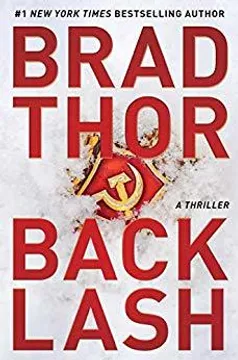
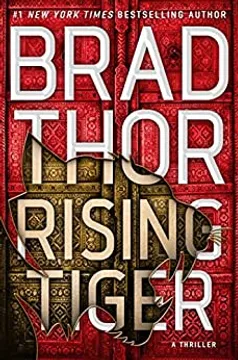
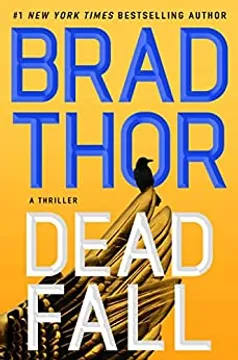
About the Author

Download PDF
Download EPUB
.epub digital book format is ideal for reading ebooks on phones, tablets, and e-readers.








