


Plot Summary
Prologue
At the Jefferson Memorial, FBI operative Andrew Salam meets Nura Khalifa, the young woman he recruited as an informant inside the Foundation on American Islamic Relations. Nura arrives in tears with a warning: her uncle, Koranic scholar Marwan Khalifa, has become a target, and an assassin may already be hired.
Salam promises to act, though his attraction to Nura has begun to blur the professional distance he depends on. As they leave the memorial so she can tell him more, two men rush them from the shadows.
The opening makes intimacy a practical vulnerability. Salam’s attachment to Nura matters because it compromises his attention at the exact moment she needs him to notice danger. The Jefferson Memorial also plants the book’s central collision: an American founder’s legacy will become entangled with a dispute over Islam’s origins and authority. Nura’s warning gives the plot a personal source of urgency, but her uncertainty leaves room for the larger institutions around her to manipulate what the authorities later believe happened.
The Mercedes at the Café
In Paris, former Navy SEAL Scot Harvath is trying to build an ordinary life with Tracy Hastings, a former Navy explosive-ordnance technician still recovering from a devastating injury. Across from their café, he spots a man switch cars in a way that feels staged.
When a Mercedes replaces the stolen Peugeot, Harvath recognizes the danger and tackles a passing American just before the car explodes. He and Tracy move the injured man away from the wreckage, then discover he is Anthony Nichols, a University of Virginia historian carrying a private White House phone number.
Nichols disappears before they can question him. Harvath understands that the bombing was no random attack, and Tracy points out that French surveillance footage will soon make them suspects too.
Harvath’s return to action begins as a reflex, not a decision. He tries to leave his former life behind, yet his trained attention keeps reading the street as a pattern of threats. The rescue binds him to Nichols through consequence: once Harvath acts, he and Tracy are visible witnesses whose apparent foreknowledge can be mistaken for complicity. Tracy’s insistence on facing that danger also establishes her as a partner in judgment, not simply someone Harvath must protect.
A Murder Made to Fit
Back in Washington, CIA operative Aydin Ozbek examines the Jefferson Memorial killing that left Nura dead and Andrew Salam in custody, covered in her blood. Salam insists he was framed, but the FBI denies employing him.
His account identifies the recruiter who trained him as Sean Riley, an apparent handler who taught him to infiltrate Islamist groups under the name Operation Glass Canyon. Ozbek recognizes that the supposed FBI operation may have been designed to protect those groups from real investigators.
Salam explains that Nura had reported growing interest in her uncle’s research and meetings between FAIR chairman Abdul Waleed and radical cleric Mahmood Omar. The two men had hired a covert assassin, Majd al-Din. Ozbek suspects the agent is former CIA operative Matthew Dodd, officially dead.
The plot’s deception works by giving Salam a genuine tradecraft education while falsifying the institution behind it. His sincerity makes him useful to the conspirators and easy to frame: he behaves like an operative because he believes he is one. Ozbek’s investigation mirrors that uncertainty. His professional instinct is to distrust the story, but details such as Salam’s training and Nura’s reports point toward a real operation concealed beneath the fabricated one. The resulting question is not merely who killed Nura, but who controls the evidence that defines guilt.
Jefferson’s Missing Pages
At the Sargasso safe house on a Paris barge, Nichols explains why someone wants him dead. President Jack Rutledge recruited the historian to study Thomas Jefferson’s private writings on the Barbary pirates and Islam.
Jefferson believed he had uncovered a trail to a final revelation attributed to Mohammed, one that might overturn the later commands to wage war. The trail runs through Miguel de Cervantes’s captivity in Algiers, a cryptogram supposedly hidden in a first-edition Don Quixote, and a cipher wheel Jefferson used to protect his research.
Nichols is trying to buy the rare book at a Paris antiquarian fair, but a rival bidder has outmatched the president’s private funds. The discovery of early Koran fragments by Marwan Khalifa may corroborate the search, making the scholar a target as well.
The historical investigation gives the thriller a chain of material objects, each carrying knowledge across a different era: manuscript fragments, a novel, Jefferson’s encoded notes, and the wheel cipher. This turns intellectual work into action without making scholarship a mere decoration. The characters must decide whether an interpretation of sacred history can alter present violence, while the novel’s premise makes the cost of that hope tangible. Nichols’s modest resources also contrast with the enormous political consequences imagined for a book he cannot yet afford.
Shots at the Grand Palais
Harvath takes Nichols’s place at the antiquarian fair and approaches dealer René Bertrand with an improved offer. Before they can reach a café to negotiate, an armed man forces Harvath and Bertrand through the crowd at gunpoint. Police recognize Bertrand and order him to stop. The gunman fires, wounding all three officers, and Bertrand bolts back into the exhibition hall.
Harvath pursues him through the panicked crowd, fires to clear a path, and drags him out through an emergency exit. He takes a car to escape and brings Bertrand to the barge, where he learns the dealer’s paranoia is mixed with a serious heroin addiction. Harvath uses the drug as leverage until Bertrand admits the book is being held at a mosque in Clichy-sous-Bois.
The book becomes dangerous before anyone can read its secret. Bertrand’s double dealings connect scholarly recovery to a criminal market, while the gunman’s willingness to shoot police reveals that the opposition will accept civilian chaos as a cost of keeping the object hidden. Harvath’s tactics are effective but morally rough: he substitutes control of Bertrand’s addiction for physical violence. The scene also exposes the limits of his protective instincts. He can extract information, but each intervention enlarges the danger around Nichols and Tracy.
The Mosque Switch
Tracy’s worsening headaches leave her unable to join Harvath at the Bilal Mosque, so she helps him prepare a counterfeit book and an alarm to distract the mosque’s custodians. Disguised as an academic assistant, Harvath persuades director Namir Aouad to show him Jefferson’s box and the Don Quixote.
He verifies the first-edition markings, then triggers the shrill alarm and uses the confusion to replace the original with the decoy. Outside, he recognizes Matthew Dodd, the assassin from the Grand Palais.
Dodd draws his weapon and pursues him through the mosque as worshippers stampede. Harvath escapes through an adjoining bathhouse, but a massive mosque guard tackles him outside. His waiting cabdriver, Moussa, rams the second guard with his taxi and gets Harvath away with the genuine book.
The substitution is a small, precise victory inside an expanding moral and physical crisis. Tracy’s operational intelligence remains active even as her health fails, and Harvath relies on her judgment rather than treating her only as a liability. The crowded mosque complicates the action: his escape depends on turning a place of worship into cover, while the gunfire that follows threatens people who have no part in the conspiracy. The book is secured, but Harvath has now met the adversary directly and knows the danger has followed him across continents.
The Ghost in Paris
Ozbek compares security footage from the bombing and book-fair shooting, then matches the shooter’s brief profile to Matthew Dodd, a Transept operative long listed as killed in Pakistan. He also identifies Harvath and learns Nichols is tied to the White House.
Meanwhile, Harvath returns to the barge with the book and finds Tracy gone; she has sought medical care rather than slow his escape. French police take her into custody while doctors investigate her brain swelling.
President Rutledge and his aide Gary Lawlor help Harvath and Nichols leave France under false Canadian identities. Before flying home, Harvath learns from Salam that Dodd had posed as an FBI handler. Salam is still imprisoned, but Ozbek believes his account and continues pursuing Dodd.
The apparent retirement ends, but Harvath’s return is not a simple restoration of his old identity. Tracy chooses treatment without asking him to abandon the mission, while Harvath has to accept that love cannot mean controlling every risk she takes. The parallel investigation finally names the threat, linking the Paris attacks to the false FBI operation in Washington. Yet official help remains compromised by secrecy and jurisdiction: the president can get Harvath out of France, but cannot simply free Tracy or resolve Salam’s case.
Blood on American Ground
Back in Virginia, Harvath retrieves Nichols’s encrypted research from a tennis ball in his university office. Two Saudi operatives ambush him at the University of Virginia, firing into his vehicle; Harvath kills both and escapes in a stolen car.
Ozbek’s team traces Dodd to Baltimore and raids his apartment, but Dodd kills Stephanie Whitcomb and badly wounds Steve Rasmussen before escaping. He then breaks into Harvath’s home, Bishop’s Gate, knocks down Lawlor, and steals Nichols’s laptop, notes, Jefferson’s cipher wheel, and most of the recovered material.
Only two partially decoded drawings survive because Nichols had kept them near his bed. Harvath, Nichols, and Ozbek are left with scraps, an injured ally, and the knowledge that Dodd now possesses nearly everything they had gathered.
The American setting strips away the fantasy that home ground guarantees control. Dodd turns the investigators’ own surveillance and confidence against them, and Ozbek’s unauthorized operation exposes the cost of pursuing justice outside legal safeguards. Harvath’s losses are both strategic and personal: a colleague is attacked in his home, research accumulated over years disappears, and his group is reduced to fragments. The surviving drawings matter because preparation sometimes looks like redundancy until catastrophe makes it the only remaining path.
The Clock Behind the Wall
The surviving drawings point Nichols, Harvath, and Ozbek first to Monticello’s Great Clock, then to a mantelpiece at Jefferson’s retreat, Poplar Forest. Curator Susan Ferguson and director Jonathan Moss help them connect Jefferson’s architectural details to the room that once held his library.
Harvath recognizes that a brick opening beside the fireplace is not an anchor point but a concealed mechanism. After removing the mantel and drilling out the plugged opening, the group reveals a chest marked with the name of naval officer Isaac Hull.
Inside is an eight-hundred-year-old clock created by the Islamic inventor al-Jazari. Harvath fits the Basmala gear into its mechanism, and the clock’s tiny scribe begins writing a message in blood. Before they can decipher the whole text, Dodd arrives and takes the device and hostages.
The discovery is a collaboration between historical knowledge and physical intuition. Nichols reads Jefferson’s intellectual trail; Ferguson and Moss interpret architecture; Harvath recognizes how a concealed mechanism might function. The clock embodies the novel’s belief that ideas survive through craft as well as texts. Its hidden placement also makes historical memory vulnerable to loss: one fire, one theft, or one misreading could sever the chain. Dodd’s arrival interrupts not just a puzzle but a collective act of recovery, converting their shared expertise into a hostage crisis.
One Word Survives
Dodd forces Harvath and Ozbek to surrender their weapons, then takes the al-Jazari clock, Nichols’s papers, and Poplar Forest director Jonathan Moss and curator Susan Ferguson. Harvath has already concealed the Basmala gear, leaving Dodd with a machine that cannot reproduce its message.
After Dodd flees, Moss returns wounded and says the captives were released at a roadside stop. The president later tells Harvath what Jefferson’s private diary concluded: Mohammed’s final revelation rejected war and urged peaceful life among people of other faiths.
The clock had produced only one legible word before it was taken: Peace. Harvath cannot recover the device, but the message survives in his memory, and Dodd’s theft no longer erases the central discovery.
The apparent defeat is narrowed by one act of foresight. Harvath cannot save the device or prevent Dodd’s escape, but keeping the gear preserves the possibility of interpreting what the machine revealed. The president’s account shifts the stakes from finding an artifact to deciding who will carry its meaning. The word is both evidence and ethical demand, though the book refuses to imply that a recovered text can instantly end political conflict. Knowledge survives; its consequences still depend on human choices.
Dodd Breaks with Omar
At the Bitter End Yacht Club in the British Virgin Islands, Dodd studies the al-Jazari device and concludes that Sheik Omar and Abdul Waleed care more for power than for the faith they claim to defend. He calls them from a satellite phone, pretending he is ready to return the invention.
Instead, he dials a number connected to a bomb hidden behind Omar’s desk. The explosion kills both men. President Rutledge authorizes Harvath to pursue Dodd, and military surveillance narrows the search when the assassin uses his satellite phone again.
Harvath sails to the island and watches Dodd drink himself into a vulnerable stupor. He expects a straightforward capture, but another visitor arrives first: Pentagon official Imad Ramadan, who has come armed and intends to secure the device.
Dodd’s break with his patrons is not a conversion to moral innocence. He recognizes their corruption, yet responds by killing them through the same secret violence that has defined his service. His grief and search for moral certainty have made him susceptible to people who promise order; now he sees their ambition more clearly but has no stable alternative. Harvath’s pursuit is likewise shaped by compromise: the government wants the lost device, while his immediate motive is to recover a truth that may help moderate Muslims challenge extremism.
The Last Exchange
On Dodd’s veranda, Ramadan demands the al-Jazari device and admits his involvement in the larger network. Harvath orders him to lower his weapon, but Dodd, drunk and unsteady, suddenly attacks. Ramadan shoots Dodd through the head; Harvath kills Ramadan before he can fire again.
Harvath later hands Dodd’s body and a list of extremists to French intelligence, securing their cooperation in arranging Tracy’s release. The president explains the revelation preserved in Jefferson’s diary, while Harvath confirms the clock itself is lost and its surviving word is Peace.
At St. Martin, Tracy arrives from France recovered from the swelling in her brain. Harvath welcomes her aboard his boat, where their dog Bullet is waiting, and the two prepare to travel together.
The climax denies Harvath a clean victory. Dodd and Ramadan die, but the machine that might have made the revelation publicly persuasive is gone. Harvath secures Tracy’s return by bargaining with the French, turning intelligence into a form of restitution rather than triumph. His reunion with Tracy closes the emotional question opened in Paris: whether he can return to his vocation without treating love as something incompatible with it. The answer is provisional and shared, grounded in her recovery and their renewed willingness to choose the life ahead together.
Epilogue
Back in Washington, Andrew Salam settles into a fragile return to ordinary life with his dog. The FBI has offered him a job, but he is not ready to accept. Then a letter arrives from a hotel in the British Virgin Islands.
Inside is a locker key and a note from Matthew Dodd, written under the name he used when recruiting Salam. Dodd leaves the choice of what to do with the key to the man he once deceived. Salam’s next decision is now his own.
The epilogue refuses to let Dodd’s death settle every consequence. His message makes Salam the recipient of a final responsibility, but unlike his earlier assignment, no institution has supplied a false identity or scripted purpose. The key is an unresolved object, a compact reminder that information can outlive its original owner and become a moral test for whoever inherits it. Salam’s return home is therefore not a complete restoration. It is a pause before a choice made with clearer knowledge of how easily duty can be manufactured.
Analysis
The novel turns a dispute over historical authority into a transnational chase. Its major clues are objects that must be found, verified, and interpreted: early Koran fragments, Jefferson’s papers, a rare Don Quixote, a cipher wheel, and al-Jazari’s clock. This material sequence gives the characters’ intellectual labor the momentum of an action plot, while also making knowledge vulnerable to fire, theft, and deliberate suppression. The stakes are not simply whether the revelation exists, but whether evidence can survive the political interests that would shape its reception.
The book repeatedly contrasts people who seek certainty with people who accept ambiguity. Dodd’s bereavement leaves him hungry for an absolute moral structure; Omar offers one, but his own appetite for power exposes its hollowness. Salam, by contrast, believes he is serving a legitimate institution and discovers that his loyalty has been exploited. Harvath’s growth is quieter: he learns that returning to dangerous work need not mean abandoning the possibility of love, especially when Tracy is treated as a partner with agency of her own. Their relationship offers a counterweight to the novel’s repeated use of people as instruments in state or ideological schemes.
Institutions in the story are neither wholly protective nor wholly corrupt. The CIA and White House can offer resources, but secrecy and political expediency constrain them; Ozbek’s unauthorized actions produce immediate costs. Harvath’s competence can save people, yet his methods also cross ethical boundaries. This tension keeps the thriller from presenting force as an uncomplicated solution, even as the plot relies on spectacular violence to move forward.
The ending is deliberately partial. The artifact disappears, the revelation cannot be publicly authenticated, and the word Peace survives as a clue rather than a political settlement. The epilogue transfers responsibility to Salam, who must decide what to do without the false authority that once directed him. In this way, the book’s final question is less whether an ancient text can change the present than whether people will use knowledge to challenge the systems that profit from certainty and conflict.
Review Summary
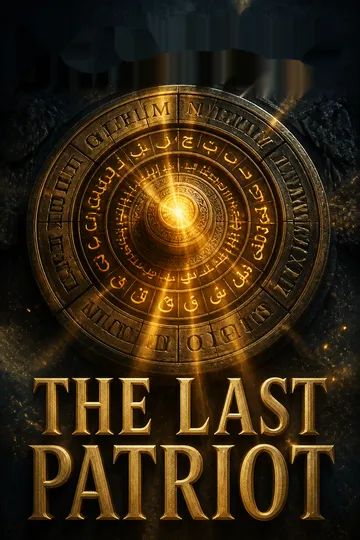
The Last Patriot receives mixed reviews, with ratings ranging from 1 to 5 stars. Readers praise its fast-paced action, historical elements, and thrilling plot involving Islamic terrorism and a secret revelation from Mohammed. Critics find fault with Thor's political views, writing style, and character development. Some compare it to Dan Brown's work, while others criticize its anti-Muslim sentiment. The book's controversial nature led to its banning in some Middle Eastern countries. Despite divisive opinions, many readers found it entertaining and thought-provoking.
People Also Read

Characters
Scot Harvath
Reluctant counterterroristA former Navy SEAL and covert counterterrorism operative, Harvath has tried to leave fieldwork behind so he can build a lasting life with Tracy Hastings. His attention to small irregularities, physical discipline, and willingness to act make him effective, but they also keep drawing him back toward danger. He distrusts political promises after seeing how decisions made at the top can endanger the people closest to him. Harvath’s central conflict is not whether he can fight, but whether he can remain a committed operative without letting the work consume every possibility of intimacy, rest, and ordinary happiness.
Tracy Hastings
Harvath’s fieldwise partnerA former Navy explosive-ordnance technician, Tracy is physically resilient, tactically sharp, and unwilling to let an injury define her. She and Harvath share a relationship built on humor and hard-earned trust, yet she recognizes that his attempt to abandon his vocation may be another way of avoiding the past rather than healing from it. Tracy makes operational decisions, challenges Harvath’s assumptions, and expects to be treated as an equal partner. Her self-deprecating humor can mask insecurity about her altered appearance, but her deeper strength lies in her ability to identify what matters and act without asking for permission to be valued.
Anthony Nichols
Jefferson’s patient decoderNichols is a University of Virginia historian specializing in Thomas Jefferson. President Rutledge recruits him to organize presidential papers, giving him discreet access to Jefferson’s private writings and the historical trail behind the missing revelation. He is a scholar rather than an operative, which makes him vulnerable when the search turns violent, but his persistence and command of historical context make him indispensable. Nichols believes evidence must be interpreted carefully and publicly supported, not simply used as a weapon. His partnership with Marwan Khalifa reflects that conviction: he wants scholarly corroboration for a discovery that could otherwise be dismissed as partisan provocation.
Aydin Ozbek
CIA investigatorOzbek is a former Green Beret and CIA operative assigned to track rogue intelligence officers. He reads people closely and understands how institutions hide their mistakes, but his belief that national security demands action can push him beyond lawful boundaries. His colleague Steve Rasmussen and his dog Shelby are among the few personal ties that soften his controlled, work-centered life. Ozbek recognizes that Salam may be telling the truth and commits himself to finding Dodd, even when the investigation becomes officially forbidden. His character tests the difference between moral conviction and legal authority, especially when consequences land on the people he commands.
Matthew Dodd
The vanished CIA assassinOnce a CIA assassin, Dodd disappears after the deaths of his wife and young son leave him grieving, angry, and hungry for a moral code that appears more definite than the one he has lost. He converts to Islam, takes the name Majd al-Din, and places his skills in the service of men who promise purpose. Dodd is disciplined, observant, and capable of extraordinary violence, but he is not a simple zealot: he dislikes unnecessary civilian deaths and resents leaders whose grand gestures endanger others. His search for order makes him both dangerous and vulnerable to anyone who can present power as moral certainty.
Andrew Salam
The deceived informantA young American Muslim with strong academic training in Arabic studies, Salam believes he is serving the FBI by infiltrating Islamist organizations. He is intelligent, patriotic, and committed to protecting moderate Muslims from extremists who claim to speak for them. His work depends on trust, which makes him susceptible to a recruiter who gives him convincing training and a false institutional identity. Salam’s professional restraint around Nura shows that he understands the ethical danger of exploiting an informant, even as his feelings complicate that boundary. The story places him between genuine civic loyalty and organizations that use his loyalty for their own ends.
Nura Khalifa
The endangered informantNura works inside FAIR and provides Salam with information about the organization’s leadership and its growing interest in her uncle’s research. She is brave enough to act on incomplete warnings, but the danger around her is difficult to measure and her connection to Salam is emotionally complicated. Nura is also Marwan Khalifa’s niece, giving her personal stakes in the scholarly work that powerful people view as threatening. Her role shows how intelligence gathering relies on people whose private relationships and safety can be absorbed into larger political struggles.
Marwan Khalifa
Scholar of early KoransA respected Koranic scholar, Marwan studies fragments recovered from the Great Mosque of Sana’a and finds textual differences between early manuscripts and later accepted versions. He is a moderate Muslim who believes historical inquiry can deepen, rather than destroy, religious understanding. His work intersects with Nichols’s Jefferson research, providing a possible independent foundation for the search. Marwan’s intellectual seriousness makes him threatening to people who treat questioning as blasphemy, while his relationship with Nura gives the academic dispute a family dimension.
Mahmood Omar
The radical clericOmar is a Saudi-born cleric who facilitates militant networks and supplies Dodd with assignments. Charismatic and strategic, he believes religious and political power should reinforce one another. He prefers dramatic, symbolic acts even when quieter methods would be safer, and he treats proverbs and confidence as tools for managing anxious allies. Omar’s certainty makes him dangerous, but his instinct to control every operation can also undermine the people he depends on.
Abdul Waleed
FAIR’s political operatorAs FAIR’s chairman, Waleed cultivates public influence and works with Omar to protect their political and religious project. He is less romantic than the cleric about risk: he worries about law enforcement, evidence, and whether their methods have exposed them. Waleed’s anxiety reveals a pragmatic understanding that public legitimacy is a resource to be managed. He sees Salam’s arrest and Nura’s death as potential liabilities, even as he remains committed to the organization’s ambitions.
Jack Rutledge
The burdened presidentPresident Rutledge quietly funds Nichols’s historical research and regards it as a possible way to weaken militant ideology without further bloodshed. His relationship with Harvath is strained by an earlier decision that placed people Harvath loved at risk, yet Rutledge accepts responsibility rather than pretending the conflict never happened. He is politically embattled and increasingly focused on what can be accomplished before his presidency ends. Rutledge’s secrecy protects the project, but it also limits the practical help he can offer when the search becomes dangerous.
Gary Lawlor
Harvath’s trusted mentorA former FBI deputy director who now leads the president’s covert counterterrorism effort, Lawlor has known Harvath since childhood and acts as a blunt, dependable mentor. He understands procedure, but his work requires him to support operations that stretch beyond ordinary bureaucratic limits. Lawlor’s mixture of care and directness makes him one of the few people able to challenge Harvath without losing his trust. He remains focused on the practical task of keeping people alive and moving the investigation forward.
Steve Rasmussen
Ozbek’s loyal colleagueRasmussen works beside Ozbek in the CIA unit tracking rogue operatives. His humor lightens their tense partnership, while his concern about legal limits gives voice to the risks Ozbek is willing to take. He is loyal, capable, and willing to enter dangerous situations, but he does not confuse loyalty with the absence of consequences.
Stephanie Whitcomb
The sharp-eyed analystA highly intelligent CIA operative, Whitcomb helps interpret surveillance footage and connect the Paris attacks to Harvath and Dodd. Her analytical skill makes her an important part of Ozbek’s team, and her willingness to join fieldwork shows that she is more than a desk-bound specialist.
René Bertrand
The compromised booksellerBertrand is a nervous rare-book dealer whose access to Jefferson’s Don Quixote puts him between competing buyers and a dangerous political conspiracy. His drug addiction and criminal associations complicate any assumption that he is a neutral intermediary. He is motivated by money and self-preservation, yet his possession of the book makes him a crucial link in the search.
Imad Ramadan
The Pentagon insiderRamadan is a high-ranking Pentagon official who is publicly involved in Muslim outreach and privately tied to the network surrounding Dodd and Omar. He presents himself as a defender of Muslim interests, but his loyalties and methods raise questions about where his institutional role ends and his political agenda begins.
Plot Devices
Mohammed’s lost revelation
A contested sacred historyThe novel’s central mystery concerns a final revelation said to have been given to Mohammed shortly before his death, then omitted from the Koran after his assassination. Jefferson’s research suggests it instructed Muslims to abandon warfare and live peacefully alongside people of other faiths. The revelation gives both sides a reason to act: Nichols and Rutledge hope it can strengthen reformers, while Omar and Dodd’s allies fear it will undermine their authority. Its importance depends not only on whether it exists, but on who can establish its authenticity and interpret it. The claim is the novel’s fictional premise, not an event established by the historical record.
Jefferson’s cipher wheel
A lock for the archiveJefferson’s cipher wheel encrypts his notes by arranging lettered discs in a particular order. The reader must know both the encoded message and the order of the discs to decode the material, so the device turns Jefferson’s research into a physical puzzle. Nichols uses it to follow clues from Jefferson’s writings, and its loss in Dodd’s raid sharply limits the investigators’ progress. It also reflects Jefferson’s caution: the research is preserved, but not easily accessible to people who might misuse it.
The first-edition Quixote
A literary map to JeffersonA rare copy of Don Quixote, once owned by Jefferson, is believed to contain notes that reveal how to order the cipher wheel and continue the search. The book passes through Bertrand’s hands and is hidden at a mosque in Clichy-sous-Bois. Harvath verifies its identifying marks, then secretly exchanges it for a decoy to carry the genuine volume away. The novel uses the physical book as a bridge between Cervantes’s captivity, Jefferson’s historical investigation, and the present-day chase.
Al-Jazari’s clock
A machine that preserves wordsThe clock, hidden behind a fireplace at Poplar Forest, was designed by the medieval inventor al-Jazari. Its mechanism includes a small moving scribe that writes a message when the proper gear is installed and the handle is turned. The Basmala gear allows the machine to function; Harvath secretly keeps it when Dodd steals the clock. The device makes the final discovery mechanical rather than purely textual, and its partial message gives the investigators a clue even after the larger artifact is lost.
Scot Harvath Series


About the Author

Download PDF
Download EPUB
.epub digital book format is ideal for reading ebooks on phones, tablets, and e-readers.








