

Plot Summary
Mansoor Becomes the Listening Post
On a country road near Uppsala, Scot Harvath and Riley Turner stage a crash that kills two men collecting Mansoor Aleem, a cyber operative linked to his uncle Aazim’s terrorist network. They seize Mansoor, then replace him with Sean Chase, an American agent whose Egyptian heritage may help him pass as the nephew.
Chase takes Mansoor’s passport and belongings, while Turner cuts a fresh scar into his forehead and adds broken glass to his clothes to make the accident look real. Their goal is to get Chase inside the Uppsala cell before it can launch a much larger wave of attacks. The urgency comes from a recent disaster in Yemen: an RPG destroyed Harvath’s vehicle and killed the captured Aazim, leaving the Americans suspecting a leak.
The operation begins with identity treated as equipment. Chase’s resemblance, borrowed possessions, and manufactured wound create a usable person, while Mansoor’s survival makes him both prisoner and potential source. The earlier loss of Aazim gives the mission its urgency, but also its distrust: Harvath is acting inside a system he believes may already be compromised. The disguise is therefore more than a spy device. It is a wager that close observation can recover intelligence that force and formal channels have failed to secure.
The House in Coldwater Canyon
In Los Angeles, former Delta Force operator Luke Ralston drives film producer Larry Salomon home on the anniversary of Salomon’s daughter Rachael’s birth. Ralston notices unfamiliar tracks near the estate’s service road, returns to investigate, and finds a van and an armed intruder.
He rams the gunman with his Porsche, cuts the house power, and fights through the dark with a kitchen knife and a stolen pistol. Inside, two of Salomon’s collaborators, Chip and Jeremy, are dead.
Salomon has locked himself in a makeshift panic room and shoots an attacker through the wall with a shotgun. Ralston gets him out alive, but refuses to wait for police, believing more killers may come. They escape in Salomon’s old Wagoneer, leaving a crime scene that makes them look guilty.
Ralston’s intervention grows from a specific habit of attention: he notices the tire tracks because he does not accept a quiet night at face value. His military training saves Salomon, but the same reflex to evade danger makes the pair appear culpable. Salomon’s grief is not a decorative backstory; it explains why he is alone, drinking, and vulnerable on the night of the attack. The rescue thus begins with care and immediately acquires a cost. Survival gives the men a chance to investigate, while flight places them outside the law’s protection.
The Film Beneath the Hit
At Hank McBride’s home, Salomon explains why the dead filmmakers were working from his office. Their documentary followed money moving through major foundations and endowments, then into the Standing Fund, run by billionaire James Standing.
They believed Standing and allied financiers were using that money to steer education, media, and politics toward a managed collapse of American institutions, a plan called Project Green Ramp. Salomon says the intended crisis could be economic, political, or worse, and that Standing sees mass death as an acceptable price for remaking society.
In New York, Financial Times reporter Julia Winston challenges Standing’s arguments for global governance and a new currency system. Standing reveals his contempt for ordinary Americans, while his quiet call with MI5 officer Robert Ashford shows that the Los Angeles murders are part of a larger conspiracy.
The documentary gives the conspiracy a material trail: not merely a villain’s speech, but money routed through institutions that appear respectable. Yet the film also shows how easily political argument becomes a weapon. Standing’s public language of collective welfare conceals coercive ends, while Salomon’s private investigation risks reducing complicated civic life to a single hidden design. Winston’s interview supplies a countervoice inside the story, forcing Standing’s abstractions to meet questions about individual choice. The section’s tension comes from the gap between public legitimacy and private intent.
Mansoor’s Heart Stops
Harvath isolates Mansoor in a cold barn and presses him about the Uppsala cell. Mansoor says he was summoned after his uncle’s death and insists he knows little about the people who brought him to Sweden. Harvath tries to make him believe the cell intends to kill him, hoping fear will overcome his guardedness.
When Harvath returns with water and a blanket, Mansoor has collapsed without a pulse. Riley Turner and Andy Bachmann begin resuscitation, and Riley injects adrenaline while Harvath uses two Tasers in an improvised attempt to restart his heart.
After repeated shocks, Mansoor breathes again. Riley suspects an underlying heart disorder and insists he needs a hospital, forcing Harvath to abandon the planned interrogation and arrange covert medical transport to Iceland.
Harvath’s control-based interrogation reaches a limit that he cannot command away. Mansoor is not simply a source to be extracted; his body can fail, making the operation’s human cost immediate. Harvath’s repeated shocks reveal panic beneath his professional certainty, while Riley’s medical judgment interrupts his impulse to keep pushing. Their disagreement makes the team’s ethical boundary practical rather than theoretical: information has value, but a dead prisoner cannot provide it. The rescue also redirects the mission, separating Riley from the assault team.
Blinds Become a Signal
Chase reaches the Uppsala cell after waiting in a garage and enduring questions from Sabah, a former Palestinian police officer who now serves as the cell’s muscle. Cell leader Mustafa Karami tests Chase’s account of the crash and asks about the mysterious Sheikh from Qatar, a name Chase has never heard.
During prayer, Chase counts nine men and sees no obvious weapons or explosives. He later spots Harvath’s car, marked by a book on its dashboard, and uses the apartment blinds and open windows to signal the assault team.
Karami notices the altered window coverings, sketches their arrangement, and sends Sabah away with the drawing. Chase understands that his signal may have exposed him, but cannot risk another attempt. He stays among the cell’s followers and waits for the raid.
Chase survives by performing a role that is both behavioral and bodily. His irritated hacker manner, religious gestures, and willingness to be mocked over hookah smoke all help maintain his cover. But the section also shows the instability of performance: Karami studies tiny deviations, turning the blinds into evidence. Chase’s discovery of the Sheikh matters because it expands the network beyond Aazim, while his signal makes him choose between gathering more intelligence and protecting the assault team. He chooses the latter, accepting that he may already be compromised.
The Wrong Apartment Burns
Harvath’s assault team enters what it believes is the safe house, but Karami has reproduced Chase’s window signal in a second apartment across the street. The operators hit the decoy, which explodes and kills five members of the team, including leader Schiller.
Harvath charges into the burning building, and Pat Murphy drags him back before the collapsing floor can kill him too. Across the street, Chase realizes Karami has read the signal and attacks the remaining cell members with a broken hookah and a rifle.
Wounded in the arm, he fights through the apartment and escapes with Harvath and Murphy. Karami and Sabah are missing. The surviving team flies to Iceland with Chase and the critically ill Mansoor, while Harvath accepts that the operation has failed and the enemy is preparing to move.
The decoy turns the team’s own communication method against it. Their failure is not caused by a lack of courage or force, but by an adversary who anticipates how they will read the scene. Harvath’s attempt to rescue his operators repeats the same protective impulse that once saved Salomon, yet here it cannot undo the losses. Chase’s escape preserves a fragment of the mission, but the missing leaders transform tactical failure into a larger threat. Grief and urgency now coexist: the dead must be honored, and the living must keep moving.
The Map of Two Hundred Cities
Back in Virginia, Harvath joins Reed Carlton and Nicholas, a gifted analyst known as Moonracer, to understand the network behind Aazim and Karami. Nicholas traces its origins to a Chinese military program called unrestricted warfare, a plan to exploit American political, economic, social, and technological vulnerabilities rather than fight conventionally.
Someone stole the plans, destroyed the Chinese outpost where they were developed, and took control of the terrorist network built from them. Nicholas decodes a map marked with more than two hundred American cities, each tagged by a color that appears to represent a different attack method.
The scale makes the Uppsala cell look like one part of a nationwide system. Harvath asks for the cities to be warned, but Carlton keeps the response quiet to avoid alerting the cells.
The map changes the story’s scale without dissolving its human stakes. A single compromised apartment now belongs to a system designed to attack ordinary infrastructure and public life. Nicholas’s work makes technology double-edged: pattern recognition may expose the plot, but the same interconnected systems create vulnerabilities. The language of unrestricted warfare also mirrors the secret operations used by Harvath’s own organization. Both sides exploit concealment and civilian systems, though the novel distinguishes them by their aims. That distinction remains morally charged because the methods can look disturbingly alike.
Theaters Become Targets
On a Saturday night, Sudanese operative Qusay Ali Atwa enters a crowded Des Moines theater carrying a backpack bomb. Iowa state trooper Mike Bentley notices Qusay behaving suspiciously and moves to confront him while his wife and twin sons watch.
Qusay detonates the device, killing Bentley and many of the people gathered for a family film. Similar attacks strike movie theaters across the country, and the death toll climbs into the thousands. At the Carlton Group, Harvath watches the reports arrive while Nicholas overlays the locations on the coded map.
The attacks match one color exactly: silver, a reference to cinema screens. The bombings confirm that the network is active and that the city markers were not speculative. Harvath rushes to Reston, expecting another attack to follow.
The theater attack makes the conspiracy intimate by placing violence inside an ordinary family ritual. Bentley’s attention to a stranger is an act of duty, but it cannot prevent the blast; his family becomes part of the catastrophe he tries to stop. The sequence also gives the map’s color coding a grim clarity. Silver is not an abstract military label but the familiar screen above a room full of families. The novel’s emotional force here depends on the contrast between the ease of entering a public space and the irreversibility of what happens inside it.
A Second Wave at LAX
Using an advanced intelligence program called TIP, Nicholas links one theater bomber to a second Egyptian man who previously died while planting explosives beneath a Chicago office tower. Their shared visa history and immigration lawyer suggest a wider recruitment pipeline.
Nicholas then identifies Tariq Sarhan, another Egyptian living in Los Angeles, whose house empties in a series of carefully separated departures. Harvath follows Sarhan’s surveillance-detection route to LAX and realizes four two-man teams are heading into terminals while overloaded vehicles wait nearby.
He captures Sarhan in a parked Escalade and tries to learn how to recall the teams. Sarhan refuses. When one bomber detonates in Terminal Two, Harvath orders authorities to move against the others. LAPD and specialist teams stop the remaining vehicle bombs, though officers are killed and many are injured.
This sequence turns data analysis into a race against physical time. TIP links records that separate agencies have failed to connect, but the discovery arrives only as the plot is already unfolding. Harvath must decide whether to preserve intelligence or act on an incomplete threat; the explosion removes the luxury of waiting. His choice exposes a recurring conflict in the novel between institutional authority and operational judgment. The civilians and police officers pay for the gap between recognizing a pattern and being able to stop it.
Ralston Finds the Fixer
While Harvath pursues the airport attackers, Ralston seeks help from Alisa Sevan, the sister of his former partner Ava, whose overdose death left him estranged from her family. Alisa brings him to her father, Martin, who tests Ralston’s judgment before introducing Aleksey Lavrov, an FBI source with ties to Russian organized crime.
Lavrov identifies Yaroslav Yatsko, a former FSB officer rumored to arrange assassinations using Russian operatives. Ralston breaks into Yatsko’s home, incapacitates him, and finds a corpse prepared to disguise the Russian’s disappearance.
He takes Yatsko to the desert and forces him to name Robert Ashford, an MI5 officer, as the man who ordered the Salomon hit. Ralston kills Yatsko but keeps the encrypted drive that may prove the connection.
Ralston’s hunt is powered by two debts: the present danger to Salomon and the guilt he carries over Ava. Alisa’s willingness to help does not erase their conflict; it makes them confront how grief hardened into blame. Martin’s test asks whether Ralston will act from revenge or restraint, and Ralston passes by refusing the blank evidence he is offered. Yet he later kills Yatsko, revealing how narrow that restraint can become under pressure. The drive gives his private pursuit a consequence beyond vengeance: it may connect the local hit to the national plot.
DuPont’s Hidden Charges
Nicholas notices that the map’s orange targets may be the corporate headquarters of the Dow Jones companies, where attacks could devastate the economy as well as kill executives. Harvath takes a small team to DuPont’s Wilmington headquarters, a complex containing offices, shops, a bank, and a hotel.
Explosive ordnance and emergency-response teams search the building while security chief Ron Lamat supplies plans and access. Bomb-detection dogs eventually alert handlers to charges hidden behind drywall around the fourth-floor support columns.
Teams confirm enough C4 to collapse the structure several times over. They evacuate the building and secure the explosives before they can be detonated. Harvath sends the discovery back to Carlton, who uses it to warn the other corporate targets while keeping the search as quiet as possible.
The DuPont discovery gives the financial dimension of the attack a concrete architecture. The plan is not merely to frighten investors; it places explosives inside the structures that hold a company, making economic damage inseparable from bodily danger. The building’s mixed use, including a sleeping hotel, also shows how a single target gathers people with no connection to corporate power. Lamat’s practical knowledge and the dogs’ alertness matter as much as Harvath’s strategic insight. Prevention here depends on coordinated expertise, not on one exceptional operative.
Ashford Names His Patron
Carlton lures Robert Ashford to Virginia by claiming the Group needs his help with Mansoor’s interrogation and the terror investigation. Harvath meets the MI5 officer at Dulles, drives him to a false office, and captures him.
Under pressure from Carlton, Harvath, and Yatsko, Ashford admits that James Standing financed the theft of the Chinese plans, took over Aazim’s network, and ordered the attacks. He identifies the next operations: coordinated strikes on Dow companies, followed by attacks on major news organizations and efforts to disable the Internet and power grid.
Ashford says he killed Aazim to prevent interrogation and confirms that hundreds of cells may be operating. His information changes the problem from tracing isolated bombers to dismantling a nationwide command structure before Standing can accelerate it.
Ashford’s confession turns the thriller’s scattered clues into a chain of command: financial patron, intelligence intermediary, terrorist commanders, and local cells. The revelation also exposes the limits of Harvath’s earlier assumptions about a leak. Professional trust has been used as an access point by the antagonist. Carlton’s offer of a new identity rather than ordinary prosecution underscores how far the Group operates outside public accountability. The threat is now legible, but not yet contained; knowing the plan does not guarantee that the many people poised to carry it out can be reached in time.
Standing’s Final Bath
With Ashford identifying Standing as the remaining command center, Harvath enters the billionaire’s Manhattan apartment before dawn. He incapacitates the security guard inside, reaches Standing’s bedroom, and confronts the financier in the bathroom.
Harvath forces Standing to take pills and drink wine, then leaves him to die in the bathtub with a razor and towel arranged to suggest suicide. Before leaving, Harvath places a DVD of Salomon’s documentary in the bedroom, along with material tying Standing to Project Green Ramp and the attacks.
The planned news strikes and infrastructure assault are still a danger, but Standing can no longer direct them. Harvath’s operation removes the man at the center of the plot while ensuring that the evidence of his crimes reaches the public.
The climax solves the immediate command problem through an act that deliberately bypasses law and due process. Harvath frames Standing’s death as suicide and uses the documentary as a counterweapon, converting hidden evidence into public narrative. The act resembles the antagonist’s own belief that outcomes justify coercive means, a resemblance the novel does not fully resolve. Yet the targets differ: Standing’s plan treats populations as instruments, while Harvath acts to halt further killing. The uneasy parallel keeps the victory from feeling morally clean, even as it makes the plot’s danger plain.
The Network Is Rounded Up
A week after Standing’s death, the documentary and interrogation footage reach the press, prompting a Justice Department investigation. Information from Ashford and the recovering Mansoor gives the FBI, U.S. Marshals, and local police enough detail to arrest terrorist suspects across the country.
The teams also return to Sweden, where Chase finds Karami and kills him; Murphy kills Sabah in revenge for the operators lost in Uppsala. In Los Angeles, Ralston and Salomon meet with detectives and the district attorney, who clear them of the murders at Salomon’s home.
Martin Sevan helps settle the legal fallout, while Salomon plans to screen his film in towns struck by the bombings and later travel to Israel to face his daughter’s death. Ralston learns Alisa is divorced, and she invites him to lunch.
The roundup converts private intelligence into public institutions, a rare moment when clandestine knowledge produces formal accountability. But the Swedish resolution remains personal and violent: Chase and Murphy impose their own endings on the men who escaped, echoing the larger conflict between justice and retaliation. In Los Angeles, the survivors’ consequences are less spectacular but more intimate. Salomon turns a documentary made in secrecy into a communal act of mourning, while Ralston and Alisa begin to loosen the blame that bound them to Ava’s death. Resolution here means different things to different characters.
Bullets at Number Seven
Before the final confrontation in Paris, Harvath gives Israeli intelligence evidence that Standing planned to provoke a war against Israel and frame the Israelis for the American attacks. Standing intended to make the United States distrust its ally and withhold help.
The closing scene then shifts to Harvath in Paris, carrying the Old Man’s cryptic address to a new safe house. He follows it to an apartment building and presses the buzzer for number seven. Riley Turner opens the door, revealing that Carlton has brought her there too.
Harvath has barely registered her presence when he notices movement on the stairs. He shouts a warning and knocks Riley back inside as bullets strike the doorway. The book ends with the immediate danger unresolved, even though the larger network has been dismantled.
The final scene refuses to let operational success become emotional safety. Harvath has delivered intelligence that may protect Israel, but the last image returns him to the exposed threshold where a private hope and professional danger collide. Riley’s presence suggests a possible life beyond work, yet the gunfire interrupts any easy transition into intimacy. The ending also keeps the protagonist’s defining problem active: he can identify threats, but cannot make the world stop reaching him. The close is a cliff edge rather than a settled homecoming.
Analysis
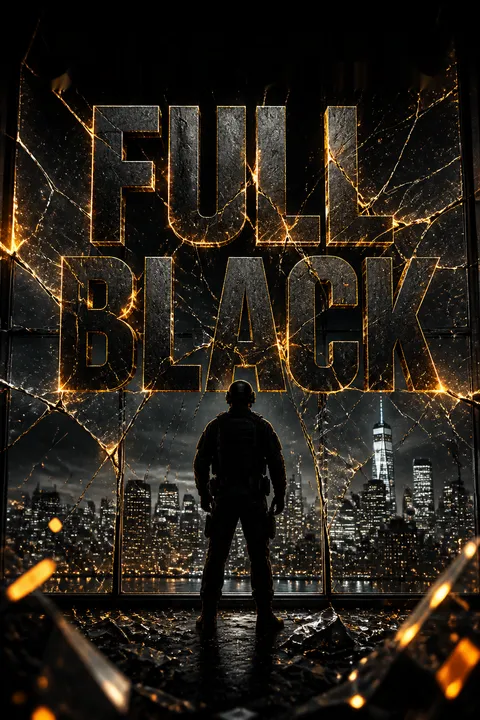
Full Black builds its thriller around the conversion of hidden knowledge into action. Harvath’s team begins with fragments: a dead terrorist commander, a cyber operative, a suspicious cell, and a documentary produced in a private home. Each new clue enlarges the danger, from Uppsala to a map of American cities, until the plot becomes a contest over whether intelligence can move faster than a coordinated attack. The book’s recurring devices, assumed identities, covert signals, data-mining systems, and coded targets, make information feel physical. It can save a life, expose a team, or turn a city into a point on a map.
The emotional counterweight is found in the two personal histories. Ralston’s failure to give testimony he could not honestly provide has estranged him from Alisa, while Salomon’s daughter’s murder has left him unable to imagine a future beyond work. Their stories resist the novel’s more sweeping political claims by insisting that violence is never merely strategic. It enters families, alters loyalties, and leaves survivors with choices that cannot be undone. Salomon’s decision to screen his film in attacked communities turns storytelling into an attempt at repair, not simply persuasion.
The novel’s sharpest moral tension comes from the resemblance between its antagonist and its protagonist. Standing believes coercion is justified by a promised better world; Harvath believes extraordinary violence is justified by the lives it may save. The story clearly distinguishes their ends, but its covert operations repeatedly bypass public scrutiny, and Harvath’s staged killing of Standing makes that problem impossible to ignore. Full Black therefore offers both a conventional thriller’s satisfaction, a conspiracy exposed and a network dismantled, and a less comfortable question: who gets to decide that secrecy and force are necessary, and how can anyone know when that decision has become another form of power without restraint?
Review Summary
Full Black by Brad Thor receives polarized reviews. Supporters praise the fast-paced action, intricate plot, and realistic counterterrorism thriller elements featuring protagonist Scot Harvath. However, many critics condemn the book for its heavy-handed right-wing political agenda, portrayal of liberals and Democrats as un-American, anti-Muslim sentiment, and graphic torture scenes. Several reviewers abandoned the series due to excessive political preaching that overshadows the story. The premise involves a billionaire funding terrorists to collapse America. Fans appreciate the suspenseful storytelling, while detractors find the ideology offensive and the political commentary overwhelming.
People Also Read


Characters
Scot Harvath
The covert operations spearpointHarvath is a former Navy SEAL and Secret Service counterterrorism officer now working for the clandestine Carlton Group. He is physically disciplined, decisive, and more comfortable acting than waiting for a bureaucracy to approve action. That effectiveness comes with a cost: he distrusts institutions, carries responsibility for people lost under his command, and has difficulty making room for an ordinary private life. His relationship with Riley complicates his preference for control, while his loyalty to Reed Carlton gives him a mentor and a chain of command he does not always find easy to follow. Harvath’s central tension is whether protecting others can remain a moral vocation when his methods increasingly operate beyond public law.
Sean Chase
The deep-cover infiltratorChase is a CIA operative trained to pass inside terrorist networks, and his mixed Egyptian and American background helps him cross boundaries that would expose other agents. He is observant, physically capable, and willing to use humor or irritation as part of a cover. Unlike Harvath, he has spent years inhabiting an enemy organization and understands how much intelligence depends on patience and performance. He is also young enough to bring a direct, impatient energy to the work, sometimes testing the limits of his colleagues’ judgment. His relationship with Harvath is built on mutual respect and shared purpose, but Chase retains an independent streak and a strong desire to complete what he has begun.
Riley Turner
The field surgeon and operatorTurner is a trauma surgeon and former Athena Project operative whose medical training makes her essential when a mission goes wrong. Fit, perceptive, and difficult to read, she can challenge Harvath without allowing his authority to overrule clinical judgment. She treats injured people as patients first, even when they are prisoners or adversaries, and that discipline counters the team’s tendency to see every problem as operational. Her wary attraction to Harvath creates a personal connection, but she does not let it erase professional boundaries.
Reed Carlton
The spymaster and mentorCarlton is a veteran intelligence officer who built the Carlton Group as a lean alternative to the risk-averse agencies he believes have failed their purpose. He recruits capable people, trusts them to act, and expects loyalty to the mission. His bond with Harvath has elements of mentorship and paternal care, though Carlton is not above using that bond to steer him. He balances his affection for the people he employs with a readiness to make ruthless calculations. His preference for secrecy and compartmentalization keeps the organization effective, but also raises questions about who can hold such power accountable.
James Standing
The billionaire ideologueStanding is an immensely wealthy financier who presents himself as a humanitarian critic of inequality and national borders. He is intellectually agile, vain, and practiced at shaping the room around him, yet his confidence in his own superior judgment leaves little space for dissent. His public arguments about collective welfare conceal a profound contempt for individual choice. Standing’s wealth gives his ideas practical reach: he can fund institutions, influence public opinion, and move people without appearing to command them. He embodies the danger of benevolent language when its speaker assumes that ordinary people must be forced toward the future he has chosen.
Robert Ashford
The polished intelligence veteranAshford is a senior MI5 officer shaped by decades of espionage and Cold War habits. Immaculately controlled, career-minded, and adept at plausible deniability, he sees himself as a practical servant of a larger historical cause. That self-image makes him vulnerable to rationalizing choices that would otherwise appear indefensible. He is comfortable working through intermediaries and shaping events from a distance, but his professional pride also makes him susceptible to the need for information and influence. His long relationship with Carlton adds a personal dimension to the intelligence rivalry.
Luke Ralston
The Delta veteran in HollywoodRalston is a former Delta Force operator who now advises film productions on tactics and action scenes. He is observant, protective, and skilled under pressure, yet his discipline is complicated by unresolved grief and a tendency to take responsibility for other people’s choices. Ava’s death left him carrying guilt, while Salomon’s pain draws him into a new crisis before he has fully made peace with the old one. Ralston values personal honor so strongly that he once refused to give testimony he could not honestly provide, even when that choice cost him the Sevan family’s trust. He is capable of violence, but does not consider it a substitute for conscience.
Larry Salomon
The grieving film producerSalomon is a successful Hollywood producer whose confidence in the movie business has been hollowed out by the murder of his daughter, Rachael. Work has been his chief remaining structure, and alcohol offers a temporary way to endure dates that reopen his loss. His documentary investigation gives him a reason to act again, but also places him and his collaborators in danger. Salomon is neither a natural spy nor a public crusader; he is a storyteller who understands that evidence must reach an audience to matter. His struggle is to turn private grief into something that might help others without pretending it has disappeared.
Nicholas
The brilliant data hunterKnown within the Carlton Group as Moonracer, Nicholas is a gifted analyst and hacker whose command of data can reveal connections hidden across institutions. He is eccentric, guarded, and fiercely attached to the two enormous dogs that accompany him. His childhood exploitation taught him to treat information as both protection and currency, leaving him with a complicated relationship to trust and belonging. Joining Carlton’s organization offers him a chance to use his abilities in service of something beyond himself, though he remains wary of the people and institutions that claim authority over him. His work turns digital traces into the team’s most important source of foresight.
Mansoor Aleem
The captured cyber operativeMansoor is Aazim Aleem’s nephew and a skilled participant in the digital side of the terrorist network. He is more accustomed to controlling information than facing physical danger, and his technical ability has not prepared him for interrogation or captivity. His uncertainty about the network’s leadership makes him valuable to Harvath, while his fragile health forces the team to confront the limits of what it can demand from a prisoner.
Mustafa Karami
The watchful cell commanderKarami leads the Uppsala cell with careful discipline and a mind trained to distrust coincidence. Physically frail but intellectually sharp, he treats operational security as a matter of survival and tests newcomers rather than accepting their stories. His painful history with government torture has helped shape a temperament that values secrecy above comfort. Karami’s attention to detail makes him more dangerous than the cell’s enforcers, because he can recognize how tiny signs reveal a larger intrusion.
Sabah
Karami’s imposing enforcerSabah is a large, battle-hardened Palestinian who serves as Karami’s closest security aide. Before joining the militant cause, he worked as a corrupt police officer, giving him an instinctive feel for questioning and suspicion. He is physically intimidating and alert to changes in behavior, especially when the cell’s safety may be at risk. His loyalty to Karami is practical as well as ideological: he acts as both guard and investigator.
Yaroslav Yatsko
The Russian criminal fixerYatsko is a former FSB officer who has built a quiet criminal presence in Los Angeles behind legitimate businesses. His experience links Russian intelligence methods with organized crime, and he prefers to arrange dangerous work through other people. He is calculating and self-protective, treating violence as a service to be managed rather than a moral act. His past makes him a useful intermediary in a world where a local operation can depend on international networks.
Alisa Sevan
The attorney who reopens trustAlisa is an entertainment attorney and Ava’s older sister. Practical, intelligent, and accustomed to managing conflict, she has kept her distance from Ralston since his refusal to testify in the case surrounding Ava’s death. Her anger is rooted in grief and in the family’s need to locate someone to blame. Beneath her professional control remains a complicated affection for Ralston, which makes helping him both a choice and a reckoning with the past.
Martin Sevan
The formidable defense attorneyMartin is Alisa and Ava’s father, a prominent Los Angeles criminal defense attorney with a keen eye for motive and character. He protects his family fiercely and does not offer trust without testing it first. His legal career has brought him into contact with dangerous people, but he understands that familiarity is not the same as safety. His authority in the family is balanced by a capacity to acknowledge when grief has led them to treat someone unfairly.
Aleksey Lavrov
The FBI’s Russian sourceLavrov is a naturalized American and an informant within the FBI’s Russian organized crime task force. He is nervous and physically imposing, but his knowledge of the Los Angeles Russian community gives Ralston a path toward identifying who could arrange a professional hit. His relationship with Martin Sevan is based on legal dealings and favors, making him a cautious bridge between private citizens and law enforcement.
Aazim Aleem
The network’s former architectAazim is a British-born jihadist commander, scholar, and bomb maker whose preaching and operational planning helped build a far-reaching terrorist network. He is known for the steel hooks that replaced his hands, a physical reminder of his militant past. He compartmentalizes his organization and keeps even relatives from knowing its full structure. His death before interrogation leaves Harvath’s team with an incomplete picture and gives other forces room to seize control of the network.
Julia Winston
The probing financial reporterWinston is a Financial Times journalist who interviews Standing about currency, global governance, and inequality. She is confident enough to challenge a powerful subject and precise enough to expose contradictions in his public arguments. Her intelligence and composure are not merely professional tools; they let her refuse the role Standing tries to assign her. The interview offers a public glimpse of his thinking before the hidden plan becomes visible.
Pat Murphy
The surviving assault operatorMurphy is a former Green Beret assigned to watch the rear of the Uppsala operation. When the assault goes wrong, he pulls Harvath out of the burning building and helps Chase escape. He carries the loss of his teammates into later action, where grief sharpens his desire for retribution. His competence and loyalty make him a dependable operator, but his response to loss shows how easily duty and vengeance can converge.
Hank McBride
The retired SEAL allyMcBride is a retired Navy SEAL and Hollywood technical consultant who offers Ralston and Salomon a place to hide. Resourceful and blunt, he remains connected to the Special Operations community and knows how to find equipment or people quickly. His friendship with Ralston gives the fugitives practical help, while his easy humor helps make a frightening situation briefly bearable.
Rachael Salomon
The daughter at the story’s heartRachael is Larry Salomon’s only daughter, murdered during a trip to Israel. Her absence shapes his grief, the collapse of his marriage, and his withdrawal from the life he once enjoyed. She remains a presence through the choices her father makes rather than through direct action in the present.
Qusay Ali Atwa
The patient sleeper operativeQusay is a Sudanese operative who has lived quietly in Iowa while awaiting instructions from the network. His religious conviction and dependence on promises made to his family help keep him committed to the mission. His outwardly frail appearance conceals a willingness to carry out violence against civilians.
Mike Bentley
The trooper at the theaterBentley is an Iowa state trooper who takes his wife and young twin sons to their first movie theater outing. His attention shifts from family celebration to public duty when he notices a suspicious man nearby. The scene briefly shows the human life the wider plot threatens.
Plot Devices
Mansoor’s Assumed Identity
A face inside the cellChase uses Mansoor Aleem’s passport, belongings, and apparent injuries to enter the Uppsala terrorist cell under a convincing cover. His Egyptian heritage helps him appear plausible to the group, while his knowledge of jihadist behavior sustains the disguise. The device gives Harvath access to a cell that would otherwise remain hidden, but it also creates risk: Karami and Sabah test small details, and Chase’s window signal helps expose the operation. The assumed identity makes intelligence gathering depend on performance, not just surveillance.
Fenestral Semaphore
Blinds carry covert intelligenceHarvath arranges for Chase to communicate through the height and angle of blinds, open windows, and hanging cords. The coded signal can tell the assault team how many people are inside and whether obvious weapons, traps, or explosives are present, without requiring Chase to use a phone. It is a small, quiet method suited to a compromised environment. Its weakness is equally important: Karami notices the unusual arrangement and recreates it at the decoy apartment, turning a simple communication channel into a trap.
TIP Pattern Analysis
Records reveal hidden linksNicholas uses Total Intelligence Paradigm, an advanced data-analysis system, to connect visa applications, travel records, utilities, financial activity, and other databases. The system identifies relationships between bombers and helps locate Tariq Sarhan through patterns of movement and household activity. TIP accelerates the investigation beyond what isolated agencies have found, but its reach also raises questions about privacy and surveillance. In the novel, its chief dramatic function is to make apparently unrelated records form a usable picture before the next attack occurs.
Color-Coded Attack Map
A hidden timetable of strikesThe stolen unrestricted-warfare data contains a map of more than two hundred American cities marked with differently colored dots. Nicholas and Harvath gradually infer that the colors correspond to distinct attack types. Silver identifies the movie theater bombings, while orange points toward attacks on major corporate headquarters. Ashford later identifies yellow as a planned assault on news organizations. The map turns the plot from a hunt for individual attackers into a race to interpret and disrupt a coordinated campaign.
Project Green Ramp
A crisis designed to collapseProject Green Ramp is the plan attributed to James Standing and his associates. It combines financial influence, cultural and political pressure, and terrorist violence to destabilize the United States, then exploit the resulting fear and economic damage. The plot’s attacks are not isolated acts of terror but components of a strategy meant to make the public accept a radically different political order. Salomon’s documentary traces the financial links, while the color-coded network supplies the operational means. The device gives the thriller’s international conspiracy an ideological and economic objective.
Scot Harvath Series





About the Author

Download PDF
Download EPUB
.epub digital book format is ideal for reading ebooks on phones, tablets, and e-readers.








