

Plot Summary
Prologue
In Istanbul, CIA contractor Scott Coleman watches Russian agent Vasily Zhutov through a camera hidden in Bebe Kincaid’s purse. Bebe, a retired FBI surveillance expert with an extraordinary memory for faces, spots the same young man tailing Zhutov for a second time.
Coleman knows the Russian operation may be connected to Joseph Rickman, the CIA traitor whose secrets could have exposed agents worldwide. His partner Joe Maslick is still recovering from a gunshot wound, but insists on working. The surveillance has found a threat, though not yet its purpose.
The opening turns routine surveillance into a test of attention: Bebe notices what a conventional team might miss, and her memory becomes a living intelligence instrument. Maslick’s injured shoulder gives the operation a human cost before the danger is fully understood. Meanwhile, Zhutov’s ordinary walk home carries the weight of a much larger uncertainty: whether Rickman’s betrayal ended with his death or left instructions still moving through the world. The scene establishes the novel’s governing tension between information and action. The agents can observe the danger, but observation alone cannot tell them who set it in motion.
Rickman's Network Frays
The CIA is still counting the cost of Joseph Rickman’s betrayal. After faking his kidnapping and joining forces with Pakistani intelligence officer Akhtar Durrani, Rickman exposed agents and left encrypted files behind. Mitch Rapp killed him and recovered computer drives, but no one knows how much intelligence Rickman had gathered or passed on.
CIA director Irene Kennedy works to identify compromised assets while Rapp heads for Istanbul to protect Zhutov, a Russian source named in Rickman’s torture video. At the Farm, Rapp’s mentor Stan Hurley is dying of cancer, and assassin Louis Gould remains a prisoner. Mike Nash worries Rapp is becoming as isolated as Hurley. Rapp leaves anyway, because Zhutov’s danger cannot wait for certainty.
The crisis begins with a paradox: killing Rickman stopped his immediate actions but made the full extent of his knowledge harder to establish. Kennedy must protect people from information she cannot inventory, while Rapp treats loyalty to an individual agent as a duty that cannot be postponed for strategic convenience. Hurley’s illness and Nash’s concern place that choice beside a second question: whether Rapp’s commitment to service is also a route toward self-destruction. The plot therefore opens on two kinds of uncertainty, operational and personal, each demanding action before anyone can know its full cost.
Sitting Bull's Rainy Walk
When FSB agents try to force Zhutov into a van, Rapp blocks the abduction. He shoots the driver and another armed Russian, then takes a surviving operative, Vadim Yenotin, for questioning. Yenotin explains that the FSB received an email after Rickman’s death identifying Zhutov as the CIA’s Sitting Bull and naming his handlers. The message could not be traced.
Rapp realizes Rickman had arranged for damaging information to keep coming after he was gone, and Zhutov’s rescue is only the first consequence. Kennedy now has to consider a deliberate release system rather than a single leak. Rapp brings Yenotin back to the Farm, where he and Kennedy begin searching for whoever is carrying out Rickman’s instructions.
Rapp’s rescue is both a moral choice and an intelligence failure made visible. Zhutov has not betrayed his country for money; Rapp values the principled risk he took and refuses to treat him as expendable. But Yenotin’s account shifts the danger from a compromised asset to an unseen mechanism that can keep operating without its creator. The email’s timing is the crucial evidence: Rickman planned for his own death. Rapp can protect one person in the street, yet the larger threat now lies in a system that may expose people before the CIA can reach them.
Taj Beneath the Surface
Ahmed Taj, Pakistan’s apparently unremarkable ISI director, uses Rickman’s crisis to strengthen his position. He kills Afghan commander Abdul Qayem and tortures Abdul Zahir, both potential links to the plot against Rapp, while presenting himself to Kennedy as a cooperative partner.
Taj secretly engineers an attack on a nuclear weapons facility, then uses the security failure to help shift control of the arsenal from the army to the ISI. He also recruits Senator Carl Ferris by flattering his ambitions and promising campaign money.
Ferris, already hostile to Kennedy, becomes a useful American voice against the CIA. Taj’s aim is larger than revenge: he intends to seize Pakistan’s government and make the United States appear responsible for the violence that follows.
Taj’s strength is not force alone but the careful arrangement of appearances. He allows others to mistake restraint for weakness, then turns their assumptions into political openings. The staged attack on a nuclear site makes institutional failure serve his rise, while Ferris’s vanity gives Taj influence inside the country he hopes to destabilize. Their alliance shows how a foreign operation can exploit domestic politics without controlling every participant. Ferris believes he is advancing his own career; Taj needs only that belief to make him useful. The danger grows because ambition, rather than shared ideology, is enough to bind them.
Gould Takes the Bait
With Rickman’s trail pointing toward Swiss banker Leo Obrecht, Rapp turns to Gould, the assassin who once destroyed Rapp’s home and killed his wife and unborn child. Kennedy has moved Gould’s wife, Claudia, and daughter, Anna, into protection. Rapp offers to spare him and let him return to them if he helps capture Obrecht.
Gould agrees, but his appetite for being recognized as the man who kills Rapp overrules the chance to resume family life. While imprisoned, he finds a coded job advertisement planted by Obrecht. It gives him a route to contact his former handler and a plan for the coming operation. Gould presents an apparently useful assault strategy, while concealing that he intends to turn it against Rapp.
Gould’s choice exposes the difference between wanting a family and accepting the obligations that family imposes. He can name the life he might recover, yet the fantasy of professional supremacy holds more power over him than Claudia and Anna’s safety. Rapp’s offer is not forgiveness; it is a conditional bargain made because the mission requires Gould’s expertise. That distinction matters. Rapp continues to judge the assassin by what he does, not by his claims of affection. The coded advertisement gives Gould a private channel into the operation, while his apparent cooperation creates a vulnerability that Rapp recognizes only in part.
The Swiss Estate Burns
Rapp, Gould, Coleman, and Hurley enter Obrecht’s heavily guarded Swiss estate through an escape tunnel. Hurley poses as an investigator to keep Obrecht occupied, but guards attack and take him. In the study, Gould sweeps Rapp off his feet and reveals he has accepted a contract to kill him. A thermobaric blast from Coleman’s team breaks through the wall, giving Rapp the opening to kill two guards.
Hurley wounds Gould at close range, but Gould shoots him repeatedly before collapsing from his own injuries. Rapp finds Obrecht dead in the basement, his throat cut by one of his guards, so the banker cannot explain who controls the operation. The team escapes with Hurley’s body, leaving the intelligence trail unresolved.
The operation makes trust a physical risk. Rapp accepts Gould because the mission needs his access, but Gould turns that dependence into a weapon. Hurley’s death is especially painful because he entered the estate not as a passive relic but as a participant determined to remain useful despite illness and age. Obrecht’s murder compounds the failure: the team can defeat the immediate attackers but cannot recover the explanation they came for. The violence buys escape, not closure. The survivors leave with proof that someone else is directing events, and Rapp carries a loss that changes the meaning of his next choice.
A Widow's New Beginning
After the Swiss operation, Rapp travels to Greece to tell Claudia Gould that her husband is dead. He avoids describing how Gould died, sparing her a final image of the man who repeatedly chose violence over the life she wanted with him. Rapp gives Claudia access to nearly thirty million dollars from Gould’s accounts, now consolidated and cleared of tax problems.
Kennedy has arranged a new identity and permanent residence for Claudia and Anna in South Africa, along with a home near a school and room for the life Claudia can build without her husband’s criminal world. Anna, named for Rapp’s murdered wife, meets him briefly before heading to the beach. Claudia embraces Rapp, grieving and thanking him for protecting them.
Rapp’s visit is a small act of repair that cannot undo the past. He does not recast Gould as a misunderstood husband or ask Claudia to forgive him; instead, he gives her practical security and lets her keep the truth she can bear. Anna’s name links two families through loss, but the child is not made responsible for that history. Rapp’s restraint here contrasts with his work as an enforcer. He can protect the living without turning grief into another execution. The scene offers him a form of agency beyond killing: he can leave someone safer than he found her.
The Lawyer's Daughter
In Rome, Kabir Gadai, Taj’s assistant, locates Isabella Accorso, the lawyer managing Rickman’s scheduled file releases. Gadai films Isabella’s sixteen-year-old daughter, Bianca, through a rifle scope and uses the threat to force Isabella to bring him Rickman’s encrypted files.
Isabella delivers the archive and erases the client’s records from her firm’s systems. Gadai promises that she and Bianca will be safe, then orders a truck to kill them both in a staged road accident.
The files reach Taj, but their encryption key is still held by a separate computer criminal. Kennedy’s team later finds evidence of the transfer and the deliberate crash, confirming that Rickman’s system has been seized by a powerful organization rather than a lone opportunist.
Gadai turns family attachment into coercion, making Isabella’s most rational act, protecting her daughter, serve the very danger she fears. His false promise reveals how Taj’s network treats people as disposable once they have fulfilled a function. The division between the law firm holding the files and the criminal holding the key is also consequential: Rickman designed a system in which no single custodian could access everything. That protection now creates a race. Taj has acquired the archive, but must find the person who can unlock it before the next scheduled release exposes more of his operation.
Safavi's Midnight Extraction
Rickman’s next release identifies Kamal Safavi, Iran’s ambassador to Britain and a CIA asset who favors better relations between Tehran and Washington. Kennedy sends a warning, but Iranian security reaches his London residence first.
Safavi is seized with his wife and young daughter, and the family is taken to the Iranian embassy. Rapp arrives too late to stop the kidnapping. MI6 refuses to intervene on British soil, and the American president rejects an attempt to intercept the family’s return flight, fearing it would put the United States on a war footing.
Safavi’s capture wrecks a fragile diplomatic opening and leaves Rapp furious at the political limits imposed on him. Rickman has again chosen the target and timing to prevent a rescue.
Safavi’s case makes the human cost of intelligence exposure brutally specific. He is not merely a name in a file: he has a wife and a child, and he acted from a belief that two hostile governments might find common ground. The agencies know what is happening but cannot act without risking a wider conflict. That restraint may be politically defensible, yet it leaves the people who trusted them exposed. Rickman’s timing exploits the gap between knowing and doing. Rapp’s anger comes from confronting a system that can identify danger precisely and still decide that intervention is too costly.
The Trail Through Rome
Rapp and Nash visit Isabella’s law firm and persuade its managing partner to give them the surviving paper instructions and access to the firm’s systems. The digital records have been deliberately overwritten, while Isabella’s death makes her disappearance from the process look like an accident.
CIA computer specialist Marcus Dumond traces the scheduled releases to an unidentified hacker who decrypts each file before sending it onward. He proposes a phishing operation, sending a corrupted test file to a shortlist of skilled hackers and tracing whoever asks for a working copy.
Kennedy authorizes the risky plan. A new release exposes Afghan fighter Fahran Hotaki, prompting Rapp to call him directly and offer extraction. Hotaki refuses to abandon Afghanistan, leaving the team with one less chance to protect Rickman’s sources.
This section shifts the CIA from reacting to each exposed asset toward trying to locate the machinery behind the releases. Dumond’s plan uses deception against a system built on secrecy, but it also risks alerting the very people the Agency is hunting. The law firm’s compliance cannot restore what Isabella erased; it can only narrow the search. Hotaki’s refusal complicates the idea that safety is always the highest good. He understands the danger, yet regards leaving his country as a surrender of the purpose for which he has fought. Rapp can offer escape, but he cannot make another person choose it.
Hotaki Refuses the Exit
After the leaked file identifies him, Hotaki stays in central Afghanistan rather than take the CIA’s extraction route. When Taliban fighters come to seize him, he arms himself and attacks. He uses a grenade, a stolen truck, and then firearms to kill or scatter the men who surrounded his village, turning their assault into a final defense of the people nearby.
Hotaki is wounded repeatedly and dies after continuing to fight. Rapp learns that the man he tried to save chose to remain where his family had been murdered and where he believed the Taliban still had to be opposed. The loss deepens the pressure on Rapp, while Kennedy’s team continues racing to identify who received the files.
Hotaki’s refusal is not simply stubbornness or a rejection of American help. His history has made home inseparable from the people and place he is defending, even when that defense is likely to cost his life. The novel does not present his decision as a strategy Rapp can adopt or a victory that makes the loss easy to bear. It leaves Rapp with the limits of his role: he can offer a route out, but cannot substitute his judgment for Hotaki’s. The episode also makes Rickman’s remote system lethal at a distance, turning a scheduled disclosure into an attack on a village.
The Burned House
As Kennedy faces President Alexander and Senator Ferris over the growing diplomatic damage, Rapp visits the burned remains of the home where his wife Anna died. He sits by the old fireplace, considers selling the ruined property, and recognizes how much his life has narrowed to repeated missions and losses. He tells himself that leaving the CIA may be the only future if Kennedy is forced out.
Meanwhile, Dumond’s phishing messages go to a narrowed list of hackers chosen partly by their history with him. The plan finally produces a Russian server location. The result gives the team a lead, but not time to spare: Taj is preparing a state dinner that will bring Pakistan’s president, American officials, and Ferris together.
Rapp’s visit to the house gives private form to the cost of a life organized around emergencies. The ruin is not only a memorial; it is a decision he has postponed, and his thought of clearing or rebuilding it marks a tentative willingness to act outside the next mission. That possibility remains fragile, since the Russian lead arrives while political support for Kennedy is weakening. The story places two forms of repair side by side: Rapp may be able to rebuild a home, while Kennedy must persuade a government to preserve the institution she leads. Neither can control the timing.
A Key in the Snow
Rapp’s team flies into a blizzard in northern Russia to reach Pavel Katdsyn, the hacker receiving Rickman’s files. Taj’s men arrive first, kill several residents of Katdsyn’s remote commune, and force the hacker to reveal the encryption key. Gadai sends it to Taj before Rapp reaches the building. Rapp captures Gadai and takes the key and files, but Taj has already gained access to the archive.
Under interrogation, Gadai confirms that Taj plans to kill President Chutani during the American state dinner and blame the United States, clearing the way for an ISI takeover. Rapp persuades Gadai that Taj will also eliminate him and his family. Gadai agrees to die in exchange for his family’s protection, and Rapp honors the bargain.
The Russian operation is a tactical success arriving one step too late. Rapp saves the archive from being destroyed and captures the man who can explain Taj’s next move, but the transmission of the key means the enemy already possesses the same leverage. Gadai’s decision is not a sudden conversion; it follows from the possibility that Taj sees him as expendable. Rapp’s offer forces him to choose between political ambition and his family’s survival. The bargain also reveals Rapp’s moral code in an uncomfortable form: he uses lethal force, but treats a promise made to protect innocents as binding.
The Palace Kitchen
Rapp reaches Islamabad with Scott Coleman and joins security consultant Jack Warch at the presidential palace. The American delegation is already inside, and Taj is keeping close to Ferris. Rapp and Warch trace the plot to chef Obaid Marri, whom Taj has tasked with poisoning Chutani. Rapp corners Marri in a walk-in refrigerator and finds a tiny poison packet concealed beneath the chef’s sleeve.
Rather than expose the threat in a room crowded with armed Pakistani guards, Rapp forces Marri to put the poison in Taj’s dish instead. Warch positions his team to protect the visiting secretary of state, while Rapp stays close enough to Taj to verify the switch. The dinner begins with the conspiracy redirected toward its architect.
The kitchen turns the coup into a problem of proximity and timing. Rapp cannot simply arrest Marri without alerting Taj or triggering armed guards in a crowded palace, so he uses the chef’s own access to redirect the attack. His method is coercive and dangerous, but it limits the number of people who need to know what is happening. Warch’s cooperation matters because Rapp is not acting alone; the security plan depends on someone who understands the political consequences of a firefight. The poison’s concealment under Marri’s clothing makes the plot literal: the threat has been carried inside the room all along.
Taj's Last Banquet
As Chutani welcomes the American delegation, Marri serves the poisoned dish to Taj instead of the president. Taj begins choking, then vomits blood and collapses. Guards rush to protect Chutani and Secretary of State Sunny Wicka, and Rapp pushes through the panicked crowd to check that Taj cannot warn them. The ISI director dies from the poison he intended for Chutani.
Rapp pulls a fallen congresswoman to her feet, but when Ferris grabs him and demands rescue, Rapp drives a salad fork into the senator’s thigh and leaves him behind. He escapes with the crowd as Warch’s security team moves the American principals out. Taj’s assassination fails, his planned coup loses its leader, and Chutani remains alive to confront the crisis.
The banquet’s reversal is political as well as physical: Taj’s own means of assassination becomes the instrument that ends his plan. Rapp keeps his attention on preventing the president’s death, but the scene refuses to make him a spotless protector. His treatment of Ferris is punitive, driven by accumulated contempt for a politician who helped undermine the CIA and now expects personal rescue. The fork wound exposes the danger of Rapp’s anger even as he saves others. The immediate coup is disrupted, but the larger institutional damage remains, so survival does not equal a clean restoration of trust.
A Country Holds Its Breath
After Taj’s death, President Chutani opens an investigation into the ISI and secures the copies of Rickman’s files found in Taj’s office. They remain encrypted, and CIA specialist Marcus Dumond estimates that Pakistan will need decades to break the code. The CIA has the archive and key, but the exposed intelligence has already damaged relationships with Russia, Iran, and Saudi Arabia, while Washington debates Kennedy’s leadership.
Ferris survives his injury and accuses Rapp of stabbing him with a steak knife; Kennedy helps contain the political fallout. Rapp has also repaid Claudia Gould with a safe future for her and Anna, and begun considering a life beyond the ruins of his old home. Hurley’s death remains the loss he cannot file away.
The resolution is deliberately incomplete. Taj is gone and Chutani has survived, but the information Rickman assembled has already changed alliances and cannot be made harmless simply by locking it away. The encrypted copies buy time rather than closure. Rapp’s actions toward Claudia and his thoughts about the burned house point toward a different life, yet Hurley’s death leaves him facing the possibility that he has inherited the very isolation he once feared. The ending’s tension lies between preservation and repair: the Agency may keep its secrets for now, but Rapp must decide whether he can build anything for himself beyond defending other people.
Epilogue
At Stan Hurley’s funeral in Kentucky, Rapp chases Mike Nash’s four-year-old son through the cemetery before joining the small group around the coffin. Hurley’s estranged children and former wives are mostly absent, but flowers arrive from people whose lives he saved. Rapp apologizes to Kennedy for the operation that cost Hurley his life.
She reminds him that Hurley would have claimed the mission as his own. Kennedy confirms that Chutani is grateful and that the files are locked beyond Pakistan’s near-term reach. When she asks about the weapon Rapp used on Ferris, he insists it was a fork, not a knife. Then he leaves the grave with no promise that his own ending will resemble Hurley’s.
The funeral gives Hurley a measure of recognition without softening the damage his choices left behind. A small attendance, estranged family, and abundant flowers preserve the contradictions that defined him: he could be difficult to love and still save lives across decades. Rapp’s apology shows how readily he assumes responsibility for another person’s death, while Kennedy’s reply refuses to let him turn grief into a simple verdict against himself. The final exchange about Ferris preserves Rapp’s unruly independence, even after the political danger has passed. His future remains open, but the grave makes clear what kind of life he is trying not to repeat.
Analysis
The novel treats intelligence as a problem of custody. Rickman’s files do not become dangerous merely because they contain secrets; they become dangerous because the people who know how to read them, store them, release them, and respond to them are scattered across institutions that distrust one another. The CIA can recover an asset yet fail to protect him, obtain an archive yet lack its key, or understand a threat while diplomacy prevents intervention. Knowledge is never equivalent to control.
That political fragility is mirrored in the characters. Taj understands that institutions can be manipulated through the ambitions of the people inside them. Ferris’s desire for power makes him an instrument of a foreign plot without requiring him to see himself as disloyal. Gadai’s faith in Taj is similarly entangled with status and family. The book’s antagonism therefore does not rest on a simple contest between national virtue and national evil. It grows through self-interest, grievance, and the confidence that one person can impose order on chaos.
Rapp’s counterweight is personal loyalty. He risks his life for Zhutov, offers Hotaki escape, protects Claudia and Anna, and keeps his promise to Gadai’s family. Those choices do not make him gentle or politically reliable. His treatment of Ferris shows how readily justice becomes revenge when his anger takes over. Yet the distinction between Rapp and Gould remains consequential: both are exceptionally capable of violence, but Rapp understands protection as an obligation to people beyond himself.
Hurley’s death sharpens the final question. Rapp can preserve the Agency and stop a coup, but he cannot let duty substitute forever for a life of his own. The burned home, Claudia’s new beginning, and the funeral all point toward different forms of aftermath. The book ends with the archive contained, not erased, and with Rapp’s future similarly unresolved. Survival buys the chance to choose what comes next.
Review Summary
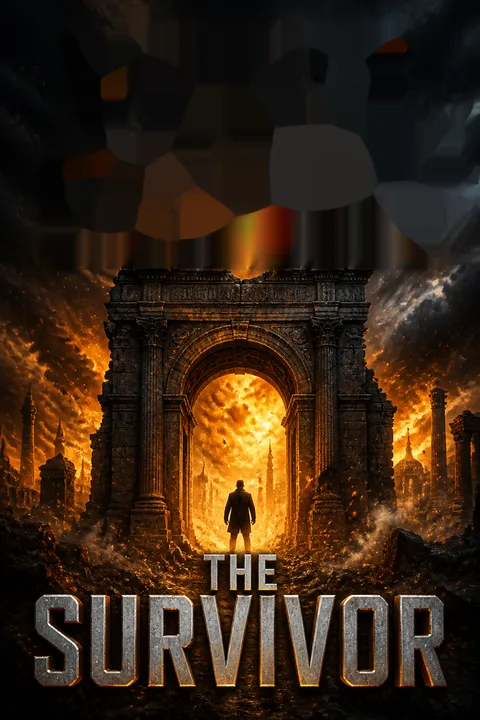
The Survivor received mostly positive reviews, with readers praising Kyle Mills for successfully continuing Vince Flynn's legacy. Many felt Mills captured Mitch Rapp's character and the series' tone well. Some noted minor differences but overall found it an exciting, action-packed addition. A few readers were less impressed, finding it less engaging than previous installments. Most longtime fans were relieved and satisfied with Mills' effort, appreciating the continuation of beloved characters and storylines.
People Also Read



Characters
Mitch Rapp
The CIA's field enforcerRapp is a highly trained CIA operative whose work depends on speed, judgment, and an unusual tolerance for danger. He measures himself by whether he can protect people in immediate peril, which makes bureaucratic caution feel like abandonment. Beneath his competence is a man shaped by the deaths of his wife and child, and by a long dependence on violence as a way to act when grief offers no remedy. His relationships with Kennedy and Hurley give him a rare sense of belonging, while his dealings with Gould force him to confront the difference between lethal skill and loyalty. Rapp is not comfortable with tenderness, but his protection of Claudia and Anna shows that he can turn responsibility toward repair.
Irene Kennedy
The Agency's strategistKennedy, director of the CIA, works at the point where intelligence, diplomacy, and domestic politics collide. She is controlled, observant, and skilled at withholding the reactions others want to provoke. Her responsibility for the Agency makes every decision costly: extracting an asset may save a life while exposing a network, and inaction may preserve a relationship while sacrificing a person. She shares a long history with Hurley and a deep professional bond with Rapp, though she cannot command either of them as easily as she can manage a room of politicians. Kennedy’s strength is not certainty but the capacity to make decisions while knowing that the evidence may remain incomplete.
Stan Hurley
Rapp's brutal mentorHurley trained Rapp and helped shape the instincts that made him an effective operative. He is abrasive, physically fearless, and impatient with the polished language used to disguise institutional compromises. His humor and appetite for drink conceal a life that has cost him marriages, family ties, and much of his health. Hurley’s bond with Rapp is built less on affection than on years of conflict, loyalty, and shared danger; he can provoke Rapp more effectively than anyone else because he knows exactly where the younger man’s pride lives. His presence also gives Kennedy a connection to the past and reminds Rapp that professional toughness has a personal price.
Ahmed Taj
The patient power brokerTaj leads Pakistan’s ISI and presents himself as a modest, practical administrator rather than a dangerous political force. He is patient, observant, and skilled at letting rivals underestimate him. His worldview treats institutions as instruments to be redirected, whether through money, violence, or carefully manufactured appearances. Unlike impulsive operators, Taj studies how other people’s ambitions can be made to serve his own. He sees weakness in democratic indecision and believes order must be imposed from above. His measured manner is a form of concealment, not passivity, and it makes him difficult for foreign intelligence services to assess accurately.
Joe Rickman
The brilliant CIA plannerRickman is a senior CIA operator whose intelligence on Afghanistan is unusually broad, covering political factions, local relationships, and the practical mechanics of covert work. He is known for exceptional analytical ability and a habit of planning several contingencies ahead. That talent makes him valuable to Kennedy’s organization and difficult for others to read. Rickman’s work has affected colleagues far beyond the region he oversaw, leaving the Agency to reckon with how much one person can know when trusted with years of sensitive operations. He is also a family man whose private concerns exist alongside the vast machinery of his professional life.
Louis Gould
The mercenary mirrorGould is a French-born professional assassin with a reputation for patience, adaptability, and close control of his emotions. He can make himself appear harmless when it serves him, but his deeper appetite is for mastery and recognition. His wife Claudia and daughter Anna represent a life he says he wants, while his work offers the exhilaration and status he struggles to relinquish. Gould’s history with Rapp makes him more than a conventional adversary: he reflects the same capacity for violence, stripped of Rapp’s stated commitment to protecting others. Their uneasy relationship tests whether skill alone can ever be trusted.
Mike Nash
The diplomat in the fieldNash is a former operative whose career has shifted toward management, political liaison, and family life. He is perceptive about people and more comfortable than Rapp with persuasion and institutional compromise. His friendship with Rapp is strained by the way Rapp made decisions about Nash’s future without fully including him, but the loyalty between them remains. Nash often tries to keep tense encounters from becoming violent, and his ability to motivate specialists becomes especially useful when the Agency must rely on technology as much as force.
Kabir Gadai
Taj's ambitious deputyGadai is Taj’s well-educated assistant and a capable intelligence officer who oversees sensitive operations. He is confident, status-conscious, and invested in the larger ambitions of the people he serves. His polished manners make him effective in international settings, while his willingness to threaten civilians reveals the violence beneath that polish. Gadai values loyalty, but he is also alert to his own future and to the possibility that powerful men may treat him as expendable. His relationship with Taj combines family connection, professional dependence, and an unspoken contest over influence.
Scott Coleman
Rapp's tactical allyColeman is a former special operations soldier who runs a private team of experienced operatives. He is disciplined, practical, and comfortable translating Rapp’s plans into positions, equipment, and escape routes. His loyalty is grounded in competence rather than flattery; he will voice concerns but still carries out the work when the decision is made. Coleman’s role gives Rapp a dependable command partner and a team capable of handling the logistical demands that Rapp tends to treat as secondary.
Vasily Zhutov
The Russian patriotZhutov is a Russian intelligence officer who secretly works with the CIA because he believes his country can become something better than its corrupt leadership. He refuses payment and does not trade military secrets, setting him apart from sources motivated by money or personal revenge. His careful routines and modest life make him vulnerable to surveillance, but they also show how little he wants from the people he risks his life to help. Rapp respects the distinction between a traitor for hire and a person acting from conviction.
Carl Ferris
The senator chasing powerFerris is a long-serving American senator whose public language centers on law and accountability. His private ambition is to gain greater political power, and he is quick to mistake flattery for evidence that he is acting in the national interest. He distrusts the CIA and believes its secrecy threatens elected authority, a concern that could be serious in another person’s hands. His vanity, however, makes him easy to manipulate. Ferris represents the danger of democratic oversight when personal advancement replaces a genuine effort to understand the institution being scrutinized.
Saad Chutani
Pakistan's elected presidentChutani is Pakistan’s president, a forceful political leader who has concentrated authority in his office while trying to present the country as a modern and dependable partner. He is pragmatic about cooperation with the United States and understands the instability within his own government. His reformist ambitions coexist with the hard methods of a leader operating in a volatile political system. Kennedy sees him as more reasonable than many Pakistani power brokers, though neither she nor Rapp mistakes him for a disinterested democrat.
Isabella Accorso
The lawyer holding secretsAccorso manages legal trusts and confidential client arrangements for an Italian law firm. She is a divorced mother whose strongest attachment is to her teenage daughter, Bianca. Her professional role requires discretion, but she is not an intelligence operative and has no reason to expect that ordinary administrative work could expose her family to danger. Accorso’s careful competence makes her valuable to clients who need information handled without scrutiny, while her devotion to Bianca gives others a means to pressure her.
Fahran Hotaki
The Afghan resistance fighterHotaki is an Afghan fighter who allied himself with the CIA after foreign militants destroyed his family and village. He does not share the American belief that Afghanistan can be remade through outside intervention; he sees the alliance as a practical way to oppose the men who brought violence to his home. His loyalty is rooted in personal loss and a fierce sense of obligation to his people. Hotaki’s choices reflect the difference between accepting help and surrendering responsibility for one’s own country.
Leo Obrecht
The banker of criminalsObrecht runs a discreet Swiss bank whose wealthy clients include corrupt officials, criminals, and people seeking anonymity. He enjoys the excitement of proximity to danger while relying on guards and a fortified estate to keep it at a distance. His work connects financial secrecy to the world of hired violence, and his careful security suggests a man who expects betrayal as a normal cost of business. Obrecht’s relationship with Gould is professional and transactional, built on money, access, and mutual suspicion.
Jack Warch
The security old handWarch is a former Secret Service executive brought in to assess security for the American delegation in Pakistan. He is experienced, cautious, and aware that the success of an operation depends as much on controlling a room as on defeating an attacker. His friendship with Rapp gives him reason to cooperate, but he continues to weigh the risks to the people under his protection. Warch’s presence connects Rapp’s impulsive field instincts with the careful procedures required to keep visiting officials alive.
Bebe Kincaid
The face-memory observerKincaid is a former FBI surveillance specialist whose remarkable memory for faces makes her difficult to fool. Her plain appearance helps her pass unnoticed in crowds, while her recall gives the team a human source of precision that cameras cannot always match. Rapp recognizes her value and treats her as a professional, not a novelty.
Marcus Dumond
The Agency's hackerDumond is a gifted computer specialist recruited after getting into trouble for hacking a bank. He is quick, inventive, and more comfortable with systems than with the pressure of field operations. His technical confidence can coexist with anxiety when lives depend on a result. Rapp takes a protective interest in him, while Kennedy and Nash learn that the best way to use his abilities is to give him resources without making fear another obstacle.
Joe Maslick
The wounded operatorMaslick is a former Delta soldier and member of Coleman’s team. Recently wounded, he insists on returning to operational work rather than allowing injury to define his usefulness. His terse manner makes him seem uncommunicative, but his willingness to take difficult assignments shows a stubborn loyalty to his teammates.
Anna Reilly
Rapp's lost partnerAnna was Rapp’s wife, a woman whose belief in people’s capacity for goodness differed sharply from his own working view of violence. Her memory shapes his grief and his uncertainty about whether a life built around danger can leave room for intimacy.
Claudia Gould
The assassin's wifeClaudia is Gould’s wife and Anna’s mother. She wants a stable life for her daughter and has spent years hoping her husband will choose family over the criminal world. Her loyalty is not blindness so much as a long effort to believe that the man she loves can still change.
Plot Devices
Rickman's timed releases
Secrets outlive their keeperRickman arranges for encrypted files to be released on a schedule if he stops checking in. A law firm administers the instructions, while a separate computer criminal decrypts and forwards the files. The division keeps any single custodian from seeing the full operation, and the timed disclosures expose CIA sources long after Rickman can be questioned. The mechanism drives the international crisis and forces Kennedy’s team to hunt both the archive and its key.
The encryption key
A second lock on the archiveThe files Rickman leaves behind are encrypted separately from the law firm’s release instructions. That distinction allows the archive to be transferred without giving the firm access to its contents. Taj’s organization can seize the files but must locate the hacker who can decrypt them. Dumond’s pursuit of that person turns online traces and a phishing scheme into an intelligence operation with immediate consequences for exposed sources.
Coded job advertisements
A message hidden in plain sightObrecht uses advertisements for employment to send instructions to Gould without relying on a direct, traceable communication. Phrases about starting work quickly, a Swiss residence, and a high salary carry operational meaning for someone who knows the code. Gould reads the advertisement while imprisoned and uses it to prepare his approach to the estate. Its ordinary appearance makes it difficult for guards to recognize that a prisoner has received a message.
Obrecht's escape tunnel
A hidden route inside the estateThe banker’s fortified property includes a concealed tunnel connecting the basement to a cave beyond the outer wall. Gould knows the entrance code and presents it as the safest way to remove Obrecht. The route gives Rapp’s team a quiet means of entry, but it also funnels the operation into an environment where they cannot easily see the guards or communicate with Hurley. The tunnel’s apparent advantage helps make the assault vulnerable to Gould’s betrayal.
Taj's staged security crisis
A manufactured reason to seize powerTaj uses a Taliban attack on a nuclear weapons facility to make Pakistan’s security arrangements appear inadequate. The attack creates political pressure to transfer responsibility for the arsenal from the army to the ISI, giving Taj a stronger position while he presents himself as an effective administrator. The same logic shapes his plan for the state dinner: violence is meant to create public anger and a pretext for a change in power. These manufactured crises turn institutional fear into a tool of political control.
Mitch Rapp Series Series







About the Author

Download PDF
Download EPUB
.epub digital book format is ideal for reading ebooks on phones, tablets, and e-readers.








