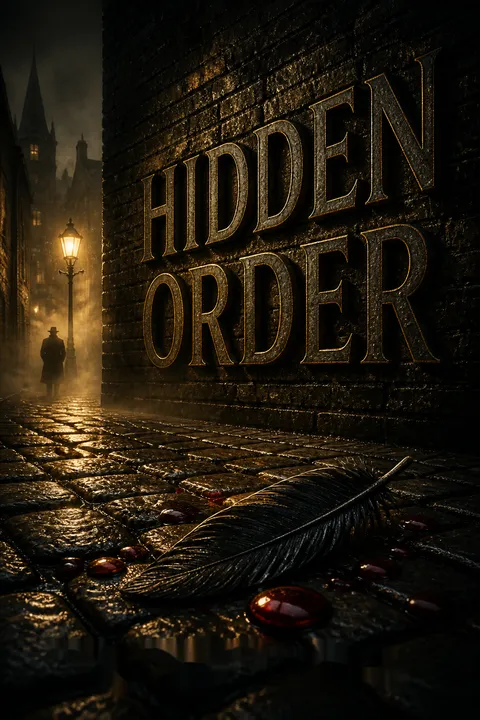


Plot Summary
Prologue
On Sea Island, Claire Marcourt, an economist being considered for Federal Reserve chair, reflects on her family and the Georgia home that makes her feel safe. A masked man drugs her, carries her to an inflatable boat, and takes her into a creek.
Before leaving the area, he reports by coded satellite call that the hostage is secured and the operation can proceed. Claire has no idea why she has been taken, but the men who planned it already know that the first move is complete.
Claire’s abduction turns a place of refuge into a crime scene before the wider plot has even named its stakes. Her memories of family, inheritance, and safety make the assault more than a tactical opening: the operation begins by violating the private world that its powerful targets believe they can protect. The coded call then replaces her personal fear with the machinery of a larger plan. She is not chosen for a private grievance; she is one piece in an operation whose purpose remains hidden.
Jordan's Warning in Frankfurt
CIA officer Lydia Ryan meets Nafi Nasiri, Jordan’s deputy intelligence chief, in a Frankfurt airport lounge. He shows her former members of Eclipse, a covert destabilization team, meeting Jordanian Muslim Brotherhood figures in Cyprus. He also says the same Americans appeared in Egypt and Libya before those governments fell, giving Jordan reason to suspect that it could be next.
Ryan denies knowing what the dismissed team is doing, but Nasiri refuses to share intelligence about a terrorist plot targeting the United States unless she helps him investigate. His warning leaves her facing two problems at once: a possible attack at home and the possibility that her own agency has concealed the team’s return to work.
Ryan’s professional identity is caught between two forms of loyalty. Nasiri is an ally whose warning may save lives, but the evidence implicates people she once worked beside and an agency trained to protect its own secrets. His conditional disclosure makes intelligence itself a bargaining instrument, forcing Ryan to judge not only what is true but who is withholding truth for leverage. The scene also establishes her refusal to treat institutional affiliation as proof of innocence. Her skepticism is not disloyalty; it is the discipline that makes her useful.
The Captain's Cost
Off Somalia, former Navy SEAL Scot Harvath has retaken the hijacked tanker Sienna Star, but discovers the pirates have taken its Greek captain ashore. With his employer, Reed Carlton, already strained by lost contracts and recent attacks, Harvath cannot afford a failed operation. Kenyan engineer Mukami offers to guide him and fellow SEAL Matt Sanchez to the pirate compound in exchange for money that could help recover his trafficked sister.
The team diverts the pirates with an attack on their boats, enters the compound, and reaches the captain. A pirate kills Mukami before Harvath can intervene. Harvath gets the captain out under fire, but the rescue leaves him carrying fresh grief as Carlton urgently summons him home.
Harvath’s competence does not protect him from the cost of using people as pieces in an operation. Mukami makes a calculated choice because poverty and his sister’s disappearance have narrowed his options, yet that choice ends in a death Harvath cannot prevent. The loss punctures the clean logic of a successful mission: the captain is saved, the pirates are defeated, but the human price cannot be counted as a tactical detail. Harvath’s later impatience with bureaucratic delay grows from this experience. He is accustomed to acting where consequences are immediate and visible.
Five Names at the Fed
In Washington, Carlton explains why Harvath was rushed back: Federal Reserve chairman Wallace Sawyer has died, and all five people being considered to replace him have disappeared. One, Claire Marcourt, has been found murdered on Jekyll Island.
At the Federal Reserve, security director William Jacobson and senior official Monroe Lewis show Harvath evidence left with Claire’s body: a crown above a skull and crossbones, an economic message, and the initials S.O.L. The Federal Reserve wants the missing candidates recovered and asks the Carlton Group to help discreetly alongside the FBI.
Harvath hesitates because there is no ransom demand and the case belongs primarily to law enforcement. Carlton accepts anyway, betting that Harvath can find the pattern before another candidate dies.
The assignment begins inside a conflict over who controls public knowledge. The Federal Reserve fears the murders, but it also fears the scandal that would expose its leadership and selection process. Harvath notices that the client’s desire for discretion may compete with the victims’ need for rescue. His reluctance therefore marks an ethical distinction between serving a client and serving the people endangered by the client’s crisis. The strange symbols offer a second kind of opacity: they look like political theater, but their precise historical references may turn spectacle into evidence.
Ryan Crosses the Chain
At the CIA, Ryan’s supervisor, Phil Durkin, refuses to investigate the former Eclipse team or trade information with Nasiri. Ryan turns instead to her mentor, Bob McGee, who believes Durkin may be concealing more than he admits.
McGee arranges a discreet meeting with Director of National Intelligence George Johnson, who authorizes a covert inquiry and gives Ryan cover to investigate. Before Ryan and McGee can act, armed professionals lure Ryan from her apartment and abduct her; McGee follows their van and rams it, killing the captors and freeing her.
They flee to Colonel Brenda Durkin’s home, where Ryan recognizes a wine opener and bottle matching evidence planted to frame them for murder. The attack convinces them that someone inside the intelligence world knows about their meeting and wants them silenced.
Ryan’s decision to bypass the chain of command is not a simple act of rebellion. The institution has failed to distinguish procedural loyalty from public responsibility, so she seeks authority outside the channel that is blocking her. The attempted framing escalates that institutional problem into personal danger: evidence is designed to make the truth look like guilt. Her discovery of the planted items shows how expertise can restore agency, while McGee’s rescue underscores the trust that survives between colleagues when formal systems become hostile. The story makes secrecy both a tool of statecraft and a weapon against its practitioners.
A Crown Above Bones
Back at his Virginia home, Harvath compares the crime-scene photographs with books on the American Revolution. He recognizes the skull, crossbones, and crown as imagery used against British rule, then connects the bloody marks on Claire’s sign and the logs beneath her body to the Sons of Liberty and the 1772 Pine Tree Riot.
The initials S.O.L. complete the apparent signature. Carlton sends him to Bill Wise, a former intelligence specialist whose research into lethal behavior helps distinguish professionals from ideological amateurs.
Wise argues that the cleanly removed ears, careful staging, and simultaneous kidnappings suggest a funded operation, not merely angry citizens. Harvath is left with a useful but uneasy conclusion: the historical clues are deliberate, but their public message may conceal the killers’ real purpose.
History functions here as a language that can be read in two incompatible ways. The killers borrow symbols associated with resistance to tyranny, but their violence does not automatically inherit the moral legitimacy of the revolution they invoke. Harvath’s research makes the evidence legible without making its authors trustworthy. Wise adds a psychological counterweight: the crime’s precision suggests an organized sponsor, not spontaneous political rage. This distinction is central to the investigation. A symbol can announce what perpetrators want the public to believe while simultaneously distracting from the interests paying for the performance.
Boston's Bloody History
A second candidate, Herman Penning, is found hanged outside Boston’s Liberty Tree site, suspended by a pulley mechanism timed with a draining container. Harvath reaches the scene before the investigation has settled and clashes with Boston homicide detective Lara Cordero and her prickly partner, Sal Sabatini.
Harvath recognizes the devil figure and revolutionary symbols hidden in a small boot, linking the killing to the old protest against the Stamp Act. Cordero presses him until he admits that the victims were candidates for a powerful economic post.
Later, a prostitute named Kelly Davis is found in the Charles River with her ears cut off. Her friend Brittany Doyle identifies a man who had assaulted her in a cemetery, and Harvath buys Brittany’s cuff so police can examine it for prints.
The Boston murders convert historical symbolism into a working relationship. Cordero’s insistence on reciprocity challenges Harvath’s instinct to protect the client by withholding information, while her homicide expertise supplies the local knowledge he lacks. Their uneasy cooperation is grounded in a shared practical aim: prevent another death. Kelly’s murder also changes the meaning of the killer’s signature. The repeated mutilation links an apparently political execution to an impulsive attack on a vulnerable woman, suggesting that the symbolic pattern and the killer’s personal appetites may not fit neatly together.
The Crate in Garden Court
A third candidate, Peter Whalen, is discovered dead inside a metal box in a North End apartment, his body covered in pine tar and feathers. A timed tire fire has filled the building with smoke, drawing first responders to the grisly display.
Harvath recognizes the allusion to colonial punishment and identifies Whalen by his height and old knee-surgery scars. The new crime confirms that the killer has brought victims from other cities to Boston, and it leaves Betsy Mitchell and Jonathan Renner as the two missing candidates.
Harvath and Cordero map revolutionary sites and focus on the Boston Massacre marker, where police gather in hopes of intercepting the next attack. They have a likely location, but no reliable way to distinguish a victim from a decoy.
The change in method intensifies the investigation without making the killer easier to understand. The historical references remain coherent, but the physical spectacle grows more elaborate, as if the perpetrator needs to keep increasing the scale of his control. Harvath and Cordero respond by treating place as evidence, mapping the city’s revolutionary geography to anticipate behavior. Their plan depends on a fragile inference, however, and the public setting carries a moral risk: the more visible the trap, the more people it may expose. Knowledge narrows the search while leaving the danger broad.
The Team Still Breathes
Ryan and McGee use a false investigation into missing funds to pressure banker Erick Stevenson, who reveals that the Eclipse team is still funded through a renamed front organization. Ryan chooses former teammate Florentino Marche as a possible source, but gunmen kill him in an alley and nearly hit her.
The pair follow a surveillance operative to Wise’s warehouse, where they interrupt an attempt to kill Wise and capture Samuel, a lethal operative once known to Wise. Under questioning, Samuel confirms that Durkin kept secret programs alive and targeted Ryan and McGee.
Ryan’s trail also leads her toward Tom Cushing, the former team leader, and other Eclipse operatives in Boston. The evidence now points beyond Jordan’s suspicions: the old unit has not merely resurfaced, it is being used.
Ryan’s investigation requires her to exploit the very habits of covert work that once defined her team: false fronts, financial channels, and carefully chosen vulnerabilities. The death of Florentino shows the cost of acting on a plausible lead when an adversary has already anticipated it. Samuel’s capture provides intelligence, but not certainty; his account must be weighed against a system built to compartmentalize truth. Ryan’s refusal to use children as leverage also distinguishes her method from McGee’s harder instincts. She remains willing to operate in the shadows, but insists that necessity does not erase moral limits.
Liberty's Blast Radius
At the Boston Massacre marker, the missing Betsy Mitchell appears in a heavy coat, repeating a nursery rhyme and dropping cards printed with the revolutionaries’ emblem. Harvath senses something wrong, but the officers need seconds to identify her.
When she steps into the street, Cordero and patrol officer Kaczynski rush to protect her. A remote-controlled suicide vest detonates. Harvath shields Cordero from the blast, but Kaczynski and many bystanders are killed or wounded.
Mitchell had been released under threat after being forced to perform as a disoriented homeless woman; a camera on her body let her captors monitor the approach. The political theater has become mass murder, and the careful police operation has instead delivered the victim into the blast zone.
The bombing exposes the danger of treating public symbols as predictable scripts. Mitchell’s rhyme and discarded cards are not simply clues; they are controls her captors use to direct her body through a crowded city. The police read the scene correctly too late, and their protective instincts become part of the mechanism. Harvath’s attempt to save Cordero cannot undo the deaths around them, making heroism painfully local rather than triumphant. The blast also strips away the comforting distance between symbolic political violence and ordinary civilians: the people nearest the historical marker bear the cost.
The Tea Party Chase
After the bombing, Ryan and Wise capture Eclipse operative Stark at a hotel, while Cordero discovers that Sabatini has been involved in the killings. Sabatini escapes to Boston Harbor, where Harvath and Cordero find a body in the water that is not Jonathan Renner.
A Coast Guard pursuit ends with Renner alive aboard a cabin cruiser, Tom Cushing dead on the upper deck, and another operative, Vaccaro, drowned below. Sabatini escapes the boat, then returns to Cordero’s apartment and holds her parents at gunpoint while trying to take her and her son, Marco.
Harvath gets Marco to safety through the downstairs tenants. When Sabatini threatens Cordero and her family, Harvath shoots him, ending the immediate danger and the partnership that had turned against her.
This climax collapses professional and intimate betrayal into the same space. Cordero’s partner has used the trust built through years of shared work to conceal violence, then turns that history into leverage against her family. Harvath’s rescue of Marco depends on Cordero’s plan and her willingness to risk herself, not on his usual control of an operation. At sea, Renner’s survival offers a rare reprieve amid the deaths; at home, force becomes necessary only after Sabatini makes the family a hostage. The thriller’s action resolves through relationships as much as through weapons.
The Fed's Hidden Bargain
The surviving clues lead Harvath, Ryan, and their allies to Tierra del Fuego, where Durkin has fled with hired gunmen. They find Durkin already shot dead and intercept Jacobson, the Federal Reserve security chief, as he tries to escape.
Under pressure, Jacobson admits that Saudi leaders blackmailed former chairman Sawyer over the dollar’s role in oil trading. Sawyer then funded Durkin’s secret operations, including Cushing’s team, which engineered the Arab Spring to create governments friendlier to Saudi interests.
When Sawyer reconsidered and promoted outside candidates for his successor, Durkin had them abducted and killed. Jacobson and Lewis intended to install Lewis as chairman by exploiting a damaging secret inside the Federal Reserve. What looked like an anti-Fed uprising was a cover for power and survival.
The revelation reverses the case’s apparent political logic. The killers’ anti-tyranny theater was not an authentic revolt but camouflage for an alliance among intelligence operators, financial leaders, and foreign state interests. Yet the book does not let the exposure produce a clean moral victory: the plot rests on real vulnerabilities in a system whose secrecy enables both public manipulation and private coercion. Harvath’s investigation uncovers a chain of complicity rather than a single mastermind. Durkin, Jacobson, Lewis, and Sawyer each use institutional power to avoid consequences, while the people killed become collateral in their effort to control the future.
A Republic Rebuilt
Back in Washington, the President orders prosecutions for the conspirators and refuses to renew the Federal Reserve’s charter, demanding an overhaul of the financial system rather than another rescue for powerful institutions.
He appoints Ryan and McGee to jointly lead the CIA, brings Wise back to help investigate its hidden programs, and directs Ryan to review Jordan’s intelligence about the separate terrorist plot. Cushing’s remaining associate is taken into custody, while the President asks for a full accounting of Durkin’s covert operations.
He also agrees to protect Harvath’s team from fallout over the Somalia raid by assigning responsibility through the DNI. The Carlton Group, badly weakened before the crisis, is invited to serve the country again. The immediate conspiracies are exposed, though the reforms ahead promise a different struggle.
The resolution offers institutional repair without pretending that exposure alone can restore trust. The President responds by changing leadership, scrutinizing clandestine programs, and challenging the Federal Reserve’s authority, but each remedy carries political and economic risk. Ryan and McGee inherit the agency that failed them, transforming their survival into an obligation to reform the system from within. Harvath and Carlton receive renewed purpose, yet their protection over the Somalia operation shows that even a just outcome may require secrecy. The ending’s optimism is therefore conditional: accountability begins, but the institutions that enabled the crisis remain powerful and must be remade.
Epilogue
On Cape Cod, Harvath has spent a week growing close to Lara Cordero’s son, Marco, while Lara begins to imagine a future with him. She has brought them to the beach where her husband drowned, not to erase the loss but to face it with her family beside her.
Harvath promises to keep Marco safe, and Lara teases him for having concealed his swimming ability. Then she chooses to enter the water with both of them. The gesture does not undo her grief; it lets her return to the place where grief began without standing there alone.
The beach scene answers the novel’s opening image of a family’s refuge by returning its survivors to water, now under conditions of choice rather than abduction. Lara’s decision to enter the sea does not signify that grief has ended or that Harvath can replace her husband. Instead, she tests whether a new attachment can coexist with an old wound. Marco’s bond with Harvath makes the possible relationship concrete, while Harvath’s promise gives his protective instincts a domestic form. The ending moves the story’s concern with safety from institutions and operations into the fragile, chosen work of family.
Analysis
Hidden Order builds its thriller around a collision between public symbols and private power. The murder scenes borrow the Sons of Liberty’s language of resistance, inviting investigators and citizens to see the violence as a modern uprising against financial tyranny. That reading is plausible because the Federal Reserve is distant, technical, and difficult for ordinary people to understand. But the historical imagery is a mask: those who claim to oppose hidden authority are themselves serving a secret arrangement among intelligence operatives, financial leaders, and foreign interests. The novel’s sharpest political question is therefore not whether institutions should be trusted, but how trust can be earned when institutions control both information and the means of concealment.
Its characters offer competing answers. Harvath believes responsibility begins with action, while Ryan insists that action must remain answerable to moral limits. Cordero brings the investigation back to the people and neighborhoods that abstract strategies endanger. Their methods differ, but none can solve the case alone. The novel makes cooperation a form of practical ethics: professionals must share enough truth to protect others, even when secrecy would be easier.
Violence also appears as a system of labor. Mukami is driven into criminal work by the search for his sister; Samuel is shaped by an institution that treats vulnerability as a resource; Sabatini turns personal attachment into possession. These stories do not excuse harm, but they resist the convenient fiction that violent actors emerge outside society. Institutions recruit, fund, and reward the capacities they later disown.
The ending promises reform, yet it avoids presenting exposure as cure. The President can prosecute conspirators, restructure agencies, and challenge the Federal Reserve, but each institution still contains people with power to evade oversight. Harvath’s return to service is hopeful precisely because the danger remains. Freedom, in this story, is not a settled inheritance. It is a practice of scrutiny, restraint, and responsibility that must be renewed wherever authority gathers.
Review Summary
Hidden Order by Brad Thor receives mixed reviews (4.17/5 overall). Many readers appreciated the fast-paced action and historical information about the Federal Reserve and Boston's Revolutionary War era. However, several critics felt protagonist Scot Harvath acted more like a detective than an action hero, with excessive historical exposition and insufficient action until the book's end. Common complaints included repetitive torture scenes, political soapboxing, and plot holes. Some readers found the dual storylines confusing. Fans generally enjoyed the thriller despite its departure from typical series entries, while detractors found it boring and poorly executed.
People Also Read


Characters
Scot Harvath
Relentless field operativeA former Navy SEAL and Secret Service protective agent, Harvath now works for Reed Carlton’s private intelligence firm. He is disciplined, physically formidable, and most at ease when a problem can be met directly, yet the death of Mukami reminds him that operational success is never morally weightless. Harvath respects competence more than rank and has little patience for bureaucratic delay, but he is not indifferent to civilians caught in the machinery of power. His humor gives him a way to manage strain without denying it. Beneath the self-reliance is a man still shaped by his father’s death and by the belief that courage means accepting responsibility for what happens next.
Lydia Ryan
CIA officer turned investigatorRyan is a gifted CIA field officer whose intelligence, nerve, and moral judgment made her valuable to a covert destabilization team. She is not naïve about the compromises intelligence work demands, but she resists treating secrecy as permission to ignore consequences. Her ties to former teammates complicate her assessment of the threat, while her trust in Jordanian intelligence officer Nafi Nasiri pushes her to challenge her own chain of command. Ryan’s operational skill is matched by an ability to read people, though she knows that instinct alone cannot substitute for evidence. Her central drive is to protect lives without surrendering her judgment to the institution that trained her.
Lara Cordero
Boston homicide detectiveCordero is a sharp Boston homicide detective and a widowed mother raising her young son, Marco, with help from her parents. She insists on evidence, local knowledge, and fair exchange, which makes her a necessary counterweight to Harvath’s instinct for secrecy and unilateral action. Her directness can be funny, but it also protects a woman accustomed to carrying grief while continuing to work. The drowning death of her husband has made the water a private measure of what she can bear. Cordero’s professional composure and maternal attention are not opposing selves; both come from the same need to notice danger before it reaches the people she loves.
Reed Carlton
Harvath's veteran mentorKnown to Harvath as the Old Man, Carlton built a private intelligence company after a long CIA career. He is an experienced strategist, a demanding employer, and a mentor who can be both paternal and sharp-edged. Recent attacks and the loss of his government contract have left his company financially vulnerable, so he accepts assignments with considerable risk. Carlton understands that political consequences matter, but he trusts Harvath to manage the danger on the ground. His long friendship with Harvath gives the younger man a model of leadership distinct from command: knowledge, accountability, and a willingness to stand behind the people sent into harm’s way.
Bob McGee
Ryan's tactical mentorMcGee is an experienced former Delta operator and CIA instructor who trained Ryan and remains fiercely protective of her. He is blunt, practical, and inclined to solve danger through direct action, which sometimes puts him at odds with Ryan’s more deliberate plans. His humor and appetite for comfort soften an otherwise formidable presence, but he is never casual about a threat. McGee knows how quickly professional judgment can be compromised by loyalty, anger, or fear. He follows Ryan into an increasingly dangerous investigation because he trusts her character, even when he doubts her choices.
Nafi Nasiri
Jordanian intelligence liaisonNasiri is deputy chief of Jordan’s General Intelligence Department and a former ally of Ryan’s. He is polished and personally charming, but he approaches intelligence as a matter of state survival, not sentiment. His decision to withhold information about a terrorist plot until Ryan helps investigate Eclipse makes him both a valuable partner and a source of pressure. Their shared history gives Ryan reason to take him seriously, while his methods force her to question what trust between allies can require.
Bill Wise
Expert on lethal behaviorWise is a retired soldier and intelligence specialist whose research examined how individuals and organizations use violence. His vast knowledge is paired with a practical, almost playful manner and a warehouse full of restored machines and books. He helps Harvath interpret the murder scenes as deliberate work rather than random rage. Wise also understands that a behavioral profile can guide an investigation without turning a suspect into a diagnosis. His past professional ties give him insight into clandestine programs and into the people shaped by them.
Phil Durkin
Ryan's CIA supervisorDurkin is Ryan’s former supervisor, an ambitious CIA manager with a history of drinking, personal misconduct, and strained relationships. He is skilled at navigating agency politics and believes that results can justify operating outside ordinary constraints. Ryan’s experience with him makes it difficult for her to distinguish professional judgment from personal grievance. His authority over covert work places him at the center of questions about responsibility, oversight, and what a powerful official can conceal.
Sal Sabatini
Cordero's longtime partnerSabatini is a Boston detective who has worked beside Cordero for years and knows the neighborhoods, routines, and institutional habits of the city. He is protective of his partner and has helped her through the demands of raising a child after loss. His brusque manner can read as comic or overbearing, but it grows from deep loyalty and a strong sense of personal attachment. For Cordero, he is part of the professional family on which her daily life depends.
Samuel
Covert program operativeSamuel is a highly trained clandestine operative whose disciplined manner contrasts with the disturbing nature of his assignments. Wise knows him from an earlier program and understands that Samuel values respect, order, and his relationship with his sister. His private history complicates any simple division between a capable professional and a damaged human being. He represents the danger of institutions that seek to turn psychological vulnerability into a usable weapon.
Monroe Lewis
Federal Reserve executiveLewis is a senior Federal Reserve official who has spent most of his adult life serving the institution. Intellectually capable and personally isolated, he understands its internal workings better than outsiders and wants its authority to endure. His association with Chairman Sawyer gives him access to decisions that shape the investigation. Lewis’s polished restraint reflects a man who has learned to make institutional power appear orderly, even when its consequences are not.
William Jacobson
Federal Reserve security chiefJacobson oversees security for the Federal Reserve and presents himself as a hard-edged professional accustomed to managing risk. He is well connected in Washington and believes that institutional survival requires secrecy and decisive action. His confidence in the organization’s resources makes him difficult to read. Through him, the story examines how a security role can blur into political influence when the institution being protected also has something to hide.
Claire Marcourt
Missing chair candidateMarcourt is an economist and prospective Federal Reserve chair whose career reflects both professional achievement and family history. Her Georgia home offers a rare sense of belonging amid a demanding public life. She is thoughtful about what her success means to her children and remembers the mother whose sacrifices helped make it possible.
Betsy Mitchell
Finance executive and candidateMitchell is a successful hedge fund executive known for supporting popular causes and resisting the idea that she needs personal security. She sees herself as accessible rather than untouchable, a belief shaped by confidence in her public image. Her practical concern with budgets and independence leaves her unprepared for the specific danger surrounding her candidacy.
Jonathan Renner
Missing chair candidateRenner is one of the outside candidates being considered to lead the Federal Reserve. His disappearance expands the case beyond a single murder and makes the list of prospective leaders central to the investigation. The limited information available about him underscores how little the public knows about the private selection process.
Tom Cushing
Eclipse team leaderCushing leads Ryan’s former destabilization team and is respected for his operational confidence and strategic instinct. He believes that covert action can reshape events more effectively than public policy, and he expects loyalty from those who serve under him. His team’s history gives Ryan both personal knowledge and a reason to question the stories told about its closure.
Mukami
Kenyan ship engineerMukami is an educated Kenyan engineer who works with Somali pirates because the money offers his family a chance to recover his trafficked sister. He is practical rather than cruel, and he helps Harvath plan the captain’s rescue. His story shows how economic desperation can force decent people into dangerous arrangements.
Brenda Durkin
Army intelligence officerBrenda is an Army colonel whose marriage to Phil Durkin has ended, though she retains a clear-eyed understanding of his character. She is independent, direct, and willing to offer Ryan and McGee shelter when they have nowhere safe to go. Her military discipline and personal candor make her a steady ally.
Florentino Marche
Ryan's former teammateMarche is an Arabist and former member of Ryan’s team, more academic and less naturally suited to fieldwork than some of his colleagues. He has a history of questioning the team leader’s more aggressive choices. Ryan believes their past rapport may make him a useful source.
Sloane Ashby
Carlton Group operatorAshby is a brilliant, athletic former Army operator who joined Carlton’s firm after the military barred her from returning to combat. Her humor and confidence can conceal how quickly she assesses danger. She is respected for her intelligence, field experience, and refusal to be reduced to her public image.
George Johnson
Director of National IntelligenceJohnson is a decorated former Army officer who has led major intelligence organizations and now oversees the national intelligence community. He listens carefully to Ryan and McGee before deciding how to act, balancing respect for institutional procedure with the urgency of a possible attack. His long relationship with McGee gives their meeting unusual personal weight.
Marco Cordero
Lara's young sonMarco is Cordero’s young son, raised amid the care of his mother and grandparents. He gives Lara’s protective instincts a daily, concrete focus and quickly responds to Harvath’s playful attention. His presence represents the ordinary future the adults are trying to preserve.
Plot Devices
Sons of Liberty symbols
Historical murder signatureThe crown, skull and crossbones, S.O.L. initials, and colonial references make the murders appear to be acts of anti-tyranny protest. Harvath and Cordero decode the signs by connecting each crime scene to places and episodes from the American Revolution. The clues help predict where the killer may strike next, but they also serve as misdirection: the historical message presents a political motive that conceals the operation’s actual sponsors and purpose.
The Federal Reserve shortlist
Five targets, one successionThe five people under consideration to replace the dead Federal Reserve chairman connect the separate kidnappings and murders. Their names are held closely, so discovering the shortlist points toward someone with access to the institution. The candidates also create urgency: each missing person may be next, and their survival could determine who controls the Federal Reserve. The list turns what first looks like a series of symbolic crimes into a coordinated attack on succession.
Eclipse and Swim Club
Hidden programs within agenciesEclipse is a covert team built to destabilize foreign organizations and governments. Swim Club is a separate black program that recruited psychologically troubled people for violent assignments. Their hidden funding and compartmentalized structures allow officials to deny responsibility, while operatives can appear to live ordinary lives between missions. The programs connect Ryan’s suspicions about her old team with the professional methods used in the murders. Their existence also raises the story’s central institutional question: what happens when state secrecy removes accountability rather than protecting a legitimate operation?
Caring International accounts
Money trails under coverRyan uses the financial records of a community bank to test whether Eclipse has truly been shut down. The banker reveals that its funding moved from an old nonprofit front to a renamed organization, exposing a continuing source of money. The accounts give Ryan a concrete way to track people who otherwise leave little digital evidence. They also show how a charitable cover can make clandestine operations appear legitimate while moving money beyond ordinary oversight.
Betsy's coerced performance
A victim becomes a signalMitchell is forced to repeat a nursery rhyme, wear a concealed camera, and walk through Boston as if disoriented. Her captors use the performance to monitor the police response and draw officers toward the bombing site. The rhyme, coat, and dropped cards seem to offer clues, but they are also instructions that the victim has been compelled to follow. The device turns a rescue attempt into a controlled spectacle and makes the authorities’ visibility part of the attack.
Scot Harvath Series





About the Author

Download PDF
Download EPUB
.epub digital book format is ideal for reading ebooks on phones, tablets, and e-readers.








