

Plot Summary
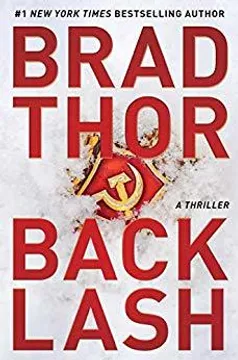
The Russian Flight Falls
The transport plane carrying Scot Harvath, an American intelligence operative seized in New Hampshire, loses both engines over a remote stretch of northern Russia. When the crew prepares for impact, its loadmaster forces Harvath’s Spetsnaz guard to give him an oxygen mask and enough freedom to brace. The plane tears through trees and breaks apart near a clearing.
Harvath wakes in the wreckage still shackled, surrounded by smoke, fire, and freezing wind. The Russian loadmaster, pinned beneath a cargo container, is the only other survivor he can find. Their uneasy alliance begins with a practical bargain: the airman tosses Harvath the key, and Harvath promises to get him out before the fire reaches them.
The crash strips the political operation down to its bodily facts: breath, blood, cold, and the chance to move. The loadmaster’s decision to help a prisoner is not a conversion or a declaration of allegiance. It is a small act of judgment that refuses to let orders erase a person’s claim to survive. Harvath’s first advantage is therefore not simply his training. It is the unexpected mercy of someone inside the enemy’s machinery. The episode also establishes the novel’s governing tension: Harvath must remain capable of violence without allowing violence to become the only moral language he understands.
Four Bodies on Governors Island
In New Hampshire, Gilford Police Chief Tom Tullis discovers four people executed inside Reed Carlton’s home: retired intelligence chief Reed, CIA Deputy Director Lydia Ryan, former Boston detective Lara Cordero, and a Navy corpsman. A fifth person, Harvath, is missing.
The victims were armed but never drew their weapons, and the killer removed almost all the shell casings and destroyed the security recorder. Tullis seals off Governors Island and calls Bob McGee, the CIA director, before following ordinary procedure.
McGee recognizes the dead and explains that Carlton’s private intelligence firm had been protecting him, in part because Alzheimer’s threatened to expose secrets he carried. A phone found near the driveway belongs to Harvath. When McGee calls it, the ringing confirms that Harvath disappeared from the murder scene.
The crime scene makes absence as consequential as the bodies. Harvath’s missing presence can be read as guilt, flight, or abduction, and the initial evidence deliberately supports more than one story. Tullis’s procedural caution contrasts with McGee’s personal certainty, exposing the limits of institutional authority when a case crosses local crime, intelligence secrecy, and national security. Carlton’s illness adds a further complication: protecting him means protecting information, but secrecy also kept local police from helping. The investigation begins with a moral and epistemic problem, not merely a hunt for a killer: who gets to define the facts when the most informed people cannot speak openly?
Matterhorn Opens the Door
The attack began after Harvath and Lara came to Governors Island to marry privately beside Reed, whose health was failing. Lydia had also arranged a visit from Artur Kopec, a Polish intelligence officer secretly working for Russia.
Reed had long known Kopec’s divided loyalties and fed him a mixture of genuine intelligence and carefully planted falsehoods, turning the double agent into a channel that Moscow trusted but could also be manipulated through. Kopec’s visit gave the Russians a route to the cottage.
After he left, Harvath stepped outside to meet Lara and found the assault team already there. They killed Lara, Lydia, Reed, and the corpsman, then drugged and abducted Harvath. During the attack, his earlier loss of a loved one made him hesitate to risk an armed response, a choice that now feeds his guilt.
Kopec’s role complicates the ordinary meaning of betrayal. He supplies the information that exposes the house, yet he does not understand the full operation built upon it. Reed’s long manipulation of Kopec is both ingenious and ethically unstable: friendship becomes cover, truthful reporting becomes bait, and trust is manufactured for strategic use. Harvath inherits this compromised system just as its human cost becomes intimate. His secret marriage turns the attack from a professional failure into the destruction of a family he had only just chosen. His guilt is psychologically credible precisely because it mistakes helplessness for responsibility; he knows the attackers controlled the situation, yet still searches for the missed action that might have saved everyone.
Keys in the Snow
Harvath uses the dead guard’s keys to free his hands and ankles, then kills a surviving Spetsnaz soldier who appears outside the broken fuselage. He searches the wreckage for other threats and takes warm clothing, a pistol, ammunition, and supplies from the dead.
The Russian flight officer he shoots through a jammed locker is not one of the people responsible for the New Hampshire murders, but Harvath is too consumed by anger to preserve that distinction. He builds a fire, improvises a tourniquet for the loadmaster, and tries to lift the container crushing the man’s legs.
The airman is too badly injured to survive. Harvath stays beside him as he dies, then turns the cargo container into a shelter and sorts the food, water, first-aid kit, and survival gear he can carry.
Harvath’s competence keeps him alive, but the section refuses to present competence as moral clarity. He saves the loadmaster where he can and sits with him when saving him becomes impossible; elsewhere, rage expands his definition of who deserves punishment. The dead flight officer marks the danger of that expansion. Harvath understands that the man is not responsible for the kidnapping, yet kills him anyway, then rationalizes his own loss of restraint as part of a larger struggle against Russian aggression. The survival inventory is concrete and useful, but it is also psychological: counting supplies gives Harvath a task small enough to control when grief and revenge threaten to take over.
The River Takes Everything
After surviving a wolf pack at the wreck, Harvath makes crude snowshoes and sets west for Finland, knowing American forces may not even know he was kidnapped. He shoots a lynx for food, drives off another wolf attack, and follows a frozen river toward a distant cabin.
The ice breaks beneath him during the crossing. His gear and the lynx vanish underwater, and he must shed his heavy coat to pull himself onto the bank. Near collapse from hypothermia, he reaches the cabin and manages to start a fire before passing out.
Its owner, an elderly Sámi trapper, has already died there. Harvath takes the man’s fur clothing, leaves him respectfully wrapped outside, and searches the property. In the trapper’s shed he finds a snowmobile, a dead battery, and a GPS unit.
The river makes survival depend on surrendering what had seemed essential. Harvath loses his food, equipment, and coat because carrying them would drag him under; persistence here means letting go rather than pushing harder. The trapper’s cabin offers shelter through someone who can no longer consent, so Harvath treats that necessity with care, acknowledging a debt even as he uses the dead man’s clothes. His encounter with the lynx also gives survival a moral dimension: he follows the wounded animal rather than leaving it to suffer. These choices sit uneasily beside his growing appetite for vengeance, suggesting that compassion remains active in him, though it no longer governs every decision.
Christina Opens the Clinic
Harvath warms the snowmobile’s battery with a solar panel, gets the engine running, and uses the trapper’s GPS to locate Nivsky. After reaching the village, he breaks into its medical clinic to find antibiotics for his wolf bites.
Christina Volkova, the local doctor and the trapper’s niece, catches him with her hunting rifle. Harvath explains that the Russian operation took him from America after murdering his wife and friends; Christina recognizes the trapper’s clothes and realizes her uncle has died.
She treats Harvath’s wounds, gives him antibiotics and rabies injections, and accepts his request to help him reach Finland. Her own husband died while serving with Wagner, the mercenary company now hunting Harvath. She takes his money to buy supplies and begins planning an escape.
Christina’s choice is neither simple trust nor impulsive rebellion. She verifies the evidence in front of her, treats urgent wounds, and only then decides whether to help. Her connection to Wagner gives her knowledge of the threat, while her husband’s death gives her a personal reason to distrust the state’s use of mercenaries. Harvath, meanwhile, makes a consequential departure from his usual intelligence discipline by telling her the truth. The decision acknowledges that survival can require dependence, not just concealment. Their alliance begins as an exchange of practical needs, but the shared losses underneath it make that exchange emotionally charged without turning either person into a substitute for the dead.
Nivsky Becomes a Trap
Wagner commander Kazimir Teplov lands troops in Nivsky, seizes vehicles, posts Harvath’s picture, and offers residents a large reward for his capture. Christina helps Harvath leave her clinic and directs him toward a Sámi village, while she stays behind to mislead Teplov.
At her uncle’s home, she uses a missing atlas page to suggest Harvath is heading toward a distant border point. Teplov finds the page hidden in her car and realizes she has been helping him.
Before that discovery catches up with Harvath, he skis toward Friddja, exhausts himself, and collapses in the snow. Two Sámi hunters carry him to Adjágas, where healer Sini tends his wounds. When a helicopter approaches, Harvath leaves Sini’s home rather than let the search expose her family.
The town’s reward transforms neighbors into potential informants, so Christina and Harvath must treat ordinary community ties as both protection and risk. Her false map is an attempt to manipulate the search without directly confronting Teplov, but its discovery shows how little control she has over the coercive system closing around her. Harvath’s collapse also punctures the heroic fantasy of endless endurance: training can extend his limits, not abolish them. His departure from Sini’s house is an ethical calculation. Remaining might improve his odds briefly, but it would make her family a target. His instinct to protect others survives even as his judgment becomes increasingly shaped by guilt and violence.
The Trap in Adjágas
Teplov takes Christina to Friddja and forces her to identify a house where Harvath might be hiding. Harvath has already returned to Adjágas, rigged an explosive inside the cabin, and strung wire across a trail.
The trap kills two Wagner riders, and he uses the explosion in the cabin to bring down their first helicopter. Teplov’s next search team finds Harvath and the hostages near the wreck of a second helicopter. Teplov disarms Harvath and prepares to capture him, but an explosion scatters them.
Harvath attacks Teplov in the snow; when Teplov gains the advantage, Christina picks up Harvath’s rifle and shoots the mercenary. Harvath frees Christina and Mokci, retrieves Teplov’s pack with a satellite phone and maps, and contacts his American colleagues before fleeing.
Harvath’s improvisations turn the pursuers’ equipment, routes, and assumptions against them, but each tactical victory raises the danger to the people caught nearby. Christina is not merely rescued by Harvath: she intervenes decisively when he can no longer defend himself. That reversal matters because their alliance is reciprocal, not a protector-and-dependent arrangement. The violence also carries a cost beyond the battlefield. Harvath’s methods begin to resemble the brutality he condemns, and his use of fear as a weapon risks narrowing his sense of who may be harmed. The satellite phone gives him a link to rescue, but it arrives only after he and Christina have become responsible for surviving together.
A Rescue Takes Shape
In Washington, CIA director Bob McGee persuades President Paul Porter to activate the Hostage Recovery Fusion Cell, despite the lack of proof that Harvath was kidnapped. Nicholas, the Carlton Group’s technology chief, recognizes Harvath’s coded Instagram distress signal from Nivsky and confirms that he is alive and moving west.
The team flies to Finland, where Finnish officers arrange support near the border. Their route depends on Pavel, a Finnish-connected Russian bush pilot who hates America because an American weapon killed his brother.
Team leader Mike Haney offers an apology on behalf of the United States and negotiates payment for Pavel’s help. Meanwhile, Harvath and Christina leave the village with supplies and a satellite phone, aiming for a meeting point on a frozen lake. They use a snowmobile and a dog sled route to evade Wagner patrols.
Rescue becomes a collective problem of imperfect information. Harvath can transmit only a coded location, the Finns will not openly cross into Russia, and Pavel’s cooperation must be negotiated through an injury the United States helped cause. The scene resists the idea that national loyalty can be assumed or purchased without acknowledgment. Haney’s apology does not erase Pavel’s grievance, but it recognizes it as part of the present operation rather than inconvenient history. Nicholas’s technical work and Christina’s local knowledge carry equal practical weight, while presidential authorization supplies force only at a distance. The rescue’s fragile architecture reflects the story’s broader claim that competence depends on relationships as much as equipment.
The Ice Becomes a Battlefield
Harvath and Christina hide beneath moose meat on Jompá and Olá’s dog sleds, but Wagner’s helicopter intercepts them. The mercenaries kill the two brothers and begin firing at the sleds. Harvath shoots back while Christina escapes the pinned load, and the pair reaches a rocky outcrop.
Haney’s Carlton Group team arrives through the trees, killing nearby attackers and using a light anti-tank rocket to break the assault. Wagner reinforcements then converge, including helicopters and Russian troops, while Harvath’s team waits under cover.
In Washington, Porter orders Operation Gray Garden: the United States threatens to expose and freeze President Peshkov’s hidden assets while offering him a way to avoid public humiliation. F-22 fighters roar over the Russian forces. Peshkov orders them to withdraw, allowing the Americans to reach their waiting aircraft.
The rescue succeeds through coordinated force, but its emotional center is not triumph. Jompá and Olá die after choosing to help strangers, and the dogs remain beside them when Harvath and Christina leave. The losses keep the operation from becoming a clean fantasy of extraction. At the same time, the confrontation reveals that violence alone cannot determine the outcome: Porter’s financial pressure gives Peshkov a face-saving reason to stand down, while the fighters make the threat credible. Political bargaining and armed deterrence operate together. Harvath survives because allies take risks for him, yet the deaths around him intensify his conviction that he owes the world a reckoning.
The Dead Leave Instructions
Back in the United States, Harvath endures a four-day debrief and attends Lara’s funeral in Boston, then the services for Lydia and Reed in Washington. He spends time with Lara’s son, Marco, and feels the family he had just begun to claim now belongs to grief.
The Carlson Group’s succession papers place Nicholas in charge after Harvath, and Reed’s journal, recovered from Teplov’s belongings, identifies GRU General Konstantin Minayev as the organizer of the abduction and Russian President Fedor Peshkov as the authority behind it.
Harvath gives the journal to Nicholas and makes his plans despite the risks. Two weeks later, he returns to Russia with help from Polish intelligence, smugglers loyal to Reed, and Alexandra Ivanova, an FSB officer he has been cultivating as an ally.
The funerals do not resolve Harvath’s grief; they give it names, faces, and obligations. Marco’s presence makes the loss especially difficult because Harvath must inhabit the role of a grieving adult without promising a future he cannot yet provide. Reed’s journal then converts private mourning into actionable intelligence. That conversion is dangerous: the document offers a target list, and the act of reading it makes revenge appear orderly, almost administrative. Harvath’s return to Russia shows how quickly a person can mistake purpose for healing. He is not returning because his losses have become manageable. He is returning because he believes punishment will answer them.
Three Debts in Moscow
Alexandra helps Harvath enter Moscow and reach three men identified through Reed’s journal and Nicholas’s research. Harvath kills Josef Kozak, the interrogator who led the New Hampshire operation, while Josef is recovering in a hospital.
He then kills Minayev, disguising the general’s death as a disgraced suicide and arranging for evidence of child pornography to ruin his reputation. Finally, Harvath kills Mikhail Peshkov, the Russian president’s abusive son, and leaves a key that directs the president’s chief of staff to a letter describing the attacks and warning against retaliation.
Alexandra risks her position and her life by helping, while Harvath accepts her condition that she control decisions made inside Russia. The mission gives him a sense of action, but it cannot restore Lara, Lydia, Reed, or the others he has lost.
The revenge sequence is structured as an answer to helplessness: Harvath identifies the people behind the operation and acts where he once could not. Yet the targets are not interchangeable. Josef represents direct personal cruelty, Minayev institutional command, and Mikhail the impunity protected by inherited power. Harvath’s methods also expose a tension between justice and retaliation. He engineers reputational destruction alongside physical death, making punishment extend beyond the moment of killing. Alexandra’s insistence on control inside Russia introduces a limit to his authority, though not a restraint on the violence itself. The victories are real in the plot, but psychologically they cannot settle the central debt: the dead remain beyond repair.
Lara’s Picture by the Sea
After leaving Moscow, Harvath travels through Belarus and Poland with help from the network Reed built, then flies to Little Torch Key to recover in the warmth.
At the resort, he finds the framed photograph of Lara that Sloane had packed for him: Lara standing on his dock in a sundress, the image that appeared in his mind when he nearly froze in the trapper’s cabin. The photograph does not settle whether that vision was memory, delirium, or something more.
Harvath pours a drink and watches the sun approach the water, allowing himself to consider what life might look like after the mission. He has not forgiven himself, and his revenge has not restored his family. For the first time in weeks, however, he has room to listen to his grief rather than outrun it.
The closing image offers neither absolution nor a simple return to ordinary life. Lara’s photograph links the moment when memory helped Harvath survive in Russia with the quieter question of how he will live after survival. The image is emotionally powerful precisely because its status remains uncertain: it can be understood as hallucination, a stored intimate memory, or a spiritual encounter without the story requiring a verdict. The resort’s warmth contrasts with the frozen wilderness, but comfort does not erase guilt. Harvath’s movement toward reflection is modest and provisional. He is not healed; he has only stopped treating motion and retaliation as the sole possible responses to pain.
Analysis
Backlash binds two kinds of action together: the immediate work of staying alive and the later work of deciding what survival is for. Harvath’s training gives the narrative a precise physical grammar. He counts calories, improvises tools, reads terrain, and manages injuries. Yet these skills do not solve the moral problem that grows beside them. He believes he failed Lara, Lydia, and Reed, although the operation that killed them was planned and executed by people who controlled the encounter. His guilt converts helplessness into a task he can pursue, and revenge offers the clean sequence that grief cannot: identify the responsible, act, finish.
The book repeatedly tests that logic against other forms of obligation. The loadmaster helps Harvath despite their opposing roles. Christina chooses to treat and assist him after judging the evidence, and later saves him when he cannot save himself. Sámi villagers risk their safety to shelter and transport him. Their generosity complicates Harvath’s belief that he must bear every consequence alone, while their deaths make his rescue feel costly rather than triumphant. Haney’s team and Porter’s administration extend that collective responsibility across military and diplomatic institutions.
The intelligence plot also questions whether useful deception can remain morally contained. Reed’s manipulation of Kopec creates strategic leverage, but the same channel helps the Russians locate the safe house. The organization’s private methods are effective partly because they operate outside public scrutiny, the very condition that leaves Tullis’s town excluded from information that might have helped. Secrecy protects operations and produces vulnerability at once.
Harvath’s return to Russia is therefore not a simple restoration of justice. He punishes the men he identifies as responsible, but those acts cannot return the people he lost or discharge his grief. The final photograph does not absolve him; it interrupts his compulsion to move long enough for him to imagine a life beyond pursuit. The novel’s sharpest question is not whether violence can stop violence, but whether a person trained to answer danger with force can still recognize when the fight has ended.
Review Summary
Backlash receives an overall rating of 4.44/5, with many readers praising it as one of Brad Thor's best entries in the Scot Harvath series. Fans highlight its gripping survival thriller elements, emotional depth, and revenge-driven narrative set in the Russian wilderness. Several reviewers compare it favorably to Louis L'Amour's Last of the Breed. Critics note issues including a rushed ending, redundant survival sequences, and underdeveloped geopolitical motivations. Some readers were disturbed by the graphic violence, while others found it a refreshing departure from the series' usual formula.
People Also Read




Characters
Scot Harvath
The hunted SEALHarvath is a former Navy SEAL and highly capable intelligence operative whose work has made him a persistent obstacle to Russian plans. He is disciplined, adaptive, and practiced at acting under pressure, but his self-command hides a more difficult habit: he turns responsibility for other people’s danger into personal guilt. His relationships matter deeply even when he pretends to keep his emotional circle small. Lara gives him a vision of family beyond the demands of his work, while Reed Carlton serves as mentor and model. Harvath’s central conflict is not whether he can endure danger, but whether his capacity for necessary violence can coexist with grief, loyalty, and a life not governed by retaliation.
Christina Volkova
The village doctorChristina runs the medical clinic in Nivsky and is the niece of a Sámi trapper. Athletic, practical, and sharply observant, she combines medical competence with an instinct for reading people and planning under pressure. Her husband served with Wagner and died in Syria, leaving her with both grief and a clear view of the mercenary organization’s reach. She does not help Harvath because she mistakes him for harmless; she assesses the situation, treats his injuries, and decides that Moscow’s violence is a greater threat than the risk of assisting him. Her independence matters throughout their alliance. She is a partner with her own knowledge, motives, and judgment, not simply a guide through unfamiliar terrain.
Lara Cordero
Harvath’s chosen familyLara is a former Boston police detective who has built a life with Harvath beyond the demands of covert work. She is direct, warm, and emotionally perceptive, with a strong bond to Reed Carlton and Lydia Ryan as well as to Harvath. Her son, Marco, gives her relationship with Harvath a family dimension that he has long wanted but struggled to make room for. Lara’s professional background means she understands danger without romanticizing it. She offers Harvath a form of intimacy that does not ask him to become someone else, while her presence also forces him to reckon with the cost his work may impose on people he loves.
Reed Carlton
The spymaster mentorReed Carlton is a retired CIA operative who helped establish the Agency’s Counter Terrorism Center and later founded a private intelligence firm. He is an old-school case officer, skilled at reading people and willing to use complicated deceptions when he believes the stakes justify them. His long friendship with Artur Kopec becomes an intelligence channel as well as a personal relationship, revealing both his ingenuity and his comfort with moral ambiguity. Reed’s mentorship shapes Harvath’s professional judgment and sense of obligation. As his health declines, he entrusts others with responsibilities that reflect his belief in their competence, not merely their loyalty.
Lydia Ryan
The agency builderLydia is a respected CIA field operative who becomes the day-to-day leader of Reed Carlton’s private intelligence company. She is trusted by Reed and Harvath, and she often handles the practical arrangements that let their operations function. Her move from the CIA to the Carlton Group reflects both her field experience and her impatience with bureaucracy that prevents action. Lydia’s competence is matched by loyalty to the people in her circle. She is not merely an administrator: she understands the stakes of intelligence work and accepts responsibility for decisions that carry personal and political consequences.
Nicholas
The guarded technologistKnown in intelligence circles as the Troll, Nicholas is a brilliant hacker and the Carlton Group’s chief technology officer. His small physical stature contrasts with his formidable technical reach, while his enormous guardian dogs make clear that he lives in a world where enemies are never theoretical. His past in black-market intelligence has given him a keen sense for secrets and leverage. Beneath his shrewdness is a strong attachment to the people who have treated him as family. Nicholas works to earn trust through transparency and competence, and his technical ingenuity becomes crucial whenever Harvath needs to communicate from hostile territory.
Bob McGee
The CIA directorMcGee is the Director of Central Intelligence, a former soldier with deep experience inside the Agency. Tough, direct, and wary of political maneuvering, he is trying to reform a bureaucracy he believes has become too cautious for the threats it faces. His decision to support the Carlton Group reflects a willingness to pursue unconventional solutions while remaining aware of their risks. McGee respects Reed and Harvath personally, but he must also manage the legal and diplomatic boundaries around their work. He is at his strongest when translating private loyalty into institutional action without pretending the two are the same.
Tom Tullis
The careful police chiefTullis is Gilford’s police chief, accustomed to protecting a small New Hampshire community and following evidence methodically. The murders on Governors Island force him into a case involving intelligence officials, classified work, and a missing operative, but he does not abandon ordinary investigative discipline. He secures the scene, studies the cameras, and asks McGee questions that national officials would prefer to avoid. Tullis’s local responsibilities keep the story grounded in the consequences of secrecy for people outside the intelligence world. He is neither easily intimidated nor eager to mistake official status for proof.
Artur Kopec
The compromised double agentKopec is a Polish intelligence officer whose career has been compromised by money, vanity, and divided loyalties. Once a capable officer, he has grown comfortable selling sensitive information to Russia while retaining a public role under diplomatic cover. Reed Carlton’s long relationship with him complicates the usual handler-and-source arrangement: Kopec believes he is serving one side while Reed manipulates the information he passes along. Kopec’s self-preservation makes him a poor judge of the human cost of his choices. He is a study in how corruption can coexist with nostalgia for former friendship and a sincere belief that one can keep both.
Josef Kozak
The GRU interrogatorJosef is a colonel in the GRU’s special missions group and the Russian officer who leads the operation against Harvath. He is composed, physically fit, and skilled at making cruelty appear procedural. His command depends on both psychological manipulation and the force of the Spetsnaz team around him. Josef understands that Harvath’s knowledge is valuable, but the operation is also personal, shaped by years of Harvath disrupting Russian missions. He represents the state’s effort to turn interrogation into control, and his calm manner makes his capacity for violence more unsettling rather than less.
Konstantin Minayev
The ambitious GRU generalMinayev leads the GRU’s special missions group and treats the Harvath operation as both a national assignment and a chance to advance his own fortunes. He is volatile, distrustful of subordinates, and accustomed to hiding failures from superiors until he can contain them. His ambition reaches beyond military rank: he wants political approval and the wealth to build a private timber business. Minayev’s personal appetite is inseparable from his understanding of state power. He sees people and agencies as replaceable assets, except when a particular outcome is necessary to secure his own future.
Kazimir Teplov
The Wagner commanderTeplov, known by the call sign Wagner, commands a Russian mercenary force with experience in winter warfare. He is physically imposing, theatrical, and eager to dominate a scene through visible intimidation. His methods include public threats, rewards, and house-to-house searches designed to turn a community into an extension of his operation. Teplov prizes loyalty and obedience, but his confidence in coercion can make him underestimate the people he is pursuing. His role shows how a state can outsource violence to a force that is officially separate yet politically useful.
President Paul Porter
The hostage-rescue presidentPorter is the American president, a detail-oriented leader who takes a personal interest in the effort to recover Harvath. He listens to the Hostage Recovery Fusion Cell, asks pointed questions, and understands that any operation inside Russia could trigger a larger conflict. His willingness to authorize an ambitious rescue reflects a belief that the government must act when one of its people is taken. Porter is not portrayed as free of political calculation; he has to weigh military risk, diplomatic consequences, and the possibility of failure while still making a decision.
Brendan Rogers
The hostage negotiatorRogers is the Special Presidential Envoy for Hostage Affairs, a former Navy JAG officer who left corporate law for government service. He has experience negotiating with hostile regimes and criminal groups, and he approaches the Harvath crisis as a problem of leverage as well as rescue. His diplomacy is practical: he offers a face-saving path while making clear that the United States can impose serious costs. Rogers’s work complements the armed rescue plan, showing how negotiation can create an exit where military pressure alone might produce escalation.
Mike Haney
The rescue team leaderHaney is a former Force Recon Marine and the Carlton Group team’s operational technology specialist. Experienced and deliberate, he becomes the field leader for the mission to recover Harvath. He values preparation but is willing to make hard decisions as the plan changes, including when to hold position and when to move. Haney’s leadership is defined less by bravado than by responsibility for the people around him. His respect for Harvath is personal, but he does not let that affection erase the need to assess risk for the entire team.
Sloane Ashby
The elite field operatorSloane is a highly accomplished soldier recruited by Reed Carlton for the private intelligence group. She is a strong athlete, a top student, and an experienced combat operator whose reputation once drew unwanted attention from the press. After being pulled from combat by the military, she joins the Carlton Group to return to demanding field work. Sloane is confident without relying on other people’s expectations of her appearance, and she is trusted as a capable member of the team. Her relationship with Harvath and the others is marked by professional respect and familiar teasing.
Sini
The Sámi healerSini is a Sámi healer who lives near the villages where Harvath is trying to cross the region. She uses traditional remedies and has a working relationship with Christina, whose modern medical practice complements her own. Having grown up in Swedish Lapland before returning to her ancestral region, Sini carries a personal connection to the history of Sámi displacement. Her hospitality is generous but not naïve; she understands that helping a hunted stranger may endanger her household. She represents a form of care rooted in community knowledge rather than official institutions.
Mokci
Sini’s Sámi husbandMokci is Sini’s husband and a member of the Sámi community that helps Harvath move through the wilderness. He is connected to the local network of families, hunters, and dog teams that makes travel possible far from roads. His practical knowledge and loyalty to Sini place him inside the risks created by the Russian search.
Jompá
The dog-sled hunterJompá is one of the Sámi brothers who finds Harvath in the snow and brings him to safety. He knows the local terrain and helps organize travel by dog sled, using methods that can conceal people from aerial searches. His actions show the quiet courage of a community member who helps without expecting protection from the state.
Olá
Jompá’s hunting brotherOlá is Jompá’s brother and a fellow hunter who helps Harvath and Christina travel through the snowbound region. He contributes local knowledge, dogs, and practical support when the escape depends on routes that cannot be found on ordinary roads. His place in the story links survival to the cooperation of people with no obligation to take such risks.
Marco
Lara’s young sonMarco is Lara’s son, a young boy whom Harvath has begun to imagine as part of his family. Their shared outings and small routines reveal the domestic future Harvath hopes to build beyond covert work. Marco’s presence makes Harvath’s emotional stakes tangible without reducing him to a symbol of loss.
Alexandra Ivanova
The cultivated FSB assetAlexandra is an FSB officer whom Harvath has been cultivating as a potential intelligence asset. She is a patriot who dislikes Russia’s system of government and possesses the judgment and nerve that make her valuable to him. Their history includes Harvath’s efforts to help her career, but she is not simply indebted to him; she sets conditions for cooperation and retains control over decisions made inside Russia. Her role tests Harvath’s ability to trust someone without controlling every part of the operation.
Pavel
The reluctant bush pilotPavel is a Russian bush pilot who works as an asset for Finland. He distrusts the United States because an American weapon supplied to Afghan fighters killed his brother. His cooperation requires the Americans to acknowledge that history and compensate him, making him more than a convenient ride across the border.
Fedor Peshkov
The Russian presidentPeshkov is Russia’s president, a former security officer who has built immense personal power and wealth. He uses nationalism to redirect public anger away from his government and expects others to protect his interests. His political choices affect the Harvath operation at every level, from the original abduction to the question of whether Russian forces will escalate against American rescuers. Peshkov is difficult for American intelligence to predict because his actions do not always follow conventional calculations of national self-interest.
Plot Devices
SERE Survival Training
Makes expertise physicalHarvath’s Navy training gives him procedures for survival, evasion, resistance, and escape. The story applies those skills to specific problems: freeing himself with salvaged gear, rationing food, treating wounds, navigating with a compass, building snowshoes, and choosing concealment over speed. Training does not make him invulnerable. His fatigue, injuries, and near drowning repeatedly expose the gap between technique and physical limits. The device turns survival into a chain of decisions whose consequences accumulate, while showing that competence can keep a person moving without resolving the grief driving him.
Matterhorn
Turns betrayal into baitMatterhorn is Artur Kopec’s codename and the name attached to Reed Carlton’s long-running deception. Kopec secretly sells intelligence to Russia, while Carlton feeds him information Moscow values, sometimes mixing truth with falsehood to shape Russian expectations. That arrangement makes Kopec both a compromised source and a strategic channel. His visit to the New Hampshire safe house supplies the Russians with information that helps expose it, though he does not know the full plan. The device links old friendships, intelligence manipulation, and the assault that launches Harvath’s escape.
The Dead-Drop Signal
Connects fugitive to rescuersThe Carlton Group maintains coded communication procedures for operatives who cannot safely use ordinary channels. Harvath uses a seemingly innocuous Instagram account to send a distress signal from Nivsky, allowing Nicholas to authenticate him and identify his last known location. Later, a satellite phone taken from Teplov’s equipment gives Harvath a more direct but still risky way to pass coordinates and updates. These devices prevent the wilderness storyline from becoming isolated from the parallel American response, while preserving the uncertainty of communication under surveillance and jamming.
The Sámi Route
Conceals escape in communityThe Sámi villages, dog teams, hunting camps, and local knowledge provide Harvath with ways to move through the Murmansk wilderness that Russian forces cannot easily anticipate. The route is not a secret passage so much as a network of relationships and practical expertise: hunters know the terrain, healers can treat injuries, and sleds can conceal passengers beneath hides and meat. The same community that shelters Harvath is exposed to danger when Wagner searches for him. This device makes local hospitality consequential, showing how survival depends on people whose lives are threatened by the larger political struggle.
Operation Gray Garden
Pairs force with an exitWhen Russian troops and helicopters threaten the rescue team, President Porter authorizes a combined diplomatic and military gambit. The United States exposes and freezes assets held by President Peshkov while offering a way to retreat without publicly admitting responsibility. F-22s then enter Russian airspace as a visible warning. The plan makes Peshkov choose between escalation and preserving his wealth and political position. Its function is not to defeat Russia militarily, but to create a moment in which restraint becomes the more useful choice for its leader.
Scot Harvath Series





About the Author

Download PDF
Download EPUB
.epub digital book format is ideal for reading ebooks on phones, tablets, and e-readers.








