

Plot Summary
Bagram’s Narrow Rules
CIA operative Mike Nash is called from home to Bagram after American troops capture Abu Haggani, a Taliban commander, and Mohammad al-Haq, a senior link between the Taliban and al-Qaeda. Nash has spent years building files on both men, but three visiting senators have already warned the base commander to keep their treatment within strict legal limits.
Nash sees the contradiction: the same politicians who once demanded aggressive questioning now fear the consequences of it. When lawyers stop him from using pressure that has begun to unsettle al-Haq, Nash calls his superior, Mitch Rapp. The prisoners’ intelligence may expose an attack on America, but the rules designed to control the interrogation threaten to delay the search for it.
The opening makes procedure an active force in the plot, not simply a backdrop. Nash’s problem is not that he lacks skill or information; it is that his authority is divided among intelligence officials, military command, lawyers, and senators, each with different incentives. The lawmakers’ reversal reveals how political responsibility can be separated from political rhetoric. Nash remembers their earlier demands, while the prisoners experience the present restrictions as proof that they are safe. That gap gives the interrogation its urgency: every delay is both a legal safeguard and a possible strategic cost.
Karim’s Jungle School
Far from Afghanistan, Karim Nour-al-Din has spent six months shaping a small team in the jungle near Paraguay, where the borders of three countries meet. He studies American special forces and makes his recruits practice bomb assembly, weapons handling, and disciplined movement.
One trainee, Zachariah, repeatedly fails and irritates Karim, who suspects the Egyptian was imposed on the team by his uncle, al-Qaeda leader Ayman al-Zawahiri. Karim decides that loyalty to the mission outweighs family ties and shoots him. The execution does not make the remaining men more united. Instead, morale falters, exposing the cost of Karim’s command style: he can impose obedience, but he cannot make fear resemble trust.
Karim’s camp offers a dark counterpoint to the CIA’s procedural conflict. He borrows the methods of the American forces he despises, treating discipline as a weapon and training as a way to manufacture a superior self. Yet his killing of Zachariah shows that his model of leadership rests on coercion rather than shared commitment. The act may remove a weak recruit, but it also creates a new fracture among the men. Karim sees sacrifice as proof of seriousness; his followers must live with the knowledge that the commander who demands their loyalty may also decide that they are expendable.
Rapp Takes the Cells
Rapp reaches Bagram with a small team, including General Abdul Rashid Dostum, the former Northern Alliance commander whom al-Haq fears. Disguised as an Air Force colonel, Rapp presents a forged authorization and takes temporary control of the interrogation facility. He and Nash use the threat of Dostum’s custody to unsettle al-Haq, while Rapp confronts Haggani, whose attacks deliberately target civilians, including children.
Haggani spits at him and tries to bite him; Rapp responds with blows that leave visible blood. Nash has warned him not to leave marks, but Rapp’s anger at Haggani and at Washington’s restrictions is stronger than his restraint. The injury gives the base commander a reason to intervene.
Rapp’s arrival converts the opening’s political stalemate into immediate action, but it also makes the cost of his methods visible. His forged authority shows how covert work depends on theatrical legitimacy, while his violence exposes the unstable line between using force strategically and acting from rage. Nash tries to preserve both access to the prisoners and a defensible record; Rapp believes hesitation endangers lives. Their partnership is effective precisely because they bring different temperaments, yet that difference is also a fault line. Haggani’s injury makes their private urgency impossible to keep private.
Al-Haq Names a Third
While Rapp presses Haggani, Nash and Dostum work on al-Haq. The general’s presence makes the threat of transfer credible, but Nash is careful to turn fear into a bargain rather than simply rely on violence. Al-Haq proposes exchanging intelligence for money, a new identity, and protection for his family. He wants the CIA to report him dead.
Nash recognizes that this is more than another prisoner’s attempt to buy comfort: al-Haq knows about the two cells already intercepted in Mauritania and Hong Kong, and says a third group is preparing to attack an American city. He withholds the city and timing until he receives assurances. Nash calls CIA director Irene Kennedy, knowing that the opportunity is valuable and dangerously dependent on trust.
Al-Haq’s offer shifts the story from coercive interrogation to transactional defection. His calculation is neither heroic nor purely cynical: he wants to survive and protect his family, but his knowledge may prevent mass casualties. Nash understands that the bargain must remain covert because public exposure would endanger the family and likely invite political interference. The scene also reverses the usual balance of power. Al-Haq is a prisoner, yet he controls the most urgent information. The threat becomes a negotiation in which secrecy is not an accessory to intelligence work; it is the condition that makes cooperation possible.
The Commander Cuts Loose
Karim’s men remain divided after Zachariah’s execution, and his attempt to restore discipline reveals how much he fears losing control. He recruits the struggling Moroccan Ahmed as his partner, offering him confidence instead of another punishment.
When the team is finally ready to leave, Karim tells them that the other two units have disappeared and admits he suspects Zachariah was reporting to Zawahiri. He concludes that al-Qaeda’s leadership has been penetrated and burns their records, radios, and plans rather than risk further leaks.
Karim then reveals that their passage will depend on an arrangement he made with his childhood friend Hakim, who operates outside the organization. The mission no longer answers to al-Qaeda’s chain of command. Karim intends to make himself its author.
Karim’s retreat from al-Qaeda is not a rejection of extremism but a bid for independence. He interprets intercepted cells as evidence of infiltration, yet his own suspicion makes him increasingly isolated from allies. His choice to burn records is tactically sensible and psychologically revealing: he wants to eliminate not only evidence but any authority that might constrain him. By partnering with Ahmed and relying on Hakim, he builds a smaller structure centered on personal loyalty. That structure may be more agile, but it also magnifies Karim’s control and makes the operation depend on his private ambitions.
Rapp Becomes the Scandal
At Bagram, General Scott Garrison discovers the unauthorized interrogation and arrests Rapp, while Nash and the rest of the team escape. Rapp remains in the detention facility until CIA officials negotiate his release; he reluctantly apologizes to Captain Trevor Leland, whose attempt to enforce regulations has left him injured.
On returning to the United States, Rapp is arrested again at Dulles on a warrant tied to his actions in Afghanistan. Wade Kline, a Justice Department civil-liberties official, tries to make Rapp trade information about the CIA for leniency.
Rapp refuses, frees himself from his restraints, and turns the confrontation against Kline. The dispute now threatens to expose the agency’s covert practices in open political conflict.
The arrest forces the novel’s central conflict into a new arena. Rapp’s physical competence can defeat an immediate threat, but it cannot settle who has legitimate authority over covert action. Leland believes rules must remain binding even in an emergency; Rapp sees their enforcement as a danger when an attack may be imminent. Kline’s attempt to use the arrest for leverage reveals that legal oversight can also be shaped by ambition. The shift from Bagram to Washington raises the stakes for Nash and Kennedy: the people who conduct secret operations may now have to defend them before institutions that were never built for secrecy.
The Leak Hits Home
A Washington Post report claims the CIA has secretly surveilled Muslim communities in several American cities, without the FBI or congressional oversight committees knowing. Nash knows the story threatens an operation that has produced valuable intelligence about terrorist recruiting and financing.
At Langley, he clashes with CIA Inspector General Glen Adams, whom he suspects may have fed information to the press. Director Kennedy orders Nash to focus on shutting down the operation, while senior officials face demands from Wade Kline and Senator Barbara Lonsdale.
Nash’s return home brings no relief: he is exhausted, suffering unexplained headaches, and increasingly unable to separate field work from family life. The leak turns an intelligence success into a political liability before the danger has passed.
The article transforms a hidden operation into a public crisis, but its effect is not simply exposure. It breaks the trust on which the operation depends and forces Nash to weigh institutional orders against the judgment of people in the field. The press story also makes secrecy morally ambiguous: it may conceal unlawful conduct, yet it can reveal methods that have helped identify real threats. Nash’s suspicion of Adams reflects a larger problem in the novel: oversight is essential, but the systems meant to provide it may be compromised by rivalry and leaks. His physical exhaustion registers the human cost of carrying that contradiction.
Nash’s House of Strain
At home, Nash’s wife, Maggie, worries that his headaches, constant absences, and recent sexual difficulty signal a deeper collapse. Retired operative Stan Hurley bluntly urges Nash to deal with the strain rather than pretend it will disappear.
The pressure reaches the children when Rory punches a classmate who has made obscene remarks about Rory’s sister Shannon and about Maggie. Maggie initially fears Rory will be expelled from Sidwell and reacts before hearing his account. Nash backs his son, confronts Maggie, and explains what provoked the fight.
Maggie later apologizes to Rory and agrees to consider a school better suited to him. The family conflict does not erase Nash’s work obligations, but it makes clear that his silence and absence are shaping the lives he is trying to protect.
The family subplot gives the political crisis an intimate measure. Nash is trained to control information and suppress emotion, but that discipline fails at home, where his children need presence rather than operational judgment. Maggie’s first response reflects her own professional habits: she moves quickly to manage consequences, treating school expulsion as a crisis to contain. Nash recognizes the moral injury to Rory and insists on hearing the boy’s reasons. Their reconciliation is modest, not a cure for the job’s demands, but it shows that repair begins when each parent stops treating the other as an obstacle and listens to the child at the center.
Cocaine Becomes Passage
Hakim’s preparations give Karim’s team a way into the United States without relying on al-Qaeda. They attack a drug cartel’s remote airstrip, take cocaine and a plane, then use the shipment to buy cooperation from Cuban contacts.
Karim is uneasy about profiting from drugs, but Hakim argues that the money can finance their mission and keep them independent. The pair eventually reach the Florida Keys in fast boats, carrying a Barrett .50-caliber rifle for Ahmed.
When a Coast Guard helicopter approaches, Hakim slows the boats to invite a closer inspection. Ahmed fires armor-piercing rounds into the aircraft’s engines and tail, sending it into the sea. The team speeds toward shore, having crossed from covert travel into an act of war on American waters.
The route into America depends on moral compromise as much as tactical ingenuity. Karim’s religious certainty collides with the drug economy he condemns, while Hakim treats money as a tool that can free them from unreliable leaders. Their disagreement foreshadows the growing divide between them: Hakim improvises through social and logistical networks, while Karim wants control and ideological purity. The Coast Guard attack turns that uneasy arrangement into irreversible violence. It also demonstrates the team’s capability before the domestic plot can fully identify them, making the threat tangible rather than merely political speculation.
The Agent in the Mosque
In Washington, one of Nash’s undercover operatives, Chris Johnson, notices suspicious boxes being carried into a mosque basement. The supplies are explosives, and Johnson’s discovery brings him into the hands of Karim’s group.
Karim tortures him for his identity and handler, learns that he works for Nash, and kills him after extracting what he wants. He then orders his men to load the explosives into a van and accelerates the attack schedule.
Hakim objects to Karim’s growing readiness to kill allies and civilians, but Karim treats the dead as acceptable costs of his mission. When Johnson misses his agreed check-ins, Nash realizes that the danger is no longer hypothetical. His decision to keep the operation running has left an agent alone inside the cell.
Johnson’s discovery converts the surveillance operation from a source of intelligence into a direct vulnerability. The informant is not undone by carelessness alone; he is caught because the enemy has adapted, noticed an irregular delivery, and acted before Nash can shut the network down. Karim’s torture produces information, but it also hardens the conflict between him and Hakim, who sees the human cost that Karim translates into strategy. Nash’s responsibility is similarly complicated. He keeps Johnson active because the agent may be close to a breakthrough, yet that choice carries a personal debt once the check-ins stop.
Congress Closes Ranks
Captain Leland brings his account of Rapp’s conduct to Senator Lonsdale, who hopes to turn the incident into a case against the CIA. Secretary of Defense William England disrupts her hearing with General Garrison’s statement, which contradicts Leland’s account and accuses Lonsdale of politicizing a military matter.
Rapp then appears before the Judiciary Committee. Rather than invoke the Fifth Amendment, he admits using force on Haggani and explains that intelligence from two intercepted cells points to a possible third.
He offers to discuss the threat openly if the committee will accept the political consequences. Lonsdale refuses a public confrontation and the committee sends the matter back to the Intelligence Committee. Rapp has not won trust, but he has placed the danger before lawmakers.
The hearings dramatize a contest over who gets to define the facts. Lonsdale begins with a fixed political conclusion, while England’s intervention exposes that the account she relies on is disputed. Rapp’s unusual willingness to admit his actions is a tactical gamble: he gives the committee a fact that can damage him in exchange for a chance to make the threat harder to ignore. His candor does not resolve the ethical argument over interrogation. Instead, it changes the question from whether the CIA should be punished to whether lawmakers will accept responsibility for the consequences of restricting it.
Four Men at the Mosque
Nash allows Johnson two more days to investigate after the operative reports locked boxes and a newly suspicious pattern at the mosque. When Johnson disappears, Nash learns that a burned body matching his description was found with three toes missing.
Rapp and Rob Ridley go to the mosque, where they find Aabad bin Baaz and three accomplices trying to leave. Rapp disables their car and arrests them. The men smell of smoke, and Aabad’s evasions point toward Johnson’s murder.
At the National Counterterrorism Center, Rapp and Nash question him while the rest of the team works to identify the attackers. Aabad admits that more men remain at large and names Karim Nour-al-Din. Before the officers can act on the revelation, bombs detonate across Washington.
The discovery of Johnson’s body collapses the distance between intelligence work and personal loss. Rapp’s decision to investigate the mosque directly is both a response to immediate danger and a return to the field, where he trusts his own observation more than bureaucratic channels. Capturing Aabad gives the team a name and a partial map, but the information arrives too late to prevent the first phase of the attack. The sequence also turns the mosque surveillance controversy inside out: the hidden network has found a real cell, yet the cell has used its exposure to strike before officials can coordinate a response.
The Center Under Fire
Three bombs strike crowded Washington restaurants, killing and injuring hundreds. A further device detonates at the Monocle while rescuers search the wreckage. As federal officials converge on the National Counterterrorism Center, six attackers in SWAT gear assault the building and shoot their way toward the operations floor.
Nash fires from the balcony while Rapp charges the attackers at close range, stopping their advance. The men wear C-4 suicide vests packed with ball bearings.
With seconds left, Rapp, Nash, and the wounded staff throw the attackers through a damaged window into the concrete parking ramp, where the vests explode. The center survives as a functioning command post, but Jessica, Nash’s assistant, is killed, and dozens of other staff members die or are wounded.
The climax makes the novel’s competing forms of protection collide in one room. The bombers exploit the authority signaled by SWAT uniforms, while Rapp and Nash rely on rapid recognition and practiced violence to stop them. Saving the operations floor requires a brutal, improvised use of the attackers’ bodies as a way to move the explosives away from civilians. The act succeeds tactically but cannot make the outcome clean: Jessica and many colleagues are dead, and the people who survive have witnessed a massacre at work. The threat is stopped only in part, and victory arrives inseparable from grief.
The Cost Comes Home
After the assault, the casualty count at the National Counterterrorism Center rises to thirty-eight dead and seventeen injured. Rapp keeps the center operating, even knocking down an official who tries to freeze the room as a crime scene.
Nash remains at work until late, then returns home in a bloodstained shirt. Maggie knows he cannot tell her what happened, but she recognizes that colleagues have died. Nash initially insists he is fine; alone in the shower, he remembers Johnson and Jessica and finally breaks down.
Earlier family tensions have begun to ease, but the attack reveals what his silence costs both at home and inside himself. He has protected his family from operational details without protecting them from the absence and fear those details create.
The aftermath refuses the simple emotional logic of the action thriller, where survival can stand in for recovery. Nash’s workday continues because the institution needs him, but the accumulated losses reach him only when he is alone. His breakdown marks the limit of the self-control that has sustained him through combat and family life. Maggie’s presence offers care without access to the facts, a form of intimacy shaped by the same secrecy that protects Nash’s work. The scene suggests that compartmentalization can postpone grief, but it cannot remove it; the cost returns through memory and the body.
Lonsdale Changes Sides
The attack kills Senator Lonsdale’s closest adviser, Ralph Wassen, along with senators and staff who had gathered at the Monocle. Facing the loss, Lonsdale recognizes how her certainty and political maneuvering helped distract from the danger Rapp had described. She meets Rapp and Nash, apologizes for attacking their character, and offers to leave the Judiciary Committee for the Intelligence Committee.
More consequentially, she gives Rapp a private letter promising political support for whatever measures he and Nash deem necessary to hunt Karim and his remaining associates. Karim’s team is not captured, and the threat is unresolved. The novel ends not with safety restored but with a new, uneasy authorization to pursue the men responsible.
Lonsdale’s reversal is driven by grief, but it is not merely an emotional conversion. Wassen’s death strips away the distance that allowed her to treat the threat as a political abstraction. Her apology acknowledges that moral certainty can become a shield against evidence, especially when a public stance also offers political advantage. The letter she gives Rapp is deliberately limited: it promises support but offers no legal protection. That ambiguity preserves the novel’s central tension. The country needs covert force, yet the institutions authorizing it remain vulnerable to fear, denial, and changing political winds.
Analysis
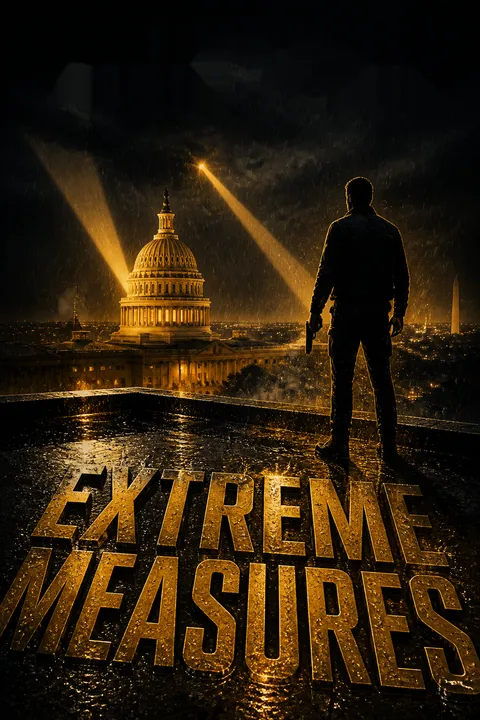
Extreme Measures makes its central question practical rather than abstract: who bears responsibility when preventing an attack requires actions that the law, the public, or the political leadership may reject? Rapp’s violence is not presented as uncomplicated heroism. His instincts save time and lives, but his temper produces evidence of misconduct and allows opponents to treat the entire covert effort as a personal failing. Nash offers a different model, built on patient interrogation and human intelligence, yet his judgment also has costs. He leaves Johnson in place because the agent may be close to a breakthrough, and that decision becomes inseparable from Johnson’s fate.
The parallel plots make this conflict sharper. Karim studies American methods, builds a disciplined cell, and then uses the same logistical pragmatism he condemns in his enemies. His faith does not restrain his appetite for power; it gives that appetite a sacred vocabulary. Hakim’s objections expose the gap between Karim’s language of sacrifice and the deaths he actually chooses for other people. Their conflict echoes the American political argument, where leaders can invoke principle or security while avoiding the personal cost of either.
The family story brings the state’s hidden war back into ordinary rooms. Nash’s children and Maggie cannot know the details of his work, but they absorb its absences and strain. His eventual breakdown shows that professional compartmentalization is a temporary technique, not emotional immunity. Lonsdale’s reversal similarly comes through personal loss: political abstraction changes when the dead include her own colleagues and closest adviser.
The ending offers authorization, not closure. Karim’s group remains at large, and Lonsdale’s letter promises support without legal protection. That unresolved bargain is the book’s clearest judgment on covert power. Democratic oversight cannot be discarded simply because the threat is real, but political leaders cannot demand protection while pretending that difficult decisions belong only to the operatives who carry them out.
Review Summary
Extreme Measures is a political thriller featuring CIA operative Mitch Rapp. The book focuses on the controversial use of enhanced interrogation techniques and the battle between national security and civil liberties. While some readers found the political discussions engaging, others felt the action was limited compared to previous installments. The introduction of Mike Nash as a family man balancing work and home life added depth to the story. Overall, fans appreciated Flynn's ability to create tension and address timely issues, though opinions varied on the book's pacing and emphasis on political drama.
People Also Read





Characters
Mitch Rapp
The field enforcerRapp is the CIA’s most formidable counterterrorism operative, a direct and unsentimental man who trusts field judgment more than bureaucratic caution. Years of violence have made him efficient, but not emotionally untouched; the loss of his wife and unborn child has sharpened his sense of responsibility toward people such as Nash and Nash’s family. He acts quickly when he believes lives are at stake, even when his methods put colleagues and political allies at risk. His bluntness can look like contempt, yet he is often trying to force decision-makers to face consequences they prefer to leave abstract. He is both the agency’s most effective weapon and a challenge to its claim that force can remain controlled.
Mike Nash
The divided protectorNash is a former Marine and experienced CIA operative who combines patience, memory, and a talent for reading people. He is Rapp’s protégé and partner, but his life is less solitary: he has a wife, Maggie, and four children whose needs compete with the demands of covert work. Nash believes intelligence can be gathered through attention and leverage as well as force, which makes him a measured counterweight to Rapp. He is deeply committed to protecting the public, yet his habit of suppressing stress leaves him vulnerable to exhaustion, headaches, and emotional strain. His central tension is not whether he loves his family, but how to remain present to them while serving a job built on absence and secrecy.
Karim Nour-al-Din
The self-made commanderKarim is an educated Saudi militant who sees himself as a future leader of a sweeping religious revolution. Scholarly, disciplined, and tactically observant, he studies American special forces in order to defeat them on their own terms. His faith gives his ambitions a language of destiny, while his fear of failure and suspicion of betrayal push him toward harsher control. He wants not merely to serve al-Qaeda but to rise beyond its current leadership and command his own movement. Karim’s intelligence is genuine, but so is his capacity for self-deception: he interprets personal desire as divine direction and treats other people’s lives as evidence of his own purpose.
Hakim
Karim’s practical equalHakim is Karim’s childhood friend and logistical partner, a fluent, adaptable man who can build relationships across cultures and make plans work in the real world. Where Karim values discipline and ideological certainty, Hakim values improvisation, money, and practical knowledge. He has a taste for adventure and a gift for charm, but he is not simply a carefree foil: he understands how easily a mission can become an excuse for cruelty. His long loyalty to Karim gives him unusual influence, though he increasingly struggles with the commander’s willingness to sacrifice others. Hakim’s pragmatism is both the operation’s enabling force and a moral counterpressure on Karim.
Irene Kennedy
The guarded directorKennedy directs the CIA and must balance covert operations against political, legal, and institutional constraints. She is composed, strategic, and accustomed to weighing consequences before acting, which makes her a natural counterweight to Rapp’s impatience. Her relationship with Rapp is built on deep professional trust, and she also cares about his influence on her son. Recent personal trauma has made her more forceful and less patient than before, raising questions about how grief may alter judgment in a leader. Kennedy understands that secrecy can protect operations while also corroding public accountability. Her role is to keep the agency moving through a landscape where every decision can become a political weapon.
Barbara Lonsdale
The ambitious chairwomanLonsdale is a powerful senator and chair of the Judiciary Committee, forceful, image-conscious, and convinced that the law must restrain intelligence agencies. She is skilled at turning hearings into political theater, but her confidence can harden into certainty before the evidence is complete. Her close adviser, Ralph Wassen, knows how to challenge her without reducing her to a caricature; she is capable of reflection, though she resists it when her authority is at stake. Lonsdale’s public concern for civil liberties is sincere, but it also intersects with ambition and a desire to control the political narrative. She represents the possibility that democratic oversight can be principled and self-interested at once.
Wade Kline
The civil-liberties prosecutorKline is a Justice Department official charged with privacy and civil-liberties oversight. A former prosecutor, he is polished, ambitious, and convinced that legal rules should govern even the most secretive operations. He sees Rapp and Nash as possible symbols of unchecked state power, but his pursuit of them is also bound up with career advancement and political alliances. Kline’s confidence makes him underestimate the difference between courtroom combat and the world Rapp inhabits. His character sharpens the novel’s question about oversight: whether formal legality can remain principled when officials use it to advance personal power.
Mohammad al-Haq
The bargaining insiderAl-Haq is a senior Taliban figure with a long history of shifting allegiances as power changes around him. His experience makes him a valuable source, but also a practiced liar who treats survival as a political skill. He fears both his former allies and the prospect of being handed to Dostum, and he wants to protect his family while escaping his old life. Rather than speak from conviction, he calculates the terms under which cooperation might benefit him. That calculation does not make his intelligence useless. It forces Nash to separate motive from information and to recognize that a morally compromised source can still offer a chance to save lives.
Abu Haggani
The civilian-targeting commanderHaggani is a senior Taliban commander associated with suicide attacks against civilians, including women and children. He meets captivity with defiance and treats violence against the vulnerable as a form of ideological commitment. His certainty makes him difficult to manipulate through ordinary appeals to fear or shame. To Rapp, Haggani embodies the enemy’s willingness to weaponize innocence; to the interrogation team, he is also a source of potentially urgent information. His presence tests whether righteous anger can be separated from useful judgment, and whether an interrogator can condemn a prisoner’s cruelty without allowing rage to govern his own actions.
Maggie Nash
The family’s anchorMaggie is Nash’s wife, a successful public-relations executive who is accustomed to managing crises openly and directly. Her professional confidence contrasts with the secrecy that governs Nash’s work, leaving her to interpret absences and physical symptoms without knowing their cause. She loves him but worries that the job is damaging his health and diminishing his presence with their children. Her initial response to Rory’s school fight shows how easily fear about consequences can overpower curiosity about motive. She is not simply waiting at home: she challenges Nash, makes decisions for the family, and is capable of revising them when she listens.
Scott Garrison
The cautious base commanderGarrison commands Bagram Air Base and values order, responsibility, and the functioning of his command. He dislikes being forced to manage a detention facility and fears that an unauthorized operation could destroy the careers of people under him. His decisions are shaped by both institutional duty and self-preservation, leaving him caught between a real security threat and the risk of appearing complicit in misconduct. Unlike Leland, he is willing to hear Rapp out, but he cannot simply ignore the chain of command. Garrison shows how military responsibility often means choosing among bad options without knowing which consequences will arrive first.
Trevor Leland
The rigid young officerLeland is an Air Force captain and aide to General Garrison, earnest about military standards and determined to be taken seriously. He believes professional integrity depends on following rules even when powerful people want exceptions. His ambition and frustration with stalled promotion complicate that ideal: he wants to do what is right, but also longs for recognition. Rapp’s arrival puts Leland’s principles under pressure, and his response brings him into conflict with both his commander and the CIA. He represents an officer who sees compromise as a threat to institutional honor, though his certainty can make him underestimate the practical danger unfolding around him.
Rob Ridley
The loyal deputyRidley is a senior CIA clandestine officer and Kennedy’s deputy, experienced enough to understand both field operations and Washington’s institutional games. He is loyal to Rapp and Nash, but less inclined than Rapp to treat political opposition as an obstacle that can simply be overrun. His humor helps him manage pressure, though it does not conceal his concern for colleagues and family. Ridley frequently acts as a bridge between the operators and the agency leadership, translating risk into terms that headquarters can bear. He understands that courage in the field does not automatically protect people from the consequences of a congressional investigation.
Stan Hurley
The blunt old spookHurley is a retired CIA operative whose reputation and connections make him a resource in moments of institutional crisis. He is irreverent, sexually brazen, and skilled at cutting through the self-protective stories people tell themselves. With Nash, he refuses to limit the conversation to policy and forces him to confront the toll of work on his marriage and health. Hurley’s advice is often ethically abrasive, especially when he treats lethal action as a clean answer to betrayal. He offers a vivid version of the old intelligence culture: effective, unsentimental, and shaped by methods that a newer generation is no longer willing to defend without question.
Ralph Wassen
Lonsdale’s candid adviserWassen is Lonsdale’s longtime chief of staff, confidant, and most trusted source of personal and political counsel. He understands her ambition and temperament well enough to challenge her when others would simply comply. His humor can soften difficult truths, but he is perceptive about how public opinion, personal grief, and institutional power shape decisions. Wassen urges Lonsdale to consider the human consequences of the intelligence debate rather than rely on slogans or partisan advantage. His relationship with her shows the value of an adviser who can disagree without withdrawing loyalty.
Chris Johnson
The undercover field assetJohnson is a former Army paratrooper recruited into Nash’s covert counterterrorism network. He works undercover inside a mosque, collecting information through patient observation rather than overt force. The assignment requires him to live among people whose views and habits he finds deeply hostile, while maintaining a believable cover and reporting through strict check-ins. Johnson’s frustration grows as the operation is shut down just as he believes he has found something significant. His role highlights the human risk behind the intelligence reports that reach Washington: an operative can become isolated long before anyone at headquarters knows that contact has been lost.
General Dostum
The feared former allyDostum is a former Northern Alliance commander with a reputation for brutality and a long history of shifting alliances in Afghanistan. He is loyal to Nash, who helped establish the American relationship with him, and he accepts a role in the interrogation because he knows al-Haq’s past. His presence provides leverage, but his methods make Nash wary of what might happen if the prisoner is actually transferred to him. Dostum embodies the uneasy bargains made in wartime: a useful ally may also be a dangerous man whose loyalty does not make him morally simple.
Marcus Dumond
The systems specialistDumond is a CIA technical specialist brought to Bagram to manage cameras, recordings, and security systems. Clever and confident in his expertise, he helps Rapp’s team control what the base’s monitors reveal. His role shows how modern covert operations depend on technical workers as much as on armed field agents.
Jessica
Nash’s trusted assistantJessica supports Nash at the National Counterterrorism Center and helps him manage the daily flow of calls, reports, and responsibilities. Her practical competence makes her part of the connective tissue of the operation, the person who helps urgent work keep moving while senior figures argue over authority.
Aabad bin Baaz
The cell’s local contactAabad is a Saudi-American associated with the mosque where Karim’s group stores supplies. Nervous and less capable than Karim’s trained recruits, he nevertheless provides access to local facilities and information. His fear makes him vulnerable under interrogation, while his wish to remain useful to the cell keeps him involved in dangerous work. Aabad is a reminder that a terrorist network is not composed only of disciplined fighters; it also depends on ordinary contacts whose weaknesses can expose the larger operation.
Plot Devices
The covert mosque network
Hidden domestic intelligenceNash and Rapp quietly place undercover agents inside several American mosques after official investigations avoid entering them. The network collects information on extremist recruitment and support, and its reports help identify the two intercepted cells and point toward a possible third. Because it operates without normal authorization or congressional knowledge, the network is also a political liability. The same secrecy that lets agents work without alerting suspects makes the operation difficult to defend once a newspaper reveals it. The device ties the thriller’s external threat to its institutional conflict: intelligence gained through covert means can protect people while simultaneously undermining public trust.
Al-Haq’s defection bargain
A prisoner becomes a sourceAl-Haq offers time-sensitive information about a third terrorist cell in exchange for money, a new identity, and protection for his family. His conditions force Nash to weigh the value of intelligence against the risks of promising secrecy and protection. The bargain also gives the plot a source who knows the enemy’s structure but cannot be trusted automatically. He may be truthful, self-serving, or both. His willingness to cooperate allows the CIA to act before the attack, but the political and operational delays surrounding his assurances mean the warning does not provide a complete picture in time.
Hakim’s smuggling route
A covert path into AmericaHakim uses a cartel’s airstrip, cocaine cargo, Cuban contacts, and fast boats to move Karim’s team toward the United States. The route allows the attackers to avoid depending on al-Qaeda’s compromised leadership, but it forces them into a criminal economy Karim considers religiously corrupt. Hakim’s social ease and logistical ingenuity make the journey possible, while Karim’s suspicion and need for control complicate each partnership. The route also introduces the Barrett rifle that the team uses against a Coast Guard helicopter. A method of entry thus becomes both a character test and a demonstration of the attackers’ capabilities.
The bomber’s vest
A final deadly fallbackKarim’s assault team wears tactical gear over vests packed with C-4 and ball bearings. The attackers intend to enter the National Counterterrorism Center, kill as many people as possible, and detonate if they are stopped. A master detonator gives their leader a way to trigger the explosives if the operation begins to fail. The device turns every fallen attacker into a continuing threat, so the defenders cannot simply secure the room after defeating the gunmen. Rapp and Nash must improvise a way to move the bodies away from the crowded operations floor before the timers expire.
The Senate hearings
Oversight becomes battlegroundHearings over Rapp’s conduct and the leaked domestic operation create a public and institutional arena where the CIA must defend its authority. Lonsdale uses the dispute to pursue an investigation, while Rapp uses his testimony to force lawmakers to hear about the intercepted cells and the potential third attack. The hearings expose competing duties: legal accountability, protection of civil liberties, operational secrecy, and prevention of violence. Their procedural limits also shape the action, since each delay or disclosure can affect what the intelligence agencies know and when they can act. The device makes political process part of the thriller’s causal machinery.
FAQ
Synopsis & Basic Details
What is Extreme Measures about?
- High-stakes counterterrorism mission: CIA operative Mitch Rapp and his protégé Mike Nash are tasked with interrogating high-value Taliban prisoners captured in Afghanistan, believed to hold information about imminent terrorist attacks on the U.S.
- Navigating political pressure: Their aggressive, yet effective, interrogation tactics clash with political figures in Washington and visiting senators who demand strict adherence to legal protocols, creating significant tension and bureaucratic hurdles.
- Uncovering a deadly plot: As Rapp and Nash push the boundaries to extract critical intelligence, they uncover a plot by a determined terrorist leader, Karim Nour-al-Din, and his highly trained cell, who are already in the U.S. and preparing for a devastating, multi-pronged attack.
- The cost of the job: The narrative explores the immense personal sacrifices, ethical compromises, and legal and political fallout faced by those operating in the shadows to protect national security, culminating in a direct confrontation with the terrorists on American soil and a political reckoning for Rapp and the CIA.
Why should I read Extreme Measures?
- Intense, realistic thriller: The novel offers a gripping, fast-paced portrayal of the covert war on terror, drawing on insider knowledge of intelligence agencies and the military for a "jaw-droppingly realistic" feel.
- Deep dive into ethical dilemmas: It forces readers to confront the difficult questions surrounding interrogation tactics, political pressure, and the balance between civil liberties and national security in the face of a ruthless enemy.
- Complex character studies: Beyond the action, the book provides nuanced looks at characters like Mitch Rapp, Mike Nash, and Irene Kennedy, exploring their motivations, personal costs, and the psychological toll of their dangerous work.
What is the background of Extreme Measures?
- Post-9/11 counterterrorism context: The story is set in a period following the 9/11 attacks, reflecting the heightened focus on preventing future attacks and the ongoing debate within the U.S. government regarding the methods used in the War on Terror, particularly concerning detainee treatment.
- Political and legal debates: The narrative directly engages with real-world controversies of the time, such as the application of the Geneva Conventions to non-state actors like al-Qaeda and the Taliban, the use of "enhanced interrogation tactics," and the tension between intelligence gathering and civil liberties, particularly regarding domestic surveillance.
- Geopolitical hotspots: Locations like Bagram Air Base in Afghanistan and the Triple Frontier region of South America (where Paraguay, Brazil, and Argentina meet) are featured, highlighting areas known for their complexity in counterterrorism efforts, from military detention facilities to havens for illicit activities.
What are the most memorable quotes in Extreme Measures?
- "We sleep soundly in our beds because rough men stand ready in the night to visit violence on those who would do us harm.": This quote, attributed to Winston Churchill and used as an epigraph, encapsulates the core theme of the book and the controversial role of characters like Rapp and Nash, highlighting the necessary brutality required to protect a peaceful society.
- "I'm not one of the talkers. I don't have the patience they do... I'm your biggest nightmare.": Mitch Rapp's blunt self-assessment to Abu Haggani in Chapter 9 starkly defines his character and interrogation style, emphasizing his direct, intimidating approach compared to Nash's more psychological methods.
- "My position, Madam Chairman... is that it should be the unofficial policy of this government to reserve the right to use extreme measures in instances where we are threatened from terrorist attacks.": Rapp's defiant declaration to Senator Lonsdale and the Judiciary Committee in Chapter 59 crystallizes the central debate of the novel, openly challenging the political establishment on the necessity of controversial tactics to prevent attacks.
What writing style, narrative choices, and literary techniques does Vince Flynn use?
- Lean, propulsive prose: Flynn employs a direct, unadorned writing style focused on driving the plot forward, characterized by short sentences and paragraphs that maintain a high level of tension and readability, typical of the political thriller genre.
- Alternating perspectives and locations: The narrative frequently shifts between the operational world of Rapp and Nash (Afghanistan, NCTC, D.C.) and the terrorist perspective (Triple Frontier, Cuba, D.C.), providing a comprehensive view of the conflict from both sides and building suspense as their paths converge.
- Dialogue-driven exposition and conflict: Key information is often revealed and character dynamics explored through sharp, realistic dialogue, ranging from Rapp's confrontational exchanges and Nash's strategic conversations to the political sparring in Washington and the terrorists' ideological discussions.
Hidden Details & Subtle Connections
What are some minor details that add significant meaning?
- Nash's chronic headaches: Introduced early (Chapter 19), Nash's persistent headaches, a physical manifestation of the trauma from a past explosion, subtly underscore the long-term, invisible costs of his job, contrasting with Rapp's seemingly impervious physical resilience but shared emotional burden.
- Karim's panic attacks: Revealed in Chapter 18, Karim's hidden panic attacks, which he dismisses as migraines, expose a vulnerability beneath his outwardly confident and ruthless leadership, suggesting the immense psychological pressure even the terrorist mastermind faces.
- The specific locations of the D.C. bombings: The targeting of the Monocle, Hawk 'n' Dove, and Bobby Van's (Chapter 65) isn't random; these are known power lunch spots for politicians and government officials, highlighting the terrorists' specific aim to strike at the heart of the American political establishment, not just civilians.
What are some subtle foreshadowing and callbacks?
- Johnson's missed check-ins: The seemingly minor detail of Chris Johnson missing his scheduled check-ins (Chapter 54) escalates from a potential lapse in protocol to a chilling confirmation of his capture and death, foreshadowing the terrorists' infiltration and brutality.
- Karim's study of American tactics: Karim's detailed analysis of American Special Forces selection and training (Chapter 4) and his adoption of their methods (like the "washing out" concept and two-man teams) subtly foreshadows the terrorists' high level of training and ability to mimic and counter U.S. operational procedures.
- The mention of the delivery elevator at the mosque: Hakim's casual glance at the delivery elevator (Chapter 50) becomes crucial later when Karim uses it to transport the C-4 explosives (Chapter 53), a callback that highlights the meticulous planning and utilization of seemingly innocuous details in the terrorist plot.
What are some unexpected character connections?
- Hurley's connection to Kennedy and Nash's personal life: Stan Hurley, the retired spook, is not just a professional resource but also has a personal relationship with Irene Kennedy and even calls Nash's wife, Maggie (Chapter 27), revealing a deeper, almost familial network within the intelligence community that extends beyond formal channels.
- Leland's prior interaction with the CIA: Captain Leland's brief encounter with CIA operations during his first tour (Chapter 11) is a subtle detail that explains his ability to recognize Rapp and his immediate suspicion, making his decision to report the incident more credible than if he were completely unfamiliar with the agency's covert activities.
- Hakim's admiration for Ernest Hemingway: Hakim's childhood fascination with Hemingway (Chapter 37), an iconic American writer, adds an unexpected layer to his character, contrasting his role as a jihadist facilitator with a past appreciation for Western culture and adventure, hinting at a complexity beyond simple ideological zeal.
Who are the most significant supporting characters?
- Stan Hurley: Though retired, Hurley serves as a crucial mentor and blunt voice of reality for Kennedy and Nash, offering unconventional advice and highlighting the old-school, often morally ambiguous, nature of espionage that the younger generation must navigate.
- Ralph Wassen: Senator Lonsdale's chief of staff provides a counterpoint to her political rigidity, offering pragmatic advice and expressing doubts about her pursuit of Rapp, representing a more nuanced perspective within the political sphere and highlighting the personal cost of their work. His death underscores the indiscriminate nature of the terrorist attacks.
- Hakim: Karim's childhood friend and logistical expert, Hakim's increasing moral conflict over Karim's brutality and willingness to sacrifice allies provides an internal critique of the terrorist group's methods and highlights the ideological rifts that can exist even among close associates.
Psychological, Emotional, & Relational Analysis
What are some unspoken motivations of the characters?
- Rapp's need for control: Beyond duty, Rapp's relentless pursuit and controversial methods are partly driven by a deep-seated need for control in a chaotic world, exacerbated by the loss of his wife and child, which fuels his determination to prevent similar tragedies and punish those responsible (Chapter 36).
- Lonsdale's pursuit of political power: While framed as upholding the law, Senator Lonsdale's initial antagonism towards Rapp and the CIA is heavily influenced by her ambition and desire to use the issue to gain political leverage and prominence, particularly within the Judiciary Committee (Chapter 31).
- Karim's quest for historical significance: Karim's meticulous planning and willingness to sacrifice his men are motivated not just by ideological zeal but also by a profound desire to elevate his own status within the jihadist movement and be remembered as a legendary figure who struck a decisive blow against America (Chapter 17).
What psychological complexities do the characters exhibit?
- Nash's compartmentalization and stress: Nash struggles to balance his brutal, secretive job with his suburban family life (Chapter 16), leading to physical symptoms like headaches and emotional outbursts (Chapter 23), demonstrating the psychological toll of compartmentalizing extreme violence and domestic normalcy.
- Karim's blend of piety and ruthlessness: Karim exhibits a complex mix of deep religious devotion, strategic intellect, and chilling brutality (executing Zachariah and the helpers, Chapter 4, 55), showing how ideology can be twisted to justify extreme violence and a disturbing lack of empathy for those deemed expendable.
- Lonsdale's shift from principle to pragmatism: Senator Lonsdale's dramatic transformation after the attacks (Chapter 61) reveals the psychological impact of personal loss and tragedy, forcing her to abandon her rigid adherence to legal principles in favor of a more pragmatic, results-oriented approach to counterterrorism.
What are the major emotional turning points?
- Nash's confrontation with his wife over Rory: The argument with Maggie about their son's fight (Chapter 51) forces Nash to confront the emotional distance his job has created and the impact it has on his family, leading to a moment of raw honesty and a decision to prioritize his family's needs more actively.
- Karim's execution of Zachariah: Karim's cold-blooded killing of Zachariah (Chapter 4) marks a significant emotional turning point for the terrorist group, solidifying Karim's ruthless authority but also sowing seeds of doubt and fear among his men, particularly Hakim.
- Lonsdale's reaction to the D.C. bombings: The devastating attacks and the death of her chief of staff (Chapter 61) serve as a brutal emotional turning point for Senator Lonsdale, shattering her political posturing and forcing a profound reevaluation of her priorities and stance on counterterrorism methods.
How do relationship dynamics evolve?
- Rapp and Nash's mutual reliance: Their relationship evolves from mentor/protégé to one of deep mutual reliance and loyalty (Chapter 7, 14), particularly evident when Rapp takes the fall for Nash in Afghanistan and when Nash rushes to support Rapp during the NCTC attack, highlighting the strong bonds forged in shared danger.
- Karim and Hakim's ideological rift: The close childhood friendship between Karim and Hakim (Chapter 34, 42) is strained and ultimately fractured by Karim's increasing brutality and disregard for human life, revealing a fundamental ideological clash that leads Hakim to question his friend's leadership and sanity.
- Lonsdale and Rapp's adversarial shift: The relationship between Senator Lonsdale and Mitch Rapp transforms dramatically from open political hostility and legal antagonism (Chapter 31, 44) to a reluctant alliance born out of shared tragedy and a common enemy (Chapter 72), demonstrating how real-world events can force political adversaries to cooperate.
Interpretation & Debate
Which parts of the story remain ambiguous or open-ended?
- The full extent of the terrorist network: While Karim's cell is identified and largely neutralized, the novel leaves open questions about the broader al-Qaeda leadership's involvement, the source of the leaked information that compromised the earlier cells, and whether other sleeper cells might exist in the U.S.
- The long-term consequences of Rapp's actions: While Rapp avoids immediate legal repercussions due to the political climate and Lonsdale's shift, the potential for future investigations, legal challenges, and political fallout from his controversial methods remains a lingering possibility.
- The future of U.S. counterterrorism policy: The ending suggests a potential shift towards more aggressive, less constrained methods with Lonsdale's support, but the inherent tension between security and civil liberties, and the political battles surrounding it, are likely to continue, leaving the future direction of policy uncertain.
What are some debatable, controversial scenes or moments in Extreme Measures?
- Rapp's interrogation of Haggani: The scene where Rapp uses a stun gun and headbutts Abu Haggani (Chapter 7, 9) is highly controversial, directly confronting the debate over torture and "extreme measures" and forcing readers to question whether the potential intelligence gained justifies the brutal methods used.
- Karim's execution of Zachariah and the helpers: Karim's cold-blooded killings of his own men (Chapter 4, 55) are shocking and debatable, highlighting the ruthless nature of the terrorist leader and raising questions about the internal dynamics and moral boundaries (or lack thereof) within the terrorist organization.
- Rapp's physical confrontation with Wade Kline: Rapp's decision to physically assault DOJ official Wade Kline (Chapter 38) is a controversial moment that pushes the boundaries of the hero's actions, raising questions about accountability, the abuse of power, and whether Rapp's frustration with bureaucracy justifies his violent response.
Extreme Measures Ending Explained: How It Ends & What It Means
- The NCTC attack and its aftermath: The climax involves Karim's cell launching car bombs across D.C., followed by a suicide attack on the National Counterterrorism Center itself. Rapp and Nash, present at NCTC, heroically fight off the attackers, preventing a complete massacre by throwing the suicide bombers out a window just before detonation, but suffering significant casualties among their colleagues.
- Political transformation and renewed mandate: The devastating attacks and the death of prominent figures, including Senator Lonsdale's chief of staff, cause a dramatic political shift. Senator Lonsdale, humbled and transformed, abandons her legalistic stance and offers Rapp and Nash her full support, including taking over the Intelligence Committee, providing them with a renewed, albeit controversial, mandate to hunt down the remaining terrorists using "whatever means necessary."
- Meaning: Sacrifice, pragmatism, and the ongoing fight: The ending underscores the immense sacrifice made by intelligence operatives and civilians alike. It highlights the novel's central argument that in the face of a brutal, unconventional enemy, strict adherence to traditional rules may be insufficient, suggesting a pragmatic, results-oriented approach is necessary. The final scene with Lonsdale giving Rapp and Nash her blessing signifies a temporary political alignment driven by crisis, but also acknowledges that the fight against terrorism is far from over, and the controversial methods employed will likely continue in the shadows.
Mitch Rapp Series Series











About the Author
Download PDF
Download EPUB
.epub digital book format is ideal for reading ebooks on phones, tablets, and e-readers.








