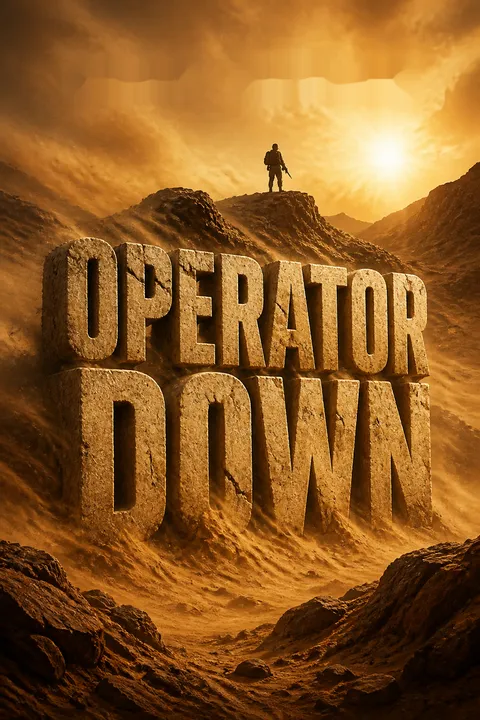


Plot Summary
Soweto's False Diamond Trail
In Soweto, Israeli contractor Aaron Bergmann and Alexandra Levy, a diamond-exchange employee recruited for her expertise, secretly film an Israeli merchant meeting two unfamiliar men. Lip-reading software reveals talk of weapons, soldiers, and a disgruntled Lesotho general, not diamonds.
Aaron follows the group to an abandoned power station and discovers that the men have noticed the surveillance. Before he can withdraw, attackers smash into their car and drag Alexandra out.
Aaron fights long enough for her to run, but the blond mercenary Johan van Rensburg intercepts him near the tourist grounds. Drugged and beaten, Aaron wakes bound in a room, learning that Alexandra has also been captured and that his Israeli partner, Shoshana, has become a target.
The mission begins with a category error: Aaron expects commercial embarrassment and finds a political operation instead. His technology makes silent speech legible, but it cannot protect him from the human fact that the observed men are watching back. Alexandra's inexperience raises the stakes because Aaron must manage both intelligence gathering and responsibility for a civilian. His decision to keep pursuing the meeting after the weapons talk emerges is not simple carelessness; it is the professional reflex to finish a task before the picture is clear. That reflex turns an inquiry into a hostage crisis.
Vegas Takes the Wrong Turn
At Las Vegas's SHOT Show, Taskforce commander Kurt Hale diverts Pike Logan and his team from testing firearms to watch American arms dealer Tyler Malloy. Tyler's aide, Bulgarian former army officer Stanko Petrov, carries an iPad that may contain the dealer's plans.
Pike uses a staged craps-table dispute and a failed attempt to copy the device to learn that Tyler and Stanko are flying to Tel Aviv. The operation is only Alpha surveillance, and it bypasses the Taskforce Oversight Council, leaving Pike uneasy about his commander's judgment.
Knuckles, Pike's longtime deputy, is especially reluctant to join: his relationship with Carly has ended, but he has promised to train her for Taskforce selection and must decide whether to honor that duty.
The Vegas assignment establishes the book's institutional tension before Pike knows what the larger threat is. His team normally pushes against restrictions, yet now Pike recognizes that Kurt has made an exception without the usual democratic check. The practical failure with Stanko's iPad also matters: this is not a frictionless spy fantasy in which technology simply yields answers. Knuckles's private rupture parallels that uncertainty. He is tempted to abandon a commitment after the intimacy that motivated it has ended, and Pike's insistence that he train Carly separates professional responsibility from romantic possession.
The Call From Tel Aviv
Pike and Jennifer Cahill arrive in Tel Aviv and follow Tyler and Stanko to the Israeli diamond exchange, where Stanko later meets contractors in Jaffa. Jennifer uses a compromised Apple Watch to capture fragments of their conversation. The transcript describes a woman with a Mossad past who is being located by a paid team, and one clue places her at the Dan Carmel hotel in Haifa.
Pike recognizes that Shoshana Weinberg, Aaron's partner, is staying there, though she has refused his calls. He and Jennifer abandon their original surveillance posture and drive north. The intercepted conversation does not prove who is being hunted, but its timing and the hotel detail make the possibility too urgent to ignore.
This is where the two plotlines begin to share a danger without yet sharing reliable knowledge. Jennifer's technical improvisation produces only scraps, so interpretation becomes as important as collection. Pike's leap from a partial transcript to Shoshana is an act of judgment shaped by friendship, not certainty. The scene also places his personal loyalties inside a mission whose authorization is already questionable. What he chooses to do next will depend on whether he treats ambiguity as a reason to wait or as a warning that waiting itself may be dangerous.
Haifa's Balcony Escape
At the Dan Carmel, hired attackers arrive disguised as a massage therapist and her assistants. Shoshana sees the threat in time, kills the intruders, and escapes down the hotel balconies before a second team can close in. She reaches the Baha'i Gardens, where Pike crashes his car into an pursuing SUV to block it, but Shoshana reads his arrival as part of the attack and flees through the gardens.
After fighting another armed man, she boards a bus to Acre. Pike and Jennifer follow the hunters instead, trace them into Acre's market, and confront an Orthodox Jewish locator before he can find Shoshana. When she sees Pike protecting her rather than pursuing her, her suspicion breaks, and she accepts the team's help.
Shoshana's misreading is not a sudden lapse in competence. Isolation, fear for Aaron, and her long history of being used make even familiar allies look like possible instruments of betrayal. Her ability to perceive danger is powerful, but it cannot tell her what a trusted person's intentions are when her own fear has already supplied an answer. Pike's response is physical rather than rhetorical: he places his vehicle between her and the attackers, then tracks the people hunting her. Trust returns through observable risk, not reassurance, which is the only evidence Shoshana has learned to believe.
The Diamond Exchange Link
Once Shoshana joins Pike's team, she explains that Aaron had been hired to investigate suspicious dealings connected to the Israeli diamond exchange. Pike's surveillance now finds Tyler entering the same institution.
In a private meeting, merchant Eli Cohen explains why he is financing a change of government in Lesotho: replacing the prime minister with deputy Makalo Lenatha could give him privileged access to the kingdom's future diamond mines. Tyler is asked to provide weapons, aircraft, and jump equipment.
Cohen also offers a more extraordinary payment, South African Krytron nuclear triggers left over from Project Circle, the dismantled weapons program he once helped build. Johan's mercenary force is to install the new government, while Tyler plans to sell the triggers to Hezbollah contact Hassan Kantar.
The diamond trade is not merely a pretext for the thriller; it is the mechanism that connects private appetite to public violence. Cohen wants to preserve his place in a shrinking industry, Tyler wants an unusually valuable commodity, and Lesotho's resources become bargaining chips in both men's plans. Each participant can describe the transaction in the language of business, yet their contract requires armed force and nuclear components. Shoshana's personal crisis and Pike's national-security mission now intersect materially. Aaron was not simply unlucky to stumble into the coup. He uncovered the same system from its Israeli commercial entrance.
The Castle's Second Guest
In Cape Town, Pike's team follows Stanko and Tyler to a nighttime meeting at the Castle of Good Hope. Jennifer identifies the historic governor's quarters as the likely venue, and Pike and Jennifer climb the fort walls to aim a laser microphone at its windows. The recording confirms that Tyler is supplying the equipment for an assault and that Johan, who captured Aaron, is working with Colonel Lloyd Armstrong.
Tyler's men discuss parachutes, ammunition, and a timetable, while Armstrong negotiates payment and South African military support. A guard forces Pike and Jennifer to abandon the listening post. Shoshana reaches them as they escape, carrying a photograph of the warehouse lock where Tyler's equipment is stored.
The castle's layered walls make the surveillance problem concrete: the team must observe without being seen, and the method that yields evidence also creates exposure. Pike's choice to delegate the trigger role to Brett and rely on a laser rather than enter the meeting reflects an effort to contain risk, but the guard's appearance ends that control. The recording also changes Johan from a distant captor into a present operational obstacle. For Shoshana, the mention of Aaron is not yet proof of his location, but it sharpens the conflict between waiting for evidence and acting on emotional certainty.
A Dose on Signal Hill
While Pike prepares to enter Tyler's warehouse, Shoshana independently follows a local intermediary from the Long Street Hotel to Signal Hill. Hidden above an old fortification, she watches the intermediary demand payment from a foreign operative. He admits that he contacted Eshan, a man in Durban who helped arrange the safe house where Aaron was interrogated.
The operative kills a drug seller and injects the intermediary with heroin, leaving him to die as an overdose. Shoshana reaches him before he loses consciousness completely, forces his phone open, and retrieves Eshan's number. She has a new lead on Aaron, but the killer is already moving to erase anyone who can connect the operation to him.
Shoshana's investigation shows both the precision and the cost of acting alone. She does not attack the foreign operative when he is within reach because the information is more valuable than immediate revenge. Yet the means she uses to get the phone from the dying intermediary are coercive, and her urgency narrows her moral attention to the one answer she needs. The scene makes the book's central danger of instrumental thinking personal: people become sources, obstacles, or leverage. Shoshana knows that logic intimately, which is why her attempt to escape it is so unstable.
The Warehouse Key
Shoshana's photograph of the warehouse lock lets Taskforce hacker Creedwater produce a key design, which she has printed at a local hobby shop. Pike, Jennifer, and Brett use the fragile plastic copy to enter Tyler's Cape Town warehouse.
Inside, Pike photographs assault rifles, explosives, ammunition, and high-altitude parachutes, evidence of a substantial operation rather than an ordinary arms sale. A faulty alarm draws three guards, forcing Pike to hide above them before he can escape.
Shoshana's Signal Hill lead arrives at the same time: Stanko is traveling to Durban to meet Eshan. Pike convinces Kurt to obtain foreign-phone collection so the team can follow the meeting, preserving the investigation while moving toward the person who may know where Aaron is held.
The key is an apt emblem for this investigation: access comes from translating an image into a workable object, but the result remains brittle under pressure. The warehouse offers physical corroboration of a planned assault, yet nothing there alone proves the nuclear transaction. Pike therefore needs further intelligence rather than a satisfying but premature raid. Shoshana's independent lead gives the operation a human target, while the Taskforce's technical reach makes cooperation possible. Their alliance is productive but ethically strained, since Pike is stretching his authority for a friend even as he insists on method and evidence.
The Market Garrote
In Durban's crowded Victoria Street Market, Pike's team spots Stanko meeting Eshan, an Indian intermediary who helped secure the South African safe house. When the men leave the public food court, Stanko tries to garrote Eshan in a parking garage. Shoshana attacks Stanko and disables him, while Pike and Brett pursue Eshan through the market and prevent his escape.
Under questioning, Eshan confirms that Aaron and Alexandra were moved from Durban to Lesotho at the insistence of Lieutenant General Jonathan Mosebo. Shoshana now has a location, but the prisoners are inside the military world that is preparing to overthrow the government. The team must decide whether to continue as observers or turn its investigation into a rescue.
The market's public bustle does not make Eshan safe; it only forces Stanko to conceal violence until he can isolate him. The attempted garrote reveals how aggressively the conspiracy is being cleaned up, and Shoshana's intervention is both a rescue and a violent escalation. Eshan's information transforms Aaron from an absent partner into a reachable captive, but reachability is not the same as access. Lesotho's military base is precisely where ordinary surveillance rules may fail. Pike's choice now carries two competing obligations: prevent a wider threat and refuse to abandon someone already in danger.
Project Circle Reappears
As Pike follows the Lesotho lead, CIA collection links Tyler's Cape Town communications to Hassan Kantar, a Hezbollah operative demanding delivery of Project Circle triggers before upcoming nuclear inspections.
The Taskforce Oversight Council accepts Kurt Hale's argument that the components could reach Iran through Hezbollah and grants Omega authority to capture Tyler. Kurt also positions Knuckles and Veep to reinforce Pike, while a transport aircraft carries equipment toward South Africa.
Pike's mission has changed from watching an arms dealer to interrupting a nuclear smuggling route, though the Council's approval does not authorize him to reshape Lesotho's government. He proceeds with the rescue and the coup investigation occupying the same dangerous ground.
The new intelligence resolves a crucial evidentiary gap: Project Circle's mention in Cape Town is no longer an isolated phrase, because a separate collection stream connects it to a Hezbollah buyer and a deadline. The Council's decision shows oversight functioning as a source of legitimacy, but its mandate remains bounded. Pike will have authority to capture Tyler, not to choose Lesotho's leadership. This distinction becomes harder to maintain as personal rescue and political consequence converge. The state can authorize force against a defined threat more readily than it can accept responsibility for what happens after that force succeeds.
Bushman's Nek Crossing
Pike's reinforcements parachute into the Drakensberg foothills with motorcycles, weapons, and a Fulton recovery system for extraction. The team avoids the main road by crossing at Bushman's Nek, where the Lesotho side has little border infrastructure, then rides toward Morija.
Their target safe house is expected to receive Johan's force the following night, but five troop trucks arrive early, and the mercenaries begin pairing with local soldiers. Pike's team observes the coup accelerating from a distance. He ambushes Johan's departing vehicle with Shoshana, forcing it off the road, while Brett and Veep keep the soldiers below from closing in. Johan escapes the wreck, limps toward a footbridge, and is captured there.
The insertion converts the Taskforce's distant intelligence into bodily exposure: weather, terrain, checkpoints, and timing all threaten the plan before a shot is fired. The choice of a minor crossing illustrates Pike's practical ingenuity, but it also makes the team dependent on a narrow route and limited equipment. Their arrival at Morija reveals that the coup's schedule has outrun their assumptions. Pike can no longer develop the situation at leisure. Capturing Johan offers a chance to learn the operation's structure, but the force already moving toward the capital means every delay has consequences.
Mosebo's Last Interrogation
Inside the Lesotho military base, Aaron has been held in a prison with Alexandra and political dissident Thomas Naboni. Thomas's followers protect the pair, and Aaron quietly weakens bricks around a window so they can escape. Before he can use it, guards take Aaron and Alexandra for another interrogation.
When Mosebo threatens Alexandra, Aaron uses his shackles to kill the guards, strangles the general, and takes his phone. He frees Alexandra, but their flight through the base leaves her wounded and both of them exposed. Aaron reaches the surrounding woods with one rifle and calls Shoshana. At the same time, Pike's team learns from Johan that the assault is under way and receives Aaron's location.
Aaron's escape is powered by a shift from waiting for rescue to preparing for survival. He still hopes Shoshana will come, but he does not let that hope replace action: he studies the prison, builds an exit, and acts when Alexandra's danger becomes immediate. Killing Mosebo gives him freedom while also detonating the base's command structure. His rescue is therefore never a clean extraction. By calling Shoshana, Aaron turns private faith into usable coordination, but the call arrives when he and Alexandra are still surrounded and the coup is already unfolding.
The First Base Assault
Pike and his team cut through the perimeter fence and move toward Aaron's position as soldiers sweep the field with searchlights. Knuckles and Veep disable the guard towers, while Pike, Brett, and Johan provide cover. They reach Aaron's depression under fire and find Alexandra wounded in the leg.
Johan, now convinced that Armstrong used him, gives his body armor to Alexandra and helps carry her toward the vehicles. The team breaks contact and gets both captives outside the base. On the road, Aaron thanks Pike but immediately reveals that Thomas and the other political prisoners remain in danger. Despite the strain of returning to a military compound, Pike agrees to go back for them.
The rescue forces former enemies into a provisional alliance. Johan's knowledge of the base and willingness to shield Alexandra matter more than his past role in Aaron's capture, but trust remains conditional. Pike's team measures success not by reaching Aaron alone but by whether the people who helped him survive are also left behind. That standard makes the operation more dangerous, yet it reflects the story's recurring argument that obligation cannot be reduced to formal authority. Aaron's insistence on Thomas turns gratitude into a new mission and tests whether the team will accept that moral debt.
The Second Prison Window
Aaron leads Pike's team back onto the base, using the window he prepared to extract Thomas and four members of his inner circle. When Lurch arrives and holds Thomas at gunpoint, Aaron re-enters the prison rather than abandon him. Shoshana and the Taskforce team overwhelm the guards, disarm Lurch, and keep the other prisoners from being forced into the fight.
Thomas emerges alive, but the coup has already fractured: Johan reports that the prime minister has been killed, police and mercenaries are still clashing, and Armstrong is heading for the airport with Lenatha. Pike divides the team. Some move to intercept the coup leaders, while Jennifer and Shoshana take Thomas toward the Americans gathered at a nearby hospital.
Returning to the prison is the clearest rejection of a purely instrumental rescue. Aaron owes Thomas for protecting Alexandra and himself, and he accepts the risk of re-entering the base rather than convert that debt into a private feeling of gratitude. The window he prepared makes escape possible, but the rescue becomes collective only when the team joins him. Meanwhile, the coup's collapse creates a political vacuum. Thomas's survival is not yet a resolution, because the armed men who control the state may still kill or sideline him before his public legitimacy can matter.
Baylor's Manufactured Emergency
At the police headquarters, Pike discovers that Andy has taken Khosi and plans to kill Thomas and his followers. With no official authority to intervene politically, Pike gives Jennifer and Shoshana a dangerous workaround: report a threat to American staff at Baylor Children's Hospital.
Jennifer persuades the embassy's Special Forces security team to leave the compound, then leads them to Thomas just as armed men prepare to execute him. Shoshana and Jennifer join the soldiers in the fight, rescue Thomas, and bring his supporters out alive. The intervention places visible American force in the middle of the coup, making it harder for Lenatha's faction to erase the reformer before the country can decide what follows.
The hospital deception exposes the gap between formal mandate and practical responsibility. Pike knows that rescuing Thomas will influence Lesotho's political future, precisely the sort of action his commander has warned him not to take. He nevertheless uses the embassy's duty to protect American citizens to create a response that can stop an imminent execution. Jennifer's performance makes the maneuver possible, but it also implicates her in a lie. The scene refuses an easy moral distinction between lawful restraint and unlawful intervention: the rules preserve accountability, yet strict adherence would leave vulnerable people to be killed.
The Airport's Last Passenger
Pike's team reaches the airport disguised beneath a truck tarp, with Johan and Chris presenting themselves as expected personnel. Once inside, Johan breaks his restraints and attacks Andy, who has been working with Armstrong to preserve the coup.
Chris is killed in the ensuing gunfire, but Pike's team enters the terminal and eliminates Lenatha's armed guards. Johan captures Armstrong, while Thomas arrives with the rescued prisoners and Lesotho police. Thomas assumes leadership with the police behind him, and Pike leaves him to govern rather than claim a role for the Taskforce.
Johan chooses to stay and help Thomas. The mercenary campaign ends not with its planned installation of Lenatha, but with its organizer in custody and a local reformer holding the fragile opening it created.
The airport brings the book's competing loyalties into a single room. Johan's break with Armstrong is not a conversion into innocence; he acts because he refuses to be used in a transaction that leads to nuclear trafficking. Thomas's authority, by contrast, comes from a constituency and a political record rather than military force. Pike can create the opening, but he cannot make the new government legitimate on its own. His withdrawal matters: restraint after intervention is part of the ethical problem, not an escape from it.
Triggers at the Hard Rock
Three days later, Pike watches from a Johannesburg Hard Rock Cafe as diplomatic security and FBI agents arrest Tyler during a staged transfer with Colonel Smith. The Project Circle triggers are taken out of the smuggling chain, and the Taskforce hands the case to law enforcement because Tyler is an American citizen.
Aaron and Shoshana prepare to return to Israel and confront Eli Cohen at the diamond exchange; Aaron intends to force him to face the consequences of the scheme.
Before they part, Shoshana urges Pike and Jennifer to make room for a life beyond their work, drawing on what she has learned from their partnership. The immediate threats are contained, but the characters leave with their loyalties intact and their private futures newly visible.
The ending deliberately shifts from covert violence to public procedure. Tyler's arrest is less spectacular than the Lesotho operation, but it completes the threat chain through evidence and lawful handoff rather than another private execution. The final meal gives emotional closure without pretending that the people involved have become ordinary. Shoshana can now interpret intimacy as something learned through observing others, not merely as a threat to her independence. Her advice to Pike and Jennifer reflects a quieter form of reciprocity: the rescuers have also changed the person they rescued.
Analysis
Operator Down makes the ethics of intervention its central thriller problem. Its action is driven by a chain of bargains: Cohen trades political access for commercial advantage, Armstrong sells military skill, Tyler prices out weapons and nuclear components, and Mosebo treats command as personal security. Each participant can reduce the consequences to a contract or a tactical objective. The resulting coup is not an abstract geopolitical crisis; it is a process that turns Lesotho's mines, water, police, and prisoners into instruments of private negotiation.
Pike's arc tests the same logic from the opposite direction. He believes that rules exist to protect democratic legitimacy, yet he repeatedly finds that obeying the narrow mandate may leave an ally in danger or a political prisoner to be killed. His choice to involve the US security team through a fabricated hospital threat is morally compromised, even if it prevents an execution. The novel does not present his good intentions as a universal exemption. It shows how a commander can become both rescuer and political actor, then asks whether success can justify the authority he claimed for himself.
The personal plot gives that dilemma emotional force. Shoshana has learned to survive by reading danger and answering it with violence, but Aaron's absence destabilizes that skill. Her fear makes Pike look like an enemy until his actions supply evidence otherwise. Aaron, meanwhile, turns reliance into reciprocity: Thomas protected him and Alexandra, so Aaron risks re-entering the prison to free Thomas. These relationships offer a counterweight to the story's transactional world. Loyalty is not innocent, but it binds people to obligations that cannot be priced.
The ending's shift from covert assault to law enforcement and local leadership matters. Tyler's arrest closes the nuclear route, while Thomas's political authority must come from Lesotho rather than Pike's team. The book's uneasy lesson is that force may create an opening, but it cannot manufacture legitimacy. A responsible intervention must know when to stop acting as well as when to begin.
Review Summary
Operator Down received mostly positive reviews, with an average rating of 4.31/5. Readers praised the action, character development, and detailed plot. Many enjoyed the focus on Shoshana and Aaron's storyline. Some criticized the book for being too wordy or lacking urgency. Fans of the series appreciated the continuation of Pike Logan's adventures, while a few found it less engaging than previous installments. Overall, readers found it an exciting thriller with well-researched settings and complex geopolitical themes.
People Also Read







Characters
Pike Logan
Taskforce field commanderPike leads the Taskforce's field operations and owns Grolier Recovery Services with Jennifer, his partner in work and life. He is decisive, physically capable, and comfortable challenging rules when he believes the threat justifies it, but this mission makes him confront the danger of becoming his own unchecked authority. His loyalty to Aaron and Shoshana repeatedly presses against his official assignment to stop Tyler Malloy. Pike often hides concern behind humor and impatience, yet his defining skill is reading what a situation demands and accepting responsibility for the consequences. He trusts his team to correct him, even when his choices strain the limits of their mandate.
Jennifer Cahill
Pike's analytical partnerJennifer is Pike's partner in Grolier Recovery Services and the Taskforce, where she contributes unusual technical, analytical, and physical abilities. Her first love is archaeology, and she remains alert to the history and human context that Pike tends to dismiss while pursuing a target. She can move between quiet surveillance and decisive action, but her strongest influence often comes from noticing what others have stopped considering. Jennifer challenges Pike's evasions about their relationship and protects Shoshana without treating her as helpless. Her steadiness is not passivity: she is willing to improvise, deceive, and take personal risks when people are in immediate danger.
Aaron Bergmann
Israeli field contractorAaron is a seasoned Israeli operative working outside the formal Mossad structure, skilled in surveillance, interrogation resistance, and close combat. He recruits Alexandra for her knowledge of the diamond trade, then feels responsible for her safety when the assignment reveals a much larger plot. His loyalty is practical rather than sentimental: he plans, fights, and accepts danger on behalf of people who depend on him. Aaron's marriage to Shoshana is central to his life, though both partners have to learn how intimacy works after years of treating people as assets or threats. He has hard-earned faith in Shoshana's abilities, but he does not mistake faith for a substitute for action.
Shoshana Weinberg
Mossad-trained protectorShoshana is an exceptionally dangerous former Mossad operative who now works independently with her husband, Aaron. Orphaned by political violence and trained to kill, she has little experience of ordinary intimacy and struggles to distinguish jealousy, fear, and instinct. She believes she can sense danger in other people, a talent that has protected her but cannot shield her from misreading those she loves. Shoshana's relationship with Aaron gives her a reason to imagine a life beyond being a weapon, while her bonds with Pike and Jennifer offer examples of loyalty that is not based on command. She is direct, feral under pressure, and more vulnerable than she knows how to show.
Alexandra Levy
Diamond-market specialistAlexandra works in the Israeli diamond exchange and assists Aaron because she understands the industry he is investigating. She is intelligent and eager to contribute, but she has little field experience and initially underestimates the danger around her. Captivity forces her to rely on judgment and endurance she did not know she possessed. Her relationship with Aaron begins as a professional arrangement shaped by his responsibility for her safety. Alexandra's fear is credible rather than cowardly: she has been pulled into violence without training, and she must decide repeatedly whether to keep acting despite that fear.
Johan van Rensburg
Mercenary ground commanderJohan is a South African veteran of elite reconnaissance units who now sells his combat skill as a mercenary. He values competence and brotherhood, and he tells himself that his work can remain separate from the consequences it produces. Memories of past atrocities have left him wary of outright evil, though financial need and loyalty to his men complicate his moral boundaries. Johan's history makes him an effective planner, while his discomfort with being deceived gives him a point of contact with Pike. He is neither a clean hero nor a simple villain: his central struggle is whether personal honor can survive when the work itself serves corrupt ends.
Tyler Malloy
Arms-dealing opportunistTyler is an American arms dealer who began as a Marine and contractor before building a private weapons business through contacts in Eastern Europe and the Middle East. He is ambitious, fit, and invested in the image of a hard-edged operator, even as his present role is commercial rather than military. Tyler treats buyers and political causes as secondary to access, leverage, and profit. He is willing to extend credit when a deal promises an unusually large return, but he dislikes uncertainty and expects others to honor agreements on his terms. His self-image as a capable businessman helps him rationalize the risks he imposes on others.
Thomas Naboni
Imprisoned reformerThomas is a Lesotho political activist with advanced training in economics and international relations. He returned home after his nephew died in an unsafe initiation rite and became involved in efforts to protect young men and challenge entrenched corruption. Educated abroad but rooted in local experience, Thomas understands how natural wealth can coexist with public deprivation. In prison, he protects a small circle of men without surrendering his dignity, earning loyalty through conduct rather than title. He is thoughtful about the risks of power and wary of being treated as a symbol when what his country needs is accountable leadership.
Stanko Petrov
Tyler's Bulgarian fixerStanko is a former Bulgarian army officer who helped Tyler establish his arms business and now handles security and practical arrangements. He is efficient, guarded, and accustomed to serving as the channel through which Tyler's decisions become action. His presence connects the American dealer to overseas suppliers and to the people hired to remove obstacles. Stanko's loyalty is instrumental rather than intimate: he values competence and keeps sensitive business moving. He is the kind of aide whose quiet usefulness can make a larger, more reckless principal appear organized.
Kurt Hale
Taskforce commanderKurt commands the Taskforce and must persuade an Oversight Council to authorize dangerous operations without allowing the unit to become an unaccountable instrument. He has deep faith in Pike's judgment, but he also understands the institutional limits that Pike is inclined to test. Kurt uses indirection and strategic patience, often withholding his reasoning until the consequences clarify it. His choices place him between political oversight and field realities, where a decision to wait can be as consequential as a decision to act.
Knuckles
Pike's veteran deputyKnuckles is Pike's longtime second-in-command, a Navy SEAL with a blunt manner and a habit of using humor to puncture tension. His loyalty is grounded in years of shared operations, not automatic agreement. He has a personal commitment to train Carly, even after their romantic relationship ends, and Pike insists that he honor it. Knuckles can be impatient with command games, but he recognizes the value of discipline and is willing to question his own motives. He remains one of the people best positioned to keep Pike's instincts from becoming the team's only compass.
Brett Thorpe
CIA-trained field operatorBrett is a former Recon Marine and CIA paramilitary officer recruited into Pike's Taskforce team. Compact, tough, and dryly funny, he is comfortable with surveillance, improvisation, and close combat. He often punctures Pike's self-seriousness without undermining the mission, and his presence gives the team another experienced perspective when plans unravel. Brett's humor is a working tool: it keeps fear from governing the room, while his discipline ensures that jokes do not replace attention to risk.
Eli Cohen
Israeli diamond merchantEli is a diamond merchant whose family history and former intelligence work give him access to both the Israeli exchange and older state networks. He sees the diamond business losing its former centrality and fears becoming one more displaced merchant. That fear makes political influence attractive: he wants a direct relationship with Lesotho's future mining interests rather than another layer of commercial intermediaries. Eli speaks in the language of reputation and honor, but his ambitions place him inside arrangements that depend on force and secrecy.
Jonathan Mosebo
Lesotho military generalMosebo leads the Lesotho Defence Force and sees his position threatened when the prime minister demands his retirement. He wants to retain command and is willing to align with political actors who promise to preserve it. His authority rests on the military's power, but insecurity makes him suspicious of outsiders and increasingly reliant on coercion. Mosebo represents the danger of a state institution becoming a private instrument for its leader's survival.
Lloyd Armstrong
Mercenary company colonelArmstrong is a former Rhodesian and South African soldier who now organizes private military operations. He is experienced at converting political objectives into plans, teams, and equipment, and he expects subordinates to follow his strategic judgments. Armstrong regards human and national consequences as secondary to whether the operation succeeds and the client pays. His confidence in his own networks can obscure the degree to which other people are taking risks on his behalf.
Hassan Kantar
Hezbollah-connected buyerHassan is a Lebanese operative with ties to Hezbollah who once encountered Tyler during a training program for Syrian fighters. He is patient when a deal is useful and demanding when a deadline matters. His relationship with Tyler is built on access and profit rather than trust, and his questions reveal how much the buyer values the transaction's timing.
Plot Devices
Silent lip-reading software
Turns mouths into evidenceAaron uses a button camera and Mossad software to infer speech from filmed faces without recording audio. The tool first reveals that the Soweto meeting concerns weapons and Lesotho's military, not diamond trading. It also produces the crucial warning that the target knows he is being followed. The method supplies a major clue while creating a false sense of control: it can decode words, but it cannot tell Aaron what the men will do once they realize he is there.
Taskforce authorization ladder
Sets limits on interventionAlpha authority permits surveillance and exploratory work, while Omega authority permits a more direct capture operation. Pike's choices repeatedly test the gap between his formal mandate and what he believes must be done to save Aaron or prevent a political crisis. Kurt must persuade the Oversight Council with evidence linking Tyler, Project Circle, and Hezbollah. The authorization system creates procedural friction that shapes the plot rather than merely decorating it, especially when Pike considers helping determine who governs Lesotho.
The Project Circle triggers
Connects coup to terrorSouth Africa's dismantled nuclear program left behind Krytron triggers, sought by Tyler as payment for supplying the coup's weapons and transport. Tyler intends to sell them to Hassan Kantar, whose Hezbollah connection raises the possibility of eventual transfer to Iran. This object links the Lesotho operation to the Taskforce's counterterrorism mission and gives Kurt evidence strong enough to seek Omega authority. The triggers remain an unseen commodity, but their price and destination determine the stakes of the entire conspiracy.
The Lesotho coup
Makes commerce politicalEli Cohen finances an effort to replace Lesotho's prime minister with Makalo Lenatha, expecting favorable access to new diamond mines. General Mosebo and Colonel Armstrong supply local military power and mercenary expertise, while Tyler provides logistical support. The coup gives the cast a shared physical arena and turns commercial ambition into a contest over state power. Its unexpected violence also forces Pike to confront the difference between observing a political intervention and taking part in one.
The plastic key and laser mic
Opens sealed conversationsShoshana photographs a restricted warehouse lock, and Taskforce hacker Creedwater converts the image into a printable key design. Separately, Pike and Jennifer use a laser microphone to capture speech through a window at the Castle of Good Hope. Both devices transform remote observation into physical access or usable evidence. Neither works without risk: the key breaks during entry, and a guard forces the team to abandon the listening post before it can collect everything.
Pike Logan Series

About the Author

Download PDF
Download EPUB
.epub digital book format is ideal for reading ebooks on phones, tablets, and e-readers.








