


Plot Summary
Prologue
In April 1945, captured dictator Benito Mussolini waits in a Lake Como cottage with his devoted companion, Claretta Petacci, as partisans close in. A German officer arrives, but he is secretly an emissary of the Knights of Malta, demanding a ring and documents Mussolini took from a murdered knight.
Mussolini refuses, believing the papers can still protect him. The partisans lead him and Claretta to an execution site. As he dies, he directs a cryptic Latin warning at the watching emissary, suggesting the old order’s struggle has not ended.
The prologue makes political power feel suddenly mortal. Mussolini remembers the crowds and authority that once fed his self-image, yet now he cannot control even the room in which he waits. His refusal to surrender the ring and papers shows that the secret has become more important than his chance of escape. Claretta’s loyalty contrasts with the bargains made by the men around him, while the emissary’s presence ties fascist history to an older institution that survives by protecting its own secrets. The execution closes Mussolini’s life but opens the novel’s central question: what was valuable enough to pursue through his final hours?
Como’s Missing Satchel
British intelligence sends Cotton Malone, a retired American agent and Copenhagen bookseller, to Lake Como to retrieve five supposed letters between Churchill and Mussolini. At the villa, he finds a murdered man and a house searched from top to bottom. A bear has reached the third floor before him, forcing Cotton onto a narrow exterior ledge.
He returns armed, drives the animal out, and discovers Mussolini’s hidden elephant-skin satchel beneath a study floor. It holds eleven Churchill letters and other wartime papers. Before Cotton can leave, an attacker knocks him unconscious and escapes with the satchel. Cotton wakes to a dead assailant, a flat tire, and a ring marked with an unfamiliar palindrome.
Cotton’s first assignment turns archival work into physical danger, but the two are not separate kinds of labor. His knowledge of books and languages lets him recognize the satchel’s value; his field instincts keep him alive long enough to find it. The bear introduces a disorder no intelligence file anticipated, exposing how quickly a neat plan can become bodily improvisation. The missing papers then make evidence itself unstable: what Cotton discovers cannot yet be verified or controlled. The ring is the first clue that the documents are only one layer of a much older contest.
Luke Above Malta
On Malta, Magellan Billet agent Luke Daniels watches Cardinal Kastor Gallo, a disgraced church judge who has fled Rome just before the papal conclave. Luke parasails above the coast to overhear Gallo meeting Arani Chatterjee, but the men spot him. A hired attendant cuts the towline, dropping Luke into the sea, while gunmen chase him across the water.
Luke fights his way onto their boat and disables two attackers. A blonde operative, Laura Price, then intercepts him and claims she can help. Luke doubts her intentions, especially after she damages his own boat and he shoots her engine in return. He reaches shore, where two men ambush and imprison him beneath Valletta.
Luke’s competence is real, but his confidence repeatedly outruns his awareness. He survives the water assault through training, then mistakes tactical success for control of the larger situation. His clash with Laura establishes their relationship as a contest over information as much as attraction or temperament. Malta’s geography magnifies that contest: open water offers visibility but little safety, while the island’s hidden tunnels promise concealment at the cost of confinement. Luke’s errors are consequential, yet the story treats them as correctable rather than defining. He must learn the local network before he can act effectively within it.
The Ring’s Old Order
Cotton carries the ring to Milan and tells MI6 officer Sir James Grant that the satchel is gone. Grant confirms that three people connected to the villa have been killed, including its owner, who was found suspended by his arms in a manner associated with the Hospitallers. The ring’s Sator Square and Maltese cross suggest a link to the Knights of Malta.
Grant admits that the letters matter to Britain because they might settle rumors about Churchill, but he also wants Cotton to investigate the knights. Cotton recognizes that Grant is withholding part of the mission, yet accepts a larger fee and agrees to go to Rome. He keeps the ring from Grant until he can judge what the British really know.
Cotton’s suspicion grows from discrepancies rather than from a single revelation. Grant’s calm account of several deaths, paired with his eagerness to expand the assignment, tells Cotton that the letters are a pretext for a larger inquiry. The ring works as both evidence and social marker: its meaning depends on recognizing an institution that presents itself publicly as charitable and privately guards a militant past. Cotton accepts the job without surrendering his skepticism. His professionalism is not blind obedience; he tests what he is told, while his willingness to continue also exposes how money and curiosity can pull him back into danger.
A Cardinal’s Bargain
Kastor Gallo meets Chatterjee on Malta and learns that the missing Nostra Trinità, a three-part collection of documents guarded by the Hospitallers, may be connected to Mussolini. Kastor wants the relic to strengthen his bid for pope.
Archbishop Danjel Spagna, head of the Vatican’s secret intelligence service, offers him a different weapon: evidence that cardinals have diverted charitable funds, falsified accounts, and enriched themselves. Kastor accepts the alliance, though Spagna will release the full proof only after the cardinals are sealed inside the conclave.
Meanwhile Luke discovers that Laura has entered the old underground prison where he is held. She explains that Vatican intelligence is watching Gallo, and Luke agrees to work with her despite their mutual distrust.
Kastor’s ambition grows out of genuine grievance, but he treats reform as a route to personal restoration. Spagna understands this and offers not moral clarity but leverage, turning institutional wrongdoing into a private bargaining chip. Their alliance is therefore transactional from its beginning. Luke’s partnership with Laura provides a counterpoint: he accepts cooperation without receiving full disclosure, because the danger is too immediate to wait for trust. Both strands show secrecy functioning differently. For Kastor it is a tool to dominate rivals; for Luke and Laura it is a practical obstacle that must be managed while events continue to move.
The Archive Ambush
At the Knights of Malta’s archive in Italy, Cotton is received by a man calling himself Pollux Gallo, the temporary head of the order. The visitor claims the ring is merely ceremonial, then reveals that he knows Cotton found the satchel. Armed guards attack when Cotton presses him about the letters.
Cotton fights through the archive, triggering sprinklers and using tables, shattered glass, and a candle stand to escape. He finds a private collection of Mussolini papers, confirming the knights have studied the dictator for decades. Stephanie Nelle arrives with the real Pollux, Kastor’s identical twin and a senior Hospitaller, who explains that the Secreti, a secret brotherhood within the order, may be active again.
The archive scene converts the novel’s historical mystery into a question of identity. Cotton has entered a repository where objects are carefully preserved, yet the authority figures around him are unreliable and armed. His escape damages irreplaceable materials, making survival carry a cost rather than a clean victory. The distinction between the false and real Pollux also asks the reader to treat institutional titles cautiously: possession of a name or office does not guarantee legitimacy. The Secreti deepen that uncertainty by embodying an organization whose continuity is disputed. History here is not a stable record but a resource factions claim, conceal, and weaponize.
The Letters Become Currency
The Como satchel contains more than the five letters offered to MI6, including Churchill’s wartime proposal that Italy remain neutral in exchange for a postwar discussion of Malta. The offer never persuaded Mussolini, and its publication could embarrass Britain. The man who stole the satchel, a knight operating under the Secreti name, reads all eleven letters and contacts Grant.
He wants British intelligence’s information about Mussolini’s search for the Nostra Trinità. Grant accepts a trade, unaware that the knight intends to keep both the letters and the secret. Near Rapallo, the knight shoots Grant and throws his body into the sea. The documents have become bargaining currency, but every attempted exchange leaves another witness dead.
The letters complicate the novel’s treatment of national virtue. Churchill’s proposal was pragmatic, not necessarily treacherous, yet its political meaning depends on what later generations are allowed to know. Grant wants to protect his country’s reputation, while the knight wants knowledge that can secure his order’s power. Their exchange collapses because neither side is seeking simple truth. The killing makes the cost of controlling historical evidence explicit: once documents become leverage, people who know their contents become liabilities. The episode also narrows the field of trustworthy actors, leaving Cotton to pursue a mystery whose supposed sponsors are themselves implicated.
Mussolini’s Obelisk
Cotton, Stephanie, and the real Pollux reach Mussolini’s obelisk at the Foro Italico in Rome. They break through the marked base and retrieve the fascist codex sealed there in 1932. A second, older-looking sheet falls from its casing, carrying a German message and a string of letters.
Pollux explains that the codex’s opening phrase echoes the words Mussolini spoke before his execution, linking the monument to the missing Hospitaller treasure. Cotton and Pollux conclude that Mussolini hid a clue rather than the Nostra Trinità itself. The message directs them toward the Church of St. John in Valletta. The monument meant to immortalize a dictator instead becomes a concealed signpost to the secret he never found.
The obelisk brings public spectacle into contact with private concealment. Mussolini built a monument to make power visible, then used its interior to hide a message that could not be read from the street. The irony is more precise than a simple fall of tyranny: the regime’s propaganda survives as a container for evidence of its limits. Cotton’s role is interpretive, connecting a phrase, a physical mark, and a location. Pollux contributes the order’s historical knowledge, but neither can proceed alone. The clue therefore makes collaboration necessary while preserving the larger question of who will control the truth once it is found.
Valletta’s Deadly Detour
While Cotton works on Mussolini’s clue, Luke and Laura return to Valletta after Archbishop Spagna asks them to locate Chatterjee and Kastor. Luke is attacked at the safe house, but Laura helps him subdue the intruders. They find Spagna after he has been thrown from a window; a sniper kills the wounded archbishop before they can question him.
Laura is also shot by the attackers, confirming that the struggle around Gallo has spread beyond a surveillance assignment. Luke pursues the killers to the harbor, commandeers a small boat, and rams their yacht. The vessel explodes and sinks, killing four men. Maltese police arrest Luke, while Cotton’s group deciphers the clue and prepares to search the cathedral.
The violence strips away the professional distance Luke has tried to maintain. Laura is not merely an irritating operative or a source of intelligence; her death makes the cost of being used by competing agencies immediate. Spagna’s murder likewise removes the one person who appeared to understand the entire scheme, leaving evidence without its custodian. Luke’s attack on the yacht is decisive but morally and legally messy, and his arrest shows that acting quickly does not erase consequences. The parallel discovery in Rome continues regardless, producing a thriller structure in which a clue can advance even as the people who might interpret it are being killed.
The Cathedral’s Cipher
Inside Valletta’s co-cathedral, Cotton matches the coded message to the painted ceiling and the marble tombs beneath his feet. References to a crowned pride, a shield, roses, and ranks and files identify particular grave mosaics; their positions form an X. A tomb’s carved clock leads the team to a heavy marble timepiece in the oratory.
Cotton removes packed glass and finds a bottle containing a map of Malta, with symbols that Pollux connects to the island’s old watchtowers. Lines through the marked points converge near St. Magyar’s, a secluded chapel once used by the Secreti. The trail has moved from Mussolini’s monument to the knights’ own sacred geography, and Cotton now knows where the hidden documents lie.
The puzzle rewards attention to material detail rather than abstract brilliance. Tombs, paint, clocks, and watchtower positions turn the island’s built environment into a text, legible only when several kinds of knowledge meet. Cotton’s use of a phone to check the meaning of a word makes the method practical rather than mystical. Yet each solved clue also carries the group closer to a place controlled by the order, where their access and safety will depend on others. The cathedral’s graves make the search especially charged: the investigators read the dead as coordinates, using memorials built to preserve individual reputations for a purpose their makers could not have anticipated.
The Twin’s Exchange
At St. Magyar’s, Cotton and Pollux uncover a hidden chapel beneath the church and break open an altar bearing the Sator Square. Inside a glass reliquary lie the Nostra Trinità: two known papal decrees and Constantine’s lost Constitutum Constantini. Kastor and Pollux appear to reconcile, but once Cotton leaves, Pollux garrotes his twin, hides Kastor’s body in a guva, and takes his clothes and identity.
He also kills two accomplices, then travels to Rome as Cardinal Kastor Gallo, carrying the document and Spagna’s blackmail evidence. Cotton returns and discovers the emptied pit and the missing bodies. With Luke’s help, he uncovers Kastor’s corpse and realizes Pollux has infiltrated the conclave.
The discovery of the Trinity appears to resolve the historical mystery, but it instead exposes the most dangerous deception in the present. Pollux’s impersonation is not an improvised disguise; it completes a lifelong rivalry by literally erasing the brother whose identity gave him access to power. The guva, first introduced as an instrument of imprisonment, becomes a place where identity is buried and manufactured. The plot’s revelation also revises earlier scenes: the apparently helpful Pollux was never a neutral ally. Knowledge alone cannot protect the protagonists; they must recognize that the person carrying the answers may be the chief threat.
A Cardinal in Flight
Cotton reaches Rome as the conclave begins and warns Cardinal Stamm, the Entity’s senior official, that the cardinal inside is Pollux wearing Kastor’s identity. Pollux has already taken the oath with the other electors and slips out of the Sistine Chapel when Cotton arrives. Cotton searches the Vatican museums and galleries, eventually spotting him outside in a Swiss Guard uniform.
Pollux moves toward the railway gate and boards a freight train leaving the Vatican. Cotton jumps aboard, fights him in a railcar, and knocks him unconscious before the train clears the boundary. Stamm halts the train and takes Pollux into Vatican custody. The first vote never takes place, preventing Pollux from using the conclave to secure the papacy.
Pollux’s escape depends on the same institutional trust that enabled his entrance: a uniform and a cardinal’s status allow him to move through spaces where people expect obedience. Cotton counters that advantage through observation and physical pursuit, not by appealing to the legitimacy of the process. The train offers a sharp image of an institution’s machinery carrying a false authority toward the outside world. Stopping it prevents immediate political capture, but does not settle who has the right to judge Pollux. The conclave is halted, and the crisis passes from public procedure into the Vatican’s private system of custody.
The Gift Is Burned
In Vatican cells, Cardinal Stamm examines the recovered Constitutum Constantini and accepts that it is authentic. The document describes how an emperor might shape Christian doctrine into a system of authority, fear, and obedience.
Pollux demands that the evidence be made public, while Stamm argues that exposing it could destabilize the church. Stamm burns the parchment and keeps Spagna’s files on corrupt cardinals, promising to deal with those men privately.
He then declares that Pollux and Kevin Hahn, the Maltese security chief who helped him, will not leave the cells alive. Cotton, Stephanie, and Luke leave without intervening. The immediate conspiracy is contained, but the institution preserves its power by destroying the proof and concealing its own punishment.
The resolution refuses the clean satisfaction of exposing a conspiracy and restoring justice. Stamm’s decision to burn the document protects the church from a crisis, but it also repeats the secrecy the document condemns. His private threat against the prisoners turns institutional defense into possible execution, making him both custodian and perpetrator. Cotton and his colleagues’ departure marks the limits of their intervention: they can stop Pollux from becoming pope, but they cannot compel the Vatican to disclose what it knows. The ending leaves readers with an unresolved ethical distinction between preserving a community and preserving the authority that governs it.
Analysis
The novel’s central conflict concerns who gets to author a history that institutions treat as sacred. Mussolini’s papers, Churchill’s letters, the Hospitallers’ decrees, and Constantine’s alleged blueprint are not simply clues to a past event. Each is evidence that can redistribute present authority. Characters therefore fight less over whether an object exists than over who may interpret, conceal, trade, or destroy it.
The two Gallo twins embody rival forms of ambition. Kastor presents his desire for the papacy as a defense of orthodoxy, but repeatedly converts institutional crisis into personal opportunity. Pollux initially appears to represent restraint and service, making his eventual identity theft especially disturbing: the quiet twin has learned to treat his brother’s public role as property that can be taken. Their conflict turns likeness into a political instrument. The most consequential disguise works because the institution already recognizes titles and vestments more readily than persons.
Cotton and Luke provide different models of action. Cotton’s knowledge lets him read the material world, from a floor mosaic to a hidden container, while Luke learns that bravery without local understanding can make him easy to manipulate. Their work succeeds through correction and collaboration, not invulnerability. Yet their victories remain limited. They stop Pollux from taking the papacy and recover the Trinity, but the Vatican’s leadership destroys the most explosive document and withholds its evidence of internal corruption.
That ending refuses the comforting idea that revelation automatically produces reform. Stamm may believe he prevents a crisis, but burning the parchment repeats the secretive logic it exposes. The novel leaves the reader with a sharper question than whether religion or power is inherently corrupt: when an institution claims that secrecy protects the common good, who is allowed to decide what the public can bear to know?
Review Summary
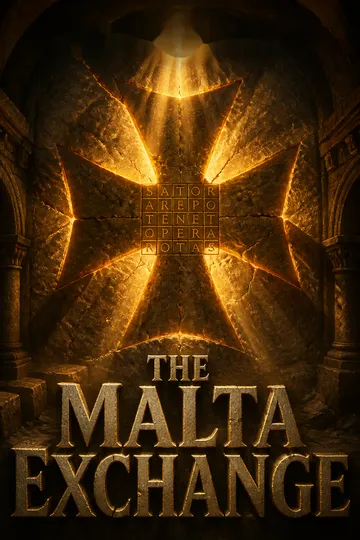
The Malta Exchange receives mixed reviews averaging 3.93 stars. Readers praise Berry's historical research blending Vatican intrigue, the Knights of Malta, and WWII secrets involving Churchill and Mussolini. Many appreciate the fast-paced thriller elements and fascinating Maltese setting. However, critics note excessive historical detail slows the plot, predictable twists, underdeveloped characters, and heavy-handed religious criticism. Some longtime fans found it disappointing compared to earlier Cotton Malone novels, calling it boring or confusing with too many plot threads. Others enjoyed the action-packed adventure and learned history, recommending it for thriller fans.
People Also Read




Characters
Cotton Malone
Retired agent and booksellerA former Justice Department operative who now owns a rare-book shop in Copenhagen, Cotton is expert in history, languages, and the practical handling of danger. He approaches a mystery as both a physical problem and an archival one, noticing what an object can reveal while remaining wary of the person who presents it. His instinct is to act when others are still calculating, a strength that has sometimes made him vulnerable to manipulation. Cotton’s dry humor and curiosity soften his professional caution, but he is not indifferent to the human cost of his work. His relationships with Stephanie Nelle, Luke Daniels, and Cassiopeia Vitt show a man who values loyalty while resisting the idea that retirement means withdrawing from responsibility.
Luke Daniels
Ranger turned intelligence agentA Magellan Billet operative and former Army Ranger, Luke is energetic, physically capable, and eager to prove that he can earn the trust placed in him. He is the nephew of former president Danny Daniels, but he wants his competence, not family connections, to define him. His easygoing manner can conceal how seriously he takes the work and how much he learns from experienced agents such as Cotton. Luke tends to act before he has mastered the local picture, then adapts when his first judgment fails. His attachment to family, especially his mother and brothers, grounds him in a life beyond intelligence work, even as the job repeatedly tests his pride and self-reliance.
Kastor Gallo
Ambitious Maltese cardinalA Maltese cardinal and former head of the Church’s highest judicial court, Kastor is a forceful traditionalist who believes the church has weakened by seeking approval rather than asserting authority. His public outspokenness cost him influence, but he interprets the setback as evidence that the institution needs a stronger leader. Raised in an orphanage with his identical twin, Pollux, he developed a fierce appetite for distinction and achievement. Kastor is intelligent and historically learned, yet impatient with limits and susceptible to treating people as instruments of a larger plan. His faith is entangled with ambition: he wants to defend the church, but also to place himself at its center.
Pollux Gallo
Hospitaller officer and twinKastor’s identical twin, Pollux is a senior figure in the Knights of Malta and a career soldier who has spent much of his life outside the church’s public spotlight. He presents himself as pragmatic, disciplined, and devoted to the order’s charitable mission. His physical resemblance to Kastor is counterbalanced by differences in manner and temperament, making the brothers’ shared history a persistent source of comparison. Pollux understands the Hospitallers’ structures and obligations from within, and he is wary of the disorder created when ambition overrides institutional stability. His quiet demeanor makes him easy to underestimate, while his loyalty to his own judgment can be as consequential as Kastor’s more visible defiance.
Laura Price
Maltese security operativeA former CIA operative now working for Malta’s security service, Laura is athletic, resourceful, and difficult to intimidate. She watches before she explains, preferring to control the flow of information rather than expose what she knows. This guardedness makes her a frustrating partner for Luke, whose instincts favor direct action, but her local knowledge gives her a practical advantage on the island. Laura’s willingness to take risks is matched by a strong sense of professional purpose. She is not easily reduced to a simple ally or adversary, because her loyalties and methods are shaped by the competing authorities surrounding the conclave.
Danjel Spagna
The Vatican’s hidden spymasterAn archbishop who directs the Entity, the Vatican’s covert intelligence service, Spagna is an experienced strategist accustomed to working through secrecy and intermediaries. He has survived successive papacies by understanding both the church’s internal politics and the uses of information. His apparent support for Kastor combines institutional concern with personal ambition, and he believes that a carefully chosen leader could restore the church’s influence. Spagna can be patient when planning, but his confidence in his own ability to control people carries risks. He reads others closely and expects them to underestimate him, a habit that makes him formidable and difficult to trust.
Arani Chatterjee
Scholar of the HospitallersA medieval historian with expertise in the Hospitallers, Chatterjee serves as Kastor’s researcher and field operative. His academic knowledge is paired with a willingness to steal, fight, and take risks, a combination that makes him useful in a search involving both archives and armed adversaries. He is irreverent toward authority and candid about his lack of conventional morality. Chatterjee’s relationship with Kastor is practical rather than deferential: he offers expertise but does not pretend that the cardinal’s ambition is beyond question.
Stephanie Nelle
Magellan Billet directorThe disciplined leader of the Magellan Billet, Stephanie recruits and directs Cotton and Luke while coordinating with foreign intelligence services. She values results, expects clear judgment under pressure, and does not confuse personal affection with professional favoritism. Her long experience gives her a measured response to crises, even when the information available is incomplete. Stephanie’s connection to Luke’s uncle, Danny Daniels, makes her especially aware of the need to judge Luke by his work. She is also an established counterpart to Spagna, whose methods and institutional reach she understands.
Sir James Grant
MI6 officer with a secret agendaA senior British intelligence officer, Grant hires Cotton to recover the Churchill letters and then expands the mission into an inquiry about the Knights of Malta. He is polished, patient, and practiced at withholding the full purpose of an assignment. Grant says Britain wants to settle rumors about Churchill, but his interest in the letters also reveals a concern with what they can be traded for. He treats intelligence as a negotiation in which disclosure is always measured and trust is temporary.
Kevin Hahn
Malta’s security chiefThe head of Malta’s security service, Hahn oversees local resources and becomes involved in the struggle between the Entity and the Knights of Malta. His authority gives him access to agents, safe houses, and information about movements on the island. Hahn is pragmatic and accustomed to serving powerful partners, a quality that makes him valuable but also leaves his loyalties open to pressure. His role connects the international plot to Malta’s own security apparatus.
Charles Cardinal Stamm
The Entity’s senior officialAn elderly cardinal who chairs the Entity’s leadership, Stamm represents the Vatican’s institutional continuity. He is reserved, careful about procedure, and more concerned with containing damage than satisfying the demand for public disclosure. He understands that intelligence work operates beyond ordinary visibility, yet still considers the protection of the church his duty. Stamm’s calm manner conceals hard judgments about what the institution can survive and what it must suppress.
Nick Tawil
Clockmaker and family researcherA Maltese maker of traditional tal-lira clocks, Tawil inherits a family craft and a multigenerational interest in the Nostra Trinità. His shop preserves a small piece of local tradition, while his family’s records connect him to earlier searches for the hidden relic.
Monsignor John Roy
Spagna’s Vatican aideAn American priest and close assistant to Spagna, Roy helps manage the Entity’s operations during the crisis. His position places him between the church’s intelligence apparatus and agents working in the field, where he must make decisions before the Vatican can settle on a public account.
Benito Mussolini
Dictator guarding an old secretItaly’s fascist ruler appears first as a defeated fugitive whose final journey carries documents, gold, and a ring. The novel portrays him as a man who once depended on public adulation but, near death, has lost control of events. His dealings with the church and the Hospitallers make him a bridge between wartime politics and the modern search. Mussolini’s monuments and papers continue to shape events long after his execution.
Claretta Petacci
Mussolini’s devoted companionMussolini’s longtime companion, Claretta chooses to remain beside him as his regime collapses. Her personal loyalty contrasts with the political opportunism surrounding them and gives the prologue’s final hours an intimate human focus.
Plot Devices
The Sator ring
A mark of hidden allegianceThe pewter ring bears the five-word Sator Square and a Maltese cross. Cotton finds one on a dead attacker, while versions appear among people connected to the Hospitallers. Its palindrome provides a recognizable badge and eventually a cipher: its letters can be rearranged into a Christian symbol. The ring links Mussolini’s last days to the Knights of Malta and the Secreti, but it also misleads investigators because copies and false claims of membership circulate. Its meaning depends on whether the wearer is preserving an old duty or exploiting its authority.
The Nostra Trinità
A relic and political weaponThe Nostra Trinità consists of two known papal decrees and the missing Constitutum Constantini, said to be an early document connected to the organization of Christianity. The Knights of Malta guarded the three documents together, while Napoleon and Mussolini sought them. In the present, Kastor hopes the relic can strengthen his papal candidacy, and the Entity fears its contents could damage the church’s authority. The search therefore joins historical adventure to a contemporary contest over who controls religious knowledge.
The Churchill letters
History turned into leverageEleven letters between Churchill and Mussolini survive in the satchel recovered at Lake Como. They reveal a British proposal to keep Italy out of the war by offering a postwar discussion of Malta. The letters are valuable to MI6 because they could answer rumors about Churchill, and valuable to the Knights because they can be exchanged for information about Mussolini’s search. Their contents complicate patriotic reputations: a document can be accurate while its meaning remains politically contested.
Mussolini’s coded trail
Monuments become a mapMussolini’s obelisk conceals a fascist codex and a message that points toward Malta. Cotton and Pollux connect the message to the co-cathedral’s paintings, tomb mosaics, a carved clock, and a map marked with the island’s watchtower positions. Each clue converts a physical feature into the next instruction. The chain makes history an active landscape rather than background, while requiring knowledge of language, architecture, and local geography to reach the final site.
The conclave
A sealed contest for powerThe election of a new pope creates a deadline and a closed arena. Once the cardinals enter the Sistine Chapel, outside communication is cut off and political pressure can be applied privately. Kastor hopes to use the Nostra Trinità and Spagna’s evidence of corruption to win support, while Pollux’s impersonation turns the ceremony into a security crisis. The conclave’s formal rules make secrecy possible, but they also make any intrusion or manipulation especially consequential.
Cotton Malone Series





About the Author
Other books by Steve Berry

Download PDF
Download EPUB
.epub digital book format is ideal for reading ebooks on phones, tablets, and e-readers.








