

Plot Summary
Prologue
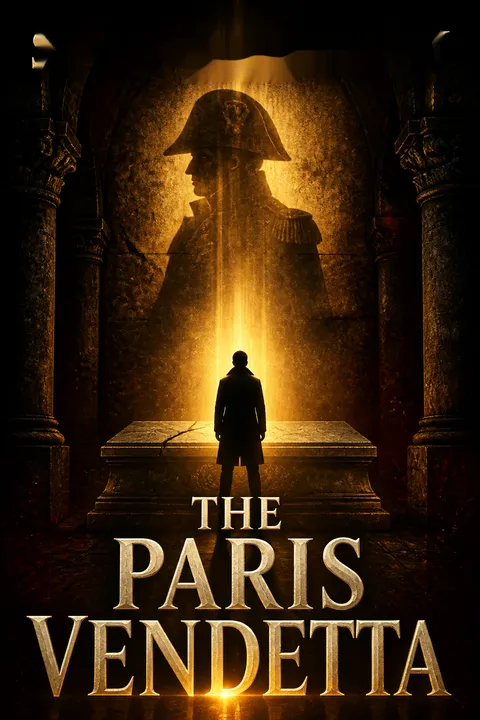
In 1799, Napoleon enters the Great Pyramid at Giza carrying a mysterious oracle and meets an Egyptian seer alone in the King’s Chamber. He emerges shaken, orders his trusted scholar Gaspard Monge to ensure the stranger never speaks of their meeting, and rides away toward France and the power he believes is waiting for him.
The encounter leaves behind a secret Napoleon will spend the rest of his life trying to control, while the threat of prophecy shadows the empire he intends to build.
The pyramid frames power as a struggle between control and uncertainty. Napoleon can command soldiers, scholars, and even the silence of a friend, yet the encounter unsettles him because it offers knowledge he cannot govern. His order to suppress the seer is more than a practical precaution: it shows a ruler trying to defeat fate by controlling who may tell its story. The scene also establishes the novel’s recurring question about historical evidence. A secret can survive not because it is perfectly hidden, but because those who inherit it mistake silence for certainty.
The Bookseller’s Midnight Visitor
Cotton Malone, a retired Justice Department agent now running a Copenhagen bookshop, wakes from his recurring dream of a Mexico City shooting and hears someone on the stairs. Sam Collins, a young former Secret Service agent, has broken in to warn him that Henrik Thorvaldsen is in danger. Before Malone can learn more, armed men invade the shop.
He and Sam use the shelves and a fire extinguisher to drive them out, then escape in Malone’s car. The attackers were pursuing Sam, who admits that Thorvaldsen sent him to find Malone. He finally identifies the man behind the danger: Lord Graham Ashby, a wealthy British financier whose name turns an alarming break-in into a much larger pursuit.
Malone’s old instincts return before he has chosen to resume his old life. The dream of the Mexico City massacre and the gun already kept within reach show that retirement has changed his occupation, not his nervous system. Sam arrives as both messenger and mirror: another man whose ideals have collided with institutions that prefer quiet compliance. Their escape depends on cooperation rather than trust, and the damaged bookshop makes the cost immediate. Malone is drawn back not by abstract duty but by Thorvaldsen, the friend who once offered him a new life.
Cai’s Unfinished Case
At Christiangade, Malone finds Thorvaldsen prepared for another attack, with two armed intruders already dead. The Danish magnate explains that he has spent two years tracing the Mexico City massacre where Malone was wounded and Thorvaldsen’s son, Cai, was killed beside prosecutor Elena Ramirez Rico.
Rico had been preparing a case against art traffickers Amando Cabral and Ashby; after her death, her successor dropped the charges. Thorvaldsen’s investigators tied Cabral to the killings, while the surviving evidence points toward Ashby as the force behind the operation.
He admits that the men who attacked Malone’s shop were not the killers he expected. The danger has widened, and Sam’s warning about a financial conspiracy now demands attention.
Thorvaldsen’s immense resources cannot repair the one loss that matters to him, so he has turned investigation into a substitute for mourning. His orderly estate, inherited weapons, and long surveillance all express a mind trying to make grief actionable. Malone recognizes the danger because his own Mexico City trauma has never settled into the past. The two men differ in their response: Malone distrusts revenge as a guide, while Thorvaldsen treats certainty as permission to act. Their friendship becomes the moral pressure point of the story, not merely a useful alliance.
A Club Built on Fear
While Malone and Sam race north, Eliza Larocque crosses the Atlantic with billionaire Robert Mastroianni and recruits him into a secret group she calls the Paris Club. She argues that war and credible threats strengthen governments, create profitable markets, and make citizens accept powers they would otherwise resist.
To demonstrate the value of hidden knowledge, she has Mastroianni consult a nineteenth-century oracle associated with Napoleon; its answer appears to match a private worry about his unborn child.
Sam explains that he lost his Secret Service position after publicly investigating financial manipulation on his website. Thorvaldsen confirms that a small circle of powerful people has been testing market interference abroad. Sam’s evidence is no longer merely speculation: Ashby belongs to the group.
Eliza’s argument is frightening because it converts catastrophe into an operating principle. She does not present herself as a conventional conqueror; she imagines influence exercised through capital, fear, and the selective manufacture of crisis. The oracle helps her recruit Mastroianni by making chance feel like private confirmation, a psychological technique as important as the promised profits. Sam’s amateur investigations stand in sharp contrast to the club’s cultivated secrecy. His lack of official authority makes him easy to dismiss, but also frees him to notice patterns that established institutions have reasons to avoid.
Gold Beneath Cap Corse
In Corsica, Ashby forces a local official to decode a Roman-numeral message hidden through the Moor’s Knot, a book-based cipher inherited from an old Corsican contact. The clues lead from Santa Maria Tower to a convent cemetery and a grave marked Ménéval, but the grave is empty.
Ashby already suspects that the Corsican and his accomplice Gustave moved the six crates, so his men find the cache buried in Gustave’s yard. The crates contain Nazi-marked gold bars, the fabled Rommel treasure.
Ashby withdraws his promised payment and has his enforcer kill both Corsicans. On the yacht, a book about Napoleon yields a more consequential clue: Napoleon’s loyal valet, Saint-Denis, once received a collection of the emperor’s books, including a volume on the Merovingians.
Ashby’s treasure hunt exposes the moral grammar he uses everywhere: people are collaborators only while useful, and agreements last only while they serve his appetite. His success with Rommel’s gold also sharpens the danger of his second pursuit. The Corsican cipher is a concrete model for the novel’s larger puzzle, where books carry instructions across generations and greed turns scholarship into a weapon. Ashby’s discovery of the Saint-Denis reference links modern financial ambition to Napoleon’s unaccounted wealth, making the past less a backdrop than a storehouse of unresolved claims.
The Museum’s False Trail
In Paris, Malone and Sam follow an evasive online contact to Shakespeare and Company, where a trail of notes and a book leads them to Jimmy Foddrell. Two armed men follow the supposed webmaster into the Cluny Museum.
A museum employee, Meagan Morrison, raises the alarm, and gunfire erupts among the medieval exhibits. Malone arms himself with a display sword and shield; Sam takes a gun from Meagan, who then leads him away at gunpoint. She reveals that Foddrell is her decoy identity and that she runs GreedWatch, the site Sam has followed for a year.
Malone’s former boss Stephanie Nelle explains that Ashby is an American intelligence source and that the government wants the wider conspiracy exposed. Sam and Meagan, both outsiders in their own ways, begin to trust one another.
The museum sequence makes information itself feel dangerous: the men are tracked through books, websites, and staged signals, while the public exhibits offer no real protection from violence. Meagan’s deception is not simply a trick; she has built a false identity because she expects institutions to ignore her until danger becomes visible. Sam’s eagerness to prove himself puts him in the field before he is ready, but his growing bond with Meagan gives his ambition a human counterweight. Malone’s discovery that Ashby is an intelligence asset complicates justice by forcing him to distinguish a useful source from an innocent man.
The Dane Joins the Conspiracy
Thorvaldsen travels to Eliza’s Loire Valley château and confronts her with the existence of her Paris Club. He offers to join, revealing that Ashby is deeply indebted and may be disclosing the group’s plans to obtain loans.
Eliza admits that her project reaches beyond profit: family-held papyri, taken from Napoleon’s belongings, describe how governments use threats to secure obedience. Thorvaldsen presents his suspicions as a reason to be admitted, while privately intending to get close to Ashby.
At the same time, Ashby and his mistress Caroline Dodd examine a letter Napoleon wrote on Saint Helena. Raised letters point to a Psalm, and the emperor’s will singles out a book about the Merovingians. Their clues send both sides toward the Invalides in Paris.
Thorvaldsen’s entry into Eliza’s circle is an act of strategic self-presentation: he uses wealth and intelligence to conceal the personal motive driving him. Eliza, meanwhile, trusts inherited documents as a political philosophy, treating her family’s version of history as both evidence and permission. Caroline’s scholarship matters because it gives Ashby access to a kind of knowledge he cannot buy outright. The parallel investigations reveal a central tension of the novel: history can constrain the present with evidence, but it can also be recruited to sanctify a plan already chosen.
The Book Napoleon Marked
On Christmas Eve, Malone slips into the closed Napoleon galleries at the Invalides and removes the Merovingian book before Ashby can reach it. Its pages contain Roman numerals and fourteen lines in handwriting identified as Napoleon’s, but the code lacks the word numbers needed for an ordinary Moor’s Knot.
Professor Joseph Murad recognizes that the marks are deliberate and compares the script with a published sample of Napoleon’s writing. Meanwhile, in London, Stephanie presses Ashby for details about the coming attack.
He warns that Peter Lyon intends to strike the Invalides, then accepts the stolen book from her, concealing his true plans. Lyon confronts Ashby afterward and reveals that he knows about the American contact. Caroline studies the book and prepares to decipher its raised letters.
The book is a material challenge to the authority of official history: a will, a private letter, and an unusual manuscript form a chain of evidence that institutions have overlooked. Malone’s theft is not a final solution but a deliberate interruption, a way to control who can read the clue and when. Ashby’s double dealing turns information into currency, as he bargains with both American intelligence and Lyon while concealing his own target. Murad’s handwriting comparison supplies a crucial distinction between Napoleon’s words and the polished records others prepared for him.
The Eiffel Tower Trap
On Christmas morning, Eliza gathers the club at the Eiffel Tower, unaware that Ashby has changed Lyon’s target from the Invalides to the summit where the members will watch. Ashby locks the upper exits and slips away, trapping the group. At the Invalides, a weak van blast and a woman with a false bomb threat occupy security while Malone and Stephanie discover a beacon in the dome.
Malone boards an explosives-laden, remotely controlled Skyhawk from a helicopter, fights its controls, and forces it past the tower before parachuting to safety as a fighter destroys it. Thorvaldsen sees Malone at the controls and feels betrayed, not knowing the full operation. The club survives, but Eliza now has proof that Ashby lied about the missing book.
The tower attack fuses the novel’s political thesis with physical spectacle: a group that hopes to manipulate public fear is itself trapped above the city, made vulnerable by a staged crisis. Ashby’s plan is not merely to eliminate rivals; it is to remove witnesses and keep the club’s money and power for himself. Malone’s rescue depends on improvisation, while Thorvaldsen sees only the visible fact of his friend working with the Americans. This produces a painful asymmetry: the mission succeeds operationally, but the trust needed to make it morally intelligible begins to collapse.
Dagobert’s Tomb Is the Key
Back at Salen Hall, Caroline isolates the raised letters in Napoleon’s manuscript and reads a message associating treasure with King Dagobert and Sion. She identifies Dagobert’s memorial at the Basilica of Saint-Denis as the likely destination. Ashby, however, has already become exposed: after the tower, he meets Lyon on a Seine tour boat, where a smoke bomb and a disguised Malone’s intervention turn the encounter into a struggle.
Ashby escapes with Lyon, who takes him and Caroline to the basilica to locate the cache. Thorvaldsen follows, intent on confronting Ashby, while Sam and Meagan separately track the same trail. The treasure hunt has narrowed to one church, but several armed pursuers are converging there for different reasons.
Caroline’s reading turns a cryptic sentence into a geographical direction, demonstrating that intellectual labor can change the balance of power more decisively than money or force. Yet knowledge does not bring safety: it makes Caroline indispensable to Lyon and draws every faction toward the same site. The river encounter adds a second layer of deception, with Malone disguising himself as Lyon while the real Lyon uses the confusion to seize Ashby. Thorvaldsen’s pursuit is now driven by a desire for personal reckoning, leaving the shared investigation vulnerable to his grief.
A Bomb in Saint-André
Lyon calls Malone and Stephanie with a warning that a suicide bomber is about to strike a Paris church, forcing them to search while he keeps their attention away from Saint-Denis. At Church of Saint-André, Malone spots a man carrying a backpack through the congregation.
When the man abandons it near the altar, Malone hurls the bag down an open stairway into the crypt and orders worshippers to take cover. The bomb explodes below, limiting the harm, while Stephanie arrests the bomber.
They then learn that Thorvaldsen, Sam, Meagan, Ashby, Caroline, and Lyon have gathered inside the Basilica of Saint-Denis. Malone and Stephanie race there by helicopter. In the basilica, Thorvaldsen is already moving through the shadows with a gun, while Sam tries to keep him from acting alone.
Lyon’s warning is effective because it exploits a real moral obligation: Malone cannot ignore a potential attack on worshippers simply because it may be a diversion. The bomb’s containment depends on quick judgment under uncertainty, a recurring contrast with Thorvaldsen’s increasingly narrowed focus. Sam’s choice to follow his friend into the basilica is not uncomplicated bravery; it risks repeating the reckless impulse he has been taught to control. By splitting the action between a public church and Saint-Denis, the story shows how a terrorist’s power lies partly in forcing others to divide attention and accept impossible tradeoffs.
The Basilica’s Last Vendetta
Inside Saint-Denis, Caroline explains that Napoleon’s Roman numerals refer to Psalms, which guide a search through the basilica. Lyon threatens Ashby while Meagan and Sam try to distract him; Thorvaldsen corners Ashby and prepares to avenge Cai.
Lyon shoots Thorvaldsen in the chest, then kills Ashby when the Brit reveals that Rommel’s gold could buy his life. Meagan attacks Lyon, and Sam, wounded in the shoulder, retrieves Thorvaldsen’s gun. Lyon tests his hesitation and walks toward the exit; Sam fires and kills him.
Malone and Stephanie arrive to find Thorvaldsen mortally wounded and Ashby and Lyon dead. Thorvaldsen dies before Malone can repair their rupture, leaving the last words between the friends as an accusation rather than a farewell.
The basilica brings together three incompatible forms of justice. Thorvaldsen seeks emotional repayment, Ashby tries to purchase survival, and Sam must decide whether trained restraint can coexist with lethal action. Lyon exploits each man’s weakness, but his confidence falters when Sam finally acts. The most devastating consequence is not simply the body count; it is the permanent rupture between Malone and Thorvaldsen, created by secrecy and confirmed at the worst possible moment. Sam’s first killing marks a threshold he cannot un-cross, while Thorvaldsen’s death leaves him carrying both the cost of action and the cost of delay.
The Treasure Under Saint-Denis
Five days later, Malone returns alone to the basilica with Murad’s Psalm references. The verses direct him from the house of God to an olive-tree marker, then to a hollow beneath the floor. He breaks the stone and follows a passage into a concealed chamber filled with Napoleon’s gold, silver, and jewels.
Eliza Larocque arrives with Paolo Ambrosi, expecting to remove the hoard, but Malone has arranged for Stephanie and Sam to wait nearby. Sam disarms Ambrosi, and Eliza is forced to leave without the treasure.
French authorities take control because the cache lies on French soil. Malone later joins Sam and Meagan in mourning Thorvaldsen, whose funeral at Christiangade closes the personal story even as the treasure’s discovery leaves its larger history unresolved.
The final discovery rewards patient interpretation rather than possession: the Psalms function as a map only when read alongside Napoleon’s manuscript and the basilica’s architecture. Malone’s decision to deny Eliza the cache is also a rejection of private inheritance as an automatic moral claim. The French state receives the treasure, but ownership does not erase the violence that surrounded it. Malone’s grief remains deliberately unfinished. Sam’s survival and new place in the Magellan Billet offer a future, yet neither professional advancement nor recovered wealth can restore the friend whose absence now defines Malone’s next life.
Analysis
The novel makes historical knowledge a contested form of power. Napoleon’s library, will, private letters, and coded messages are not neutral artifacts: each character tries to make them authorize a present ambition. Eliza treats the papyri as a political manual, Ashby treats history as an inventory of recoverable wealth, and Malone and Murad approach it as evidence that must survive comparison and interpretation. The distinction matters because the same knowledge can expose a conspiracy or justify one.
Money is the story’s most mobile weapon. The Paris Club does not need to govern openly; it hopes to profit from engineered instability while public institutions absorb the damage. This connects financial speculation to the book’s account of fear: people accept extraordinary controls when they believe danger is imminent, and financiers can profit from both the threat and the response. The novel’s critique is strongest when it shows concrete mechanisms, such as short selling, hidden funding, and Ashby’s use of gold as collateral, rather than treating wealth as an abstract evil.
The personal plot resists that cold arithmetic. Thorvaldsen’s grief cannot be balanced by recovering a fortune, and Malone’s loyalty cannot be reduced to intelligence work. Their friendship becomes the ethical center because each man believes he is protecting the other while withholding information. That secrecy proves costly. Sam’s coming of age offers a different response: he learns that courage is not the absence of fear, and that action carries moral weight after the danger has passed. The final treasure is found, but the emotional debt remains unpaid. By giving the cache to France rather than Eliza or Ashby, Malone rejects the idea that discovery alone confers ownership. The story leaves history unresolved, but insists that present choices still matter.
Review Summary
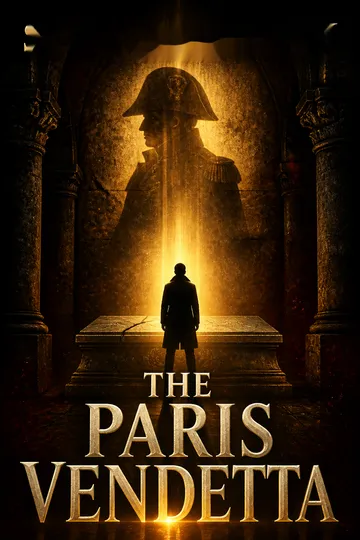
The Paris Vendetta receives mixed reviews, with an average rating of 3.94 out of 5. Many readers praise Berry's blend of history and thriller elements, particularly the Napoleon-related plot. Some find the book fast-paced and exciting, while others criticize its complexity and slow start. Fans appreciate the character development and historical details, but some feel it doesn't live up to previous entries in the series. The novel's focus on revenge and financial conspiracies divides readers, with some enjoying the new direction and others missing the traditional treasure hunting aspects.
People Also Read




Characters
Cotton Malone
Retired intelligence booksellerMalone is a former Justice Department agent and naval officer who has exchanged fieldwork for a Copenhagen bookshop, though his habits of observation and readiness for danger remain intact. He values evidence, books, and personal loyalty, but distrusts anyone who expects him to accept a plan without examining its cost. His friendship with Henrik Thorvaldsen draws him into the search, while his working relationship with Stephanie Nelle forces him to balance private obligations against public danger. He is capable under pressure, yet not emotionally invulnerable: the Mexico City shooting continues to trouble his sleep, and his protective instincts often place him in conflicts he would rather avoid.
Henrik Thorvaldsen
Grieving Danish magnateThorvaldsen is a wealthy Danish industrialist whose family history, formidable intelligence, and network of investigators make him difficult to surprise. He is physically stooped, but socially and mentally commanding, with a deep attachment to his ancestral home and the people he considers family. His friendship with Malone is unusually intimate for a man accustomed to controlling what others know. He has a strong sense of justice and a dangerous impatience with institutions that turn human suffering into paperwork. The death of his wife and the hopes he places in his son shape his understanding of legacy, duty, and the limits of self-command.
Graham Ashby
Aristocratic treasure hunterAshby is an English lord, financier, and collector who moves comfortably among old money, political influence, and illicit antiquities. He enjoys the pursuit of lost objects as much as their value, approaching historical mysteries with patience and a practiced eye for leverage. His polished manners do not soften his transactional view of people: he measures allies by usefulness and treats risk as a cost to be shifted onto someone else. Financial pressure has made his ambitions more urgent, while his inherited status helps him present self-interest as respectable business. The search for Napoleon’s wealth appeals to both his appetite for discovery and his need for a way out of trouble.
Eliza Larocque
Secretive financial architectLarocque is a French-Corsican businesswoman who leads a vast family enterprise and treats economic systems as instruments of political power. She is intelligent, disciplined, and highly selective about whom she admits to her private circle. Her public composure conceals an intense attachment to family history, especially the legacy of her ancestor Pozzo di Borgo. She reads the past not as a cautionary tale but as a source of strategies that can be adapted to the present. Wealth is important to her, yet her ambitions exceed accumulation: she wants to shape events while remaining outside public view. Her reliance on inherited documents and an oracle reveals a mind that values both calculation and destiny.
Sam Collins
Restless junior agentCollins is a former Secret Service financial investigator raised in New Zealand, an ambitious agent whose independent website has brought him into conflict with his superiors. He wants field responsibility and tends to mistake opportunity for proof that he is ready, but he can learn quickly when events expose the gap between preparation and experience. His lack of family history has made institutions and chosen relationships especially important to him. Thorvaldsen’s attention gives him a sense of belonging, while Meagan Morrison recognizes in him a similar appetite for questioning official explanations. His courage is real, but so is his fear, and his growth depends on learning to act without pretending that fear has disappeared.
Meagan Morrison
Fearless conspiracy investigatorMorrison is an American economics researcher in Paris who operates GreedWatch behind the pseudonym Jimmy Foddrell. She is bold, resourceful, and impatient with people who dismiss her findings before examining them. Her staged decoy and sudden museum alarm show both her ingenuity and her willingness to expose herself to danger to make others pay attention. Beneath her confidence is a practical fear of being targeted, which she rarely lets govern her decisions. She and Sam share an appetite for investigating financial power, but their connection grows through mutual vulnerability as much as shared theories.
Stephanie Nelle
Hard-edged intelligence chiefNelle is Malone’s former boss at the Magellan Billet, an experienced operator who can turn a chaotic scene into an intelligence problem with clear priorities. She is direct, demanding, and willing to use pressure when she believes time is running out. Her longstanding familiarity with Malone allows her to recognize both his abilities and his reluctance to be managed. She must also contend with Thorvaldsen’s independent pursuit and Sam’s eagerness to prove himself. Nelle’s pragmatism is not indifference; she understands that protecting a source, stopping an attack, and securing justice can pull in different directions.
Peter Lyon
Mercenary broker of violenceLyon is a South African operative who sells violence and disruption to clients while guarding his own independence. He uses disguises, false trails, and carefully staged diversions to keep pursuers responding to him rather than anticipating him. His amber eyes are a rare identifying feature he cannot fully conceal, and his confidence often becomes a performance designed to unsettle others. Lyon treats morality as irrelevant to the transaction, yet he has a personal contempt for clients who lie about their intentions. He is dangerous not simply because he can kill, but because he understands how fear and uncertainty make other people reveal themselves.
Caroline Dodd
Scholar of Napoleon’s worldDodd is Ashby’s longtime companion and a trained scholar of medieval literature and Napoleonic history. Her knowledge of French sources and her skill with historical documents make her more than a social accessory to Ashby’s pursuits. She notices patterns others miss, including the unusual lettering in Napoleon’s manuscripts, and approaches puzzles with academic patience. Her relationship with Ashby combines affection, intelligence, and a clear awareness of his appetite for risk. She can be frightened without becoming passive, and her scholarship repeatedly changes what the men around her are able to understand.
Cai Thorvaldsen
Diplomat and beloved sonCai is Henrik Thorvaldsen’s adult son, a Danish diplomat whose work takes him to Mexico. He is drawn to history and archaeology, and his relationship with his father retains warmth despite the expectations attached to the Thorvaldsen family legacy. Cai values public service and wants to shape a life beyond the family business, a choice that reveals his independence as well as his affection for Henrik. His connection with Mexican prosecutor Elena Ramirez Rico places him between two cultures and two professional worlds. Through memories and family photographs, he remains a vivid presence in Henrik’s understanding of home.
Elena Ramirez Rico
Mexican cultural-crimes prosecutorRico is a Mexican prosecutor specializing in cultural crimes, especially the theft and trafficking of art and artifacts. Her work brings her into conflict with powerful collectors and intermediaries, while her knowledge of Mexican history makes her a natural guide to Cai’s interests. She is remembered through Thorvaldsen’s understanding of her warmth and intelligence, as well as through the case she was preparing to bring. Rico’s professional independence places her in a vulnerable position, but she is defined by more than the danger surrounding her: she has convictions, expertise, and a personal life that mattered deeply to Cai.
Amando Cabral
Art-trafficking fixerCabral is a Spanish art trafficker and Ashby’s specialist for illicit acquisitions and coercive operations. He is practical and ruthless, accustomed to solving business problems through intimidation rather than public argument. His involvement in the Mexican investigation connects the stolen-art trade to the broader financial and political schemes surrounding Ashby. Cabral represents the operational layer of an elite conspiracy: powerful patrons can distance themselves from violence by assigning it to people who already know how to work in the shadows.
Jesper
Thorvaldsen’s steadfast stewardJesper is Thorvaldsen’s longtime chamberlain and trusted companion at Christiangade. He knows the estate, its routines, and the histories that its owner rarely discusses. His loyalty is expressed through quiet competence rather than sentiment, and he stands beside Thorvaldsen through danger without seeking recognition. Jesper’s history with the family gives him a perspective on the grief that has overtaken the house, while his practical steadiness contrasts with his employer’s increasingly personal sense of justice.
Joseph Murad
Napoleonic history scholarMurad is a Sorbonne historian who specializes in Napoleonic Europe and assists Thorvaldsen with the meaning of the Merovingian book. He combines academic rigor with a willingness to follow evidence into uncertain territory. His knowledge of Napoleon’s library, will, and the Psalms helps turn obscure references into a workable trail. Murad is not a field operative; his value lies in recognizing why a seemingly minor historical detail deserves closer attention.
Napoleon Bonaparte
Emperor guarding a secretNapoleon is the historical presence at the center of the novel’s puzzles: a conqueror, administrator, and collector whose ambitions reshaped Europe. He distrusts financiers and debt, yet acquires wealth through conquest, leaving later generations to argue over the difference between public spoils and private hoarding. His interest in prophecy and the Merovingians adds contradiction to his calculating image. The manuscripts, will, and personal library attributed to him become clues through which modern characters try to understand not only where his wealth went, but how he wanted his son to remember him.
Gaspard Monge
Napoleon’s scholar and confidantMonge is a French mathematician and one of the scholars who accompanied Napoleon to Egypt. He shares the emperor’s revolutionary ambitions and combines academic curiosity with the habits of a soldier. His friendship with Napoleon is tested when the emperor demands silence about the secret meeting inside the pyramid.
Robert Mastroianni
Billionaire recruited by ElizaMastroianni is an Italian industrialist and former International Monetary Fund official whom Eliza hopes to recruit. Skeptical of her methods but interested in her account of money and political power, he tests her claims through the oracle before committing to her circle.
Jimmy Foddrell
Meagan’s online decoyFoddrell is the pseudonym Meagan Morrison uses to present GreedWatch’s work and draw attention away from herself. The apparent webmaster’s theatrical caution becomes part of the trail Malone and Sam must interpret before they can identify the real investigator.
Pozzo di Borgo
Corsican foe of NapoleonPozzo di Borgo is Eliza Larocque’s ancestor and Napoleon’s former friend turned political adversary. He pursued a long vendetta through diplomacy and alliances rather than direct military force. His search for Napoleon’s hidden wealth becomes part of the family history Eliza hopes to vindicate.
Louis Etienne Saint-Denis
Napoleon’s loyal valetSaint-Denis served Napoleon during exile and prepared clean copies of many of the emperor’s writings. Napoleon entrusted him with books intended for his son, making the valet a crucial link between the emperor’s private intentions and the modern search.
Plot Devices
The Moor’s Knot
A book becomes a cipherThe Moor’s Knot encodes a message through page and line references in a book shared by sender and recipient. The Corsican treasure hunters use it to find the location of Rommel’s gold, establishing the method that later investigators apply to Napoleon’s hidden clues. Its effectiveness depends on possession of the right text, which turns apparently ordinary books into keys and makes historical research inseparable from the physical hunt.
The Merovingian Book
Napoleon’s hidden directionsA volume named in Napoleon’s will survives among objects from his personal library. Its Roman numerals and raised letters appear to encode separate messages, and its handwriting can be compared with other samples attributed to Napoleon. Caroline Dodd and Professor Murad identify different layers of meaning, directing the search toward the Basilica of Saint-Denis. The book converts Napoleon’s library from historical residue into an active map, while its theft lets Malone influence who can pursue the clue.
The Book of Fate
Chance presented as knowledgeEliza possesses an oracle called The Book of Fate, which generates answers through a random procedure of marking and counting lines. She uses it to impress Mastroianni and later consults it when judging her allies and prospects. The oracle does not provide dependable evidence, but it gives Eliza a personal language for interpreting uncertainty. Its narrative function is psychological: it shows how a person can treat coincidence as confirmation when a decision is already emotionally compelling.
The Paris Club Papyri
A theory becomes a blueprintEliza’s family preserves four papyri that describe how rulers can use a credible external threat to consolidate authority and channel public fear. Eliza adapts these ideas to modern financial markets, imagining that instability can create both political compliance and private profit. The papyri explain why her club is more than a group of wealthy speculators. They are her intellectual warrant for staging a crisis, and they connect the novel’s economic conspiracy to Napoleon’s Egypt campaign.
Rommel’s Gold
A wartime cache funds ambitionSix crates believed to have been transported to Corsica by German soldiers in 1943 become the object of Ashby’s first major treasure hunt. Roman numerals, a Napoleon memoir, and the Moor’s Knot point toward the hiding place. The recovered bullion gives Ashby financial breathing room and demonstrates his ability to turn historical riddles into present-day leverage. More importantly, the hunt uncovers the book reference that links him to Napoleon’s much larger and more consequential cache.
Cotton Malone Series







About the Author
Other books by Steve Berry

Download PDF
Download EPUB
.epub digital book format is ideal for reading ebooks on phones, tablets, and e-readers.








