


Plot Summary
Prologue
In 1086, royal coroner Martin Borr entered Highglen, a village marked wasted in the Domesday Book, and found its people and animals dead despite full granaries. A boy’s stomach held food, yet his body had starved. In the church, Borr found ancient Celtic symbols beside a freshly painted cross and circle.
Centuries later, Father Marco Giovanni carried a small leather satchel into Saint Peter’s Basilica, where armed men hunted him. Mortally wounded, he hid the satchel on a pope’s tomb before an explosive bolt killed him. The two episodes frame the same unanswered question: what force could turn nourishment into death, and what knowledge had been buried to contain it?
The prologue gives the thriller a historical wound before its modern machinery begins. Highglen’s full granaries make starvation appear not as simple scarcity but as a violation of nature’s promise: food is present and useless. Borr’s discovery turns the census into a record of danger rather than mere taxation, while the matching symbols imply that the old catastrophe left a trace. Marco’s final concealment converts that trace into an active mystery. His death also establishes the story’s governing pressure: knowledge can preserve lives, but possessing it makes its keeper a target.
Mali’s Burning Harvest
In a Red Cross refugee camp in Mali, Jason Gorman, a young plant biologist, wakes to gunfire and fire. Rebels have attacked the camp, where Viatus is testing drought-resistant corn, but the arriving helicopters turn the raid into a massacre, strafing refugees and burning the fields. Jason reaches the laboratory and sends his father an account of the assault, attaching the corn research files so the evidence will survive.
Then Krista, his girlfriend and a Viatus researcher, appears. Jason expects rescue; instead, she shoots him in the chest and leaves him for dead. The message uploads after she is gone. That surviving file, sent by a dying witness who does not understand the larger conspiracy, becomes the first thread Sigma can follow.
Jason’s last act is an accidental form of testimony. He does not know what the genetic data means, but he recognizes that the attack must be documented and preserves the research before trying to save himself. Krista’s betrayal makes intimacy a weapon: the person he trusts can approach him without raising alarm, and his assumption of safety proves fatal. The massacre also binds corporate ambition to political violence. The corn is presented as a response to drought and hunger, yet the camp’s residents bear the cost of experiments whose risks they did not choose. The e-mail matters because Jason’s limited agency outlasts his body.
The Basilica’s Hidden Finger
After an explosion at Saint Peter’s Basilica leaves her uncle, Monsignor Vigor Verona, in a coma and kills his former student Marco Giovanni, Italian Carabinieri officer Rachel Verona refuses to leave the investigation to the sprawling agencies.
Vigor’s repeated mention of death sends her back into the basilica, where she searches the crime scene and finds a tiny satchel hidden on a tomb. Its burned circle-and-cross matches the mark on Marco’s forehead. Inside lies a mummified finger.
Rachel keeps the discovery from police, knowing her unauthorized search could get her shut out, and calls Gray Pierce, her former partner and a Sigma Force commander. In Washington, Gray is already tracking assassin Seichan, but Vigor’s injury sends him to Rome with Joe Kowalski.
Rachel’s choice to keep the relic is both professional initiative and personal attachment. She trusts her own reading of Vigor’s clue more than a fragmented official investigation, but her decision also reflects fear that institutions will take the evidence and leave her outside the truth. Gray’s arrival reactivates a relationship that neither has fully resolved, yet the plot does not let private longing become a refuge from duty. The mummified finger is a compact, unsettling clue: its meaning is unknown, but the matching brand connects a church murder to an apparently unrelated catastrophe. Rachel turns grief into method without pretending that method can cure her uncle.
Princeton’s Dead Professor
At Princeton, Dr. Henry Malloy has compared Jason Gorman’s corn samples and found that foreign DNA appears to have spread into a second chromosome between generations. Before Monk Kokkalis and new recruit John Creed can question him, assassins murder Malloy, burn his computer, and brand his forehead with the same circle and cross.
Monk discovers the body with Malloy’s assistant Andrea Solderitch, then realizes the killers have also targeted her home and murdered her dogs. He leads Andrea and Creed through the laboratory’s animal rooms, where Creed releases piglets to obstruct pursuit.
Trapped by gunmen, Monk turns a grenade back on its thrower inside his briefcase, then escapes with the others through a maintenance crawlspace. Andrea survives, but Malloy’s first data file is gone.
The laboratory attack makes the research itself a contested object: the killers destroy the machine that could verify the mutation and target everyone who heard Malloy’s interpretation. The missing first file keeps the science uncertain, a crucial distinction between evidence and inference. Monk’s response, meanwhile, marks a return to competence without erasing his vulnerability. His memory loss and prosthetic hand are not decorative impairments; they shape how others judge his readiness and how he judges himself. Creed’s quick improvisation earns a place beside him, while Andrea becomes a witness whose safety depends on the team’s ability to act before certainty arrives.
Seichan’s False Trail
Gray reaches his Rome hotel expecting Rachel and instead finds her handcuffed to the bed, guarded by Seichan, a former Guild assassin whose movements Sigma has been tracking through an implanted device.
Seichan explains that she discovered and removed the implant, then used it to mislead surveillance by leaving it with the curator’s cat in Venice. She has come to Rome because the Guild is interested in Marco’s murder and wants information she can trade to regain its confidence.
Rachel shows Gray the satchel and finger; the symbols link Marco’s death to Jason and Malloy. When hotel staff warn that visitors are coming, the group flees down a fire escape as armed pursuers enter the building. Seichan joins the escape, leaving Gray to decide whether to trust her motives.
Seichan’s false trail literalizes the novel’s concern with unreliable appearances: a tracking device reports movement, but not whose movement it records. Her account also refuses the simple categories Gray would prefer. She may be exploiting the investigation, yet she has protected Rachel from another group of hunters. Rachel, meanwhile, shifts from sole custodian of the evidence to an uneasy collaborator with the woman who restrained her. Gray’s decision to keep Seichan close is not confidence but calculated tolerance. The team’s escape establishes a recurring moral condition: they must work with people whose motives cannot be verified before the next threat arrives.
The Lake District Ring
After escaping Rome, Gray, Rachel, Kowalski, and Seichan travel to northern England to meet Dr. Wallace Boyle, the historian who worked with Marco. Boyle explains that a red-marked entry in the Domesday Book led him to an ancient stone circle hidden in a peat bog.
Its stones bear spirals on one side and the same quartered-circle symbol found on the satchel on the other. Excavations uncovered a woman and child preserved in the peat, their bodies carrying fungal growths.
Boyle says Marco came to investigate whether the bodies connected to the Black Madonna, a figure formed in stories where pagan earth worship and Christian devotion meet. He also reveals that a Viatus grant funded his dig. The relic, the ancient site, and the corporation now share a path.
The stone ring makes history physical rather than merely legendary. Its paired carvings provide a repeatable pattern that Gray can compare with the satchel, while the peat preserves biological evidence that ordinary time should have erased. Boyle’s account also complicates the apparent religious divide: Christian symbols may have absorbed older meanings instead of simply replacing them. The Black Madonna becomes a question about cultural translation, not a tidy answer. Most consequentially, the Viatus grant binds archaeology to corporate research. A search for ancient disease is not neutral when a modern company has the resources and incentives to turn an organism into intellectual property.
The Valley Ignites
That night, the group learns the peat valley is more dangerous than the excavation suggests. Buried incendiary charges erupt across the forest, and flames spread through long-smoldering peat beneath the snow.
A pony bolts into a fiery sinkhole and dies, leaving the survivors to flee by horseback with Wallace’s terrier, Rufus, seeking a safe path. When a burning channel blocks their route, Gray jumps his stallion across; Rachel’s mare lands badly, and Gray and Seichan drag Rachel clear before Seichan shoots the injured animal to end its suffering.
Kowalski makes the crossing last. At a tarn, Seichan destroys Gray’s satellite phone and reveals that she has supposedly poisoned Rachel, forcing the team to find the Doomsday key for an antidote.
The fire transforms the archaeological landscape into an active trap. Snow offers no protection because the danger travels underground, invisible until a hoof or stone breaks the crust. The animals’ deaths make the cost of escape immediate, while Seichan’s shot is both a merciful act and a reminder of her capacity for violence. Her threat against Rachel converts the mystery into a coercive race, leaving Gray with no safe channel to Sigma and no freedom to abandon the search. The supposed poisoning exploits his protective attachment, but it also lays groundwork for a later question: whether Seichan’s threat is the whole truth.
The Vault Beneath Bardsey
Wallace directs the group to Bardsey Island, where stories of healing, a dark queen, and a vanished plague have followed one another for centuries. Father Timothy Rye recalls that Marco returned from the island frightened and spent a night praying for forgiveness.
At the ruins of Saint Mary’s Abbey, Gray follows the alignment between an ancient spiral stone and a Celtic cross to Lord Newborough’s crypt. Rachel spots an unusual arrangement of bricks, and Gray pulls one free, opening a concealed staircase.
A pressure step seals them inside until Seichan finds the exterior release. Below the abbey, they discover a sarcophagus containing an illuminated Bible with a cavity cut through its pages. The satchel fits the cavity, and the book belongs to Saint Malachy.
Bardsey gathers the novel’s scattered traditions into one landscape: pilgrimage, pagan burial, Christian relics, and tales of healing all occupy the same ground. The hidden entrance is discovered not by brute force but by noticing how built forms preserve older arrangements. That method suits the story’s larger puzzle, where inherited symbols conceal technical knowledge. The Bible’s mutilated pages make the clue tangible, but its owner points beyond the book toward Malachy’s life and legacy. Gray’s inference that the relic and the key were once kept together gives the investigation direction, while the trapped party learns that every discovery can activate a mechanism designed to punish curiosity.
The Stormbound Crossing
The crypt floor collapses beneath Gray when he turns a wheel carved into a Celtic cross. Rachel catches Seichan, and Wallace and Kowalski help trigger the reset lever before the chamber’s shifting floor and spikes kill them. The island’s storm then strands the party, so Gray and the others steal a ferry at night and fight through violent seas.
Seichan goes overboard; Gray dives after her, and Kowalski pilots the catamaran to bring them both back. Once ashore, Gray concludes that the missing key must have moved with the ancient queen’s relic. Since Malachy had been honored as a healer and his Bible protected the finger, Gray believes the key was transferred to Malachy’s own tomb at Clairvaux, France.
This section turns inference into commitment. The crypt’s trap punishes Gray for treating a symbol as a simple switch, and the group’s survival depends on cooperation rather than individual expertise. The storm crossing makes that interdependence emotional as well as physical: Gray risks himself for Seichan, whose vulnerability briefly breaks through her practiced self-sufficiency. His conclusion about Malachy is a hypothesis, not proof, but Rachel’s limited time makes waiting impossible. The journey also changes the meaning of the relic. It is no longer merely evidence of an old death; it is a portable link between generations of custodians, carrying both a cure and the responsibility to use it.
The Prison Cloister
In Troyes, Gray, Rachel, and Wallace research the Abbey of Clairvaux, now enclosed within a maximum-security prison. Rachel finds no clear record of Malachy’s remains after the French Revolution, while Wallace learns of Saint Bernard’s Black Madonna healing story.
Seichan and Kowalski scout the prison and prepare an infiltration, but Kowalski returns with a better option: public tours of the ruins. During the tour, Gray notices that the cloister’s twelve consecration crosses are not all present.
The guide confirms that only eleven can be found and recounts a local legend about a hidden treasure. Gray recognizes the compass at the garden’s center as the missing symbol in altered form. Before they can investigate further, helicopters approach and the prison alarms sound.
The public tour makes a useful contrast to the secret passages and encrypted histories that have dominated the quest. The clue is visible to everyone, yet its meaning depends on seeing the compass as a transformed sacred sign. Gray’s recognition depends on earlier knowledge of the quartered circle, not on a miraculous new revelation. The prison setting also narrows the team’s choices: their destination is both culturally protected and physically guarded. The abrupt attack interrupts interpretation at the moment it becomes actionable, converting an intellectual breakthrough into a tactical emergency. Here the book insists that knowledge is not merely found; it must be reached under pressure.
The Spinning Compass
As armed men rappel from the helicopters, Kowalski fires to hold them back while Gray, Rachel, Wallace, and Seichan turn the cloister compass. Its mechanism grinds open a hidden stairway, and Kowalski tumbles below just before a grenade destroys part of the walkway.
Gray’s group escapes into the tunnel and seals the entrance. Beneath the abbey, they find a domed chamber built around a bronze Celtic cross, a roof patterned with quartz stars, and an immense three-part spiral in the floor.
Seichan recognizes that the cross resembles a telescope. Gray realizes it is an ancient surveying instrument and that its wheel and weighted cord require a celestial alignment and geographic coordinates. A wrong setting releases descending spikes, trapping Gray and Seichan inside.
The chamber reveals that religious imagery and engineering are not opposing domains in this story. The cross is at once a sacred form and an instrument for measuring the world, so the old priestly class’s spiritual authority rests partly on technical knowledge. Gray’s insight arrives through accumulated clues: the stars, the plumb line, the wheel, and the earlier alignment studies. Yet the mechanism makes knowledge dangerous when applied without precision. His first attempt triggers the spears, turning the puzzle into an ethical test: he must accept help from Seichan, the person he has most reason to distrust, because neither has the luxury of solitary control.
Three Spirals Turn
With bronze spikes descending from the ceiling and the exit sealed, Gray reconsiders the trap as a timed challenge rather than a single wrong-answer punishment. He calculates Clairvaux’s coordinates by aligning the cross’s hollow arm with the north star, then turns its wheel to match the weighted line.
Seichan braces the instrument and takes over the wheel when a spike wounds Gray’s hand. A spear pierces her cheek, but Gray tells her he trusts her, and she forces the mechanism through its final turn.
Three gongs sound; the spikes retract, the exit opens, and the spiral floor rotates to reveal three glass caskets. One bears Egyptian imagery, the others hold two remarkably preserved figures. Above them, the party has uncovered the graves and the path to the key.
The puzzle’s solution depends on revising an assumption under mortal pressure. Gray succeeds when he sees the mechanism as a sequence requiring patience, not a test that allows one guess. Seichan’s assistance is more than physical: she contributes the observation that clarifies the cross’s function, then accepts pain to complete the calculation. Gray’s declaration of trust matters because it counters the relationship’s usual economy of suspicion and leverage. The three spirals make the chamber’s symbolism operational, each rotation revealing a hidden layer. The scene rewards collaborative knowledge, but does not erase the damage between them; trust appears here as a chosen risk, not a settled condition.
Meritaten’s Last Jar
The stained-glass casket identifies its occupant as Meritaten, daughter of Egyptian rulers, whose body has a missing index finger. In her hands rests a sealed canopic jar. Gray opens it and finds a white powder, which he recognizes as the antifungal cure capable of countering the organism that turns grain indigestible.
Another casket holds Saint Malachy, preserved with his journal. Rachel identifies the book as the saint’s own record, including the famous papal prophecies and many additional predictions.
Before they can study it, commandos breach the passage. Wallace reveals he has been working with Krista Magnussen, and Krista arrives demanding the jar. She takes it, leaves an incendiary bomb, and tells Gray that Rachel’s poison has no antidote.
The solution makes ancient knowledge valuable in a way that exceeds treasure. The jar’s contents can treat a modern agricultural catastrophe, so the tomb is not merely a vault but a preserved laboratory. The book’s Egyptian and Christian layers resist a simplistic story of progress in which one civilization replaces another; instead, techniques and remedies migrate through contact, translation, and appropriation. Yet preservation has an ambivalent cost. The dead have been turned into containers for living knowledge, and the people seeking that knowledge repeatedly endanger the living. Krista’s seizure of the jar makes this ambiguity immediate: a cure can become a tool of control when access is monopolized.
The Vault Under Siege
In parallel, Painter and Senator Gorman confront Ivar Karlsen at the Svalbard Global Seed Vault. Karlsen’s confession begins after the senator accuses him of Jason’s murder, but a hidden thermobaric warhead interrupts them.
Painter moves the device up the tunnel and uses its blast to break the ice sealing the entrance, while the others shelter in a pressurized seed chamber. Outside, Monk and Creed are captured by Norwegian soldiers, then learn that mercenaries are attacking the vault.
Monk and Painter’s improvised defense cripples an assault vehicle; when bullets cannot stop the attackers, the Norwegian allies drive a pack of polar bears toward the battlefield. The attack collapses, and Painter’s group escapes. On the flight south, Karlsen admits the corn’s fungal genes mutated, regained their lethal force, and spread.
The Svalbard crisis concentrates the novel’s political argument into one sealed space. A vault built to preserve biodiversity becomes a tomb when a weapon blocks its entrance, while the endangered human survivors must improvise their own route to air. Painter’s rescue plan depends on understanding the material behavior of pressure, heat, and ice, the same practical intelligence the ancient instrument demanded. Outside, the bears interrupt a human battle without obeying anyone’s moral program. Karlsen’s confession reveals the psychological danger of benevolent authoritarianism: once he believes catastrophe is inevitable, he treats consent and individual lives as variables to manage. His idealism has not vanished; it has become the alibi for coercion.
A Cure in the Cloister
In Clairvaux, Krista takes the jar and orders her men to destroy the chamber, while she shoots Wallace after he claims membership in the Guild’s ruling Echelon. Painter arrives with French forces and joins the firefight, but Krista shoots Creed in the chest before Painter kills her with his own explosive injector knife.
Gray had already reversed the tomb mechanism, shielding his companions from Krista’s incendiary bomb. The jar survives, and the group emerges from the chamber.
Rachel collapses, but doctors find no toxin in her system: Seichan had switched the thermoses and destroyed the poison, using the threat to keep the team moving while watched by Guild spotters. Rachel has pneumonia, not poisoning. Vigor wakes from his coma, and Seichan apologizes to Rachel in person.
The final violence refuses a clean victory. The cure is recovered, but Creed dies protecting the people around him, and the Guild’s reach remains intact. Krista’s death ends her immediate threat without resolving the institution that empowered her. The revelation about Rachel’s supposed poisoning reinterprets Seichan’s coercion: she was performing for unseen observers, but the deception still inflicted genuine fear and damaged trust. Her apology cannot erase that experience; it is the beginning of accountability rather than its completion. Vigor’s recovery gives Rachel a personal reprieve, but the larger resolution depends on the team confronting a crisis whose consequences now extend far beyond one chamber.
The Midwest’s Narrow Escape
Back in the United States, Sigma and its allies race to contain the fungal contamination from Viatus seed fields. Authorities spray production sites and establish broad testing zones; overseas plantings are scraped and treated as well.
Early human cases respond to a low-toxicity antifungal compound, and Viatus’s facilities are turned toward manufacturing it at scale. Karlsen cooperates from custody, handing over the company’s resources, while Senator Gorman confronts the role he played in promoting the project. Monk and Kat mourn Creed, whose partner grieves privately at Arlington.
Gray visits Rachel as she recovers, and Rachel’s uncle is awake. Seichan, now caught between Sigma and the Guild, remains a dangerous ally. The immediate biological disaster is contained, but the conspiracy survives in the form of an approaching war.
The resolution measures success through mitigation rather than reversal. The contaminated fields cannot be made never to have existed, and the dead cannot be restored; the best outcome is to limit spread and make treatment available. Karlsen’s corporate infrastructure, once part of the problem, becomes a public-health resource, showing that institutions can be redirected but not morally cleansed by a single useful act. Gorman’s culpability is political as well as personal: he helped legitimize a project without understanding its risks. Creed’s funeral gives the mission a human cost that no scientific success can offset. The ending leaves survival provisional, with containment achieved and the Guild still active.
Epilogue
Painter secretly examines Wallace Boyle’s body and finds a tattoo at the base of the skull: a distorted Masonic emblem with a moon and star where the familiar central letter should be. The mark confirms that Wallace’s claim to belong to Echelon was not empty, though it reveals little about the Guild’s leadership.
Painter orders the body cremated before the discovery can become public. He now has two clues, the name Echelon and an unfamiliar symbol, and concludes that Sigma’s struggle with the Guild is not finished.
The epilogue withholds the satisfaction of a solved conspiracy. Wallace’s corpse yields a mark, not a confession, and Painter’s decision to destroy the body shows that secrecy remains part of the contest. The emblem distorts a familiar symbol, echoing the novel’s repeated transformations of crosses, spirals, and sacred objects. Recognition offers a lead but not comprehension. After a story in which buried knowledge can heal or kill, the final clue is deliberately incomplete: the team has learned enough to know the scale of the danger, but not enough to control it. The next conflict begins as an interpretive problem as much as a tactical one.
Analysis
The Doomsday Key builds its thriller around a collision between stewardship and control. Karlsen is not indifferent to hunger; he is terrified of it. His failure begins when he treats that fear as permission to bypass consent, then accepts a corporate project that can manipulate the food supply itself. The danger is not simply that science goes wrong, but that people who claim to prevent catastrophe decide that other lives may be spent in advance. Jason’s death, the destroyed refugee camp, and the threatened crops make that logic material.
The historical mystery complicates any easy opposition between modern science and ancient superstition. The novel’s cure is carried through stories of saints, pagan queens, relics, and sacred architecture, but Gray finds it by reading those objects as technical systems. The cross is also a surveying instrument; the religious calendar is also a coordinate scheme; the tomb is also a protected archive. Knowledge survives because generations translate it into forms their successors can recognize, though each translation risks distortion or appropriation.
The Black Madonna motif similarly challenges clean boundaries. The figure gathers pagan earth worship, Christian devotion, Egyptian history, and medical healing without resolving them into a single origin. In this book, cultural mixture is not contamination; it is how knowledge travels. The actual contamination is imposed by institutions that conceal biological risks and treat communities as expendable testing grounds.
The characters mirror that ethical struggle. Gray must learn that command is not the same as certainty. Rachel turns grief into investigation without surrendering her judgment. Seichan’s performed betrayal protects the mission, yet the emotional harm remains real, so good intentions do not absolve her. Monk’s return to danger insists that recovery requires agency, while Creed’s loss refuses to let success become a clean triumph. The final cure limits the crisis rather than undoing it. That restraint gives the ending its force: knowledge can help repair damage, but it cannot erase responsibility or restore what has been taken.
Review Summary
The Doomsday Key receives mostly positive reviews, with readers praising its fast-paced action, blend of history and science, and engaging characters. Many appreciate Rollins' ability to weave complex plots involving global conspiracies, ancient artifacts, and modern technology. Some critics find the plot overly convoluted or implausible at times. Fans of the Sigma Force series particularly enjoy the character development and ongoing storylines. Several reviewers mention learning interesting historical and scientific facts from the book, adding to their enjoyment of the thriller.
People Also Read
Characters
Gray Pierce
The field commanderGray is a Sigma Force commander trained to move between scientific reasoning and physical danger. He pursues a problem by linking small material clues, whether a tracking signal, a carved symbol, or a measurement hidden in an old structure. His loyalty to his team often makes him take personal risks, and it can cloud his judgment when trust becomes emotionally charged. His history with Rachel complicates their work without reducing her to a romantic interest; his wary bond with Seichan is more volatile still. Gray’s defining strength is not certainty but adaptability: when an early interpretation fails, he can reconsider the evidence and let another person’s insight change his course.
Rachel Verona
The Vatican investigatorRachel is an Italian Carabinieri officer specializing in the protection of art and antiquities. She brings a trained eye for evidence to an investigation complicated by her uncle Vigor’s coma and the death of his former student. Independent and decisive, she enters a crime scene outside her jurisdiction and risks professional consequences rather than wait passively for other agencies. Her history with Gray gives their reunion warmth and friction, but her choices remain her own. Rachel’s knowledge of religious history, much of it learned from Vigor, helps the team interpret the symbols and the path toward Saint Malachy. She combines emotional openness with a practical refusal to surrender agency.
Seichan
The elusive double agentSeichan is a highly trained operative linked to the Guild, a covert network whose leadership and purposes remain obscure. Her childhood in an abusive orphanage taught her to treat vulnerability as a danger, and her adult survival depends on anticipating betrayal before it happens. She is precise, physically capable, and difficult to read, yet her guardedness does not mean she feels nothing. Her connections with Gray and Rachel expose competing needs: to remain useful, to regain access to the Guild, and to avoid being reduced to a weapon by either side. She resists easy trust, but she is capable of cooperation and moral choice even when those choices cost her.
Painter Crowe
Sigma’s directorPainter leads Sigma Force and carries responsibility for its agents as well as its fragile political standing. His background in engineering and field operations gives him an inventive, hands-on approach to surveillance and crisis response. He can read political motives, but he does not mistake diplomacy for safety; when necessary, he accepts personal danger and takes responsibility for decisions. His relationship with General Metcalf is marked by institutional tension, while his partnership with Lisa Cummings offers a private counterweight to his work. Painter’s central conflict is the cost of command: he must choose who goes into danger and continue functioning when those choices end in loss.
Monk Kokkalis
The stubborn field analystMonk is a Sigma operative whose specialties include forensic investigation and field improvisation. He has a prosthetic hand and memory gaps from an earlier trauma, impairments that make others question his readiness and make him impatient with being treated as fragile. He is married to Kat and is a devoted father, but he also needs meaningful work beyond the safety of home. His humor and bluntness mask a serious loyalty to his partners. Monk’s partnership with Gray is affectionate and competitive; his guidance of new recruit John Creed shows that he understands the difference between a small assignment and an insignificant one. He measures recovery by participation, not by the absence of risk.
Ivar Karlsen
The idealistic industrialistIvar is the powerful head of Viatus International, a corporation that works in petrochemicals and agricultural biotechnology. He believes private industry can respond faster than governments to hunger, climate instability, and population growth. His conviction is sincere, but it carries a dangerous impatience with democratic limits and individual consent. He values family legacy, discipline, and a code of honor, and he measures himself against a Norwegian industrial tradition of public responsibility. Ivar’s confidence in his own judgment makes him susceptible to people who promise that extreme measures are necessary. He embodies the unsettling possibility that a person can pursue a professedly humanitarian goal while accepting actions that destroy the very lives he claims to protect.
Krista Magnussen
Viatus’s chief geneticistKrista is a brilliant geneticist who directs Viatus’s Crop Biogenics research. Her professional competence and calm confidence make her persuasive to people who want results quickly. Beneath that polished manner lies a hard need to remain valuable to powerful patrons, especially the secretive Guild. She understands that access, information, and survival are forms of leverage, and she is willing to use personal relationships as instruments. Her history gives her reasons to fear being discarded, but fear does not soften her choices. Krista represents expertise severed from ethical responsibility: she can understand a biological system in fine detail while treating the people caught inside it as expendable.
John Creed
Sigma’s young geneticistJohn is a newly recruited Sigma operative with training in genetics and military experience in Afghanistan. His towering frame, youthful face, and permanent limp make him easy to underestimate, while his quiet focus can make him seem distant. He is still learning the difference between classroom knowledge and field judgment, but he adapts quickly when Monk gives him responsibility. His scientific background helps interpret the crop evidence, and his willingness to act under pressure shows that he is not merely a laboratory specialist. Creed’s private life is kept largely out of sight, reflecting the limits imposed by his military service and his own guardedness.
Wallace Boyle
The archaeological guideWallace is a Scottish historian and archaeologist whose expertise centers on ancient Britain, the Neolithic period, and the overlap between pagan and Christian traditions. He is robust, sociable, fond of stories, and inclined to make knowledge theatrical. His excavation in the Lake District gives the team access to the ancient stone ring and the preserved bodies, while his familiarity with local history helps move the investigation toward Bardsey. Wallace’s lively manner can conceal how much institutional support shapes his work. He represents the porous boundary between scholarship and sponsorship, where the search for knowledge may be redirected by whoever pays for it.
Senator Sebastian Gorman
The grieving policymakerSebastian Gorman is a powerful United States senator who advocates biotechnology and biofuel development. He is politically ambitious and persuasive, able to use personal warmth to build alliances, but he also believes practical policy requires compromise. His son Jason’s work in Mali connects his public agenda to the private cost of the research he supports. Gorman’s relationship with Ivar is founded on shared concern about the future, which makes their political partnership difficult to separate from personal trust. He must confront the consequences of promoting a system whose risks he did not adequately understand.
Monsignor Vigor Verona
Rachel’s scholar uncleVigor is a Vatican monsignor and archaeologist who helped Sigma in earlier investigations. He raised Rachel and encouraged her interest in history, religion, and the mysteries behind celebrated miracles. His broad knowledge of early Christianity makes him an important link between Marco Giovanni’s research and Rachel’s investigation. Vigor’s relationship with Rachel is affectionate and formative; he is both family and intellectual mentor. His work reflects a curiosity that crosses institutional boundaries, from Church archives to pagan traditions, and he is willing to entertain questions that official doctrine might prefer to leave closed.
Father Marco Giovanni
The murdered archaeologistMarco is a Vatican archaeologist who studies Celtic Christianity and the roots of the Black Madonna tradition. He pursues the points where pagan practice and Christian belief have met, convinced that old symbols preserve histories that official accounts overlook. His research takes him from the Lake District to Bardsey and into contact with Vigor Verona. Marco’s scholarly focus is both rigorous and personally consuming: he follows evidence beyond the comfort of his institution, even when the consequences become dangerous.
Jason Gorman
The doomed researcherJason is Senator Gorman’s son, a young plant molecular biologist working on Viatus’s drought-resistant corn project in Mali. He combines scientific ambition with a genuine desire to help people facing hunger. His research role puts him near information whose significance he only partly understands. Jason’s relationship with his father is close enough that he sends him evidence in an emergency, while his trust in Krista makes him vulnerable to her deception. His brief but consequential attempt to preserve data sets the investigation in motion.
Andrea Solderitch
The threatened lab assistantAndrea is Dr. Malloy’s research assistant and a former nurse specializing in dialysis. She is changing careers in middle age and brings both professional patience and practical familiarity with medical work. Her closeness to Malloy makes her a witness to his genetic findings, placing her in danger when the assassins seek to erase that knowledge. Andrea is not a trained operative, but shock does not prevent her from helping Monk and Creed navigate the laboratory.
Dr. Henry Malloy
The Princeton geneticistMalloy is a Princeton genomics professor who mentors Jason Gorman and analyzes the corn data Jason sends him. He is intellectually curious and eager to secure new research work, but his scientific instincts lead him to notice a potentially dangerous change in the crop’s genetic structure. He treats Jason’s file as both a technical problem and a record of the young researcher’s courage.
Kat Bryant
The intelligence specialistKat is a Sigma operative with a background in Naval Intelligence and a wide network of contacts. She is married to Monk, raises their daughter Penelope, and is pregnant during the investigation. Her instinct is to protect the people she loves, especially after Monk’s past injuries, but she understands that forbidding him from working would deny his sense of purpose. Kat provides political and intelligence support while balancing family life with the risks of Sigma’s work.
Joe Kowalski
The blunt backupKowalski is a large former Navy seaman who serves as Gray’s backup. His irreverent humor and appetite make him seem less serious than he is, but his physical courage and boat-handling skill repeatedly matter. He is devoted to his girlfriend Liz and has an unexpectedly tender interest in buying her gifts. Kowalski tends to complain about danger while moving directly into it.
Father Timothy Rye
Bardsey’s local historianFather Rye is the elderly priest of Saint Hywyn’s Church in Wales. He knows the island’s pilgrimage traditions, local stories, and layered religious history, and he welcomes visitors with warmth and food. His accounts of Bardsey’s saints, ancient inhabitants, and healing lore give Gray’s team essential context for following Marco’s route.
Lyle Bryce
The island guideLyle is a thirteen-year-old islander whose knowledge of Bardsey’s ruins and play spaces gives the investigators access to places an outside scholar might overlook. Energetic and confident in bad weather, he leads the group to the old crypt and helps them locate the hidden route beneath the abbey.
Rufus
Wallace’s loyal terrierRufus is Wallace Boyle’s elderly Lakeland Terrier, a spoiled hunting dog with a sharp nose and a stubborn streak. His instinct helps the group find safer ground when the peat fires consume the valley. His bond with Wallace gives the professor a source of affection and steadiness amid the expedition’s dangers.
General Gregory Metcalf
The cautious overseerMetcalf is the head of DARPA and Painter’s political superior. A disciplined military officer, he worries about Sigma’s fragile standing and the consequences of an operation spreading across borders. His caution creates friction with Painter, but he recognizes accountability and grants the director room to act when the case demands it.
Dr. Lisa Cummings
Painter’s medical partnerLisa is a physician and Painter’s girlfriend. Her medical work brings her into the response to the spreading fungal illness, where she helps evaluate treatment and oversee care. She offers Painter intimacy and emotional steadiness without asking him to pretend that leadership carries no grief.
Plot Devices
The circle and cross
A symbol linking erasThe quartered circle appears on the bodies of modern victims, on the satchel Marco hides, and on ancient stones and religious structures. Its meaning changes with context: it can signify the earth, a sacred boundary, or a transformed church symbol. Gray’s team follows it as a recurring clue, while its paired spiral points toward a broader system of ancient knowledge. Its eventual connection to a navigational instrument turns the symbol from a mark of menace into a practical key for finding the hidden chamber.
The mummified finger
A relic that opens historyMarco’s leather satchel contains a preserved finger branded with the recurring symbol. Rachel finds it hidden on a papal tomb and carries it into the investigation. The finger connects the Vatican murder to the Lake District burials and ultimately to the Egyptian princess Meritaten, whose body is missing that digit. As a physical relic, it compresses centuries of custody into one object and gives Gray a clue that can be compared against each new discovery.
The unstable corn
The biological threatViatus’s drought-resistant corn incorporates genetic material from an ancient fungus recovered from peat-preserved bodies. The inserted traits initially appear useful, but the organism changes across generations, regaining its capacity to infect plants and prevent animals from digesting food. The corn’s promise of higher yields hides a self-propagating threat, and its production fields have already been planted across several regions. The device ties the historical plague to modern genetic engineering and makes the search for a cure urgent.
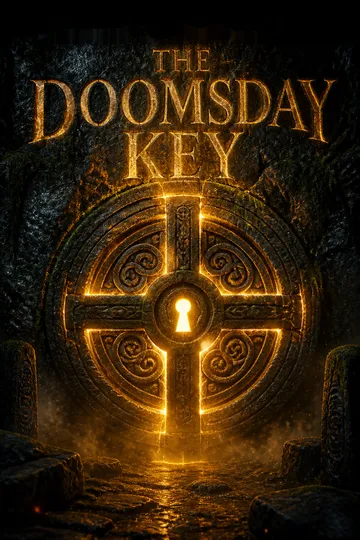
The Doomsday key
A cure hidden in ritualThe sought-after key is not a conventional key but a preserved antifungal compound associated with the ancient queen Meritaten. It is hidden through a chain of symbols, graves, and instruments that leads from the Lake District to Bardsey and then Clairvaux. The substance can counter the fungus used in the unstable corn, while its long association with healing explains the legends of miraculous cures. Finding it requires both archaeological interpretation and scientific understanding.
Seichan’s tracking implant
A moving false signalSigma secretly implants a passive tracker in Seichan during surgery, hoping to monitor her connection to the Guild. She discovers it and uses it to misdirect her pursuers by placing it on a cat in Venice. The device creates a false sense of surveillance and helps explain why Gray’s team cannot easily know where she is or whose interests she serves. It also embodies the story’s recurring conflict between intelligence gathering and trust.
Sigma Force Series

About the Author
Other books by James Rollins


Download PDF
Download EPUB
.epub digital book format is ideal for reading ebooks on phones, tablets, and e-readers.








