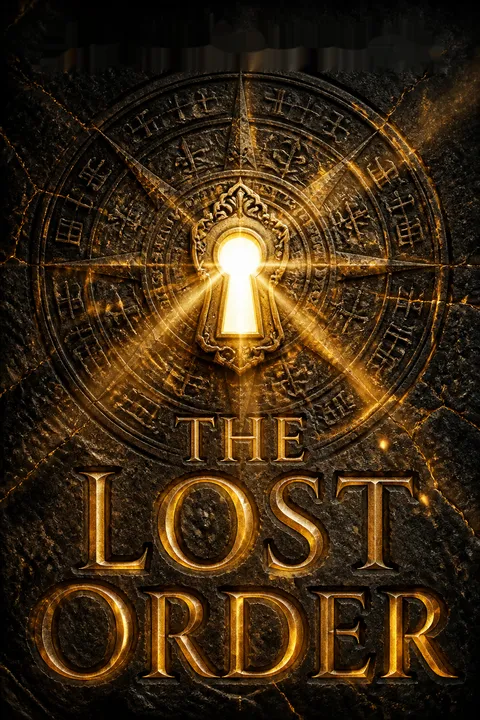


Plot Summary
Prologue
In January 1865, Confederate spy Angus Adams visits Joseph Henry, secretary of the Smithsonian, to deliver a brass key and retrieve his field journal. A fire races through the Castle, and a Union captain enters Henry’s office to seize both objects.
Adams fights him, escapes with the key and journal, then turns back into the burning building to carry the unconscious captain to safety. As soldiers search the grounds, Marianna McLoughlin spirits Adams away in her carriage. Their secret greeting confirms their connection, and she learns that his friends call him Cotton.
The fire makes the Smithsonian more than a setting: it becomes a contested shelter where knowledge, political loyalty, and personal conscience collide. Adams protects objects that may preserve a history the victors could erase, yet he also risks himself to save a Union officer. That mercy complicates the spy’s allegiance without dissolving it. His rescue suggests that a person can serve a cause and still refuse to let the cause dictate every act. The key, journal, and nickname establish the inherited trail that will draw his descendant into the same unfinished conflict.
Gold Beneath the Maple
Cotton Malone, a former intelligence agent now running a Copenhagen bookshop, accepts a Smithsonian assignment to investigate an old Arkansas treasure hunt. Guided by a librarian’s field notes, GPS coordinates, carved trees, and iron buried as primitive compass markers, he narrows the search to a patch of forest. Beneath a maple he uncovers a jar packed with Confederate gold coins.
Before he can photograph the find, an armed figure approaches and strikes him unconscious. The job had seemed like a historical puzzle, but the coins prove the treasure is real, and the attack shows someone else is guarding it. Cotton wakes later in an iron incinerator, stripped of his equipment and trapped in the heat.
Cotton’s methodical reading of the landscape turns history into usable evidence: marks that once seemed ornamental become directions, and buried farm tools become a navigational system. The scene’s pleasure in discovery is deliberately interrupted by violence. The treasure is not simply lost wealth; it is an inheritance actively controlled by people who believe they have authority over it. Cotton’s competence also has a personal undertow. He has returned to danger partly because his family’s past gives the work emotional weight, though the attack makes clear that ancestry offers no protection from its living consequences.
A Widow’s Warning
In Tennessee, former president Danny Daniels attends the funeral of his friend Alex Sherwood, a senator whose body was found in a river. Away from the mourners, Danny visits his daughter’s grave, still carrying guilt over the childhood fire that killed her and helped destroy his marriage. Taisley Forsberg approaches him there and says Alex was murdered.
She explains that she and Alex were close friends, and that he had recently studied a notebook concerning drastic changes to Congress. A stranger entered Alex’s Washington apartment using a key, then left with the notebook and research books. Alex had also become troubled by what he had learned. His presumed accident now looks connected to a political secret.
Danny’s public identity has ended, but his private grief has not. At the grave, he is not a former president or skilled political operator; he is a father still asking forgiveness. Taisley’s accusation interrupts that inward retreat and gives his political instincts a new object. Her account matters because she offers both intimacy and evidence, while acknowledging the limits of what she knows. The scene joins two forms of unfinished business: Danny’s inability to repair the past with his daughter, and his growing suspicion that Alex’s death was arranged to silence a man who had begun questioning power.
Rope Through the Furnace
Cotton’s partner, Cassiopeia Vitt, tracks his location and finds him locked inside the abandoned incinerator. Unable to pick its combination lock, she lowers a rope through the roof lattice and gives him a way to climb out. A rifleman fires from a ridge while Cotton reaches the top, so Cassiopeia sends him a pistol and draws the shooter’s attention as they move to flank him.
They capture the shooter, a young woman named Lea Morse, who admits that her grandfather Terry knocked Cotton out and locked him up. Terry’s family has guarded the forest for generations. Lea says the coins belong to a hidden stash and that her grandfather’s job is to make treasure seekers leave.
The rescue shows Cotton and Cassiopeia operating through trust rather than lengthy planning. She improvises a rope escape, he follows her cues under fire, and their familiarity becomes a tactical resource. Lea’s presence changes the moral texture of the pursuit: the person shooting at them is not a professional enemy but a young woman obeying a family duty. The inherited role has given Terry’s family purpose, yet it has also normalized assault and intimidation. Lea’s reluctance to continue suggests that the tradition is already fraying from within, especially for the generation expected to inherit it.
The Cross in the Bee House
At Terry Morse’s home, Cotton recovers his gear and finds that the coins are old Confederate pieces. Terry’s tattoo bears a cross inside a circle, the emblem of the Knights of the Golden Circle, a secretive organization Cotton knows from family stories. Terry insists he is a sentinel, charged with protecting the treasure, and shows Cotton a carved stone hidden beneath his beehives.
Its broken Spanish and symbols instruct the reader to seek a map and a heart. Before Terry can explain more, three armed men enter, claiming the same Order’s authority. Cassiopeia knocks over the hives, releasing a cloud of agitated bees; Cotton disarms their leader, but the men escape after firing at them.
The scene separates inherited belonging from genuine authority. Terry’s secret handshake and family history make the impostors credible to him, but their violence exposes how easily ritual can be used as a counterfeit credential. The bees, normally kept in orderly colonies, become an improvised defense once the intruders disturb their shelter. Their chaos mirrors the breakdown of Terry’s inherited system: a duty designed to protect a secret has become an opening for strangers to exploit him. The stone’s instructions shift the search from a single cache toward a larger structure, but its meaning remains incomplete until other pieces are found.
Danny Steals the Notebook
At Alex’s house after the funeral, Danny questions his widow, Diane, then spots the research books and brown notebook Taisley described. He steals the notebook and studies its notes on Senate procedure, constitutional conventions, and a proposal associated with Alexander Stephens. That night, he returns to watch the house from the woods and sees Diane meeting Speaker Lucius Vance and her brother, Kenneth Layne.
He overhears enough to learn that Vance expects to become vastly more powerful through a change to the House’s rules. Danny connects the notebook to the private meeting and realizes Alex had discovered a scheme with national consequences. Rather than retreat into retirement, he decides to investigate from inside government.
Danny’s theft is the moment his old political self reactivates. He does not merely inherit Alex’s suspicions; he chooses to break the law because official channels have already failed to protect his friend. The notebook is a compressed model of institutional power: obscure procedural rules can carry consequences more consequential than dramatic speeches. Diane and Vance’s private intimacy also makes their alliance personal as well as political. Danny’s return is driven by duty, but the scene admits another motive: public service gives him a structure and purpose he has lost since leaving the presidency.
The Smithsonian Key
At the National Museum of Natural History, Smithsonian librarian Martin Thomas brings a visitor into the Cullman Library without reporting the meeting. The visitor is Grant Breckinridge, a restless man seeking Confederate treasure. Thomas has learned too much and tries to bargain for a share, so Grant shoots him in a tunnel beneath the Mall.
Grant crosses to the Castle and smashes a display case to steal its ceremonial brass key. Stephanie Nelle, head of the Magellan Billet, follows him through the buildings, but he escapes. After she and curator Rick Stamm search Thomas’s apartment, Grant drives past and shoots Stephanie twice. She is rushed into surgery, leaving Cotton and Danny with an urgent reason to find the killer.
Grant’s violence converts an archival investigation into an immediate human emergency. Thomas’s greed contributes to his isolation, but it does not make his murder inevitable or deserved; the scene exposes how Grant treats other people as obstacles once they threaten his access to wealth. The ceremonial key’s removal is especially revealing because it is valuable for what it may open, not for its display case or institutional prestige. Stephanie’s shooting extends the cost beyond the Smithsonian and forces Cotton and Danny to act under emotional pressure, where the temptation to pursue revenge competes with the need to understand the larger scheme.
The Mine Under the Ruins
With Lea guiding her, Cassiopeia reaches an abandoned Arkansas mine and discovers a hidden chamber holding gold bars. The place is guarded by James Proctor and men who identify themselves as genuine Knights of the Golden Circle, unlike the impostors at Terry’s home. Proctor captures Cassiopeia and Lea, then drops them into a shaft and covers the opening with trunks.
Cassiopeia climbs out through the unstable pile, fights off men who return, and is rescued when Terry arrives with a shotgun. The danger does not end: Proctor later takes Terry and the Witch’s Stone, then forces Cassiopeia to travel west. She has planted her tracking watch with the gold shipment, giving the Billet a possible lead.
Cassiopeia’s courage is expressed through physical judgment rather than fearlessness: she waits, finds air pockets, climbs, and uses distraction when brute force would fail. Lea’s knowledge opens the way to the mine, but the discovery also exposes how family lore can be weaponized by people with greater resources. Proctor’s claim to a respectable tradition is contradicted by his willingness to imprison and kill. Cassiopeia’s hidden tracker is a small act of agency inside captivity. Even when she cannot control where she is taken, she can leave information behind for others to follow.
A Senate Seat Returns
Danny persuades Tennessee’s governor to appoint him to Alex’s vacant Senate seat, then is sworn in privately by Vice President Theodore Solomon. He learns that Vance’s proposal would let the House consider only legislation originating there, reducing the Senate to a narrower role and concentrating power in the Speaker.
Danny confides in Solomon and recruits longtime House ally Paul Frizzell, a member of Vance’s Rules Committee. Frizzell confirms the plan is advancing but cannot openly oppose Vance without losing his position.
He also brings Danny to a secret meeting with the Knights of the Golden Circle, who oppose Vance’s shortcut and want constitutional change pursued through a national convention. The Order’s commander asks Danny to stop the Speaker.
Danny’s appointment is both a practical return to public life and a psychological admission: retirement left him without a meaningful arena. The proposed rule change is dangerous precisely because it can be presented as a cure for gridlock. Its legal form disguises a concentration of power, making the distinction between lawful procedure and democratic legitimacy central to the conflict. The Knights further complicate Danny’s choices. They advocate reform, but their history is entangled with slavery and violence; their present claims cannot be accepted without scrutiny. Frizzell’s divided loyalty shows that institutions often depend on people who cannot safely speak against them.
Five Stones, One Ancestor
Cotton returns to the Smithsonian with Rick Stamm and learns that the stolen key was found decades earlier in the Castle attic. The institution’s chancellor, Chief Justice Warren Weston, explains that Cotton’s ancestor Angus Adams joined an 1854 Smithsonian expedition and secretly recorded information for the Knights.
Cotton recognizes the cross and circle as an Order emblem and realizes that the Arkansas stone is one piece of a five-stone map. The other known pieces include the Trail, Heart, and Horse Stones; a fifth, called the Alpha Stone, supplies the starting point.
Weston admits the Smithsonian has searched for the treasure before. Cotton agrees to continue, though the murder of Thomas and Stephanie’s critical condition make the institution’s secrecy harder to accept.
Cotton’s family resemblance to Adams is no longer merely a private curiosity; it gives the investigation a historical lineage and a possible key to decoding the stones. Yet inheritance does not mean automatic loyalty. Cotton questions the Smithsonian’s motives because its leaders have concealed information while asking him to take risks. The institution’s pursuit of knowledge is ethically unstable when the knowledge may lead to stolen wealth and a violent organization’s archive. The five-stone structure also turns the plot into a problem of partial information: each object appears meaningful, but only their relationships can expose the route.
Beneath Eleven Mistakes
Cotton visits retired Castle curator Frank Breckinridge, who appears to believe the Civil War is still underway. Frank tests him with a scrambled message, and Cotton deciphers it as a direction to look beneath eleven mistakes. The clue points to the error on James Smithson’s tomb, which gives the wrong age at death.
Meanwhile, Grant and his father enter the Castle after hours and take the Heart Stone from the tomb’s hidden compartment. Cotton and Stamm find Frank’s concealed copy of Adams’s field journal, hidden inside a gramophone. Its title page and decorated edges link it to the stones. Grant now has the Heart Stone, while Cotton has the journal needed to reveal the trail’s starting point.
Frank’s apparent confusion becomes a protective language: he can transmit knowledge without openly naming what he is guarding. Cotton’s ability to read the riddle depends on his memory and his willingness to treat the old man as a strategist rather than a patient. The tomb itself turns institutional commemoration into concealment, hiding a map piece inside the founder’s resting place. Grant’s theft shows the danger of recovering information faster than one can secure it. Cotton and Grant now possess different parts of the puzzle, and the contest shifts from interpretation alone to a race for control.
The Book’s Hidden Picture
Cotton studies the journal and remembers a technique his mother once showed him: fanning gilded page edges can reveal a hidden image. The picture depicts a church beside a river and three buildings arranged in a triangle, matching clues on the Horse Stone. Its location is an old mission called Pasto al Norte in the Carson National Forest, on land once owned by Angus Adams.
Cotton also recognizes Frank’s coded references to the Supreme Court building as a warning that Weston leads the Knights. Danny confronts Weston, who confirms the Order is divided: he supports legal constitutional change, while Frank wants the treasure kept hidden. Cotton flies west after Grant and Frank, who are headed for the same New Mexico site.
The fore-edge painting rewards attention to a material feature that seemed decorative, just as the forest carvings rewarded Cotton’s scrutiny. The clue is not solved by a single genius leap but by combining family memory, language, artifacts, and terrain. Weston’s revelation also shifts the moral landscape: the chief justice is not a neutral observer but a participant in the struggle. His commitment to lawful reform does not erase his concealment or his use of Cotton. The story asks whether good intentions can justify manipulating others, especially when the stated goal is to correct abuses of power.
Diane’s Last Stand
The Knights’ commander shows Danny a recording of Diane pushing Alex from a cliff after he refused to support her plan with Vance. The Order had monitored the Sherwood home but delayed acting while it weighed its own interests. Diane is also confronted with the evidence and warned to abandon the treasure hunt.
Later, she finds Alex’s confidante, Taisley Forsberg, in his apartment and shoots her twice. Taisley dies. Diane then enters Stephanie’s hospital room with Alex’s gun and points it at Danny and the recovering Billet chief. A Billet agent enters as Stephanie cuts the lights; when illumination returns, Diane has been shot and the threat is over.
Diane’s ambition grows from a genuine belief that the political system needs radical correction, but she increasingly treats disagreement as obstruction that can be removed. The recording makes her private violence inseparable from her public program: the woman who condemns institutional paralysis has used murder to silence her husband. Her attack on Taisley is driven by jealousy as well as fear, exposing the intimate resentments beneath the grand political language. Stephanie’s recovery matters because she is not merely rescued by Danny; she helps create the opening that allows the agent to end the confrontation.
Two Breckinridges, One Betrayal
In New Mexico, Frank reveals to Cassiopeia that the church marks the start of the route and that the Alpha Stone is hidden in its floor. He finds the stone and smashes it, intending to keep anyone from reaching the vault. Grant, who wants the gold, turns on his father and shoots him. Cotton arrives in an ultralight, but Proctor fires at the aircraft and damages its controls.
Cassiopeia attacks the men holding her, allowing Cotton to land in the trees. Cotton confronts Grant and shoots him when he reaches for his gun. He then follows the riverbank, where Proctor is about to kill Cassiopeia, and kills Proctor before he can fire. Cassiopeia survives, and Cotton frees her restraints.
The father and son embody opposed uses of inheritance. Frank sees guardianship as a duty to preserve the Order’s resources for an imagined future, while Grant reduces the inheritance to money and personal escape. Their conflict ends not in reconciliation but in Frank’s death at the hands of the son he manipulated. Cassiopeia’s escape and Cotton’s dangerous landing keep the climax grounded in mutual reliance rather than abstract symbolism. The destroyed Alpha Stone appears to close the route, but Cotton and the Smithsonian have preserved images, showing that knowledge can outlast the physical object that carried it.
The Vault’s Final Order
Cotton, Cassiopeia, Danny, and Weston assemble digital images of all five stones and follow their eighteen markers from the old church. A heart-shaped boulder hides the entrance, but Cotton recognizes it as a trap and places explosives to expose a safer approach.
The ceremonial key opens a gate beyond a corridor lined with deadly pits. Inside, they find gold, Confederate government records, and a preserved body.
A locked box contains Angus Adams’s final instructions: the Smithsonian should receive the archive and wealth, while the Knights should abandon violence and work through lawful debate. Danny uses his Senate position to make Vance withdraw the House rule change. The treasure is secured for public use, and Cotton and Cassiopeia leave together.
The vault resolves the material quest by revealing that its deepest value is not the gold but the instruction attached to it. Adams, once a Confederate spy, concludes that political disagreements must be settled with words rather than weapons, a judgment that rebukes both the Order’s violent past and Grant’s greed. The physical traps make the treasure’s recovery a test of interpretation as well as nerve: rushing toward the obvious entrance would have been fatal. Danny’s political victory similarly depends on using institutional power to prevent its capture by one ambitious leader. The ending joins personal loyalty, historical accountability, and public stewardship without pretending that the past can be made innocent.
Analysis
The novel makes procedure and archaeology mirror one another. Cotton reads marks in trees, stones, and book edges; Danny reads the less visible marks in Senate rules, appointments, and private alliances. In both cases, power belongs to whoever understands how a system actually works, not simply whoever claims authority over it. That parallel gives the political plot its thriller logic: a minor procedural adjustment can matter as much as a hidden key because both control access.
The story also refuses to let heritage remain picturesque. The Knights of the Golden Circle leave behind ingenious codes and a vast fortune, but their organization was built around slavery, intimidation, and theft. Terry’s family inherits a duty without possessing its full context, while Grant treats the same past as a personal bank account. Adams’s final instruction interrupts both forms of inheritance. He does not declare the old cause redeemed; he directs its wealth and records toward public stewardship and rejects renewed violence.
The central characters confront different temptations to confuse purpose with entitlement. Diane believes that the government’s failures justify extraordinary personal action. Vance believes that a legal mechanism will excuse the power it concentrates. Weston believes secrecy can protect reform. Frank believes preservation grants him authority to decide when the future may act. Each turns a defensible concern into a private mandate. Danny’s compromise ethic is not presented as perfect, but his final use of political leverage prevents one officeholder from remaking the system for his own benefit.
On the personal level, Cotton and Danny return to public danger because retirement has left them without a clear role. Their renewed involvement is partly service and partly appetite: Cotton wants answers about his family, while Danny wants the work and urgency he has lost. The resolution asks them to act without mistaking the satisfaction of action for moral permission. The gold matters, but the more durable prize is a recovered choice: whether history will be repeated as a command or examined as evidence.
Review Summary
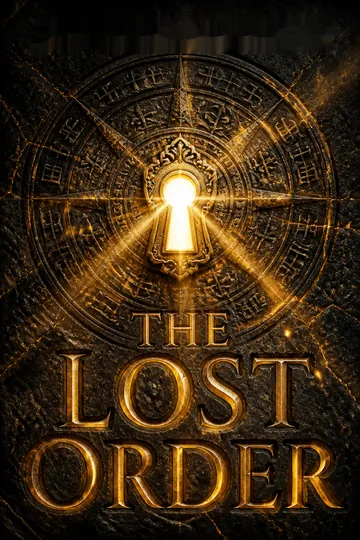
The Lost Order by Steve Berry receives mixed reviews averaging 4.09/5 stars. Fans praise Berry's blend of historical facts with thrilling fiction, particularly regarding the Knights of the Golden Circle and Confederate treasure. Many appreciated finally learning Cotton Malone's nickname origin and the fast-paced action. However, some readers found the plot overcrowded with subplots, too politically heavy, or less engaging than earlier series entries. The Smithsonian connection and Civil War history fascinated many, though a few felt the Confederate organization's portrayal was problematic. Overall, history buffs enjoyed it more than casual readers.
People Also Read

Characters
Cotton Malone
The reluctant field agentA former Magellan Billet agent who has retired to run a Copenhagen bookshop, Cotton is observant, disciplined, and difficult to draw back into danger. He accepts the Smithsonian assignment partly because the search touches his Southern family history, and he approaches the woods like a code that must be read patiently. His eidetic memory, legal training, and field experience let him move between archives and gunfire without losing sight of evidence. Cotton is more emotionally guarded than indifferent: loyalty to friends and curiosity about his ancestry repeatedly overcome his wish to leave world-saving to others. His bond with Cassiopeia rests on respect for her independence as much as on attraction.
Cassiopeia Vitt
The fearless partnerA historian and architectural restorer who lives in France, Cassiopeia is wealthy, self-directed, and skilled at surviving dangerous situations. She joins Cotton in Arkansas because their partnership matters to her, though she has spent much of her life defending her solitude. Her Spanish and European heritage gives her a personal connection to history, while her practical intelligence keeps her from treating the past as romance. Cassiopeia improvises under pressure, notices what others overlook, and refuses to become a passive companion in Cotton’s investigations. Her growing openness to a shared future does not diminish her independence; it reflects her willingness to make room for attachment without surrendering her own life.
Danny Daniels
The restless ex-presidentA former two-term president and lifelong Tennessee politician, Danny is a skilled compromiser who believes government works through negotiation rather than purity of intent. Leaving office leaves him restless and uncertain of his usefulness. Alex’s death pulls him back toward the work he understands, while grief for his daughter remains the private wound beneath his confident public manner. Danny can be blunt, strategic, and stubborn, but he is also capable of recognizing when his appetite for power is serving his own needs. His investigation forces him to decide whether political experience can protect democratic checks and balances without simply restoring his personal sense of importance.
Stephanie Nelle
The Billet’s hard-edged chiefThe experienced head of the Magellan Billet, Stephanie is a demanding leader who accepts risk when a situation requires direct intervention. She has a long professional history with Cotton and a deep personal connection to Danny, though her authority often keeps private feeling out of view. Stephanie thinks in terms of operational consequences, contingency plans, and the people who may be harmed when intelligence work goes wrong. Her decision to help the Smithsonian comes through loyalty to Rick Stamm, not full knowledge of the danger. She is resilient without being invulnerable, and her professionalism includes the capacity to recognize when she has allowed a situation to escalate too far.
Diane Sherwood
The ambitious senator’s widowAlex’s wife and a Smithsonian Libraries advisory board member, Diane is intelligent, historically minded, and impatient with political systems she considers incapable of meaningful change. She has spent years feeling constrained by her marriage and by the careful, respectable life surrounding a senator. Her confidence makes her an effective planner, but it also encourages her to treat other people’s doubts as weaknesses to overcome. Diane’s interest in the Knights’ history is both intellectual and personal, tied to her father’s research and her desire to make a lasting mark. She is most dangerous when she believes that her intended outcome excuses the means required to reach it.
Grant Breckinridge
The hungry opportunistThe son of a former Smithsonian Castle curator, Grant is restless, impatient with ordinary work, and driven by the prospect of wealth. He resents his father’s decline and remembers feeling like a disappointment, so money becomes more than a prize: it represents proof that he can escape the life he despises. Grant is adaptable enough to exploit museum access and historical knowledge, but he lacks the patience and ethical restraint that the treasure’s puzzles demand. His appetite for risk gives him momentum, while his belief that success belongs to whoever takes it makes him dangerous to anyone who stands between him and the prize.
Frank Breckinridge
The watchful curatorA retired Smithsonian Castle curator, Frank spent decades studying the Knights of the Golden Circle and safeguarding pieces of their hidden map. He distrusts institutions as readily as treasure hunters, believing that restraint is necessary when powerful resources could revive old ambitions. His declining memory makes him appear unreliable, but he remains capable of deliberate tests and carefully placed clues. Frank’s relationship with his son is strained by Grant’s impatience and greed. He sees himself as a custodian rather than an owner, a distinction that shapes both his secrecy and his willingness to decide what future generations should be allowed to find.
Warren Weston
The judicial commanderThe chief justice of the United States and chancellor of the Smithsonian, Weston is accustomed to making decisions behind a formal public role. He values the institution’s independence and worries about its financial survival, which makes him protective of its reputation and resources. His command of legal and historical detail allows him to see how old constitutional arguments can return in new forms. Weston is more committed to political reform than his judicial position might suggest, and he sometimes mistakes strategic secrecy for responsible leadership. His dealings with Cotton and Stephanie test whether a worthy cause can remain ethical when its leaders withhold crucial information.
Terry Morse
The inherited sentinelA lifelong Arkansas resident, Terry guards the forest and the hidden objects his family has protected for generations. His duty gives structure and pride to a life rooted in the land, but its old rules have led him to threaten people who come too close. Terry is less ignorant than he first appears; he understands local networks, observes strangers carefully, and knows when fear is being used against him. His affection for his granddaughter Lea gradually presses against the traditions he inherited. He wants to preserve his family’s sense of purpose without allowing that inheritance to destroy the person who might have to carry it forward.
Lea Morse
The sentinel’s granddaughterTerry’s teenage granddaughter, Lea has lived with him since her parents failed to care for her. She respects his authority and loves him, but she is beginning to question the violent duties he expects her to inherit. Lea is observant, brave under pressure, and more mature than her age suggests, especially when danger threatens her family. Her affection for a young man in the area gives her a life beyond the sentinel tradition, though she must negotiate that independence with Terry’s protectiveness. She becomes an essential guide because she knows the local land and recognizes that inherited loyalty need not mean unquestioning obedience.
Alex Sherwood
The reform-minded senatorDanny’s close friend and Tennessee’s senior senator, Alex is courteous, principled, and troubled by the privileges Congress reserves for itself. His long-standing advocacy for equal accountability makes him sympathetic to reform, but he is wary of change imposed without open public debate. Alex is a careful, private man whose political life has occupied much of his marriage. He prefers deliberation to spectacle and tends to avoid conflict at home, even as he confronts difficult questions in public life. His relationships with Diane and Taisley reveal how much of his emotional life has remained unspoken.
Taisley Forsberg
The senator’s confidanteA Washington lawyer and Alex’s neighbor, Taisley has shared a close friendship with him while respecting the boundaries he set around his marriage. She is observant enough to notice the visitor who removed Alex’s notebook and determined enough to bring her suspicions to Danny. Taisley’s affection for Alex is sincere, but she does not mistake private closeness for a right to control his choices. Her evidence is personal and incomplete, which makes her appeal vulnerable to skepticism. She nevertheless accepts the risk of exposing her connection to Alex because she believes his death deserves an honest investigation.
Lucius Vance
The power-seeking SpeakerSpeaker of the House, Vance is an effective vote counter who understands how to turn institutional frustration into political leverage. He has spent years opposing Danny’s administration and now sees an opportunity to recast the balance of power in Congress. Vance is ambitious, polished, and pragmatic, with little patience for symbolic gestures that do not produce results. His confidence can look like competence, but it also makes him susceptible to plans that promise a historic legacy. He wants to be remembered as a leader who changed government, and he underestimates how quickly that ambition can begin to resemble the concentration of power he claims to correct.
Kenneth Layne
The convention organizerDiane’s twin brother, Kenneth leads a political organization pressing state legislatures to call a constitutional convention. He has cultivated connections among state lawmakers and politicians, giving him access to people more powerful than himself. Kenneth is more reflective and cautious than Diane, yet he is also drawn to the significance of being part of a national transformation. His choice to involve Alex without consulting Diane creates conflict among the people he hopes to unite. He wants credibility and influence, but his dependence on stronger personalities makes him vulnerable to being used by movements whose aims exceed his control.
Paul Frizzell
The conflicted congressmanA veteran House member and Danny’s longtime friend, Paul serves on the Rules Committee under Vance’s leadership. His position gives him a view of the Speaker’s plans, but openly resisting Vance could end his influence and compromise the cause he wants to serve. Paul is loyal, politically experienced, and conscious of the difference between personal courage and useful sacrifice. His connection to a secret organization complicates his public role, yet he does not confuse its history with a license to impose change. He becomes a bridge between Danny’s investigation and the hidden political movement shaping events.
Rick Stamm
The Castle curatorThe Smithsonian Castle’s curator, Rick knows the institution’s buildings, collections, and internal procedures intimately. His friendship with Stephanie brings her into an investigation he cannot manage alone, and he later works closely with Cotton to trace the missing objects. Rick is conscientious but secretive, believing controlled disclosure can protect the Smithsonian from scandal and treasure hunters. His loyalty to the institution sometimes places him in conflict with the law and with the people he asks to help. He represents the daily labor behind a celebrated public museum, where preserving access and preserving reputation do not always point in the same direction.
Theodore Solomon
The Senate’s presiding officerThe vice president, Theodore Solomon, is a former senator who understands the habits and limits of Washington’s institutions. He swears Danny into the Senate and listens when Danny warns him about Vance. Solomon is pragmatic, direct, and willing to assist without demanding public credit.
Plot Devices
The forest markers
A hidden route through ArkansasCarved beech bark, oddly shaped trees, stones, and buried iron tools form a navigational language left by the Knights of the Golden Circle. Cotton uses the 1909 expedition notes and modern instruments to interpret their directions and locate a coin cache. The markers establish that the treasure hunt depends on patient observation rather than a single map. They also reveal how sentinels can protect a location without knowing the full meaning of what they guard. This device is central to the discovery of the Witch’s Stone and the larger trail. It reveals major plot information.
The five stones
A map divided into fragmentsThe Witch, Trail, Heart, Horse, and Alpha Stones contain broken Spanish, numbers, images, and directional marks. No single stone gives a complete location. Cotton and other characters compare them with one another, with the journal, and with the landscape to build an eighteen-point route. Their fragmentation makes possession and interpretation separate problems: a person can hold a stone and still lack the knowledge needed to use it. Digital photographs preserve the clues even after a stone is damaged. The stones reveal the final destination and the scheme behind the treasure hunt.
The ceremonial key
A symbol that opens the archiveThe Smithsonian’s brass key begins as an object displayed for its ceremonial meaning, then becomes a prize sought by Grant. Its cross-and-circle detail connects it to the Knights, and its unusual form eventually opens the lock protecting the vault’s final box. The key links the institution’s public identity to its hidden history: an emblem of stewardship becomes a practical instrument for entering a secret space. Its importance is not obvious from appearance alone, so it rewards the reader’s attention to an object first introduced in the historical prologue.
Adams’s journal
A family memory becomes a mapAngus Adams’s field journal holds more than observations from an early expedition. Its coded markings and painted page edges connect its hidden image to the Horse Stone and identify the church beside the river as the route’s starting point. Cotton can recognize the method because of a memory from his childhood and his family’s stories. The journal also frames the treasure as a question of custody rather than simple discovery. Its final contents explain what Adams wanted future finders to do with the wealth and records. This device reveals both the destination and the ethical resolution.
The House rule change
A legal route to powerVance plans to have the House consider only legislation that originates in the House, using each chamber’s constitutional authority to set its own rules. The change would weaken the Senate’s independent role and make the Speaker a far more powerful gatekeeper. Because the move appears procedurally lawful and promises relief from gridlock, it can attract broad support before its consequences are understood. Danny studies the proposal through Alex’s notebook, then uses his Senate appointment and political relationships to stop it. The device makes procedural language the battlefield of the political plot, rather than treating power as a matter of speeches alone.
Cotton Malone Series





About the Author
Other books by Steve Berry

Download PDF
Download EPUB
.epub digital book format is ideal for reading ebooks on phones, tablets, and e-readers.








