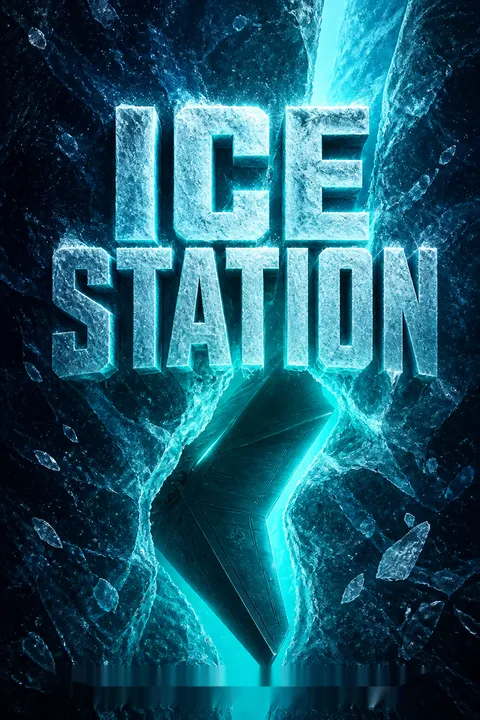


Plot Summary
Prologue
A lecture on Antarctica’s slow-moving ice warns that the apparently empty continent can conceal what the world has forgotten. An archival account adds a second mystery: Colonel Otto Niemeyer, a powerful military insider, vanished in 1979 after borrowing a survey of an Antarctic site. At Wilkes Ice Station, divers Price and Davis climb an underwater tunnel toward a silent cavern.
Their radio contact ends; chief Ben Austin sends a second team after them despite the storm and failing communications. Austin surfaces in a vast chamber and finds a black aircraft frozen into the ice. Then unseen animals attack the divers from the water and walls. Austin’s final distress call reaches no one who can help.
The opening places two kinds of hidden history beneath the same Antarctic ice: geological time and political secrecy. The lecture makes the landscape an active force, while the Niemeyer record suggests that governments have already tried to map or exploit what lies there. The divers’ discovery turns both clues into immediate danger. Their radios and technical equipment cannot make the cavern legible or safe, and the station’s isolation converts a scientific expedition into a sealed crisis. The chapter’s movement from measured observation to sudden predation also establishes the novel’s central tension: human beings arrive believing that discovery confers control, only to learn that the place has its own inhabitants and history.
The French at Wilkes
After Wilkes Ice Station’s distress signal reaches a U.S. Navy ship in Sydney, Lieutenant Shane Schofield leads a Marine reconnaissance team across Antarctica. A solar flare and blizzard have cut communications, so the unit travels by hovercraft.
On the way, Staff Sergeant Buck Riley investigates a missing vehicle signal and finds a French hovercraft wrecked in a crevasse, its occupants shot from behind. At Wilkes, Schofield meets exhausted scientists and four clean, composed French visitors who claim to have come from nearby Dumont d’Urville.
Paleontologist Sarah Hensleigh explains that geophysicist James Renshaw found metal beneath the ice, then a cavern and a spacecraft. She also explains that Renshaw is sealed in a room after killing his supervisor.
Schofield enters a crisis already shaped by competing forms of knowledge. The scientists understand the site through research, while the military briefing defines it as an asset to secure. The French visitors exploit the gap between those systems by using real names and familiar scientific manners. Schofield’s suspicion is useful but not yet enough to distinguish genuine colleagues from impostors. The wrecked hovercraft supplies the first concrete warning that the Antarctic emergency is not merely environmental. The commander's central burden is established early: he must protect people while obeying orders that treat their safety as secondary to controlling the discovery.
Scientists Draw Guns
Schofield’s Marines sweep the station and discover that one of the visitors is Jacques Latissier, while Hensleigh explains that the French have already taken five Wilkes residents away in a hovercraft.
When a second French group arrives with food and blankets, Lance Corporal Libby Gant notices that one can has been opened and resealed. Inside is a compact crossbow, the weapon associated with France’s elite First Marine Parachute Regiment. The impostors drop the pretense.
Latissier opens fire, another commando shoots Gant, and the barrage kills Augustine Lau and wounds other Marines. Schofield recognizes that the French have brought real scientists to reinforce their cover, but the earlier civilian passengers have already been murdered. He now knows the fight is over the buried aircraft.
The betrayal works because it weaponizes the habits of hospitality and verification. The French anticipate that Schofield will check identities, so they borrow real names and bring genuine scientists to make their story feel verifiable. Gant defeats that performance by attending to a small physical irregularity, the resealed can. Her observation converts an ordinary supply delivery into proof of an armed incursion. Schofield’s anger comes not only from the killing but from losing initiative: the enemy has dictated the timing and location of the battle. The station’s communal spaces become unstable, since food, uniforms, and even professional credentials can no longer be trusted.
The Station Ignites
French commandos attack from both ends of Wilkes, forcing the Marines and scientists toward the living quarters. A grenade damages the old air-conditioning cylinders, which leak highly flammable gas through the station.
When gunfire ignites it, the B-deck catwalk erupts and its heated supports tear free from the ice. Marines and civilians plunge into the pool below, where killer whales seize anyone who moves or remains within reach. Riley catches Kirsty Hensleigh as she hangs from a burning railing, but her removable hood begins to detach and she falls.
Schofield uses the station’s retractable bridge and Maghook to reach her in the water. Wendy, Kirsty’s fur seal, draws the whales away long enough for survivors to escape the pool. Mother loses part of a leg.
The disaster collapses the difference between battlefield and habitat. The station’s cooling system, built to keep the scientists comfortable, becomes the mechanism that spreads lethal gas; the catwalks that organize daily life become unstable platforms over a predator-filled pool. Schofield’s leadership is shown through rapid physical improvisation, but no tactical skill can prevent every loss. Riley’s failed attempt to hold Kirsty and his desperate recovery of her make care visible as action rather than sentiment. Wendy’s role further unsettles the assumption that armed humans control the scene. Survival depends on reading the station, the animals, and one another faster than the danger changes.
The French Trap
With the station dark and gunfire unsafe in the leaking gas, Schofield’s Marines hunt the remaining commandos using Maghooks, crossbows, and night-vision gear. Sergeant Rebound Simmons follows a French soldier toward the drilling room and finds two Claymore mines wired to a trip line.
Rather than expose the trap, he turns the mines toward the French and lets their leader, Jean Petard, believe the ambush is still ready. Petard steps across the wire and dies in the blast.
The immediate battle ends, but the cost is severe: several Marines and scientists are dead, Mother is badly wounded, and Samurai Lau is critically injured. Soon afterward, surgeon Luc Champion determines that Samurai was suffocated after the fighting, not killed by his wounds.
Rebound’s countermeasure is a reversal of the enemy’s own design, but the tactical victory does not restore trust. His choice to preserve the trap until Petard commits shows a young soldier acting with patience under pressure. Samurai’s unexplained death then changes the meaning of the station: danger is no longer located only among foreign forces. Someone had private access to the wounded Marine and a reason to disguise murder as battlefield loss. Schofield keeps that discovery quiet, preferring uncertainty to alerting a possible killer. Command now requires a second kind of vigilance, one directed inward at the relationships on which a unit depends.
The Cave Opens
Schofield prepares a dive to learn what happened to the missing Wilkes team, and Sarah Hensleigh persuades him to let her accompany the Marines. She believes the object may be either extraterrestrial or evidence of an ancient civilization, and argues that the cavern could hold a discovery beyond anything in her field.
A dead killer whale then rises into the station pool with deep, tearing wounds along its belly, proof that something more dangerous than the whales lives below.
Using silent breathing gear, Schofield’s team reaches the cavern in daylight and finds a sleek black aircraft embedded in the ice. Nearby lie the mutilated remains of the earlier divers. Hensleigh studies the aircraft with intense ambition, while Gant keeps watch and grows uneasy.
The descent gives scientific curiosity its strongest moral appeal: Hensleigh has spent her life preparing to interpret a discovery that could revise human history. Schofield allows her to go because expertise matters, but also because he understands what the mission means to her. The wounded whale complicates any romance of discovery. The cavern is not an empty museum; it is a contested habitat where the aircraft has altered the balance of life. The corpses make the price of entering tangible. Hensleigh’s excitement and Gant’s unease register two legitimate responses to the same object, the promise of knowledge and the suspicion that fascination can make people careless.
The Cobra on Tape
As the divers explore below, Schofield hears a French transmission warning that a unit called Shark will erase Wilkes unless the station reports within three hours. Soon afterward, a sniper shoots him in the throat from outside the ice dome.
Renshaw finds his apparently lifeless body, removes the bullet fragments, and shows him video of a Marine checking his pulse before pushing him into the pool. Schofield recognizes the cobra painted on the shooter’s shoulder plate: it belongs to Gunnery Sergeant Scott Kaplan, called Snake.
Snake admits he killed Samurai and tries to kill Mother, but she fights him off despite her injuries. Schofield arrests him. The French warning, he realizes, points to a vessel offshore and a larger threat than the commandos he has defeated.
The video changes Schofield’s survival from a lucky accident into forensic evidence. Renshaw’s camera lets him identify a uniform marking that would otherwise be hidden by the shooter’s helmet, while the cold pool revives the body the assassin believed he had disposed of. Snake’s betrayal attacks the basic promise of military hierarchy: years of shared service cannot guarantee allegiance. Mother’s physical resistance counters the assumption that injury makes her irrelevant. Meanwhile, the French transmission expands the conflict beyond the station. Schofield must now connect local violence to a deadline and an unseen force, even as evidence shows that the most immediate threat has worn his own uniform.
The Reporters Find Trent
In New Mexico, Washington Post reporter Pete Cameron investigates a garbled military transmission recorded by the SETI Institute. His wife, reporter Alison Cameron, maps its coordinates to Wilkes and searches library records for the location.
Their research points to a missing 1978 survey and to Colonel Otto Niemeyer, who vanished after borrowing it. Pete follows a tip to Andrew Wilcox, who reveals himself as Andrew Trent, a Marine officially reported dead after a covert mission in Peru.
Trent says a secret group called the Intelligence Convergence Group planted loyal operatives in elite units and killed his team after it found valuable technology. Alison and Pete trace Wilkes researchers’ electronic addresses and send Schofield a list of suspected ICG members, giving him crucial information even though their message reaches him late.
The reporter storyline turns information gathering into an alternative form of rescue. Pete and Alison cannot reach Antarctica physically, but they can interpret scraps the military would prefer to leave meaningless: coordinates, library records, and a death certificate. Trent’s testimony is difficult to verify, yet it connects the isolated station to an institutional pattern rather than a one-off betrayal. The old survey also links the present crisis to Niemeyer’s disappearance, making secrecy a historical process with records that outlast the people who create it. Journalism here is neither instantly heroic nor omniscient. It is patient, collaborative work that gives Schofield evidence before the institution can erase him.
Escape Across the Ice
When British SAS commander Trevor Barnaby arrives with a platoon, Schofield sees that his handful of survivors cannot hold Wilkes. He leaves Snake chained behind and evacuates Kirsty, Renshaw, and the remaining scientists in Marine hovercrafts.
Mother refuses to slow the retreat and stays hidden in the station. The SAS pursues with missiles and machine guns. Renshaw learns to fire a Stinger, Schofield uses a dangerous reverse-driving maneuver to protect Riley, and the group transfers Kirsty between speeding craft.
Riley and Kirsty fall during a missile strike and are captured. Schofield’s damaged hovercraft races toward a cliff, forcing him and Renshaw to abandon it and plunge into the Southern Ocean. Their escape costs them their unit and leaves them separated from Kirsty.
The retreat tests Schofield’s loyalty against the arithmetic of survival. Leaving Mother and losing Riley are not clean strategic choices; each decision preserves some lives while exposing others. The sequence also makes Barnaby a personal antagonist before he becomes a direct opponent: he is a commander whose force and preparation overwhelm Schofield’s diminished team. Renshaw’s sudden competence with a Stinger gives the civilian a role in the survival of others, while Kirsty’s repeated transfers show how the adults’ plans must account for a child who is not merely cargo. The cliff plunge strips away vehicles, weapons, and military advantage, leaving Schofield and Renshaw to survive by improvisation.
The Sub Beneath Ice
In the water below the cliffs, Schofield discovers that Shark is a French submarine preparing to fire a nuclear torpedo at Wilkes. He attaches a Tritonal explosive to his Maghook and manages to place it inside an open torpedo tube, destroying the submarine before its weapon can launch.
The blast exposes a window buried in a nearby iceberg. Schofield and Renshaw break into Little America IV, a long-lost American station that has flipped upside down inside the ice.
Its rooms contain chemical weapons and old scuba gear, evidence that it was a covert military facility rather than an ordinary research camp. They use the gear to swim back toward Wilkes. The detour saves the station from the submarine but returns them to Barnaby’s occupied ground.
The submarine revelation makes the earlier deadline concrete: the threat was not an abstract erasure order but a weapon poised beneath the sea. Schofield wins time by turning a charge intended for demolition into a tool against the submarine, using the enemy’s own military technology against it. Little America IV then widens the history of the site. The buried base shows that Wilkes is not the first attempt to control this stretch of Antarctica, and its chemical arsenal makes secrecy materially dangerous. The route back is also significant: Schofield and Renshaw do not escape the conflict so much as re-enter it through a forgotten layer of the same landscape.
Book Over the Pool
While Schofield and Renshaw are away, Barnaby takes Wilkes and sends a diving team toward the cavern. Gant’s group holds the entrance, but the cavern’s giant elephant seals attack the SAS divers and kill them. Back at the station, Barnaby interrogates Riley and learns that Marines are below. He suspends Riley over the killer-whale pool, then lowers him into the water as a warning.
The whales kill Riley while Schofield watches from the rising diving bell. When Schofield reaches the surface, Barnaby’s troops surround him and take him prisoner. Barnaby orders him and Snake to fight for the right to die last. In the drilling room, Schofield uses a crossbow to trigger the drill and kill Snake, then escapes Barnaby’s execution setup.
Barnaby’s use of Riley converts a natural predator into an instrument of command. The act is designed not simply to kill but to make Schofield witness the cost of resistance. Riley’s death marks the collapse of the unit’s old emotional center, the trusted senior who has guided Schofield since his early career. Yet the cavern’s seals also demonstrate that Barnaby cannot fully command the terrain he has entered. Schofield’s forced fight with Snake brings the internal betrayal to a brutal end, but it does not restore moral order. He survives by making the drilling machine, the very apparatus of human extraction, turn against the conspirator.
The SAS Falls
Barnaby’s soldiers hang Schofield above the killer-whale pool, but Schofield uses magnesium detonator cord hidden on his wrist to cut his handcuffs. He distracts a whale with Kirsty’s asthma puffer and bubbles, blinds the SAS with a stun grenade, then uses the Maghook to escape the water.
Finding Kirsty, he rigs the station lights to flicker and plants nitrogen charges on the retractable bridge. When Barnaby orders the bridge withdrawn, the charges detonate and kill most of his force.
Barnaby escapes in the diving bell, intending to reach the cavern and claim the aircraft. Schofield follows underwater, harpoons the bell’s cracked porthole, and causes it to implode. Renshaw gives him a breathing mouthpiece, and Schofield returns to Wilkes with the station briefly his again.
Schofield’s escape is a synthesis of lessons accumulated across the novel: use the enemy’s attention, treat ordinary objects as tools, and refuse the apparent limits of a trap. The asthma puffer, bridge, and detonator cord become tactical instruments because he understands their properties under pressure. The counterattack also carries an emotional cost: the same station that killed his people becomes the machinery through which he defeats Barnaby. The final fight with Barnaby is not a contest of abstract strength but of technical knowledge and persistence. Renshaw’s mouthpiece completes a reciprocal bond: the scientist who saved Schofield earlier now keeps him alive long enough to finish the mission.
The Last Mole
After Barnaby’s defeat, Schofield finds Trent’s email and the list of ICG informants. It identifies Montana Lee, one of the Marines still in the cavern. There, Montana has already killed Santa Cruz and shot Gant. Gant escapes his pursuit, and the returning elephant-seal bull kills Montana.
The locket Schofield has carried for Sarah reveals that she is not Kirsty’s mother but her stepmother, and Schofield recognizes Sarah’s name on Trent’s list.
Sarah draws a gun, admits she killed Bernard Olson with sea-snake venom, and explains that she served the ICG while gathering intelligence on Antarctic research. She intends to deliver Schofield to the SEALs. Gant shoots Sarah before she can carry out the threat, but the station is already beginning to break apart.
This revelation gathers several strands that had seemed separate: Olson’s death, Sarah’s professional access, Kirsty’s distance from her, and the ICG’s reach into the station. The locket functions as more than sentimental jewelry; its inscription turns a family relationship into evidence. Sarah’s betrayal is especially unsettling because she has occupied the roles of scientist, parent, and ally without relinquishing her intelligence mission. Montana’s violence confirms that the conspiracy remains active even after the foreign forces fall. Gant’s decisive act protects Schofield, but it also makes her the one who must confront the human cost of the operation directly.
The Silhouette Flies
Barnaby’s timed Tritonal charges explode around Wilkes, breaking the ice shelf loose and turning the station into a drifting iceberg. Schofield understands that the cavern’s black aircraft may be their only escape.
Kirsty recognizes the keypad’s first digits as part of a Fibonacci sequence and works out the next sixteen, unlocking the plane. Schofield starts the Silhouette’s engines while the cavern collapses, frees its tail fins with afterburners, and waits for the iceberg to flip so the underwater tunnel becomes an upward route.
He leads the aircraft through the ice, firing its guns to clear the passage. The nuclear missile launched by a surviving British fighter hits the iceberg behind them, destroying Wilkes and the buried cavern. Schofield, Kirsty, Renshaw, Gant, and Wendy escape in the aircraft.
Kirsty’s mathematics turns a skill associated with her dead father into practical agency under extreme pressure. She does not merely inspire the adults; her knowledge opens the only exit. The aircraft’s escape depends on reading the iceberg as a moving structure, an echo of the opening lecture about ice as an active force. Schofield must wait for the landscape to rotate rather than simply overpower it. The nuclear strike destroys the station and its evidence, producing a bitterly apt outcome: the same institution that pursued technological dominance erases the site before it can control it. Survival comes through collaboration across age, expertise, and military status.
The Invisible Fighter
The Silhouette’s documents reveal that it is a 1970s American prototype, not an alien spacecraft. Its plutonium core powers a cloaking system that bends light as well as defeating radar. When six U.S. F-22s intercept the plane and prepare to seize it, Schofield activates the cloak and releases its missiles.
The fighters are destroyed, and he reaches the USS Wasp. Admiral Thomas Clayton arrives to take the prototype for the ICG, but Schofield has programmed the final missile to return and destroy the aircraft.
Its explosion kills Clayton and ends the immediate attempt to suppress the evidence. At Pearl Harbor, Sergeant Major Chuck Kozlowski tries to have Schofield and his companions killed, but Jack Walsh intervenes after Trent alerts him. The Washington Post publishes the story of the conspiracy.
The aircraft’s true origin resolves the book’s extraterrestrial mystery while sharpening its political one. The marvel is human-made, and the danger lies in the institution claiming exclusive ownership of it. Schofield’s decision to destroy the prototype denies both foreign rivals and his own government the prize, a refusal that protects lives at the cost of the technology itself. His dogfight with the F-22s makes that choice spectacular, but the Pearl Harbor confrontation reveals its continuing consequences: institutional power follows survivors home. Trent’s intervention and the Camerons’ reporting provide a counterweight to secrecy, converting a military survival story into public evidence.
Survivors Speak
The Washington Post publishes Schofield and Trent’s official death certificates beside their photographs, then reports on the ICG’s infiltration of military units, universities, and corporations.
The story runs for weeks, while the governments involved keep the French and British presence at Wilkes out of public accounts and NATO leaders publicly reaffirm their alliance. Rebound reaches McMurdo with surviving scientists, and a patrol later finds Mother alive in Little America IV, suffering from exposure and radiation sickness.
Gant remains comatose after surgery, but Schofield stays by her hospital bed until she wakes. Kirsty and Renshaw leave the Wasp with him, while Wendy remains aboard in the ship’s dive pool. The survivors recover one another, though the public record remains only partly honest.
The resolution refuses the fantasy that exposure automatically produces full truth. The ICG’s existence reaches the public, but diplomatic convenience keeps the foreign incursions unnamed, and official institutions retain control over parts of the account. Against that incomplete disclosure, the survivors’ recoveries are concrete: Mother is found, Rebound returns, and Gant wakes to find Schofield still present. His vigil answers the novel’s repeated scenes of abandonment with sustained care. The final emotional movement is not triumph without residue. It is the formation of a fragile community among people who have learned that loyalty must be enacted, checked, and sometimes defended against the organizations that claim to represent it.
Epilogue
Months later, on a remote Chilean island, a boy named José dives for oysters and finds a faded plastic name badge marked Niemeyer. He does not recognize its importance and throws it away.
The small object has travelled from the lost Antarctic station into an ordinary life far from the military struggle, carrying a trace of the mystery that the survivors could not fully resolve.
The badge gives the final word to chance and historical persistence. The novel’s institutions devote enormous resources to controlling information, yet a small remnant escapes their systems and arrives in the hands of a child with no reason to preserve it. José’s dismissal is not ignorance framed as failure; it shows how evidence can survive without becoming knowledge. The badge keeps Niemeyer’s disappearance open, resisting a neat closure that would make every hidden history legible. After the main plot’s public revelations, this quiet image restores uncertainty and reminds us that the material past often outlasts the stories built to contain it.
Analysis
Ice Station treats discovery as a contest over who may possess knowledge and who must pay for it. The scientists uncover the aircraft through patient research, but military and political institutions convert that discovery into a strategic resource almost immediately. France, Britain, and the United States differ in method, not in their willingness to risk lives for technological advantage. The ICG makes the point most starkly: patriotism becomes a rationale for killing the very soldiers charged with serving the country.
Against this machinery, Schofield’s leadership is defined by a narrower and more demanding loyalty. He protects individuals even when doing so complicates the mission, and he repeatedly has to revise his tactics when his assumptions fail. His survival depends on technical knowledge, but also on help from people he might have underestimated: Renshaw’s improvised medicine, Gant’s perception, Riley’s judgment, and Kirsty’s mathematics. Competence is distributed across the group rather than monopolized by the commander.
The novel’s landscape reinforces this argument. Ice moves slowly but with force beyond human control; the station’s systems leak, collapse, and turn against their builders. The seals are not villains but animals defending a habitat transformed by the aircraft’s presence. Human conflict takes place inside an ecology that does not recognize military borders or national claims. The final destruction of the Silhouette rejects the easy triumph of possessing superior technology. Schofield prevents the aircraft from becoming another prize by denying it to everyone, including his own government. Yet the public reckoning remains partial: the ICG is exposed, while the foreign forces are omitted from official accounts. The story closes with survival and testimony, not perfect justice. Its lasting question is whether institutions can serve the people who trust them when secrecy and power are treated as ends in themselves.
Review Summary
Ice Station is a fast-paced, action-packed thriller set in Antarctica. Readers praise its non-stop excitement, likening it to a Hollywood blockbuster. The protagonist, Shane Schofield, is a popular hero among fans. While some criticize the book's over-the-top nature and implausibility, many enjoy it as escapist entertainment. The novel features intense violence, military technology, and conspiracy elements. Reviews are mixed, with some loving the adrenaline-fueled story and others finding it too unrealistic. Overall, it's described as a fun, if not entirely believable, read.
People Also Read
Characters
Shane Schofield
The scarred field commanderA Marine lieutenant leading a small reconnaissance unit, Schofield hides scarred eyes behind reflective glasses and carries the weight of command with unusual seriousness. His tactical intelligence is matched by a strong concern for the civilians and Marines in his care. He prefers clear analysis to rage, yet his restraint is tested whenever an enemy exploits his trust or puts a child at risk. A former pilot forced to rebuild his career after severe injuries, Schofield is defined by persistence rather than invulnerability. His relationships with his team, Kirsty, and the scientists reveal a leader who measures success not only by objectives secured but by who gets brought home.
Libby Gant
The sharp-eyed MarineA compact, capable member of Schofield’s unit, Gant combines practical courage with an observant mind. She spots details others overlook and meets danger without surrendering her judgment. Her past has made trust difficult, particularly in relationships with men, but she has built professional confidence inside a unit that treats her as a soldier first. Gant admires Schofield’s leadership and is emotionally perceptive enough to notice the loneliness behind his composure. Her scientific curiosity is less pronounced than her tactical alertness, yet she recognizes when a discovery feels wrong. She represents competence without emotional numbness: care, fear, and resolve coexist in her rather than cancel one another.
Buck Riley
Schofield’s steadfast sergeantKnown as Book, Riley is the veteran sergeant who has served beside Schofield since the lieutenant’s early career. Serious under pressure and easygoing when danger recedes, he understands both the mechanics of the unit and the people inside it. His loyalty is not blind obedience; he offers Schofield candid counsel and models a kind of steadiness younger Marines can borrow. Riley is especially attentive to vulnerable civilians, and his humor helps keep terror from becoming the only language in a crisis. He has the grounded authority of someone who has survived enough operations to know that skill matters, but that trust and timing matter just as much.
Kirsty Hensleigh
The brilliant young survivorSarah Hensleigh’s twelve-year-old daughter is short for her age, wears thick glasses, and reads far beyond the expectations of her classmates. Her late father, a Harvard geophysicist, encouraged her talent for mathematics and shared outdoor adventures with her. Kirsty can be blunt and inquisitive, but she also carries grief and discomfort around the adults who now shape her life. Her bond with Wendy, a fur seal, gives her a source of uncomplicated companionship amid the station’s tension. Kirsty is not simply a child to be protected: she observes, learns, and contributes her own knowledge. Her intelligence and vulnerability make adults reconsider what agency can look like under pressure.
James Renshaw
The caged geophysicistA brilliant but socially awkward geophysicist, Renshaw is at Wilkes to study ancient ice cores and has made a discovery that transforms the station’s importance. His nervous, talkative manner can make him seem unreliable, but he is resourceful, technically minded, and attentive to evidence. His conflict with his supervisor has made him a convenient target for suspicion. He is also Kirsty’s godfather, a connection that gives him a protective investment in her beyond his scientific ambitions. Renshaw’s intelligence tends to arrive in bursts, often when a practical problem demands it. He reminds Schofield that useful courage need not look polished or military.
Sarah Hensleigh
The driven station scientistA paleontologist and marine biologist at Wilkes, Sarah is practical, articulate, and comfortable moving between field science and leadership. She is Kirsty’s stepmother, a relationship complicated by grief, family history, and the child’s attachment to her late father. Sarah has spent years pursuing questions about prehistoric life, and her work gives her a personal stake in the station’s discoveries. She is observant about people as well as fossils, and she can project confidence even when circumstances become dangerous. Her character embodies the tension between intellectual ambition and personal obligation, especially when scientific work carries consequences beyond the laboratory.
Andrew Trent
The erased Marine witnessA former Marine reconnaissance commander officially declared dead after a mission in Peru, Trent survives outside the military system and investigates the organization he believes destroyed his unit. Bitter, watchful, and persistent, he seeks a credible public witness rather than relying on rumor alone. His approach to Pete Cameron shows a strategic understanding of journalism: evidence needs both verification and an audience willing to examine it. Trent is also a living reminder to Schofield that institutional records can be manufactured to erase people. Though marked by betrayal, he continues to seek accountability through evidence rather than disappearing into revenge.
Trevor Barnaby
The brilliant SAS commanderA senior British special forces commander, Barnaby is an accomplished tactician who teaches strategy with clarity and confidence. He prizes preparation, deception, and decisive action, and he expects subordinates to execute plans without hesitation. His influence on Schofield is complicated: the lieutenant respects Barnaby’s intelligence even as their opposing objectives place them on a collision course. Barnaby sees combat as a contest of attention and leverage, not merely force. His commanding presence makes him dangerous because he can anticipate an opponent’s habits and turn them against him. He represents expertise detached from any obligation to the people endangered by its use.
Scott Kaplan
The veteran sniperKnown as Snake, Kaplan is a highly experienced Marine Gunnery Sergeant, a sniper and career soldier with decades in the Corps. His disciplined appearance and professional competence make him seem like a natural authority within Schofield’s unit. He is respected for his skill and carries the confidence of someone accustomed to operating under pressure. Kaplan’s seniority places him at the center of the team’s informal structure, where younger Marines look to veterans for standards and example. His presence raises the question of how much a unit can know about a person who has spent a lifetime serving beside it.
Morgan Lee
The oldest field MarineCalled Montana, Lee is the oldest Marine in Schofield’s unit, a stocky, seasoned soldier who brings practical experience to a fast-moving crisis. He is comfortable taking responsibility and tends to speak plainly about the risks in front of him. His age and steady manner make him a reassuring presence among the younger Marines. Lee’s assignments often place him where knowledge of the station or the terrain matters, and he can adapt quickly to unfamiliar equipment and conditions. He embodies the confidence that comes from long service, while the story tests how far outward appearances can be trusted.
Mother Newman
The unit’s fearless bruiserGena Newman is a tall, powerful Marine whose call sign reflects her formidable physical presence rather than a maternal role. She is outspoken, funny, and fiercely loyal to Schofield, whom she trusts because he cares about the people under his command. Her blunt humor helps her confront pain without pretending it does not exist. Mother has enough experience to recognize that courage is not the same as invulnerability, and she is willing to speak frankly when Schofield doubts himself. She is one of the unit’s emotional anchors, combining an imposing combat presence with an unexpectedly generous understanding of her comrades.
Robert Simmons
The nimble young climberKnown as Rebound, Simmons is the unit’s small, agile climber and one of its youngest Marines. He responds strongly to encouragement and takes pride in being useful to his team. His youth makes him eager, but he can also show patience and tactical judgment when the situation demands it. Rebound’s physical nimbleness suits him to difficult terrain, while his quick learning helps him adapt to unfamiliar dangers. He is part of the younger generation Schofield is responsible for, a role that tests the commander’s desire to protect his people without limiting their ability to act.
Wendy
Kirsty’s fearless fur sealWendy is an Antarctic fur seal who belongs to Kirsty and moves freely between the station and the water beneath it. She is affectionate, curious, and comfortable around people, especially once she has decided they are safe. Her small size and playful habits contrast with the much larger predators in the story. Wendy’s knowledge of the pool and its inhabitants comes through movement rather than explanation: she senses danger, finds routes, and draws attention away from people in peril. For Kirsty, she is a companion and source of comfort; for the Marines, she is a reminder that animal behavior can offer information human equipment misses.
Pete Cameron
The investigative reporterA Washington Post reporter with a background in investigative journalism, Pete is skeptical of easy explanations and willing to follow an uncertain lead. His visit to the SETI Institute begins with a transmission that sounds like meaningless military jargon, but he records it carefully rather than dismissing it. Pete understands that a source’s claims are not enough; a story must be checked before readers will trust it. His work with Alison and Andrew Trent combines curiosity with method. He represents the journalist as investigator, a person who can connect seemingly trivial fragments into a public account of hidden events.
Alison Cameron
The pattern-finding reporterPete’s wife and fellow Washington Post reporter, Alison is quick to notice structure in information others treat as noise. She maps the coordinates in Pete’s transmission and pursues the records that might explain them. Her intelligence is collaborative: she works from her husband’s notes, library databases, and the details of old documents rather than claiming certainty too soon. Alison’s instinct for connections gives the reporting its forward motion while Pete pursues sources in person. Together they form a partnership based on professional trust as well as marriage, each contributing a different investigative strength.
Jack Walsh
Schofield’s protective captainCaptain of the USS Wasp, Walsh is a respected Marine leader known for placing his people ahead of political convenience. He has a history with Schofield and recognizes the difference between a report that protects an institution and one that protects a soldier. Walsh is direct, independent, and willing to challenge powerful officials when he believes they are acting unjustly. His authority comes not only from rank but from the trust he has earned among Marines. He provides a rare example of military command aligned with personal responsibility rather than secrecy for its own sake.
Chuck Kozlowski
The senior enlisted powerAs Sergeant Major of the Marine Corps, Kozlowski is the highest-ranking enlisted soldier in the service and a figure with enormous institutional reach. His long career and extensive decorations give him credibility among Marines and access to the upper levels of military decision-making. He understands how personnel assignments and official records shape what units can know. Kozlowski is composed and forceful, accustomed to presenting institutional priorities as matters of national necessity. His position makes him a powerful counterpoint to Schofield, whose loyalty is rooted in the people beside him.
Luc Champion
The French station surgeonA French scientist at Dumont d’Urville, Champion is a surgeon whose medical knowledge becomes valuable to the wounded Marines. His professional expertise places him in an uneasy position between scientific duty and the political crisis surrounding Wilkes. He is observant and capable, but his presence also reminds Schofield that useful skills do not automatically establish trust.
Benjamin Austin
The station’s marine biologistAustin is a Stanford marine biologist and chief of Wilkes Ice Station. He makes the difficult call to send divers after his missing colleagues despite the storm, limited air, and failed communications. His decisions establish the station’s emergency and begin the chain of events that brings Schofield to Wilkes.
Otto Niemeyer
The vanished colonelA former Air Force colonel with access to the highest levels of military counsel, Niemeyer disappears in 1979 after borrowing a survey connected to Antarctica. His absence becomes a historical clue that links an older military project to the events at Wilkes. The surviving records suggest a man whose movements were deliberately obscured.
José
The island boyA ten-year-old boy in a Chilean fishing village, José dives for oysters and finds a faded badge bearing Niemeyer’s name. He has no reason to understand its significance and discards it. His brief appearance places the novel’s unresolved history in an ordinary life far from the military world.
Plot Devices
The Wilkes cavern
Concealed history beneath iceThe underwater tunnel and cavern give the novel a physical center that is difficult to reach and harder to control. Their depth, darkness, and isolated access explain why the first divers can vanish without help and why each military force must send teams through the same narrow route. The cavern initially seems to contain an alien craft, then opens into the remains of an older secret installation. It therefore works both as an action setting and as an archive whose contents expose successive layers of government secrecy.
The Silhouette
The prize behind the invasionThe black aircraft appears to be an extraterrestrial spacecraft, which motivates the French, British, and American attempts to seize Wilkes. Its keypad, buried hangar, and damaged records gradually establish a human origin. The prototype carries a nuclear-powered cloaking system that can hide it from radar and sight. Its reveal reframes the international battle as a struggle over advanced military technology, while Schofield’s eventual use of the aircraft turns the object of possession into a means of escape.
Elephant seals
The cavern’s living defenseThe enormous seals inhabit passages around the cavern and attack divers who approach noisily or at the wrong time. Their presence explains the mutilated bodies and gives the underwater route an independent danger beyond armed soldiers. Schofield and Gant piece together that silent gear and daylight improve the odds of passing them, while the seals’ behavior can abruptly reshape a battle. Their size and unusual teeth also suggest that the aircraft’s environment has affected local life. They prevent the cavern from becoming a simple prize waiting for whichever force wins the gunfight.
The ICG list
Evidence against trusted authorityAndrew Trent’s list of suspected Intelligence Convergence Group operatives gives Schofield a way to test the possibility that his unit has been infiltrated. It links the station’s violence to an organized domestic program that prioritizes American technological advantage over the lives of soldiers. The list arrives through the Camerons’ investigation, making journalism part of the plot’s causal machinery. Its names do not automatically prove every allegation, but they help Schofield identify threats before they can complete their work and expose the scale of the conspiracy.
Wilkes Ice Station
A trap made of infrastructureThe five-level station is carved into the ice around a central shaft, with catwalks, tunnels, a pool, a retractable bridge, a dumbwaiter, and aging cooling equipment. Each feature becomes tactically important: the gas leak turns gunfire dangerous, the bridge enables Schofield’s escapes and traps, and the pool brings killer whales into the battle. The setting is not decorative scenery but a machine whose maintenance systems, layout, and structural weaknesses determine who can move and survive. Its eventual destruction removes both a military objective and a community’s home.
FAQ
```markdown
Synopsis & Basic Details
What is Ice Station about?
- High-stakes Antarctic Thriller: Ice Station plunges readers into a remote American research outpost in Antarctica, where a routine dive uncovers a mysterious "spaceship" buried deep beneath the ice, triggering a desperate struggle for control. The discovery quickly escalates into a multi-national covert war, as elite military units from France, Britain, and the U.S. converge on the station, each determined to seize the advanced technology.
- Survival Against All Odds: Lieutenant Shane "Scarecrow" Schofield, a scarred but brilliant Marine Recon leader, and his dwindling team find themselves caught in a deadly siege, battling not only foreign commandos and mutated Antarctic wildlife but also a shadowy U.S. government conspiracy known as the Intelligence Convergence Group (ICG). The narrative is a relentless race against time, filled with betrayals, impossible choices, and explosive action.
- Unmasking a Deeper Conspiracy: As Schofield fights to protect his remaining crew and the truth, the "spaceship" is revealed to be a lost American stealth aircraft with a cloaking device, its secrets guarded by the ruthless ICG. The story culminates in a desperate escape and a fight to expose the ICG's pervasive influence, highlighting themes of national security, loyalty, and the hidden costs of technological superiority.
Why should I read Ice Station?
- Relentless, High-Octane Action: If you crave non-stop, explosive action sequences and intricate tactical combat, Ice Station delivers in spades. Matthew Reilly's signature style ensures that every chapter is packed with adrenaline-pumping confrontations, from close-quarters knife fights in the dark to hovercraft chases across the ice and aerial dogfights.
- Intriguing Conspiracy and Betrayal: Beyond the surface-level military thriller, the novel weaves a compelling web of conspiracy, revealing a shadowy government organization (ICG) that infiltrates its own military units and manipulates events for technological advantage. This "enemy within" element adds layers of psychological tension and moral ambiguity, making you question every character's loyalty.
- Unique and Vivid Setting: The desolate, unforgiving landscape of Antarctica is brought to life as a character in itself, providing a claustrophobic and dangerous backdrop for the unfolding drama. The extreme environment, coupled with mutated wildlife and a buried secret, creates a truly immersive and unforgettable reading experience that pushes the boundaries of the thriller genre.
What is the background of Ice Station?
- Geopolitical Cold War Echoes: The novel is set against a backdrop of lingering Cold War-era paranoia and shifting international alliances, where "friendly" nations like France and Britain are depicted as ruthless competitors for technological dominance. The introduction of the Antarctic Treaty and its "neutral territory" status is immediately subverted, highlighting the author's cynical view of international cooperation when immense strategic value is at stake.
- Technological Speculation and Military Secrecy: The core mystery revolves around advanced military technology, specifically a stealth aircraft with a cloaking device, which taps into real-world fascination with black projects and classified defense initiatives. The narrative explores the ethical implications of unchecked scientific and military ambition, where the pursuit of superiority justifies extreme measures and human sacrifice.
- Antarctic Environment as a Character: Reilly extensively uses the unique geographical and climatic conditions of Antarctica—its extreme cold, blizzards, vast ice shelves, and unique marine life (killer whales, elephant seals)—not just as a setting, but as active elements shaping the plot and challenging the characters. The scientific research conducted at Wilkes Ice Station, particularly ice core analysis and marine biology, provides a plausible, albeit exaggerated, context for the extraordinary discoveries and dangers encountered.
What are the most memorable quotes in Ice Station?
- "My loyalty to my country is greater than my loyalty to you, Scarecrow.": This chilling declaration by Snake Kaplan, the ICG infiltrator, encapsulates the novel's central theme of loyalty versus national interest. It highlights the dehumanizing logic of the ICG, where personal bonds are sacrificed for a perceived greater good, and underscores the profound betrayal Schofield experiences.
- "Good strategy is like magic. Make your enemy look at one hand while you're doing something with the other.": Attributed to Trevor Barnaby, this quote serves as a tactical mantra throughout the book, reflecting the constant deception and misdirection employed by all sides. It's a meta-commentary on the narrative's own use of red herrings and plot twists, emphasizing the intellectual chess match beneath the physical combat.
- "You are smart, Scarecrow, and you are good, and don't you ever doubt that. Ever. You just have to believe in yourself.": Spoken by "Mother" Newman, this quote is a rare moment of emotional depth and affirmation amidst the chaos. It cuts through Schofield's self-doubt and the pervasive cynicism of the ICG, emphasizing the importance of personal integrity and self-belief in a world rife with betrayal.
What writing style, narrative choices, and literary techniques does Matthew Reilly use?
- Rapid-Fire, Cinematic Pacing: Reilly employs an extremely fast-paced, almost cinematic writing style, characterized by short sentences, frequent scene changes, and a constant escalation of stakes. This creates a relentless sense of urgency and propels the reader through the narrative at breakneck speed, mirroring the high-octane action sequences.
- Detailed Technical Descriptions and World-Building: Despite the speed, Reilly meticulously details military hardware, tactical maneuvers, and scientific concepts, lending a sense of authenticity to the fantastical elements. His descriptions of the Antarctic environment, advanced weaponry, and the "Silhouette" aircraft are vivid and immersive, grounding the extraordinary in plausible technical detail.
- Third-Person Omniscient with Shifting Focus: The narrative primarily uses a third-person omniscient point of view, allowing Reilly to jump between multiple characters and locations, providing a comprehensive overview of the unfolding global conspiracy. This shifting perspective builds suspense by revealing different pieces of the puzzle to the reader before the characters themselves, enhancing the sense of a vast, interconnected plot.
Hidden Details & Subtle Connections
What are some minor details that add significant meaning?
- Niemeyer's Name Badge and the "Preliminary Survey": The discovery of Otto Niemeyer's name badge in the epilogue, coupled with Alison Cameron's earlier research into his disappearance and his borrowing of a "Preliminary Survey" for the Wilkes location in 1979, subtly confirms the deep historical roots of the ICG's operations. It reveals that the "first" station, Little America IV, was not just a lost research outpost but a precursor to the Silhouette project, and that Niemeyer, an ICG figure, was involved in its initial concealment or recovery, linking the past to the present conspiracy.
- The "Happy New Year 1969!" Banner in Little America IV: This seemingly innocuous detail found in the inverted Little America IV station provides a precise temporal anchor for the station's abandonment and subsequent "flipping." It highlights the sheer passage of time and the natural forces (iceberg calving, flipping) that buried and preserved the secrets of the past, emphasizing how long the ICG's projects have been hidden and forgotten by the wider world.
- The Killer Whales' "Staking Claim" Behavior: Renshaw's observation that the killer whales "stake their claim" by brushing past their victims before the kill is a subtle but potent parallel to the human conflicts in the story. It reflects the territoriality and predatory nature of the French, British, and ICG forces, who similarly "claim" the station and its secrets through initial incursions and displays of dominance before moving in for the kill, underscoring the primal, animalistic aspects of human conflict.
What are some subtle foreshadowing and callbacks?
- Schofield's Scars and the "Scarecrow" Nickname: The initial mystery surrounding Schofield's hidden eyes and his nickname "Scarecrow" subtly foreshadows his traumatic past in Bosnia, where his eyes were deliberately scarred. This detail not only adds to his enigmatic persona but also serves as a constant reminder of the brutal realities of covert warfare and the personal cost of military service, linking his past trauma to the present betrayals.
- The Biotoxin Lab and Sea Snake Venom: The early mention of the Biotoxin Lab on B-deck and Sarah Hensleigh's work with Ben Austin on "antivenom for Enhydrina schistosa" (sea snake) subtly foreshadows the true cause of Bernie Olson's death. This detail, initially presented as background, later becomes crucial evidence in Renshaw's vindication, revealing Sarah's ICG involvement and her calculated use of a specific, highly lethal toxin to frame Renshaw.
- Andrew Trent's E-mail and the "Officially Dead" Status: Trent's e-mail to Schofield, warning him of ICG infiltrators and stating that Schofield is "officially dead," is a direct callback to Trent's own past experience in Peru. This parallel immediately signals the grave danger Schofield is in and establishes the ICG's modus operandi, creating a sense of inescapable doom and highlighting the cyclical nature of government cover-ups.
What are some unexpected character connections?
- Renshaw as Kirsty's Godfather: The revelation that James Renshaw is Kirsty's godfather adds an unexpected layer of emotional depth and personal stakes to his character. It transforms him from a mere eccentric scientist into a protective figure, explaining his concern for Kirsty and providing a familial link that grounds the high-stakes plot in human relationships. This connection also subtly highlights Sarah Hensleigh's coldness, as she is Kirsty's stepmother but lacks such a bond.
- "Mother" Newman's Loyalty to Schofield: Mother's decision to reject a prestigious transfer to an Atlantic Recon unit to stay with Schofield, explicitly stating her belief in him as a "good man" who cares for his troops, is an unexpected and powerful testament to Schofield's leadership. This connection underscores the theme of earned loyalty in contrast to the ICG's forced allegiance, providing Schofield with a crucial emotional anchor and moral support.
- Schofield's Unspoken Connection to Andrew Trent: The deep, almost telepathic understanding between Schofield and Andrew Trent, despite their physical separation, is an unexpected connection forged by shared trauma and betrayal. Trent's ability to anticipate Schofield's predicament and send a warning email, and Schofield's immediate recognition of Trent's plight, highlights a bond formed through the ICG's machinations, making them kindred spirits in the fight for truth.
Who are the most significant supporting characters?
- James Renshaw: Initially a suspect in a murder, Renshaw evolves into a crucial ally. His scientific knowledge, particularly in geology and biotoxicology, is instrumental in understanding the "spaceship" and exposing Sarah Hensleigh's treachery. His eccentricity and unexpected medical skills (from his brief stint in medicine) make him an unlikely but invaluable asset, providing both comic relief and critical plot exposition.
- "Mother" Newman: As a seasoned Gunnery Sergeant, Mother provides a grounded, no-nonsense perspective and unwavering loyalty to Schofield. Her physical resilience (surviving a killer whale attack and a leg amputation) and her emotional intelligence (her pep talk to Schofield) make her a powerful symbol of Marine fortitude and the human spirit. Her survival against the odds is a testament to her strength and a source of hope.
- Kirsty Hensleigh: The young, mathematically gifted girl is far more than a civilian in distress. Her ability to decipher the Silhouette's Fibonacci code is the key to the survivors' escape, making her a child prodigy whose intellect directly impacts the plot's resolution. Her innocence and vulnerability also serve as a moral compass for Schofield, motivating his desperate actions and highlighting the human cost of the conflict.
Psychological, Emotional, & Relational Analysis
What are some unspoken motivations of the characters?
- Schofield's Drive for Redemption: Beyond his stated duty to protect the station and his men, Schofield is implicitly driven by a deep-seated need for redemption and to prevent a repeat of past failures. His internal monologue about Andrew Trent's fate in Peru, and his determination to not let his own men be sacrificed by a shadowy government entity, reveals a personal quest to right past wrongs and protect the innocent, even at immense personal cost.
- Sarah Hensleigh's Calculated Ambition: Sarah's motivation extends beyond simple ICG loyalty; her marriage to Brian Hensleigh and her subsequent actions are rooted in a cold, calculating ambition for status and access. Her willingness to sacrifice personal relationships and commit murder for "technological superiority" reveals a deep-seated desire for power and recognition, using the ICG as a vehicle for her own advancement rather than purely patriotic ideals.
- Snake Kaplan's Twisted Patriotism: Snake's unwavering loyalty to the ICG, even as he betrays and murders his comrades, stems from a deeply ingrained, albeit twisted, sense of patriotism. His belief that "My loyalty to my country is greater than my loyalty to you, Scarecrow" suggests a conviction that his actions, however brutal, serve a higher national purpose, highlighting the dangerous extremism that can arise from unquestioning allegiance to an abstract ideal.
What psychological complexities do the characters exhibit?
- Schofield's Burden of Command and Trauma: Schofield grapples with immense psychological complexity, marked by the visible scars on his eyes and the invisible wounds of past trauma (Bosnia, Peru). He constantly battles his own anger and impulsiveness, relying on learned tactical frameworks (Barnaby's three-step analysis) to maintain control. His struggle to trust anyone, even his own men, after experiencing betrayal, showcases the psychological toll of leadership in a morally ambiguous world.
- Renshaw's Eccentricity as a Defense Mechanism: James Renshaw's manic, talkative eccentricity and seemingly disorganized nature can be interpreted as a psychological defense mechanism against the isolation and the traumatic events he witnessed at Wilkes. His deep immersion in scientific detail and his need to explain everything, even in dire circumstances, might be a way to impose order on a chaotic and terrifying reality, masking a profound vulnerability.
- Gant's Emotional Resilience and Hidden Affection: Libby Gant exhibits remarkable psychological resilience, enduring severe physical injury and betrayal while maintaining her combat effectiveness. Her unspoken affection for Schofield, revealed in her internal thoughts and Book's observations, adds a layer of emotional depth, showing a capacity for love and vulnerability beneath her tough exterior, a stark contrast to the cold pragmatism of the ICG agents.
What are the major emotional turning points?
- Book Riley's Sacrifice: Book's death, being fed to the killer whales by Barnaby, is a profound emotional turning point for Schofield. It shatters his composure, fueling a raw, vengeful anger that momentarily overrides his tactical discipline. This loss underscores the brutal cost of the conflict and deepens Schofield's personal stake in defeating his enemies, transforming the mission from a duty into a deeply personal vendetta.
- Renshaw's Vindication and Schofield's Trust: The moment Renshaw reveals the video evidence of Snake's betrayal and the true nature of Olson's death is a critical emotional shift. It vindicates Renshaw, transforming him from a suspected murderer into a trusted ally, and forces Schofield to confront the horrifying reality of an enemy within his own ranks. This re-establishment of trust is vital for the survivors' cohesion and their ability to fight back.
- Kirsty's Mathematical Breakthrough: Kirsty's ability to identify the Fibonacci sequence in the Silhouette's access code is an emotional turning point that shifts the narrative from despair to hope. It highlights the power of unexpected talents and the resilience of innocence, providing a moment of intellectual triumph amidst overwhelming physical threats and offering a path to escape when all other options seem exhausted.
How do relationship dynamics evolve?
- Schofield and His Team: From Unit to Family: The relationship dynamics within Schofield's unit evolve dramatically under pressure. Initially a professional military unit, the shared trauma, betrayals, and sacrifices forge a familial bond, particularly evident in Mother's unwavering loyalty and Book's protective instincts towards Kirsty. The loss of comrades like Hollywood and Samurai deepens the survivors' reliance on each other, transforming their professional allegiance into a profound personal connection.
- Schofield and Renshaw: From Captor/Captive to Mutual Reliance: The relationship between Schofield and Renshaw undergoes a significant transformation. Starting with Renshaw as a suspected murderer and Schofield as his interrogator, their dynamic shifts to one of mutual reliance and respect. Renshaw's scientific expertise and Schofield's tactical prowess become interdependent, culminating in Renshaw saving Schofield's life and becoming a trusted confidant, highlighting the power of shared adversity to forge unexpected alliances.
- Sarah and Kirsty: The Unmasking of a Dysfunctional Family: The relationship between Sarah Hensleigh and Kirsty is initially presented as a typical mother-daughter dynamic, but it subtly hints at underlying tension. The revelation that Sarah is Kirsty's stepmother, and her subsequent betrayal, exposes a deeply dysfunctional and manipulative relationship. Kirsty's quiet rejection of Sarah and her eventual embrace of Schofield as a protector symbolizes the triumph of genuine care over calculated ambition, reflecting the broader theme of authentic human connection versus ICG's cold pragmatism.
Interpretation & Debate
Which parts of the story remain ambiguous or open-ended?
- The Full Extent of the ICG's Reach: While the ICG is exposed and some of its members are purged, the story leaves the full extent of its influence and its long-term future ambiguous. The implication is that such a deep-seated organization, with high-ranking officials like Kozlowski, would be incredibly difficult to dismantle entirely, suggesting that the fight against it is ongoing and perhaps never truly won.
- The Fate of the Silhouette's Technology: Although the Silhouette is destroyed, the knowledge of its cloaking device and nuclear propulsion system is now public, thanks to Schofield and the Camerons. However, the story doesn't explicitly detail the global implications or the subsequent race among nations to replicate this technology, leaving the long-term impact of this revelation open to interpretation.
- The Future of Schofield and Trent: Both Schofield and Trent are "officially dead" and have exposed a powerful government conspiracy. Their future roles, whether they continue to operate as rogue agents fighting the ICG or seek a quieter life, remain open-ended. The ending suggests they are now guardians of truth, but the specific path they will take is left to the reader's imagination.
What are some debatable, controversial scenes or moments in Ice Station?
- Book Riley's Death by Killer Whales: The scene where Trevor Barnaby deliberately lowers Book Riley, handcuffed and helpless, into a pool of killer whales is highly controversial. It's a moment of extreme brutality and psychological torture, designed to break Schofield. While it serves to highlight Barnaby's ruthlessness and the savagery of the conflict, some readers might find it gratuitously violent and a difficult death for a beloved character.
- The ICG's Justification for Its Actions: The ICG's rationale, as articulated by Kozlowski, that their actions—including the murder of American soldiers—are for "national security" and to maintain America's technological superiority, presents a morally ambiguous and controversial justification. It forces readers to confront the ethical dilemmas of state power and whether the ends can ever justify such extreme means, sparking debate about patriotism and unchecked authority.
- Schofield's Use of the Nuclear Missile: Schofield's decision to arm and launch the Silhouette's nuclear missile, albeit with a delay and aimed at the destroyed station, is a controversial act. While it serves to erase the evidence and prevent the ICG from acquiring the technology, it involves the use of a weapon of mass destruction. This moment challenges Schofield's moral compass and raises questions about the lengths to which a hero must go to achieve his objectives.
Ice Station Ending Explained: How It Ends & What It Means
- The Nuclear Eraser and the Silhouette's Destruction: The climax sees Schofield, Renshaw, and Kirsty escaping the collapsing Wilkes Ice Station in the Silhouette, a nuclear-powered stealth fighter with a cloaking device. They blast out of the newly formed iceberg just as a nuclear missile, launched by a rogue British fighter ([Barnaby's](#trevor-
About the Author
Other books by Matthew Reilly


Download PDF
Download EPUB
.epub digital book format is ideal for reading ebooks on phones, tablets, and e-readers.








