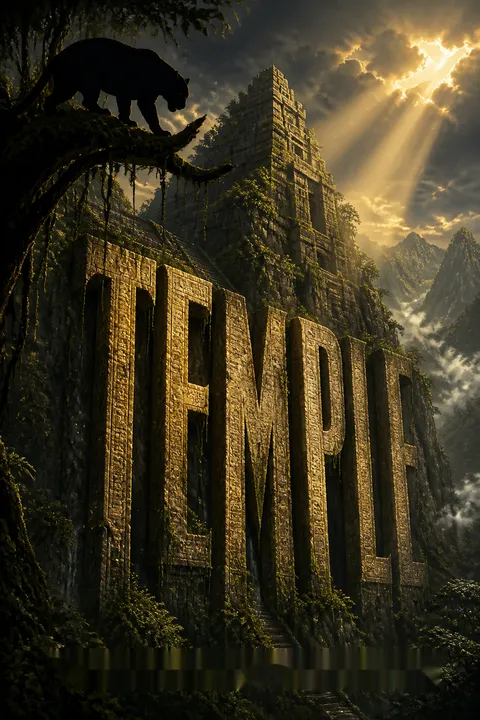


Plot Summary
Prologue
After scholars uncover the long-lost Santiago Manuscript, masked German commandos storm the Pyrenean abbey holding it. They demand the account of an Incan idol, shoot monks who cannot help them, then kill the rest after an elderly brother gives up the book. One young monk survives by hiding above the dining hall.
Days later, another team breaks into a sealed DARPA laboratory in Virginia and steals a weapon built to use a rare substance the manuscript may help locate. The attacks join a four-century-old treasure hunt to a modern contest for a weapon of unimaginable force.
The opening makes preservation itself dangerous: the monks safeguard a historical account, yet their archive becomes the reason they are murdered. The parallel theft at DARPA enlarges the manuscript's stakes from cultural memory to planetary risk. Both raids are efficient, technical, and indifferent to human life, establishing a world in which knowledge is treated as equipment to seize. The hidden witness also creates a useful moral counterpoint. Institutions may be destroyed, but a surviving observer can carry the truth forward.
Race Enters the Convoy
William Race, a thirty-one-year-old NYU linguist, expects an ordinary lecture until retired colonel Frank Nash arrives with armed Green Berets and recruits him to translate a medieval Latin manuscript. Race joins because his brother Marty works at DARPA and because Lauren O'Connor, his former girlfriend, is on the team.
A guarded flight carries them toward Cuzco, Peru, while Race learns the manuscript concerns Hernando Pizarro's hunt for an Incan idol. The object may contain thyrium, a meteorite substance sought for the stolen Supernova, a weapon capable of destroying the planet. Nash's secrecy and the soldiers' protection make the assignment feel less like scholarship than enlistment without consent.
Race's entry into the mission begins with compromised agency. He agrees through personal loyalties and incomplete information, not a clear understanding of the danger. His linguistic skill, normally a quiet academic specialty, becomes a form of military infrastructure: whoever controls the translation can direct the expedition. Lauren's presence adds an intimate pressure, since Race's old attachment makes him easier to persuade. The episode also establishes the novel's central collision between interpretation and force. Race reads a text; armed institutions convert what it says into a race for a weapon.
A Monk Breaks Ranks
In the manuscript, Franciscan monk Alberto Santiago visits Renco Capac, an Incan prince imprisoned aboard a Spanish prison hulk. Renco explains that he must reach Cuzco before Hernando Pizarro finds the Spirit of the People, the sacred jaguar-shaped idol his people regard as their source of strength.
Alberto has watched Spanish soldiers plunder and brutalize the conquered Incas, and their conduct has shattered his belief that conquest serves his faith. He returns to the prison with a young Incan named Tupac. Tupac kills the guard, and Alberto helps Renco escape, freeing some Incan warriors as they flee. Alberto shoots a Spanish soldier who threatens him, crossing from private doubt into open rebellion.
Alberto's decision is not a sudden conversion to another ideology. It is an ethical break with the identity his country and church have given him. Spanish violence has made obedience morally impossible, while the Incas' refusal to betray their sacred object gives him a model of fidelity he no longer finds among his countrymen. His first act of resistance is compromised by violence, including his own shot, so conscience does not offer clean hands. It offers a direction: protect the vulnerable even when doing so turns him into a traitor.
Cuzco's Hidden Passage
Renco and Alberto reach Cuzco during its siege, where the Incas surround the city their Spanish conquerors have seized. Hernando's cavalry enters as Renco races for the Coricancha, the Sun Temple, and its hidden vault. He and Alberto reach the idol by an underwater sewer passage, but Hernando blasts open the vault with a cannon.
They escape through the city's tunnels, enlist the imprisoned criminal Bassario, and evade soldiers by using rooftops, a cannon, and a rope swing through a breached gate. Bassario joins them carrying quarry stones whose resemblance to the idol gives him a dangerous new task. The three flee into the mountains with Hernando's forces in pursuit.
Cuzco makes the political violence of conquest literal: the Spanish occupy the city while its people besiege it from outside. Renco's escape depends on knowledge of hidden routes, while Alberto's participation turns his moral choice into sustained risk. Bassario's recruitment introduces skill as morally portable. The same talent that once served forgery and crime can now protect a people. The city's tunnels and improvised escapes also establish a pattern that later matters to Race: survival depends less on superior force than on reading a place accurately.
The Rapa Totem Trail
For eleven days, Renco, Alberto, and Bassario cross mountain paths and Amazonian rivers while Hernando's soldiers burn villages behind them. At a quarry, Renco obtains stones for Bassario's covert carving. In the rainforest, he teaches Alberto how to follow stone jaguar totems: alternate between the creature's tail and the direction marked by the Sun, or the trail sends pursuers astray.
Renco also entrusts Alberto with the code in case he dies. The route ends at Vilcafor, a hidden citadel town, but its streets are littered with mutilated bodies. In the present, Race's incomplete translation gives Nash enough landmarks to find the same ruins by helicopter, though the manuscript stops before revealing the idol's destination.
The journey turns a map into a test of trust. Renco does not merely give Alberto directions; he prepares him to continue the mission without its prince. The alternating totem code embodies that principle: apparent signs can mislead unless read within a larger pattern. Bassario's quarry stones quietly prepare a deception, while the village's ruin foreshadows a threat older than the Spanish pursuit. In the modern strand, Race's partial translation has practical value but leaves the team vulnerable to assumptions. Knowledge arrives incomplete, and haste tempts its users to treat a clue as certainty.
The Temple Opens
Nash's team confirms the ruins of Vilcafor, finds the jaguar totems, and follows their coded directions to a temple atop a rock tower inside a vast crater. An NRI scan detects a radioactive substance nearby, strengthening the belief that the idol is inside. The temple bears an old Spanish warning against entry, but the German expedition led by General Gunther Kolb removes the blocking stone.
Its first soldiers descend into darkness and are attacked by enormous black cats, the legendary rapas. The animals pour onto the tower and into Vilcafor, killing Germans and Americans alike. Race survives the first assault inside a disabled Humvee as a cat smashes through its windshield and black caimans attack the sinking vehicle.
The temple turns extraction into a violation. The warning is not an abstract superstition but the residue of an earlier encounter, and the Germans ignore it because their instruments promise a valuable substance. Their confidence in measurement does not extend to the living system surrounding the object. The cats and caimans make the landscape an active force rather than scenery. Race survives through improvised attention, not expertise in weapons. The section also punctures the expedition's belief that technological superiority can make an ancient place safe to enter.
The FBI Finds a Pattern
While the survivors struggle in Peru, FBI agent John-Paul Demonaco examines the DARPA murders. Navy investigator Vernon Aaronson blames the Oklahoma Freedom Fighters, but Demonaco doubts that the small group could have executed a disciplined raid on a fortified laboratory.
A V-CD left with militia intermediary Bluey James shows terrorist leader Earl Bittiker threatening to destroy the world at noon unless he obtains thyrium. James reveals that Bittiker has merged the Freedom Fighters with the larger Republican Army of Texas and members of Japan's apocalyptic Aum Shinrikyo cult.
The alliance combines technical skill, military training, and a willingness to die in mass destruction. Meanwhile, surviving Germans at Vilcafor reveal that the Stormtroopers also possess a Supernova and intend to extort governments.
Demonaco's investigation exposes how labels can be used as camouflage. A tungsten bullet points toward one militia, but the attack's scale and precision point elsewhere; the apparent clue is deliberately planted to direct official force toward the wrong target. The alliance is dangerous not just because its members have weapons, but because their motives reinforce one another: technical competence serves a political grievance and a doomsday belief. Across the two strands, the novel distrusts institutional certainty. Aaronson wants a fast culprit, while Demonaco recognizes that the most convenient explanation may be the one an adversary prepared.
Renco's Unfinished Account
At dawn, two surviving BKA agents, Renee Becker and Karl Schroeder, free Nash's people from their restraints and explain that the German attackers are Stormtroopers hunting the idol for their own Supernova. Race receives the original Santiago manuscript and reads beyond the fragment.
It describes Renco and Alberto finding Vilcafor destroyed because its chief opened the temple, releasing the rapas. Renco learns that water makes the idol hum and draws the cats, while monkey urine repels them.
Bassario has carved a convincing duplicate from the quarry stones. Renco uses the singing real idol to lead the predators back into the temple, then seals them inside as Hernando arrives. The account makes it appear that Renco stays behind with the cats.
The completed account offers Race a usable method, but its apparent ending also teaches him to confuse sacrifice with certainty. Renco's strategy joins knowledge of animal behavior to a willingness to use himself as bait; the idol is powerful only through how someone handles it. Bassario's duplicate complicates the sacred object with a practical counterfeit, showing that preservation may require deception. Race inherits both the method and the unresolved cost. He now has enough information to act, but not enough to know what became of Renco or whether the story's final image is true.
The Idol Changes Hands
Nash sends Sergeant Van Lewen, Buzz Cochrane, and Tex Reichart toward the temple while the others draw the rapas to the citadel and use monkey urine for protection. Race joins the soldiers after German jamming cuts radio contact. Inside the temple he finds a mangled skeleton wearing Renco's emerald pendant and assumes his friend died there.
The Green Berets emerge with the idol, but German gunfire kills Reichart and knocks the object down the tower's muddy slope. Race slides after it, nearly falls into the crater, then uses a grappling hook to arrest his fall. The Stormtroopers seize the idol and drop the rope bridge, leaving Race and the wounded Cochrane trapped on the tower while Van Lewen escapes.
Race's mistaken identification of the skeleton gives the mission a personal wound: he sees the cost of heroism before he understands its history. The failed raid also reverses the team's assumption that possession can be secured by reaching the object first. The Germans control routes, communications, and firepower, while Race's survival depends on a grappling hook and quick improvisation. His growing courage remains distinctly unheroic in texture. He is frightened, often confused, yet continues because each retreat would abandon another person or surrender the idol.
The River Becomes a Battlefield
Race and Van Lewen escape the tower by swinging from a Mosquito helicopter, then return to Vilcafor as the rapas and German demolition squad converge. Doogie Kennedy's sniper fire and the survivors' armored ATV help them reach the hidden quenko, an underground maze that leads to a waterfall.
There they find the Stormtrooper fleet fleeing downriver. Race traces their destination to the Madre de Dios goldmine. At the mine, German agent Uli Pieck reveals himself as a BKA infiltrator and frees Race and Renee from execution.
Uli and Renee fight through the boathouse; Race kills Heinrich Anistaze when their struggle reaches the moving conveyor belt. But the Stormtroopers have already taken the idol to their suspended control booth and armed their Supernova.
The river chase transforms the landscape into an alternative network of escape and pursuit. The quenko, first described as an Incan royal refuge, becomes a route around the cats and toward the modern enemy. Race's discovery of the mine comes from interpreting a garbled transcript rather than from superior surveillance. Uli's double identity further destabilizes allegiance: the apparent captor is actually an ally, while the visible military fronts conceal competing intentions. Yet each successful inference arrives late enough to cost lives, emphasizing that intelligence is valuable only when it can be acted on in time.
A Code from Nuremberg
In the mine's control booth, physicist Fritz Weber extracts material from the idol and arms the Stormtrooper Supernova. Race reaches the suspended cabin, shoots the aging Nazi leader Odilo Ehrhardt, and tries to stop the timer.
A secondary mechanism means disarming the device will trigger explosive hypergolic fluids, apparently forcing Race to choose between himself and the world. Renee helps him identify the likely code: Weber's supposed execution date at Nuremberg.
Race enters the date with four minutes remaining, terminating the Supernova countdown, but the backup timer detonates the fluids and destroys the cabin. He survives inside a protective warhead capsule and retrieves the idol. It makes no humming sound when wet, revealing that the Germans had been working with Bassario's fake.
Race's decisive act depends on joining small pieces of ordinary knowledge: a newspaper story about password habits, Weber's biography, and Renee's intelligence. The code is not won through technical mastery but through human inference. The apparent sacrifice is also complicated by the false idol: the bomb's promised planetary power was a bluff built on a mistaken material assumption. Still, Race cannot dismiss the danger simply because the device is imperfect. The episode distinguishes actual capacity from credible threat, showing how fear itself can become a weapon even when its machinery is flawed.
The Mark in the Village
Back at Vilcafor, Race uses the incomplete manuscript and simple trigonometry to correct the team's earlier reading. The NRI signal points beyond the temple to a hidden settlement above the crater, where descendants of Renco's people guard the real Spirit of the People.
Chieftain Roa recognizes the birthmark beneath Race's left eye as the Mark of the Sun, but tests him by releasing an enormous caiman into a flooded pit. Race evades its attacks and, when it clamps onto his arm, releases the claws of his grappling hook inside its mouth, killing it. The people accept him as the prophesied protector. Race has found the real idol, but armed rivals are converging on the village.
Race's success comes from correcting a seductive but faulty interpretation of data. The NRI gave a distance and angle, not a verdict about which structure contained the source; geometry matters because observation alone is not understanding. The caiman test converts prophecy into bodily evidence, and Race survives through a tool he has already used in less deliberate ways. His response does not prove supernatural election. It shows how a community reads courage through its own inherited symbols, while Race remains skeptical of the title placed upon him.
Nash Turns on America
Navy helicopters arrive at the upper village, followed by Army aircraft sent by Nash, and the two American teams clash over the idol. Race recognizes his estranged brother Marty among the Navy scientists, while the Navy's linguist carries the manuscript copy Nash used to recruit him.
Nash reveals that his mission was an Army operation designed to secure the Supernova before the Navy could, then executes the Navy and DARPA team rather than let them expose him. A hidden Army order on his laptop confirms Race was meant to be killed after the idol was found. Marty has helped Nash obtain the manuscript and married Lauren, but Race also realizes she has been involved with Troy Copeland. The violence leaves Race and his remaining allies exposed.
The military rivalry turns national security into a struggle over institutional survival. Nash's loyalty is not to public safety but to the Army's continued relevance, and his bureaucratic language converts murder into procedure. Marty and Race embody different responses to recognition: one has spent years feeling overlooked, the other has mistaken his own ordinary life for insignificance. Their reunion cannot repair that history because each arrives burdened by secrets and resentments. The scene also makes Race's earlier recruitment newly coercive: his expertise was useful, but his survival was never part of the plan.
Bittiker Takes the Idol
Before Race can recover from Nash's massacre, Earl Bittiker arrives with armed Texans and takes the real idol. Copeland joins him, revealing that he has been passing Army information to the terrorists and carrying on an affair with Lauren. He shoots Marty, Lauren, and Nash; Nash survives briefly, then the natives swarm him after Bittiker's helicopters depart.
Van Lewen has already been killed defending Race, and the assault leaves Doogie wounded. Race, Renee, Gaby, and the injured Uli escape in the Goose. Race identifies the Texans' next destination by matching their river route and a garbled message about a mine. Bittiker is carrying the idol toward his own Supernova, with a noon deadline approaching.
The betrayals gather private and political betrayals into one act of violence. Copeland exploits Lauren's divided loyalties and Marty's longing for recognition, while Bittiker treats both as disposable once they have served his operation. Nash, who had framed the mission as national defense, is destroyed by the same logic of force he used against the Navy team. Race's grief is sharpened by responsibility: his brother's choices cannot be undone, but he can still prevent the stolen object from becoming a weapon. The story shifts from competing institutions to a direct moral emergency.
The Antonov's Open Ramp
Bittiker's force transfers the idol to an Antonov cargo plane carrying a stolen Abrams tank and the second Supernova. The Goose follows as the Antonov climbs toward eighteen thousand feet. Race reaches from the tiny plane's nose hatch and opens the cargo ramp from its exterior control panel, then crawls aboard through the violent slipstream.
He finds Bittiker and enters the tank, where the countdown has begun. Bittiker says no one knows the disarm code. Race spots the tank's controls, starts its engine, and fires the 105-millimeter cannon through the cargo plane, killing Copeland and disabling the aircraft. He drives the Abrams off the open ramp, sending it and himself into a free fall with seconds left on the device.
The set piece makes the novel's central contrast physical: Race has no military training, yet he turns knowledge of a mundane exterior switch into access to an airborne fortress. His actions are not elegant, and every improvisation worsens his immediate danger. The tank cannon is both a weapon and a means of rupturing Bittiker's control of the situation. Race's decision to enter the falling vehicle repeats the earlier pattern of accepting personal risk, but now his courage is less about being recognized as a hero than refusing to let another person decide the world's fate.
The Serial Number
Inside the plummeting Abrams, Race has only seconds to stop the Supernova. Marty's dying reference to the ignition system gives him the crucial link: his brother designed it. Race remembers Marty's habit of using Elvis Presley's Army serial number as a password and enters the eight digits. The countdown stops with four seconds left.
Race climbs out through the tank's turret hatch as the vehicle hits the rainforest and is crushed; a J-7 jet pack hidden in his kevlar vest automatically slows his fall. Doogie brings the Goose down to retrieve him. The four survivors are alive, and the real idol remains with Race, but he still has to return it to the people whose lives it sustains.
The climax turns an intimate memory into a life-saving code. Marty had seemed to Race a distant, resentful brother, yet the details Race retained about his habits become more useful than any classified technical briefing. The J-7 pack, planted earlier as body armor, pays off as a hidden mechanism rather than a sudden rescue from nowhere. Race survives because he has learned to notice what people repeat, what institutions conceal, and what ordinary objects can do. His victory remains costly: the device is stopped, but it cannot restore the people lost to the contest.
The Spirit Returns
Race returns the real idol to Chieftain Roa and asks the tribe to disappear into the rainforest before outsiders come searching again. He then carries the humming idol into the temple, leads the rapas back inside, and has the natives seal the entrance. From within, he discovers the temple's deeper chambers, a sacrificial chute, and a hidden water passage that lets him escape the rock tower.
He adds his own warning to the stone. On the flight home, Race reads Santiago's small notebook: Renco escaped the temple through the underwater passage and lived for decades with Alberto, Bassario, and Lena. The skeleton Race mistook for Renco was another man. Santiago had also married Lena and found a family after the conquest.
The resolution corrects the manuscript's false ending and Race's grief over the wrong skeleton. Renco's survival depends on a passage the written account withheld, demonstrating that archives can preserve truth while also shaping what later readers believe. Race repeats Renco's act of confinement but does not remain trapped: he understands the temple's structure and finds the water route out. Returning the idol and urging the tribe to vanish rejects the extraction logic that drove every expedition. The final revelations restore private life to the historical record, where sacrifice had seemed to be the only possible ending.
Analysis
Temple builds its thriller from two kinds of extraction. Hernando Pizarro wants an Incan sacred object melted into wealth; modern military and terrorist factions want its meteorite material converted into strategic power. The historical thread does not merely decorate the modern plot. Alberto's record supplies clues, while its omissions mislead Race and keep the past active as a problem of interpretation. The book repeatedly distinguishes an object from the meaning imposed on it: to the Incas, the idol is their spirit; to scientists, it is thyrium; to armed institutions, it is leverage.
Race's development turns on learning that courage is not a stable identity. He begins convinced he is an ordinary academic, and the narrative repeatedly places him in situations where fear remains present while action becomes necessary. His strengths are attention, memory, and a willingness to revise an interpretation. He survives by calculating the idol's location, recognizing Marty's habitual password, and using equipment in ways its designers did not intend. His heroism is therefore cognitive as well as physical: he notices what powerful people dismiss.
The novel is also suspicious of institutions that justify harm through necessity. Nash invokes national defense while trying to secure the Army's standing; Bittiker turns political resentment into a warrant for annihilation; Hernando cloaks plunder in religious conquest. These motives differ, but each makes other lives expendable. Against them, Renco and Alberto model a form of loyalty grounded in relationship and shared responsibility. The final return of the idol and the tribe's retreat refuse the premise that every valuable thing must be exposed, owned, or weaponized. The story's strongest lesson is not that the world is saved by exceptional force, but that survival depends on resisting the systems that make possession seem more important than people.
Review Summary
Temple receives mixed reviews, with some praising its non-stop action, thrilling plot, and entertaining nature, while others criticize its implausibility and overuse of italics and exclamation marks. Fans appreciate the dual narrative, unique concepts, and fast-paced storytelling, comparing it to blockbuster films. Critics find the characters underdeveloped and the plot overly complex. Despite its flaws, many readers enjoy the book as a fun, adrenaline-fueled adventure, though some struggle with its length and far-fetched scenarios.
Characters
William Race
Reluctant scholar-heroRace is a young NYU professor of ancient languages whose ordinary habits and self-doubt contrast with the armed missions that claim his expertise. He notices patterns, remembers details, and translates texts with care, but he does not begin with a soldier's confidence. Family distance and an old heartbreak leave him sensitive to being overlooked, especially beside his more accomplished brother and former girlfriend. Race is motivated less by glory than by the growing sense that his choices affect people who cannot protect themselves. His intelligence is interpretive and practical: he tests assumptions, adapts tools, and gradually accepts responsibility without becoming convinced that he is naturally heroic.
Alberto Santiago
Conscience in the conquestSantiago is a young Franciscan missionary sent to Peru alongside the Spanish conquest. He arrives with religious ideals but sees Spanish soldiers commit cruelty in the name of empire, forcing him to question whether obedience can still be virtuous. His friendship with Renco gives that moral unease a human focus. Santiago is neither a born warrior nor a detached observer; he hesitates, fears consequences, and acts anyway when the Incas' loyalty to their people exposes his countrymen's greed. His manuscript frames the past for later readers, while his own vulnerability makes the record feel like testimony rather than triumphal history.
Renco Capac
Incan prince and guardianRenco is an Incan prince entrusted with retrieving the Spirit of the People from Cuzco before the Spanish can seize it. He is quick-minded, composed under pressure, and capable of making others feel included in a purpose larger than themselves. His friendship with Santiago rests on mutual teaching: Renco shares language and cultural knowledge, while Santiago teaches him swordsmanship. Renco's courage is not simply fearlessness; he plans carefully, delegates knowledge, and prepares for the possibility of his own failure. He treats the idol as the living heart of a community, not as an object whose value can be measured by wealth.
Frank Nash
Strategist with hidden loyaltiesNash is a forceful mission leader who knows how to turn urgency, official authority, and selective disclosure into instruments of control. A former Army colonel connected to high-level weapons work, he recruits Race by offering a national-security rationale and making the expedition seem unavoidable. Nash sees the Supernova as leverage in a struggle between military institutions, and he judges people by their usefulness to that contest. His composure under pressure is effective, but it also masks a willingness to subordinate individuals to organizational survival. He represents the danger of treating a weapon's possession as proof of political legitimacy.
Lauren O'Connor
Physicist with divided tiesLauren is a talented theoretical physicist working in the military research world and one of the few people Race knows when the mission begins. Their former relationship makes her presence emotionally charged for him, though Lauren approaches the expedition with professional focus. She is practical, self-possessed, and comfortable moving between technical work and dangerous field conditions. Her intelligence gives the team crucial access to the NRI and its readings. Lauren's ambition and personal relationships place her within overlapping circles of scientific and military power, and she is not easily reduced to Race's memory of the woman who once left him.
Marty Race
Brilliant, overlooked engineerMarty is William's older brother, a gifted DARPA design engineer whose technical ability has not brought him the recognition he wants. As children, the brothers occupied contrasting roles: Marty was academically brilliant and socially isolated, while William was more athletic and readily liked. Their parents' divorce deepened the distance between them. Marty is driven by a need to have his work and intelligence acknowledged, a need that makes professional advancement especially powerful. His expertise in weapons electronics and ignition systems connects the family story to the Supernova crisis.
Leo Van Lewen
Race's steadfast protectorVan Lewen is the large, observant Green Beret assigned to guard Race. He is disciplined without being needlessly harsh and often treats the professor with more patience than the mission's other soldiers do. His military competence includes practical knowledge of vehicles, weapons, and field survival, but his defining quality is a protective loyalty that extends beyond the immediate chain of command. Van Lewen helps Race understand that courage need not look like fearlessness. Their trust grows through repeated crises in which each man depends on the other's distinct strengths.
Douglas Kennedy
Quiet sharpshooterKnown as Doogie, Kennedy is a young Green Beret whose shy manner and unassuming Southern speech conceal exceptional intelligence and sniper skill. He grew up under severe abuse and deprivation, yet developed a remarkable ability to absorb information and persist under pressure. His fellow soldiers sometimes mistake his awkwardness for a lack of ability. In the field, he proves both technically gifted and compassionate, particularly when someone else is in danger. His gentleness around Gaby Lopez reveals a vulnerability that his military role otherwise keeps hidden.
Renee Becker
BKA field agentRenee is a German federal agent working with the BKA team in Peru. Petite and disarming at first glance, she is trained, perceptive, and willing to enter danger rather than remain a distant intelligence source. Her work depends on reading people as carefully as she reads field conditions, and she brings crucial knowledge about the Stormtroopers and the competing Supernova projects. Renee treats Race as a capable partner rather than merely a civilian to protect. Their growing closeness develops amid shared risk, not through a return to Race's earlier romantic history.
Bassario
Criminal sculptor and archerBassario is an Incan prisoner with a past as a prince and an exceptional stonemason. His gambling debts drew him into a forgery scheme, and his family suffered for a crime he committed. He is witty, self-interested, and initially distrustful of the society that punished his relatives. Renco recruits him because his ability to reproduce valuable objects can serve the rescue mission. Bassario's skill in carving and archery makes him useful in distinct ways, but his deeper conflict concerns whether he can reclaim honor without pretending his grievances never happened.
Earl Bittiker
Doomsday militia leaderBittiker leads the Republican Army of Texas and presents himself as an enemy of the existing world order. A former Navy SEAL with a record of violence and institutional discipline, he combines combat experience with an apocalyptic political vision. He does not seek a conventional military victory; he treats mass destruction as a way to force a new order into existence. Bittiker's certainty makes him more dangerous than a simple opportunist, because he interprets catastrophic harm as justified by the scale of his grievance. He recruits technical and ideological allies whose abilities make his fantasy operational.
Troy Copeland
Weapon scientist and operatorCopeland is a DARPA nuclear physicist with a dry, severe manner and a strong sense of technical authority. He explains the potential of thyrium and the Supernova to Race, but his knowledge is tightly guarded and shaped by military priorities. Copeland is comfortable in high-pressure settings and expects others to defer to expertise. His work places him at the center of the competition between armed services and militant groups. The gap between his scientific role and his field conduct makes him an unsettling figure, one who can treat human consequences as secondary to the mission.
Heinrich Anistaze
Ruthless Stormtrooper commanderAnistaze is a former East German security officer who becomes a mercenary operative for the Stormtroopers. His cold reputation rests on deliberate cruelty and a method of coercion that punishes people around the person he wants to break. A missing finger marks a history of violence, but it is his patience and procedural efficiency that make him frightening. Anistaze serves the Nazi organization as a field commander, using modern weapons and disciplined teams to pursue the manuscript and idol. He treats terror as a practical tool rather than an emotional outburst.
Hernando Pizarro
Conquistador obsessed with treasureHernando Pizarro is the Spanish governor's brother and a leading figure in the conquest of Peru. He is relentless in his pursuit of the Spirit of the People, offering rewards and inflicting torture in an effort to learn where it has been hidden. His ambition is not restrained by religious claims or concern for the people he subjugates. Hernando's pursuit gives Renco and Santiago an adversary whose military resources are formidable but whose greed makes his decisions predictable. He represents the colonial appetite to convert sacred objects and living cultures into personal wealth.
John-Paul Demonaco
FBI investigatorDemonaco leads the FBI's domestic antiterrorist work and is called to investigate the DARPA break-in. He is plainspoken, skeptical of convenient conclusions, and experienced in distinguishing a group's public image from its actual capacity. His inquiry challenges the Navy's preferred explanation and identifies the threat posed by a newly merged terrorist alliance. Demonaco's work forms a parallel investigative strand to Race's expedition: both men have incomplete information, but each resists the first story offered by an institution. His role shows how careful analysis can matter even when events are unfolding far away.
Gaby Lopez
Field archaeologistLopez is a young Princeton archaeologist whose field expertise helps the expedition identify ancient settlements and structures. She is intelligent, composed, and physically capable, though her colleagues' assumptions about her sometimes reduce her to her appearance. Gaby brings professional judgment to an expedition dominated by military urgency and theoretical science. Her later interactions with Doogie reveal that confidence and shyness can coexist, and that bravery may appear as much in care for another person as in combat.
Miguel Marquez
Anthropologist among the tribeMarquez is a Peruvian anthropologist who has lived for years among the remote descendants of an Incan tribe. He speaks with authority about their customs and helps Race understand why the community treats the Mark of the Sun and the Spirit of the People as more than legends. His long residence gives him a role between outsider scholarship and local knowledge, though the chieftain's authority remains primary.
Chieftain Roa
Guardian of the villageRoa leads the hidden community that guards the real idol and the traditions attached to it. He is cautious with outsiders and insists that Race undergo a test before the tribe accepts his claim to the Chosen One's role. His decisions are rooted in collective survival rather than curiosity about the outside world. Roa's care for the idol reflects its meaning as a bond among the people, not a resource to be traded.
Plot Devices
The Santiago Manuscript
A map through two erasThe manuscript carries Alberto Santiago's account of Renco's flight from Cuzco and the hunt for the Spirit of the People. In the modern strand, Race's translation gives the expedition place names, the totem code, and clues about the rapas. The first copy is incomplete, while the original offers more of the history but still leaves out the final truth. Its gaps create suspense and make interpretation consequential: characters act on what the manuscript says, what it omits, and what they assume it means.
The Spirit of the People
Sacred idol and power sourceThe Incas regard the black-and-purple jaguar carving as the source of their people's spirit. Its stone is actually meteorite material containing thyrium, a substance that modern scientists hope to use in the Supernova. When wet, the real idol hums and affects the rapas, making it both a cultural relic and a practical tool. Bassario's duplicate complicates every attempt to possess it: a convincing copy can deceive an enemy, but only the real object carries the properties the hunt depends upon.
Totems and the Quenko
Routes hidden in plain sightStone jaguar totems direct travelers through the rainforest according to an alternating code that only selected Incan nobles know. The quenko is a concealed maze beneath Vilcafor, originally designed as an escape route for the ruling family. Both systems reward knowledge of sequence rather than brute strength. Renco uses them to evade Hernando, and Race later uses the manuscript's directions to escape the rapas and reach the river route used by the Stormtroopers.
The Temple of Solon
A test built around greedThe ancient temple was designed to tempt treasure seekers with riches placed behind an entrance guarded by rapas. Its original purpose tests whether people can resist wealth when pursuing it means certain death. The later Incan trail and rope bridge bring explorers to the structure, while the sealed portal warns them away. The temple's deeper chambers and hidden water passages explain how the rapas survive and how a determined person can enter and leave. Its design makes every expedition's desire for the idol part of the danger.
The Supernova
A weapon shaped by rivalryThe Supernova is a nuclear device intended to use thyrium as its core. The United States Navy and Army both pursue versions of it, each seeking advantage in a secret struggle over which military branch will survive future reductions. Terrorists also want the weapon, whether to extort governments or destroy the existing order. Its countdowns, disarm codes, and safeguards provide the mechanics of the final crises, while its existence reveals that institutional competition has already made catastrophe possible.
About the Author
Other books by Matthew Reilly
Download PDF
Download EPUB
.epub digital book format is ideal for reading ebooks on phones, tablets, and e-readers.








