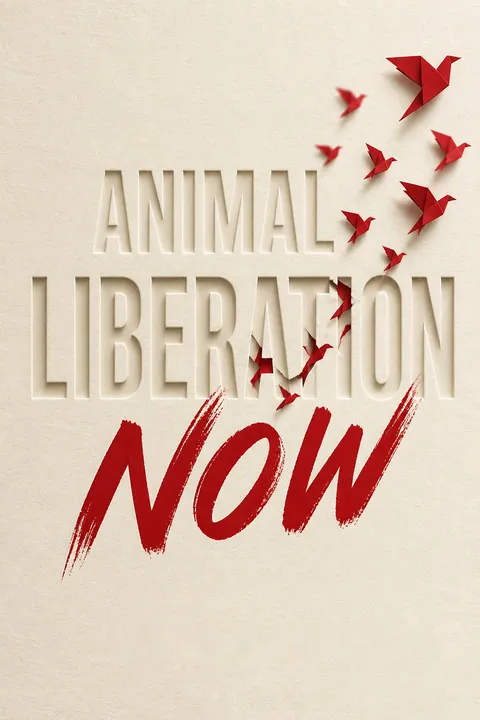


Key Takeaways
Reject speciesism: weigh comparable suffering by experience, not species.
The moral test. Speciesism is bias that favors one species, usually our own, when interests conflict. Singer argues that moral equality does not mean identical treatment. It means giving similar interests similar weight. A child and a pig need different things, but pain matters in both cases. The capacity to feel suffering or pleasure, called sentience, is the threshold for having interests that deserve consideration.
Ability is not a boundary. Human beings differ widely in intelligence and self-awareness, yet those differences do not erase their basic claim to consideration. The same reasoning applies across species. A dog does not need a vote, but a dog’s pain cannot be dismissed merely because dogs cannot vote.
What's striking is how the argument separates equal moral concern from sameness. That distinction also underlies fair treatment across human differences: equal standing does not require identical accommodations. The difficult practical question is how to compare experiences across species, since pain cannot be measured directly or translated perfectly. Singer's principle does not solve every comparison, but it blocks a shortcut: assuming human interests automatically matter more, whatever the stakes.
Treat credible signs of animal pain as evidence, even without words.
Evidence beyond speech. Pain is private in humans too; it is inferred from behavior, physiology, and the effects of pain relief. Animals show parallel signs, including avoidance, distress calls, altered movement, and physiological stress. A 2012 declaration by neuroscientists concluded that many animals possess brain systems associated with consciousness. In one study, lame chickens chose food containing a painkiller, and their limping diminished as the dose increased.
A widening circle. Fish respond to painful stimuli with lasting behavior changes that painkillers can reduce. Research also finds complex behavior, such as cooperative hunting between groupers and moray eels. Evidence for conscious experience is strong in mammals and birds, and substantial for some other animals, including octopuses and crabs.
The case is strongest when multiple kinds of evidence converge, rather than when one human-like behavior is treated as proof. That is a useful standard in any science of minds: behavior, biology, and response to intervention can reinforce one another. There remains uncertainty about exactly which experiences different animals have. But uncertainty is not evidence of absence, especially when the possible cost of being wrong is severe, prolonged suffering.
Separate equal concern for pain from the harder ethics of killing.
Pain and death differ. Singer argues that comparable pain should count equally regardless of who feels it. Deciding whether killing is wrong is more complicated because beings differ in self-awareness, memory, relationships, and ability to plan for the future. Taking a life may frustrate future-directed hopes in ways it does not for every animal.
Species alone cannot decide. The case of Baby Theresa, an infant who could never become conscious, exposes the problem with treating every human life as inviolable while treating more cognitively capable animals as expendable. Singer does not conclude that humans with profound disabilities should receive less protection, or that every animal has an identical right to life. He argues that species membership alone cannot settle the question, while preventable suffering already gives strong grounds for reform.
This distinction prevents a common debate from collapsing two questions into one. The moral case against inflicting pain can be compelling even when the status of painless killing remains contested. The harder issue is whether future-oriented capacities, personal relationships, or the value of continued experience should determine protection from death. Those criteria may support different conclusions for different beings, but they require careful defense rather than a boundary drawn neatly around our own species.
Follow the food supply chain past the package to the animal's life.
Scale is part of the harm. More than 83 billion birds and mammals are slaughtered for food each year. Most encounter industrial systems designed to produce saleable meat, milk, and eggs at low cost. In the United States, broiler chickens are commonly killed at five to seven weeks, despite a natural lifespan of about seven years. Selective breeding makes them grow so quickly that many suffer leg problems and chronic pain.
Profit sets the limits. Hens may be confined in crowded cages, while pregnant sows in the United States are commonly kept in stalls too narrow to turn around. These are not isolated acts of cruelty by a few workers. They are predictable outcomes of production systems in which space, slower growth, and attentive care cost money, while suffering often does not.
The book's focus on routine production, rather than unusually cruel individuals, shifts attention to institutional design. A supply chain can produce harm without any single participant feeling personally responsible, because each task is divided and the animal becomes an input. This is familiar from other forms of industrial risk. Better rules and oversight can reduce harm, but standards based mainly on productivity may still define tolerable suffering too generously.
Demand stronger evidence before trading animal suffering for scientific promise.
Count the hidden costs. The book estimates that roughly 200 million animals are used in experiments worldwide each year, while stressing that the data are incomplete. U.S. reporting excludes rats, mice, and birds, which make up most research animals. At one Dutch university, published papers described work involving only 26 percent of the animals covered by research applications. Unpublished experiments leave suffering with no visible contribution to the scientific record.
Use a fair ethical test. Animal models can fail to predict human responses, and some psychological experiments inflicted severe distress without clear human benefit. Singer proposes that harmful experiments should be important enough to justify comparable harm to a profoundly cognitively disabled human. He allows that an exceptional experiment might pass this test if no alternative exists and major benefits are likely.
The strongest version of this argument is not that animal research never helps, but that its benefits must be demonstrated rather than presumed. Translation across species is a real scientific problem, and publication bias can make a weak research program look more successful than it is. A strict ethical threshold also invites hard questions about uncertainty, alternatives, and who gets to judge benefits. Those questions strengthen the case for independent review, transparent reporting, and better methods.
Replace animal calories with plants to free land and cut emissions.
A costly conversion. About 77 percent of global soy production goes to animal feed, while only 7 percent is eaten directly by people. In one U.S. analysis, beef converted feed into edible calories with about 2.9 percent efficiency. The rest is used for animal metabolism and body parts people do not eat. Feeding crops directly to people can therefore provide more food from the same land.
Food choice outweighs food miles. A report cited in the book estimates that animal agriculture produces just under 15 percent of global greenhouse gas emissions. Transport accounts for only a small share of many foods' total emissions, so choosing nearby beef does far less than replacing beef with plants. Dietary studies also associate plant-rich eating with health benefits, though those findings do not guarantee the same outcome for every person.
This argument connects animal ethics to climate policy and food security, making dietary change relevant even to people who do not accept Singer's full moral framework. The efficiency numbers also expose a hidden opportunity cost: land used to feed livestock cannot serve other purposes. Still, averages can obscure differences among production systems and local diets. The practical case is clearest as a direction of change: eat more plants, especially instead of high-impact animal products.
Make your choices part of a coordinated campaign, not private purity.
Direct choices matter. Animal products create demand for the systems that produce them. An estimate cited by Singer suggests that someone eating a plant-based diet spares about 105 vertebrates annually compared with average consumption. The exact effect of one purchase is hard to trace: supermarkets order in batches, and suppliers respond to demand with delays. But many small decisions can shift those orders and, in turn, the number of animals raised.
Aim effort where it helps most. Effective altruism is an approach that uses evidence and reasoning to choose effective ways to do good. Applied to animals, it can mean supporting organizations focused on farmed animals, speaking about food choices, or choosing work that reduces suffering. Singer notes that global meat consumption has risen sharply, but argues that this is no reason to add demand.
The focus on expected impact counters the claim that an individual purchase is too small to matter. It also shifts activism from moral display to leverage: Which choice, donation, or policy pressure is likely to change outcomes? Yet consumer responsibility should not obscure corporate and political power. Personal choices are most effective when they reinforce collective campaigns and make stronger standards politically and commercially viable.
Question traditions that turn human dominance into moral entitlement.
Old ideas leave marks. Singer traces Western justifications for using animals to religious dominion and Greek hierarchies that ranked beings by reason. Christian thinkers combined these traditions. In the seventeenth century, Descartes treated animals as mechanisms without conscious experience, a view that could excuse painful experiments. Later thinkers challenged such assumptions, and Darwin's account of common ancestry weakened the idea that humans stand apart from animal life.
Knowledge does not erase habit. The moral status of animals improved in some philosophical debates, yet everyday practices changed much more slowly. The book's historical account shows how ideas can function as defenses of existing interests. If a belief repeatedly makes a profitable or convenient practice seem natural, its age is not evidence that it is morally sound.
Historical context does not by itself disprove a moral belief, but it can reveal that a supposedly self-evident boundary has a history and serves particular interests. That is a valuable move in intellectual history: tracing how categories become common sense. The account is centered on Western thought, so it should not be mistaken for a universal history of human-animal relations. Its narrower point is that inherited authority deserves scrutiny.
Notice when convenience makes you deny the minds of animals you eat.
The meat paradox. People often care about animals while eating them. In studies described in the book, participants who expected to eat beef or lamb became more likely to deny mental capacities to cows or sheep than participants expecting apples. The researchers called this motivated mind perception: adjusting beliefs about an animal to make eating it feel less troubling.
Institutions train distance. Singer also describes conditioned ethical blindness, in which routine, professional authority, and career incentives make harmful practices seem normal. Researchers may follow standard procedures without asking whether the work is worthwhile. Consumers face a parallel distance: packaged food and cheerful advertising hide the animal and its living conditions. Learning where food comes from can disrupt that convenient separation.
These examples show that moral inconsistency is not always simple hypocrisy. People can manage conflict by changing what they notice, what they believe, or how responsibility is distributed. Similar mechanisms appear whenever a harmful system is normalized through routine and euphemism. Awareness alone rarely changes behavior, particularly when social habits and institutions push in the opposite direction. Making alternatives accessible and socially ordinary can help beliefs and choices move together.
Extend precaution to uncertain minds without demanding identical rights.
Evidence varies by species. The case for sentience is strong for mammals, birds, many fish, octopuses, and decapod crustaceans such as crabs and lobsters. Evidence about insects is disputed, and the book treats oysters as less likely to feel pain than shrimp, while acknowledging uncertainty about other shellfish. Plants respond and communicate, but those capacities do not by themselves establish conscious experience.
Care can be proportionate. Uncertainty does not mean every being has the same needs or rights. It can justify avoiding methods that may cause prolonged suffering when safer options are readily available. The book also raises possible concern for wild animals, while warning that interventions such as eliminating predators can create greater ecological harm.
A precautionary approach is useful when evidence is incomplete and the potential harm is large, but it should not turn every uncertainty into a certainty. Singer's distinctions invite attention to the quality of evidence, the scale of exposure, and the cost of avoiding risk. Wild-animal welfare adds a further challenge: reducing suffering requires ecological knowledge, not simply importing human intuitions into nature.
Use winnable reforms without mistaking them for an end to exploitation.
Campaigns can change rules. Since the first edition of Animal Liberation, animal advocates have helped secure bans on some confinement systems, restrictions on cosmetics testing, and an end to invasive research on great apes in several countries. In the United States, the share of laying hens kept outside cages rose from 3 percent in 2005 to 35 percent in 2022. These changes show that public campaigns can alter laws and corporate purchasing.
Measure what remains. Cage-free hens may still live crowded indoors, and the worldwide scale of animal production continues to grow. Singer favors reforms that reduce suffering while building pressure for deeper change. The task is to judge each improvement by the animals' actual conditions, not by labels or promises, and to keep reform from becoming a reason to stop asking what the system is for.
The book holds two truths together: reforms can improve millions of lives, and partial improvements can leave the underlying system intact. That balance avoids both complacency and the all-or-nothing stance that can make achievable protections harder to win. Credible progress needs outcome measures, independent inspection, and follow-through on commitments. The deeper political question is whether reform changes the industry's incentives or simply makes its existing practices more acceptable.
Analysis
The book's central achievement is to make species membership do less moral work. Instead of asking whether animals are rational, articulate, or sufficiently human-like, it asks whether they can have interests at all, then argues that comparable suffering should count comparably. This reframes animal ethics from sentiment toward dogs or disgust at extreme cruelty into a test of impartiality. The test is powerful because it exposes how easily ordinary preferences, especially food preferences, receive priority over another being's entire life.
The evidence about industrial farming gives that abstract principle institutional force. The book shows how suffering can be designed into production without requiring unusually malicious individuals. Breeding, confinement, labor-saving systems, and market concentration make harm routine, while euphemisms and distance obscure who bears the cost. Its account of research adds a parallel problem: scientific prestige can substitute for evidence of human benefit, even when translation across species is uncertain and much work remains unpublished.
The argument is strongest where harm is intense, avoidable, and tied to low-stakes human benefits. It is less determinate when comparing experiences across species, judging death separately from pain, or choosing interventions in wild ecosystems. Singer acknowledges these limits, but the principle of equal consideration does not itself supply a common unit for measuring every interest. Nor does the case against factory farming settle every question about animal agriculture, food access, or research with unusually strong prospective benefits. Those are reasons for careful application, not permission to revert to species as a moral trump card.
The book's practical insight is that ethical change requires both personal consistency and institutional pressure. Dietary choices can reduce demand, while advocacy, law, research standards, and corporate commitments can change the available options. No single lever is sufficient. Together, they turn concern for sentient beings from a private feeling into a public standard against which familiar practices can be judged.
Review Summary
Animal Liberation Now receives high praise for its compelling arguments against animal exploitation. Readers find it eye-opening, disturbing, and life-changing, with many adopting vegetarian or vegan lifestyles after reading. The book's detailed accounts of factory farming and animal testing horrify readers, while its philosophical arguments challenge speciesism. Some criticize its utilitarian approach or find certain sections difficult to read. Overall, reviewers consider it an important, thought-provoking work that should be widely read, despite its emotionally challenging content.
People Also Read

Glossary
speciesism
species-based moral biasA prejudice that gives greater weight to the interests of one species, typically humans, than to comparable interests of another species. Singer uses the term for both dismissing animal interests in favor of human ones and favoring some animals, such as dogs, over others with similar interests, such as pigs.
equal consideration of interests
equal weight for similar interestsThe ethical principle that comparable interests should receive comparable moral weight, regardless of the being who has them. It does not require identical treatment: different beings have different needs. In Singer's argument, a being's capacity for suffering or enjoyment makes it capable of having interests that must be considered.
sentience
capacity for felt experienceThe capacity to experience pain or pleasure, including negative and positive conscious states. Singer treats sentience as the defensible boundary for considering a being's interests: a being that can suffer has at least an interest in avoiding suffering. Sentience is not the same as intelligence, language, or self-awareness.
non-speciesist ethical guideline
a fair test for harmful experimentsSinger's proposed test for experiments that harm animals: the expected benefit must be important enough that a comparable experiment would also be justifiable on a human being with similar cognitive capacities, if no alternative existed. The guideline is intended to reveal when a defense of animal research relies on species membership rather than relevant differences.
conditioned ethical blindness
learned tolerance of wrongdoingA term used by former animal researcher Donald Barnes for becoming morally unresponsive to harm through routine, training, and rewards. When animal use is standard practice and supports professional status or income, researchers may stop examining its ethical basis. The term describes institutional conditioning, not necessarily deliberate cruelty.
motivated mind perception
denying minds to ease conflictA psychological process described in research on the meat paradox. People expecting to eat an animal may become more likely to deny that the animal can feel or think, making the meal less troubling. In the studies Singer discusses, participants expecting meat attributed fewer mental capacities to the relevant farm animal than before.
welfare biology
science of wild-animal welfareAn interdisciplinary field concerned with factors that affect the well-being and suffering of animals living in the wild. Its goal is to study whether interventions can reduce suffering while avoiding greater harms. Singer presents it as a cautious research agenda, not a case for broadly controlling nature or eliminating predators.
effective altruism
evidence-guided efforts to helpAn approach to doing good that uses reason and evidence to identify actions likely to have greater positive impact. Applied to animals in Singer's discussion, it can guide donations, career choices, public advocacy, and attention toward farmed animals, whose numbers and conditions make them a major focus for reducing suffering.
Cambridge Declaration on Consciousness
scientists' statement on animal consciousnessA 2012 declaration by an international group of neuroscientists stating that humans are not unique in possessing the neural systems associated with consciousness. It identifies mammals and birds, as well as some other animals including octopuses, as possessing relevant neurological substrates. Singer uses it as support for taking animal experience seriously.
FAQ
1. What is Animal Liberation Now by Peter Singer about?
- Renewed classic on animal ethics: The book is an updated and expanded version of Singer’s groundbreaking 1975 work, arguing for the ethical treatment of all sentient animals and challenging the widespread practice of speciesism.
- Focus on animal suffering: It exposes the realities of animal suffering in factory farms, research laboratories, and other industries, emphasizing the need for societal and policy changes.
- Philosophical foundation: Singer builds his argument on the principle of equal consideration of interests, focusing on sentience—the capacity to suffer—as the key criterion for moral concern.
- Modern context: The book incorporates recent scientific findings, legal developments, and environmental issues, making it highly relevant to contemporary debates on animal rights and sustainability.
2. Why should I read Animal Liberation Now by Peter Singer?
- Ethical urgency: The book reveals the immense suffering of billions of animals in modern agriculture and research, urging readers to reconsider their own choices and societal norms.
- Environmental and health impact: Singer connects animal exploitation to climate change, deforestation, and global food insecurity, showing the broader consequences of our dietary habits.
- Empowerment and action: The book offers practical steps for reducing animal suffering, from dietary changes to effective advocacy, making it a guide for ethical living.
- Comprehensive update: It provides a thorough, contemporary perspective on animal rights, making it essential reading for anyone interested in ethics, animal welfare, or environmental issues.
3. What are the key takeaways from Animal Liberation Now by Peter Singer?
- Speciesism is unjustifiable: Discriminating against animals based on species is morally comparable to racism or sexism and should be rejected.
- Sentience matters most: The capacity to suffer, not intelligence or species, is the basis for moral consideration.
- Factory farming is cruel: Industrial animal agriculture inflicts immense suffering and environmental harm, and alternatives are urgently needed.
- Individual and collective action: Change is possible through personal choices, policy reform, and public advocacy, with each person’s actions making a tangible difference.
4. What is speciesism, and why does Peter Singer argue it is unjustifiable in Animal Liberation Now?
- Definition of speciesism: Speciesism is the unjustified discrimination against beings solely based on their species, privileging human interests over those of nonhuman animals.
- Moral critique: Singer argues that speciesism is analogous to racism and sexism, lacking any rational or ethical justification.
- Philosophical principle: The book emphasizes equal consideration of interests, meaning similar interests (like avoiding pain) should be weighed equally, regardless of species.
- Cultural and historical roots: Singer traces speciesism’s origins in Western thought and challenges its deep-seated presence in law, culture, and economics.
5. What is the principle of "equal consideration of interests" in Animal Liberation Now by Peter Singer?
- Core ethical idea: This principle means giving equal moral weight to the like interests of all sentient beings, regardless of species, race, or sex.
- Not identical treatment: It does not require treating all beings the same, but demands that their interests—such as avoiding pain—are considered equally.
- Philosophical roots: Inspired by Jeremy Bentham’s focus on the capacity to suffer, this principle underpins Singer’s critique of speciesism.
- Implications for society: Adopting this principle challenges many common practices, including eating animals and using them in research.
6. How does Peter Singer define and address the question "Who can suffer?" in Animal Liberation Now?
- Scientific evidence: Singer explains that pain in animals is inferred from behavior and physiological responses, with research confirming that many animals are sentient.
- Behavioral parallels: Animals display pain through vocalizations, avoidance, and stress responses, often alleviated by painkillers, indicating genuine suffering.
- Broad consensus: The Cambridge Declaration on Consciousness and other studies affirm that sentience is not unique to humans, supporting ethical concern for many nonhuman animals.
- Ethical extension: Recognizing animal suffering demands extending moral consideration beyond humans.
7. How does Animal Liberation Now by Peter Singer describe the conditions of animals in factory farms and slaughterhouses?
- Extreme confinement: Animals like chickens, pigs, and cows are kept in crowded, unnatural conditions, leading to chronic pain, disease, and high mortality.
- Routine mutilations: Practices such as debeaking, tail docking, and castration are performed without anesthesia, causing prolonged suffering.
- Slaughterhouse cruelty: The book exposes inhumane killing methods, including failures in stunning and mass depopulation during disease outbreaks.
- Fish and aquatic animals: Fish and crustaceans also endure immense suffering, often without legal protection, in both aquaculture and wild capture.
8. What are the ethical challenges of animal experimentation discussed in Animal Liberation Now by Peter Singer?
- Scale of suffering: Hundreds of millions of animals are used annually in experiments, many of which cause severe pain and distress with questionable benefits.
- Scientific validity: Singer critiques the poor reproducibility and limited applicability of animal research to human health, noting frequent failures in translation.
- Regulatory shortcomings: Legal protections are often inadequate, especially in the U.S., where many animals are excluded from regulation and oversight is weak.
- Moral alternatives: The book calls for phasing out animal experimentation in favor of more humane and scientifically valid methods.
9. How does Animal Liberation Now by Peter Singer link animal agriculture to environmental issues like climate change?
- Major emissions source: Animal agriculture is responsible for nearly 15% of global greenhouse gas emissions, rivaling the entire transportation sector.
- Inefficient land use: Farmed animals occupy about 80% of agricultural land but provide less than 20% of human calories, driving deforestation and biodiversity loss.
- Potential for positive change: Shifting to plant-based diets could free vast tracts of land for reforestation, significantly mitigating climate change.
- Broader environmental impact: Reducing animal product consumption also addresses issues like water use, pollution, and global food insecurity.
10. What practical steps does Animal Liberation Now by Peter Singer recommend for reducing animal suffering and living without speciesism?
- Dietary change: The primary recommendation is to stop buying and consuming factory-farmed animal products, adopting a plant-based diet as far as practical.
- Effective altruism: Singer encourages supporting the most effective animal charities and considering careers that reduce animal suffering.
- Advocacy and education: The book stresses the importance of educating others, protesting cruelty, and openly discussing reasons for avoiding animal products.
- Policy reform: It calls for stronger legal protections, phasing out cruel practices, and promoting alternatives to animal use.
11. How does Animal Liberation Now by Peter Singer address common objections to animal liberation and speciesism?
- “Humans come first” objection: Singer argues this is a speciesist assumption without rational basis, and that human concerns do not justify ignoring animal suffering.
- Inconsistency objection: The book acknowledges that striving for consistency in avoiding animal exploitation strengthens the moral case for animal liberation.
- Appeals to nature: Singer rejects the idea that naturalness justifies exploitation, emphasizing our capacity for moral reflection and choice.
- Wild animal suffering: The book discusses the complexities of intervening in nature, weighing ethical considerations carefully.
12. What are the best quotes from Animal Liberation Now by Peter Singer and what do they mean?
- On speciesism: “Speciesism is wrong, and that this means that, if you take morality seriously, you should try to eliminate speciesist practices from your own life and oppose them elsewhere.” This highlights the central ethical claim of the book.
- On individual impact: “Each year, the average consumer of a plant-based diet saves approximately 79 wild-caught fishes, 14 farmed fishes, 11.5 farmed birds, and half a farmed mammal, for a total of 105 vertebrates.” This quantifies the tangible effect of personal dietary choices.
- On climate change: “A vegan diet is probably the single biggest way to reduce your impact on planet Earth, not just greenhouse gases, but global acidification, eutrophication, land use and water use.” This underscores the environmental imperative of plant-based eating.
- On moral progress: “The way in which you and other readers respond to this book can shorten that time, and reduce that number [of animals suffering].” This is a call to action, emphasizing personal responsibility and the potential for change.
About the Author
Other books by Peter Singer







Download PDF
Download EPUB
.epub digital book format is ideal for reading ebooks on phones, tablets, and e-readers.








