

Key Takeaways
Treat every meal as a decision with consequences beyond your plate.
Food choices affect others. The book follows three American families: Jake and Lee, who prioritize price and convenience; Jim and Mary Ann, who seek organic and more humane food; and Joe and JoAnn, who raise their children vegan. Their different kitchens reveal the same problem: shoppers rarely see the conditions behind familiar products, yet their purchases help sustain them.
Trace the hidden chain. A carton of eggs or a chicken breast connects consumers to animal treatment, pollution, working conditions, and farmers’ livelihoods. The book argues that eating is not only personal preference. It is a recurring choice about which systems receive money and which people or animals bear the costs. Ethical eating means asking what happened before food reached the shelf, without assuming that one imperfect meal defines a person’s character.
What's striking is how the family stories make an abstract moral question ordinary. Ethics is not reserved for dramatic decisions; it can be embedded in the shopping routine people repeat every week. This resembles the idea of moral distance: harms become easier to ignore when they are remote, hidden, or divided among many actors. Making the supply chain visible can shrink that distance. Still, information alone does not make better choices affordable or convenient. The book’s strongest implication is therefore not that shoppers must become flawless, but that food systems should make responsible choices easier to identify and obtain.
Low prices hide costs paid by animals, workers, neighbors, and taxpayers.
Cheap chicken has a bill. The book reports that more than 99 percent of U.S. chicken came from factory-style production. A typical broiler shed held tens of thousands of birds, with each mature chicken allotted roughly the floor area of a sheet of paper. Selective breeding made birds grow about three times faster than chickens in the 1950s, but the account links that growth to widespread leg problems and chronic pain.
Costs travel outward. Chicken manure polluted waterways, while workers faced dangerous, exhausting jobs and growers could become trapped by debt and dependence on a single company. Economists call costs imposed on people outside a transaction externalities. The shopper sees a low price; nearby residents, workers, animals, and taxpayers absorb costs that never appear on the receipt.
The price tag is not a neutral summary of a product’s consequences. It records what buyers and sellers exchange, while leaving unpriced harms elsewhere. That is a useful correction to the idea that the cheapest option is automatically the most efficient one. Yet individual consumers cannot calculate every hidden cost, and the burden should not fall only on people with time and money to investigate. Public rules, enforceable pollution limits, and accurate disclosure can make prices more honest across the market, rather than asking each household to solve an industrial problem at checkout.
Consumer pressure can move food giants, but labels still need scrutiny.
Secrecy protects the system. The authors contacted 87 companies while tracing foods bought by their three families. Only 14 offered any assistance. That reluctance matters because a label can suggest care without revealing what the claim actually requires. The egg industry’s Animal Care Certified seal, for example, permitted practices such as cramped cages and painful beak trimming, leading a consumer group to challenge it as misleading.
Pressure can change standards. Activist Henry Spira pushed McDonald’s to improve animal handling at suppliers’ slaughterhouses. The chain’s audits helped prompt competitors to adopt similar measures. Whole Foods also developed stronger animal-care requirements after its chief executive investigated conditions at a duck supplier. These cases show that a large buyer can reshape production, but a logo is useful only when its standards and enforcement are clear.
Labels function as miniature governance systems: they translate complicated production rules into a signal shoppers can act on. Their value depends on the quality of the rules, independent verification, and consequences for noncompliance. A weak seal can make a harmful practice look settled without materially improving it. Conversely, a major retailer’s purchasing requirements can reach farms that individual buyers could never influence directly. The useful test is not whether a package looks reassuring, but whether the claim specifies measurable conditions and whether someone credible checks them.
Choose plant foods when animal suffering is avoidable.
Sentience matters morally. The book argues that animals’ capacity to suffer gives their interests moral weight. Treating an animal’s pain as unimportant simply because it belongs to another species is called speciesism. This does not mean animals need every human right. It means comparable suffering should not be dismissed because a creature is not human.
A vegan diet can work. The Farb family eats no animal products and serves varied meals built around beans, grains, tofu, vegetables, nuts, and seeds. The book cites dietetic guidance that well-planned vegetarian and vegan diets can suit every stage of life. It also stresses practical nutrition: vegan diets need a reliable source of vitamin B12, and some people may need vitamin D. Protein combining at each meal is generally unnecessary when the diet is varied and supplies enough calories.
Equal consideration is not the same as identical treatment. A child and a chicken do not need the same things, but pain does not become irrelevant when the sufferer is less powerful or less familiar. That distinction gives the animal argument philosophical force without requiring the claim that all beings are interchangeable. The practical qualification matters too: a diet that is safe for a well-informed family with access to supplements may not be equally feasible everywhere. Ethical guidance is stronger when it recognizes both the animal’s interest and the eater’s real circumstances.
Demand proof of humane treatment from birth through slaughter.
Better farms change daily life. At two Niman Ranch supplier farms, pigs could root, graze, explore, and build nests before giving birth. One farmer described a sow having fourteen piglets without any being crushed, challenging the claim that restrictive farrowing crates are indispensable. The system pays farmers more than standard market rates, but the meat can cost substantially more.
A humane label has limits. Certification may improve housing while saying little about breeding animals, painful procedures, transport, or killing. The book notes that egg standards can allow beak trimming, while dairy production still commonly separates calves from mothers. Even farms with better conditions operate under pressure to cut costs. A conscientious omnivore, the book’s term for someone who eats animal products only when they meet ethical standards, must look beyond the label and ask how the whole production chain works.
A life worth living followed by a quick death is a serious defense of eating meat, but it does not settle every question. It depends on reliable evidence about an animal’s life, and it asks whether creating and killing animals for food can be justified when alternatives exist. The Niman example makes welfare concrete, while the remaining procedures show why a single certification cannot answer everything. A lifecycle standard is more informative than a comforting phrase because it follows the animal through the stages where commercial incentives may conflict with its interests.
Seafood is not automatically kinder or more sustainable.
Wild fish can disappear. The tragedy of the commons describes how individuals acting in their own short-term interest can exhaust a shared resource. The book uses the collapse of Newfoundland cod to illustrate the pattern: by 1992, the adult population was estimated at just 1.1 percent of its early-1960s level. Modern fishing also discards enormous quantities of unwanted catch; the book estimates global bycatch at about 27 million tons a year.
Farming fish shifts the burden. Salmon raised in sea cages can pollute surrounding water, escape into wild populations, and require several tons of smaller fish to produce one ton of salmon. The book also reviews evidence that trout respond to harmful stimuli in ways consistent with pain, while acknowledging scientific disagreement. When sensitivity is uncertain, it recommends giving animals the benefit of the doubt where avoiding harm is not too costly.
Seafood exposes two ethical questions that are often blurred together: whether a fishery can endure, and whether the animals caught or farmed suffer. A sustainability label addresses the first more directly than the second. The precautionary approach to animal pain is sensible where the possible harm is serious and the cost of restraint is modest. At the same time, seafood categories are too varied for a single rule to fit every species and method. Knowing the species, source, and capture or farming practice is more useful than treating fish as a morally uncomplicated substitute for meat.
Buy organic for ecological safeguards, not magical health claims.
Organic is a production standard. U.S. organic rules described in the book restrict synthetic fertilizers, most synthetic pesticides, genetically modified crops, and growth hormones or routine antibiotics in animals. The environmental case is stronger than the claim that organic food is necessarily more nutritious: research reviewed in the book links organic farming with less pesticide exposure, better soil conservation, and greater biodiversity, while government agencies found no clear proof that organic food is safer or more nutritious overall.
Certification is not a whole philosophy. Large organic dairies could meet formal requirements while keeping cows in crowded conditions with little meaningful pasture. The book also treats genetic engineering cautiously, distinguishing possible benefits from risks such as modified genes spreading into wild relatives. Its position is neither that every organic product is exemplary nor that every genetically modified crop is dangerous. Standards, enforcement, and the particular farming method matter.
A label turns broad values into inspectable rules, which makes large-scale participation possible. It also narrows the meaning of those values to what inspectors can verify. That tradeoff explains why certified organic can be environmentally preferable without guaranteeing a farm’s entire social or animal-welfare record. The same case-by-case discipline is useful for genetic engineering: a possible hazard is not proof of harm, but uncertainty about ecological effects can justify careful oversight. Consumers need categories that inform decisions, not labels treated as moral certificates.
Buy locally when it helps, and globally when fairness demands it.
Distance is not the whole footprint. Local food can be fresher and easier to trace, but food miles alone do not measure environmental impact. Heated greenhouses, small delivery routes, or extra car trips to farmers’ markets can use more energy than efficient transport from farther away. The book’s examples suggest buying locally and seasonally when the production method is comparable, rather than assuming nearby always means greener.
Trade can support poorer farmers. The Del Cabo cooperative helped Mexican smallholders grow organic vegetables for export, earning income that supported families and schooling. Fair trade certification sets requirements for producer organization or worker treatment and guarantees a price floor for some goods, including coffee. Buying fairly traded products can direct more benefit to low-income producers, though the book also notes that supply chains determine how much of a retail dollar reaches them.
The right unit of analysis is the supply chain, not the distance between farm and fork. A nearby purchase can build trust and sustain a local farm; an imported purchase can matter more to a farmer whose income is far lower. Neither loyalty to one’s community nor faith in global markets is sufficient by itself. The more useful questions are how food was produced, how it traveled, who captured the value, and what alternatives were displaced. That broader accounting prevents a simple slogan from masquerading as an ethical rule.
Set practical priorities: reject factory farming, waste less, and ask questions.
Use a clear ethical test. The book’s five principles are transparency, fairness, humanity, social responsibility, and needs. In practice, ask whether a seller will explain how food was produced, whether its costs are imposed on others, whether animals suffer unnecessarily, whether workers have decent conditions, and whether a food choice meets a genuine need or merely a preference.
Choose progress over purity. The book argues that avoiding factory-farmed animal products is a stronger obligation than buying organic when money is tight. It also reports that more than 40 percent of U.S. food was lost or discarded, with much of it still safe to eat. Buying only what can be used, eating leftovers, asking stores for better options, and reducing excessive consumption can improve the food system without requiring every meal to be perfect.
A short set of principles is useful because food decisions are numerous, repetitive, and rarely made under ideal conditions. The distinction between needs and preferences helps prioritize when values conflict, while the emphasis on transparency gives shoppers a practical first question. Yet consumer choice cannot replace collective standards: a shopper can ask for humane food, but cannot independently regulate a slaughterhouse or protect workers from coercion. Individual habits matter most when they reinforce public rules and institutional purchasing decisions that spread better practices beyond one household.
Analysis
The book’s central achievement is to turn food ethics into a problem of tracing consequences. Rather than treating a meal as a private matter of taste, it follows products from family kitchens back through farms, factories, fisheries, retailers, and labor systems. The three families give that investigation human scale: ethical intention competes not only with appetite, but with time, price, children’s preferences, and limited information. This makes the argument more persuasive than a simple demand for personal virtue.
Its moral framework is consequentialist in practice. Animal suffering, pollution, low wages, and poverty matter because food choices help distribute benefits and harms. The argument for giving animals comparable consideration when they can suffer extends that reasoning beyond the human community, while the discussion of fair trade insists that moral concern should also cross national borders. These commitments can collide. Local purchasing may support trust and farm continuity, while imports may create greater gains for extremely poor producers. Organic standards may reduce some environmental harms while leaving animal welfare or labor practices unresolved. The book is most useful when it treats these as real tradeoffs rather than offering one universal shopping slogan.
The consumer-as-voter idea is powerful but incomplete. A purchase can signal demand, and the examples of corporate policy shifts show that organized pressure can influence suppliers. Yet consumers work with the options institutions provide, and many cannot afford premium products or spend hours investigating labels. Responsibility therefore belongs partly to governments, retailers, certifiers, and food companies. Transparency and enforceable standards are not alternatives to ethical shopping; they are conditions that make it meaningful.
Finally, the book’s statistics and industry examples describe the period around its 2006 publication and should not be treated as current measurements. Its enduring contribution is less a fixed shopping list than a method: identify who benefits, who bears the costs, what evidence supports the label, and whether a less harmful choice is realistically available.
Review Summary
The Ethics of What We Eat examines the ethical implications of food choices through case studies of three families with different diets. Readers found it informative, eye-opening, and thought-provoking, praising its balanced approach and thorough research. Many were compelled to reconsider their eating habits, particularly regarding animal welfare and environmental impact. The book's exploration of factory farming, organic food, and veganism resonated with readers, though some found the final chapters less convincing. Overall, it was highly recommended for those interested in making more ethical food choices.
People Also Read




Glossary
Externalities
Costs shifted to outsidersCosts or harms created by a transaction but borne by people outside it. In the book, cheap factory-farmed food can impose pollution, odor, health, and environmental costs on nearby residents, workers, taxpayers, or future generations. Because these costs are absent from the shelf price, the product can appear cheaper than its full social cost.
Concentrated Animal Feeding Operation (CAFO)
High-density animal productionA large operation that keeps many animals together and supplies their feed rather than allowing them to forage. The book uses the term for intensive systems raising animals such as chickens, pigs, and cattle. These operations can produce food at low retail prices while concentrating manure, disease risks, animal-welfare problems, and pollution.
Speciesism
Species-based moral biasThe practice of discounting an individual’s interests simply because that individual belongs to a species other than one’s own. The book argues that an animal’s capacity to suffer gives its interests moral importance. This does not require granting animals identical rights to humans; it requires taking comparable suffering seriously.
Tragedy of the commons
Shared resource overuseA pattern in which individuals pursuing their own immediate benefit collectively deplete a shared resource. The book applies this idea to commercial fisheries: if each fleet catches as much as it can before competitors do, fish populations can collapse, leaving all fishers and communities worse off.
Conscientious omnivore
Ethical animal-product eaterA person who eats meat or fish only when the products meet ethical standards the person accepts. In the book, this approach can involve choosing animals raised with more space and care, and seeking sustainable seafood. It demands investigation because labels may not cover every stage, from breeding and transport through slaughter.
Locavore
Local-food eaterA person who makes a deliberate effort to eat food produced within a nearby region. The book presents locavore projects as ways to explore local food systems, support nearby farmers, and reduce some forms of transport. It cautions that locality alone does not guarantee lower environmental impact or fairer outcomes.
Fair trade
Certified equitable sourcingA certification approach intended to improve conditions for food producers and workers. Standards described in the book include producer organization, acceptable labor conditions, and minimum prices for some products. The model aims to make more income and planning security available to growers, while connecting consumers to the social conditions behind goods such as coffee and chocolate.
Five ethical principles
Food ethics checklistThe book’s practical framework for evaluating food choices: transparency, fairness, humanity, social responsibility, and needs. It asks whether production is disclosed, whether costs are imposed on others, whether animals suffer unnecessarily, whether workers receive decent treatment, and whether a choice meets a genuine need rather than merely a preference.
USDA Organic
Regulated organic certificationA U.S. Department of Agriculture labeling and certification system that sets legally enforceable standards for organic production. The standards described in the book restrict synthetic fertilizers, many pesticides, genetic engineering, and certain drugs and hormones in animal production. The label indicates compliance with defined requirements, not a guarantee that every aspect of a farm is environmentally or ethically ideal.
FAQ
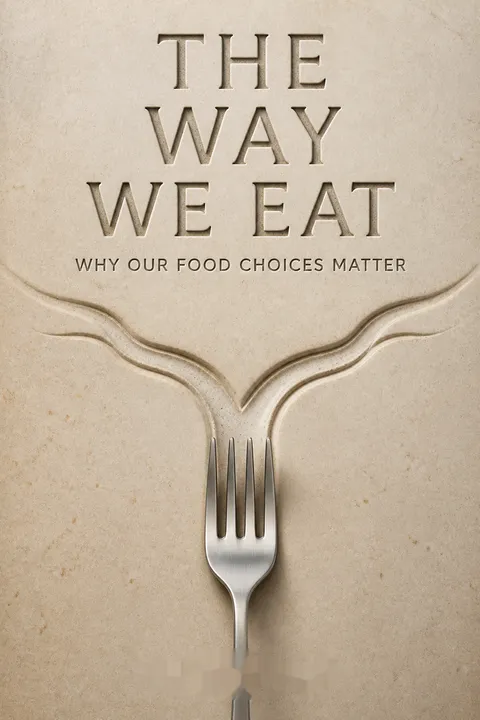
What's The Way We Eat: Why Our Food Choices Matter about?
- Focus on Food Ethics: The book delves into the ethical implications of our food choices, examining their effects on animals, the environment, and human health.
- Three Main Sections: It is structured into three parts: the Standard American Diet, the Conscientious Omnivores, and the Vegans, each offering a unique perspective on food ethics.
- Real-Life Examples: Through case studies of families, the authors illustrate the complexities and challenges of making ethical food choices in daily life.
Why should I read The Way We Eat?
- Awareness of Impact: The book raises awareness about the hidden costs of food choices, including animal welfare and environmental sustainability.
- Practical Guidance: It offers insights into making more ethical food choices, serving as a practical guide for conscientious consumers.
- Engaging Narrative: The authors blend philosophical discussions with relatable stories, making complex ethical issues accessible and engaging.
What are the key takeaways of The Way We Eat?
- Ethical Eating Matters: The book emphasizes that food choices have significant ethical implications, affecting health, animal welfare, and the environment.
- Consumer Power: It highlights the power of consumers to influence food production practices through their purchasing decisions.
- Diverse Diets: Various dietary approaches are presented, from the Standard American Diet to veganism, with ethical considerations for each.
What are the best quotes from The Way We Eat and what do they mean?
- "Isn't it a sad thing when our morals become so disposable?": This quote reflects the concern about convenience and cost often overriding ethical considerations in food choices.
- "The challenge is to teach others that every animal we intend to eat or use is a complex individual.": It emphasizes the need for empathy and recognition of animal sentience in food systems.
- "Eating is a political act": This underscores the idea that food choices reflect values and beliefs, offering an opportunity to support ethical practices.
What is the Standard American Diet (SAD) as described in The Way We Eat?
- High in Animal Products: The SAD is characterized by a high intake of meat, dairy, and processed foods, leading to health issues like obesity and heart disease.
- Low in Nutrients: It typically includes low amounts of fruits, vegetables, and whole grains, resulting in a diet deficient in essential nutrients and fiber.
- Cultural Norm: The book discusses how this diet has become normalized in American culture, often at the expense of ethical considerations regarding food production.
How do the authors define "Conscientious Omnivores" in The Way We Eat?
- Balanced Approach: Conscientious omnivores strive to balance ethical considerations with the enjoyment of a varied diet that includes both plant and animal products.
- Awareness of Sources: They seek to understand where their food comes from and how it is produced, often opting for organic or humanely raised options.
- Practical Compromises: Even conscientious eaters may struggle with convenience and cost, leading to compromises in their ethical standards.
What are the ethical concerns surrounding factory farming discussed in The Way We Eat?
- Animal Welfare Issues: Factory farming often involves severe confinement and inhumane treatment of animals, leading to suffering and distress.
- Environmental Impact: The book highlights pollution and resource depletion caused by intensive animal agriculture, affecting ecosystems and communities.
- Worker Exploitation: It addresses poor working conditions and low wages faced by workers in factory farms, raising questions about social justice in food production.
How does The Way We Eat address the concept of "voting with your dollar"?
- Consumer Influence: The authors argue that consumers can drive change in food production practices by choosing to buy ethically produced food.
- Market Demand: Increased demand for humane and sustainable products can lead companies to adopt better practices, benefiting animals and the environment.
- Empowerment: This concept empowers readers to recognize their role in shaping the food system through informed purchasing decisions.
What are the environmental implications of our food choices according to The Way We Eat?
- Carbon Footprint: The book discusses how food transportation contributes significantly to greenhouse gas emissions, urging readers to consider local and seasonal options.
- Resource Use: It highlights the high resource consumption associated with industrial agriculture, including water, land, and energy, and the need for sustainable practices.
- Biodiversity Loss: The authors warn that industrial farming practices can lead to habitat destruction and loss of biodiversity, impacting ecosystems and food security.
What alternatives to factory farming does The Way We Eat suggest?
- Pasture-Based Systems: The authors advocate for farming practices that allow animals to roam freely and engage in natural behaviors, improving their welfare and food quality.
- Local and Organic Farming: They encourage supporting local farmers who use sustainable practices, reducing environmental impact and promoting community resilience.
- Fair Trade and Ethical Sourcing: The book promotes fair trade as a means to support farmers in developing countries, ensuring fair compensation for their labor and products.
What is the concept of fair trade in The Way We Eat?
- Fair Trade Defined: Fair trade ensures producers in developing countries receive fair compensation for their goods, prioritizing social and environmental sustainability.
- Impact on Workers: Fair trade practices improve the lives of farmers and workers by providing better wages and working conditions, combating exploitation.
- Consumer Choices Matter: By choosing fair trade products, consumers contribute to a more just and sustainable food system, supporting ethical production practices.
How does The Way We Eat suggest we can reduce food waste?
- Mindful Consumption: The book encourages planning meals to avoid excess, reducing the amount of food that goes uneaten and wasted.
- Utilizing Leftovers: The authors advocate for using leftovers creatively, incorporating them into new meals to minimize waste.
- Community Initiatives: It highlights community efforts like food recovery programs and composting, which help divert food from landfills and promote sustainability.
About the Author
Other books by Peter Singer





Download PDF
Download EPUB
.epub digital book format is ideal for reading ebooks on phones, tablets, and e-readers.








