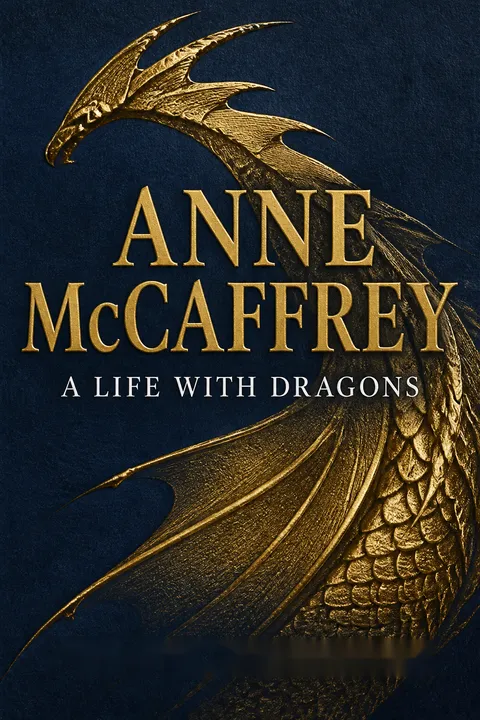


Key Takeaways
Turn feeling like an outsider into a world where difference matters
Difference became material. McCaffrey grew up in an Irish American family proud of resisting unfair authority, but she also felt out of place as a loud, bookish girl. At school and camp, she learned that her energy could alienate people. Later, she gave fictional outsiders unusual abilities and a place in the community: a girl’s music, a person’s psychic powers, or a bond with a dragon could make difference valuable rather than shameful.
Readers made that vision real. In 1968, McCaffrey became the first woman to win both the Hugo and Nebula awards. Her work eventually sold more than twelve million copies and reached readers in fourteen languages. Its appeal rested not only on dragons, but on the promise that people who do not fit can still find a home and matter.
What's striking is how the books transform exclusion into a question of social design. The outsider is not simply repaired to fit the group; the group discovers that it needs what the outsider can do. That distinction gives McCaffrey's imagined communities an ethical charge. Yet fictional acceptance is not a substitute for changing the institutions that marginalize people in ordinary life. The value of the fantasy lies in making a different arrangement emotionally imaginable, not in claiming that imagination alone overcomes prejudice.
Use emotional memory as material, then reshape it rather than copy it
Experience supplied emotional force. McCaffrey's father was away during much of her adolescence, her brother Kevin endured a dangerous illness, and her marriage eventually became painful and abusive. She did not simply reproduce these events in fiction. She changed their scale and setting, turning family loss into stories about characters who must survive separation, grief, and danger. She described writing The Ship Who Sang as a way of working through the shock of her father's death.
Fiction changed the ending. McCaffrey's characters often find understanding, chosen family, or a new purpose where real life had left her with uncertainty. Moreta's self-sacrifice carries the emotional weight of illness and loss, while the story of a young dragonrider's recovery echoes Kevin's determination during his own illness. These are transformations, not one-to-one portraits.
The biography's strongest account of creativity is neither pure invention nor disguised autobiography. It shows memory being selected, intensified, and reorganized into a story with shape and consequence. That process can help a writer turn private pain into something shareable, while also protecting the complexity of the original experience. A caution follows: biographical parallels are illuminating, but they can become reductive if every fictional choice is treated as a symptom. McCaffrey's craft matters precisely because her stories exceed their sources.
Give women the agency your own era kept withholding
Her heroines took the center. McCaffrey wrote Restoree as a protest against passive female characters in science fiction. Its heroine, rather than a male hero, interprets events and acts to survive. Across her work, women become riders, strategists, musicians, leaders, and explorers. She also brought love, sexuality, and emotional life into a genre that often treated them as distractions. Those choices drew on a life in which educated women still faced narrow job options and pressure to prioritize marriage.
The shift reached readers. McCaffrey was among the women writers who helped move female characters from the margins of science fiction into its central roles. In 1978, she became the first science fiction writer with a book on the New York Times bestseller list. The achievement joined popular success to a body of work that made women protagonists ordinary rather than exceptional.
McCaffrey's contribution is not that every novel advances a formal political program. It is that agency becomes part of the genre's everyday machinery: women make decisions, possess expertise, and alter the future of their communities. Emotional relationships are not treated as evidence of weakness, either. That combination expanded what adventure could include. The limitation is worth keeping in view: depicting powerful heroines does not automatically dismantle the gender assumptions around them. Still, representation changes the imaginative baseline from which readers judge what women can do.
Let rigorous feedback sharpen your voice without surrendering it
A trusted editor changed the work. McCaffrey's relationship with agent and editor Virginia Kidd began in the early 1960s. Kidd offered practical advice, close readings, and blunt criticism, from sentence-level corrections to questions about character and structure. When McCaffrey struggled with Dragonquest, Kidd told her the draft was not working and urged her to start again. McCaffrey accepted the challenge. Betty Ballantine also helped her see that the novel's story belonged more to characters F'nor and Jaxom than to the leads of Dragonflight.
Criticism served the story. The editors did not ask McCaffrey to imitate them; they pressed her to make her own intentions clearer. Their support was especially important when her husband dismissed her writing and she doubted her ability. The relationship shows how a writer can gain both a professional standard and the confidence to keep going.
The productive feature of this mentorship is the combination of trust and friction. Praise alone would not have solved the structural problems in Dragonquest, while criticism without affection might have reinforced McCaffrey's insecurity. The editors' role was not simply to approve or reject manuscripts, but to help her distinguish a weak draft from a weak writer. That distinction is valuable beyond publishing. Still, this model depends on unusually attentive editors and a writer willing to revise; not every creative field offers that level of sustained guidance.
A fresh start can unlock work, but never removes its costs
Ireland offered room to begin again. In 1970, after her divorce, McCaffrey moved from the United States to Ireland with her two youngest children. She wanted distance from a painful marriage and a chance to build a different life. The move brought real obstacles: money was tight, banking and mail were frustrating, and she had to adjust to a new country while caring for her children and her mother. The Artists Exemption Act helped her establish herself as a writer, but it did not make her financially secure overnight.
Work grew alongside hardship. McCaffrey published thirteen books during the 1970s, including the Harper Hall trilogy and The White Dragon. The latter reached the bestseller list in 1978. Her relocation helped her create a more independent life, but it also meant isolation from friends and a constant need to earn. Reinvention was not a clean escape; it was a demanding new arrangement.
The move is compelling because it is both liberation and logistics. A dramatic change of place can interrupt old roles, but it cannot erase debts, caregiving, or the daily labor of making a living. McCaffrey's story refuses the tidy version of reinvention in which courage is enough. Her new setting gave her a chance to write more freely, while practical support and persistence made the change sustainable. The distinction matters: people should not mistake a bold decision for a complete solution to the problems that prompted it.
Grow a fictional world from stories, then give it history
Small narratives became a larger world. McCaffrey often tested characters and ideas in short stories before expanding them into novels or series. The early Pern stories developed into the Dragonriders books, while stories about young Harper Menolly grew into the Harper Hall trilogy. This allowed her to revisit a setting from new angles, including the lives of musicians, miners, and people outside the central dragonriding community.
Details made the world feel lived in. Pern has working communities called Holds, a social role for Harpers, and recurring threats such as Thread, a destructive spore. Ballads and histories help explain how people remember their world. McCaffrey also sought scientific advice, including from astronomers, when developing aspects of the setting. Her approach combined emotional continuity with accumulated practical detail, so each story could enlarge the world without making it feel static.
A long-running fictional world works when it is more than a backdrop. Pern feels inhabited because work, memory, music, danger, and social structure all have consequences for its characters. McCaffrey's repeated returns to the setting let readers experience change across communities and generations. The tradeoff is that serial worlds can invite continuity errors or make familiar territory too comfortable. Her solution was not rigid system-building alone; she kept introducing new viewpoints and unresolved problems, allowing the world to grow through narrative rather than through reference material alone.
Treat success as a new workload, not a finish line
Fame created demands. After The White Dragon became a bestseller, McCaffrey toured heavily to meet readers and promote her work. One 1979 tour covered twenty-two cities in thirty-two days. She became so exhausted and disoriented that she struggled to sleep and needed medical help. Later, conventions brought devoted fans, some of whom were overwhelmed simply to meet her. She valued that connection, but the attention could drain her and complicate the work of writing.
Achievement added responsibility. Financial success let McCaffrey support relatives, friends, staff, and people in trouble. It also created bills and expectations. She sometimes gave more money and time than was wise, and her heart attack and stroke made the costs of sustained pressure harder to ignore. The biography presents success as real freedom, but not as freedom from limits.
This is a useful corrective to the idea that recognition simply rewards effort. Visibility produces another job: managing access, expectations, and the emotional labor of being a public figure. McCaffrey's generosity made her success communal, but her difficulty setting limits left her vulnerable to overload. The story does not make generosity a mistake; it shows why generosity needs boundaries and recovery time. A career can be flourishing on paper while the person carrying it is depleted.
Build a creative life with people, not the myth of solitude
The household supported the writing. McCaffrey's Irish home became a busy community of family, friends, staff, horses, and visitors. Her stables and gardens required labor; people helped manage the house and care for family members. Her kitchen table became a gathering place for conversation and work. In the 1990s, she also invited writers to collaborate, including Elizabeth Ann Scarborough and Elizabeth Moon. Some partnerships worked better than others, but the exchange brought companionship and fresh ideas.
Generosity had a practical side. McCaffrey supported friends in financial difficulty, helped younger writers, and made room for people in her household. This network helped her sustain a demanding writing life. It also made her responsible for many others, sometimes beyond what was healthy. The biography's portrait of a working author is therefore not a solitary genius at a desk, but a person whose creative time depended on a complicated community.
The household is not merely colorful background. It is creative infrastructure: people supply care, conversation, expertise, and ordinary interruptions that keep writing connected to life. This challenges the familiar image of authorship as an isolated act. At the same time, the arrangement is unequal if one person becomes the default provider of money, attention, and emotional support. McCaffrey's example values interdependence, but it also makes visible the need to distribute care rather than assume that a generous person can absorb every demand.
Let successors extend your world without pretending they are you
Pern became an inheritance. McCaffrey worked with her son Todd on Dragon's Kin and Dragon's Fire, and Todd wrote the later Pern novel Dragonsblood. Her daughter Gigi also contributed to stories and helped edit her mother's work. The handoff was not just about permission to use a setting. It meant trusting the next writer to preserve what readers valued while bringing a different sensibility to the material.
The world could outlast its creator. Todd's novels retain Pern's dragons, history, and vulnerable outsiders, but his work gives more attention to technical problems and large-scale conflict. McCaffrey's legacy also includes the readers and writers she encouraged, her influence on women in science fiction, and the Grand Master Award she received in 2005. Passing a world on did not erase her authorship; it made its continuation a shared task.
The handoff offers a model of legacy based on stewardship rather than perfect imitation. A fictional world belongs partly to its creator, partly to its readers, and increasingly to the writers who carry it forward. A successor's differences may be evidence of life, not betrayal. Yet continuity is not guaranteed by family ties or a famous name; readers still decide whether a new book feels compelling. McCaffrey's trust gave Todd room to work, while the distinct texture of his writing made the inheritance a negotiation rather than a duplicate.
Analysis
Robin Roberts organizes this biography around a productive tension: Anne McCaffrey built imaginary worlds as an escape from constraining realities, yet her success depended on intensely real networks of editors, relatives, colleagues, fans, and household labor. The result is more than a chronology of publication. It is an account of how a writer's private emotional life can become public imaginative architecture, and how that architecture can in turn offer readers a language for belonging.
The biography's strongest through-line is the outsider who becomes necessary. McCaffrey's own adolescent isolation, Irish family history, and frustration with limited roles for women recur in fiction where unusual abilities are recognized and valued. The claim is persuasive, but it needs restraint. A novel is not a coded case history. The biography sometimes links individual experiences to particular characters so closely that the fiction risks seeming merely therapeutic. Its evidence is strongest when it describes an influence or emotional resemblance, rather than claiming a direct explanation for every plot choice.
The account also unsettles the myth of the solitary author. Virginia Kidd's sustained editorial work, Betty Ballantine's structural guidance, and McCaffrey's later collaborations show that artistic independence can be strengthened through dependence on capable partners. Her home, stable, and extended household similarly made writing possible, while creating obligations that could overwhelm her. The biography makes that support visible, though its narrative emphasis remains on McCaffrey and gives less space to the labor of those around her.
McCaffrey's significance lies in the conjunction of popular appeal and formal change. She brought emotional intimacy, female agency, and human-animal bonds into science fiction on a scale that reached millions. Her career shows that genre fiction can be culturally consequential without becoming narrowly didactic. The book's central insight is that imagination does not merely flee an imperfect world. It can prototype relationships and communities that readers find worth wanting, while remaining honest about the losses and limits that real life imposes.
People Also Read





Glossary
Talent
Innate exceptional abilityIn McCaffrey's fiction, a Talent is an unusual ability that can distinguish a person and make them useful to a community. The term often refers to psychic powers, including telepathy or telekinesis, in the Tower and Hive stories. Other fiction also values abilities such as music or second sight, though the term's precise use varies by series.
Thread
Life-destroying Pern sporeThread is a destructive spore that periodically falls on the planet Pern. It consumes organic life, threatening people, animals, crops, and settlements. Dragonriders fight it from the air, making its return a recurring danger that shapes Pernese society, technology, and memory. The threat also provides the central conflict in many Dragonriders of Pern stories.
Hold
Pernese community and territoryA Hold is a central social and geographic unit in Pernese life, usually organized around a lord and family. Holds are associated with practical work such as agriculture and provide a local base for people to live and cooperate. The term describes both a place and a community, linking land, livelihood, and social authority.
Impress
Dragon and rider bondTo Impress is to form the defining bond between a dragon and a human rider on Pern. A dragon chooses its human partner, creating a relationship marked by deep attachment and communication. The bond is central to the Dragonriders' identity and work, and it shapes the emotional stakes of the series.
Brain Ship
Human mind in a spaceshipA Brain Ship is a spacecraft whose central intelligence is a human being, often someone whose physical body cannot function in an ordinary way. The human brain operates the vessel and works with a human partner called a Brawn. The stories use this arrangement to explore disability, interdependence, identity, and intimacy.
Download PDF
Download EPUB
.epub digital book format is ideal for reading ebooks on phones, tablets, and e-readers.








