

Key Takeaways
Treat an absent parent as a person, not a settled explanation
Absence still shapes a family. Nick grows up with only fragments about his father: he drove a cab, drank, and was better kept away. As an adult, Nick works at Boston's Pine Street Inn, a large shelter for homeless men. His father is evicted, then appears asking for a bed. Nick has spent years knowing roughly where his father is without knowing him closely. The shelter turns an abstract family absence into a man standing in front of him, exposed to the same rules as every other guest.
The reunion is not a cure. Nick's father has spent years in prison, rooming houses, a taxi, and on the street. Their relationship becomes a question of what the son owes, what the father can offer, and whether either man can know the other without inherited assumptions taking over.
What's striking is how the shelter makes a private family problem public without resolving it. Family therapists use the idea of ambiguous loss for relationships in which someone is physically or emotionally absent, leaving no clear ending to grieve. Nick's father is both a stranger and a constant presence, so ordinary scripts for reunion do not fit. The memoir's refusal to manufacture a healing embrace is a strength. At the same time, a parent's history is never the whole child: resemblance, family name, and fear of inheritance can feel powerful without determining a person's future.
Notice when a survival story starts replacing the life it explains
A grand story keeps him afloat. Nick's father presents himself as a writer destined for greatness, a businessman, a bank robber, and the son of an inventor. His accounts change with the audience and the moment. He claims his father invented the life raft; Nick searches patent records and finds life raft patents under his grandfather's name, including one from 1918 and another from 1942. The myth has a factual center, but its scale grows beyond the evidence.
The story becomes shelter. His promised novel, The Button Man, is supposed to redeem a life of failed ventures, alcohol, crime, and homelessness. His letters insist that the book is nearly complete, even when no manuscript can be found. The stories help him preserve a sense of identity, yet they also keep him from facing what his life has become.
Narrative identity is the way people organize experience into a story about who they are. That can support resilience: a person who sees a setback as one chapter may keep moving. But a story can also become unfalsifiable, turning every failure into proof of a hidden triumph. Nick's patent search captures this tension unusually well: evidence does not simply expose a lie, because part of the family legend is real. The useful question is not only whether a story is true, but what it allows someone to confront, and what it helps them avoid.
Treat addiction as a pattern, not a private moral failure
Alcohol runs through the family. Nick grows up around drinking in Scituate, a town with many bars and liquor stores. His mother warns him that alcohol runs in the family, while his grandmother sends him to collect her whiskey. As a teenager, Nick begins drinking to get drunk. He later uses drugs, works around criminals, and drifts into dangerous situations. His father has been drinking heavily for decades, with blackouts, arrests, and worsening instability.
The pattern is not destiny. Nick's therapist identifies him as an alcoholic and tells him recovery requires sobriety and twelve-step meetings. Nick resists, uses drugs, and struggles through the process, but eventually becomes sober. The memoir places individual choices inside a family and social environment without claiming that inheritance makes the outcome inevitable.
The account resists two easy explanations: that addiction is simply a bad choice, or that family history makes recovery impossible. Contemporary addiction models often describe interacting influences, including biology, stress, social conditions, and access to treatment. That frame fits the memoir's crowded world of drinking relatives, precarious work, and readily available substances. It also cautions against treating every person in a family as the same case. Shared vulnerability is not a shared fate, and a diagnosis can clarify a pattern without explaining every decision or excusing harm.
Set boundaries without pretending distance makes the bond disappear
Care has a cost. Before his father becomes homeless, Nick sees him on the street and does not invite him into his loft. He fears that taking his father in would collapse the distance between them and pull him toward the same destructive life. When his father later appears at Pine Street, Nick struggles to keep working while coworkers know the guest is his father. He sometimes avoids him, gives him money, and asks him not to jeopardize his job.
Neither rescue nor abandonment is simple. Nick's work brings food, beds, clothing, and practical help to people living outside. Yet he cannot make his father stop drinking or accept treatment. The memoir does not treat boundaries as proof that he does not care. It shows that a son can remain involved while refusing the fantasy that love gives him control over another person's survival.
This is a useful distinction between responsibility and control. Care ethics emphasizes that helping is relational and concrete, but it also requires attention to the caregiver's limits and the other person's agency. Nick's fear of being pulled under is not an abstract excuse; he has already watched addiction and instability shape the family. Still, boundaries can harden into avoidance, and the book lets that discomfort remain. The question is not whether the son makes the perfect choice. It is whether he can stay honest about the cost of each choice.
Record the person, not only the crisis that gets written down
Shelter work is practical and chaotic. At Pine Street, staff issue bed tickets, store clothes, check people for injuries and illness, manage conflict, and decide who needs medical or psychiatric attention. The shelter's daily log records arrivals, violence, intoxication, and deaths. Staff estimate that 100 to 150 men they can identify die each year. The numbers convey the scale of loss, but the book also shows the individual lives behind the entries: a man who studies dentistry on himself, another who spends an hour under the shower, and a guest who needs help treating lice.
The record has limits. A person can appear in an official log as a disturbance, a diagnosis, or a body that needs moving. Nick's close attention restores context without pretending to know every guest's past. His portraits show how little a crisis report can tell about the person it names.
Administrative records are designed to make complicated situations manageable. In social services, that can protect staff and coordinate care, but categories also shape what institutions notice. A log entry may preserve a fact while flattening a life into a problem. Nick's combination of operational detail and close observation works like a corrective: it neither romanticizes the shelter nor reduces its guests to dysfunction. The limitation is real, too. Attention cannot replace housing, medical care, or sustained treatment. Seeing a person more fully matters, but recognition alone does not supply what the institution lacks.
A roof reduces exposure, but it cannot undo years of damage
Housing changes the immediate danger. After nearly five years of homelessness, Nick's father eventually receives a subsidized apartment and disability support. A stable room protects him from the cold and makes him easier to find. The change matters: earlier, Nick tracks him by searching benches, shelters, and places where people sleep outside.
Stability does not erase the past. The apartment remains crowded with newspapers, books, and possessions. His father continues to drink, hold paranoid beliefs, and get into conflict with neighbors. Twelve years after becoming housed, he faces possible eviction after threatening someone with a spiked club. The memoir distinguishes a safer place to live from a full recovery. Housing makes survival more possible, but it does not by itself repair illness, addiction, relationships, or the consequences of years on the street.
A home is a platform for stability, not a magical treatment. That distinction supports housing-first approaches, which prioritize permanent housing rather than requiring people to prove readiness through sobriety or perfect compliance. The memoir also shows why housing alone may not meet every need: physical illness, addiction, and psychiatric distress can persist after the key is handed over. The father's case should not be used to argue against housing. Instead, it makes the case for pairing a secure place with voluntary, sustained support, while recognizing that a person may refuse some forms of help.
After loss, accept help before numbness becomes another hiding place
Grief scrambles ordinary judgment. Nick's mother struggles with depression and drugs before dying by suicide. Months earlier, Nick discovers an old suicide note she wrote after a painful period in the family. He tells himself she is better, burns the note, and says nothing. After her death, he finds the final note she left behind. He is unable to focus at school, cries often, and experiences a disorienting mixture of humor, shock, and helplessness.
Help arrives unevenly. Nick sees a therapist, is told that alcohol is part of the problem, and eventually becomes sober. He also attends Buddhist teachings and tries to understand his relationship with his father. None of this turns grief into a tidy lesson. The story instead shows that surviving a loss may require help even when the bereaved person cannot explain what is wrong or what would make it better.
Bereavement often disrupts concentration, memory, sleep, and a person's sense of time. Nick's inability to read a page or answer a simple question is not a failure of character; it is part of a life overwhelmed by loss. The memoir is especially alert to the danger of hindsight: discovering an earlier suicide note does not mean the son could have known what would happen. Seeking help is not a guarantee of recovery, and the book avoids presenting therapy as a switch. Its value here is that support creates a place to remain with pain rather than hide from it.
Let art carry experience without demanding it repair the past
The manuscript becomes a family question. Nick's father describes The Button Man for decades as the great novel that will make him known. Nick searches his father's room and finds no finished book. When his father finally gives him four binders containing about 400 pages, the work turns out to be a musical. It begins with energy and promise, then loses coherence. The discovery proves that some manuscript exists, but not that it can redeem the life his father has built around it.
Writing passes between generations. Nick makes a documentary about his mother's former partners, writes poems about her death, and eventually writes about his father. He recognizes that this work risks becoming another version of the father's impossible project. Art can preserve stories and give them shape, but it cannot make time whole or guarantee reconciliation.
Art can function as both witness and defense. A manuscript, a film, or a poem may help someone approach what ordinary conversation cannot hold; it can also organize reality around a preferred self-image. Nick's discovery of his father's pages complicates any simple verdict about whether the book is real. The more important distinction is between making art and expecting art to absolve. Creative work can transmit experience without settling the moral or emotional account. That restraint is particularly important in memoir, where a compelling narrative can seem more complete than the lives it represents.
Keep family contact human without mistaking it for reconciliation
Small exchanges coexist with old injuries. As an adult, Nick visits his father, walks with him, buys him food, and listens to stories he has heard before. His father buys flowers for his room and for a young neighbor, and points out a street tree he says he arranged to have planted. These moments sit beside insults, drinking, threats, and decades of neglect. The relationship is not transformed into warmth simply because the son keeps returning.
Contact does not require a final verdict. Nick's brother refuses contact with their father, while Nick maintains a more irregular relationship. The memoir does not declare one response morally superior. It leaves the reader with a relationship that remains difficult and unfinished, sustained through visits and ordinary gestures rather than a dramatic apology or a clean account of what the father deserves.
Families often disagree about what contact should look like after serious harm. Estrangement may protect one person, while limited contact may help another stay connected without surrendering boundaries. Neither choice can be judged from the outside without knowing the history and the risks. The book's final gestures are powerful because they remain small: a meal, a walk, flowers, a tree. They do not erase the father's behavior or promise a repaired bond. They show that humane attention can coexist with unresolved anger, provided it is not confused with forgiveness on demand.
Analysis
This memoir is built around a problem of knowing: how can a son describe a father who is both physically present and largely inaccessible? Its answer is not a single revelation but a collage of forms. Shelter logs, prison letters, remembered scenes, interviews, family legends, and a found manuscript each offer different kinds of evidence. Their contradictions are part of the subject. The father's accounts are often unreliable, yet not empty: the life raft story proves to have a factual source, while his claims of literary fame exceed what his pages can support.
That method also prevents a simple story of inherited damage. Nick fears becoming his father, then recognizes his own drinking, drugs, and evasions. But resemblance never becomes destiny. His work with homeless men places him close to his father's circumstances without making him his father's savior. The shelter's procedures show both the necessity and insufficiency of institutional care. A bed, shower, coat, or medical referral can keep someone alive; none can force recovery or repair a family.
The book's ethical center is its refusal of easy redemption. It does not turn the father's homelessness into a spiritual lesson, his son's service into heroism, or the mother's death into a neat origin story for art. It asks readers to hold several truths at once: the father can be vulnerable and abusive, inventive and deluded, loved and feared. Nick can be compassionate and avoidant. A stable apartment can be a real improvement without being a cure.
The literary form matters because the central relationship resists ordinary closure. A finished account would falsely suggest that the son has finally understood the father, or that writing has settled their debts. Instead, the memoir's layers expose the limits of memory and explanation while preserving the small acts through which people continue to meet. Its deepest achievement is not reconciliation, but precision: it makes a difficult bond legible without pretending that legibility makes it whole.
Review Summary
Another Bullshit Night in Suck City receives mixed reviews, with many praising Flynn's poetic writing style and raw honesty in depicting his relationship with his homeless, alcoholic father. Readers appreciate the vivid descriptions of Boston's homeless population and Flynn's ability to blend humor with tragedy. Some find the nonlinear structure and experimental format challenging, while others see it as innovative. The memoir is lauded for its exploration of family dynamics, addiction, and personal growth. Critics note its unique perspective on homelessness and the author's journey to understand his father.
People Also Read

Glossary
The Button Man
Father's long-promised manuscriptThe title of Jonathan Flynn's repeatedly promised book, which he describes as the work that will establish his literary greatness. For decades, Nick cannot find a complete manuscript. When Jonathan finally hands him four binders, they contain roughly 400 pages shaped as a musical. The pages have flashes of energy but become increasingly incoherent, complicating the question of whether the father's imagined masterpiece exists.
The Cage
Shelter's bed-ticket stationThe area at Pine Street Inn where staff issue bed tickets and store guests' valuables. Nick works there early in his shelter career, behind a steel-mesh screen as hundreds of men arrive for the evening. The Cage is both a practical checkpoint and a vantage point from which he learns the shelter's routines, tensions, and recurring patterns.
Fact Foundation of America
Father's imagined fact institutionThe name of a corporation Jonathan Flynn creates on letterhead that presents him as its president. The organization appears to be a proposed public source of reliable facts, but it has no functioning office or staff. Its polished identity reflects Jonathan's recurring effort to give his ambitions and unstable life the appearance of an established enterprise.
Pine Street Palace
Father's sarcastic shelter nicknameJonathan's sarcastic name for the Pine Street Inn, the Boston shelter where his son works and where Jonathan himself becomes a guest. The grand title mocks the contrast between the shelter's institutional self-presentation and the difficult conditions experienced by its residents. It also reveals Jonathan's tendency to turn personal grievance into theatrical language.
toxic amnesia
Father's term for blackoutsJonathan's own phrase for episodes in which heavy drinking leaves him unable to remember what he has done. He uses the term when describing a blackout that preceded his arrest for taking a sheriff's car. It is his wording, not a diagnosis established in the memoir, and reflects his habit of giving dramatic names to events that threaten his self-image.
photogenic
Father's claim of vivid memoryJonathan uses this word to describe his memory, telling Nick that his recollections can be made vivid for the camera. The term suggests that he can produce a compelling verbal image of the past, but the memoir repeatedly shows his accounts shifting or conflicting with other evidence. It captures the difference between vivid storytelling and reliable recollection.
FAQ
What's "Another Bullshit Night in Suck City" about?
- Memoir of Nick Flynn: The book is a memoir by Nick Flynn, detailing his experiences working at a homeless shelter in Boston and his complicated relationship with his estranged father, who becomes a guest at the shelter.
- Father-Son Relationship: It explores the dynamics between Flynn and his father, a former writer turned homeless man, and how their lives intersect in unexpected ways.
- Themes of Homelessness: The narrative delves into the broader issues of homelessness, addiction, and mental illness, providing a raw and personal perspective on these social issues.
- Search for Identity: Flynn's journey is also about understanding his own identity and grappling with the legacy of his father's failures and his mother's suicide.
Why should I read "Another Bullshit Night in Suck City"?
- Unique Perspective: The book offers a unique, firsthand perspective on homelessness and the personal impact of having a parent who is homeless.
- Emotional Depth: It provides an emotionally charged narrative that explores themes of family, identity, and redemption.
- Literary Style: Flynn's writing is poetic and reflective, offering a blend of memoir and literary exploration that is both engaging and thought-provoking.
- Social Commentary: The memoir serves as a commentary on societal issues, encouraging readers to reflect on the complexities of homelessness and familial relationships.
What are the key takeaways of "Another Bullshit Night in Suck City"?
- Complex Family Dynamics: The memoir highlights the complexities of family relationships, particularly between fathers and sons, and the impact of parental failures.
- Understanding Homelessness: It provides insight into the lives of homeless individuals, challenging stereotypes and offering a more nuanced understanding of their struggles.
- Personal Growth: Flynn's journey is one of personal growth, as he learns to reconcile his past and find his own path despite his father's influence.
- Resilience and Redemption: The narrative underscores themes of resilience and the possibility of redemption, even in the face of seemingly insurmountable challenges.
How does Nick Flynn portray his father in "Another Bullshit Night in Suck City"?
- Complex Character: Flynn portrays his father as a complex character, a man of contradictions who is both charming and deeply flawed.
- Struggles with Addiction: His father's struggles with alcoholism and homelessness are central to the narrative, illustrating the impact of addiction on personal relationships.
- Unfulfilled Potential: Flynn's father is depicted as a man with unfulfilled potential, a writer who never achieved the success he believed he deserved.
- Humanizing Perspective: Despite his father's failings, Flynn offers a humanizing perspective, showing empathy and understanding for his father's plight.
What role does the homeless shelter play in "Another Bullshit Night in Suck City"?
- Setting for Reflection: The shelter serves as a backdrop for Flynn's reflections on his life and his relationship with his father.
- Microcosm of Society: It is depicted as a microcosm of society, where various social issues such as addiction, mental illness, and poverty intersect.
- Catalyst for Change: Working at the shelter becomes a catalyst for Flynn's personal growth and understanding of his father's situation.
- Community and Isolation: The shelter represents both community and isolation, highlighting the paradoxes of life on the margins of society.
How does "Another Bullshit Night in Suck City" address themes of identity and self-discovery?
- Search for Self: Flynn's narrative is a journey of self-discovery, as he seeks to understand his own identity separate from his father's shadow.
- Impact of Family Legacy: The memoir explores how family legacy and parental influence shape one's sense of self and life choices.
- Reconciliation with the Past: Flynn grapples with reconciling his past, particularly his mother's suicide and his father's failures, to forge his own path.
- Personal Transformation: Through his experiences, Flynn undergoes a personal transformation, finding strength and clarity in the face of adversity.
What are the best quotes from "Another Bullshit Night in Suck City" and what do they mean?
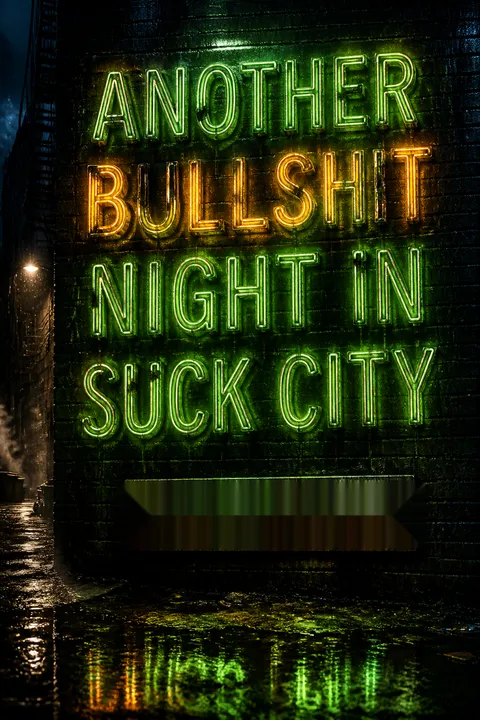
- "Another bullshit night in suck city": This phrase captures the bleakness and monotony of life on the streets, reflecting the despair and resignation felt by the homeless.
- "We are born to help others": This quote underscores the memoir's theme of compassion and the importance of helping those in need, a lesson Flynn learns through his work at the shelter.
- "Whether you like it or not—you are me": This reflects the complex father-son dynamic, highlighting the inescapable connection and influence between Flynn and his father.
- "I am a born writer. So are you": This quote speaks to the theme of unfulfilled potential and the shared legacy of writing between Flynn and his father, despite their different paths.
How does Nick Flynn's writing style contribute to the narrative of "Another Bullshit Night in Suck City"?
- Poetic Prose: Flynn's writing is characterized by poetic prose, which adds depth and emotional resonance to the narrative.
- Reflective Tone: The reflective tone allows for introspection and exploration of complex themes such as identity, family, and redemption.
- Nonlinear Structure: The nonlinear structure mirrors the chaotic and fragmented nature of Flynn's experiences and memories.
- Vivid Imagery: Vivid imagery brings the settings and characters to life, immersing readers in the world of the homeless shelter and Flynn's personal journey.
What impact did Nick Flynn's mother's suicide have on him in "Another Bullshit Night in Suck City"?
- Emotional Trauma: His mother's suicide is a source of deep emotional trauma, influencing Flynn's outlook on life and relationships.
- Motivation for Understanding: It serves as a motivation for Flynn to understand his family's past and his own identity.
- Recurring Theme: The suicide is a recurring theme throughout the memoir, shaping Flynn's narrative and his interactions with his father.
- Search for Closure: Flynn's journey is partly a search for closure and understanding of his mother's actions and their impact on his life.
How does "Another Bullshit Night in Suck City" explore the concept of redemption?
- Possibility of Redemption: The memoir suggests that redemption is possible, even for those who have fallen far, like Flynn's father.
- Personal Growth: Flynn's own journey of personal growth and self-discovery is a form of redemption, as he learns to forgive and understand.
- Empathy and Compassion: The narrative emphasizes the importance of empathy and compassion in the process of redemption, both for oneself and others.
- Complex Path: Redemption is portrayed as a complex and ongoing process, rather than a single moment of transformation.
What lessons can readers learn from "Another Bullshit Night in Suck City"?
- Understanding Homelessness: Readers gain a deeper understanding of the complexities and challenges faced by homeless individuals.
- Family Dynamics: The memoir offers insights into the impact of family dynamics and parental influence on personal identity.
- Resilience and Hope: It highlights the resilience of the human spirit and the possibility of finding hope and redemption in difficult circumstances.
- Empathy and Compassion: The importance of empathy and compassion in addressing social issues and personal relationships is a key takeaway.
How does "Another Bullshit Night in Suck City" challenge stereotypes about homelessness?
- Humanizing Perspective: Flynn provides a humanizing perspective on homelessness, challenging stereotypes and misconceptions.
- Complex Characters: The memoir presents complex characters who defy simplistic labels, showing the diverse backgrounds and stories of homeless individuals.
- Systemic Issues: It highlights systemic issues such as addiction, mental illness, and poverty that contribute to homelessness, rather than blaming individuals.
- Personal Stories: By sharing personal stories, Flynn encourages readers to see homeless individuals as people with unique experiences and struggles.
Download PDF
Download EPUB
.epub digital book format is ideal for reading ebooks on phones, tablets, and e-readers.








