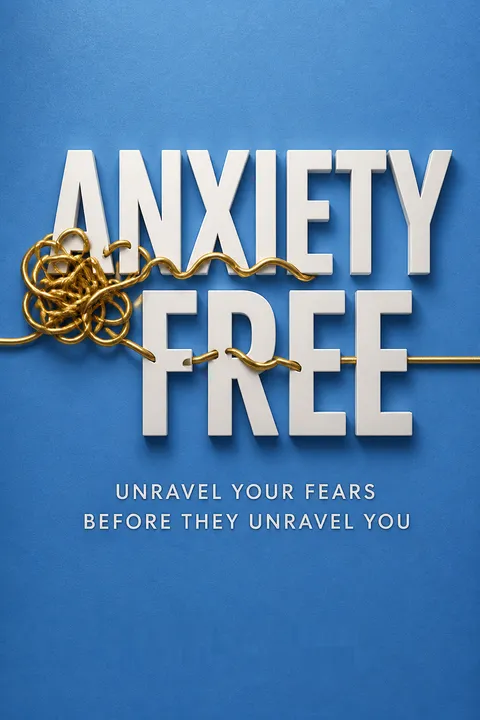


Key Takeaways
Treat anxiety as an overprotective alarm, not a verdict about danger
Fear is not a flaw. Leahy begins with Carolyn, a woman whose panic, phobias, sleeplessness, and social fears had become so familiar that she assumed nothing could help. Her symptoms had narrowed her life and contributed to depression. The case introduces the book’s central distinction: anxiety is a normal protective system that can become disabling when it mistakes ordinary situations for emergencies.
The alarm can be retrained. Leahy reports that anxiety disorders are widespread, yet many sufferers receive no treatment or inadequate care. He argues that cognitive-behavioral methods can help people learn safety through experience, rather than trying to banish anxiety through willpower. The goal is not a life without fear. It is a life in which fear no longer dictates every choice.
What's useful about this opening is its moral reframing: symptoms become understandable responses, not evidence of weakness. That can reduce shame, which often keeps people from seeking help. The evolutionary account is best treated as a plausible explanation, not a complete account of why any one person develops anxiety. Biology, learning, relationships, and present circumstances can all matter. Normalizing anxiety also should not dismiss genuine risk or medical symptoms. Compassion and careful assessment belong together.
Map the fear loop before trying to outthink it
Fear follows a pattern. Leahy calls the recurring set of anxious instructions the Anxiety Rule Book. It directs attention toward possible threats, magnifies their consequences, urges control, and pushes a person to avoid or escape. A worried speaker, for instance, may search for every possible failure, decide the talk will be disastrous, rehearse compulsively, and then avoid speaking. Each response can make the feared situation seem more dangerous.
Change the response, not just the thought. Leahy recommends checking the full evidence, distinguishing a possibility from a likely outcome, and asking how bad the feared consequence would actually be. He also urges people to allow anxious sensations without rituals and to act while uncomfortable. Mindfulness, defined here as noticing thoughts and sensations in the present without judging or trying to control them, helps create distance from mental alarms.
The model is memorable because it links attention, interpretation, and behavior in one loop. It also avoids treating anxiety as a purely intellectual error: knowing a fear is unlikely often does not calm the body, while new experience can alter what feels dangerous. The loop is a practical map, not a universal law. Some threats are real, and the useful question is not whether fear is irrational, but whether the response fits the evidence and the person’s actual circumstances.
Stop letting avoidance claim credit for dangers that never happened
Relief can preserve fear. Betsy fears flying, scans the plane for danger, grips the armrests, and drinks before boarding. When the flight ends safely, she may credit those protective rituals rather than the plane’s safety. Leahy calls such rituals safety behaviors: actions intended to prevent catastrophe that can instead preserve the belief that catastrophe was imminent. Avoiding flights has the same effect, because it prevents Betsy from learning what happens when she flies without escaping.
Practice in manageable steps. A fear hierarchy is a list of increasingly difficult situations, rated with Subjective Units of Distress (SUDS), a personal scale from 0 to 10. Imagining and then entering these situations repeatedly can produce habituation, a decline in fear response with sustained exposure. Record what is predicted, what actually happens, and which safety behaviors are dropped. Exposure should be gradual and appropriate to the risk.
This account captures a central learning problem: escape reduces distress immediately, so it is easily reinforced, even when it makes future fear more likely. Exposure offers new evidence, not merely a test of bravery. Contemporary learning theory also cautions that fear reduction during one exercise does not necessarily erase an old association; learning may depend on varied settings and repeated practice. The practical aim is broader than waiting for anxiety to fall. It is learning that anxiety can be present without requiring retreat.
For panic, learn that body sensations are not the catastrophe you predict
Fear can feed on itself. Paul’s first panic attack followed exercise on a hot day. He felt breathless and noticed his pounding heart, interpreted the sensations as a heart attack, then became more frightened and more physically aroused. He began avoiding exercise, elevators, and eventually leaving home. Panic disorder centers on fear of these internal sensations and the disastrous meanings attached to them, not simply fear of a particular place.
Test the prediction safely. Leahy describes medical assessment to rule out physical causes, followed by gradual practice with feared sensations and situations. Paul learned to tolerate exertion and ride elevators without the rituals that had made them feel necessary. The book reports that structured cognitive-behavioral treatment substantially helps many people with panic disorder. New, severe, or unexplained symptoms still warrant medical attention; deliberate symptom practice should be guided when health risks are possible.
Panic illustrates how interpretation can amplify bodily arousal: a racing heart becomes frightening partly because it is read as proof of imminent collapse. Interoceptive exposure, the deliberate and controlled experience of feared sensations, can help people test that interpretation directly. Yet the boundary between panic symptoms and medical conditions cannot be settled by a self-help exercise. The book’s strongest practical point is therefore not to dismiss sensations, but to assess them appropriately and then learn from safe, structured experience.
Let intrusive thoughts pass without treating them as evidence or orders
A thought is not an act. In obsessive-compulsive disorder, intrusive thoughts or images provoke distress, and compulsions are repeated actions or mental rituals intended to neutralize that distress. Susan fears contamination and disturbing religious thoughts; she washes, avoids triggers, and repeats prayers. Leahy describes thought-action fusion as the belief that having a thought makes an action more likely or changes reality. He notes that unusual thoughts are common among people without OCD, too.
Stop feeding the ritual loop. Trying to suppress a thought can make it more prominent. Leahy instead recommends allowing the thought to be present while gradually reducing the ritual or delaying it. Exposure with response prevention means facing a feared thought or situation while refraining from the compulsion that usually follows. Susan’s treatment included planned contact with objects she feared and practice not washing immediately. Severe OCD often merits support from a qualified clinician.
The distinction between thought content and the meaning assigned to it is especially important here. A disturbing image does not, by itself, reveal a person’s character or intentions; the struggle to prove that it means nothing can keep it central. Exposure with response prevention applies learning principles to both the trigger and the ritual. Care is needed, however, because ordinary hygiene and safety remain sensible. Treatment targets compulsive excess, not every precaution or every uncomfortable thought.
Turn worry into a scheduled review, then take one useful action
Worry can masquerade as preparation. Linda worries about her daughter, money, work, and health, even when her life offers little evidence of immediate disaster. Leahy suggests that worry can feel useful because it promises preparation and control, while also diverting attention from painful emotions. The book cites research suggesting that many feared outcomes turn out neutral or positive, though the key point is that repeated worry is not the same as solving a problem.
Separate planning from rumination. Leahy recommends setting aside a limited daily period for worry, writing down concerns as predictions, and later comparing them with what actually happened. For a concern that has a practical solution, make a specific to-do item. Linda’s work worries eased when she stopped spending hours avoiding tasks online and began working from a concrete list. The aim is not to eliminate every worry, but to stop treating each one as an urgent command.
The distinction between productive planning and repetitive worry gives readers a useful behavioral test: does this thought lead to a feasible next step, or merely repeat the threat? Scheduling worry can also reveal how often concerns lose urgency when they are not obeyed immediately. Still, planning is genuinely valuable when uncertainty can be reduced by action. The goal is not to dismiss foresight, but to reserve it for problems where information or effort can make a meaningful difference.
In social fear, look outward instead of auditioning yourself in real time
Self-surveillance distorts the room. Ken expects others to see him as awkward and inferior. He avoids conversation and watches himself for signs of anxiety. Later, an acquaintance tells him that his withdrawal had looked like conceit. Leahy uses this mismatch to show how social anxiety can become self-reinforcing: fear of judgment prompts behavior that makes connection harder, while isolation leaves the feared assumptions untested. The book cites a survey in which social anxiety disorder affected more than 13 percent of respondents.
Redirect attention and experiment. Rather than monitor every tremor or facial expression, Leahy advises listening closely, asking genuine questions, and noticing positive or neutral reactions. He also recommends testing feared outcomes through small social steps, such as greeting strangers or speaking up, while reducing safety behaviors like hiding one’s hands or relying on alcohol. Reviewing every interaction afterward as a failure can maintain the fear; give credit for approaching, not just for appearing flawless.
Social interaction is a feedback process, so inward attention can crowd out the cues that make conversation work. Shifting attention outward is not a trick for impressing others; it makes room for curiosity and more accurate perception. Behavioral experiments can also expose the gap between imagined scrutiny and what other people actually notice. This does not mean every social setting is welcoming or that rejection never happens. It means that one awkward moment is weak evidence for a global verdict about belonging.
Help traumatic memories become past-tense through careful, supported exposure
A memory can feel present. Sarah’s history of violence and rape was followed by nightmares, avoidance, hypervigilance, and a persistent sense of being damaged. Leahy describes PTSD as a condition in which memories and sensations can feel as if the threat is happening again. He uses the term hot spots for especially distressing moments in a trauma memory, such as a particular image or sound. Avoiding every reminder can shrink life and make the world seem continually unsafe.
Process at a safe pace. The book describes carefully retelling a trauma in detail, noticing hot spots, and gradually encountering reminders while distinguishing past danger from present conditions. Sarah used recorded retellings and, when prepared, revisited the neighborhood where the assault occurred. The chapter strongly recommends skilled clinical support because trauma work can intensify distress. Exposure must never mean returning to an unsafe situation or being pressured to recount experiences before a person is ready.
The past-tense distinction offers a clear account of why a reminder can produce real terror without signaling current danger. Gradual, supported engagement can help a person develop a fuller account of what happened and reclaim avoided parts of life. The ethical qualification is essential: trauma treatment is not forced exposure, and safety, consent, and pacing matter. The book’s memory-processing metaphor helps explain persistent symptoms, but recovery is not a test of how vividly someone can retell a traumatic event.
Measure recovery by reclaimed life, not by a perfectly quiet mind
Progress is functional, not flawless. Leahy argues that recovery does not require the disappearance of every anxious thought. It means being less governed by fear and more able to work, travel, connect, and choose. Sarah, whose trauma had left her feeling worthless, later returned to college, found work she valued, and built a relationship while accepting that life could still bring hurt. The book emphasizes continued practice because stress can bring familiar symptoms back.
Make persistence humane. Exposure and cognitive-behavioral tools are presented as skills to revisit, not a one-time cure. The appendices add relaxation, sleep practices, mindfulness, and guidance on medication, with medication decisions made alongside a physician. Leahy also stresses self-compassion, especially when progress is uneven. Anxiety can be a normal response; the target is needless restriction, not ordinary caution or every moment of discomfort.
This closing standard protects recovery from becoming another perfectionistic demand. A person can make meaningful gains while still experiencing anxiety, setbacks, or uncertainty. That is consistent with a broader psychological distinction between symptom control and valued action: a life can expand before distress vanishes. The book’s confidence in self-help is encouraging, though symptoms that are severe, persistent, traumatic, or linked to suicidal thoughts call for professional care. Courage here is not solitary endurance; appropriate support is part of effective treatment.
Analysis
Anxiety Free is a clinically oriented self-help guide organized around a single mechanism: people suffer not only because fear appears, but because they interpret it as evidence of danger, try to control it, and avoid what evokes it. Leahy makes this model memorable through patient stories, then adapts its practical implications to phobias, panic, OCD, generalized worry, social anxiety, and PTSD. The through-line is experiential learning. A person does not become unafraid simply by being told that a fear is irrational. Carefully encountering the trigger without the expected catastrophe can change what the body predicts.
The book’s most valuable move is its treatment of avoidance and safety rituals as understandable short-term solutions that can become long-term traps. Its case examples show how these behaviors restrict work, intimacy, travel, and ordinary independence. It also gives readers a concrete method: identify predictions, rank feared situations, record outcomes, and practice tolerating distress. Its emphasis on self-compassion is important because shame can compound anxiety and make treatment feel like another personal failure.
The evolutionary account gives readers a non-shaming story about why threat detection is powerful, but it should not be mistaken for a settled explanation of individual disorders. Nor should the repeated claim that anxiety is harmless be applied indiscriminately to new physical symptoms or real danger. Leahy’s own cautions about medical assessment and therapist support matter, particularly for panic symptoms and trauma. Modern exposure approaches also emphasize that the aim is not always immediate fear reduction. Learning that a person can act effectively while afraid may matter more than achieving calm during each exercise.
Published in 2009, the book’s prevalence estimates and treatment claims are historically situated, not current epidemiological guidance. Its enduring contribution is less a claim that every alarm is false than a method for testing alarms carefully. Its practical ethic is measured: preserve reasonable caution, challenge rituals that do not improve safety, and reclaim activities that fear has unnecessarily taken away.
Review Summary
Anxiety Free receives mostly positive reviews, with readers praising its comprehensive approach to understanding and managing anxiety. Many find the techniques helpful and appreciate the evolutionary perspective on anxiety's origins. Readers value the book's insights into various anxiety disorders and practical strategies for coping. Some criticize the repetitive nature and old-fashioned thinking, while others note its usefulness as a supplement to therapy. The book is seen as informative but may be challenging for beginners, and some suggest it's best used alongside professional help.
People Also Read






Glossary
Anxiety Rule Book
habitual threat-response instructionsLeahy’s name for the recurring mental instructions that shape anxious responses. The pattern involves scanning for danger, exaggerating its consequences, trying to control the situation or one’s internal reactions, and avoiding or escaping what feels threatening. The concept helps identify how several different anxiety problems can share a similar cycle.
safety behaviors
rituals meant to feel saferActions used to reduce fear or prevent a predicted catastrophe, such as repeatedly checking, seeking reassurance, gripping a seat, or bringing a companion. They may provide short-term relief, but when they do not materially improve safety, they can reinforce the belief that danger was present and that the ritual prevented it.
Subjective Units of Distress (SUDS)
personal distress ratingA self-rating used to track fear or discomfort during imagined or real exposure. In the book, the scale runs from 0, no distress, to 10, extreme distress. Ratings help a person build a hierarchy of feared situations and observe changes in response. SUDS is subjective, so it records personal experience rather than an objective measure of danger.
habituation
reduced response after exposureA decrease in the intensity of a fear response after sustained or repeated contact with a feared image, sensation, or situation. Leahy uses the term to explain why anxiety may rise at first and then fall as the person remains exposed without the expected catastrophe. A lower distress rating can mark change, though learning may also occur without immediate calm.
anxiety sensitivity
fear of anxiety sensationsA tendency to notice bodily or emotional signs of anxiety and interpret them as dangerous. A person with high anxiety sensitivity may read a racing heart as evidence of a heart attack or dizziness as a sign of collapse. In panic disorder, fear of the sensations themselves can intensify arousal and help sustain a cycle of panic.
thought-action fusion
equating thoughts with actionsA belief, especially relevant to OCD, that having a thought makes an action more likely, reveals an intention, or can affect reality. Someone who experiences an unwanted violent thought may fear it means they will act violently. Treating thoughts as mental events rather than evidence or commands can reduce the perceived need to suppress or neutralize them.
worry time
scheduled period for worriesA planned, limited period set aside to write down and examine worries, rather than responding to each one throughout the day. Leahy suggests recording worries as predictions and later checking them against actual outcomes. The practice aims to reduce urgency and show that some concerns lose their importance when they are not continually rehearsed.
hot spots
highly distressing memory momentsLeahy’s term for particularly charged moments within a trauma memory, such as a specific image, sound, or belief during the event. These moments may prompt a person to rush through a retelling, avoid the memory, or disconnect from emotion. Identifying them can guide careful therapeutic work, ideally with appropriate professional support.
mindfulness
present-moment, nonjudgmental awarenessA practice of noticing present experience, including breath, sensations, and thoughts, without judging or trying to control it. In Leahy’s account, mindfulness helps people recognize thoughts as events in the mind rather than accurate descriptions of danger. It is presented as a way to gain perspective and reduce automatic obedience to anxious predictions.
exposure with response prevention
face triggers, refrain from ritualsA treatment method commonly used for OCD. The person deliberately encounters a feared thought, object, or situation while refraining from the compulsion normally used to reduce distress or prevent a feared outcome. Repeated practice tests the belief that the ritual is necessary and helps the person tolerate uncertainty without neutralizing the trigger.
FAQ
1. What is Anxiety Free: Unravel Your Fears Before They Unravel You by Robert L. Leahy about?
- Comprehensive anxiety guide: The book offers a thorough exploration of anxiety disorders, their origins, symptoms, and impact on daily life.
- Cognitive-behavioral focus: It centers on cognitive-behavioral therapy (CBT) techniques to help readers understand and manage anxiety by changing thought patterns and behaviors.
- Practical self-help: Leahy provides step-by-step strategies and exercises, empowering readers to confront and reduce their anxiety.
- Evolutionary perspective: The book explains anxiety as an adaptive survival mechanism that can become maladaptive in modern society.
2. Why should I read Anxiety Free by Robert L. Leahy?
- Expert author: Dr. Leahy is a leading cognitive therapist with decades of clinical experience, making his advice trustworthy and research-based.
- Accessible and engaging: The book is written in a clear, conversational style, making complex psychological concepts easy to understand.
- Evidence-based techniques: Readers gain access to proven CBT methods that can significantly improve anxiety symptoms.
- Empowering and hopeful: The book reassures readers that anxiety is treatable and provides tools to regain control and improve quality of life.
3. What are the key takeaways from Anxiety Free by Robert L. Leahy?
- Anxiety is natural: Anxiety evolved as a protective mechanism but often misfires in modern life.
- Change is possible: With the right tools and mindset, readers can learn to manage and reduce anxiety.
- Acceptance over elimination: The goal is not to eradicate anxiety but to live effectively with it.
- Long-term commitment: Managing anxiety requires ongoing practice, patience, and self-compassion.
4. What are the main anxiety disorders discussed in Anxiety Free and how are they characterized?
- Generalized Anxiety Disorder (GAD): Chronic, excessive worry about multiple life domains, often with physical symptoms like muscle tension and insomnia.
- Social Anxiety Disorder (SAD): Intense fear of negative evaluation and embarrassment in social situations, leading to avoidance and isolation.
- Panic Disorder and Agoraphobia: Fear of panic attacks and avoidance of places or situations that might trigger them.
- Obsessive-Compulsive Disorder (OCD): Intrusive thoughts (obsessions) and repetitive behaviors (compulsions) aimed at reducing anxiety.
- Post-Traumatic Stress Disorder (PTSD): Persistent fear and avoidance following trauma, with symptoms like flashbacks and hypervigilance.
- Specific Phobias: Irrational fear of specific objects or situations, such as heights or flying.
5. How does Robert L. Leahy explain the evolutionary and psychological roots of anxiety in Anxiety Free?
- Survival mechanism: Anxiety evolved to protect our ancestors from real dangers like predators and social threats.
- Mismatch with modern life: Our brains still operate on ancient "rules" that overpredict danger, causing anxiety in safe situations.
- Capacity for change: Humans can use their rational minds to adapt and rewrite these outdated anxiety rules through experience and exposure.
- Understanding origins: Recognizing the evolutionary basis of anxiety helps reduce self-blame and fosters a more compassionate approach to treatment.
6. What is the "Anxiety Rule Book" concept in Anxiety Free and how does it affect anxiety?
- Four core rules: The "Anxiety Rule Book" includes detecting danger quickly, catastrophizing, seeking control, and avoiding feared situations.
- Irrational beliefs: These rules are supported by beliefs like the need for certainty and the idea that anxious thoughts are dangerous.
- Counterproductive today: While once adaptive, these rules often increase anxiety in modern life.
- Rewriting the rules: Leahy advocates for developing new, realistic rules that encourage acceptance, exposure, and letting go of control.
7. How does Anxiety Free by Robert L. Leahy address the treatment of Generalized Anxiety Disorder (GAD) and chronic worry?
- Worry as maladaptive strategy: GAD involves excessive, uncontrollable worry as a misguided attempt to manage risk.
- "Worry Rule Book": Sufferers follow mental rules demanding certainty, control, and avoidance of discomfort.
- Changing the rules: The book teaches readers to recognize and challenge these rules, promoting acceptance of uncertainty and present-moment focus.
- Emotional processing: Shifting from abstract worry to directly experiencing and processing emotions is emphasized.
8. What methods does Anxiety Free recommend for overcoming Social Anxiety Disorder (SAD)?
- Motivation and self-compassion: Recognize the costs of avoidance and give yourself permission to be anxious.
- Challenging negative assumptions: Stop mind reading and negative predictions about others' thoughts; focus on actual feedback.
- Exposure and practice: Gradually face feared social situations, eliminate safety behaviors, and track progress.
- Fighting the inner critic: Learn to accept anxiety and silence self-judgment.
9. How does Anxiety Free by Robert L. Leahy approach the treatment of Panic Disorder and Agoraphobia?
- Focus on sensations: Panic disorder centers on fear of physical and mental reactions, leading to avoidance.
- Panic induction and exposure: Controlled exposure to feared sensations and situations helps patients reinterpret them as non-threatening.
- Challenging catastrophic thinking: The book guides readers to question catastrophic interpretations and reduce safety behaviors.
- Gradual confrontation: Step-by-step exposure to feared places or activities is encouraged to regain control.
10. What are the recommended strategies in Anxiety Free for managing Obsessive-Compulsive Disorder (OCD)?
- Understanding obsessions and compulsions: OCD involves intrusive thoughts and repetitive behaviors aimed at reducing anxiety.
- Thought-action fusion: Sufferers often believe their thoughts are dangerous or predictive of reality.
- Acceptance and exposure: The book emphasizes accepting thoughts rather than suppressing them, and using exposure to reduce compulsions.
- Gradual elimination: Compulsions are addressed step-by-step, with a focus on changing the relationship to obsessions.
11. What role do "safety behaviors" play in anxiety disorders according to Anxiety Free by Robert L. Leahy?
- Definition and examples: Safety behaviors are actions taken to avoid or reduce anxiety, such as avoidance, over-preparation, or using substances.
- Maintaining anxiety: These behaviors prevent disconfirmation of fears and reinforce the belief that anxiety must be hidden or controlled.
- Therapeutic goal: The book stresses identifying and gradually eliminating safety behaviors to allow true exposure and habituation.
- Path to recovery: Giving up safety behaviors is essential for long-term anxiety reduction.
12. How does Anxiety Free by Robert L. Leahy incorporate mindfulness and relaxation techniques for anxiety management?
- Mindfulness practice: The book encourages observing thoughts and sensations without judgment, breaking the cycle of anxious rumination.
- Changing thought relationships: Mindfulness helps readers see thoughts as transient events, reducing their power.
- Progressive Muscle Relaxation (PMR): Step-by-step PMR and breathing exercises are detailed to reduce physical tension and promote calm.
- Daily integration: Regular practice of mindfulness and relaxation is recommended to manage arousal and foster resilience.
About the Author
Other books by Robert L. Leahy


Download PDF
Download EPUB
.epub digital book format is ideal for reading ebooks on phones, tablets, and e-readers.








