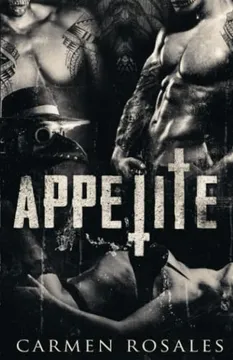


Plot Summary
Prologue
After a confrontation involving their parents, Gia travels with Dravin and Draven to a cemetery church, where masked members welcome her into the secret Consortium. A barista she recognizes has been killed and displayed on a cross.
Dravin presents the murder as punishment for the attack that cost Gia her unborn child, then declares her protected as the twins’ chosen partner. The silent members agree, but a message on Dravin’s phone abruptly unsettles him, leaving Gia’s new place among the powerful shadowed by another danger.
The opening makes protection and violence inseparable. Gia is admitted to a society that claims to punish rule-breakers, yet its judgment is delivered through a spectacle of killing rather than law. Her grief over the pregnancy loss gives the punishment emotional force, but the scene also shows how easily private pain becomes political permission. The sudden message interrupts the apparent security of the ceremony: even at the center of power, Gia cannot know what danger is approaching, or what the Consortium will demand next.
Reid Finds Jess
Jess Sharpe wakes in Reid Riordan’s bedroom after passing out beside him, groggy from drugs given by Michael Levine, a man who has coerced her into sex and threatened her mother. Reid has a doctor test her blood and helps her bathe, but his concern comes wrapped in suspicion and a chilling promise to punish whoever hurt her.
Jess refuses to report Michael. She believes he can reach her mother more easily than the Order can protect them, and she needs to finish school before she can support them both. When Gia urges her to speak, Jess deflects by asking about the church and learns that the barista has been killed.
Jess’s silence is not confusion about what happened; it is a calculation made under coercion. Michael has turned her mother’s safety into leverage, so formal reporting feels less like rescue than a gamble with someone else’s life. Reid’s intervention offers immediate care, but his language of punishment belongs to the same violent world that has trapped Jess. The opening therefore complicates the familiar rescue pattern: being protected by powerful men may reduce one danger while placing Jess inside another system whose rules she does not control.
Michael Enters Kenyan
Jess’s threat becomes impossible to keep at a distance when Michael transfers into her economics class and takes a seat where he can watch her. In a dark hallway, he reminds her that speaking up could put her mother in danger. Jess knows the Order has rules, but she doubts that its members would protect a poor student against a wealthy family with influence.
Valen Vikiar notices her distress and offers to leave campus with her; Jess refuses, afraid of drawing him into her trouble and wary of wanting more from him than he can give. She also believes Reid is unavailable, though his attention unsettles her. With graduation still months away, she resolves to endure Michael quietly.
Michael’s transfer turns the university from a possible escape into an extension of his control. Jess’s isolation is economic as well as emotional: she has few resources, a prepaid phone, and a mother whose livelihood can be threatened. Her refusal of Valen is both self-protection and an attempt to preserve agency in a situation where almost every choice has a cost. The Order’s rule that Prey choose sounds empowering, but Jess’s experience reveals the limit of that promise when powerful men can threaten the people she loves.
The Masked Watcher
After Jess scrubs herself in the dorm shower, a man in a plague mask appears and identifies himself as Zero. He knows about her sexual encounters and the shame she tries to wash away, then uses touch to bring her relief before disappearing. The next morning, a note proves the meeting was real.
Zero returns in later nights, leaving cryptic letters and music, watching her sleep, and promising to help her confront the people who have harmed her. Jess is frightened by his access to her room and unsettled by how precisely he reads her. Yet she begins to anticipate his visits, because he offers pleasure without asking her to explain herself.
Zero’s appeal grows from a paradox: he violates Jess’s privacy while making her feel uniquely understood. His mask and anonymous notes let him control what she can know, while his intimate knowledge of her history creates a sense of recognition. That imbalance is not incidental romance; it is part of the seduction. Jess’s desire for relief is real, but it develops inside conditions she cannot verify or safely question. The story makes secrecy feel comforting before it exposes how secrecy can also conceal power and danger.
A Dinner for Three
At Babylon, Veronica reveals that Reid is expected to marry, and Jess leaves before she can hide how much the news hurts. Reid drives her to his hotel penthouse, where Valen joins them for dinner. Valen treats her gently and asks permission before they become intimate, while Reid watches from a chair.
Jess keeps looking toward Reid, unable to ignore her feelings, and Reid finally leaves without explanation. Valen takes Jess back to her dorm, but the encounter leaves her emptier than before. She finds another letter from Zero afterward, proof that the masked watcher has been tracking her even as her attachment to Reid and Valen grows more complicated.
The dinner makes Jess’s romantic confusion concrete rather than abstract: Valen offers the tenderness she wants, but her attention remains fixed on Reid, whose silence functions as both rejection and restraint. The scene also places care, desire, and possession beside one another. Valen asks for consent, while Reid’s watching turns Jess’s intimacy into a charged performance for him. Zero’s letter afterward extends the same pattern of unseen observation. Each man seems to know a different part of Jess, but none yet gives her the full information needed to choose freely.
The Betrothal Ball
Before the Order’s formal ball, Jess learns that Valen is betrothed to Melissa and Reid is expected to marry Tara. Valen’s clumsy explanation that Jess is invited because she is Gia’s friend confirms her fear that she is only useful in private; she slaps him and leaves. She still attends to support Gia, wearing a custom gown secretly arranged for her.
At the ball, Reid unexpectedly joins her for photographs, but his family and Tara make his obligation unmistakable. Tara humiliates Jess in front of the guests. Jess escapes to a private bathroom, where Michael corners and assaults her. Veronica finds her afterward and offers to show her what the Order hides.
The ball turns romantic disappointment into public humiliation. Jess is not merely told that the men have other obligations; she must watch those obligations displayed as social ceremony, while she is positioned as an unclaimed outsider. Her slap at Valen is a rare refusal to absorb injury quietly, but the assault by Michael demonstrates how limited that refusal remains. Veronica’s intervention matters because it changes the scene’s direction: rather than asking Jess to trust the men who have failed to tell her the truth, she offers knowledge about the institution itself.
Behind the Fourth-Floor Door
Veronica leads Jess away from the ball, through a back entrance and into the church, where they retrieve a key from the people assigned to guard it. On Kenyan’s concealed fourth floor, Jess sees a psychiatric ward and learns that wealthy families send troubled heirs there for treatment away from public view.
Through a window, she sees Warren restrained and disoriented after the Bedford twins have confined him for attacking Gia. Veronica explains that the Order’s members include people with addictions and severe psychological struggles, yet the institution trains them to preserve power. She also warns that Jess’s knowledge and her ties to Gia may make it difficult for her to leave Kenyan safely.
The fourth floor recasts Kenyan’s gothic secrecy as institutional rather than supernatural. The university educates heirs while containing the crises that might disrupt their inheritance, making care and control difficult to distinguish. Warren’s confinement offers a grim mirror of that system: the Order presents itself as a judge of dangerous behavior, but it also decides who is contained and under what conditions. Veronica’s warning gives Jess a clearer map of the danger, though knowledge does not immediately grant her an exit. In this world, seeing the machinery can make a person more vulnerable to it.
Reid Chooses Jess
The group finds Jess safe in her dorm, and Reid takes her to a late-night diner, where she tells him about growing up with her mother in Cedar Lake. Their growing intimacy becomes explicit when he admits he never intended to marry Tara, then asks Jess to spend the night.
After they become lovers, Gia tells Reid that Michael assaulted Jess in high school, and Veronica confirms seeing him attack her at the ball. Reid’s response is to prepare for retaliation, not to ask Jess what she wants done. He tells the Order he will reject Tara and choose his own wife. Warren later dies in the ward, ending his immediate threat to Gia while the group conceals the truth of his final days.
Reid’s disclosure loosens one constraint, but the surrounding actions show how quickly his care turns into unilateral action. Jess receives tenderness and a possible future, while Gia and Veronica disclose her trauma to protect her from further harm. Their choice is understandable in a setting where ordinary reporting offers little security, yet it also repeats the story’s central problem: powerful people decide what protection means on someone else’s behalf. Warren’s death reinforces that the Order’s version of justice is not transparent process, but control over the account of what happened.
A Prom Reclaimed
Jess drives to Cedar Lake for her birthday, and Reid accompanies her to the trailer where she grew up. He meets Amanda Sharpe, sees the poverty Jess has concealed, and discovers that Michael arranged Amanda’s job at the bar he controls. Reid brings them to his hotel, arranges a weekend of care for Amanda, and starts buying the town’s businesses so Jess’s mother can own the livelihood that once kept her dependent on Michael.
For Jess, he creates the prom she never attended, inviting Amanda and local teenagers to celebrate with them. The gestures answer old humiliations with something tangible: her mother’s security and a memory Jess can share rather than mourn.
The birthday weekend gives Reid’s devotion a material form. He does not answer Jess’s childhood deprivation with a promise alone; he uses his wealth to alter the economic conditions that made her mother vulnerable to Michael. That remedy is emotionally potent and ethically complicated, since Jess’s freedom is again being shaped by an immensely powerful man. The prom is smaller in scale but more intimate: it restores an experience Jess had wanted for her mother as much as for herself. Care here becomes most convincing when it attends to both practical security and remembered loss.
Zero Removes the Mask
After Michael threatens Jess again, Zero appears and tells her that he will handle the danger. With Valen’s help, he captures Michael and kills him in the hidden ward, leaving the body for the Order to interpret as punishment for breaking its rules. Zero then comes to Jess’s dorm and insists she leave with him.
Their encounter becomes physically coercive; when Jess strikes him, his mask falls away, revealing Reid. He explains that Zero is another identity formed around the trauma of his sister Alicia’s death, and Jess recognizes the voice and gestures she had heard in the dark. The revelation explains the letters and surveillance, but it also forces her to confront that the man she trusts has hidden a violent self.
The unmasking resolves the mystery by joining romantic intimacy to institutional violence, but it does not make the revelation simple or safe. Reid’s dissociation offers an explanation for Zero’s separate presence, while the killing of Michael shows that this identity has been cultivated within the Consortium’s culture of secret punishment. The sexual coercion at the reveal matters: Jess’s affection cannot retroactively convert an encounter she resists into consent. The scene asks the reader to hold two facts together, her attachment to Reid and the danger created by his concealed actions, rather than letting one erase the other.
Two Lives, One Marriage
After Jess wakes in Reid’s room, he gives her legal marriage papers and a ring, asking her to marry him immediately. She signs and accepts him, including the parts of him she has come to associate with Zero. Reid also transfers the Cedar Lake businesses to Amanda, giving her a livelihood independent of Michael, and the family begins planning a home and wedding.
In Jess’s old dorm, she finds the string bracelets she once made and a final letter from Zero, linking the masked identity to the promises Reid made her. Veronica visits to apologize for earlier cruelty and admits that Alaric, Reid’s cousin, was her first love. Jess leaves Kenyan with a marriage and a safer future for her mother.
The ending gathers the book’s scattered forms of belonging into one domestic arrangement: Jess becomes Reid’s wife, Amanda gains financial independence, and the old bracelets turn private childhood labor into a sign of continuity. The resolution offers security through wealth and marriage, not through reform of the Order that made Jess prey in the first place. Jess’s acceptance of Reid’s divided identity is framed as a choice, though the preceding coercion leaves that choice morally unsettled. Veronica’s confession opens a smaller emotional future beyond the main couple, while the transfer of the businesses answers the opening threat with concrete protection.
Analysis
Appetite builds its romance inside an institution where wealth does more than buy comfort. It purchases privacy, protection, and the authority to define what justice means. Jess arrives at Kenyan hoping education will let her support her mother, but Michael follows her there because the same elite network that promises opportunity can also shelter abusers. The Order calls vulnerable students Prey and insists they can choose, yet Jess’s choices are narrowed by threats to her mother, financial dependence, and the social consequences of refusing powerful men.
The novel repeatedly makes care tangible. Reid checks Jess after she is drugged, brings her to food when she neglects to eat, creates the prom she missed, and secures Amanda’s livelihood. These gestures answer specific wounds, which is why they matter to Jess. At the same time, protection often takes the form of surveillance, secrecy, or violence. Reid’s desire to save Jess can become an excuse to decide for her, and Zero’s attention feels validating partly because he knows what she hides. The story’s emotional appeal rests on this tension, even when its resolutions do not fully resolve it.
Zero’s revelation sharpens the question of whether understanding someone is the same as being safe with them. His identity connects Jess’s masked admirer to Reid’s grief and dissociation, but it also places her inside a relationship shaped by concealed information and coercive acts. The book invites sympathy for Reid’s trauma without making the danger of his behavior disappear. That distinction matters: mental illness explains context, not automatic innocence, and the story’s dark-romance conventions sometimes blur that boundary even as Jess resists being treated as property.
Ultimately, the ending repairs Jess’s immediate material circumstances rather than dismantling the system that produced them. Her mother gains independence, Jess gains a future with Reid, and the Order continues to govern through secrecy. The novel’s most persuasive insight is therefore double-edged: love can make someone feel seen and materially safer, but when the beloved controls the rules, protection can still resemble possession.
Review Summary
Appetite received mostly positive reviews, with readers praising its emotional depth, plot twists, and character development. Many found it to be a satisfying conclusion to Jess and Reid's story, though some wished for more focus on Gia and the twins. Readers appreciated the dark themes, spicy scenes, and the exploration of mental health issues. The mysterious character Zero intrigued many, and the reveal of his identity surprised most. Some readers felt the writing could be improved, but overall, the book was considered an engaging and addictive read in the series.
Characters
Jess Sharpe
The guarded survivorJess is a poor student from Cedar Lake who has worked hard to reach Kenyan and wants to graduate without losing the fragile life she and her mother have built. Michael’s threats have taught her to hide abuse and treat sex as a way to blunt pain, while her friendship with Gia gives her one relationship grounded in trust. She is observant, academically capable, and more strategic than the wealthy students assume, yet her longing to be wanted makes her vulnerable to people who offer attention on unequal terms. Jess’s central struggle is not simply choosing between men; it is learning whether she can accept care without surrendering her right to define what happens to her.
Reid Riordan
The watchful heirReid is a wealthy Kenyan heir, a close ally of the Bedford twins, and a young man whose anger and memory lapses are shaped by his sister’s loss. He resists the Order’s expectations, including the arranged marriage his family anticipates, but he has inherited the institution’s appetite for control and retaliation. Jess draws out a tenderness he rarely shows, and he expresses care through attention, protection, and costly gestures rather than easy declarations. His conflicting impulses make him difficult to read: he can honor a boundary in one moment and conceal consequential choices in another. Reid’s appeal and danger come from the same source, his belief that loving someone means being willing to act decisively on their behalf.
Zero
The masked watcherZero is a masked figure connected to the Consortium who visits Jess in secret, leaves handwritten notes, and offers an intense form of attention that no one else has given her. He presents himself as an observer of hidden pain and promises to punish those who exploit her. His anonymity lets him seem both intimate and unknowable: he studies Jess closely while withholding the information she would need to judge him. Zero’s language of rescue is seductive, but his surveillance and threats make his care inseparable from control. His presence embodies the story’s recurring question of whether recognition can feel like love when the person offering it refuses to be fully known.
Valen Vikiar
The tender rivalValen is a younger Kenyan heir, a gifted swimmer, and a friend of Reid and the Bedford twins. He approaches Jess with warmth and a protective instinct that contrasts with Reid’s volatility. His sexual addiction shapes how he understands intimacy, and his attraction to Jess grows beyond the casual encounters he is accustomed to. Valen is also bound by family expectations and an existing betrothal, facts he delays telling Jess. His care is genuine, but his omissions show that good intentions do not cancel the hurt caused by withholding information. He becomes a bridge between Jess and the Order’s inner circle, while remaining unable to offer her the uncomplicated future she hopes for.
Gia
Jess’s steadfast friendGia is Jess’s roommate and closest friend, and the woman chosen by the Bedford twins. After losing a pregnancy and surviving an attack, she lives within the protection of the Order while remaining wary of the larger Consortium. She is direct with Jess, urging her to report Michael, but she also understands how dangerous that advice can be when money and influence are involved. Gia’s loyalty is practical: she checks on Jess, invites her into safer spaces, and eventually shares information that might protect her. Her relationship with the twins challenges ordinary ideas of romance and marriage, while her friendship with Jess offers the story one of its few bonds not founded on power.
Dravin and Draven Bedford
The twin power brokersDravin and Draven are wealthy twins who lead the Order and help create the Consortium after losses within their family. Both love Gia and intend to build a life with her, but their protection operates through rules, guards, and violence. They are difficult for outsiders to distinguish, a likeness that mirrors their shared authority and coordinated decisions. Their loyalty to Gia is sincere, yet they also treat judgment as a private power they are entitled to wield. Together they embody the Order’s central contradiction: they can offer genuine devotion while enforcing a system that makes other people’s freedom conditional.
Michael Levine
Jess’s hometown predatorMichael is a wealthy young man from Cedar Lake whose family’s influence reaches into the town and Kenyan. He uses Jess’s dependence on her mother’s income to keep her quiet, and his history with Jess turns his campus transfer into a renewed threat. He presents himself as entitled to her body and future, treating coercion as a private arrangement rather than a crime. Michael’s power rests not only on personal cruelty but on the social structures that make victims doubt that anyone will protect them. He is the clearest example of how the Order’s language of rules can be used to threaten rather than safeguard.
Veronica
The dangerous informantVeronica is a socially powerful student with a reputation for cruelty, sexual games, and unpredictable loyalties. She was close to Reid’s sister and carries knowledge of the Order that she cannot safely share all at once. Her sharpness often functions as armor, keeping others from seeing grief or fear beneath it. Veronica can humiliate Jess, yet she also intervenes after Michael attacks her and reveals the hidden ward. She is neither a reliable ally nor a simple antagonist: her protective acts emerge from guilt, loyalty, and her attempt to prevent others from suffering what her friend did.
Amanda Sharpe
Jess’s hard-working motherAmanda raised Jess alone in a struggling trailer and worked long hours to keep them housed. She believes in her daughter’s intelligence and wants her to experience the milestones poverty kept out of reach, including prom. Because she does not know the full truth about Michael, she mistakes his employment offer for kindness. Amanda’s warmth gives Jess a reason to endure, but her financial vulnerability is also the leverage Michael uses. She represents the life Jess hopes to protect, not an obstacle to her independence.
Warren
Gia’s violent attackerWarren is an Order outsider who attacks Gia and becomes the target of the Bedford twins’ retaliation. He is kept from the full reach of the Order’s inner circle, which makes him underestimate the power arrayed against him. His role exposes the difference between the Order’s public rules and the private punishments its leaders impose. Warren is dangerous to Gia, but the treatment he receives also raises questions about who gets to define justice inside Kenyan.
Melissa
Valen’s betrothedMelissa is the woman promised to Valen under the Order’s marriage expectations and has a history of using Jess in social and sexual games. She treats status as a form of security and sees Jess as a threat to the arrangement she expects to inherit. Her cruelty toward Jess is personal, but it is also supported by a culture that ranks women according to wealth, desirability, and marriageability.
Tara
Reid’s expected brideTara is the woman Reid’s family expects him to marry, a match valued for its alliance rather than emotional intimacy. At the ball she uses Jess’s outsider status to assert her own place beside Reid. Her confidence is sharpened by the privileges the Order grants her, though she too appears caught in an arrangement built around family power and sexual bargains.
Garret
A predatory classmateGarret is a student in the Order’s circle whose past behavior has made Jess wary. The men monitor him and warn him to keep away from her, presenting his presence as another risk she should not have to manage alone.
Alaric Riordan
Reid’s cousinAlaric is Reid’s cousin and part of the family network surrounding the Order. His connections place him near the same marriage alliances and private bargains that shape the younger heirs’ lives.
Alicia Riordan
Reid’s absent sisterAlicia was Reid’s older sister and Veronica’s closest friend. Her absence shapes Reid’s anger at the Order and helps explain why Veronica feels responsible for watching over him. The rules governing her life remain a source of grief and resentment for the people who loved her.
Plot Devices
Prey and the Order
A rigged choice systemKenyan divides students into powerful heirs and vulnerable outsiders called Prey. The Order’s stated rules grant Prey the right to choose their partners, but money, threats, surveillance, and arranged marriages constrain how freely that choice can be exercised. This system shapes Jess’s fear of reporting Michael, Gia’s relationship with the Bedford twins, and the betrothals surrounding Reid and Valen. It also lets the story compare the language of choice with the practical conditions required for consent. The device is central because Jess’s personal danger is not an exception to Kenyan’s structure; it is one of the ways that structure operates.
The Consortium
Secret justice beyond lawThe Consortium is a concealed society formed by powerful members of the Order to punish those they judge dangerous or disloyal. Its masked meetings, hidden identities, and private executions give the heirs authority beyond the institution’s public face. The society first appears through Gia’s introduction to a murder staged as punishment, then becomes the framework for Zero’s vigilantism. It offers protection to people like Gia while creating a new danger for anyone judged by its members. The Consortium therefore functions both as an instrument of revenge and as a critique of systems in which elites claim the right to decide who deserves safety.
The Plague Mask
Anonymity made intimateThe plague mask is worn in Consortium gatherings and by Zero during his visits to Jess. Its concealment allows the wearer to move through the story as a threat, a watcher, and a source of pleasure without being identified. Because Zero leaves notes and demonstrates intimate knowledge while hiding his face, the mask makes Jess feel recognized and kept in the dark at once. It also prepares the eventual unmasking by turning the question of identity into part of the relationship. The device’s meaning shifts from institutional symbol to private disguise, joining the Consortium’s violence to Jess’s growing attachment.
The Fourth Floor
A hidden ward for heirsBehind a locked door at Kenyan is a psychiatric ward where wealthy families send troubled children and heirs for treatment away from public view. Gia describes the floor to Jess, and Veronica later takes her inside, showing her the cells, offices, and Warren’s confinement. The hidden ward explains why the students’ illnesses and addictions remain secret while they are prepared to inherit power. It also foreshadows the space Zero uses to confront Michael. The floor is not merely a setting for revelations; it literalizes the Order’s method of managing instability by concealing it, treating it, or containing people according to private authority.
Jess’s Letters and Gifts
Clues to hidden attachmentZero leaves Jess handwritten notes, a phone, headphones, and music that express his attention while withholding his identity. The objects make his presence tangible when he is absent and let Jess revisit encounters she is unsure how to interpret. The letters’ recurring language about darkness, watching, and belonging gradually builds an emotional bond and creates clues that connect Zero to Reid. A set of childhood string bracelets later gives Jess another way to connect Reid’s visible self to the masked figure. The device turns gifts into evidence, but their generosity remains ambiguous because they are delivered through surveillance and an unequal relationship.
About the Author
Other books by Carmen Rosales





Download PDF
Download EPUB
.epub digital book format is ideal for reading ebooks on phones, tablets, and e-readers.








