

Plot Summary
Prologue
At an initiation party, eighteen-year-old Veronica goes upstairs with Alaric, the college man she has adored from afar. She expects her first sexual experience to make her feel chosen; instead, it is painful, and when other students burst in, they mistake her blood for a period and jeer at her.
Alaric joins their humiliation rather than defending her. Veronica flees home, where Charles Devlin, the man she calls her father, strikes her and begins punishing her for what he names a sin. The night teaches her to distrust desire, but it also becomes the wound around which her later life is built.
The opening makes a private injury public, then shows how authority compounds it. Veronica enters the room hoping to turn longing into intimacy; the crowd recasts her vulnerability as evidence of sexual shame, and Alaric's participation makes rejection feel like a verdict. Charles then takes the group's accusation and converts it into a rule of punishment. The scene establishes why Veronica later performs the identity others assign her: if she cannot control how she is seen, she can at least control the mask. Her vow against love is less a settled belief than an attempt to prevent another person from defining her worth.
A Grave and a Deadline
Years later, Veronica sits beside Alicia's grave, carrying grief and a promise to protect others from the Order's rules. Jess finds her there and offers friendship, but Veronica hides how little freedom she has: she must marry before graduation, and Charles Devlin will choose the man. At home, Charles makes her recount her supposed sins, preserving his authority through fear.
Away from the mansion, Veronica works night shifts at Dorothy's diner, where she can pass as an ordinary student. She befriends Adam, a kind Ohio State student, and refuses to encourage customers who treat women as conquests. Her sharp waitress persona earns some space, though she keeps her Kenyan identity and the abuse at home concealed.
Veronica's daily life is divided between spaces that demand different selves. Charles's house turns obedience into survival, while the diner gives her a limited but real capacity to choose whom she serves and how she responds. Her work is not simply an escape from privilege: she lacks money and practical independence despite her family name. The grave matters because her promise to Alicia supplies an ethical purpose where self-preservation alone has become difficult. Veronica's wit protects her, but it also makes genuine care hard to accept. The section begins with grief and a looming arranged marriage, not with romance as a cure.
The Party Reopens
When Adam's younger sister Melody discovers her boyfriend cheating, Veronica takes her to the college party where Adam and his older sister are already confronting him. Veronica distracts the football player long enough for the siblings to leave without escalating the fight. Alaric, there to retrieve his troubled cousin Valen, sees Veronica using the same party as a stage for her hard-edged reputation.
He drives after her when she refuses a ride, and their hostile exchange revives the night that broke her trust. Later, Valen finds Veronica cutting in a dorm shower. She gives him the blade only after he recognizes that she is trying to manage pain, not asking him to solve her life, and lets him see the hidden marks she has kept secret.
Veronica's intervention for Melody reverses her own formative experience: she steps between a young woman and the social machinery that would shame or exploit her. Yet protection does not make Veronica feel safe herself. Alaric's return activates the old injury, while Valen's discovery shows the cost of her practiced bravado. Her self-harm functions as a private attempt to make overwhelming distress measurable and controllable. Valen helps by staying present without demanding a confession, an important contrast to Charles's coercive scrutiny. The scene does not cure Veronica; it introduces the possibility that another person can witness her pain without turning it into evidence against her.
Dorian Gets the Vote
As graduation approaches, the Order gathers to approve Charles's chosen match for Veronica. Alaric's mother, Claire, has tried to comfort Veronica with clothes and kindness, but Alaric drives her from the house and repeats the contempt he has held since the party. At the church meeting, Charles presents Dorian Black, a wealthy rival of Alaric, as Veronica's future husband.
Dorian has already helped spread the rumors that make her seem sexually available, and he uses the ceremony to threaten what he will do once she belongs to him. Veronica searches the room for an objection. Alaric watches but stays silent, and the members approve the match. Charles has gained a political ally; Veronica's remaining hope in Alaric collapses.
The vote turns marriage into an institutional transaction. Veronica's wishes are not merely ignored; the Order converts her reputation into a reason that she has no better prospects, then treats the resulting arrangement as legitimate. Dorian's appointment is especially cruel because the organization rewards a man who helped damage the very reputation used to justify his claim. Alaric's silence repeats the prologue's betrayal in a public, consequential form. For Veronica, the scene confirms that longing cannot protect her from power. For Alaric, it leaves an unspoken choice that will later become morally costly: he has influence, but has not yet used it for her.
The Intern and the Mark
Veronica's economics internship is assigned to Alaric's investment company, giving him a reason to bring her under his supervision. After seeing her fear around the bathtub and the mark on her neck, Alaric questions his grandfather and searches the Order's records.
He learns that Charles is not Veronica's biological father and that the Order classifies her as Prey, a woman subject to rules of service and ritual punishment. The night at the initiation party had been the first time she chose a man, but Alaric misunderstood her and let her go.
He still demands that she serve him during the internship, dressing the arrangement in the language of control, while Veronica resists by insisting on the few choices she retains, including her natural hair and her right to refuse him.
The revelation changes the meaning of Veronica's apparent rebellion. The sexual reputation she has acquired is not proof of freedom; it conceals a system that has assigned her body a function and trained her to accept punishment as deserved. The mark makes private abuse legible as political ownership. Alaric's discovery produces remorse, but knowledge alone does not make him safe: he initially repeats the structure of command by claiming her service. Veronica's resistance therefore remains essential. The book distinguishes rescue from possession by showing that Alaric must learn to ask, listen, and accept refusal rather than assume that new information grants him authority over her.
The Boardroom Test
At a board meeting, Veronica spots inflated labor costs in a funding proposal and explains how the apparent staffing increase could hide money being diverted from the company. Alaric backs her when Gino, the executive behind the proposal, insults her.
Gino's belt and slurs trigger Veronica's memories of Charles's rituals, and Sergio escorts her out before she can steady herself. Alaric withdraws Gino's funding, then takes revenge through the Consortium. His questions about Veronica's injuries lead him deeper into the Order's history, where he finds records of the punishment rituals imposed on Prey.
He also confronts Garret, learning that Veronica had not been the scheming seducer Alaric imagined. Her intelligence earns professional respect, while the evidence makes Alaric understand the scale of his earlier failure.
The boardroom gives Veronica a form of authority she has rarely been allowed: her analysis changes a real financial decision. The same room also reveals how quickly verbal aggression can collapse her into the bodily fear Charles cultivated. Her competence and vulnerability coexist; one does not invalidate the other. Alaric's response is morally mixed. He protects her from Gino, but his private violence reproduces the power exercised by the Order. The discovery of ritual records broadens his task from regretting a single night to confronting an institution. His questions matter only when they lead him away from self-excuse and toward evidence about what Veronica has endured.
A First Time Reclaimed
After Veronica walks out of the internship when she sees Alaric with Tara, he searches for her and finds her staying with Adam's family. Instead of returning her to the mansion, he teaches her to drive in an empty lot, letting her choose the speed and regain a small piece of independence.
Veronica tells him how little money and freedom she actually has; Alaric stops treating her as a rich girl playing at hardship. At his house, he removes the bathtub that recalls Charles's abuse and offers a shower instead.
Their intimacy begins to change when Veronica sets the pace and Alaric asks for consent. She still cannot forget his first betrayal, but she chooses to let him try again, and he makes their second first time tender rather than punishing.
The driving lesson is a compact reversal of the story's power dynamic: Alaric's wealth provides the car, but Veronica controls the accelerator and discovers what her body can do. Removing the bathtub is similarly concrete. He cannot erase her history, but he can stop forcing its central object into her present. Their renewed intimacy gains meaning through contrast with the prologue, not through passion alone. Consent becomes a practice that has to be repeated, especially because Veronica's desire and fear are entangled. Her choice to return to Alaric is not a declaration that the past no longer matters; it is an experiment in whether he can respond differently now.
Masks at the Diner
Dorian keeps tracking Veronica and presses his claim at the diner, while Alaric's allies prepare a covert extraction to get her away from him. Masked men seize Veronica after her shift; Adam is among them, and he reveals that he has been working with the Consortium to protect her. Alaric brings her to a hidden house, where she can stay beyond Charles's reach.
In the aftermath, Alaric receives Alicia's letter and learns how deeply his cousin understood Veronica's isolation. Draven and Mr. Bedford show him footage of the Order's ritual abuse, removing any doubt about what the mark signifies. Alaric now knows that Dorian's marriage claim depends on a system that has manipulated Veronica, and he begins planning to confront its leaders.
The masked extraction deliberately resembles the threat Veronica fears, making protection psychologically costly even when it is strategically necessary. Adam's involvement confirms that her ordinary friendships were not imaginary, though his secrecy complicates her trust. The evidence Alaric sees is not a symbolic clue but documentation of a system that has made violence ceremonial and collective. Alicia's letter offers a different kind of witness: it recognizes Veronica's character without reducing her to the Order's categories. These two forms of knowledge redirect Alaric's motive. He can no longer frame the conflict as a private rivalry with Dorian; the structure itself is responsible for the harm.
Pregnancy and the Bathtub
At Alicia's grave, Alaric brings flowers and food, and Veronica finally receives her friend's letter, which urges her to keep living and trust the love she has long hidden. Their closeness deepens, and Veronica becomes pregnant despite taking birth control. Before the danger ends, Dorian returns to the diner and threatens her, then abducts her after a later shift.
She wakes naked and chained in a bathtub, the very setting used in Charles's punishments. Dorian tries to force her to service him; Veronica bites his penis and buys herself time. Alaric and Valen arrive before he can assault her, free her, and take her for medical care. The doctor confirms the pregnancy is unharmed, while Dorian escapes into the night.
The bathtub collapses past and present into one terrifying space, but Veronica is no longer the powerless girl at the center of the ritual. Her bite is an act of resistance with immediate physical consequence, not a symbolic gesture. Alicia's letter and the pregnancy create a future that is not organized around the Order's timetable, making Dorian's attack feel like an attempt to reclaim control. Alaric's rescue matters, but the scene does not treat rescue as proof that the danger is over: Dorian escapes, and the institution that enabled him remains. Veronica survives through her own action as well as the help of allies.
The Consortium Strikes
After the rescue, Alaric learns that Dorian and his father are meeting with senior Order members in the church. He gathers the Consortium, supplies them with masks and weapons, and enters the building with Valen, Draven, and Adam. The elders arrive expecting another closed meeting; instead, they find the younger men waiting in silence.
Alaric has already secured support from his grandfather and Mr. Bedford, so this is not a spontaneous attack but a challenge backed by powerful votes. When the first elder moves against them, violence erupts inside the church. The assault begins the reckoning Alaric has promised, but it does not yet free Veronica by itself. He still has to make their bond legally and publicly undeniable.
The church, once the venue where Veronica's marriage was approved, becomes the site where the Order's authority is contested. Alaric adopts its own instruments, masks, alliances, and force, so the scene offers no simple break between justice and domination. The Consortium's intervention is an organized counter-power, not an appeal to a neutral law that never protected Veronica. Still, violence can disable the men who enforce the ritual without automatically healing its survivor. The unresolved need for a public marriage points to the story's uneasy negotiation: Veronica needs protection from the Order's rules, yet Alaric must also claim a place inside those rules to secure her future.
Vows and Final Reckoning
Before graduation, Alaric marries Veronica in the church, with the Consortium, their friends, Dorothy, and family present. She accepts him while carrying their child, though she still struggles to speak the love he has already confessed.
Afterward, Alaric confronts Charles, kills him, and brings the Order's ritual records before its senior members. He establishes that Veronica was Prey, that she chose him before the Order marked her, and that Dorian's claim depended on a false account of her status.
The Consortium executes the ritual leaders, including Dorian's father; Dorian is later found dead, mutilated and displayed at the school. Veronica is no longer waiting for the marriage imposed on her. The story closes with Alaric beside her, attending to her body and the child they are expecting.
The wedding resolves the opening threat by replacing a coerced match with Veronica's own choice, but it does not make the surrounding system benign. Alaric secures her status through the Order's procedures, then uses the Consortium's violence to punish the men who exploited those procedures. That sequence is deliberately uncomfortable: the same elite structure that licensed abuse becomes the instrument of vengeance. Veronica's agency is clearest not in the killings but in choosing whom to marry and remaining alive beyond the Order's prediction of her future. The closing image shifts care toward her and the child, while leaving the reader to question whether private safety can outlast a culture built on power.
Analysis
The novel's central conflict is not simply whether a cruel man can become a loving partner. It is whether Veronica can recover authorship of her body and choices in a world where family, religion, reputation, and marriage are used to claim them. The opening party establishes the pattern: other people witness Veronica's vulnerability, invent a meaning for it, and punish her according to that meaning. Her public reputation then becomes self-reinforcing, giving powerful men a convenient excuse to ignore her account.
The Order makes private coercion political. Its marriage rules convert women into alliance-making assets, while the Prey rituals disguise exploitation as sacred duty. Veronica's father uses the language of sin to make violence seem deserved; Dorian uses the same hierarchy to claim a future wife. Alaric's initial role is therefore more complicated than a conventional rival or rescuer. He is both the person who first humiliates Veronica and a beneficiary of the system that harmed her. His change begins when evidence displaces his convenient suspicion, but his violent retaliation does not erase the fact that he once chose not to help.
The book repeatedly contrasts imposed and chosen intimacy. Veronica works at the diner, protects Melody, and eventually learns to drive because those acts give her practical control. In her relationship with Alaric, consent matters precisely because desire has been trained to coexist with fear. Her recovery is not represented as forgetting the abuse or becoming sexually uncomplicated. She can want Alaric and still mistrust him; she can accept protection without becoming passive.
The ending offers romantic security through marriage and the destruction of the men who enforced the Order's abuse. That resolution is emotionally satisfying but ethically uneasy: the same elite network answers institutional violence with private vengeance. The story's strongest insight is that rescue requires more than a powerful man choosing to protect someone. Veronica must survive, speak, refuse, and choose for herself, while the people who love her learn to treat those choices as real.
Review Summary
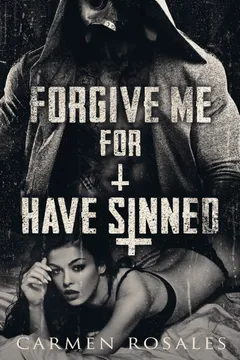
Forgive Me For I Have Sinned receives high praise for its emotional depth, complex characters, and intense storyline. Readers appreciate the redemption of Veronica's character and the development of her relationship with Alaric. The book is described as dark, raw, and gripping, with many noting they couldn't put it down. While some found Alaric initially unlikable, most were satisfied with his character arc. Readers warn of sensitive content and recommend checking trigger warnings. The novel is part of a series but can be read as a standalone, though many suggest reading the previous books for a fuller experience.
Characters
Veronica Devlin
The guarded survivorVeronica is an economics student at Kenyan whose pale eyes and hair make her conspicuous in a world that wants to define her as pure, sinful, or useful. She is sharp, funny, and skilled at reading what people want from her, but her cutting, depression, and guardedness reveal the cost of living under Charles's control. Her work at Dorothy's diner gives her a small sphere of chosen relationships and practical independence. She wants tenderness, yet distrusts it because the first person she desired publicly humiliated her. Her central struggle is to separate her own desires from the identity imposed by the Order, and to accept help without surrendering her right to choose.
Alaric Riodrick-Riordan
The ruthless heirAlaric is a wealthy Kenyan graduate, business leader, and feared member of the Order's ruling circle. He treats control as competence and initially mistakes emotional distance for strength, allowing old rumors to justify his cruelty toward Veronica. His intelligence and influence can protect people, but his instinct for violence makes that protection morally complicated. Veronica forces him to confront the difference between wanting someone and respecting her. His development depends on learning facts he once refused to seek, acknowledging his responsibility, and accepting that devotion must be demonstrated through changed behavior rather than possessive declarations.
Alicia Riordan
Veronica's closest friendAlicia is Veronica's best friend and Alaric's cousin, a young woman who offers warmth without demanding that Veronica perform innocence or toughness. Her closeness to Veronica makes her a source of trust across the otherwise rigid divisions of Kenyan. She is connected to the Order's most powerful families but is emotionally guided by loyalty rather than status. Alicia's understanding of Veronica gives the novel a measure of how little the rest of the world sees. Her affection remains important to the people around her, shaping their choices and keeping Veronica connected to a version of herself not defined by shame.
Dorian Black
The rival suitorDorian is a wealthy businessman and Alaric's long-standing rival, eager to gain influence through both investment and marriage. He is calculating enough to use the Order's traditions for personal leverage and cruel enough to treat Veronica's damaged reputation as an invitation. His public polish conceals a predatory sense of entitlement. Dorian is not simply a romantic obstacle: he represents the way powerful men can turn institutional rules into private weapons. His fixation on Veronica is bound up with rivalry, status, and the pleasure of believing that another person's choices can be taken away.
Valen Vikiar
The watchful allyValen is one of the sons of Kenyan, a talented swimmer whose emotional impulsiveness and sexual habits mask loneliness. His feelings for Jess leave him vulnerable, but he notices Veronica's distress without demanding that she make it easy to understand. When he finds her hurting herself, he stays with her and responds with patience. His loyalty to the younger circle of friends becomes practical as well as emotional, and he is willing to take risks when Veronica's safety is threatened.
Adam
The diner friendAdam is a student from Ohio State who works with Veronica at Dorothy's diner and cares for his younger sisters. His decency is visible in ordinary acts: he challenges men who harass Veronica and tries to protect his family without treating them as possessions. He becomes one of Veronica's first friends outside Kenyan's social hierarchy. Adam's connection to the secret conflict is concealed at first, but his loyalty is grounded in genuine concern rather than wealth or romantic claim.
Charles Devlin
The abusive patriarchCharles is the powerful man Veronica calls her father and the head of the Devlin household. He values obedience, family standing, and influence within the Order, using religious language to make his control appear righteous. His treatment of Veronica converts shame into a daily discipline, while his political calculations place her marriage at the service of his ambitions. Charles's authority is especially dangerous because it is both domestic and institutional: the same man who controls her at home can shape the decisions that govern her future.
Reid Riordan
Alicia's protective brotherReid is Alicia's brother and Alaric's cousin, a powerful member of the Kenyan circle with a fierce protective streak. He initially holds Veronica responsible for the loss that changed his family, making their encounters tense. His marriage to Jess has softened some of his defenses, though grief still shapes how he judges Veronica. Reid's eventual willingness to speak with her reflects a difficult distinction between accountability and blame.
Jess
The concerned friendJess is Reid's wife and one of the few people in Kenyan who keeps trying to reach Veronica despite their painful history. Her concern is quiet and persistent: she checks on Veronica at the cemetery and invites her into the social circle she shares with Gia. Jess provides care without pretending that the past is simple. Her presence also makes visible the kind of mutual affection Veronica has trouble believing she could ever receive.
Gia Bedford
The warm insiderGia is married to the Bedford twins and moves comfortably among the powerful Kenyan families. She is affectionate and perceptive, helping draw Veronica into gatherings rather than treating her as a rumor. Gia's ease with love and partnership gives Veronica a glimpse of intimacy that is not organized around punishment. Her loyalty to her friends matters because she can offer support from within the social world that has judged Veronica.
Dorothy
The diner guardianDorothy owns the diner where Veronica works and offers her practical kindness without prying into the blood or fear she sometimes carries through the door. She provides a job, a safe place to talk, and a maternal steadiness Veronica does not find at home. Dorothy's blunt judgment of the people who pursue Veronica comes from watching how they behave, not from the Order's status games. The diner becomes a rare place where Veronica is valued for showing up and doing her work.
Claire Riodrick-Riordan
Alaric's generous motherClaire is Alaric's mother, a gentle presence who has shown Veronica kindness since she was young. She gives Veronica clothes and attention without demanding anything in return, offering a glimpse of the nurturing relationship Veronica lacks with her own mother. Claire's compassion makes Alaric's contempt at her home especially painful, and her bond with Veronica reveals that not everyone in the powerful families accepts the rumors surrounding her.
Dr. Wick
The compromised therapistDr. Wick is the campus therapist assigned to Veronica, but their sessions are compromised by the suspicion that information reaches Charles. Veronica uses sarcasm and sexual provocation to test the limits of the relationship, while Dr. Wick often retreats behind procedure. The uneasy dynamic shows how difficult it is for Veronica to trust a professional when privacy has never felt secure.
Garret
The unreturned admirerGarret is one of the young men in Alaric's circle and has genuine feelings for Veronica. Their past sexual encounter was bound up with a social game rather than a relationship, leaving him hurt when she offers friendship instead. Garret's affection complicates Alaric's jealousy and gives the story another example of how the Order's sexual games blur desire, status, and emotional consequence.
Draven and Dravin Bedford
The influential twinsDraven and Dravin are wealthy Kenyan brothers, closely connected to Reid, Alaric, and the Order's leadership. Their personalities differ, but both are loyal to their partners and to the circle of friends that forms around them. The twins help Alaric investigate the abuse hidden behind the Order's traditions and lend their influence when the conflict becomes public. Their presence links the intimate story to the larger political structure of Kenyan.
Plot Devices
The Order's marriage code
Turns marriage into leverageThe Order requires heirs to marry before graduating, treating unions as instruments for family alliances and political influence. Charles uses that rule to select Dorian for Veronica, while Dorian sees the approved match as ownership. Because members can challenge or manipulate the arrangement, the rule also creates a route for Alaric to intervene. It gives the romance an institutional obstacle: private affection cannot alone protect Veronica when a powerful body claims authority over her future.
The Prey mark
Makes ownership visibleThe Order's mark identifies women it classifies as Prey, a status tied to ritualized service and punishment. Veronica's mark is hidden beneath her hair, making the secret system physically present even when others see only her public reputation. Its discovery changes Alaric's understanding of the initiation night and forces him to investigate the rules that shaped her life. The mark connects individual abuse to an organized institution rather than a series of isolated acts.
The initiation-night blood
Distorts a first encounterVeronica's blood during her first sexual experience is misread by the partygoers as menstrual blood. Their ridicule gives Alaric a false story about her and makes the night a lasting source of humiliation for Veronica. Later, the truth that she was a virgin and had chosen him reframes both his cruelty and her attachment. The blood is not proof of guilt, despite the Order's language of sin; it marks the moment when other people's assumptions overpower her account of herself.
Alicia's letters
Connects grief to choiceAlicia leaves messages for Veronica and Alaric to be delivered before graduation. Her words remind Veronica that someone saw her kindness beneath the rumors, and they give Alaric a clearer measure of the friend he failed to understand. The letters do not solve the danger or substitute for Veronica's own decisions. Instead, they preserve Alicia's perspective across her absence and help the two survivors recognize the love and loyalty that had already shaped their lives.
About the Author
Other books by Carmen Rosales




Download PDF
Download EPUB
.epub digital book format is ideal for reading ebooks on phones, tablets, and e-readers.








