

Key Takeaways
Make reliability the luxury when the journey itself is miserable
A problem worth solving. Fred Harvey knew rail travel from both sides of the counter. As a young restaurant worker and later a traveling railroad agent, he endured stale meals, dirty rooms, and hurried stops where food could be reused after passengers left. He saw that travelers would pay for something rarer than extravagance: a clean place, fresh food, fair prices, and service that kept its promises.
The first proof. In 1876, Harvey opened a small lunchroom in the Santa Fe depot in Topeka. He and his wife, Sally, cleaned and refitted it, then arranged for fresh provisions and specially roasted coffee to arrive by train. The room was inconveniently upstairs and cramped, but its consistency gave travelers a reason to return. Harvey later brought the same insistence on order to the Montezuma Hotel, where even drunken cowboys were expected to respect the house.
What's striking is how the business begins with a practical diagnosis, not a grand theory of hospitality. Harvey noticed that railway passengers were treated as a captive audience, then built trust by removing the indignities they had come to expect. That is service as infrastructure: the meal makes a long, uncertain journey feel more manageable. The language of civilizing the West, however, deserves care. Better food and safer workplaces mattered, but the railroad also helped impose settlement and commercial control on Indigenous lands. Comfort can be genuinely valuable while still serving a larger expansion project.
Turn a good meal into a system customers can trust anywhere
Consistency at scale. Harvey did not rely on a gifted cook in one town. He built linked kitchens, supply chains, and routines. Meat came through centralized purchasing, while refrigerated railcars carried fresh ingredients to distant houses. Coffee was replaced regularly rather than reheated all day. Bread slices had a prescribed thickness, and a cup-position code told servers which drink each customer wanted without slowing service.
Speed without guesswork. The Santa Fe allowed about thirty minutes for a meal stop, so staff had to serve full dining-room meals and quick counter orders on a precise schedule. Managers sent daily reports on sales, supplies, and employees; Harvey made surprise inspections. At its peak, the system included more than sixty restaurants and lunch counters, sixty dining cars, and a dozen large hotels. The point was not identical menus everywhere, but dependable execution across hundreds of miles.
The Harvey operation anticipates a central problem of large organizations: how to reduce variation without making service feel mechanical. Its answer combines fixed procedures with a supply network and frequent feedback, a structure that modern operations managers would recognize. The cup code is a small but telling example: a simple signal removes delay without asking the customer to repeat an order. Yet the system's intensity had a cost. Twelve-hour shifts, inspections, and strict rules could produce reliability while also narrowing workers' autonomy. A standard is strongest when it guides judgment, not when it replaces it.
Use the railroad to create destinations, not just reach them
A market made together. Harvey's partnership with the Atchison, Topeka & Santa Fe grew beyond depot meals. The railroad supplied tracks, buildings, and transport for food; Harvey supplied restaurants, hotels, and a reason to travel. When Santa Fe reached New Mexico, Harvey helped manage the enormous Montezuma resort near Las Vegas. The hotel offered grand dining and elaborate baths in a remote setting, turning isolation itself into an attraction.
Selling a way to see America. The partnership later helped draw visitors to the Grand Canyon. The Santa Fe extended a rail line to the South Rim, while Harvey ran El Tovar and other visitor services. The companies promoted the region through hotels, artwork, guidebooks, and tours. A train ticket could become a journey into a newly marketed American landscape, not simply passage between cities.
The story shows transportation companies acting as market-makers. A railway did not merely connect places that already attracted visitors; through hotels, advertising, and convenient access, it helped decide which places became destinations. This resembles the way a modern platform can create demand around its own network. The arrangement also concentrated power: the railroad controlled access, and Harvey often controlled the visitor's food, lodging, and excursions. The same integration that made travel practical could limit local competition and shape what tourists saw as authentic America.
Build jobs that give women wages and a wider map
Work opened a route west. In 1883, after violence and racial tensions among the all-male staff at Raton, manager Tom Gable proposed recruiting young white women from Kansas as waitresses. Harvey agreed, and the experiment spread through the chain. A new hire could earn $17.50 a month plus tips, with room, board, and train fare provided. For many, this meant leaving home, earning money, and traveling independently at a time when the West had far more men than women.
Opportunity with conditions. Harvey Girls received training, uniforms, and housing, but also faced strict supervision: a chaperone, curfews, rules against dating coworkers, and contracts requiring them to remain single during their first six months. Many later married ranchers, railroad workers, or local men and settled in the towns where they had been posted. The work gave women choices, but those choices were managed by the company.
The Harvey Girls story holds two truths together. Paid work and mobility could enlarge a young woman's life, especially in communities where social and economic options were narrow. Yet the company offered that independence inside a paternal structure designed to protect its reputation and manage employees' private lives. The original shift also replaced Black male waiters with white women, partly to calm customers and reduce racial conflict. A history of women's opportunity is therefore not automatically a history of equal opportunity. The business expanded one group's access while marginalizing another.
Give employees discretion inside standards, then promote proven insiders
A shared operating culture. Fred Harvey and his accountant, David Benjamin, turned the founder's demands into routines that employees could understand. The company issued guidance on courtesy, honesty, cleanliness, and treating guests without discrimination. At the same time, local managers could buy good regional ingredients for other houses and send them along the rail line. Employees were expected to notice opportunities, not simply follow orders.
Grow leaders from within. Benjamin built reporting and communication systems that helped Harvey monitor a sprawling network before telephones and computers were common. Harvey preferred to promote people who already understood the business. Ford Harvey continued that approach with a leadership circle nicknamed the Tenth Legion. Its members discussed everything from food costs to service complaints. The culture treated customer problems as useful tests: solving a difficult complaint could reveal how to serve everyone better.
This model pairs formal coordination with institutional memory. Internal promotion preserves practical knowledge that outside hires may lack, while local discretion lets a national chain respond to regional tastes. The combination is more subtle than simple standardization. It asks employees to understand why the rules exist so they can adapt intelligently. But a culture built around loyalty and family language can blur work and private life, making excessive demands feel like personal duty. Organizations can borrow the useful principle of shared purpose without requiring employees to surrender boundaries.
Transfer authority before the founder becomes the whole company
A brand outlives its owner. Fred's repeated absences for medical treatment left Ford Harvey and David Benjamin making more daily decisions. The company continued to present itself as Fred Harvey, even after Ford took charge, so customers would experience continuity. When Fred died in 1901, his will required the family to preserve the business unchanged for ten years. Ford and Benjamin did so, and the company expanded into hotels, newsstands, bookstores, and major union stations.
Continuity has a price. Ford was not simply a caretaker. He developed the company, negotiated major contracts, and built new ventures, yet kept his father's name at the center. The family's rules also excluded Fred's wife and daughters from company ownership in 1911. Kitty, who later inherited control after her brother Freddy died, was eventually pressured by her uncle Byron to sell her shares. The brand survived succession more easily than the family accepted women as leaders.
Founder brands can make customers feel that a personal promise remains present across a large organization. Harvey's name carried precisely that force. But concealing succession can confuse symbolic continuity with actual governance, leaving authority less visible and accountability harder to locate. The family's treatment of Minnie and Kitty makes the contradiction especially clear: a company celebrated for employing women resisted women's ownership and leadership. A durable succession plan must preserve the founder's principles while making the next decision-makers explicit, capable, and eligible regardless of gender.
Tourism can preserve a place while turning its people into scenery
Culture entered the business. Ford Harvey's sister Minnie and her husband, John Huckel, helped develop the Fred Harvey Indian Department, with Gallup manager Herman Schweizer as its expert buyer. The department collected and sold Indigenous art, and commissioned work suited to travelers' budgets. Architect Mary Colter used Indigenous design references and genuine objects to create the Albuquerque Indian Building, helping popularize what became known as Santa Fe style.
Visibility was complicated. Native artists and craftspeople gained customers and, in some cases, new markets for work that might otherwise have been discarded. But the company also staged demonstrations for visitors. Navajo artisans were asked to make lighter, cheaper jewelry for tourists, and Native employees sometimes had to perform cultural identity on a schedule dictated by arriving trains. The exhibits introduced travelers to Native art while filtering that culture through commercial expectations.
The most useful reading avoids choosing between preservation and exploitation as if only one can be true. Commercial demand can support artisans, sustain techniques, and save objects; it can also alter the work, turn living communities into spectacles, and reward outsiders who control the display. The distinction between an artist choosing a market and a company scripting authenticity matters. The Harvey case shows why cultural tourism should be judged not only by what it preserves, but also by who sets the terms, receives the income, and controls the story.
Protect the landscape before your attractions overwhelm it
A hotel moved back. During a 1901 visit to the Grand Canyon, writer and advocate Charles Lummis discovered that the Santa Fe's proposed hotel design would place balconies over the rim. He argued that the building would spoil the very view attracting visitors. Railroad leaders agreed to move it farther back. When Theodore Roosevelt visited in 1903, he urged Americans to keep the canyon from being damaged by development, and the hotel's eventual location reflected that pressure.
Stewardship required infrastructure. Ford Harvey later supported national park status and argued that visitors with different budgets and abilities needed roads, lodging, and services. The Santa Fe helped fund a paved South Rim road when government support lagged. Harvey favored one responsible concessionaire for each park, reasoning that coordinated service worked better than chaotic competition. That position could protect visitors and standards, but also strengthened his company's commercial control.
This is a revealing case of commercial and environmental interests aligning. The canyon's beauty was the source of the tourism business, so protecting the view also protected the enterprise. That alignment can motivate real stewardship, especially when a firm accepts limits on what it may build. Still, preservation is not the same as leaving a place untouched: roads, hotels, and visitor services reshape access and impact. The harder question is who decides what level of use is acceptable, and whether a single operator is accountable to the public as well as to its customers.
Carry your service standard onto the next transport system
The next route beckoned. Ford's son Freddy invested in Transcontinental Air Transport, which combined planes by day with trains by night to shorten a coast-to-coast trip. The company launched in 1929 with celebrity backing and Fred Harvey meals. But passengers feared flying, and a fatal crash that September intensified doubts. After Freddy died in a 1936 plane crash, his uncle Byron pulled the company out of airline operations. Meanwhile, cars and highways were changing how Americans traveled.
Reputation could not replace adaptation. Fred Harvey did not build the roadside restaurant network that firms such as Howard Johnson developed through franchising. The Depression closed many Harvey Houses, and wartime troop traffic briefly revived business. After the war, rail travel declined, and the chain contracted sharply. The 1946 film The Harvey Girls rekindled national affection for the name, but nostalgia could not restore the original network. The company had to rely increasingly on a few hotels, stations, and the Grand Canyon.
The family did recognize that aviation mattered, but a promising experiment is not the same as a durable transition. The airline's risks, Freddy's death, and the expense of expanding all narrowed the opportunity. Meanwhile, highway-based competitors used franchising to reach customers beyond rail stations. This is a lesson in path dependence: success can make an organization excellent at serving one channel while its customers migrate elsewhere. A trusted standard is portable only if leadership deliberately carries it into new settings and accepts the investment and uncertainty that change requires.
Analysis
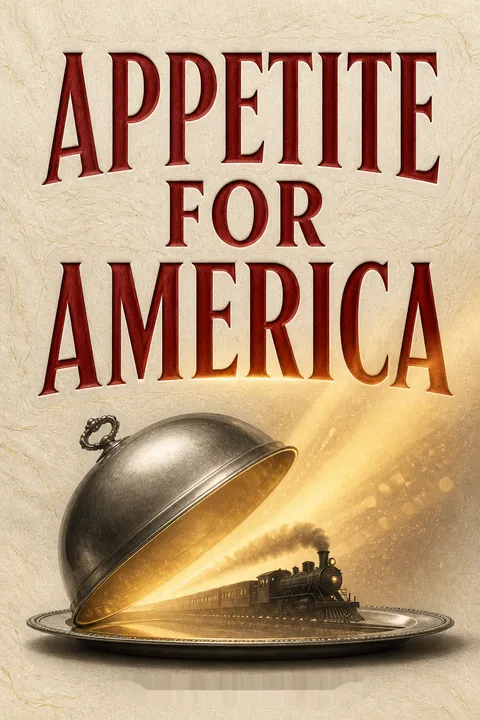
Appetite for America is a business biography that doubles as a history of how Americans learned to travel, eat, and imagine the West. Its central achievement is to show hospitality not as decorative service added to transportation, but as part of the machinery that made national travel possible. Fred Harvey's kitchens relied on refrigerated railcars, timed stops, coded orders, centralized purchasing, and a trained workforce. His hotels, gift shops, artwork, and tours then turned the railroad route into a story about America worth seeing.
The family arc makes the business history more than a celebration of operational genius. Fred's illness forces Ford into leadership; Ford preserves a company whose founder has become its public identity; Freddy seeks a new future in aviation; and Byron's leadership steers the business back toward familiar rail assets. Each generation inherits not only a brand, but constraints created by the prior generation's choices. The concealment of succession helped preserve customer confidence, yet it also made leadership less transparent. The exclusion of women from ownership, despite the company's reliance on women's labor and mobility, exposes a sharp limit in its rhetoric of opportunity.
The book's language of civilizing the West is most persuasive when it describes clean food, safer workplaces, and dependable service. It is less innocent when treated as a neutral description of progress. The Santa Fe's expansion depended on land acquisition and settlement, while Indigenous people were at once customers, artists, subjects of display, and obstacles to commercial development. The narrative includes this tension, though the company's achievements can still dominate the moral frame.
The larger lesson is not simply that quality wins. Harvey's quality depended on infrastructure, trained employees, disciplined logistics, and a public willing to travel by rail. A celebrated brand could not indefinitely compensate for a changing transport system. The company's rise and contraction show how service excellence creates lasting affection, but survival requires the institution to move where customers are going, not merely to perfect the route they once used.
Review Summary
Appetite for America is a highly praised biography of Fred Harvey and his company's impact on American hospitality and the West. Readers appreciate Fried's engaging storytelling, historical detail, and the book's exploration of Harvey's influence on railroads, restaurants, and tourism. Many reviewers express surprise at learning about Harvey's significance and enjoy the book's insights into American history. Some found the family drama sections less compelling, but overall the book is considered informative, well-researched, and entertaining.
People Also Read





Glossary
Harvey Girls
Trained women restaurant workersThe name given to young women recruited by Fred Harvey to work in his railroad restaurants and hotels. They received training, uniforms, housing, and a chance to travel and earn wages, often far from home. Their employment was also closely supervised through contracts, curfews, chaperones, and restrictions on dating.
Harvey System
Integrated hospitality networkThe linked organization of Fred Harvey restaurants, lunch counters, hotels, dining cars, newsstands, bookstores, and later tourism services. Its defining feature was consistent service across distant locations, supported by centralized purchasing, rail distribution, employee training, reporting, and inspections.
cup code
Cup-position drink signalA serving procedure used in Harvey dining rooms to communicate customers' drink orders without asking or writing them down. Servers positioned cups in specific ways to signal coffee, milk, iced tea, or varieties of hot tea. The method helped staff serve many diners quickly during short train stops.
Fred Harvey Indian Department
Native art and craft operationA company division that collected, displayed, commissioned, and sold Indigenous and Spanish-American arts and crafts. Led by people including Herman Schweizer and John Huckel, it operated a museum in Albuquerque and supported hotel displays, retail sales, and exhibits. Its work promoted Native art while also shaping it for tourist markets.
Santa Fe style
Southwestern design vocabularyAn architectural and decorative style popularized through the Santa Fe railroad and Fred Harvey properties. It drew on Pueblo and Spanish-American forms, materials, art, and motifs, then arranged them for hotels, museums, and tourist spaces. Mary Colter's buildings and interiors helped establish the style's recognizable look.
Indian Detours
Guided Southwestern auto toursA Fred Harvey tourism venture launched in 1926 that took visitors by car from Santa Fe and nearby hotels to pueblos, archaeological sites, and other Southwestern destinations. Its guides, called Couriers, were trained to explain regional history and culture. The tours became popular but did not prove profitable for the company.
Tenth Legion
Senior Harvey leadership circleFord Harvey's informal name for his close group of senior executives, most of whom had risen through the company. They met regularly to review operations, solve problems, and manage the expanding network. The nickname referred to Caesar's elite military unit and reflected the company's disciplined, service-oriented culture.
FAQ
What's Appetite for America about?
- Fred Harvey's Legacy: The book chronicles the life and achievements of Fred Harvey, an English immigrant who transformed the American dining experience along the Santa Fe Railroad.
- Cultural and Culinary Impact: It explores how Harvey's establishments and the "Harvey Girls" helped civilize the Wild West by providing quality food and service.
- Historical Context: Set against the backdrop of the American West's expansion, it delves into the rise of the railroad industry and changing social dynamics.
Why should I read Appetite for America?
- Rich Historical Insight: The book offers a detailed look at a pivotal figure in American history, providing context about the development of the service industry and cultural shifts.
- Engaging Storytelling: Stephen Fried combines biography with historical narrative, making it an engaging read for those interested in food history, American culture, and entrepreneurship.
- Lessons in Business: Readers can learn valuable lessons about customer service, branding, and the importance of quality in business from Fred Harvey's innovative practices.
What are the key takeaways of Appetite for America?
- Quality Service: Fred Harvey set a standard of excellence in dining that emphasized cleanliness, quality ingredients, and attentive service.
- Women's Empowerment: The Harvey Girls were among the first major female workforces in America, gaining independence and contributing to the settlement of the West.
- Cultural Integration: Harvey's establishments played a crucial role in introducing and integrating diverse culinary traditions into American dining.
What are the best quotes from Appetite for America and what do they mean?
- “He has added to the physical, mental and spiritual welfare of millions.”: Highlights Harvey's impact on society, improving travel and hospitality experiences.
- “More than any single organization, the Fred Harvey System introduced America to Americans.”: Reflects how Harvey's restaurants helped Americans appreciate their own culture and cuisine.
- “It is our business to please cranks.”: Underscores the importance of customer service in Harvey's philosophy, catering to even the most difficult customers.
Who were the Harvey Girls in Appetite for America?
- Pioneering Workforce: The Harvey Girls were young women employed by Fred Harvey to serve in his restaurants and hotels, often traveling from the East to the West.
- Cultural Impact: They played a significant role in changing societal norms by entering the workforce, gaining independence, and challenging traditional gender roles.
- Training and Standards: The book details the rigorous training they underwent, emphasizing the importance of service quality and the high standards set by Harvey.
How did Fred Harvey change American dining?
- Standardization of Quality: Harvey introduced a system of quality control that ensured consistent, high-quality meals across all his establishments.
- Innovative Business Practices: He pioneered centralized purchasing and inventory management, allowing for better pricing and availability of fresh ingredients.
- Culinary Diversity: Harvey's restaurants featured a mix of regional American dishes and international cuisine, broadening the American palate.
How did the Santa Fe Railroad influence Fred Harvey's success?
- Partnership for Growth: The Santa Fe Railroad provided the infrastructure and customer base that allowed Harvey to expand his dining empire across the West.
- Branding and Marketing: The railroad's promotion of "Meals by Fred Harvey" helped establish his brand as synonymous with quality dining.
- Logistical Support: The railroad facilitated the transportation of fresh ingredients and supplies, crucial for maintaining high standards.
What challenges did Fred Harvey face in his business?
- Competition and Expansion: Harvey faced significant competition from other dining establishments and had to navigate the complexities of expanding his business.
- Economic Downturns: The Great Depression forced Harvey to close many of his smaller establishments, leading to a significant restructuring of the company.
- Cultural Resistance: He faced challenges in changing the dining culture of the West, where many patrons were accustomed to poor service and low-quality food.
How did Fred Harvey influence the hospitality industry?
- Setting Standards: Fred Harvey established high standards for food quality and service that many restaurants still strive to meet today.
- Innovative Marketing: He was one of the first to use branding and marketing effectively in the hospitality sector, creating a recognizable name and reputation.
- Empowering Women: By hiring women as waitresses and providing them with training and opportunities, Harvey helped change societal perceptions of women in the workforce.
What role did Native American culture play in Appetite for America?
- Promotion of Art: Fred Harvey actively promoted Native American art and crafts in his establishments, elevating their status and appreciation.
- Cultural Exchange: Harvey's restaurants served as venues for cultural exchange, allowing travelers to experience Native American culture firsthand.
- Economic Opportunities: By sourcing art and crafts from Native Americans, Harvey provided economic support to indigenous communities.
What was the impact of the Great Depression on Fred Harvey's business?
- Closure of Establishments: The Great Depression forced Fred Harvey to close many of his smaller eating houses and hotels, reducing the company's footprint.
- Shift in Focus: The company shifted its focus to larger, more profitable locations, such as the Grand Canyon and major union stations.
- Resilience and Adaptation: Despite economic challenges, Fred Harvey's core operations remained strong, demonstrating the resilience of the brand.
What is the legacy of Fred Harvey as described in Appetite for America?
- Culinary Pioneer: Fred Harvey is remembered as a pioneer in the hospitality industry, setting standards that are still relevant today.
- Cultural Influencer: His efforts to promote Native American culture and art have had a lasting impact on American society and tourism.
- Inspiration for Future Generations: Harvey's story continues to inspire entrepreneurs and hospitality professionals, emphasizing quality, service, and cultural appreciation.

Download PDF
Download EPUB
.epub digital book format is ideal for reading ebooks on phones, tablets, and e-readers.








