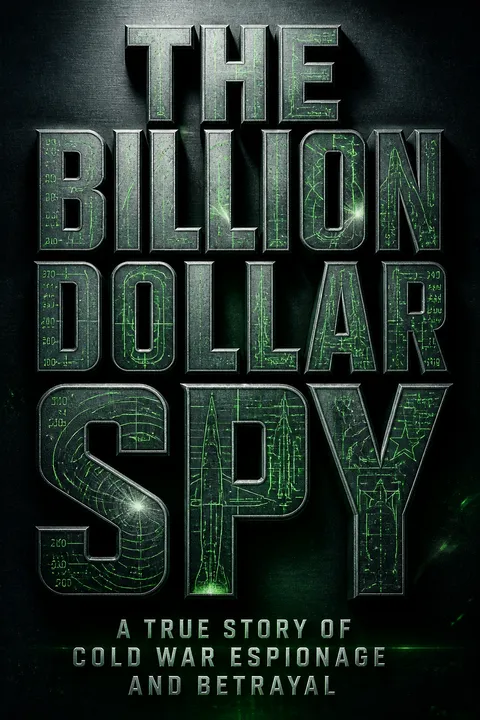


Key Takeaways
One Soviet engineer gave America a decade of radar secrets from inside Moscow
A source inside the vault. Adolf Tolkachev was an engineer at Phazotron, a secret Soviet institute designing radar and avionics for military aircraft. Beginning in 1977, he offered the CIA access to designs, tests, and weapons plans that satellites could not reveal. After a long delay, he began meeting case officers in Moscow. Over six years, he met them twenty-one times and supplied thousands of pages of documents, plus circuit boards and diagrams.
A vast intelligence return. His material disclosed systems still on the drawing board, including aircraft and radars that might not enter service for years. U.S. experts estimated that an early delivery saved as much as five years of research and development; the Air Force later put the broader value near $2 billion. In 1985, KGB officers arrested Tolkachev after a CIA insider helped expose the operation.
The story’s central achievement is not simply that one person stole secrets. It is that a technical specialist could turn access to an obscure laboratory into strategic knowledge unavailable through overhead surveillance. The scale of the return makes the title’s “billion dollar” idea plausible, but the number is an estimate, not a clean accounting. The intelligence mattered because analysts and military engineers could use it. A source creates an opportunity; institutions still have to interpret and act on what arrives.
Investigate volunteers before labeling them KGB bait
Suspicion became paralysis. After earlier agents were exposed, CIA counterintelligence chief James Angleton grew convinced that Soviet volunteers might be part of a broad deception. His approach made the agency wary of nearly every potential source. Moscow’s small station had few productive agents, and some people who offered information were turned away without a serious examination.
Gerber checked the record. CIA officer Burton Gerber reviewed years of files and concluded that volunteers should be assessed individually. The resulting “Gerber rules” treated a stranger’s unsolicited offer as worth checking, while warning that an acquaintance who eagerly delivered a message might be a planted trap. These were guides, not guarantees. The larger shift was from reflexive rejection to disciplined verification, which helped the agency take Tolkachev’s persistent approach seriously.
This episode captures a recurring institutional trap: after a failure, organizations can mistake maximum suspicion for maximum safety. Gerber’s response is more rigorous than simple optimism because it asks what patterns distinguish a genuine offer from a staged one. Yet rules of thumb can become another form of overconfidence if treated as proof. The useful principle is procedural: preserve skepticism, but make it produce investigation rather than automatic refusal. An agency that cannot test its assumptions cannot learn from its own files.
Use predictable surveillance habits to create brief windows for action
Find the watchers’ routine. CIA officer Haviland Smith learned that surveillance in Prague was persistent but not always alert. By repeating ordinary trips, he found that teams could grow accustomed to familiar patterns. He also learned to use the “gap,” a brief period when a turn or obstruction broke the watchers’ line of sight. Even fifteen to thirty seconds could allow a discreet exchange or message placement.
Make contact fleeting. A “brush pass” is a quick handoff as two people pass each other, ideally when surveillance cannot see both parties. Smith trained other officers in these methods, which helped shift CIA practice away from relying only on concealed message exchanges. The point was not to assume surveillance had vanished, but to understand its habits and act only when circumstances offered a limited opening.
The important insight is that a powerful monitoring system still has routines, staffing limits, and predictable blind spots. Smith’s methods treat surveillance as an organization whose behavior can be studied, not as an omniscient force. That is a valuable model for thinking about security more broadly: defenses are designed and operated by people, so their patterns matter. The limitation is equally important. A momentary gap is not proof of safety. The officers’ advantage came from combining observation, planning, and a willingness to abort.
Understand a source's grievance, not just their access
Access explains opportunity. Tolkachev could reach classified radar material because he was a leading designer at Phazotron. His reasons for betraying the Soviet state were more personal and political. His wife, Natasha, had lost both parents to Stalin’s purges: her mother was executed, and her father was sent to a labor camp. The family history left a lasting hatred of the system they served.
Ideas sharpened the choice. Tolkachev also admired dissidents Andrei Sakharov and Alexander Solzhenitsyn. After years of private discontent, he decided that protest leaflets would achieve little and that his technical access offered a more consequential way to damage the regime. The 1976 defection of Soviet pilot Viktor Belenko helped him see how valuable aircraft secrets could be. His motives combined grievance, conviction, and a practical sense of leverage.
A source’s motivation is not a box to check once during recruitment. It shapes what risks seem acceptable, what rewards feel meaningful, and whether cooperation can last. Tolkachev’s story resists a simple choice between ideology and self-interest: he wanted to oppose a system he despised, but also wanted recognition and material security. That mix is more human, and more operationally useful, than a single motive label. It also means that knowing someone’s cause does not make their choices fully predictable.
Treat trust as operational equipment, not a sentimental extra
A relationship carried risk. Tolkachev initially had no face-to-face contact with the CIA, only long waits and unanswered approaches. Once John Guilsher became his case officer, personal meetings let him explain procedures, hear concerns, and reassure Tolkachev that his work mattered. Their brief conversations also revealed limits: Tolkachev had little privacy at home, feared arrest, and wanted a suicide pill in case the KGB caught him.
Small requests mattered. Tolkachev sought substantial compensation, but he also asked for Western music for his son, drawing supplies, books, medicine, and better razor blades. These were not merely perks. They offered a way to help his family and signaled that the CIA saw a person, not just a stream of documents. The case officers still had to judge whether any item might attract unwanted attention.
Trust here is practical infrastructure. It supports honest reporting about fear, access, health, and changing conditions, all of which affect whether an operation can continue. The personal requests also made the alliance tangible in a life defined by shortages and surveillance. But care cannot eliminate the imbalance: the CIA needed intelligence, while Tolkachev bore the immediate danger. A respectful relationship can improve decisions, yet it does not make a dangerous bargain fair or fully controllable.
Protect the source from your own appetite for intelligence
Success raised the pressure. Tolkachev copied documents with a Pentax camera and returned the originals to their files. When workplace rules blocked his usual method, the CIA worried that he would take greater risks, while its military customers kept asking for more. Headquarters sent broad question lists, sometimes about subjects outside his specialty. Tolkachev, driven to inflict maximum damage, often pushed himself without waiting for permission.
The warning signs accumulated. His document sign-out records carried an unusually long trail of signatures. He later photographed material in a workplace toilet and hid other evidence at a country house. The Moscow station repeatedly urged caution, but the operation’s value created pressure to keep production high. Good handling meant balancing intelligence yield against the source’s safety, even when the source himself resisted slowing down.
This is the book’s sharpest management problem: the people who benefit from an asset’s output are not the ones exposed to arrest. That distance encourages demands that seem small from headquarters but can be dangerous on the street. Tolkachev’s own drive made the problem harder, not easier. Protecting a source therefore requires more than warnings. It requires limits on what the organization asks for, and a willingness to accept less intelligence when additional production raises the chance of losing the person who provides it.
Choose gadgets for the communication problem, not their novelty
A clever device can add risk. The CIA’s Discus was a handheld short-range messaging system intended to let an agent send information without meeting a case officer. It promised speed and distance, but required careful setup, suitable locations, and telltale attention to the device. Tolkachev never used it successfully as a regular channel. His main contribution was not a short urgent message but large collections of photographed documents.
Human contact still fit the work. Moscow station chief Burton Gerber argued that the operation depended on lengthy exchanges of material and on Tolkachev’s need to speak directly with someone he trusted. The CIA also developed miniature Tropel cameras, which could be hidden in ordinary objects, but their low-light performance was poor. The devices were ingenious; their usefulness depended on matching them to the agent’s actual environment and task.
The tension is between technological possibility and operational fit. Discus addressed the visible danger of meetings but introduced new behaviors and technical failure points. The camera problem was similar: miniaturization did not guarantee readable images in a dim workplace. This is a useful corrective to gadget-driven thinking. Tools matter when they reduce the whole system’s risk, not merely one risk in isolation. At the same time, personal meetings were not inherently safer; they worked here because the station invested heavily in planning and surveillance detection.
A cleared insider can undo years of tradecraft from outside
The breach began at home. Edward Lee Howard was a CIA trainee preparing for Moscow duty, with access to operational information about the station and its agents. After failing repeated security tests and being dismissed, he grew resentful and approached Soviet intelligence. He gave the KGB information pointing toward an American spy inside the Soviet military research system. The KGB investigated the defense industry and narrowed its search to Phazotron.
Another traitor deepened the damage. Aldrich Ames, a CIA counterintelligence officer, began selling secrets to the Soviets in 1985. The book describes his information as further confirmation of the operation around the time the KGB captured Tolkachev. In June, the KGB seized Tolkachev and set a trap that led to the arrest of case officer Skip Stombaugh. The episode exposed the limits of elaborate street precautions when insiders reveal what the precautions are meant to protect.
The operation’s destruction makes a sobering distinction between tactical security and institutional security. Disguises, dead drops, and surveillance detection could protect meetings from street-level observation; they could not compensate for compromised personnel and delayed coordination with the FBI. The chain of responsibility was wider than one traitor. Access controls, employee support, and timely threat reporting all mattered. The story does not suggest that better procedures eliminate betrayal, but it shows why operational brilliance cannot substitute for a trustworthy organization.
Tolkachev's files informed U.S. air power, but did not win wars alone
Secrets became practical knowledge. Tolkachev supplied designs and technical details on Soviet fighter radars, including systems for the MiG-25, MiG-29, and MiG-31, as well as information about a new airborne warning system. The intelligence helped U.S. analysts assess what Soviet aircraft could and could not do. It also informed military research and countermeasures, including changes to an American radar-jamming project.
The payoff had many contributors. During the 1991 Gulf War, F-15 pilots fought Iraqi aircraft built around Soviet designs. The book connects their advantage to intelligence about Soviet systems, but also to superior technology, tactics, and pilot training. The U.S. Air Force shot down thirty-nine enemy aircraft in aerial combat without losing one to enemy aircraft. Tolkachev’s contribution was consequential, not a single-cause explanation for that record.
The epilogue gives intelligence a concrete destination: knowledge gathered in Moscow becomes part of training, equipment, and battlefield judgment years later. That long chain is why the source’s work mattered even after the operation ended. It also guards against a seductive simplification. A spy did not personally create American air superiority; intelligence joined engineering, doctrine, and human skill. The strongest account of strategic impact preserves both facts: one source can alter what a nation knows, but institutions determine what that knowledge can do.
Analysis
The book’s most revealing subject is not espionage technique by itself, but the fragile system that converts access into usable knowledge. Tolkachev’s work depended on a chain of people and tools: a Soviet institute that gave him access, a source willing to betray it, case officers able to meet him, technical specialists who could copy and interpret documents, and military customers prepared to change plans. A failure at any link could waste the rest. The narrative’s suspense comes from watching this chain strengthen, then break.
The CIA’s internal arguments show two genuine institutional needs in conflict. Counterintelligence must suspect deception, while clandestine collection must take risks to find sources. Angleton’s excessive suspicion made the first need dominate; Turner’s stand-down tried to reduce operational danger by suspending operations, but treated risk as something the agency could eliminate. Gerber’s approach was more practical: examine evidence, adapt methods, and accept that safety cannot be guaranteed. The agency’s later pressure for more material reveals another distortion. The better the intelligence became, the more tempting it was to ask the source for still more, even as his exposure increased.
Tolkachev also complicates the familiar image of a spy as either mercenary or idealist. His political disgust and family history mattered, but so did recognition, money, and concern for his son. Those motives were not mutually exclusive. They created both commitment and vulnerability, particularly when the CIA delayed answers to personal requests or treated compensation as a secondary issue.
The ending resists a triumphalist reading. Tolkachev’s reporting gave U.S. decision makers a rare view into Soviet radar and aircraft development, with lasting military value. Yet the same operation demonstrates that technical ingenuity cannot neutralize human betrayal. The story is therefore both a case for human intelligence and a warning about its conditions: access is precious, relationships require maintenance, and protecting a source demands organizational restraint as much as operational skill.
Review Summary
The Billion Dollar Spy is a gripping non-fiction account of Cold War espionage, focusing on Adolf Tolkachev, a Soviet engineer who spied for the CIA. Readers praise Hoffman's meticulous research and thrilling narrative, comparing it to spy novels. The book offers insights into CIA operations, Soviet life, and the human drama of espionage. While some found it dry or repetitive in parts, most reviewers highly recommend it for its historical value and compelling storytelling. The book's attention to detail and ability to bring the Cold War era to life are frequently highlighted.
People Also Read



Glossary
Gerber rules
Volunteer-screening guidelinesGuidelines developed by CIA officer Burton Gerber for assessing people who volunteered information in Moscow and Eastern Europe. Rather than treating every offer as a KGB deception, the rules encouraged officers to evaluate the person and circumstances. Gerber believed a stranger’s unsolicited approach could be worth checking, while an eager offer from a known acquaintance could warrant greater caution.
the gap
A brief surveillance blind spotA short interval when a surveillance team loses visual contact with a case officer, often because a route turns around a corner or passes behind an obstruction. CIA officers sought to use these moments for brief operational acts. The gap did not mean surveillance had ended, only that a small opening might exist before watchers caught up.
brush pass
A fleeting street handoffA quick exchange of a small item as an agent and case officer pass one another in public. The method depended on timing and a location that limited what surveillance teams could see. CIA officer Haviland Smith helped develop and teach the technique as an alternative to leaving sensitive material in a concealed location.
dead drop
A concealed message exchangeA method in which an agent and handler leave or retrieve messages and materials at a hidden location without meeting. It can reduce the danger of direct contact, but the material remains vulnerable to discovery, and each side must follow agreed signals and timing. The CIA used dead drops extensively before arranging personal meetings with Tolkachev.
identity transfer
Disguise as an overlooked colleagueA CIA technique in which a case officer used a disguise to resemble an embassy employee whom the KGB paid little attention to. The officer could then leave or reenter the embassy without attracting the scrutiny applied to known intelligence officers. The method required a suitable person to imitate, convincing clothing and disguise, and careful timing.
deep cover
Low-profile intelligence assignmentAn arrangement in which a CIA officer held an ordinary-looking embassy or government job and kept distance from the station and its visible intelligence activity. In Moscow, these officers were intended to attract less KGB attention and conduct operations while appearing to have routine duties. The isolation made their work harder to coordinate and less socially supported.
Discus
Short-range encrypted messaging deviceA CIA handheld communications system designed to transmit encrypted messages between an agent and a case officer at a distance. It was meant to reduce the need for face-to-face meetings. The system required careful site selection and operation, and it was a poor fit for Tolkachev’s main task, which was transferring large volumes of photographed documents.
Tropel
Miniature document cameraA highly miniaturized CIA camera designed to photograph documents covertly. It could be concealed inside ordinary items such as a pen or key fob, making it more discreet than a conventional camera. Its small size and limited light sensitivity created practical problems: Tolkachev struggled to obtain clear images in dim work areas.
L-pill
Concealed suicide capsuleA CIA-provided lethal capsule intended for an agent to use if capture and interrogation seemed unavoidable. Tolkachev repeatedly requested one because he feared falling alive into KGB hands and revealing the operation. The CIA delayed approval over moral and operational concerns, then supplied the capsule concealed in a fountain pen.
denied areas
Closed hostile operating environmentsCIA terminology for countries or regions where foreign intelligence officers faced intense surveillance, restricted movement, and a high risk of arrest. The Soviet Union was the most difficult example in this account. Officers developed specialized methods for vetting sources, detecting surveillance, communicating secretly, and arranging exchanges in those environments.
FAQ
What is The Billion Dollar Spy by David E. Hoffman about?
- True story of espionage: The book recounts the real-life story of Adolf Tolkachev, a Soviet engineer who became one of the CIA’s most valuable spies during the Cold War.
- Focus on spycraft and risk: It details the secret meetings, tradecraft, and immense risks involved in running a spy inside Moscow under constant KGB surveillance.
- Impact and betrayal: The narrative covers the intelligence Tolkachev provided, its impact on U.S. military capabilities, and the betrayal that led to his capture and execution.
Why should I read The Billion Dollar Spy by David E. Hoffman?
- Insight into Cold War espionage: The book offers a rare, detailed look at the methods, dangers, and psychological toll of espionage in the Soviet Union.
- Human drama and courage: It explores the personal motivations, fears, and sacrifices of both Tolkachev and his CIA handlers, making the story emotionally compelling.
- Historical significance: Readers gain an understanding of how intelligence operations shaped military and political outcomes during a critical period in world history.
What are the key takeaways from The Billion Dollar Spy by David E. Hoffman?
- Espionage shaped the Cold War: Intelligence from sources like Tolkachev had a direct impact on U.S. military strategy and technological development.
- Tradecraft is complex and dangerous: The book highlights the sophisticated methods and constant risks involved in running agents in hostile environments.
- Personal cost of spying: Tolkachev’s story illustrates the immense personal and family sacrifices made by those who choose to betray their country for a cause.
Who was Adolf Tolkachev, and why is he called the "Billion Dollar Spy" in David E. Hoffman’s book?
- Soviet radar engineer: Tolkachev was a chief designer at a top-secret Soviet military radar institute, with access to highly classified information.
- Valuable CIA asset: He provided thousands of pages of blueprints, technical documents, and research plans, saving the U.S. years of development and billions of dollars.
- High personal risk: Despite tight security and health issues, he risked his life to pass intelligence, earning the nickname "Billion Dollar Spy" for the value of his contributions.
How did the CIA communicate and meet with Adolf Tolkachev in The Billion Dollar Spy?
- Covert signals: Tolkachev used signals like turning on a kitchen light (SVET) or opening a window to indicate readiness for meetings.
- Surveillance detection and disguises: CIA officers used elaborate surveillance detection runs, disguises, and alternate meeting sites to evade the KGB.
- Electronic devices: The CIA provided Tolkachev with devices like Discus and shortwave radio demodulators for secure, though sometimes unreliable, communication.
What were the main espionage methods and tradecraft described in The Billion Dollar Spy by David E. Hoffman?
- Dead drops and brush passes: The CIA used secret locations and quick handoffs to exchange materials without direct contact.
- Miniature spy cameras: Devices like the Tropel and Pentax 35mm cameras enabled Tolkachev to photograph documents covertly, even in restrooms.
- Deep cover and identity transfer: The CIA employed deep cover officers and sometimes swapped identities to avoid KGB detection during meetings.
What challenges and risks did Adolf Tolkachev face as a spy in The Billion Dollar Spy?
- Tight Soviet security: Increased document controls and spot checks at his institute made it difficult to smuggle or photograph secret materials.
- Constant KGB threat: Tolkachev operated under the constant risk of surveillance, investigation, and execution if discovered.
- Personal and family strain: His espionage activities caused emotional stress, health issues, and tension with his family, especially after his wife discovered his secret.
How did the CIA support and manage Adolf Tolkachev in The Billion Dollar Spy?
- Material and technical support: The CIA provided cameras, batteries, secure communication devices, and other spy gear to aid his work.
- Personal requests and morale: They fulfilled personal requests for Western goods, music, and gifts for his family to maintain his motivation.
- Financial compensation: Tolkachev received substantial payments, with arrangements for rubles held in escrow and valuable items as rewards.
What role did Edward Lee Howard play in the events of The Billion Dollar Spy by David E. Hoffman?
- CIA trainee turned traitor: Howard was a former CIA trainee who, after being dismissed, betrayed Tolkachev by providing information to the KGB.
- Direct impact on Tolkachev: His betrayal led to Tolkachev’s arrest and eventual execution, marking a devastating loss for the CIA.
- Broader damage: Howard’s actions, along with those of Aldrich Ames, severely compromised U.S. intelligence operations in the Soviet Union.
How did the KGB eventually capture Adolf Tolkachev, and what was his fate in The Billion Dollar Spy?
- Leak investigation: The KGB initiated a serious investigation at Tolkachev’s institute, demanding lists of employees with access to sensitive projects.
- Destruction of evidence: Tolkachev destroyed all incriminating materials and spy gear to avoid leaving evidence.
- Arrest and execution: He was ambushed, arrested, and interrogated by the KGB, then executed for espionage in 1986.
What was the significance of Tolkachev’s intelligence for U.S. military operations, especially as described in The Billion Dollar Spy?
- Revealed Soviet weaknesses: His documents exposed critical flaws in Soviet radar and air defense systems, including the lack of effective look-down, shoot-down capability.
- Enhanced U.S. tactics: The intelligence was used to improve U.S. pilot training and develop countermeasures for American aircraft.
- Impact on Gulf War: U.S. air superiority in Operation Desert Storm was partly attributed to the insights gained from Tolkachev’s espionage.
What are the best quotes from The Billion Dollar Spy by David E. Hoffman, and what do they mean?
- “Everything we do is dangerous.” —Adolf Tolkachev: Captures the constant peril faced by spies and the high stakes of espionage.
- “When you’re black, you’re black.” —David Rolph: Refers to being free from surveillance, a crucial state for safe spy operations.
- “I have selected a course which does not permit me to move backwards and I have no intention of veering from this course.” —Tolkachev: Demonstrates Tolkachev’s unwavering commitment to his mission despite the risks.
About the Author
Other books by David E. Hoffman

Download PDF
Download EPUB
.epub digital book format is ideal for reading ebooks on phones, tablets, and e-readers.








