

Key Takeaways
A KGB colonel changed the Cold War by revealing what Moscow feared
An insider with reach. Oleg Gordievsky was raised in a KGB family, trained as a Soviet intelligence officer, and recruited by MI6 in Copenhagen in 1974. He continued rising inside the KGB while secretly passing Britain information about Soviet agents, operations, and leadership thinking. By 1985, he had become the KGB station chief in London, with access to exceptionally sensitive material.
A dangerous window opened. Gordievsky’s reporting exposed Operation RYAN, a vast Soviet effort to detect a supposed Western nuclear first strike. His information helped British and American leaders understand that Moscow’s fear was genuine, not merely propaganda. The book’s central claim is not that one spy ended the Cold War, but that his intelligence helped prevent dangerous misreadings at a perilous moment.
The story makes intelligence valuable not simply as a store of secrets, but as access to an adversary’s internal model of reality. Knowing what Moscow feared changed how Western leaders interpreted its behavior. That distinction matters in any conflict: an opponent’s actions may look irrational until its perceived threats are understood. Still, a single source cannot fully explain the course of international history. Gordievsky’s importance is clearest as a rare channel of direct insight, operating alongside diplomacy, military choices, and other political forces.
A secretive home taught Gordievsky the mechanics of a double life
Secrets began at home. Oleg grew up among adults who publicly performed loyalty while privately holding different beliefs. His father served the Soviet security apparatus, his mother distrusted it, and his grandmother secretly practiced a banned religion. Even family members concealed parts of themselves from one another. Oleg learned early that outward conformity and inner conviction could coexist.
The habit preceded the rebellion. He joined the KGB as an ambitious believer, not as a lifelong dissident. His ability to compartmentalize later helped him live as a respected Soviet officer while secretly serving MI6. The same skill had first been a survival strategy in a society where candor could be dangerous. His story links private habits of concealment to the extraordinary demands of espionage.
The family offers a close-up view of how political systems enter intimate life. Control does not require constant force if people learn to censor themselves and one another. That training can produce outward obedience while leaving private doubt intact. The pattern is not unique to intelligence work: people in coercive institutions often develop different public and private vocabularies. Yet secrecy should not be mistaken for resistance. Gordievsky’s family members concealed beliefs for different reasons, and only he turned concealment into an organized campaign against the state.
Let witnessed hypocrisy test political loyalties before abstract slogans
Events changed the balance. As a young officer, Gordievsky saw the Berlin Wall rise to prevent East Germans from leaving. He was disturbed, but still obeyed KGB orders. The decisive blow came in 1968, when Soviet forces invaded Czechoslovakia and crushed the Prague Spring, a reform movement promising greater freedom. He felt shame at serving the regime responsible and made an angry call that he hoped Danish intelligence would overhear.
Belief became behavior slowly. That call did not recruit him; Western intelligence missed the signal. Years of cultural exposure, political disappointment, and growing revulsion preceded his decision to cooperate with MI6. His conversion was neither instant nor inevitable. He moved from loyal service, through private disillusionment, to a deliberate choice to undermine the system he had once joined.
The turning point is not a clever argument but a collision between ideology and observable conduct. Political beliefs become harder to sustain when a state’s actions contradict its promises in public, especially when the contradiction is repeated. This resembles moral learning in everyday life: people revise commitments when lived evidence accumulates. The account also resists a tidy conversion story. Gordievsky’s later certainty may make his earlier doubts look more decisive than they felt at the time, a reminder that people often understand their own turning points only in retrospect.
Recruiting a spy takes patience, calibrated trust, and restraint
The approach was gradual. MI6 first identified Gordievsky as a possible recruit through his friend Stanislaw Kaplan, a Czech defector. Kaplan visited him in Copenhagen and watched his reaction to discussion of the Soviet invasion. British officer Richard Bromhead then made contact. Their first lunch produced only a cautious hint that Gordievsky would report the meeting neutrally. Afterward, MI6 made no contact for eight months.
A pause became evidence. The delay frustrated Gordievsky, but also reassured him that the British were not running a trap. When Bromhead returned, he made a more direct approach. Gordievsky eventually confirmed that he had not told the KGB about their second meeting, crossing the line from sanctioned contact to secret cooperation. The recruitment depended on small signals and time for both sides to assess risk.
The courtship works because trust is treated as a sequence of tests, not a feeling that can be demanded on cue. A pause can communicate respect for the other person’s judgment, while a premature push can create suspicion. The same principle applies to high-stakes negotiations and whistleblowing: people need evidence that the other party understands the danger. But patience is not automatically wise. In this case, MI6’s lapse happened to help; the story shows that a fortunate outcome does not turn an operational mistake into a reliable strategy.
Protect a source by withholding intelligence that could expose them
MI6 chose not to press. Gordievsky’s information was too valuable to risk careless use. When he returned to Moscow in 1978, British intelligence decided not to seek regular contact or ask him to smuggle out secrets. Moscow’s surveillance was intense, and there was no safe local service to protect him. MI6 established only limited ways for him to signal an emergency or pass an exceptionally urgent message.
Restraint preserved access. For three years, the British waited. Gordievsky built his KGB career and learned English, eventually earning a posting to London. There he reconnected with MI6 and provided an enormous cache of intelligence. His handlers also disguised and carefully limited what they shared with allies, reducing the chance that a conspicuous arrest or expulsion would point back to him.
The case highlights a basic tension in intelligence and research alike: collecting information is not the same as being able to use it safely. Every visible action can change the environment that produced the evidence. In modern terms, the source is not just a pipeline; the source is a person embedded in a system that reacts. That makes restraint a form of stewardship. The cost is real, since information withheld may arrive too late to help. The skill lies in weighing immediate advantage against the survival of the channel.
A paranoid search can manufacture evidence for the fear that began it
RYAN began with a belief. In 1981, KGB chairman Yuri Andropov told senior officers that the United States was preparing a nuclear first strike. Operation RYAN, named for the Russian phrase for a nuclear missile attack, directed stations worldwide to search for warning signs. Some were sensible, such as unusual military activity. Others included counting lights in government buildings, tracking blood supplies, and monitoring slaughterhouses.
The search fed itself. Because officers were expected to report alarming findings, ordinary events could be recast as evidence of attack. A bright office late at night or increased hospital activity began to look ominous. Reports reinforced the Kremlin’s fear, which generated more orders to investigate. Western military rhetoric and NATO exercises intensified the spiral, although no first-strike plan existed. The result was a genuine danger created partly by misinterpretation.
RYAN illustrates how institutions can transform a hypothesis into an operating reality. Once employees are rewarded for confirming danger and penalized for reporting its absence, the information stream becomes systematically biased. This is a problem in intelligence, corporate risk management, and scientific inquiry: measurement follows incentives. The analogy has limits, since the Soviet leadership was responding to real strategic pressures, not inventing every concern from nothing. The lesson is not to dismiss threat assessments, but to build procedures that actively seek disconfirming evidence.
A KGB label does not prove a public figure knowingly spied
The BOOT file was politically explosive. Gordievsky found a KGB dossier on Michael Foot, a prominent Labour politician who later led the opposition. The KGB called him an agent and recorded payments and meetings stretching back decades. Foot passed political information and received material that could support articles in a left-wing newspaper. The relationship weakened after he criticized the Soviet invasion of Czechoslovakia in 1968.
Labels need scrutiny. The evidence does not establish that Foot understood the full intelligence role of the people he met, or knowingly betrayed state secrets. KGB categories could describe cultivated contacts and people useful for influence, not only classic clandestine spies. British officials judged the material too politically sensitive to publicize during an election. The episode shows how an intelligence file can be accurate in details yet misleading in the meaning attached to them.
The distinction between a source’s actions and an agency’s classification is essential. Intelligence organizations organize ambiguous relationships into categories that serve operational purposes; those categories should not be mistaken for neutral verdicts. Foot’s case also shows why context matters: accepting money, sharing political information, and knowingly spying are related but not identical acts. The material warranted scrutiny, yet its potential use as partisan ammunition made restraint necessary. Readers should resist both reflexive exoneration and the seductive simplicity of a spy label.
Ames sold lives for cash while Gordievsky risked his for conviction
Access can serve opposite motives. CIA officer Aldrich Ames was burdened by debt and wanted money to support an expensive lifestyle. In 1985 he began giving the KGB American intelligence secrets, including the identities of Western agents inside the Soviet Union. His disclosures led to arrests and deaths. He eventually received $4.6 million from the Soviets.
The comparison clarifies motive. Gordievsky also betrayed the organization that trained him, but he acted from opposition to Soviet repression and accepted MI6 support only after initially refusing payment. His choices still harmed people close to him, particularly his family, and his motives do not erase that cost. Ames and Gordievsky demonstrate that the same tradecraft can serve radically different aims: one man sought personal enrichment, while the other believed he was resisting tyranny.
The contrast warns against treating betrayal as a complete moral explanation. The label describes a relationship to an institution, not the reason for breaking it or the consequences for others. Motive matters, but it cannot settle the ethical question by itself: Gordievsky’s political purpose coexisted with decisions that imposed danger and loss on his family. Ames’s greed, meanwhile, became lethal because his access was unusually broad. A useful moral assessment therefore tracks motive, foreseeable harm, and who bears the risk.
Build escape plans around human error, not perfect execution
PIMLICO was elaborate and imperfect. MI6’s escape plan depended on a signal, a train journey, a concealed pickup near Finland, and diplomatic cars that might avoid inspection. The plan used a Safeway bag to identify Gordievsky and a person carrying a Harrods bag while eating a chocolate bar to acknowledge him. Its details were memorized and rehearsed for years, but the first planned message failed when the intended staircase in St. Basil’s Cathedral was closed.
Preparation still mattered. Under KGB surveillance, Gordievsky eventually signaled at the Moscow bread shop. MI6 officers had to improvise around traffic, surveillance cars, and a military convoy. A border dog came close to the car holding him, and a soiled baby diaper distracted it. The extraction succeeded through preparation, luck, and adaptation, not flawless control.
The escape is a vivid example of resilience as a property of a team, rather than a perfect plan. Rehearsal gave participants enough shared understanding to improvise when assumptions failed. In safety engineering, robust systems anticipate variance and provide backup paths; PIMLICO’s detailed preparation served that function, even when individual steps broke down. Yet luck was indispensable. The successful outcome can obscure how many points of failure remained, so the story should inspire contingency planning, not confidence that ingenuity always defeats overwhelming surveillance.
Intelligence matters most when it corrects an opponent's imagined intentions
Information changed the diplomatic reading. Gordievsky’s reports showed British leaders that Soviet fears of a surprise attack were sincere. During NATO’s 1983 Able Archer exercise, Moscow interpreted a simulated conflict as possible cover for a real nuclear strike. Thatcher and Reagan learned that their own rhetoric and military signals could be read as preparation for attack. They adjusted their approach and sought clearer communication.
The source also helped shape a meeting. Before Mikhail Gorbachev visited Britain in 1984, Gordievsky passed British briefing material into the KGB’s preparation for him, while MI6 used Soviet information to advise Thatcher. The leaders’ conversations were better prepared on both sides. Intelligence became useful not by dictating policy, but by helping leaders anticipate how gestures and words would be understood.
This is a broader model of intelligence as interpretation rather than mere collection. Knowing an opponent’s capabilities answers what it can do; understanding its fears helps explain what it might mistakenly think others intend. That insight can reduce escalation when signaling is ambiguous. It also creates an ethical problem: intelligence can be used to manipulate as well as clarify. The more useful the insight, the greater the temptation to script the other side’s choices. The strongest case here is for informed diplomacy that lowers miscalculation without confusing influence with mutual understanding.
Analysis
The book’s deepest subject is not espionage technique but the unstable boundary between loyalty and performance. Gordievsky begins as a product of the KGB, learning its languages, routines, and assumptions from childhood. The institution that makes him an effective intelligence officer also supplies the evidence that eventually turns him against it. His knowledge is practical, but his resistance is moral and cultural: he comes to see the state’s claims of protection and liberation as contradicted by walls, invasions, censorship, and fear.
The narrative gains unusual force by placing two systems of deception beside one another. The KGB’s suspicion turns ordinary events into evidence of a Western plot, while British intelligence protects its source by withholding information, even from close allies. Neither side is omniscient. MI6 misses Gordievsky’s early signal, doubts the importance of Soviet nuclear panic, and nearly loses him in a failed contact. The KGB’s counterintelligence work is methodical, but office politics and bureaucratic hesitation give its quarry time to escape. The history is therefore not a contest between flawless services, but a contest in which discipline, error, and chance interact.
The most consequential intelligence is psychological. RYAN and the 1983 Able Archer exercise show how a government can interpret defensive or symbolic gestures as proof of hostile intent. Gordievsky’s reporting makes that misreading legible to Western leaders and helps convert secret knowledge into diplomatic adjustment. Yet the book also insists on costs that strategic accounts often omit. Gordievsky’s defection saves him and protects Western security, but he leaves his wife and daughters in Moscow, and their eventual reunion cannot restore the family that existed before the escape. His cause may be admirable without making every choice harmless.
The account depends substantially on interviews, recollections, and intelligence records that remain incomplete. Some motives and causal links, especially the precise sequence by which Ames exposed Gordievsky, remain uncertain. That uncertainty does not weaken the central achievement. It does remind readers that even a gripping intelligence history is assembled from partial perspectives, and that the spy’s own self-understanding is evidence to assess, not a final verdict.
Review Summary
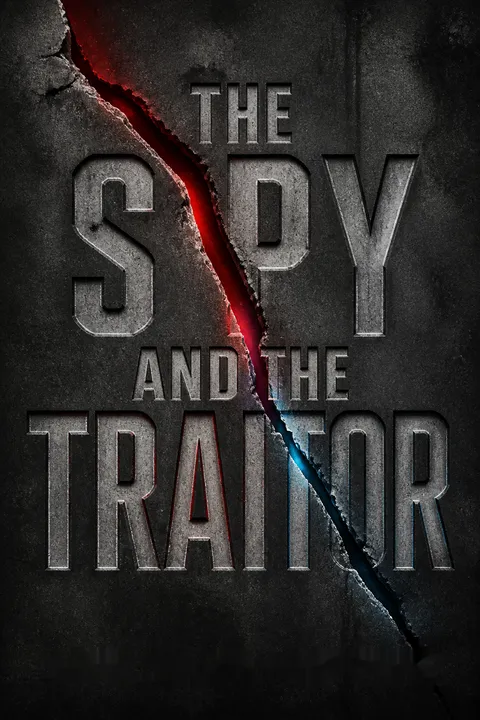
The Spy and the Traitor is a highly praised non-fiction book about Oleg Gordievsky, a KGB agent who became a double agent for MI6. Readers found it thrilling, well-researched, and as captivating as a spy novel. The book details Gordievsky's life, motivations, and his dramatic escape from the Soviet Union. Many reviewers appreciated Macintyre's storytelling skills and his ability to bring historical events to life. While some found the Russian names and organizations challenging, most considered it an excellent read for those interested in Cold War history and espionage.
People Also Read







Glossary
Operation RYAN
Soviet first-strike watchA major KGB and GRU intelligence operation launched in 1981 to detect signs of an alleged American and NATO nuclear first strike against the Soviet Union. Stations were instructed to monitor a wide range of indicators, including military activity and government preparations. Because the Kremlin already believed an attack was coming, ordinary events were often interpreted as confirmation.
PIMLICO
Gordievsky's escape planMI6’s contingency plan for extracting Gordievsky from the Soviet Union through Finland if the KGB moved against him. It relied on recognition signals in Moscow, a journey north, a concealed pickup near the Finnish border, and diplomatic vehicles crossing into Finland. The plan was repeatedly rehearsed and revised, but remained dependent on evading surveillance and avoiding a vehicle search.
dry-cleaning
Surveillance detection and evasionThe KGB training term for techniques used to determine whether someone is being followed and to lose surveillance without making the evasion obvious. Gordievsky learned to vary routes, use public transport and buildings, and observe his surroundings indirectly. The aim was to appear to be moving naturally, since conspicuous checking could alert a surveillance team to the target’s training.
dangle
A seemingly willing recruitAn intelligence tactic in which one service appears to offer a person from the opposing side as a willing recruit, hoping to draw the other service into contact and expose its intentions. Because a walk-in may be a trap, handlers treat such approaches cautiously. The book uses the idea to explain why both Gordievsky and MI6 initially suspected that the other might be testing them.
chicken feed
Low-risk intelligence baitGenuine but relatively harmless information supplied to an adversary to make a source or contact appear productive. MI6 used this kind of material to help Gordievsky satisfy KGB expectations without giving the Soviets strategically damaging intelligence. It could support his credibility and explain his movements while protecting the more valuable information he passed to Britain.
agent of influence
A source shaping public opinionA person cultivated by an intelligence service because of their ability to affect public discussion or political opinion, rather than because they can provide secret documents. Such a person might receive arguments or material intended for publication, and may not understand how the service classifies or uses the relationship. The term helps distinguish political influence work from conventional clandestine spying.
rezidentura
A foreign KGB stationA KGB station operating in another country, usually within or alongside a Soviet embassy. It was led by a rezident, the station chief, and included officers working under diplomatic or other cover. Its responsibilities could include gathering intelligence, recruiting agents, managing illegals, conducting counterintelligence, and carrying out influence operations.
FAQ
1. What is The Spy and the Traitor by Ben Macintyre about?
- True Cold War espionage: The book tells the real-life story of Oleg Gordievsky, a senior KGB officer who became a double agent for British intelligence (MI6) during the Cold War.
- Focus on Gordievsky’s journey: It covers his recruitment, espionage activities, and dramatic escape from the Soviet Union, revealing the inner workings of both the KGB and MI6.
- Impact on history: Gordievsky’s intelligence shaped Western understanding of Soviet intentions and helped prevent potential nuclear conflict.
- Themes of loyalty and betrayal: The narrative explores the psychological, ideological, and personal costs of espionage, highlighting the human drama behind the spy game.
2. Why should I read The Spy and the Traitor by Ben Macintyre?
- Gripping true story: The book reads like a thriller but is meticulously researched, offering suspense, drama, and real historical stakes.
- Insight into Cold War history: It provides a unique window into the paranoia, operations, and mindset of both Soviet and Western intelligence agencies.
- Humanizes espionage: Through Gordievsky’s personal struggles and motivations, readers gain a nuanced understanding of the moral complexities of spying.
- Relevance to today: The story’s exploration of loyalty, ideology, and the dangers of misinformation remains timely in the context of modern geopolitics.
3. Who was Oleg Gordievsky, and why is he significant in The Spy and the Traitor by Ben Macintyre?
- KGB colonel turned double agent: Gordievsky was a high-ranking Soviet intelligence officer who secretly spied for MI6 for over a decade.
- Unique access and insights: His position as KGB rezident in London gave him access to critical Soviet intelligence and Kremlin thinking.
- Risked everything for ideals: Motivated by ideological disillusionment with communism, he provided the West with invaluable intelligence at great personal risk.
- Major impact on the Cold War: His espionage influenced Western leaders and helped avert potential nuclear crises.
4. How did Oleg Gordievsky become a spy for the West according to The Spy and the Traitor by Ben Macintyre?
- Gradual ideological shift: Gordievsky’s disillusionment grew after witnessing events like the Berlin Wall’s construction and the Prague Spring’s suppression.
- Careful MI6 recruitment: MI6 used social contacts and subtle signals, including an approach via a university friend, to test his sympathies before formal recruitment.
- Moral conviction over money: Gordievsky agreed to work for MI6 out of a belief in democracy and freedom, initially refusing payment and insisting on ethical boundaries.
- Delicate trust-building: The recruitment process was slow and cautious, involving mutual assessment and the establishment of trust.
5. What were the key challenges Oleg Gordievsky faced while spying for MI6 inside the KGB, as described in The Spy and the Traitor?
- Constant KGB surveillance: Gordievsky had to maintain his cover while passing intelligence to MI6, always under suspicion from his colleagues.
- Internal rivalries and suspicion: He faced hostility from superiors and rivals like Leonid Nikitenko, who sought to undermine or expose him.
- Personal and psychological strain: Living a double life took a toll on his marriage, mental health, and sense of security.
- Risk of exposure: The threat of being discovered, interrogated, or executed by the KGB was ever-present, especially after betrayals by Western moles.
6. How did Oleg Gordievsky’s intelligence influence Western leaders like Margaret Thatcher and Ronald Reagan in The Spy and the Traitor by Ben Macintyre?
- Direct access to leaders: Margaret Thatcher personally read Gordievsky’s reports, using his insights to shape her approach to the USSR and meetings with Gorbachev.
- Revealed Soviet paranoia: Gordievsky’s intelligence showed Ronald Reagan and other Western leaders that Soviet officials genuinely feared a surprise nuclear attack.
- Helped prevent nuclear escalation: His warnings during events like the ABLE ARCHER 83 NATO exercise helped the West recognize and defuse the risk of miscalculation.
- Shaped Cold War diplomacy: The intelligence provided a foundation for more cautious and informed arms control negotiations.
7. What was Operation PIMLICO in The Spy and the Traitor by Ben Macintyre, and why was it important?
- Secret MI6 exfiltration plan: Operation PIMLICO was designed to extract Gordievsky from the USSR if he was discovered or in danger.
- Complex and risky logistics: The plan involved coded signals, diplomatic cars, and a perilous journey from Moscow to the Finnish border.
- Dramatic real-life escape: Gordievsky’s successful escape, hidden in a car trunk and evading KGB surveillance, was a rare intelligence triumph.
- Symbol of MI6 commitment: The operation demonstrated MI6’s dedication to protecting their most valuable asset and the high stakes of Cold War espionage.
8. What was Operation RYAN, and how did Oleg Gordievsky’s intelligence about it affect the West in The Spy and the Traitor by Ben Macintyre?
- Soviet nuclear paranoia: Operation RYAN was a massive KGB effort to detect signs of a Western nuclear first strike, reflecting deep Soviet fears.
- Extensive intelligence gathering: The operation involved monitoring everything from government buildings to blood banks for signs of attack.
- Gordievsky’s crucial reports: He smuggled out top-secret RYAN directives, revealing the genuine fears driving Soviet policy.
- Influenced Western strategy: This intelligence allowed the West to understand and potentially defuse the crisis, reducing the risk of nuclear war.
9. Who was Michael Bettaney (“Koba”), and what role did he play in The Spy and the Traitor by Ben Macintyre?
- MI5 officer turned Soviet mole: Michael Bettaney attempted to spy for the KGB under the codename “Koba.”
- Uncovered by Gordievsky: Gordievsky’s reporting of Bettaney’s approach to the KGB helped MI5 and MI6 identify and arrest the mole.
- Exposed internal vulnerabilities: Bettaney’s case highlighted the dangers of moles within Western intelligence during the Cold War.
- Contrasted with Gordievsky: His betrayal, motivated by different factors, serves as a foil to Gordievsky’s ideological commitment.
10. How did Aldrich Ames’s betrayal impact Oleg Gordievsky and Western intelligence, according to The Spy and the Traitor by Ben Macintyre?
- CIA mole for the KGB: Aldrich Ames was a CIA officer who revealed Gordievsky’s identity to Soviet authorities.
- Led to Gordievsky’s recall: Ames’s betrayal resulted in Gordievsky being summoned to Moscow, interrogated, and placed in grave danger.
- Massive intelligence damage: Ames’s actions compromised dozens of Western agents, leading to arrests and deaths.
- Moral contrast: The book contrasts Ames’s greed-driven betrayal with Gordievsky’s sacrifice for democratic ideals.
11. What happened to Oleg Gordievsky’s family after his defection, as described in The Spy and the Traitor by Ben Macintyre?
- Family held in the USSR: After Gordievsky’s escape, his wife and daughters were kept under KGB surveillance and house arrest.
- Failed rescue attempts: MI6’s Operation HETMAN tried to secure their release, but the Soviets refused, using the family as leverage.
- Emotional and social toll: The family endured repeated interrogations, isolation, and eventual estrangement from Gordievsky.
- Long-term consequences: The enforced separation led to divorce and lasting emotional scars for all involved.
12. What are the best quotes from The Spy and the Traitor by Ben Macintyre, and what do they mean?
- On defending democracy: “They have underlined my belief that they are the real defenders of democracy in the most direct sense of the word.” Gordievsky’s respect for British intelligence and his ideological motivation.
- On Cold War danger: Quotes about the ABLE ARCHER exercise highlight the real risk of nuclear war due to misunderstanding and paranoia.
- On betrayal and sacrifice: Gordievsky’s and others’ reflections illustrate the personal costs and moral dilemmas of espionage.
- On the human side of spying: The book’s quotes often reveal the emotional and psychological toll of living a double life, emphasizing the story’s human dimension.
About the Author

Download PDF
Download EPUB
.epub digital book format is ideal for reading ebooks on phones, tablets, and e-readers.








