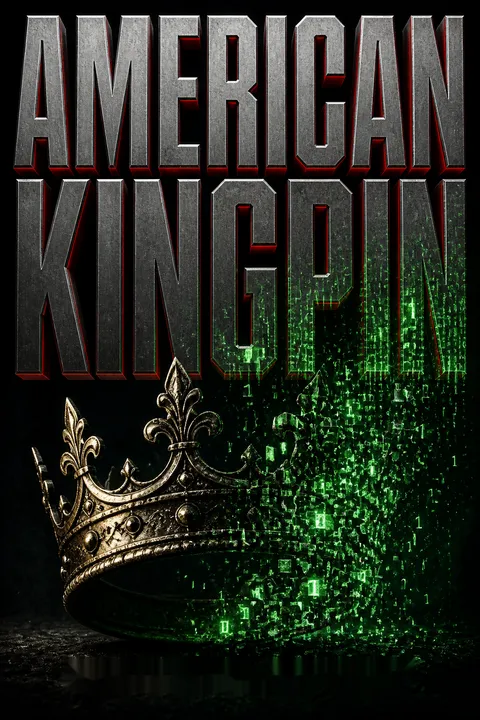


Key Takeaways
Treat tiny anomalies as leads when they reveal a hidden system.
One pill opened the case. In October 2011, customs officer Mike Weinthaler found a single pink ecstasy pill in a small envelope from the Netherlands. Most agents would have ignored so little contraband. Homeland Security agent Jared Der-Yeghiayan pursued it, and the recipient’s roommate explained that he had bought it on the Silk Road, an online drug marketplace. Jared searched government databases and found no existing investigation, despite a colleague’s claim that many cases were underway.
Follow the odd detail. Jared began collecting drug-filled envelopes to show prosecutors that the pill was evidence of a much larger operation. His persistence helped turn a minor seizure into a federal investigation. The first clue was small; the system behind it was not.
The episode illustrates the value of anomaly detection: a weak signal can matter when it points to a new pattern, not merely an isolated event. Jared’s curiosity succeeds because he asks what the unusual journey of one pill implies about the way it was bought and delivered. Yet a hunch is not proof. The envelopes and later investigation supply the corroboration that turns instinct into a case. In organizations, the useful lesson is to protect room for exploratory work, while requiring evidence before an intriguing anomaly becomes a confident theory.
A political ideal can become infrastructure before its creator reckons with consequences.
Ross built his argument into software. After leaving graduate school and struggling to find work that felt meaningful, Ross Ulbricht became absorbed in libertarian ideas about personal choice and the limits of government. He imagined a marketplace where people could buy drugs without street dealers or government oversight. Tor is software that routes internet traffic through a distributed network to make a user’s location harder to identify. Bitcoin is digital currency; Ross believed it could make online payments anonymous.
The missing pieces arrived. Ross taught himself to code, grew magic mushrooms to stock his new site, and launched the Silk Road in January 2011. His project joined technology, political conviction, and a desire to build something consequential. But a system designed to remove rules also removed many safeguards.
The marketplace’s appeal rests on a real design insight: technology can lower the cost and danger of transactions that conventional institutions make difficult. But a tool does not inherit the founder’s stated purpose. Once people can trade at scale, the system serves buyers, sellers, and motives the founder cannot neatly classify. Ross treated anonymity as liberation and assumed Bitcoin was untraceable. In practice, Bitcoin transactions leave public records, while Tor makes attribution harder rather than impossible. The gap between an idealized technology and its actual limits is itself a source of risk.
When a marketplace scales, its founder becomes a governor, not just a coder.
Success created new duties. After the Gawker article made the Silk Road widely known, users and sellers arrived in large numbers. Ross added customer ratings, hired programmers and moderators, and collected commissions on sales. The operation grew from small mushroom orders to hundreds of thousands of dollars in weekly transactions. It also expanded beyond drugs to guns, hacking tools, fake documents, poisons, and other goods.
Rules were never absent. Ross changed commission rates to limit side deals, then faced angry sellers and threats of a mutiny. He created a separate weapons site to make the drug marketplace more acceptable to some customers, but eventually returned weapons to the main site. Each choice made him less a lone coder and more a decision-maker governing a community with competing interests.
Platforms exercise power through ordinary-seeming choices: what to list, how to charge, which disputes to resolve, and what conduct to tolerate. The Silk Road makes that power unusually visible because Ross openly claimed to reject regulation while repeatedly setting rules himself. This is a classic governance problem, not a contradiction unique to illegal markets. Any platform that organizes exchange allocates opportunity and risk. A commitment to neutrality can conceal those choices rather than eliminate them, especially when the costs of a transaction fall on people who are not present in the marketplace.
Encryption hides identities, but ordinary mistakes leave a trail.
The investigation followed human traces. Silk Road users relied on Tor and Bitcoin, but the system was not immune to mistakes. Ross had promoted the site online under the name Altoid. IRS agent Gary Alford found early forum posts using that name, then connected an account to Ross’s email address. Separately, an update to the Silk Road’s login page exposed the server’s internet address, allowing FBI agents to locate it in Iceland and obtain its data.
A mundane mix-up mattered. Customs intercepted nine fake IDs bearing variations of Ross’s face. An agent first went to Fifteenth Street instead of Fifteenth Avenue, but another agent later reached Ross’s actual address. During questioning, Ross himself mentioned the Silk Road. His defenses were sophisticated; the clues were ordinary.
Security is a system of habits, not simply a piece of software. Ross invested in encryption, separate computer identities, and emergency plans, yet his trail accumulated through old accounts, a coding error, and counterfeit documents. This resembles the security principle of weakest links: one exposed endpoint can undermine many strong protections. The story also cautions against treating digital investigation as magic. The breakthrough came from patient cross-checking across technical records, mail, and an interview, rather than from a single tool that instantly revealed a hidden identity.
A second persona can make forbidden choices feel principled.
The mask changed the decision-maker. With advice from his mentor Variety Jones, Ross adopted the name Dread Pirate Roberts, borrowed from a character in the film The Princess Bride. The name also supported a cover story: leadership could supposedly pass from one person to another. Ross separated his personal and Silk Road activities on his computer and treated the two identities as distinct.
Distance softened the moral boundary. As Dread Pirate Roberts, Ross approved increasingly dangerous listings and eventually discussed violence against people he saw as threats. He framed coercion as protecting the marketplace and its rules. The persona did not erase Ross’s responsibility. It helped him act as though responsibility belonged to someone else.
Role separation can be useful when professionals need to perform difficult tasks, but it can also create moral distance. Social psychology describes how people often adapt their conduct to a role, especially when a group praises the role’s mission. On the Silk Road, employees called Ross their captain, while Ross could tell himself that the masked leader was different from the person his family knew. This does not mean identities mechanically cause wrongdoing. It does show why organizations need accountability that follows the person making decisions, even when a title or screen name changes.
Follow persistent clues, then collaborate before turf wars bury the case.
Different investigators found different pieces. Jared linked intercepted packages to vendors and built an undercover account on the Silk Road. Gary Alford used a forum search to connect Altoid to Ross. FBI agent Chris Tarbell traced a server error and led the digital investigation. None had the whole case alone.
Competition slowed the hunt. Agencies guarded information and disputed who should lead. At a Justice Department meeting, Baltimore investigators refused to share key details, while Jared laid out his evidence and methods. His openness persuaded the FBI team to work with him. Together, they used the seized server, online records, surveillance, and Jared’s undercover access to confirm that Ross was active as the site’s leader.
This investigation shows both the strength and cost of specialization. Customs officers understood mail, IRS agents followed money, and cybercrime investigators could analyze servers. Combining those perspectives made the case stronger than any single specialty could. Yet the agencies’ competition for credit threatened to keep evidence siloed. That dynamic is familiar in complex institutions: incentives can reward individual ownership even when the problem requires cooperation. Shared protocols and clear authority matter, but so does a culture where investigators can contribute without fearing that another team will simply take the credit.
Undercover deception can turn investigators into the criminals they pursue.
Carl Force crossed the line. DEA agent Carl Force entered the case under the alias Nob, posing as a powerful drug smuggler. He grew close to Ross and used other fake identities to sell confidential information about the investigation for Bitcoin. Another task-force member, Secret Service agent Shaun Bridges, secretly took roughly $350,000 from Silk Road accounts.
The operation became abuse. After the agents arrested Silk Road employee Curtis Green, Force and another agent tortured him during questioning and staged evidence to make Ross believe Green had been killed. Green survived. Ross, believing the killing had happened, later paid for what he thought were additional murders; investigators found no bodies, and some supposed hits appeared to have been scams. Force and Bridges were eventually convicted of crimes tied to their conduct.
The case is a study in principal-agent failure: an institution delegates power to investigators, but the public cannot continuously observe how that power is used. Undercover work necessarily involves deception, yet secrecy also makes oversight more important, not less. Force’s closeness to his target and his appetite for money blurred the boundary between role and self-interest. The episode does not invalidate undercover investigation. It shows why independent supervision, auditable records, and consequences for misconduct are essential when agents operate with unusual discretion.
A safer transaction is not automatically a safe market.
The platform reduced some risks and amplified others. A 2015 survey described in the book involved 100,000 people worldwide; about one in five respondents began buying drugs online in the year after the Silk Road opened. Some online buyers said street purchases made them almost six times more likely to be physically harmed. But online access did not make drugs harmless. In Perth, sixteen-year-old Preston Bridges took a powerful synthetic drug bought through the Silk Road, fell from a hotel balcony, and died.
Access has consequences. The book also points to rising deaths associated with heroin and synthetic opioids such as fentanyl. The evidence supports neither a simple claim that online markets made drug use safe nor that every online purchase caused harm. It reveals a tradeoff between reducing some transaction dangers and expanding access to potent substances.
The distinction between safer purchasing and safer consumption is crucial. Removing the possibility of a street robbery does not reduce a drug’s potency, prevent a bad dose, or guarantee accurate product information. At the same time, criminalization can expose buyers to violence and unpredictable supply. The policy question is therefore not whether the market is simply good or bad, but which harms come from the substance, which from prohibition, and which from platform design. A useful assessment has to count all three rather than treating reduced street danger as proof of overall safety.
Silk Road closed after Ross’s arrest, but successor markets appeared within weeks.
The founder paid a severe price. A jury found Ross Ulbricht guilty of all counts, including drug trafficking and running a continuing criminal enterprise. He received life imprisonment without parole, plus additional time for other convictions. The judge treated his leadership, the scale of the marketplace, and the harms associated with its products as central to sentencing.
The marketplace outlived its creator. After the original Silk Road shut down, Silk Road 2.0 and other online drug markets appeared. The story therefore ends with two facts in tension: Ross was held accountable for building and running the site, but arresting one founder did not eliminate the demand, technology, or incentives that supported similar markets.
A prosecution can assign responsibility to a person without resolving the conditions that made the enterprise attractive. The successor sites suggest that enforcement can disrupt a market while leaving its underlying demand intact. That observation is not an argument that prosecution was pointless: it removed a powerful operator and established consequences. It is a reminder that criminal justice and public policy answer different questions. A verdict determines whether an individual broke the law; it cannot, by itself, settle whether existing drug laws reduce harm or whether alternative safeguards would work better.
Analysis
American Kingpin works as a chase narrative, but its deeper subject is the collision between ideology, technology, and institutional power. Ross Ulbricht begins with an argument about individual freedom and builds a marketplace that makes that argument operational. The platform then exposes a recurring paradox: rules do not disappear when a government is excluded. They reappear as fees, moderation, security demands, and the founder’s personal decisions. Ross rejects public authority while claiming private authority over a growing community, eventually making decisions with lethal implications.
The book’s parallel investigators complicate any simple story of criminals versus heroes. Jared’s persistence and Alford’s pattern-finding show how patient, unglamorous work can beat technological mystique. Tarbell’s digital expertise matters, but so do mailroom inspection, subpoenas, a street-versus-avenue error, and cross-agency cooperation. Conversely, Force and Bridges demonstrate that law enforcement is not automatically a moral counterweight to criminality. Their misconduct is not incidental color. It exposes how secrecy, ambition, and weak oversight can deform institutions that claim public legitimacy.
The book also refuses an easy verdict on the marketplace’s social effects. Online purchases could reduce exposure to street violence, while the site enabled access to dangerous drugs and became a venue for weapons and other contraband. Those claims are not mutually exclusive. They point toward a distinction between the harms of substances, the harms created by illegal markets, and the new harms created by digital distribution. The reported evidence does not prove that the Silk Road made society safer overall, just as its criminality does not erase the risks of prohibition.
That tension gives the story lasting relevance. Digital systems do not replace human motives; they reorganize how those motives meet, scale, and evade oversight. Ross imagined himself changing the world through code, but the consequences depended on countless people, choices, and institutions beyond his control. The central caution is not simply that anonymity fails. It is that a grand principle becomes dangerous when its architect treats good intentions as a substitute for responsibility.
Review Summary
American Kingpin recounts the true story of Ross Ulbricht, creator of the dark web marketplace Silk Road. Most reviewers found it a gripping, well-researched narrative that reads like a thriller. They praised Bilton's ability to explain complex tech concepts and present a balanced view of Ulbricht and law enforcement. Some criticized the dramatized style and questioned the accuracy of detailed conversations. Overall, readers were fascinated by the rise and fall of Silk Road, finding the book a page-turning exploration of cybercrime, libertarianism, and the challenges of modern law enforcement.
People Also Read







Glossary
Silk Road
Anonymous online marketplaceA hidden online marketplace launched by Ross Ulbricht in 2011, accessible through Tor and using Bitcoin for payments. It became known for drug sales and later hosted listings for weapons, forged documents, hacking tools, and other contraband. Sellers and buyers used pseudonyms, while ratings and commissions helped the site operate like a commercial platform.
Tor
Traffic-obscuring networkA system that routes internet traffic through multiple relays, making it harder to identify a user’s location or the source of a connection. The Silk Road used Tor hidden services, which were not reachable through ordinary web addresses. Tor can improve anonymity, but it does not guarantee that a user or server can never be identified.
Bitcoin
Digital payment currencyA digital currency used by Silk Road buyers and sellers to transfer value online. Users could exchange conventional money for Bitcoins and then pay vendors without using a card tied directly to the purchase. Bitcoin transactions are recorded on a public ledger, so the currency is not inherently untraceable, despite Ross’s early belief that it offered anonymous payments.
Dread Pirate Roberts
Silk Road leader identityThe pseudonym Ross Ulbricht used as the leader of the Silk Road. Inspired by the film The Princess Bride, the name suggested that leadership could pass from one person to another, obscuring the founder’s identity and supporting Ross’s claim that he had left the enterprise. The persona became the site’s public symbol and a separate role through which Ross made decisions.
Dark Web
Hidden online servicesA portion of the internet reached through specialized software and not indexed or accessed like ordinary websites. In this account, the term refers mainly to services reached through Tor, including the Silk Road. It offered privacy and concealment for users, but hidden services still depended on servers, communication habits, and payment systems that could leave investigative clues.
Deconfliction meeting
Coordination between investigationsA meeting intended to resolve overlapping investigations by different agencies, clarify what evidence each team holds, and decide how work should proceed. In the Silk Road case, agencies competed for control and credit, making coordination difficult. The Justice Department convened a meeting so teams could disclose their progress and establish a more cooperative path forward.
Gambler's Ruin problem
Repeated bets favor the houseA probability concept describing how a gambler with finite resources is likely to lose when repeatedly betting against a party with effectively unlimited resources. IRS agent Gary Alford used it as an analogy for the Silk Road investigation: the government could keep pursuing Ross, while Ross’s resources and continued activity increased the chance that he would eventually make a mistake.
FAQ
What's American Kingpin: The Epic Hunt for the Criminal Mastermind Behind the Silk Road about?
- Focus on Silk Road: The book chronicles the rise and fall of the Silk Road, an online marketplace for illegal drugs and other contraband, created by Ross Ulbricht, who operated under the alias Dread Pirate Roberts.
- Law Enforcement Perspective: It details the efforts of law enforcement, particularly Jared Der-Yeghiayan and Carl Force, as they work to track down Ulbricht and dismantle the Silk Road.
- Themes of Morality and Freedom: The narrative explores themes of libertarianism, the morality of drug use, and the implications of anonymity on the internet.
Why should I read American Kingpin?
- Engaging True Crime Story: The book offers a gripping true crime narrative that reads like a thriller, filled with twists and turns that keep readers on the edge of their seats.
- Insight into Digital Crime: It provides a fascinating look into the world of digital crime, the dark web, and how technology can be used for both good and ill.
- Character Depth: The author, Nick Bilton, delves into the lives of both Ulbricht and the agents pursuing him, giving readers a well-rounded view of the motivations and consequences of their actions.
What are the key takeaways of American Kingpin?
- Impact of Anonymity: The book illustrates how anonymity on the internet can lead to both freedom and chaos, allowing individuals to operate outside the law.
- Consequences of Actions: It emphasizes that actions have consequences, as seen through the lives of Ulbricht and those affected by the drugs sold on the Silk Road.
- Complexity of Morality: The narrative challenges readers to think about the morality of drug use and the war on drugs, questioning whether legalizing drugs could lead to a safer society.
Who is Ross Ulbricht, and what role does he play in American Kingpin?
- Creator of Silk Road: Ross Ulbricht is the mastermind behind the Silk Road, an online marketplace that facilitated the sale of illegal drugs and other illicit goods.
- Alias Dread Pirate Roberts: He operated under the pseudonym Dread Pirate Roberts, which became synonymous with the Silk Road and its libertarian ideals.
- Journey from Idealism to Crime: The book traces Ulbricht's journey from a bright, idealistic young man to a fugitive facing serious criminal charges, highlighting the complexities of his character.
How did law enforcement agencies track down Ross Ulbricht in American Kingpin?
- Digital Footprints: Law enforcement utilized digital forensics to trace Ulbricht's online activities, analyzing server logs, IP addresses, and chat logs.
- Undercover Operations: Agents went undercover on the Silk Road, posing as buyers and sellers to gather evidence and understand its inner workings.
- Collaboration Across Agencies: The investigation involved collaboration between multiple agencies, including the FBI, DEA, and IRS, crucial for piecing together the evidence needed to arrest Ulbricht.
What challenges did law enforcement face in the investigation of the Silk Road?
- Anonymity of the Dark Web: The anonymity provided by the Tor network made it challenging to identify users and track transactions.
- Jurisdictional Issues: Different agencies had varying jurisdictions, complicating cooperation and information sharing, initially hindering the investigation's progress.
- Technological Barriers: Law enforcement had to navigate complex technologies, including Bitcoin and encryption methods, essential for effectively combating cybercrime.
What is the significance of Bitcoin in American Kingpin?
- Currency of the Silk Road: Bitcoin served as the primary currency for transactions on the Silk Road, allowing users to buy drugs anonymously without leaving a trace.
- Challenges for Law Enforcement: The use of Bitcoin complicated investigations, as it provided a layer of anonymity that made it difficult for authorities to track financial transactions.
- Symbol of Digital Freedom: The book portrays Bitcoin as a symbol of digital freedom and rebellion against government control, aligning with the libertarian ideals espoused by Ulbricht.
How does American Kingpin address the theme of freedom versus control?
- Libertarian Ideals: The book explores the tension between individual freedom and government control, particularly in the context of drug use and online anonymity.
- Consequences of Freedom: It illustrates that while the Silk Road provided a platform for freedom, it also led to chaos and harm, raising questions about the limits of personal liberty.
- Government Response: The narrative shows how the government reacts to the perceived threat of the Silk Road, attempting to regain control over a rapidly changing digital landscape.
What impact did the Silk Road have on drug distribution and society?
- Shift to Online Marketplaces: The Silk Road popularized the concept of buying drugs online, leading to a significant shift in how people accessed illegal substances.
- Increased Accessibility: The book discusses how the Silk Road made drugs more accessible to a wider audience, often with fewer risks than street purchases.
- Debate on Legalization: The existence of the Silk Road sparked discussions about drug legalization and regulation, questioning whether a controlled market could reduce harm and violence.
How did Ross Ulbricht justify his actions in American Kingpin?
- Libertarian Ideals: Ulbricht believed in a free market where individuals could make their own choices without government interference, promoting personal freedom and safety.
- Moral High Ground: He argued that by providing a platform for drug sales, he was reducing violence associated with street-level drug dealing.
- Naivety and Idealism: The book portrays Ulbricht as somewhat naive, underestimating the consequences of his actions, blinded by his idealism.
What are the best quotes from American Kingpin and what do they mean?
- “It’s like Amazon.com, but for drugs.”: This quote encapsulates the ease and accessibility of purchasing illegal drugs online, highlighting the normalization of such transactions in the digital age.
- “The state is unable to get its thieving murderous mitts on [the Silk Road].”: Reflects Ulbricht's belief in the power of anonymity and the internet to circumvent government control.
- “I just want to look back on my life and know that I did something worthwhile that helped people.”: Reveals Ulbricht's internal conflict and idealism, suggesting he believed he was making a positive impact despite the illegal nature of his actions.
What happens to Ross Ulbricht at the end of American Kingpin?
- Arrest and Trial: The book culminates in Ulbricht's arrest and subsequent trial, where he faces serious charges related to his role in the Silk Road.
- Life Sentences: Ultimately, Ulbricht is sentenced to life in prison without the possibility of parole, highlighting the severe consequences of his actions.
- Legacy of the Silk Road: The conclusion reflects on the lasting impact of the Silk Road and Ulbricht's story, raising questions about the future of online marketplaces and the war on drugs.
About the Author
Other books by Nick Bilton
Download PDF
Download EPUB
.epub digital book format is ideal for reading ebooks on phones, tablets, and e-readers.








