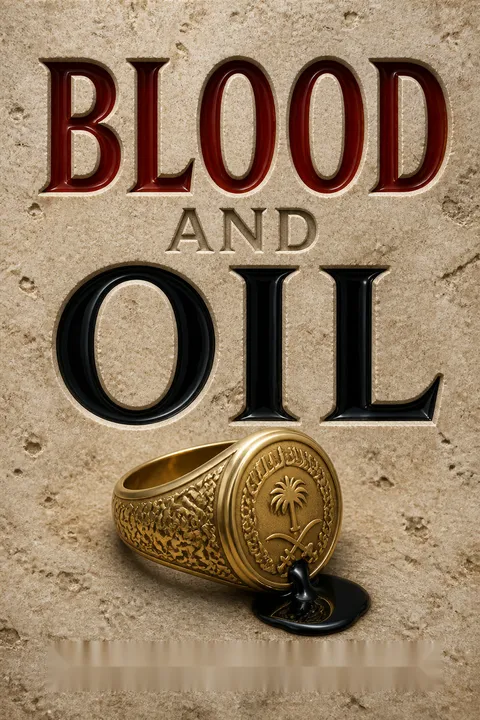


Key Takeaways
Read Saudi power through its money, not its reformer image
A hotel became a prison. In November 2017, billionaire Prince Alwaleed bin Talal arrived at Riyadh’s Ritz-Carlton expecting to meet the king. Instead, he learned that dozens of Saudi royals, officials, and business leaders were being detained there. The scene captures the book’s central puzzle: how did Mohammed bin Salman, a little-known prince only a few years earlier, gain command over so much of Saudi Arabia and its wealth?
Follow the financial trail. As investigative reporters, Hope and Scheck trace money through royal fortunes, state companies, investment funds, and business deals. Mohammed’s own early ventures included stock trading and real estate. He was also acutely aware that his father’s branch of the family had less wealth than its rivals. In this account, money is not a side story to power. It is the means to build loyalty, reward allies, and shape the state.
What's striking is how the financial lens unsettles the usual choice between calling Mohammed a reformer or a strongman. The book shows money doing both kinds of work: funding economic change and helping one political faction outmaneuver others. This resembles a family business in which ownership, management, and public authority overlap, except the company is a country and the costs are borne by its residents. That lens is powerful, but money alone cannot explain legitimacy. Religious authority, national identity, and a young population’s desire for change also shape what power can accomplish.
A succession pact can preserve stability until one prince breaks it
Rule passed sideways. For decades, Saudi kings came from the many sons of the kingdom’s founder, Ibn Saud. Senior princes distributed important government and military roles among family branches, making succession a matter of negotiation and consensus. King Abdullah formalized part of this process through the Allegiance Council, a body of royal descendants meant to help choose the next ruler. As the founding generation aged, however, there was no agreed method for selecting a king from hundreds of grandsons.
The balance gave way. When Salman became king in 2015, his son Mohammed quickly gained powerful roles in defense, economic planning, and oil. His rival, Crown Prince Mohammed bin Nayef, had deep ties to American security officials, but in 2017 he was pressured to relinquish his position. The book depicts a shift from a system that distributed power among princes to one centered on a single heir.
The succession story illustrates a political tradeoff: a system built to prevent any one faction from dominating can also make decisive government difficult. Concentrating authority may speed decisions, particularly when a country faces economic strain and demands for social change. But it also removes the informal checks that helped competing branches coexist. The Allegiance Council could not function as a constraint if its members felt the king had already settled the outcome. The key distinction is between stability produced by agreement and stability produced by fear. They can look similar until someone challenges the ruler.
Treat Vision 2030 as a high-stakes attempt to outgrow oil
The economic bet. Vision 2030 is Mohammed’s plan to reduce Saudi Arabia’s dependence on oil by growing other industries, attracting investment, and creating jobs. The Public Investment Fund, or PIF, is the state investment fund that became a central instrument of this strategy. The plan also drew on a stark problem: a fast-growing population, rising public costs, and an economy that relied heavily on petroleum revenue.
Ambition met execution. Mohammed backed projects such as NEOM, a proposed high-tech region built from scratch, and announced plans to sell shares in Saudi Aramco, the state oil giant, to fund investment elsewhere. He initially spoke of a $2 trillion company valuation. In 2019, a domestic share sale raised $25.6 billion at a valuation of $1.7 trillion. The gap between grand forecasts and realized results is part of the story, as are projects whose scale and feasibility remained uncertain.
Vision 2030 is best understood as a portfolio of political as well as economic bets. A sovereign wealth fund can turn resource income into stakes in new industries, while visible projects can help persuade citizens and investors that the country is changing. Yet investment does not automatically produce productive capacity at home. A state can buy exposure to technology firms without building the skills, institutions, or local businesses that make innovation self-sustaining. The plan’s urgency follows from oil dependence, but urgency can also reward announcements over implementation. The useful test is not the size of a promised fund, but what durable capabilities it leaves behind.
Anti-corruption can win public approval while concentrating unchecked power
A dramatic crackdown. In late 2017, Mohammed’s government detained more than three hundred royals, officials, and business figures, many at the Ritz-Carlton. Authorities said they were pursuing money obtained through corruption and sought settlements involving tens of billions of dollars. The targets included prominent people such as Alwaleed bin Talal and members of the family that owned the Saudi Binladin Group. Some detainees settled privately; many allegations were not tested in public court proceedings.
Old rules became crimes. The campaign resonated with Saudis who had watched powerful families and contractors profit from their access to government. But the process also lacked transparent trials, and opponents argued it enabled Mohammed to remove rivals and seize assets. The book emphasizes that some practices now labeled corrupt had previously been tolerated or approved by senior rulers. A crackdown can therefore punish genuine abuses and simultaneously concentrate political and economic control.
This episode poses a hard governance question: can an anti-corruption campaign be legitimate if the ruler investigating others is not subject to independent review? Recovering public money can answer a widely felt grievance, especially where elite privilege is obvious. Yet due process matters precisely when the target is unpopular or powerful. Without public evidence and consistent rules, citizens cannot distinguish impartial enforcement from selective punishment. The crackdown’s public appeal and its political usefulness are not mutually exclusive. Treating it as only one or the other misses why it could both satisfy a demand for fairness and weaken constraints on the new ruler.
Social liberalization is not political freedom when dissent remains punishable
Daily life opened up. Under Mohammed, religious police lost authority, cinemas returned, public entertainment expanded, and women gained the right to drive. These changes mattered in a country where many young people had spent years encountering music, films, and global culture mainly online. Mohammed presented social change as necessary for a modern economy and as a break from the restrictions that had tightened after 1979.
The political boundary held. The opening did not extend to public criticism of the monarchy or the crown prince’s policies. Clerics and commentators were detained, and women’s rights activists, including Loujain al-Hathloul, were arrested even as the government introduced reforms they had advocated. Al-Hathloul was accused of conspiring with foreign enemies, and her family said she was tortured; the government’s account and treatment of detainees were contested. The distinction was stark: freedoms could expand when granted by the ruler, while independent demands for them remained dangerous.
The contrast separates social modernization from political liberalization. A government may loosen rules about entertainment or work while keeping the public unable to challenge who makes decisions. That arrangement can improve daily life for many people, and it can strengthen the ruler by making change visible. It also leaves rights dependent on political permission rather than enforceable protections. The activists’ cases expose that difference especially clearly: agreeing with a reform’s goal did not guarantee safety for those who organized or demanded it. Progress is real, but its durability depends on whether people can defend it without risking punishment.
Control online speech, and popularity becomes both intelligence and theater
Twitter became political infrastructure. In a country without elections, Mohammed’s circle treated social media as a way to gauge public opinion and promote the prince’s image. According to US legal filings described in the book, a Twitter employee supplied private user information to Saudi associates. One engineer accessed information on thousands of accounts. The allegations included attempts to identify anonymous critics, whose posts sometimes revealed politically sensitive information.
Praise was organized, too. Mohammed’s advisor Saud al-Qahtani directed online messaging efforts that used fake accounts and coordinated attacks on critics. Supportive accounts became known as the flies. The government also obtained spyware and monitored dissidents. These methods served different purposes: tracking opponents, amplifying favorable narratives, and making public support appear broader than it might be. The online space was not just a communications channel. It became an arena for surveillance and political control.
Digital platforms can make public sentiment more legible to leaders, but the same visibility can be turned against the people expressing it. The book’s account shows a feedback loop: online speech gives officials clues about grievances, then surveillance and intimidation discourage the speech that could reveal future problems. Manufactured praise further muddies the signal. This is a strategic weakness as well as an ethical one. Leaders may receive abundant data while becoming less able to tell genuine approval from coerced performance. A system that treats criticism as a security threat can lose the very information it needs to govern well.
Decisive foreign policy can turn regional leverage into strategic isolation
Force moved faster than planning. Soon after becoming defense minister, Mohammed launched the Saudi-led war in Yemen against Houthi rebels. He expected a short campaign, but the fighting continued, with air operations troubled by inaccurate coordinates, communication failures, and civilian deaths. In 2017, Saudi Arabia and its allies imposed a boycott on Qatar after a cyberattack spread fabricated statements attributed to Qatar’s emir. The boycott did not force Qatar to comply; it pushed the country closer to Turkey and Iran.
Pressure backfired in Lebanon. That same year, Saudi officials detained Lebanese prime minister Saad Hariri and pressured him to resign. French president Emmanuel Macron intervened, and Hariri returned to Lebanon and resumed office. Across these episodes, Mohammed sought to curb Iranian influence and assert Saudi leadership. But the results often diverged from the aims: conflict persisted, neighbors resisted, and the kingdom’s leverage did not reliably translate into political success.
The repeated pattern is not simply that force fails. It is that coercion can produce a quick signal of resolve while making the desired political settlement harder to reach. Qatar could absorb economic pressure, while Lebanon’s governing arrangements required Hariri to deal with Hezbollah. Those local realities limited what an outside ruler could command. Foreign policy therefore tests the difference between having power and converting it into outcomes. The book gives considerable weight to Mohammed’s personal decisiveness; the cases also show why strategy requires feedback, coalition management, and a plausible exit. A bold opening move is not the same as control over what follows.
A dissident becomes dangerous when he connects scattered critics
A critic crossed the line. Jamal Khashoggi had long worked around the Saudi royal establishment and initially supported some of Mohammed’s reforms. After leaving the kingdom, he began writing for the Washington Post, criticizing the crown prince’s methods and speaking up for political expression. He also communicated with Saudi dissidents abroad and discussed organizing opposition. Saudi officials increasingly portrayed him as a security threat rather than a journalist with independent views.
The consulate killing. In October 2018, Khashoggi entered the Saudi consulate in Istanbul to obtain marriage documents and never emerged. Turkish authorities said a Saudi team killed him there; recordings and other evidence described in the book indicated a planned operation. The Saudi government initially denied responsibility, then said agents were responsible for his death. The CIA concluded that Mohammed probably ordered it, while Mohammed denied authorizing the killing. The murder made the human cost of the crackdown impossible to treat as an abstract policy dispute.
Khashoggi’s importance lay not only in what he wrote but in his capacity to connect people who were otherwise isolated. Authoritarian systems often tolerate private disagreement more readily than coordination, because a network can turn separate complaints into a shared political challenge. That helps explain why the response escalated, though it does not justify it. The case also shows the limits of branding: a ruler can present himself internationally as a modernizer, but the treatment of a visible critic can overwhelm that image. The book responsibly distinguishes reported evidence, intelligence assessments, and official denials, a distinction essential when interpreting a politically charged killing.
Global capital gave MBS leverage even after a reputational shock
Money created access. Mohammed’s PIF invested $3.5 billion in Uber and committed $45 billion to SoftBank’s Vision Fund, a technology investment vehicle that also attracted money from Abu Dhabi. The deals brought access to major companies and executives, though the book notes that some high-profile investments later disappointed. In Washington, Mohammed also cultivated Jared Kushner and President Donald Trump, whose approach to the relationship emphasized commercial deals.
The ties endured. After Khashoggi’s murder, some executives canceled appearances or paused projects, while others maintained business with the kingdom. Saudi capital remained valuable, and the crown prince controlled decisions about investments and oil policy. That gave him influence beyond formal diplomacy. Yet financial entanglement did not make every partner an ally or every investment successful. The book’s point is sharper: commercial interests helped keep channels open even when political trust and reputation were badly damaged.
The deals reveal a form of influence that works through dependency rather than persuasion. A sovereign investor can offer companies capital, access to a large market, and potential future contracts; recipients may then find it costly to condemn the investor publicly. This does not mean all engagement is corrupt or that investment has no value. It does mean that commercial relationships can weaken the practical force of reputational pressure. The distinction between a country’s long-term development and a foreign firm’s short-term financing opportunity is crucial. A deal can be politically useful even when its economic return is poor.
Centralized rule cannot replace institutions that coordinate under pressure
A vulnerable oil heart. In 2019, drones and missiles hit Saudi Arabia’s Abqaiq oil-processing complex. An expert cited in the book said the attack took seventeen minutes and cost less than $2 million. Saudi production recovered, but the strike exposed gaps in coordination among the agencies responsible for intelligence, internal security, and military defense. Officials shifted blame among ministries, and no clear system had ensured an effective response.
Oil remained the constraint. The attack came despite Mohammed’s consolidation of military authority. In early 2020, after talks with Russia over production limits collapsed, Saudi Arabia flooded the market with oil in an attempt to pressure competitors. Prices plunged, hurting a kingdom still reliant on oil revenue to fund its plans. The episode distills the book’s central tension: Mohammed could centralize decisions, but he could not quickly make state systems cohesive or escape the economic dependence he set out to end.
This is the difference between command and capacity. A leader may remove rival power centers and still inherit agencies with poor coordination, unclear responsibility, and incentives to protect themselves. Centralization can simplify who decides, but it does not automatically improve the information or routines that make a decision work. The oil episode adds a fiscal version of the same problem: using the kingdom’s strongest lever also threatens the revenue needed for transformation. The practical lesson is that institutional resilience is not created by personal control. It depends on procedures and expertise that continue functioning when pressure rises.
Analysis
Blood and Oil is an investigative political biography organized around a single, revealing contradiction: Mohammed bin Salman seeks to modernize Saudi Arabia while concentrating authority in himself. The book traces that contradiction through money. Personal ventures, oil revenues, sovereign investments, and business networks are not separate from politics; they are tools for building allegiance, bypassing rivals, and projecting power abroad. The resulting narrative is unusually concrete. A luxury hotel becomes a detention center, a fund becomes a foreign-policy instrument, and a social-media platform becomes both a public square and a surveillance system.
The strongest analytical contribution is the distinction between reform and liberalization. Saudi Arabia’s social changes are substantial in the account, but they do not entail political pluralism. The state can expand entertainment and women’s mobility while preserving a strict boundary around criticism of the ruler. That model can generate real public benefits and public approval, while making those benefits contingent on personal authority. It is neither mere public relations nor a transition to accountable government.
The book also complicates the image of an all-powerful leader. Mohammed’s rapid decisions and control over investment funds create extraordinary personal leverage, yet the Yemen campaign, Qatar boycott, Hariri episode, and Abqaiq attack show limits to what force and wealth can deliver. Centralizing power is not the same as building institutions that coordinate, learn, and reliably execute policy. Similarly, overseas investment can buy access and keep business relationships alive, but it cannot guarantee strong returns or erase reputational damage.
The account depends heavily on anonymous sources and reconstructed conversations, a necessity the authors explain given the risks of speaking about the royal court. That makes its triangulation and careful distinctions between allegations, official positions, and documented records especially important. The result is not a verdict on every disputed event, but a detailed portrait of how personal rule can make a state move quickly while leaving it vulnerable to opaque decisions, weak accountability, and the ruler’s own miscalculations.
Review Summary
Blood and Oil receives mostly positive reviews, with readers praising its detailed investigative journalism and thrilling narrative about Mohammed bin Salman's rise to power in Saudi Arabia. Many find it informative and eye-opening, offering insights into Saudi politics, culture, and MBS's ambitious vision for the country. Some criticize it for being superficial or biased, while others appreciate its objectivity. Readers particularly highlight the book's coverage of controversial events like the Khashoggi murder and MBS's reform efforts. Overall, it's seen as an engaging and accessible introduction to Saudi Arabia's recent history and leadership.
People Also Read









Glossary
Vision 2030
Saudi economic transformation planSaudi Arabia’s plan, advanced by Mohammed bin Salman, to reduce reliance on oil by developing other industries, attracting investment, increasing private-sector employment, and changing government operations. It included goals for social change and projects such as NEOM. The plan’s ambitious targets relied on forecasts and timelines that the book presents as uncertain and, in some cases, difficult to implement.
Public Investment Fund
Saudi state investment fundSaudi Arabia’s government-owned investment fund, known as the PIF. Under Mohammed bin Salman, it became a central vehicle for investing state wealth, including in international companies and large domestic development projects. The fund was positioned as a way to turn oil income into other sources of revenue and to attract businesses and expertise to Saudi Arabia.
NEOM
Planned high-tech Saudi regionA proposed development in northwestern Saudi Arabia, presented by Mohammed bin Salman as a technology-centered region with new industries, tourism, and distinctive social and legal arrangements. Its plans included futuristic infrastructure and a projected investment on a vast scale. The book describes a wide gap between the project’s sweeping ambitions and the practical work required to make them real.
Allegiance Council
Royal succession councilA body created by King Abdullah and composed of descendants of Saudi Arabia’s founder, Ibn Saud. It was intended to participate in selecting the king’s successor and provide an orderly process for succession as power moved from Ibn Saud’s sons to later generations. In practice, the book describes its authority as vulnerable to the decisions and pressure of the reigning king.
economic leakage
Spending that leaves Saudi ArabiaMohammed bin Salman’s term for Saudi money spent outside the kingdom rather than circulating through domestic businesses. Saudi citizens and elites often traveled abroad for entertainment, tourism, medical care, and shopping. Projects intended to keep that spending at home were framed as ways to stimulate local activity and create a broader economy beyond oil.
Decisive Storm
Saudi-led Yemen air campaignThe name given to the Saudi-led military campaign launched in 2015 against Houthi rebels in Yemen. Mohammed bin Salman, then defense minister, expected a relatively brief operation. The campaign instead became prolonged, and the book describes serious problems with targeting, communication, and civilian protection during the air attacks.
Sheikhdown
Ritz detention and settlement campaignA name used by some Western observers for the 2017 detention of prominent Saudi royals, officials, and businesspeople, many of whom were held at Riyadh’s Ritz-Carlton. Saudi authorities described the operation as an anti-corruption campaign and sought financial settlements. The episode also removed potential rivals and strengthened Mohammed bin Salman’s control over assets and government power.
flies
Pro-government online accountsA nickname used by young Saudis for accounts that promoted Mohammed bin Salman and attacked his critics on social media. The book describes efforts led by advisor Saud al-Qahtani that included fake accounts, coordinated messaging, and online harassment. These accounts helped shape public narratives while making it harder to distinguish genuine popular support from organized amplification.
FAQ
What's Blood and Oil about?
- Focus on MBS: The book chronicles the rise of Mohammed bin Salman (MBS) as a powerful figure in Saudi Arabia, detailing his plans for modernization and reform.
- Political Dynamics: It explores the internal power struggles within the Saudi royal family and MBS's tactics to consolidate power.
- Global Impact: The narrative highlights how MBS's actions, such as the Khashoggi murder and the Qatar blockade, affect international relations and the global oil market.
Why should I read Blood and Oil?
- Insight into Saudi Politics: The book provides a deep dive into the complexities of Saudi Arabian politics and MBS's motivations.
- Relevance to Current Events: It is timely for understanding ongoing geopolitical tensions involving Saudi Arabia and the Middle East.
- Engaging Narrative: Bradley Hope combines investigative journalism with storytelling, making the book both informative and compelling.
What are the key takeaways of Blood and Oil?
- Vision 2030: MBS's plan aims to diversify the Saudi economy away from oil dependency and modernize the kingdom.
- Authoritarian Consequences: The book illustrates the dangers of MBS's authoritarian approach, including the suppression of dissent.
- Global Economic Influence: MBS's decisions have significant implications for the global economy, particularly in the oil sector.
What are the best quotes from Blood and Oil and what do they mean?
- “I Am the Mastermind”: Reflects MBS's confidence and ambition to control Saudi Arabia's future.
- “Seize opportunities, for they pass like clouds”: Emphasizes the urgency in politics and business, a principle MBS embodies.
- “I assure you anyone involved in corruption will not be spared”: Shows MBS's commitment to fighting corruption and warning to rivals.
How does Blood and Oil portray Mohammed bin Salman?
- Ambitious and Visionary: MBS is depicted as a leader with grand ambitions for reforming Saudi Arabia.
- Ruthless Tactician: He is willing to eliminate rivals, as seen in the Khashoggi murder and the Ritz-Carlton crackdown.
- Complex Character: Balances between being a reformer and an authoritarian, reflecting contradictions in his leadership style.
What is Vision 2030 as described in Blood and Oil?
- Economic Diversification: Aims to reduce Saudi Arabia's dependence on oil by developing other sectors like tourism and entertainment.
- Global Investment: Seeks to attract foreign investment and create a business-friendly environment.
- Cultural Reforms: Includes social reforms like increasing women's rights and promoting cultural events.
How does Blood and Oil address human rights issues in Saudi Arabia?
- Suppression of Dissent: Highlights the crackdown on activists and dissidents under MBS's regime.
- Contradictions in Reform: Points out the irony of promoting social reforms while silencing advocates for greater freedoms.
- International Criticism: Discusses how human rights abuses have led to global condemnation and affected Saudi Arabia's standing.
How does Blood and Oil explain the Qatar blockade?
- Strategic Move by MBS: Presented as a calculated decision to assert dominance in the Gulf region.
- Cyber Warfare: Details how the blockade was preceded by a cyberattack on Qatar.
- Regional Stability: Discusses the broader implications for Gulf Cooperation Council unity and security.
What role does the Khashoggi murder play in Blood and Oil?
- Turning Point for MBS: Exposed the darker side of MBS's regime and led to international outrage.
- Global Relations Impact: Strained Saudi Arabia's relationships with Western nations and affected MBS's image.
- Symbol of Authoritarianism: Exemplifies the lengths MBS would go to silence dissent and maintain control.
How does Blood and Oil depict the relationship between the U.S. and Saudi Arabia?
- Transactional Nature: Illustrates how the relationship has shifted to focus on arms sales and economic deals under Trump.
- Personal Ties: Highlights connections between MBS and key figures in the Trump administration.
- Evolving Dynamics: Discusses how incidents like the Khashoggi murder have strained this historically significant alliance.
What insights does Blood and Oil provide about Saudi Arabia's economy?
- Oil Dependency: Emphasizes the challenges posed by Saudi Arabia's reliance on oil revenue.
- Investment Strategies: Outlines efforts to attract foreign investment and diversify the economy.
- Economic Reforms: Discusses social and economic reforms, such as lifting the ban on women driving.
What role do consultants play in MBS's plans according to Blood and Oil?
- Economic Strategy Influence: MBS relies heavily on consulting firms like McKinsey to shape his economic vision.
- Conflict of Interest: Raises concerns about potential conflicts of interest with external consultants.
- Implementation Challenges: Discusses difficulties in executing ambitious plans laid out by consultants.
Download PDF
Download EPUB
.epub digital book format is ideal for reading ebooks on phones, tablets, and e-readers.








