

Key Takeaways
Treat commodity traders as critical infrastructure, not distant middlemen
A war-zone test. In 2011, Libya’s rebels controlled oilfields but lacked fuel, cash, and a recognized government. Vitol’s chief, Ian Taylor, agreed to supply gasoline, diesel, and fuel oil in exchange for crude and extended credit when the pipeline carrying that crude was destroyed. Over five months, Vitol sent thirty shipments. The rebels eventually owed the company more than $1 billion. Fuel helped them operate their vehicles and power stations during the fight against Muammar Gaddafi.
Power with consequences. Traders coordinate the ships, storage, financing, and relationships that connect resources to customers. They can keep essential supplies moving when conventional companies or lenders refuse. Vitol’s intervention mattered in the war, though the book cannot establish exactly how events would have unfolded without it. Libya’s later instability also complicates any simple story of a commercial rescue.
The case shows why infrastructure is not only steel, ports, and pipelines. A balance sheet, a shipping network, and trusted contacts can perform the same function. That capacity is socially valuable precisely when ordinary systems fail. It also creates a governance problem: a private company can make a decision with public consequences, while being accountable primarily to its owners. The relevant question is not whether traders should act in crises, but who sets the limits and shares responsibility when their intervention changes the political landscape.
Build networks that can cross borders others consider closed
The pioneers went first. In 1954, Theodor Weisser travelled to Moscow, despite having been a Soviet prisoner of war, and persuaded the state oil agency to sell fuel to his West German company. At the same time, metals trader Ludwig Jesselson and grain executive John MacMillan were expanding worldwide. Their companies connected producers and buyers across political borders, often before other Western businesses were willing to enter.
Information became an edge. In 1972, Soviet crop failures led Moscow to buy nearly 20 million tonnes of American grain through several trading houses. The firms kept their deals secret and did not realize how much grain their competitors had also promised. Prices soared. The episode showed that traders could open markets, but their private information and fragmented view of total commitments could also amplify a shock.
The pioneers’ advantage came from combining relationships with logistics and market intelligence. In economic terms, they reduced the cost of finding a buyer, arranging transport, and trusting a distant counterparty. That is a genuine contribution, not merely a clever way to collect fees. Yet the grain episode also shows how secrecy can turn useful information into a collective blind spot. A network helps each firm act quickly, but without shared visibility, the system can make commitments that no participant fully understands.
When oil escaped the majors, traders inherited the power to price it
A controlled market opened. For decades, seven large oil companies, known as the Seven Sisters, dominated production, refining, and distribution. Their posted prices helped keep the market stable. As oil-producing countries formed OPEC, nationalized resources, and demanded more control, crude increasingly had to be sold outside the majors’ integrated systems. Independent traders became essential links between producers and refineries.
The price became political. Marc Rich built an early oil business using a secret pipeline that carried Iranian oil through Israel to the Mediterranean, avoiding a much longer route around Africa. In 1973, amid war in the Middle East, OPEC raised prices and Arab producers imposed an embargo on the United States and other countries. Oil prices surged, and the market’s centre of gravity shifted from company boardrooms to traders operating in the spot market, where cargoes are bought and sold for prompt delivery.
The shift was not simply from monopoly to competition. It was a transfer of influence from integrated oil companies to a market infrastructure staffed by traders, with governments still shaping supply through nationalization, quotas, and embargoes. This matters because price discovery is a form of power: it affects inflation, foreign policy, and household costs. Competitive prices can allocate scarce resources more efficiently, but market pricing alone does not decide whether the distribution of the resulting wealth is fair.
Treat emergency finance as both a lifeline and a source of leverage
Jamaica needed oil fast. In the early 1980s, the country’s central bank could not guarantee the $10 million needed for a shipment. The government’s mines minister called Marc Rich, who arranged for a tanker carrying Venezuelan crude to stop in Kingston. It unloaded 300,000 barrels less than a day before Jamaica expected to run out. Rich’s company also advanced money when Jamaica struggled to meet IMF targets and helped finance the purchase of an alumina plant.
Credit shaped the bargain. To support the plant, Marc Rich + Co agreed to buy alumina for ten years at a price linked to 9.25% of the London Metal Exchange aluminium price, a term the World Bank later assessed as below typical contract levels. The trader supplied capital and a reliable buyer; Jamaica secured investment and export income. The same arrangement could stabilize a government while binding it to a powerful creditor.
This is a classic asymmetry between urgent need and patient capital. A lender able to act quickly may provide a country with options that conventional institutions will not. But financing tied to future commodity deliveries can quietly move public choices into private contracts, especially when one buyer becomes indispensable. The case invites a useful test for development finance: did the deal expand the borrower’s future choices, or merely postpone the moment when it would have to negotiate from a stronger position?
When Soviet planning collapsed, traders became the operating system
A giant system broke apart. After the Soviet Union dissolved, mines and smelters that had relied on state agencies for supplies, buyers, and wages suddenly lacked cash and commercial routes. Traders arrived with financing, raw materials, transport, and buyers. David Reuben’s Trans-World partnered with local operator Lev Chernoy, supplying alumina to Russian smelters and taking aluminium as payment. This arrangement, called tolling, exchanged production inputs for the finished commodity.
The gains were enormous. Aluminium was cheap inside Russia, and Trans-World gained control of stakes in major smelters as the industry was privatized. The influx of Russian metal helped push aluminium prices down sharply. These transactions connected isolated factories to global markets, but unfolded amid violence, weak property rights, and opaque ownership. The traders helped industries survive, while local entrepreneurs and foreign partners competed to control the assets left behind.
The traders filled a coordination vacuum: production could resume only if someone could connect inputs, factories, finance, and export markets. That resembles a temporary governing function, even though the traders were private firms pursuing profit. The arrangement also exposes a difficult transition question. Keeping a plant running can protect jobs and productive capacity, while buying assets cheaply in a crisis can transfer public wealth to a narrow set of insiders. The book makes the machinery visible, but the fairness of each privatization remains contested.
Use derivatives to hedge exposure, not confuse hedging with safety
Oil acquired a paper market. Futures are contracts for a commodity to be delivered later, while options grant the choice to buy or sell at a set price. Together, these derivatives let traders hedge physical cargoes or speculate without handling the oil itself. The modern oil futures market began in 1983, giving traders tools that earlier oil pioneers lacked.
Andy Hall combined both worlds. In 1990, he bought oil when near-term prices were weak, stored it on tankers, and sold futures to lock in a later selling price. As war between Iraq and Kuwait became more likely, he removed some of those hedges and took a large bet on rising prices. The invasion produced huge profits, but the market’s reaction to the US-led war in 1991 erased $100 million in a night. Derivatives can contain risk, but they can also make enormous bets easier to take.
A hedge is not a promise that a trade cannot lose. It is a way to offset one exposure with another, and its effectiveness depends on timing, liquidity, and the relationship between prices in different markets. Hall’s trade illustrates the value of linking physical knowledge to financial instruments. It also warns against treating technical sophistication as control. When the underlying event changes the market’s expectations, a carefully designed position can become a wager in moments.
China’s industrial rise rewarded traders who owned supply, not just forecasts
Demand changed scale. China’s rapid urbanization and industrial growth drove a new commodity supercycle, a prolonged rise in demand and prices associated with industrial expansion. In 2001, China’s GDP per person was about $3,959, a level the book identifies as near the point where growing incomes often bring especially strong demand for raw materials. By 2017, China accounted for about half of global copper consumption, compared with less than 5% in 1990.
Assets amplified trading. Mick Davis anticipated stronger demand and expanded Xstrata through mining acquisitions. Glencore chief Ivan Glasenberg had already been buying coal mines when prices were low. As China’s appetite surged, owning mines gave traders reliable supply and exposure to rising prices, while pure trading faced tougher competition. The supercycle helped turn Glencore from a trading house into a major producer as well as a merchant.
The episode links macroeconomic change to corporate strategy: a forecast is more valuable when the firm can act on it, and ownership can turn a market view into durable supply. Yet owning assets also concentrates risk. A trader may be nimble when it buys and sells contracts, but a mine ties capital to one location, workforce, and political regime. The book’s story therefore complicates the idea that asset ownership simply improves trading. It can strengthen the business and make its social footprint harder to escape.
Treat food-price spikes as political events, not just market signals
Scarcity reached households. In 2008, poor harvests and rising demand pushed food prices sharply higher. China, which had become the largest buyer in some markets, relied on traders to secure supplies. The price shock worsened hunger and strained aid budgets. In 2010, a drought reduced Russian grain production. Glencore traders publicly urged Moscow to ban exports after privately taking positions that would benefit from higher grain prices. The ban helped drive wheat prices up further.
Not every price rise is manipulation. The book distinguishes market bets from the main forces behind the food crises, including weather, demand, and limited supply. It also traces how Archer Daniels Midland lobbied for policies promoting corn ethanol, which diverted some corn from food and animal feed toward fuel. Ethanol was not the sole cause of higher food prices, but the policy contributed to pressure on the food system.
Food markets are a useful reminder that prices transmit scarcity, but they do not distribute its pain evenly. Traders can use superior information to anticipate shortages and move supplies, while governments face pressure to protect local consumers. Their choices can stabilize access or intensify panic, depending on timing and incentives. The evidence here supports caution in blaming speculation for broad price movements, while still making a strong case for scrutinizing lobbying and decisions that redirect food crops into other uses.
Follow oil-backed credit into the politics it enables
Oil financed a disputed statehood bid. After Kurdish forces took Kirkuk during Iraq’s fight against Islamic State, the Kurdistan Regional Government needed buyers for its disputed oil and money to pay its expenses. Glencore, Trafigura, Vitol, and others advanced as much as $3.5 billion against future oil shipments. Glencore raised $500 million through an oil-backed investment vehicle, offering investors a high yield for a deal exposed to conflict, legal disputes, and political change.
Economic freedom became political confidence. Kurdish leaders argued that independent oil income could reduce their reliance on Baghdad. In 2017, the region held a referendum in which 93% voted for independence. Baghdad then retook Kirkuk, weakening the Kurdish government’s oil position. The traders did not formally endorse statehood, but their financing helped sustain the economic autonomy that made the referendum possible.
Commodity-backed lending converts a future stream of exports into spendable money now. It can bridge a financing gap, but it also gives creditors a claim on resources that may be essential to a government’s budget. The Kurdish case shows how a financial instrument can alter political capacity without being designed as foreign policy. The distinction between intent and effect matters: a trader may be motivated by repayment, while its loan still changes which political choices are feasible.
Glencore’s IPO exposed the wealth behind commodity trading
A private empire opened its books. In 2011, Glencore raised about $10 billion in its London listing. The prospectus revealed the scale of its trading and the wealth held by its employee-owners. Seven traders became billionaires on paper, including chief executive Ivan Glasenberg. The disclosure made a previously obscure company visible to investors, customers, governments, and journalists, and encouraged rivals to seek capital through bonds or outside investors.
Scale changed the business. Greater access to long-term financing helped traders buy mines, storage, ports, and other assets. Those investments secured supply and made the companies less dependent on earning a margin from each trade alone. But public scrutiny also brought new questions about profits, counterparties, and business conduct. A larger balance sheet enabled larger deals, while disclosure made it harder to preserve the secrecy that had once been part of the industry’s advantage.
The IPO altered more than Glencore’s ownership. It changed the information available to everyone around the company, including the producers and consumers who negotiated with it. That can improve accountability, but it can also create pressure to optimize for share price and rapid growth. The tension resembles that of many privately controlled firms entering public markets: capital becomes cheaper and more plentiful, while discretion and autonomy shrink. Visibility is not the same as ethical conduct, but it gives outsiders more grounds to ask questions.
US dollar access became the traders’ most powerful external constraint
Banking links created vulnerability. Commodity traders need credit to purchase and hold large shipments. In 2014, BNP Paribas paid nearly $9 billion to settle a US case over transactions that violated sanctions. The bank then withdrew about $2 billion in credit lines from Trafigura, which had used BNP financing for oil deals involving Cuba. The episode showed that even a non-American trader could be exposed when its financing passed through the US dollar system.
Enforcement tightened. US authorities increasingly used sanctions and penalties to reach companies and individuals abroad. Investigations into alleged corruption followed in Brazil, Congo, and elsewhere; some firms faced settlements or fines, while other allegations remained disputed or unresolved. Traders that had long treated political restrictions as commercial obstacles now faced the possibility that banks would refuse to finance their deals at all.
The dollar’s central role turns access to payment infrastructure into a form of regulatory power. A government need not control a ship or mine if it can influence the banks that finance the trade. This mechanism can make sanctions more enforceable, though it also extends one country’s policy reach far beyond its borders. For traders, compliance is no longer merely a legal department’s concern. It becomes a condition for operating at scale, because a profitable cargo is useless if it cannot be financed or paid for.
When oil went below zero, storage capacity became strategic power
The pandemic created an extreme surplus. In 2020, lockdowns and grounded flights cut oil demand so sharply that storage facilities filled and some US oil prices briefly fell below zero. Traders responded by buying unwanted oil and renting ships to store it. Across the market, they stored roughly one billion barrels of oil and refined products.
The old function endured. Glencore bought cheap crude, including oil priced around $10 a barrel, and sold futures for later delivery at much higher prices. Its energy trading generated a record $1.3 billion in the first half of 2020. This was not the first time traders had stored oil to bridge a mismatch between supply and demand. Their ability to use ships, credit, and futures made them buyers of last resort when producers had few alternatives.
The episode is a vivid demonstration of market-making as physical work. A future price is not useful if no one can store the commodity until demand returns. Traders supply that missing capacity, earning returns for taking a risk that producers and consumers may be unable or unwilling to bear. The same system that stabilizes supply also reinforces dependence on fossil fuels. Its economic usefulness and environmental cost are not competing descriptions; both are part of what makes the traders politically consequential.
Analysis
The book’s central argument is that commodity traders are neither ordinary brokers nor shadowy controllers of the world economy. They are firms that make physical trade possible by combining logistics, market knowledge, credit, and relationships. Their modest-looking function, buying a resource in one place and delivering it somewhere else, gives them leverage whenever producers cannot reach buyers, buyers cannot secure supply, or governments cannot borrow elsewhere.
The narrative’s strongest insight is that this power grows during transitions. The end of the Seven Sisters’ dominance, the breakup of the Soviet Union, China’s industrial rise, and the financial crisis each disrupted established channels. Traders moved into the gaps quickly. Sometimes they kept factories running or delivered fuel to a government on the brink. Sometimes they financed an authoritarian state, evaded restrictions, or extracted exceptional terms from a desperate seller. The same capacity produces public utility and private advantage.
The book also resists an overly simple account of commodity prices. Speculation can influence particular markets and intensify short-term movements, but weather, investment, policy, and physical shortages often do more to explain broad price shifts. Traders matter because they are positioned at the point where those forces meet, not because they can dictate every market indefinitely.
Its reporting is strongest when it links transactions to people, ports, loans, and political outcomes. That specificity also requires careful reading: some episodes involve disputed allegations, confidential accounts, or claims that were never tested in court. The larger pattern is clearer than every contested detail. These companies acquired public influence without public mandates, and conventional regulation often lagged behind their cross-border reach.
The deeper question is therefore institutional. If private firms provide crisis logistics and credit, societies need ways to preserve that capacity while limiting hidden transfers of risk and power. Transparency, competition, and enforceable rules matter not because traders are uniquely bad, but because their usefulness gives them unusual room to operate. Their story is a study of how infrastructure becomes influence when no public institution can move as quickly.
Review Summary
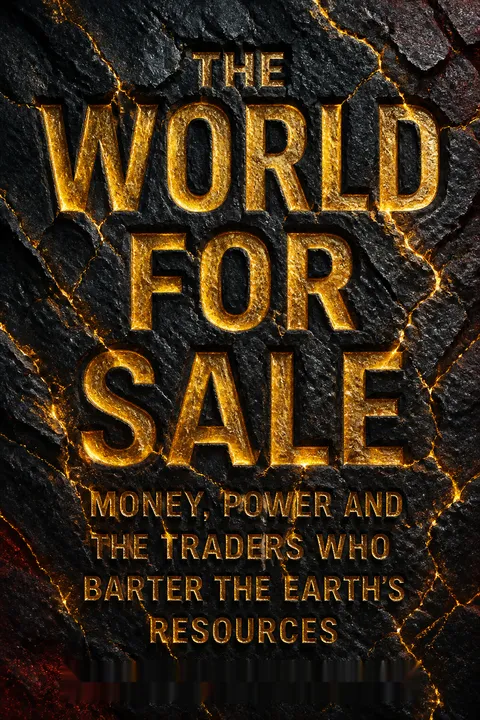
The World for Sale is praised as an eye-opening, well-researched exploration of commodity trading. Readers found it informative, thrilling, and often shocking, revealing the immense power and wealth of traders who operate in the shadows of global economics. The book exposes the complex, often unethical dealings that shape world events and economies. While some found it dense or challenging to follow, most reviewers appreciated the book's insights into a previously obscure industry, highlighting its geopolitical significance and the moral ambiguity of its key players.
People Also Read




Glossary
Commodity trader
Physical resource intermediaryA company whose main business is buying and selling physical resources it did not produce or consume. It connects producers with customers, and may arrange transport, storage, financing, and delivery. This distinguishes the trading houses in the book from financial investors who trade price exposure without handling commodities, and from producers that mainly sell their own output.
Spot market
Prompt-delivery tradingA market in which a commodity is bought and sold for prompt or near-term delivery, rather than for a date far in the future. As the oil market opened beyond the major oil companies, spot trading helped establish prices through competing offers and transactions. Rotterdam became a central hub for this trade in the 1970s.
Derivatives
Contracts tied to commodity pricesFinancial contracts whose value depends on an underlying commodity or its price. Futures commit buyers and sellers to a transaction at a later date, while options give a holder the choice, but not the obligation, to buy or sell under specified terms. Traders use derivatives to hedge physical deals or to speculate on price movements.
Tolling
Inputs exchanged for outputAn arrangement in which a trader supplies a production facility with raw materials or other inputs and receives some or all of the finished product in return. The trader can secure commodity supply without owning or operating the facility. The book describes tolling deals in Jamaican and Russian aluminium as a way to finance production and obtain metal.
Optionality
Flexibility inside a contractContract terms that allow a trader to adjust quantities, timing, or other details within agreed limits. In a rising market, for example, a trader may be able to take more supply from a seller or deliver less to a buyer, then sell the difference elsewhere. Such flexibility can become especially valuable when prices move sharply.
Commodity supercycle
Long demand-led price boomAn extended period when commodity prices remain above their long-run trend, usually because industrialization and urbanization create sustained demand. The book describes the early twenty-first-century cycle as driven especially by China’s growth, combined with supply that could not expand quickly after years of low prices and reduced investment.
Prepayment
Cash advanced for future supplyA financing arrangement in which a trader or its lenders advance money to a producer or government in exchange for future commodity deliveries. The commodity stream helps secure repayment. These deals can provide capital when ordinary lenders are unavailable, but they commit future exports and can leave borrowers exposed when prices or production fall.
Paper barrels
Oil price contractsA term for oil exposure created through futures, options, and related financial contracts, rather than through possession of physical oil. These contracts let traders and other market participants hedge or speculate on oil prices without handling a cargo. Their growth widened participation in the oil market and made large financial bets easier to place.
FAQ
What's The World for Sale about?
- Commodity Trading Focus: The book explores the intricate world of commodity trading, highlighting how traders like Marc Rich have shaped global markets.
- Power Dynamics: It examines the shift in power from large oil companies to independent traders, especially during the oil crises of the 1970s and 1980s.
- Historical Context: The narrative provides a historical overview, tracing the evolution of the industry from post-World War II to the present.
- Global Impact: It illustrates the traders' influence on economies and politics, using real-world examples like the Libyan civil war and the Iranian revolution.
Why should I read The World for Sale?
- Insightful Analysis: The book offers a deep dive into a largely overlooked industry with significant implications for global economics and politics.
- Engaging Storytelling: Authors Javier Blas and Jack Farchy use compelling narratives and real-life stories to engage readers.
- Understanding Modern Economics: It provides insights into global trade mechanisms and the influence of commodity traders on international relations.
- Hidden Industry Insight: The book reveals the strategies and relationships driving this multi-billion dollar industry.
What are the key takeaways of The World for Sale?
- Traders as Power Brokers: Commodity traders wield significant power, influencing geopolitical events and economic outcomes.
- Risk and Reward: The high-stakes nature of trading is highlighted, where traders operate in volatile environments for substantial profits or losses.
- Ethical Considerations: The book raises questions about the ethics of trading in politically sensitive regions and the moral implications of profit-driven decisions.
- Market Volatility: Traders navigate market volatility and crises, adapting strategies to capitalize on opportunities.
What are the best quotes from The World for Sale and what do they mean?
- “The commodity traders have become essential cogs in the modern economy.”: Highlights traders' critical role in ensuring the flow of essential goods.
- “Without them, petrol stations would run out of fuel.”: Emphasizes global supply chain dependency on commodity traders.
- “The traders are not just merchants; they are merchants of power.”: Captures the influence of traders on global politics and economics.
- “In the shadows, they operate, but their impact is felt in the light.”: Reflects the hidden yet significant impact of commodity trading.
How did commodity trading evolve over time according to The World for Sale?
- Post-War Expansion: Commodity trading flourished after World War II, driven by global economic growth and resource demand.
- Shift from Oligopoly: The dominance of large oil companies gave way to independent traders, leading to competitive pricing and market volatility.
- Financial Instruments: The introduction of futures and options in the 1980s transformed trading, allowing for risk hedging and speculation.
- Emergence of Oligarchs: The collapse of the Soviet Union facilitated the rise of new Russian oligarchs partnering with Western traders.
What role did Marc Rich play in the commodity trading industry?
- Pioneering Trader: Marc Rich revolutionized the oil trading market, particularly through dealings with Iran and South Africa.
- Controversial Figure: His aggressive strategies led to significant profits but also legal troubles, highlighting moral complexities.
- Legacy of Influence: Rich's approach influenced a generation of traders, leading to the establishment of companies like Glencore and Trafigura.
How do commodity traders impact global politics?
- Resource Control Influence: Traders shape political landscapes by facilitating resource flow between countries, altering power dynamics.
- Support for Regimes: They often provide financial support to governments, raising ethical questions about the consequences on local populations.
- Geopolitical Leverage: Traders' actions can shift power balances in conflict zones, demonstrating their role as key players in global politics.
What challenges do commodity traders face in their operations?
- Market Volatility: Traders navigate unpredictable conditions, with prices fluctuating due to geopolitical events or supply-demand changes.
- Regulatory Scrutiny: Increasing scrutiny from regulators complicates operations, especially in politically sensitive regions.
- Ethical Dilemmas: Balancing profit motives with ethical considerations presents ongoing challenges, particularly in regions with human rights issues.
How does The World for Sale address the issue of ethics in commodity trading?
- Moral Ambiguity: The book highlights ethical dilemmas faced by traders, especially in conflict zones or with authoritarian regimes.
- Consequences of Actions: It discusses the impact of traders' decisions on local populations and global stability, emphasizing accountability.
- Call for Transparency: The narrative suggests greater transparency and regulation could mitigate ethical issues within the industry.
How did the collapse of the Soviet Union affect commodity trading?
- Opening of Markets: The collapse created opportunities for traders to exploit the lack of structure and regulation.
- Emergence of Oligarchs: New Russian oligarchs partnered with Western traders, reshaping the region's economic landscape.
- Shift in Power Dynamics: The state-controlled trade system was replaced by a decentralized market, allowing direct negotiations with producers.
How do commodity traders adapt to changing global markets?
- Flexibility and Innovation: Traders adapt strategies to respond to market fluctuations, political changes, and emerging opportunities.
- Investment in Infrastructure: Increasing investment in physical assets secures supply chains and reduces third-party reliance.
- Leveraging Technology: Data analytics and market intelligence are crucial for informed decision-making and staying competitive.
What is the significance of the term "supercycle" in The World for Sale?
- Definition of Supercycle: An extended period of high demand and prices for commodities, driven by industrialization and urbanization.
- Impact on Traders: The supercycle, particularly fueled by China's growth, created opportunities for traders to profit from rising prices.
- Long-term Trends: Supercycles reshape global economic dynamics, influencing investment strategies and geopolitical relationships.
Download PDF
Download EPUB
.epub digital book format is ideal for reading ebooks on phones, tablets, and e-readers.








