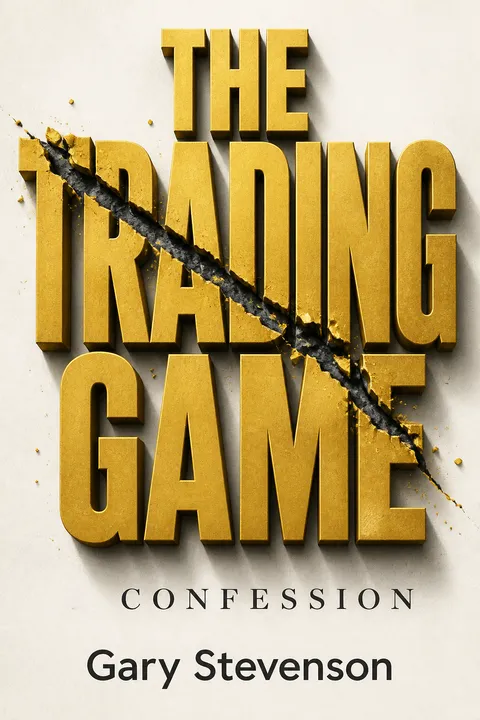


Key Takeaways
Win the contest others dismissed, then notice who controls entry.
A narrow opening. Gary Stevenson grew up in Ilford, East London, where money meant both possibility and worry. At the London School of Economics, he felt out of place among students fluent in finance jargon and familiar with elite career routes. His opening came through a bank-run trading contest: a fast numbers game that rewarded practical judgment more than polished résumés. He had an informational head start because another student explained the rules in advance, and he acknowledges that advantage was unfair.
Skill meets access. Stevenson won, secured an internship, and eventually became a highly profitable trader. The route was real, but it was not a level playing field. His story asks readers to distinguish individual ability from the unequal networks, preparation, and sponsorship that decide whose ability gets noticed.
The contest makes a useful distinction between talent and opportunity. Stevenson’s mathematical skill mattered, but so did an introduction, advance knowledge, and a hiring system that happened to reward his particular strength. Social scientists often call this hidden curriculum: unwritten rules that insiders learn early and outsiders must discover by accident. The account is not an argument that merit is meaningless. It shows why merit alone cannot explain who gets access to prestigious work, or why a gifted outsider may need an unusually lucky opening.
Quote for the market's behavior, not your private estimate.
Prices are social. In the contest, players estimated the total value of a set of cards and quoted two-way prices, meaning a buy price and a sell price. Many relied on the same expected-value calculation. Stevenson noticed that their quotes could differ widely, letting him buy from one player cheaply and sell to another at a much higher price before either understood the mismatch.
Read the room. Against stronger players, he changed tactics. He used loud opening quotes to steer the group’s reference price, then watched how people responded. The lesson he draws is that market prices are not simply what an asset is worth according to one person’s calculation. They are also shaped by what other traders will quote, accept, and imitate.
This is a compact lesson in market microstructure, the study of how trades and trading rules shape prices. A person can be right about value yet lose if others control the available price, while a sharp observer can profit by spotting poor coordination. The episode also anticipates behavioral finance: people often use nearby prices as evidence when their own information is weak. That makes imitation rational in some situations, but it can also magnify a misleading signal. The contest rewards reading both the numbers and the people using them.
Own the book, and you own the flow of profit.
A book is a business. On the trading desk, a “book” meant responsibility for a currency and the customer trades in it. The trader making prices could earn money from the gap between the buy and sell prices, called the spread. Customers might accept a less favorable price because they needed a trade completed, and the bank could earn more by holding the resulting risk rather than immediately offsetting it.
Access beats proximity. A junior “cover trader” made prices when the senior trader was away, but the resulting profit or loss still went into the senior trader’s book. Covering well could build trust and lead to a book of one’s own. Stevenson learned that trading skill alone did not determine who earned the money. Control of customer flow and whose name held the position mattered just as much.
The book system exposes a basic organizational question: who creates value, and who has the authority to claim it? Junior employees may do consequential work without owning the revenue or receiving equivalent recognition. Similar divisions appear in sales commissions, intellectual property, and platform businesses, where access to customers can be more valuable than the labor of serving them. The arrangement can reward experience and accountability, but it can also conceal how much a junior contributes. Stevenson’s career shows why understanding the incentive structure is part of understanding the job.
Credit crises widen spreads, turning financial distress into bank revenue.
A market in retreat. After Lehman Brothers collapsed in 2008, banks became reluctant to lend to one another. Stevenson’s desk traded foreign-exchange swaps, which he explains as loans secured by one currency while borrowing another. When lending became scarce, the gap between buy and sell prices widened sharply. A desk able to keep quoting could earn far more per trade than in ordinary conditions.
Profit beside panic. Traders on the desk made enormous sums while banks and jobs across the industry were threatened. Bill, an older trader who had anticipated trouble in short-term bank lending, profited heavily. Citi itself needed a government-backed bailout. The desk’s gains were not evidence that the crisis was harmless. They showed how a market disruption can reward intermediaries who still have the capacity to trade.
The episode clarifies how liquidity, the ability to transact without a large price penalty, can become valuable precisely when it is scarce. A bank that continues to make markets may provide a useful service and capture unusually large spreads at once. Those two facts can coexist, which complicates any simple story of either heroic market-making or pure exploitation. The deeper institutional tension is that private trading profits can rise during systemic distress while losses are partly transferred to the public through rescues. That is a form of moral hazard: protection from some consequences can weaken incentives to limit risk.
Never call a trade risk-free when the exit can disappear.
The Swiss shock. In 2010, Stevenson took a large position after a senior trader said a Swiss-franc trade offered an attractive opportunity. The Swiss National Bank then offered francs through a three-month foreign-exchange swap at a rate equivalent to negative 4.5 percent. That extraordinary price pushed the market against Stevenson’s position, and he could not readily get out because buyers for the other side had vanished.
A painful exit. His exposure approached $1.2 billion. He lost about $8 million before closing the trade, even though the market later moved back in the direction he had expected. His colleagues, who held smaller positions, survived and made money. The episode turned a correct-sounding forecast into a costly lesson: the trade’s path and the ability to stay in it matter as much as its eventual destination.
This is a vivid example of liquidity risk: an asset may have a plausible long-term value while becoming impossible to trade at a tolerable price in the short term. It also reveals how confidence can turn adverse evidence into an excuse to increase exposure. In behavioral economics, this resembles escalation of commitment, where people invest more in a failing decision because backing away feels like admitting defeat. The trader’s conviction may still be right, but conviction does not guarantee time, capital, or market access. Those constraints are part of the forecast, not administrative details.
Size for the worst path, not just the forecasted destination.
Survival is a condition. The Swiss position left Stevenson down $4.2 million for the year after he was forced to close it. He later argued that a good trade is not enough if the interim loss exceeds what the trader or institution can bear. A trader has a practical loss limit: once reached, managers may intervene, capital may disappear, or the position may have to be closed before the prediction comes true.
Stress-test the route. His personal rule became to ask what could go wrong between entry and the moment the thesis proved right, then to consider whether the worst case might be worse than expected. This is not a guarantee against loss. It is a way to avoid treating an eventual prediction as if it removes the danger of surviving the journey.
The principle applies beyond finance. A sound plan can fail if it demands more time, money, health, or political support than its owner can sustain. Risk management therefore asks two questions: Is the thesis plausible, and can the decision-maker endure the interval before it is tested? The distinction is especially important in systems with forced deadlines, such as debt repayment or quarterly performance reviews. Stevenson’s emphasis on survival is persuasive, though his own history also shows how easily a strong belief can distort the estimate of a worst case.
Ask households why spending stopped before trusting recovery forecasts.
Start with lived experience. By 2011, Stevenson was skeptical of repeated predictions that interest rates and economic growth would soon return to normal. He asked friends why they were not spending. One was short of money and skipping transport fares; another’s family had sold its home; another was helping cover a parent’s mortgage. These personal accounts challenged explanations that blamed a temporary loss of consumer confidence.
Follow the ownership. Stevenson’s larger thesis was that wealth was concentrating among people who spend less of each additional pound on everyday goods, while others lost homes and took on debt. He argued that this weakens broad consumer demand and keeps rates low, even as scarce assets such as houses and shares rise in value. He believed standard economic models missed this distributional pattern.
The book’s strongest economic move is to replace the imagined average household with households in different financial positions. If one group owns assets and another pays rent, debt service, or mortgage costs, the same aggregate income can produce very different spending. That perspective connects to distributional macroeconomics, which studies how income and wealth differences shape economy-wide outcomes. Still, personal interviews and a trader’s successful bets do not establish that inequality alone explains persistent low rates. The thesis is a powerful question for economic models, not a complete causal proof.
A market win can be a social loss dressed as skill.
The wager had people behind it. Stevenson made money by betting that weak growth and low interest rates would persist. During the 2011 Japanese earthquake and nuclear crisis, his position gained sharply as markets reacted to the disaster. He describes earning about $11 million amid the deaths of roughly 20,000 people, while colleagues lost money on the same movement.
A forecast is not a virtue. The episode made visible what trading screens can hide: market movements may reflect unemployment, lost homes, financial panic, or catastrophe. A profitable position can demonstrate skill at anticipating prices, but it does not make the underlying event desirable or the trader morally responsible for causing it. Stevenson’s discomfort grows as he recognizes that his financial success depends on conditions he considers socially damaging.
The distinction between prediction and endorsement matters in any profession that monetizes risk. An insurer can accurately price danger without wanting a fire; a trader can anticipate economic pain without causing it. Yet repeated rewards for anticipating harm can still shape attention, making suffering appear mainly as a signal. This resembles moral distancing in institutions, where abstract metrics separate decisions from their human consequences. The account does not settle what traders owe society, but it makes denial harder: being causally innocent is not the same as being untouched by the system’s benefits.
A huge bonus can deepen the golden handcuffs, not loosen them.
The reward changed the target. At twenty-three, Stevenson earned a bonus of £395,000 after making $12 million for the bank. He expected the money to feel like freedom. Instead, he immediately started calculating how much more he could make. His next year brought a much larger PnL, but the bonus system paid some compensation later, making departure financially costly.
Success narrowed his life. He worked long hours, grew distant from friends and family, and ignored deteriorating health. His relationship with Harry, the younger friend he had brought into his home and job, eventually collapsed amid work pressure, drinking, and drug use. The money offered choices, but it also strengthened the habit of treating every choice as a chance to earn more.
A large reward can create a ratchet: once a person adapts to a new income or status, the next threshold feels necessary rather than sufficient. Deferred compensation intensifies that effect by making future freedom conditional on staying put. This resembles behavioral research on loss aversion, the tendency to feel a potential loss more strongly than an equivalent gain. The book also resists a tidy moral lesson. Stevenson’s ambition began in real insecurity, and money helped his family. The problem was not wanting security, but allowing the pursuit of it to consume every other measure of a life.
Eighteen million in Tokyo still left him too sick to trade.
The numbers kept working. In Tokyo, Stevenson had earned millions from positions tied to persistently weak economic conditions. Yet the market eventually went quiet, and the trading floor became a place where he had little to do and few close relationships. He lost weight, struggled to eat and sleep, and described recurring pain in his chest and stomach. His success on the PnL sheet did not translate into feeling well or free.
Leaving took a fight. Deferred pay, management pressure, and disputed exit conditions kept him at the bank. He sought medical leave, legal advice, and a route out through charity work. After months of conflict, he left, uncertain how much of the outcome came from his own actions and how much from events beyond his control. The ending shifts the measure of winning from profit alone to reclaiming a life outside the game.
The story makes a useful distinction between financial freedom and the capacity to use freedom. Money can widen options, but illness, isolation, and institutional constraints can make those options feel unreachable. This resembles the capability approach in political philosophy, which judges well-being by what people are genuinely able to do, not merely by the resources they possess. The memoir cannot offer a universal formula for when to leave a high-pressure career. It does show why earnings are an incomplete measure of success when health and relationships are being spent to produce them.
Analysis
The Trading Game works because its financial education is embedded in a coming-of-age story. A boy from Ilford enters a world that claims to reward intelligence, learns how prices and incentives actually function, and becomes extraordinarily successful. But the same skills that help him read a market also trap him in a system where every win raises the next target. The narrative’s central tension is not simply whether Stevenson can make money. It is whether a person can profit from a damaged economy without becoming emotionally organized around its damage.
The trading explanations are unusually effective because they begin with concrete mechanics: two-way prices, customer flow, currency swaps, and the danger of being unable to exit. These episodes reveal that markets are neither pure mathematics nor pure irrationality. They are institutions built from information, bargaining power, imitation, and rules about who owns the resulting profits. That makes the memoir relevant to readers who have never traded. It shows how incentives can make conduct appear sensible locally while producing troubling results collectively.
The book’s inequality argument is its most ambitious claim. Stevenson connects households losing assets and spending power to persistent weak demand, low interest rates, and rising asset prices. His street-level observations offer a corrective to models that treat an average household as representative of everyone. They do not, on their own, prove that inequality explains every macroeconomic outcome. The distinction matters: an incisive hypothesis can expose what conventional analysis overlooks without becoming a complete account of causation.
The memoir is strongest where it preserves that uncertainty. Stevenson does not know whether his career success was skill, luck, or both, and he cannot fully explain how he escaped Citibank’s pressure. That unresolved ending deepens the book’s ethical question. If economic hardship can be forecast, priced, and profited from, does understanding the mechanism create any responsibility to change it? The narrative offers no clean answer, but it makes indifference feel less like neutrality and more like a choice.
Review Summary
The Trading Game receives mostly positive reviews, praised for its entertaining and honest portrayal of the high-stakes world of financial trading. Readers appreciate Stevenson's candid storytelling, humor, and ability to explain complex financial concepts. The book offers insights into the author's journey from a working-class background to becoming a top trader at Citibank. While some readers find the later parts of the book less engaging, many commend its exploration of inequality and the personal toll of the trading lifestyle. Overall, it's described as a compelling and thought-provoking read.
People Also Read






Glossary
FX swap
Currency-for-currency loanA foreign-exchange swap is an agreement in which two parties exchange currencies for a period and later reverse the exchange. Stevenson explains it as a collateralized loan in which each side borrows one currency and lends another. The interest-rate difference between the currencies affects the price. Banks, funds, and companies use swaps to manage financing across currencies.
book
Trader's assigned positionsOn the trading desk, a book is the set of positions and customer trades a trader is responsible for, usually in one or more currencies. Trades made by a cover trader for an absent colleague may still count toward the colleague's book and profit or loss. Owning a book therefore means controlling customer flow and bearing responsibility for its financial results.
cover trader
Stand-in market makerA cover trader makes prices and handles trades when the trader responsible for a currency is away from the desk. The trades generally remain in the absent trader's book, so the cover trader does not automatically receive the resulting profit or loss. For a junior, reliable cover work can demonstrate skill and help establish trust with senior traders.
PnL
Profit and lossPnL is short for profit and loss, the measure used on the desk to track the money a trader's positions make or lose for the bank. The book's PnL was visible to colleagues and influenced bonuses, status, and managerial attention. It was not the trader's take-home pay: compensation depended on a separate bonus process.
arbitrage
Profit from price mismatchArbitrage is an attempt to earn money by combining trades whose prices do not align, so that opposing positions offset one another while leaving a profit. In Stevenson's card-game example, buying at one player's low quote and selling at another's much higher quote could lock in points regardless of the final card total. In real markets, apparent arbitrage can still involve risks, costs, or limits on executing every leg.
green Eurodollar
Bet on future US ratesIn the book, a green Eurodollar is a futures-market position used to bet on the level of US interest rates at a future date. Stevenson contrasts it with foreign-exchange swaps because it offers a more direct wager on rate expectations, rather than a position involving two currencies and the need to manage related funding. He uses the instrument to express his view that rates would remain low.
representative agent
One average economic householdA representative-agent model represents an economy through a single typical or average person, household, or firm. Stevenson argues that this approach can obscure how wealth and debt are distributed across groups. If asset owners and indebted households behave differently, an average may fail to show who is spending, who is receiving interest or rent, and how those flows affect the wider economy.
pig on pork
Duplicated correlated exposureStevenson's desk used this phrase for holding several positions that appear diversified but depend on the same underlying economic outcome. For example, lending dollars, pounds, and euros may all lose value together if economies weaken or strengthen in related ways. A trader who mistakes correlated positions for separate bets may have much more concentrated risk than the portfolio appears to show.
pain threshold
Maximum tolerable lossA trader's pain threshold is the amount of loss that the trader or institution can withstand before pressure, intervention, or forced closure ends the position. A trade may ultimately move in the expected direction, yet the trader can still lose by exceeding this limit first. Stevenson treats the ability to survive adverse movement as part of sound risk assessment.
FAQ
What's The Trading Game: A Confession about?
- Personal Journey: The book details Gary Stevenson’s rise from a troubled youth in East London to a successful trader at Citibank, highlighting the personal and professional challenges he faced.
- Trading Culture: It offers a candid look at the trading floor's culture, including the camaraderie, pressure, and ethical dilemmas traders encounter.
- Financial Crisis Impact: Stevenson explores the effects of the 2008 financial crisis on traders and the banking industry, reflecting on systemic failures and reckless trading practices.
Why should I read The Trading Game: A Confession?
- Engaging Storytelling: Stevenson’s writing makes complex financial concepts accessible, with personal anecdotes adding a human touch to the finance world.
- Real-Life Lessons: The book provides valuable insights into ambition, risk, and ethics in trading, offering lessons from Stevenson’s successes and mistakes.
- Understanding Finance: It’s a compelling read for those interested in finance, providing insights into trading mechanics and the psychological aspects of being a trader.
What are the key takeaways of The Trading Game: A Confession?
- Risk Management: Stevenson emphasizes the importance of understanding and managing risk, advising traders to protect themselves in high-stakes environments.
- Ethical Considerations: The book highlights ethical dilemmas in trading, serving as a cautionary tale about the pitfalls of greed and ambition.
- Value of Relationships: Building relationships with colleagues and brokers is crucial, impacting career trajectory and success in the trading world.
What are the best quotes from The Trading Game: A Confession and what do they mean?
- “In a mad world, only the mad are sane.”: Reflects the chaotic nature of trading, suggesting that thriving requires embracing its madness.
- “You are going to learn that sometimes, bad things happen to good people.”: Highlights the unpredictability of life and financial markets, emphasizing preparedness for unforeseen challenges.
- “Cover Your Arse.”: Stresses the necessity of protecting oneself in high-risk environments, emphasizing caution and awareness of potential consequences.
How does The Trading Game: A Confession portray the trading culture?
- Competitive Environment: The book illustrates the cutthroat nature of trading, where success is often measured in monetary terms.
- Camaraderie and Relationships: Despite competition, Stevenson highlights the bonds formed among traders and brokers, emphasizing the importance of networking.
- Ethical Ambiguity: The narrative reveals moral complexities, where the pursuit of profit can lead to questionable decisions.
What challenges does Gary Stevenson face in The Trading Game: A Confession?
- Financial Crisis: Stevenson navigates the impact of the 2008 crisis on his career and the industry, reflecting on the uncertainty and fear it caused.
- Ambition vs. Ethics: He struggles with balancing ambition and the ethical implications of his actions, confronting the consequences of his choices.
- Personal Relationships: His relationships with friends and family are tested as he immerses himself in the trading world, reflecting on the sacrifices made for success.
How does the financial crisis affect Gary Stevenson’s trading strategies in The Trading Game: A Confession?
- Market Conditions Shift: The crisis changes market dynamics, affecting trade profitability and requiring strategy adaptation.
- Risk Awareness: Heightened awareness of risk management becomes crucial, emphasizing understanding trade consequences and caution.
- Opportunities Amidst Chaos: Despite challenges, Stevenson identifies profit opportunities during the crisis, capitalizing on market volatility.
What specific trading concepts are discussed in The Trading Game: A Confession?
- FX Swaps: Stevenson explains FX swaps as collateralized loans involving currency exchanges, emphasizing interest rate differentials.
- Profit and Loss (PnL): The book discusses PnL significance, with traders needing to monitor it to gauge performance and make informed decisions.
- Market Dynamics: Stevenson illustrates how market conditions, like interest rates and economic indicators, affect trading strategies.
How does Gary Stevenson’s background influence his trading career in The Trading Game: A Confession?
- Humble Beginnings: His East London upbringing shapes his perspective on money and success, driving his ambition to improve circumstances.
- Resilience and Determination: Overcoming adversity instills resilience and determination, propelling his career forward.
- Unique Perspective: His outsider status in finance allows a fresh approach to trading, leveraging his background to connect with others.
How does The Trading Game: A Confession address the theme of mental health?
- Psychological Struggles: Stevenson candidly discusses mental health challenges, including anxiety and trading pressure.
- Coping Mechanisms: He shares stress-coping strategies, like running and seeking solitude, highlighting self-care importance.
- Environment Impact: The book illustrates how trading culture can exacerbate mental health issues, making it a critical discussion topic.
What role do personal relationships play in The Trading Game: A Confession?
- Networking Importance: Stevenson underscores building relationships with brokers and colleagues, leading to opportunities and support.
- Mentorship and Guidance: Mentors play a crucial role in his career, helping him navigate trading complexities and develop skills.
- Emotional Support: Relationships provide emotional support during trading highs and lows, helping him cope with industry pressures.
How does The Trading Game: A Confession end?
- Transition to Charity Work: Stevenson leaves banking to pursue charity work, focusing on addressing inequality.
- Reflection on Choices: The ending reflects on career choices, emphasizing aligning work with personal values.
- Hope for the Future: It leaves readers with hope, as Stevenson seeks to make a positive impact despite past challenges.
Download PDF
Download EPUB
.epub digital book format is ideal for reading ebooks on phones, tablets, and e-readers.








