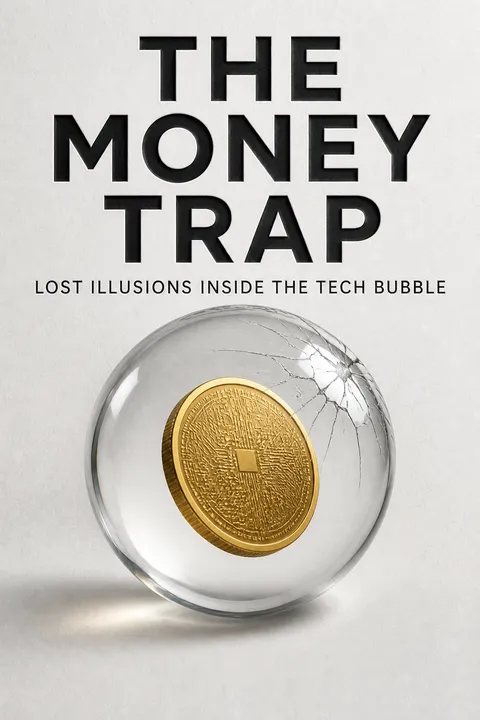


Key Takeaways
Money trap: Every raise can move the finish line farther away
The goalposts move. As a young immigrant from India, Sama entered investment banking for security, opportunity, and a better life. His first bonus, $190,000, felt astonishing. He bought gifts and expensive shirts, then watched his pay grow while new wants appeared: a better house, a faster car, and access to private jets. Among bankers, someone else always seemed richer, and each bonus could disappoint because a colleague might have received more.
Success has a hidden price. Sama eventually saw that the work kept him traveling and away from his children, while the next financial milestone remained permanently available. He did not leave the money game so much as slow down, then moved into SoftBank for a new kind of excitement. The trap is not money itself, but letting comparison decide when there is enough.
What's striking is how status competition turns abundance into a fresh measure of insufficiency. A bonus can improve a family's security, but it also becomes a public score, especially in workplaces where compensation is compared and celebrated. That makes the trap structural, not simply a private character flaw. The account also resists an easy moral: money did buy options and experiences, yet could not recover time already spent away. A useful question is therefore not whether ambition is bad, but what specific freedom each next reward is supposed to purchase.
Back technological shifts, but price uncertainty instead of worshipping vision
Vision can be real. Masayoshi Son had repeatedly anticipated major changes, from the internet to smartphones. His 2006 purchase of Vodafone Japan looked reckless, but his bet that the iPhone would transform mobile service helped turn it into a major success. In 2016, SoftBank bought Arm, whose energy-efficient chip designs were central to smartphones and could support a future of connected devices. Son believed the company’s value would grow as computing spread into cars, robots, and other products.
Being right is incomplete. The Arm purchase was bold, but SoftBank’s market value initially fell by roughly $10 billion, about the premium paid. The Vision Fund also made an early Nvidia investment that produced a substantial gain, then sold before the later surge. Identifying a trend, choosing a price, sizing a bet, and deciding when to sell are separate skills.
The distinction between technological foresight and investment performance is crucial. A compelling future does not automatically make any price reasonable, and a correct prediction can still produce a poor result if the investor exits too soon or takes too much risk. The Arm case is especially instructive because the business thesis and the market’s immediate verdict diverged. That divergence is not proof that the market was wrong; it is a prompt to test what assumptions must hold for a premium to pay off.
Slow capital deployment before leverage magnifies every mistake
Speed changes the risk. The SoftBank Vision Fund gathered close to $100 billion and aimed to invest its capital over roughly two to three years. Sama argues that this was riskier than deploying money across a longer period, because a short window can concentrate investments in the same optimistic market. Technology companies are especially exposed to shifts in interest rates and investor mood, while their valuations often depend on profits expected far in the future.
Leverage compounds the exposure. The fund used preferred equity, a financing layer that paid investors 7 percent annual cash interest but had no fixed repayment date. Some investment costs also relied on capital from the fund and SoftBank. During early years, the fund could draw investor capital to meet interest obligations. That structure increased buying power, but made losses and timing mistakes more consequential.
This is a reminder that risk depends not only on what a fund owns, but on when it buys, how quickly it commits, and how its financing behaves under stress. Diversifying across companies may not protect a portfolio if those companies depend on the same market conditions. The tradeoff is real: rapid deployment can secure access to scarce opportunities and help a fund influence companies. But a large pool of capital creates pressure to find deals, even when patience would be safer.
Check unit economics before accepting a startup's technology label
The label is not the model. Sama repeatedly questions whether a company deserves the economics of a technology platform. WeWork leased offices on long contracts, then rented space to customers on shorter terms. If demand fell, its income could shrink while its lease obligations remained. That mismatch between assets and liabilities is a basic risk-management problem, not a software feature.
Measure what the business keeps. Online marketplaces were sometimes valued on gross merchandise value, or the total price of goods sold, rather than the smaller commission they actually earned. A company could increase that headline number by discounting transactions and losing money. OYO began as a capital-light booking platform, but expanded into property ownership and costly international markets. Calling a business technological does not erase its underlying costs, obligations, or local limits.
The strongest test here is to follow the cash rather than the story. Technology can improve a business without changing its fundamental economics: a useful app does not make a property company asset-light, and a large transaction total is not the same as revenue. Still, unconventional models can create value before they show conventional profits, so early losses alone do not settle the case. The key is whether each loss plausibly builds durable customer value or merely purchases growth that disappears when subsidies stop.
Export proven business models only after adapting them to local economics
A time machine travels selectively. Son’s time machine management strategy meant carrying a successful business model from one market into another, often with changes for local conditions. Amazon inspired e-commerce investments such as Flipkart in India; Uber inspired ridesharing companies including Ola and Grab. Emerging markets could leapfrog older systems, such as car ownership or organized retail, and adopt digital services quickly.
Copying is not enough. A platform gains strength through network effects: more users can make the service more useful to other users. But the same model can struggle where those effects are weak or costs differ. Ola and Uber subsidized rides in India to attract passengers and drivers, sometimes spending more than the fare collected. The strategy could build scale, but it depended on reaching sustainable economics before funding ran out.
The model is more sophisticated than simple imitation: it treats geography as a time lag, while recognizing that consumer habits and infrastructure shape adoption. This helps explain why a local champion may outperform a foreign original. The caution is that network effects can be mistaken for proof of a viable business. Subsidies may create activity without loyalty, and market share does not guarantee pricing power if customers readily switch. Local adaptation must include a credible route from adoption to durable margins.
Give ambitious leaders challengers who can say no
Conviction needs friction. Son’s willingness to make unusually large bets was central to SoftBank’s successes. It also made it difficult for colleagues to stop a deal once he had committed to it. Sama and Ron Fisher questioned WeWork’s valuation and its claim to be a technology platform, but Son moved ahead with a multibillion-dollar investment after a brief meeting with founder Adam Neumann. The company's later collapse showed the cost of confusing a charismatic founder with a sound business model.
Disagreement is not disloyalty. SoftBank’s culture emphasized trust and a shared mission, but close relationships could make challenge harder. Nikesh Arora left after the succession plan changed and Son decided to remain CEO. Sama later found himself treated as a “cook” rather than a “hunter,” a distinction that captured their different appetites for risk. A team needs both boldness and independent judgment.
The tension is not between visionary leaders and cautious bureaucrats. It is between useful conviction and conviction that has escaped testing. Strong challengers can improve a decision without owning the final call, provided dissent is invited early and backed by evidence. At the same time, a culture of permanent skepticism can miss rare opportunities that look irrational before they work. The practical aim is not to eliminate risk, but to require a clear account of what would prove a favored thesis wrong.
Keep trusted counsel and evidence when anonymous attacks target your reputation
Power does not prevent vulnerability. The book opens with Sama being shown photographs of his wife, daughter, and dog during a meeting with men claiming they could identify people conspiring against him. They demanded a large fee and offered no usable proof. The incident felt absurd and frightening at once: his senior position and wealth could not tell him who was watching his family or why.
Build a factual defense. A broader campaign later targeted both Sama and Arora with anonymous letters, claims of misconduct, and private financial information. Sama hired a lawyer and investigators, retained records, and sought formal review of specific allegations. The book does not establish a verified identity for the person behind the campaign. Its practical lesson is to separate substantiated evidence from insinuation, protect private information, and avoid amplifying claims that cannot be checked.
Reputation is unusually vulnerable because false claims can travel faster than careful corrections, while their mere circulation can create a misleading impression of evidence. The account shows the value of legal advice and disciplined documentation, particularly when fear tempts a target to respond impulsively. It also illustrates a limit: investigation can clarify what happened without identifying every motive or culprit. A responsible response should defend the record firmly while resisting the urge to turn uncertainty into accusation.
Protect time for family before success turns absence into regret
Time cannot be banked. Sama recalls missing much of his children’s lives while building a career that brought money, travel, and status. He also repeatedly postponed telling his parents what they meant to him. After his father died, he arrived in time for a final embrace and words of pride, but was left with questions about what they had never discussed. His mother died months later, after years of caring for his father.
Loss changes the measure. His dog Ellie died while he was away on a business trip, and he never got to say goodbye. These memories sit beside his professional triumphs, exposing the limits of treating family time as something to reclaim after the next deal. The memoir does not pretend that work is meaningless. It asks whether achievement remains worth its cost when the people it displaces cannot be recovered.
The narrative makes opportunity cost emotionally legible: career time is not merely time spent elsewhere, but time that cannot be restored once a relationship or life ends. This is more persuasive than a generic instruction to seek balance because the regret is attached to particular absences and unsaid words. Yet no formula can remove the conflict between responsibility, ambition, and caregiving. The useful implication is modest but urgent: do not assume that affection will be understood without being expressed.
Choose what enough means before ambition starts measuring in acres
A grave is small. In Tolstoy’s story, Pakhom keeps acquiring land, then accepts a bargain: he can claim as much ground as he can walk around in a day, but must return before sunset. He pushes farther to secure more, becomes exhausted racing back, and dies at the finish. His worker digs a grave six feet long. The story gives the title’s central warning a physical scale: accumulation can consume the life it was meant to improve.
A different second act. Sama eventually left SoftBank, kept some shares as “schmuck insurance,” a small stake intended to soften regret if the stock rose, and began studying creative writing. The decision did not erase his interest in money or technology. It reflected a changed sense of what deserved his attention, after decades of pursuing deals and experiencing profound personal losses.
The Tolstoy parable turns an abstract argument about greed into a problem of finite time and bodily limits. Its force comes from refusing to calculate success in the same units as Pakhom: land has no value to the man who dies chasing it. Still, the lesson is not that ambition should disappear. The sharper question is whether each additional pursuit serves a life the person actually wants, or simply extends a contest whose rules were set by other people.
Analysis
The Money Trap works because it tells two stories at once. One is a finance memoir about Masayoshi Son’s high-stakes technology investing, the creation of a nearly $100 billion fund, and the damage that follows when scale, leverage, and conviction reinforce one another. The other is a personal account of a man who discovers that professional success cannot guarantee control, protect a reputation, or compensate for time with family. The investment narrative gives the memoir its machinery; the losses give it moral weight.
Its most useful distinction is between seeing a technological future and investing successfully in it. Son’s instincts about mobile computing and AI could be prescient even when the price paid, financing structure, speed of deployment, or eventual exit proved costly. The book therefore complicates the usual founder mythology: being visionary is not the same as being right about every company, and being right about a trend is not enough to manage risk. The strongest examples, including Arm and WeWork, show how strategic insight and poor judgment can coexist within the same decision-maker.
The memoir is also necessarily partial. Sama is a participant with access to boardrooms, negotiations, and personal relationships, but his account is shaped by loyalty, hindsight, and the limits of what he can verify. That limitation is clearest in the harassment story, where the campaign is documented but its ultimate source remains uncertain. Rather than resolving every mystery, the book shows how ambiguity itself becomes a burden when money and reputation are at stake.
Its final argument is not that ambition is foolish or that wealth is inherently corrupting. It is that endless accumulation can quietly become a substitute for deciding what a successful life is for. The book’s most durable question is therefore personal as well as financial: what is the next reward supposed to buy, and is it worth the time required to earn it?
Review Summary
The Money Trap by Alok Sama receives high praise for its insightful, humorous, and candid exploration of the tech investment world. Readers appreciate Sama's accessible writing style, which makes complex financial concepts understandable. The book offers a compelling insider's view of SoftBank and its deals, blending personal anecdotes with industry analysis. Many reviewers found it engaging and educational, highlighting Sama's ability to balance professional insights with personal reflections. The book is widely recommended for those interested in finance, tech, and entrepreneurship.
People Also Read







Glossary
The Airport Test
A test of collegialityA hiring idea associated in the book with Google cofounder Sergey Brin: a candidate should be someone colleagues would enjoy spending time with if they were unexpectedly stuck together at an airport. Sama uses the idea to describe a broader preference for colleagues who combine competence with curiosity, character, and engaging company.
time machine management
Transplanting proven business modelsMasayoshi Son’s strategy of identifying successful technology business models in one market and adapting them for markets where they have not yet taken hold. The model is not simply copied unchanged: local conditions may require modifications. Examples in the book include e-commerce and ridesharing businesses adapted for India, China, and Southeast Asia.
blitzscaling
Prioritizing rapid market dominanceA growth strategy that spends heavily to build market share quickly, with the expectation that scale and customer adoption can later support stronger profits. Sama connects the approach to platform businesses, where network effects can make a service more useful as more people join. He also stresses that the strategy can fail when subsidies do not lead to sustainable economics.
fat tails
More frequent extreme outcomesA feature of investment returns in which very large gains or losses occur more often than a simple normal-distribution model would suggest. The concept matters because investors can underestimate the chance of severe events, such as a financial crisis. Sama uses it to explain why leverage can threaten an investor’s survival even when ordinary outcomes appear manageable.
preferred equity
Equity with priority paymentsIn the Vision Fund structure described by Sama, preferred equity supplied part of the financing for investments and paid investors a 7 percent annual cash return. Unlike ordinary debt, it had no fixed repayment date, and investors were repaid when investments were sold. The financing increased the fund’s purchasing power while creating continuing payment obligations.
asset-liability matching
Aligning obligations with assetsA risk-management principle that asks whether the timing and durability of a business’s assets fit the timing and durability of its obligations. WeWork illustrates the danger in Sama’s account: it often had long-term leases to landlords but relied on shorter-term customers renting workspace. A decline in demand could reduce income while lease payments continued.
schmuck insurance
A hedge against seller's regretA term for retaining a limited financial interest or an option after selling an asset, so the seller still benefits if the asset later rises substantially in value. Sama uses it to describe keeping some SoftBank shares after leaving the company. The position could reduce regret from selling too early, though it could not remove investment risk.
Vision Fund
SoftBank's technology investment fundSoftBank’s large technology investment vehicle, assembled with major commitments from Saudi Arabia, the United Arab Emirates, and other investors. Its strategy was to invest aggressively in companies expected to benefit from major technological change. The fund’s scale, concentrated deployment period, and use of layered financing amplified both its capacity to invest and the consequences of poor bets.
FAQ
What’s The Money Trap: Lost Illusions Inside the Tech Bubble by Alok Sama about?
- Insider memoir of tech finance: The book is a memoir by Alok Sama, chronicling his three-decade journey through investment banking and technology investing, with a focus on the rise and fall of the tech bubble.
- SoftBank and Vision Fund focus: A significant portion centers on Sama’s time at SoftBank, working closely with founder Masayoshi Son and key projects like the Vision Fund and Arm acquisition.
- Themes of ambition and risk: The narrative explores the allure and dangers of high-stakes investing, the impact of technology on society, and the personal costs of chasing success in global finance.
- Blend of personal and professional: Sama weaves personal stories, cultural reflections, and philosophical musings into the high-drama world of tech deals and corporate power.
Why should I read The Money Trap by Alok Sama?
- Rare insider perspective: Sama offers a candid, behind-the-scenes look at major tech deals, SoftBank’s inner workings, and the personalities driving the tech investment boom.
- Lessons on risk and leverage: The book demystifies complex financial structures and highlights the dangers and rewards of aggressive, leveraged investing in volatile markets.
- Human and philosophical depth: Beyond business, Sama shares personal reflections on loss, happiness, and the search for meaning, making the memoir relatable beyond finance professionals.
- Understanding tech’s global impact: Readers gain insight into how technology, finance, and culture intersect to shape the modern world.
What are the key takeaways from The Money Trap by Alok Sama?
- Vision requires risk: Masayoshi Son’s story shows that bold vision and significant risk, including financial leverage, are deeply intertwined in tech investing.
- Leverage amplifies outcomes: SoftBank’s use of mezzanine capital and preferred equity created a leveraged fund structure, magnifying both gains and losses.
- Tech investing is cyclical: The book highlights the volatility and boom-bust cycles of tech markets, emphasizing the importance of timing, patience, and diversification.
- Human factors matter: Trust, integrity, and personal relationships are as crucial as financial acumen in determining business outcomes.
Who is Alok Sama and what unique perspective does he bring to The Money Trap?
- Veteran finance executive: Sama is a former Morgan Stanley managing director and SoftBank president/CFO, with deep experience in global tech and telecom investing.
- Immigrant and cultural lens: Born in India, Sama’s immigrant background shapes his nuanced reflections on ambition, identity, and East-West business cultures.
- Personal-professional blend: He combines stories of family, friendship, and personal growth with high-stakes dealmaking, offering a humanizing view of the finance world.
- Candid and reflective voice: Sama’s writing is marked by honesty about the pressures, costs, and rewards of operating at the highest levels of tech finance.
How does The Money Trap by Alok Sama portray Masayoshi Son’s leadership style and investment philosophy?
- Visionary and risk-taker: Son is depicted as a charismatic, unconventional leader who values bold, transformative bets and embraces risk as a path to innovation.
- “Crazy guy” mantra: He believes that “the crazy guy always wins,” favoring ambition and action over caution and incrementalism.
- Hands-on and persuasive: Son personally pitches deals, uses storytelling and mathematical symmetry to inspire, and is relentless in pursuing big opportunities.
- Occasionally reckless: While his vision led to major successes, it also resulted in overvaluation and high-profile failures, highlighting the double-edged nature of his approach.
What is the SoftBank Vision Fund, and why is it significant in The Money Trap?
- Largest tech investment fund: The Vision Fund was a $100 billion fund, codenamed “Project Crystal Ball,” aiming to dominate global tech investing.
- Innovative financial engineering: It used preferred equity mezzanine financing, embedding leverage and allowing SoftBank to amplify its investment power.
- Strategic focus on Arm Holdings: Arm was central to the fund’s thesis, serving as a “crystal ball” for tech trends and processor adoption.
- Reshaped venture capital norms: The Vision Fund’s scale, ambition, and structure set new precedents in the tech investment world.
What were the most important deals and investments discussed in The Money Trap by Alok Sama?
- Arm Holdings acquisition: SoftBank’s purchase of Arm at a 42% premium became a cornerstone of its tech strategy and later yielded massive returns.
- WeWork investment: A $4.4 billion bet on WeWork ended in failure and bankruptcy, serving as a cautionary tale about hype and governance.
- Sprint and T-Mobile merger: SoftBank’s acquisition and subsequent merger of Sprint with T-Mobile created a stronger US wireless competitor after regulatory hurdles.
- Other notable investments: The book covers stakes in Alibaba, Nvidia, Supercell, Ola, Snapdeal, DiDi, and more, illustrating both spectacular successes and costly missteps.
How does The Money Trap by Alok Sama describe the tech bubble and its impact on investors?
- Netscape IPO as catalyst: The 1995 Netscape IPO triggered a tech boom, with NASDAQ soaring and venture capital flooding the market.
- Investor psychology and hubris: Sama details the intoxicating allure of easy money, the pressure to “blitzscale,” and the eventual reckoning when fundamentals reasserted themselves.
- SoftBank’s dramatic rise and fall: The company’s share price plummeted 95% during the bubble burst, with Son losing $59 billion, exemplifying the risks of leveraged visionary investing.
- Lessons in humility: The bubble’s collapse forced a reevaluation of tech investing strategies and the dangers of hype-driven valuations.
What challenges, risks, and controversies does The Money Trap reveal about SoftBank and tech investing?
- Leverage and financial risk: Aggressive use of leverage in the Vision Fund and other deals exposed SoftBank to massive losses and volatility.
- Investment missteps: High-profile failures like WeWork and Greensill Capital raised questions about due diligence and governance.
- Smear campaigns and politics: Sama and Nikesh Arora faced coordinated smear campaigns, legal threats, and internal sabotage, revealing the dark side of corporate power.
- Regulatory and geopolitical risks: Investments in China and other markets faced unpredictable government interventions, adding to the complexity.
How does The Money Trap by Alok Sama portray the culture and lifestyle of tech and finance elites?
- Jet-setting and luxury: The book vividly describes the world of private jets, luxury hotels, exclusive clubs, and fine dining among billionaires and executives.
- Japanese business rituals: Sama explores the formal etiquette, seating arrangements, and relationship-building central to Masa Son’s world.
- Personal costs and pressures: Despite the glamour, the narrative reveals the emotional toll, paranoia, and relentless pressure to perform at the top.
- Human side of power: The book highlights the importance of friendship, loyalty, and the personal sacrifices behind corporate success.
How does The Money Trap by Alok Sama explore personal and philosophical themes beyond finance?
- Reflections on mortality and loss: Sama shares intimate stories of losing his parents and dog, using these experiences to reflect on grief, legacy, and acceptance.
- Search for meaning and happiness: The memoir questions the value of material success and explores the pursuit of happiness amid wealth and ambition.
- Technology and humanity: Sama warns against overreliance on algorithms and stresses the enduring importance of human emotions, creativity, and values.
- Life beyond business: The author discusses his turn to creative writing and the quest to make sense of life’s complexities.
What are the best quotes from The Money Trap by Alok Sama, and what do they mean?
- “Who wins in a fight between a crazy guy and a smart guy? The crazy guy always win!” — Masayoshi Son’s mantra, emphasizing boldness and unconventional thinking in business.
- “In every family there are hunters and cooks. We need the cook, he is important. But for me the hunter is the most important.” — Son’s philosophy valuing risk-takers over steady operators.
- “You can never tell who’s swimming naked until the tide goes out.” — A Warren Buffett quote used to highlight how downturns reveal true financial health.
- “One life is enough.” — Sama’s reflection on mortality, urging readers to live meaningfully rather than chase endless ambition.
- “Happiness for Everyone.” — SoftBank’s corporate mission, reflecting Son’s idealistic belief in technology’s power to improve human well-being.
Download PDF
Download EPUB
.epub digital book format is ideal for reading ebooks on phones, tablets, and e-readers.








