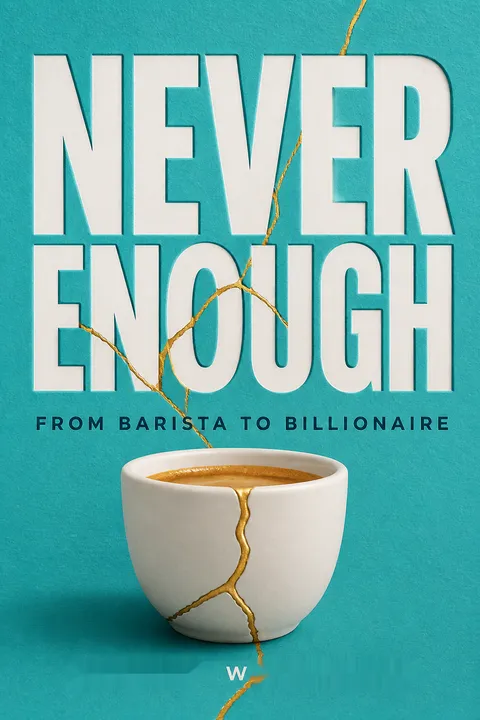


Key Takeaways
More money rarely ends the chase; define enough before doubling it.
The target keeps moving. Wilkinson first sees the word “billionaire” attached to his name in a news alert while flying to meet Charlie Munger. He feels both thrilled and sick. The label he had chased since childhood seems close enough to touch, yet he already knows he is unhappy. Growing up, his family had food and a home, but money brought tension, comparison, and a steady sense that security was missing. Even a few dollars earned carrying visitors’ bags on an island brought him relief.
He notices a pattern among wealthy people: whatever their current fortune, many imagine that twice as much would finally feel sufficient. His own ambition grew from scarcity, then kept running after scarcity had passed. The story asks readers to distinguish a real financial need from an old alarm that wealth alone cannot switch off.
The sharp distinction here is between having enough resources and feeling safe. A growing bank balance can solve concrete problems, but it cannot automatically revise the emotional rules formed around money earlier in life. That makes the question “What is enough?” more useful as a recurring check than as a magic number. The account is especially persuasive because it does not romanticize poverty or suggest that financial security is irrelevant. Its limit is that one entrepreneur’s anxiety cannot establish how others will respond to wealth. The practical point is narrower and stronger: notice when a genuine need has turned into an endlessly moving target.
Test unit economics before turning a charming idea into inventory.
Demand is not profit. As a teenager, Wilkinson starts a small computer-teaching business after noticing older customers struggling with their new machines. The lesson is simple: a business begins by solving someone else’s problem. Years later, he launches a designer cat-furniture store, assuming owners will pay more for attractive products. Orders arrive, but shipping, advertising, and overhead exceed the margin. The venture burns through more than $200,000 before he shuts it down.
The 2008 crash delivers a harsher lesson. MetaLab loses clients almost overnight, and Wilkinson sells inherited Apple shares to meet bills. A laser-hair-removal clinic, hardly a glamorous client, helps keep the agency alive because it pays reliably. Afterward he commits to spending no more than 10 percent of profits on his lifestyle. A company’s promise matters less than the cash it can keep when conditions worsen.
These episodes separate three questions that entrepreneurs often blur: Does a customer want the product? Can the company deliver it profitably? Can it survive a bad quarter? Cat furniture attracted buyers but failed the second test; the hair clinic helped pass the third. The contrast makes the book’s business advice more concrete than a celebration of vision or hustle. It also points to an uncomfortable discipline: exciting customers and impressive growth can conceal weak economics. A cash reserve cannot prevent every failure, but it gives a founder more choices when the market turns hostile.
Engineer your exit from daily operations before the company owns your calendar.
Build beyond yourself. MetaLab initially depends on Wilkinson for nearly everything: sales, client conversations, design decisions, and problem-solving. Before a trip to Europe, he asks his friend Mark to look after the agency. Mark runs it for almost four weeks without calling once. Projects continue, clients stay, and new work arrives. Wilkinson discovers that the business is not identical to its founder; it can function through capable people and repeatable processes.
He promotes Mark to general manager and adopts what he calls Lazy Leadership: the executive’s central task is to design the organization, not personally perform every job. A different kind of leverage appears when MetaLab builds Shopify themes for Pixel Union. The team creates each theme once and sells it repeatedly, rather than billing for every hour. Chris, his detail-focused partner, adds financial discipline to Wilkinson’s appetite for new ventures.
This is a shift in identity as much as management technique. Founders often equate being needed with being valuable, so a company that runs without them can feel like a personal defeat. Wilkinson instead treats replaceability as evidence that the organization is becoming an asset rather than an exhausting job. The distinction between repeatable products and billable services makes the leverage visible. Still, delegation is not the same as abdication. A company needs clear responsibility, reliable reporting, and leaders who can make decisions without waiting for the founder’s approval.
Demand a moat, capable operators, and a plausible five-year payback.
Buy what can endure. After reading about Warren Buffett, Wilkinson reconsiders investing. Rather than build every opportunity from scratch, he and Chris look for an established company with a durable advantage, ethical management, and a reasonable price. In investing, a moat is a feature that makes it difficult for competitors to take customers or profits. Coca-Cola’s familiar brand is one example; a network of users who want to be where their peers already are is another.
The partners prefer businesses they understand and can assess without elaborate forecasts. Their practical screen is whether they can plausibly recover their purchase price within five years. They avoid industries where technology or venture-backed rivals could erase a company’s position quickly. This approach follows Munger’s circle of competence: focus on areas where the buyer can judge the business, and admit when a problem is too difficult to assess.
The appeal of this method is its resistance to storytelling. A fashionable market, a clever product, or a founder’s charisma can all distract from the basic question of how a business keeps earning. The five-year payback screen also makes uncertainty operational: rather than pretending to predict a decade of technological change, the partners ask how quickly the investment can return its cost. That is not a guarantee. A moat can weaken, and apparently simple businesses can hide risks. The framework is best understood as a filter for rejecting weak bets, not a machine for eliminating uncertainty.
Buy founders' freedom from the work they hate, not just their shares.
Start with the seller’s life. Wilkinson and Chris repeatedly contacted Dribbble’s founders before they agreed to discuss a sale. In the meeting, the founders described the parts of running the company they disliked, including advertising calls, contracts, and managing a growing team. This exercise became their Anti-Goals approach: identify the burdens a founder wants removed, then shape the deal and operating plan around those burdens.
They could take over the disliked work while the founders continued creating, advising, or left altogether. The purchase also made business sense. Dribbble’s advertising brought in about $20,000 a month through an outside network; the buyers believed a dedicated sales team could raise that substantially. Later, they acquired AeroPress for $70 million, seeing an under-marketed product with a devoted following. Online sales grew 500 percent in two years.
The acquisition strategy joins financial analysis with an unusually practical understanding of motivation. Founders are not always selling because they have lost faith in the company; they may simply be tired of the tasks that growth has piled on them. A buyer who preserves the work they value can make a transaction more attractive while protecting the company’s identity. This approach also turns the buyer’s own past frustrations into an advantage. Its success depends on more than empathy, though: a respectful transition still needs sound valuation, credible plans, and careful attention to what the seller may be overlooking.
Trust documented behavior, not charm, when someone holds your company's keys.
Character needs evidence. Wilkinson’s adviser Brian initially appears to solve the problems he and Chris cannot. He helps grow MetaLab, speaks persuasively, and wins the founders’ confidence. But the warning signs accumulate: lavish expenses, a message proposing a bribe to a building inspector, and evidence that he is preparing a competing agency using company information. The partners spend four months documenting emails, messages, expenses, and client contacts before firing him. Brian then sues for $15 million.
The experience changes how they delegate. They want executives to make their own mistakes, but only mistakes that do not threaten the company’s survival. Their phrase “flesh wounds, not mortal wounds” means allowing recoverable errors while intervening when a decision could cause catastrophic damage. Trust is earned through conduct and oversight, not polished credentials or a magnetic personality.
The episode shows how charisma can make ordinary governance feel unnecessary. The founders’ mistake is not simply choosing the wrong person; it is letting confidence in that person replace independent checks. Their eventual paper trail matters because intention and impression are hard to adjudicate, while records can clarify what happened. The lesson is not to treat every colleague as a suspect. Excessive suspicion can also damage a workplace. The more balanced principle is to match oversight to authority: the greater the access, spending power, and potential harm, the more transparent the controls should be.
Count luxury's maintenance, attention, and social costs alongside its price.
Possessions create obligations. After selling businesses, Wilkinson buys sports cars, several homes, and a place on a yacht trip. The yacht is spectacular, but after a few days he feels confined, and the bill costs as much as a successful lawyer might earn in a year. His houses bring a different burden: roofs, landscaping, renovations, and staff questions, even though most of the properties sit empty much of the time.
He also notices that money changes friendships. Paying for everything can make friends feel diminished; not paying can make him seem ungenerous. Mimetic desire describes how people come to want things their peers treat as important. The hedonic treadmill describes how new comforts quickly become normal, prompting the pursuit of another upgrade. Money can remove obstacles, but luxury can add chores, comparison, and distance from ordinary relationships.
The most useful accounting in this section is not financial but attentional. A home or boat carries a continuing claim on its owner’s time, even when it is rarely enjoyed. The social costs are less measurable, yet the stories show how wealth can alter the meaning of generosity and make old relationships harder to navigate. The argument does not require rejecting comfort. Some purchases genuinely reduce friction or create pleasure. It asks a better question than whether an item is affordable: does the whole bundle of use, upkeep, comparison, and social effect improve the life it is meant to serve?
Turn down the next rung when status costs the life you want.
Choose by your own scorecard. Wilkinson’s long-awaited chance to partner with Munger could have brought a public-company role and roughly $800 million in stock. But the prospect also meant taking on unfamiliar businesses, shareholders, travel, and years of integration work. After meeting ultra-wealthy investors who still measured themselves against richer neighbors, he and Chris question whether the deal serves their real priorities or their desire to become miniature versions of their idols. They decline. Munger accepts the decision and works with them to find another CEO.
Derek Sivers offers a contrasting way to step away from the money game: he placed his company’s sale proceeds in a charitable trust that pays him 5 percent annually. Wilkinson does not copy that arrangement, but the example helps him see that a successful career need not keep expanding. A later offer makes him a billionaire on paper while he is reading a children’s book to his sons.
The refusal is compelling because it separates admiration from imitation. Munger can be a powerful model for how to invest without being the right template for every life. The decision also makes the cost of an opportunity visible: not just money or risk, but the work, attention, and family time it would consume. This is a demanding choice because prestige disguises itself as necessity. Yet turning down a major opportunity is not automatically wise. It becomes meaningful when the person can name what the opportunity would displace and what they are choosing instead.
Give wealth a destination before it distorts work, family, and self.
Make success useful. Wilkinson’s conversations with Zoe, Warren Buffett, and Derek Sivers push him to ask what his fortune is for. He joins The Giving Pledge, committing to give away most of his wealth during his lifetime or through his estate. He and Chris also give tens of millions of dollars to early employees whose work helped build the company, and Wilkinson helps his parents and brothers become financially secure. He does not pretend money can repair every family wound.
After Tiny goes public, the stock market cuts his net worth in half. Daily life barely changes: he still wakes up, takes his children to school, and drinks the same beer. The number had seemed like the prize; its sudden decline reveals how little it governs ordinary happiness. He continues building businesses, but reframes his role as raising money that can return to society.
The ending turns private success into a question of stewardship. Giving can redirect wealth toward people and institutions beyond the owner’s household, while sharing with early employees acknowledges contributions that salary alone may not have captured. The book is candid that money cannot settle every emotional debt, which keeps generosity from being presented as a cure-all. A further challenge is practical: good intentions do not by themselves establish which giving produces the greatest benefit. The pledge supplies direction and accountability to a decision, but the impact still depends on choices about recipients, evidence, and follow-through.
Analysis
This memoir is not a simple warning that money cannot buy happiness. Wilkinson’s story makes a more useful distinction: money can remove material friction, yet the habits and anxieties that once helped create wealth may remain after scarcity has disappeared. The same drive that moved a teenager to start earning can later make rest feel unsafe, make status feel urgent, and turn business growth into a reflex rather than a choice. In that sense, success does not end the original problem. It changes its scale and disguise.
The entrepreneurial material is strongest when it connects incentives to lived consequences. Cat furniture fails despite customer interest because the economics do not work. Shopify themes succeed because one product can be sold repeatedly. Dribbble becomes more valuable when the buyer addresses work its founders avoid. These episodes make business judgment legible without pretending every founder can reproduce the outcome. The memoir benefits from hindsight and unusual access to capital, mentors, and deal flow. Readers should treat its acquisition playbook as a case study, not as a universal route to wealth.
The book’s emotional center is the conflict between autonomy and accumulation. Wilkinson prizes the ability to cancel a meeting and spend time with his children, then finds that expensive homes and complex businesses can consume the very time he hoped money would secure. His decision to reject Munger’s offer, give away wealth, and share proceeds with early employees reframes success as a set of choices rather than a final number. Still, philanthropy is not a complete answer: it requires judgment about impact, and family money can ease pressure without resolving every relationship. The durable lesson is to ask what a financial decision buys in lived experience, and what it quietly takes away.
Review Summary
Never Enough received mostly positive reviews, with readers praising its engaging storytelling and valuable life lessons. Many appreciated Wilkinson's candid approach to sharing his entrepreneurial journey, personal struggles, and insights on wealth and happiness. The book was described as well-written, compelling, and emotionally approachable. Some readers found it less insightful than expected, preferring Wilkinson's podcast appearances. Overall, reviewers commended the book for its honesty, readability, and thought-provoking content on business, relationships, and life's meaning.
People Also Read








Glossary
Anti-Goals
Work someone wants removedA planning method that begins by identifying the tasks, responsibilities, or conditions a person wants to avoid. Wilkinson and Chris used it with founders considering a sale, then designed ownership and support around removing those burdens while preserving the work the founders still enjoyed. It applies to personal decisions as well as acquisitions.
Mimetic desire
Borrowed wants from peersThe tendency to want things partly because people around us signal that they are valuable. Wilkinson uses the idea to explain why he began wanting status objects and professional markers he had not previously cared about. The desire may feel personal even when it has been shaped by the expectations of a social group.
Hedonic treadmill
Comfort quickly becomes normalA pattern in which people adapt to improvements in comfort or possessions, so the initial pleasure fades and another upgrade begins to seem necessary. Wilkinson uses his purchases, from electronics to cars and homes, to illustrate how spending can raise the baseline without producing lasting satisfaction.
Lazy Leadership
Design systems, delegate executionWilkinson’s approach to leadership in which a CEO focuses less on personally completing work and more on building a capable team and processes that allow the business to operate without constant intervention. It does not mean neglecting responsibility. It means concentrating attention on decisions that truly require the leader.
Flesh wounds, not mortal wounds
Allow recoverable mistakesA management principle that gives company leaders room to make mistakes that can be survived and learned from, while reserving intervention for choices that could seriously damage or destroy the business. Wilkinson and Chris use the distinction to balance executive autonomy with their responsibility to protect the companies they own.
Mole Hill Mindset
Fear of losing accumulated moneyWilkinson’s name for the anxious shift that follows accumulating a meaningful but still limited pool of wealth. Having something to lose makes him cautious and constricted, unlike the earlier stage when he felt he had little downside. The term describes how ownership can create a new fear rather than immediate peace.
Moat
A durable competitive advantageAn advantage that helps a business defend its customers and profits against competitors. Wilkinson discusses brand loyalty, such as Coca-Cola’s, and network effects, where users value a service because other people they know already use it. A moat can make a business more resilient, though it does not guarantee permanent success.
Circle of competence
Areas one can judge reliablyThe set of businesses or subjects a person understands well enough to assess with reasonable confidence. Munger’s approach, as described by Wilkinson, includes admitting when a topic is too difficult and declining to speculate beyond that boundary. The concept encourages focused judgment rather than the pretense of expertise in every field.
Burn the boats
Remove the option to retreatA metaphor for committing to a change by removing an easy route back to the old behavior. Derek Sivers describes placing his company-sale proceeds in a charitable trust, leaving him an annual payout while making the underlying wealth no longer his to control. Wilkinson considers the idea while questioning his own attachment to accumulation.
FAQ
What's Never Enough: From Barista to Billionaire about?
- Personal Journey: The book details Andrew Wilkinson's transformation from a barista to a billionaire entrepreneur, sharing his experiences, challenges, and achievements.
- Wealth and Happiness: It explores the paradox of wealth, questioning whether financial success leads to happiness, as Wilkinson grapples with feelings of inadequacy despite his riches.
- Entrepreneurial Insights: The narrative is rich with lessons on entrepreneurship, investment strategies, and building sustainable business models, serving as a guide for aspiring entrepreneurs.
Why should I read Never Enough: From Barista to Billionaire?
- Unique Perspective: Andrew Wilkinson offers a candid, first-person account of his entrepreneurial journey, providing an authentic look at the highs and lows of building wealth.
- Valuable Business Insights: The book is filled with practical advice and lessons from both successes and failures, making it a valuable resource for entrepreneurs.
- Engaging Storytelling: Wilkinson's storytelling is engaging and relatable, making complex business concepts accessible and enjoyable to read.
What are the key takeaways of Never Enough: From Barista to Billionaire?
- Wealth vs. Happiness: Despite financial success, Wilkinson often felt unfulfilled, highlighting the importance of finding true contentment beyond wealth.
- Systems in Business: Effective systems and processes are crucial for sustainable growth, as Wilkinson learns to delegate and empower his team.
- Learning from Failures: Failures provide valuable lessons that contribute to future success, reinforcing the importance of resilience in entrepreneurship.
What are the best quotes from Never Enough: From Barista to Billionaire and what do they mean?
- Learning from Mistakes: “It’s good to learn from your mistakes. It’s better to learn from other people’s mistakes.” This emphasizes the value of observing others to avoid pitfalls.
- Family Influence: “You can always understand the son by the story of his father.” This reflects how Wilkinson's father's struggles shaped his own relationship with wealth.
- Seizing Opportunities: “You only have to be right once to become very rich.” This highlights the potential of a single successful venture to lead to significant wealth.
How does Andrew Wilkinson define success in Never Enough: From Barista to Billionaire?
- Beyond Financial Metrics: True success is not solely defined by financial achievements but also by personal fulfillment and happiness.
- Quality of Relationships: Nurturing relationships and connections are crucial, contributing significantly to a person's overall sense of success.
- Work-Life Balance: A balanced approach to work and life is essential, recognizing that relentless pursuit of wealth can lead to burnout and dissatisfaction.
What is the "Wilkinson Curse" mentioned in Never Enough: From Barista to Billionaire?
- Family Financial Struggles: The "Wilkinson Curse" refers to the financial difficulties faced by Wilkinson's family, instilling a deep-seated fear of poverty in him.
- Cycle of Anxiety: This curse manifests as constant anxiety about money, driving Wilkinson to pursue wealth relentlessly, often at the expense of his happiness.
- Impact on Decisions: It influences his career decisions, as he grapples with the desire for financial security while questioning the true value of wealth.
What role does mentorship play in Andrew Wilkinson's journey in Never Enough: From Barista to Billionaire?
- Guidance from Mentors: Mentors like Brian provide valuable insights and strategies for navigating entrepreneurship's complexities.
- Learning from Others: Wilkinson emphasizes seeking advice and learning from those who have successfully navigated similar challenges.
- Building a Network: Mentorship helps expand his network, opening doors to new opportunities and collaborations that contribute to his success.
How does Never Enough: From Barista to Billionaire address the concept of wealth and happiness?
- Wealth as a Burden: The book explores how wealth can bring stress and complications, overshadowing life's simple joys.
- Pursuit of Meaning: True happiness comes from meaningful experiences and relationships rather than accumulating material possessions.
- Philosophical Reflection: The narrative encourages readers to reflect on their definitions of success and the role money plays in their lives.
What is the significance of the "Anti-Goals" strategy in Never Enough: From Barista to Billionaire?
- Identifying Dislikes: The "Anti-Goals" strategy involves listing dislikes in work or life, clarifying what to avoid in future endeavors.
- Focusing on Joy: Understanding what brings dissatisfaction helps align actions with true passions and interests, leading to a fulfilling life.
- Practical Application: Wilkinson and his partner used this strategy to streamline their businesses, focusing on what they enjoyed for greater success.
How does Andrew Wilkinson's perspective on philanthropy evolve in Never Enough: From Barista to Billionaire?
- Moral Obligation: Wilkinson sees philanthropy as a moral responsibility for the wealthy, emphasizing giving back to society.
- Personal Reflection: He questions how to use his wealth to make a positive impact, rather than simply accumulating more.
- Commitment to Giving: By the end, he resolves to give away most of his wealth, aligning actions with values and lessons from mentors like Warren Buffett.
What does Andrew Wilkinson mean by "burning the boats" in Never Enough: From Barista to Billionaire?
- Commitment to Change: "Burning the boats" refers to fully committing to a new path or decision, leaving no option for retreat.
- Focus on Philanthropy: It symbolizes Wilkinson's decision to prioritize giving away his wealth and focusing on meaningful contributions to society.
- Eliminating Distractions: This approach encourages eliminating distractions and fully embracing a chosen path, fostering purpose and direction.
How does Andrew Wilkinson's relationship with his family influence his business decisions in Never Enough: From Barista to Billionaire?
- Parental Influence: His upbringing in a financially strained household shapes his views on money and success, driving him to seek financial security.
- Support System: Family dynamics, particularly involving his brothers in his businesses, highlight the importance of a supportive network in entrepreneurship.
- Fear of Repeating History: His desire to avoid his family's financial struggles motivates decisions prioritizing stability and growth, often leading to anxiety about maintaining success.
Download PDF
Download EPUB
.epub digital book format is ideal for reading ebooks on phones, tablets, and e-readers.








