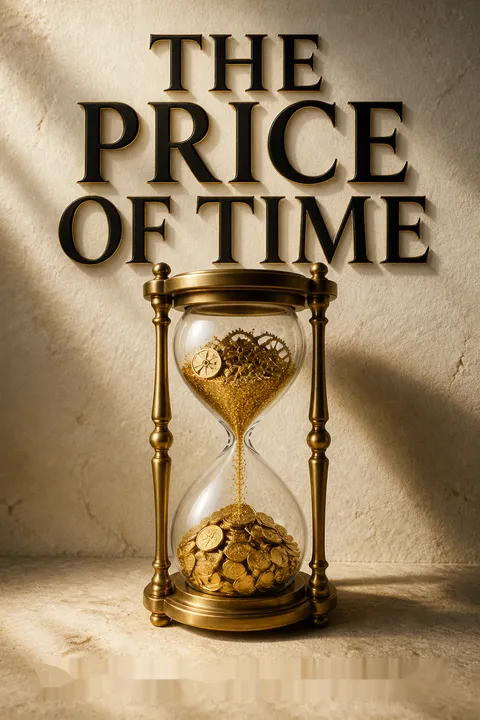


Key Takeaways
Treat interest as the price of time, not a dial for inflation alone
Older than coinage. Mesopotamian records show loans carrying interest before coins existed. Silver loans commonly bore rates near 20 percent, while barley loans could reach 33.33 percent. Hammurabi’s laws regulated lending, collateral, and relief after crop failure. These records reveal that interest was never just a modern banking charge: it enabled people to transfer resources across time, from seed before planting to repayment after harvest, and compensated lenders for delay and risk.
Time has a price. Time preference means valuing goods available now more highly than equivalent goods received later. Interest expresses that difference, while also helping compare investments with different payback periods. Yet history does not establish one universal cause or ideal rate. Custom, law, money supply, risk, and expected returns have all mattered. The book’s central claim is narrower and more practical: remove interest’s coordinating role, and markets lose an essential way to value future income and ration scarce capital.
Interest is best understood as a bundle of signals rather than a single magic number. It reflects waiting, risk, scarcity, and expected productivity, which helps explain why one theory rarely accounts for every rate. The historical examples make this complexity tangible. They also caution against turning a useful description into a moral verdict: a high rate may price genuine risk, or exploit a borrower with few alternatives. The same percentage can mean very different things depending on who lends, who borrows, and what choices each has.
Do not mistake cheaper credit for wealth that lasts
Two old arguments. In 1849, anarchist Pierre-Joseph Proudhon called interest unjust and proposed credit near zero. Frédéric Bastiat replied that lending gives someone the use of resources for a period, and that abolishing its price could deny credit to borrowers without collateral. The debate captures a lasting tension: cheap loans can help borrowers, but they can also reward those already best positioned to borrow.
Law’s grand experiment. In 1719, John Law’s French bank issued vast quantities of paper money, while his Mississippi Company absorbed government debt and its shares surged nearly twentyfold. Credit fell to about 2 percent, speculation exploded, and prices rose. When confidence cracked, the system collapsed. The episode does not prove that every rate cut ends in a crash. It does show that cheaper financing can inflate paper values without creating comparable productive capacity.
The Proudhon and Bastiat exchange remains useful because it refuses an easy moral shortcut. Charging interest can exclude people who lack assets, but eliminating the charge does not eliminate scarcity or the lender’s need to choose whom to trust. Law’s story adds a second lesson: financial engineering can make claims on future wealth look like wealth already earned. The important distinction is between easing a genuine financing bottleneck and disguising an insolvent structure with ever more credit.
Watch credit and asset prices when consumer inflation stays quiet
A misleading target. Goodhart’s Law describes how a measure can lose its usefulness when institutions make it a target. Edward Chancellor applies this warning to inflation control: stable consumer prices can coexist with dangerous credit growth and soaring asset values. In the 1920s, US consumer prices scarcely moved, while credit expanded and stocks and property boomed. In 1927, Federal Reserve chief Benjamin Strong cut rates partly to give markets a lift. The eventual crash showed what a calm price index had failed to reveal.
Japan’s echo. In the late 1980s, Japan kept its policy rate at 2.5 percent while the economy grew above 5 percent annually. Credit and property prices surged. The Bank of Japan later raised rates sharply, and the bubble burst, leaving banks with bad loans and firms burdened by debt. The broader lesson is to examine credit, asset prices, and lending standards alongside consumer inflation.
The book makes a strong case against treating one index as a complete map of economic health. Credit and asset prices can reveal imbalances that ordinary inflation measures miss, much as a system’s stress indicators can matter more than its average temperature. But this is not a simple case for central banks to prick every suspected bubble. Asset values are difficult to judge in real time, and tightening can damage sound borrowers too. Better diagnosis requires several indicators, not a new single target.
Keep the investment hurdle high enough to retire failing businesses
Selection matters. Malinvestment means committing resources to projects that appear worthwhile under distorted financing conditions but cannot earn adequate returns. The book links this risk to creative destruction, the process by which more productive firms and methods displace weaker ones. When rates are pushed very low, marginal businesses can refinance instead of closing, leaving workers and capital tied up in low-return uses.
Living through a downturn. Research cited on the Great Depression finds that surviving American carmakers adopted new production methods, while less efficient competitors failed. Railroads also cut capacity and improved operations. These examples complicate the idea that every downturn is pure waste. Chancellor argues that preventing all failures can preserve overcapacity and slow renewal. Yet indiscriminate liquidation is no cure either: a recession can destroy healthy firms alongside bad ones. The practical issue is whether support buys a viable adjustment or keeps an unviable model alive.
The ecological analogy of selective disturbance helps clarify the argument: systems need some capacity to remove accumulated weakness, but uncontrolled shocks can destroy what is healthy as well. The same distinction matters in credit policy. A firm kept alive by refinancing may preserve jobs for a time, yet its survival can block entry by more capable competitors. The hard question is not whether failure is good or bad in general. It is whether the losses are recognized and resources can move toward better uses.
Follow cheap debt into buybacks, mergers, and executive pay
The promoter’s profit. This term describes gains financiers can capture when borrowing costs fall below the returns attributed to a company or deal. In the early twentieth century, Wall Street used leverage and mergers to consolidate firms, then sold investors claims on anticipated monopoly profits. Chancellor sees a modern echo in private equity, acquisitions, and corporate borrowing.
Financial engineering. Companies can borrow cheaply to repurchase shares, reducing the number of shares outstanding and lifting earnings per share without improving the underlying business. Because executive rewards often depend on share prices or per-share results, this can pay managers more immediately than investing in new capacity. After the crisis, US companies spent hundreds of billions of dollars annually on buybacks. The book argues that cheap finance helped concentrate industries and divert money from research and investment. The distinction is between profits earned by serving customers better and gains produced mainly by reshaping financial claims.
This section points to an incentive problem, not merely a bad interest-rate forecast. When compensation rewards a short-term market metric, executives can rationally choose financial actions that improve the metric while weakening the firm’s future. That makes governance and monetary conditions interacting causes, not competing explanations. The caution is that buybacks are not inherently wasteful: returning surplus cash can be sensible when worthwhile investments are scarce. The meaningful test is what the company gives up, and who captures the immediate benefit.
Protect retirement saving from rates that erase compounding
Waiting becomes harder. Interest rewards people who postpone consumption. In a calculation discussed by economist Gustav Cassel, savings at 6 percent double in about twelve years; at 1 percent, doubling takes roughly seventy. Low returns do not automatically make households save less. Some save more to reach a fixed retirement goal, while others spend more because saving seems futile. Either way, the policy changes who bears the adjustment.
Liabilities grow too. Pension promises are valued by discounting future payments. When bond yields fall, the present value of those obligations rises, often faster than pension assets can keep pace. In the years after 2008, public and corporate pension deficits widened across the United States and Britain. Lower annuity yields also meant retirees received less income from the same savings. The book calls attention to this less visible side of asset inflation: a portfolio statement may look healthier even as the income it can provide shrinks.
Retirement finance exposes the difference between a paper gain and a future paycheck. A rising asset price can make a household appear wealthier today while lowering the return available to fund tomorrow’s needs. The book usefully shifts attention from headline wealth to income, liabilities, and time horizon. Still, lower rates also reduce borrowing costs and can support employment, which matters to workers saving through wages. The distributional result therefore depends on whether a person is mainly a borrower, saver, asset owner, or pension beneficiary.
Ask who owns assets before calling cheap money broadly helpful
Unequal starting points. Lower rates raise the value of assets whose income arrives in the future. That can lift shares, bonds, and property, but the gains accrue chiefly to people who already own those assets. The book reports that the richest 1 percent of US households held about 37 percent of private wealth in 2013, up from 22 percent in 1979.
Credit has two prices. Large firms and wealthy borrowers can often borrow cheaply, while households with weak credit may still face steep rates from card lenders, payday firms, or pawnbrokers. After 2008, savers lost interest income even as financial firms accessed extraordinary support. Chancellor argues that easy money therefore did not erase unequal access to finance. It often shifted wealth toward asset holders and connected borrowers, while leaving low-income households with costly debt and little exposure to rising markets.
Distribution is not an optional footnote to monetary policy. It affects which households can spend, invest, or withstand a shock, and it shapes whether the public sees outcomes as earned or rigged. The book is persuasive in showing why asset ownership matters more than a general claim that lower rates help everyone. Yet distributional effects are not uniform: a borrower with a mortgage may benefit even without owning a large investment portfolio. A sound assessment must track household balance sheets, not just income groups in the abstract.
Treat dollar rate cuts as global credit policy
The dollar travels. A carry trade borrows in a low-rate currency and invests in assets offering a higher return. Because the dollar funds much international lending, US rate cuts can send capital into other countries, lifting currencies, asset prices, and borrowing. Chancellor describes two waves of global liquidity: before 2008, cross-border loans helped fuel property booms in Europe; afterward, cheap dollars flowed heavily into emerging markets.
The reversal bites. In 2013, Federal Reserve chair Ben Bernanke signaled that asset purchases might be reduced. Investors pulled money from emerging markets, currencies fell, and borrowers with dollar debts faced heavier burdens. Brazil and Turkey suffered acute strains. The book also links cheap global finance and commodity speculation to rising food prices before the Arab Spring, though it does not present monetary policy as the only cause. The point is that a reserve-currency central bank exports financial conditions beyond its borders.
A national interest-rate decision can function like a global switch when other countries borrow in the same currency or manage exchange rates against it. That creates a gap between who makes policy and who absorbs the spillovers. The analogy to a shared financial ecosystem is apt: local actors can take risks under conditions set elsewhere. But reserve-currency effects do not remove domestic responsibility. Local regulators, banks, and borrowers still choose how much foreign-currency exposure to accumulate.
Separate emergency lending from a promise that investors cannot lose
Bagehot’s boundary. The Bagehot rule says a central bank should lend freely during a panic, but against sound collateral and at a rate high enough to discourage routine dependence. Its purpose is to stop a liquidity crisis from destroying otherwise viable institutions without rewarding reckless lending. Chancellor argues that modern crisis support often dropped those limits, using very low rates and broad collateral to stabilize markets.
A different path. After Iceland’s banks, whose foreign assets had grown to many times national output, failed in 2008, the country did not rescue them at any cost. It separated domestic banking operations, restructured debts, imposed capital controls, and protected local depositors and some homeowners. Iceland later recovered, though its small size and currency devaluation make it an imperfect comparison with larger economies. Its experience asks a useful question: can a rescue protect essential payments and households without preserving every creditor’s claim?
Emergency lending is a public good when panic makes even sound assets impossible to sell. But repeated protection can alter behavior before the next crisis, encouraging institutions to rely on rescue rather than hold adequate buffers. The Iceland comparison usefully expands the menu of responses beyond unconditional bailout or collapse. Its limits matter, too: a small country with its own currency has options unavailable to a currency union. The principle is not to imitate Iceland mechanically, but to make losses and protections explicit.
Treat control of interest as political power, not neutral plumbing
Financial repression. This term means keeping borrowing costs artificially low, often below inflation, so borrowers and governments benefit while savers lose purchasing power. China’s state-directed lending shows how controlled rates can channel credit toward favored firms, sustain overinvestment, and conceal bad debts. After 2008, Chancellor sees a milder form in the West, as low rates helped governments carry larger debts and central banks bought vast amounts of securities.
The limit of control. Negative rates, introduced to discourage hoarding and encourage spending, also weakened bank margins and pressured insurers and pension funds. In some places, people responded by holding physical cash or buying safes. The conclusion warns that manipulating credit’s central price expands the state’s influence over investment and risk. This is not proof that every central-bank intervention leads to authoritarianism. It is a reason to scrutinize who sets rates, whose balance sheets benefit, and what happens when cash and market alternatives disappear.
The political argument is strongest when it stays concrete: controlled rates determine who receives credit, who absorbs inflation, and which losses are postponed. That makes monetary institutions part of distributive governance, even when their language sounds technical. The danger is overstating the analogy between rate policy and comprehensive central planning. Independent markets remain important, and interventions can prevent severe harm. The democratic question is whether extraordinary powers have transparent limits, clear beneficiaries, and a credible path back to ordinary rules.
Analysis
The book’s most useful contribution is to treat interest not as a small technical setting but as a coordinating price with effects across time. That lens connects seemingly separate phenomena: asset valuations, business survival, retirement obligations, leverage, cross-border lending, and inequality. Its historical range also makes the argument memorable. Babylonian loans, John Law’s paper-money experiment, Bagehot’s warnings, and the post-2008 rescue regime all illustrate recurring conflicts between immediate relief and deferred costs.
The strongest claim is that low rates can conceal imbalances when policymakers focus narrowly on consumer inflation. The 1920s and Japan’s bubble economy show why calm retail prices do not guarantee financial health. The book also persuasively identifies mechanisms: discount rates raise asset values, cheap debt encourages leverage, and prolonged support can keep weak firms alive. These mechanisms deserve attention even when the full causal story is contested.
The main limitation is the tendency to treat unusually low rates as the master cause of stagnation, bubbles, and political discontent. Rates interact with fiscal choices, regulation, technology, demographics, market power, and crisis conditions. A low rate may be both a response to weak demand and a force that reinforces it. Likewise, allowing firms to fail can reallocate resources, but abrupt liquidation can destroy viable businesses and deepen unemployment. Iceland demonstrates an alternative response, not a universal template.
The most defensible lesson is therefore procedural rather than doctrinal: assess monetary policy using multiple signals, including credit growth, asset prices, lending quality, productivity, and distributional effects. Ask who benefits from a rate change, who bears the cost, and whether emergency support creates a route to repair or merely delays recognition. Interest is neither inherently virtuous nor inherently exploitative. Its legitimacy depends on whether it prices time and risk with reasonable accuracy, and whether the rules treat borrowers and savers consistently.
Review Summary
The Price of Time is a thought-provoking book on the history and impact of interest rates. Readers praise Chancellor's insightful analysis of how artificially low rates distort economies and fuel speculative bubbles. The book offers a comprehensive look at interest rates through history, from ancient civilizations to modern central banking. While some found parts repetitive or dense, most reviewers appreciated the book's relevance to current economic issues. Critics noted a focus on Western economies and occasional inconsistencies in argumentation.
People Also Read






Glossary
Time preference
Value placed on immediacyTime preference is the tendency to value a good or payment available now more highly than an otherwise equivalent one received later. In the book, it helps explain why lenders seek compensation for waiting and why interest can be understood as a market expression of the exchange between present and future consumption.
Natural rate of interest
Equilibrium return on capitalThe natural rate is a theoretical benchmark for the interest rate that would balance saving and investment, or align borrowing costs with the economy’s return on productive capital. It cannot be observed directly. The book stresses that policymakers may misjudge it, especially when stable consumer prices hide rapid credit growth or asset inflation.
Goodhart’s Law
Targets distort useful measuresGoodhart’s Law describes how a measure can become unreliable when authorities use it as a control target. People and institutions adapt to the target, changing the relationship that made the measure informative. The book applies the idea to inflation policy: hitting a consumer-price target does not necessarily mean credit markets or asset prices are stable.
Malinvestment
Capital committed to weak projectsMalinvestment is investment in projects that appear profitable under distorted financing conditions but cannot earn returns sufficient to justify their cost. The book links it to interest rates held below levels that reflect risk and productive returns. Examples include overbuilt property, indebted firms kept alive by refinancing, and ventures whose profits remain distant or implausible.
Promoter’s profit
Gain from financial restructuringPromoter’s profit is the gain financiers can make by using leverage, mergers, or share issuance to raise the market value of a business, rather than by improving its productive operations. The term highlights how cheap borrowing can widen the gap between financing costs and apparent returns, benefiting dealmakers and executives before the underlying business proves its worth.
Financialization
Finance displaces operating prioritiesFinancialization describes the growing influence of financial activities, incentives, and transactions within companies and across the economy. In the book, it appears when firms prioritize buybacks, acquisitions, leverage, and share-price performance over investment in products, workers, or productive capacity. It can shift income toward financiers while weakening long-term business development.
Financial repression
Rates held below market levelsFinancial repression is a system in which governments or central banks hold interest rates below market-clearing levels, often below inflation, while directing or constraining the flow of credit. Borrowers and public authorities benefit from cheaper finance, while savers lose purchasing power or income. The book examines both China’s state-directed model and postwar or post-crisis versions in the West.
Carry trade
Borrow low, invest higherA carry trade involves borrowing in a low-interest-rate currency or market and investing in an asset with a higher yield. The apparent spread is the carry. Returns may arrive steadily, but losses can be sudden when funding costs rise, currencies move, or liquidity disappears. The book uses carry trades to connect easy money with domestic and international financial fragility.
Bagehot rule
Emergency lending with safeguardsThe Bagehot rule is the principle that a central bank should supply abundant emergency credit during a panic, while requiring good collateral and charging a high rate. These conditions aim to halt contagious failures without making routine risk-taking cheap. Chancellor contrasts this restrictive original principle with modern rescue programs that often used softer terms.
Reversal interest rate
Rate where easing harms banksThe reversal interest rate is the point below which further interest-rate cuts can weaken banks rather than stimulate lending. Very low rates compress the difference between what banks earn on loans and pay on deposits, reducing profitability and lending capacity. The threshold varies by banking system and can rise when low rates persist.
FAQ
What’s The Price of Time by Edward Chancellor about?
- Historical journey of interest: The book traces the history of interest rates from ancient Mesopotamia to the present, exploring their origins, functions, and impact on economies and societies.
- Focus on modern monetary policy: Chancellor analyzes the causes and effects of persistently low and negative interest rates, especially after the 2008 financial crisis.
- Consequences for capitalism: The book examines how interest rates shape financial markets, investment, inequality, and the occurrence of bubbles and crises.
- Interdisciplinary approach: Combining economic history, theory, and policy critique, Chancellor challenges mainstream views on central banking and monetary policy.
Why should I read The Price of Time by Edward Chancellor?
- Comprehensive historical perspective: The book provides a deep, well-researched context for understanding the long-term dynamics of interest rates and their economic impact.
- Critical analysis of policy: Chancellor offers a sharp critique of central banks’ ultra-low interest rate policies and their unintended consequences, such as asset bubbles and rising inequality.
- Relevance to current issues: The book connects historical lessons to contemporary challenges like financial instability, demographic shifts, and China’s financial system.
- Accessible explanations: Complex concepts like the time value of money, natural rate of interest, and financial repression are made understandable for a broad audience.
What are the key takeaways of The Price of Time by Edward Chancellor?
- Interest as the price of time: Interest rates reflect human impatience and the value of deferring consumption, playing a crucial role in allocating resources over time.
- Ultra-low rates have costs: Prolonged low or negative rates distort investment, encourage risk-taking, and contribute to economic stagnation and inequality.
- History repeats with easy money: Episodes like the Mississippi Bubble and the 1920s boom show that artificially low rates often precede financial crises.
- Central banks’ focus is misplaced: The obsession with inflation targeting overlooks the broader functions of interest and the dangers of financial repression and credit bubbles.
What are the best quotes from The Price of Time by Edward Chancellor and what do they mean?
- “Interest is the price of time.” This encapsulates the book’s central thesis that interest compensates for the use of money over time, reflecting the cost of deferring consumption.
- “John Bull can stand many things but he cannot stand two per cent.” This quote, from Walter Bagehot, illustrates how very low interest rates provoke speculative manias and financial excesses.
- “Financial repression allowed borrowers and banks to ‘grow’ their way back to solvency, but this growth occurred mainly because the real cost of debt servicing was transferred to household savers in the form of negative real rates.” This highlights how low rates shift burdens onto savers, masking deeper economic problems.
- “Low nominal and real interest rates undermine financial stability in various ways.” This quote summarizes the unintended risks of prolonged low rates, including increased risk-taking and the rise of Ponzi financial structures.
How does Edward Chancellor define and explain the concept of interest in The Price of Time?
- Interest as time’s price: Interest is fundamentally the price of time, compensating lenders for deferring consumption and reflecting human impatience.
- Role in capitalism: Interest incentivizes saving, allocates capital efficiently, and enables valuation of long-term investments.
- Time preference theory: Chancellor discusses Böhm-Bawerk’s theory, which sees interest as arising from people’s preference for present over future consumption.
- Creative destruction: Interest acts as a “brake” on economic activity, helping to select efficient investments and eliminate the unfit.
What is the historical origin of interest according to The Price of Time by Edward Chancellor?
- Ancient Mesopotamian roots: Interest predates coined money, originating with loans of seeds and livestock, where the “interest” was the natural increase or offspring.
- Linguistic evidence: Ancient words for interest often relate to fertility and reproduction, linking interest to productive loans.
- Early regulation: Babylonian clay tablets and the Code of Hammurabi recorded loans with interest, collateral, and legal rules, including caps on rates and bans on compound interest.
- Recurring debt problems: The practice of compound interest led to unpayable debts and periodic debt cancellations, a theme throughout history.
How does The Price of Time by Edward Chancellor explain the debate on the legitimacy of interest?
- Historical controversy: Interest was often condemned as usury by religious and moral authorities, but gradually became accepted as necessary for economic development.
- Proudhon vs. Bastiat: The 19th-century debate saw Proudhon denounce interest as “usury and plunder,” while Bastiat defended it as a fair reward for capital.
- Modern echoes: Chancellor shows how this debate is reflected in today’s policies of ultra-low interest rates and their mixed economic effects.
- Dialogue of the deaf: The debate highlighted mutual misunderstandings about the role and necessity of interest in a functioning economy.
What is the “natural rate of interest” and how is it treated in The Price of Time by Edward Chancellor?
- Definition: The natural rate is the theoretical interest rate that balances savings and investment, reflecting the economy’s time preference and return on capital.
- Historical debate: Economists like John Locke argued for a natural rate determined by real factors, while Keynes and others questioned its observability.
- Modern challenges: Chancellor argues that central banks often set rates below the natural rate, leading to distortions and instability.
- Unobservable concept: The natural rate remains elusive and difficult to measure, but its divergence from market rates signals economic imbalances.
How does The Price of Time by Edward Chancellor describe the consequences of ultra-low interest rates?
- Misallocation of capital: Low rates encourage investment in unproductive or speculative ventures, such as real estate bubbles and overvalued start-ups.
- Rising inequality: Cheap credit benefits wealthy borrowers and asset owners, exacerbating income and wealth disparities.
- Financial fragility: Prolonged low rates foster excessive debt, zombie firms, and financial bubbles, increasing crisis risks.
- Economic stagnation: Despite easy money, productivity growth slows, new business formation declines, and the economy becomes less dynamic.
How does Edward Chancellor discuss financialization and its effects in The Price of Time?
- Definition of financialization: Financialization is the increasing dominance of financial motives, markets, and actors in the economy, often at the expense of productive activities.
- Corporate behavior: Chancellor highlights how corporations prioritize shareholder value through debt-financed buybacks and mergers, focusing on financial engineering over innovation.
- Consequences: This shift leads to rising corporate debt, reduced investment in physical and human capital, and greater economic inequality.
- Undermining growth: Financialization ultimately weakens long-term economic dynamism and sustainability.
What does Edward Chancellor say about the impact of ultra-low interest rates on savers and pensions in The Price of Time?
- Decline in savings incentives: Ultra-low and negative rates reduce returns on savings, discouraging thrift and forcing retirees to consume capital.
- Pension deficits: Falling discount rates increase the present value of pension liabilities, creating massive funding shortfalls for pension plans.
- Social consequences: Many retirees risk outliving their savings, and pension providers struggle to meet obligations, threatening social stability.
- Long-term risks: The erosion of savings and pension security undermines future consumption and economic resilience.
What lessons does Edward Chancellor draw from historical financial crises related to interest rates in The Price of Time?
- Easy money precedes crises: Episodes like John Law’s Mississippi Bubble and the 1920s boom show that artificially low rates often fuel speculative bubbles and financial collapses.
- Central banks’ role: Historical panics, such as those in Victorian England, highlight the importance and limitations of central banks as lenders of last resort.
- Modern parallels: Post-2008 policies echo past mistakes, with ultra-low rates fostering bubbles, debt accumulation, and stagnation.
- Limits of inflation targeting: The focus on price stability often blinds policymakers to the broader dangers of credit booms and financial instability.
About the Author

Download PDF
Download EPUB
.epub digital book format is ideal for reading ebooks on phones, tablets, and e-readers.








